
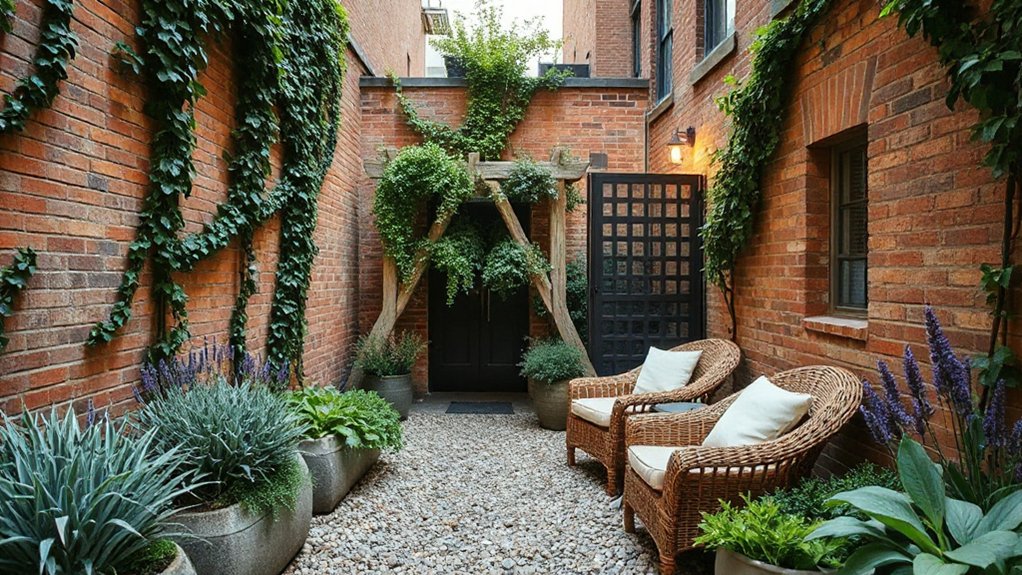
When you’re sourcing garden privacy for urban homes, start with clear goals: who you’re shielding, what needs hiding, and seasonal changes. Focus on light, air, and screening—balance sun with glare control, maximize breeze with gaps, and choose breathable barriers that respect neighbors. Layer privacy with green walls, screens, and fences, using modular, low‑maintenance elements. Add sound dampening with dense plants and porous screens, plus multi-use furniture and shade. If you keep going, you’ll uncover even smarter, longer‑lasting ideas.
Define Your Urban Garden Privacy Goals
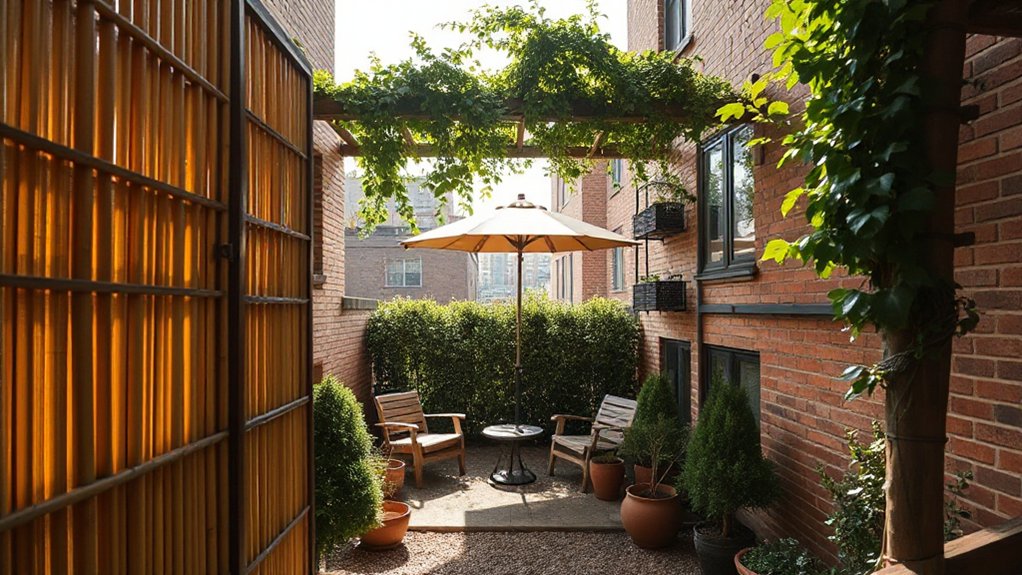
To define your urban garden privacy goals, start by identifying who you want to shield your space from and what kind of privacy you need. You’ll map clear boundaries so neighbors, passersby, and curious urban wildlife won’t intrude on your calm.
Consider sightlines from balconies, windows, and public paths, then decide how much seclusion you require without feeling boxed in. Prioritize practical solutions that fit your routine and yard size, like plant screens, trellises, or movable screens that can adapt with seasons.
Embrace privacy etiquette: be courteous with shared walls and respectful plant heights to avoid blocking others’ light.
Set measurable goals—seasonal changes, noise reduction, and visual screening—so you can track progress and adjust as life in the city shifts. Your space, your rule, your belonging.
Establish Core Criteria: Light, Air, and Screening
Establishing core criteria means balancing light, air, and screening to fit your daily rhythm. You’ll map how much sun you need at different times, then choose materials that soften glare without trapping heat.
Prioritize natural airflow by positioning gaps, vents, or slatted shields that don’t compromise privacy. When it comes to screening, aim for steady, breathable barriers that respect your view and your neighbors.
You’ll also assess how urban wildlife interacts with your space, selecting options that deter nuisance visits while preserving habitat cues.
Consider privacy technology that’s intuitive and low-maintenance, so you stay in control without constant adjustments.
The result is a practical framework you can trust, fostering belonging through calm light, clean air, and dependable privacy.
Layered Privacy: Green Walls, Screens, and Fences
Layered privacy combines green walls, screens, and fences to create a cohesive barrier that still feels natural. You’ll balance green wall strategies with screen and fence harmony to shape sight lines, airflow, and maintenance needs.
Use clear principles of layering to mix height, texture, and durability for practical, lasting privacy.
Green Wall Strategies
A green wall, screens, and fences create layered privacy by combining vertical plantings, solid barriers, and leaner screening elements. You’ll shape a private enclosure with purpose, blending living greenery with structure.
Start with vertical planting to maximize green cover in tight spaces, using climbers or small trees trained along a trellis or wall. Pair this with modular panels or fencing that offers year-round privacy while allowing airflow.
Choose low-maintenance species adapted to your climate, and select panels that harmonize with nearby architecture. Regular pruning keeps growth healthy and prevents overcrowding.
Install irrigation or a simple drip line to sustain the plants. This approach cultivates belonging through a cohesive, adaptable framework you can customize over time.
Screen and Fence Harmony
To achieve screen and fence harmony, you blend vertical greenery with solid barriers to craft a cohesive privacy layer that still breathes. You structure height and texture deliberately, pairing decorative lattice with sturdy panels so borders feel intentional, not accidental.
A well-placed trellis or lattice support becomes a garden feature, not just a divider, while maintaining airflow and light. Integrate privacy murals or bold, subtle arts that reflect your style, reinforcing belonging in shared spaces.
Choose materials that weather together—wood, metal, or composite—so maintenance stays predictable. Layered elements should align with sightlines from seating and entry points, ensuring enclosure without isolation.
Plan around scale, color, and rhythm, so every screen or fence segment contributes to a unified, welcoming exterior.
Layered Privacy Principles
When you design Layered Privacy, start with a core structure—screens, walls, and green walls—that creates a flexible backbone for the space. Layering gives you adaptable enclosure, light control, and a sense of community, not isolation.
Begin with visible screens for outdoor rooms, then add solid walls to define zones. Finally, weave green walls to soften boundaries and invite nature.
Use privacy sensors to monitor activity and adjust shading, lighting, and airflow without shouting boundaries. Choose decorative barriers that reflect your style while maintaining permeability from street view.
Align every element with your daily rhythms, so neighbors feel welcome yet private. This approach builds belonging through consistent, intentional choices—functional, attractive, and easy to maintain.
Dampening Noise With Plants and Materials
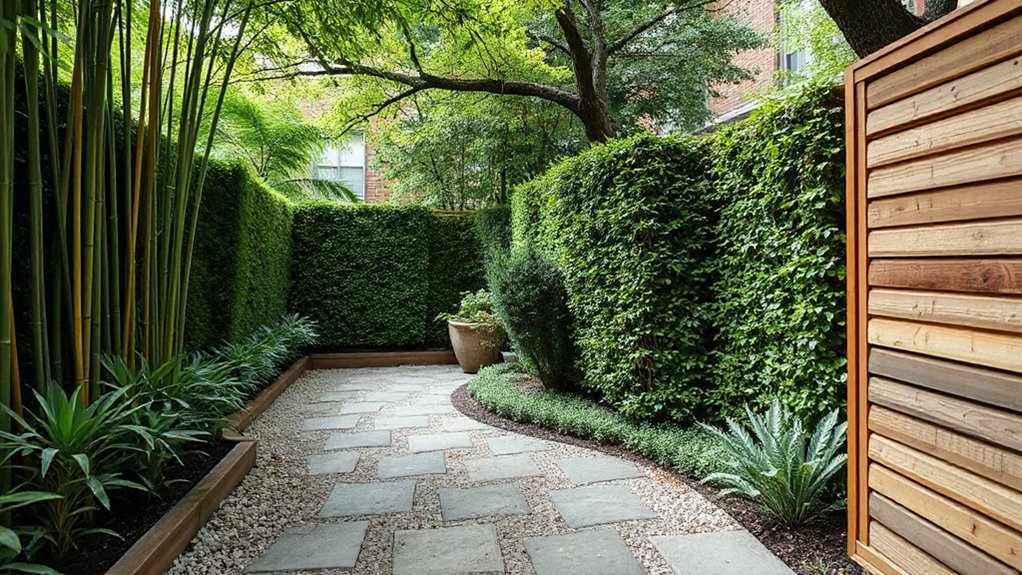
Soundproofing your outdoor space starts with plants that absorb sound and add mass to barriers. You’ll pair dense greenery with porous screens to slow echoes and create pockets of quiet.
Focus on sound absorption by choosing shrubs, evergreens, and layered hedges that trap noise before it bounces toward you. Combine this with solid, weatherproof barriers to enhance mass without visual heaviness.
Material selection matters: choose permeable screens that soften sound yet allow air to flow, and place planters and fences to create staggered surfaces that disrupt line-of-sight noise paths.
Keep paths clear and maintain foliage so barriers stay effective. This approach builds confidence and belonging, showing you control your space with practical, proven choices.
Multi-Use Privacy: Furniture, Shade, and Storage
Ever thought you could double privacy with the same outdoor setup you already use? You can, by choosing furniture-backed screens, modular seating, and stackable storage that integrate shade and privacy.
Opt for furniture versatility: pieces that rotate into screens, planters, or compact walls, so your area stays open yet defined. Pair with shade solutions that adapt to sun and wind—tilt umbrellas, retractable canopies, or pergola curtains that you can close for seclusion or open for air.
Store essentials in slim, weatherproof units hidden within seating or under benches, keeping clutter out of sight while preserving flow. Prioritize durable materials, simple maintenance, and cohesive design to reinforce belonging—your space feels intentional, welcoming, and private, without sacrificing function.
Budget, Maintenance, and Longevity
Focus on cost effective solutions: select versatile components that serve multiple functions, like screens that double as trellises or planters.
Prioritize low maintenance plants that thrive in your light and soil, reducing watering and pruning.
Build a maintenance routine you’ll actually follow, with monthly checks and seasonal tweaks, not one-off tasks.
Choose finishes that require minimal upkeep and are easy to repair.
Document your plan so future neighbors can sustain privacy, too.
Frequently Asked Questions
How Do I Measure Privacy Effectiveness in a Small Urban Yard?
You measure privacy effectiveness by noting sightlines, sound levels, and perceived enclosure. Use privacy screen options and outdoor sound barriers, then test weekly with neighbors and street noise, adjusting height, materials, and placement to feel secure, connected, and respected.
What Plants Thrive in Low-Light, High-Traffic Balcony Corners?
Like a quiet lighthouse, you’ll pick shade tolerant shrubs and low light flowering plants. You thrive, choosing shade tolerant shrubs and low light flowering plants; you’ll grow confidently, maintaining a practical, belonging-filled balcony with resilient, light-friendly foliage.
Can Privacy Features Increase Apartment Resale Value?
Yes, privacy features can boost your apartment’s resale value. You’ll value privacy screen options and soundproof barriers, because they improve comfort, reduce noise, and create a sense of belonging for potential buyers evaluating your space.
Are There Building Code Restrictions on Screens or Walls?
One neighbor’s red tape felt like towering palm walls, but you’ll find building code regulations clear: you must check local codes and obtain privacy screen permits before installation. You comply, avoiding fines and delays.
How Long Do Privacy Plants Typically Take to Mature?
Privacy timing varies, but trunking plants typically mature in 1–3 years, depending on species and care. You’ll see steady progress with consistent watering and sun. Plant growth speeds up with compost, mulch, and smart pruning for faster effect.
Conclusion
You can transform a tight balcony or courtyard into a private, usable oasis with layered solutions—green walls, screens, and fences working together. Prioritize light, air, and screening to keep vistas open while blocking prying eyes. Add plants strategically to dampen noise and integrate smart, multi-use furniture for shade and storage. Budget and maintenance matter, so choose durable options. Fun fact: dense greenery can cut perceived noise by up to 5–10 dB, making your space feel quieter and refuged.