
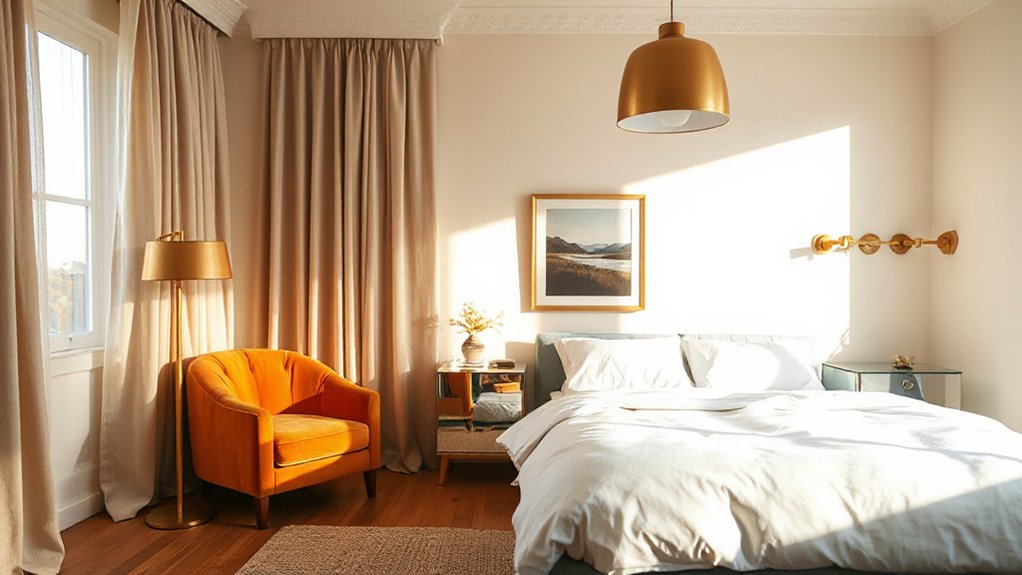
Refresh a bedroom with lighting by layering ambient, task, and accent layers. Start with dimmable base lights for a warm 2700K–3000K glow, add adjustable task lighting for reading or dressing, and highlight personality with focused accents on art or textures. Use smart controls or simple dimmers to switch moods, align color temperature with time of day, and keep fixtures cohesive in finish. Plan for seasonal tweaks and simple upgrades to see noticeable changes fast. You’ll soon discover more ideas.
How Lighting Sets Bedroom Mood
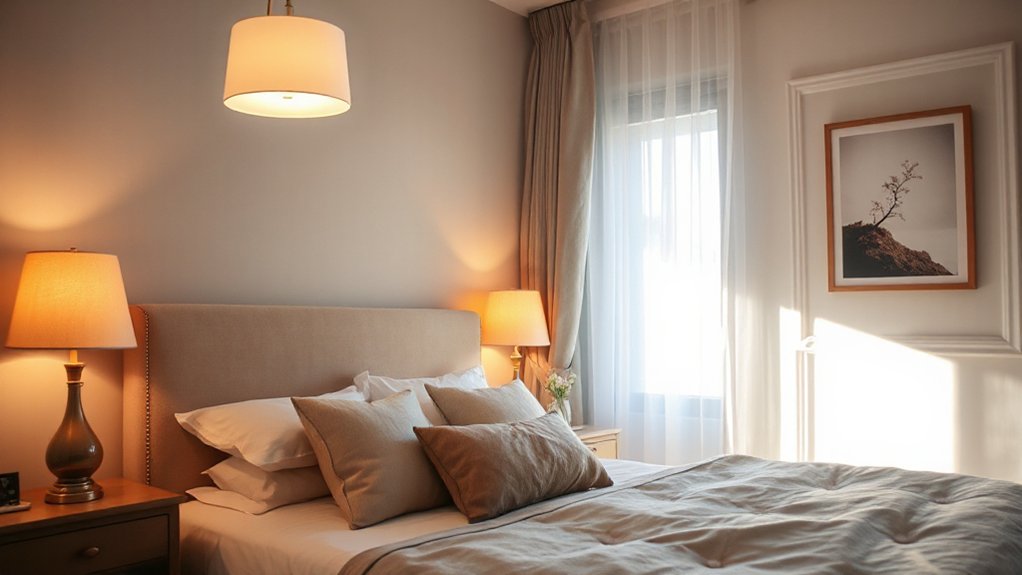
Lighting in a bedroom shapes mood as surely as color or texture. You control the atmosphere with layers: ambient, task, and accent.
Start with warm ambient light to create coziness, then add focused task lighting for reading or desk work. Accent light highlights features you love, like art or a textured headboard, giving the room personality without clutter.
To set a calm, inviting vibe, choose dimmable fixtures and bulbs in the 2700K–3000K range. Prioritize lighting durability so your setup stays steady through daily use and occasional rearrangements.
Energy efficiency matters, too—opt for tubes, LEDs, or integrated LEDs with long lifespans. Pair smart controls with zones to adjust brightness by mood or time of day.
With intentional choices, you’ll feel a sense of belonging in a thoughtfully lit sanctuary.
Take a Quick Look at Your Bedroom Lighting
Ready to assess where your bedroom lighting stands? You’ll start with a quick inventory of Lighting fixtures and how they serve you today. Note where beams feel harsh or dim, and identify gaps that distract from Bedroom aesthetics.
Check main, task, and ambient layers: is the ceiling fixture delivering even glow, are table lamps solving reading needs, and do you have soft, layered light near seating?
Look for color temperature consistency, avoiding mismatched tones that jar the space. Consider switches and dimmers—simple controls matter for mood shifts.
Scan shadows in corners and at night to reveal dark corners that undermine calm. By mapping what you have, you’ll spot easy fixes, align with your style, and keep a welcoming, cohesive bedroom aesthetic.
Set Your Bedroom Ambience Goal: Cozy, Bright, or Calm
First, decide the ambiance you want for your bedroom: cozy for rest, bright for tasks, or calm for retreat. Your goal shapes every choice, from color warmth to brightness levels, so you don’t waste effort or money.
Define how you want the space to feel when you walk in and how you want it to support your routines. This is about bedroom illumination that aligns with your daily needs and mood shifts, not random decor.
Consider how lighting aesthetics influence focus, relaxation, and sleep cues. Map a simple priority: one dominant vibe, one functional need, plus a small accent layer for depth.
With a clear goal, you’ll evaluate fixtures, temperatures, and controls more effectively.
Layer Ambient, Task, and Accent Lighting
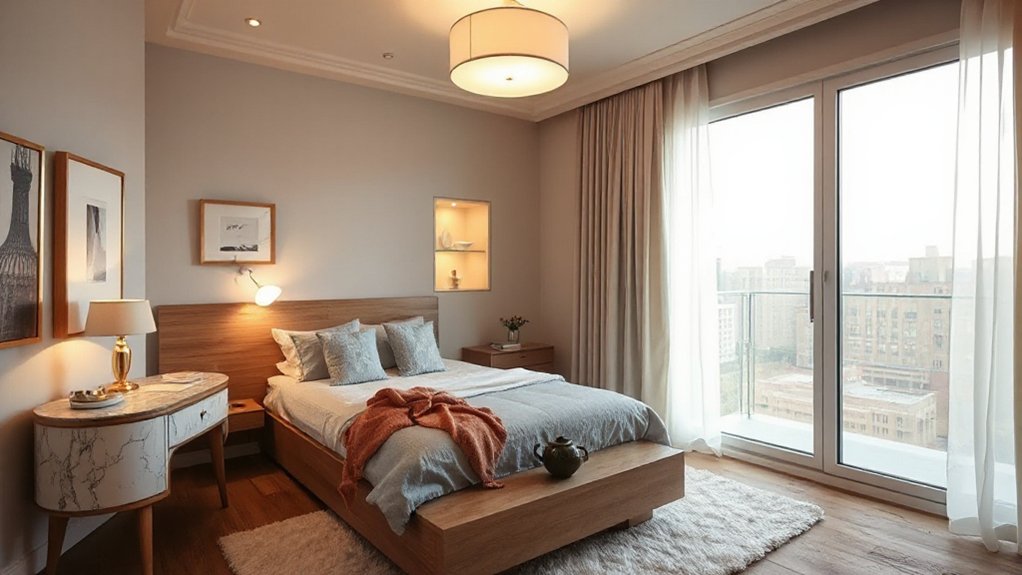
Understand how ambient, task, and accent layers work together to shape mood and function. Start with a calm baseline of ambient light. Add task lighting where you read or dress. Finish with accent lighting to highlight features. Keep each layer balanced so none overpowers the others, then adjust as your goals evolve.
Ambient Layering Basics
Ambient lighting is the foundation of a calming bedroom, and mastering its layering means you’ll balance glow, depth, and function. Start with a dimmable base lamp to provide ambient warmth without glare.
Layer in a second light source for subtle texture, such as a floor or table lamp that spreads soft illumination across walls.
Add task lighting selectively for reading or dressing—think adjustable sconces or a focused desk lamp that won’t overwhelm the room.
Accent lighting should highlight architectural features or art, but keep it restrained to avoid clutter.
This approach relies on lighting technology that blends with the room’s interior design, supporting mood and flow.
You’ll create a cohesive, welcoming space that feels intentional and belonging.
Task and Accent Harmony
To achieve Task and Accent Harmony, balance is essential: use task lighting to support reading and dressing without overpowering the room, while accent lights highlight architectural features or art without creating clutter. You’ll combine ambient, task, and accent layers so each serves a purpose without competing.
Start with user-friendly task zones near mirrors and desks, ensuring adjustable brightness for comfort. Consider color psychology to set mood: warmer tones feel intimate, cooler hues promote focus.
Plan furniture placement to keep pathways clear and lighting accessible, avoiding dark corners. Use dimmers to modulate intensity as needs shift through the day.
Accent fixtures should illuminate art, texture, or architectural details, not overwhelm them. This approach fosters belonging, clarity, and a cohesive, refreshed bedroom experience.
Choose Color Temperature for Each Layer
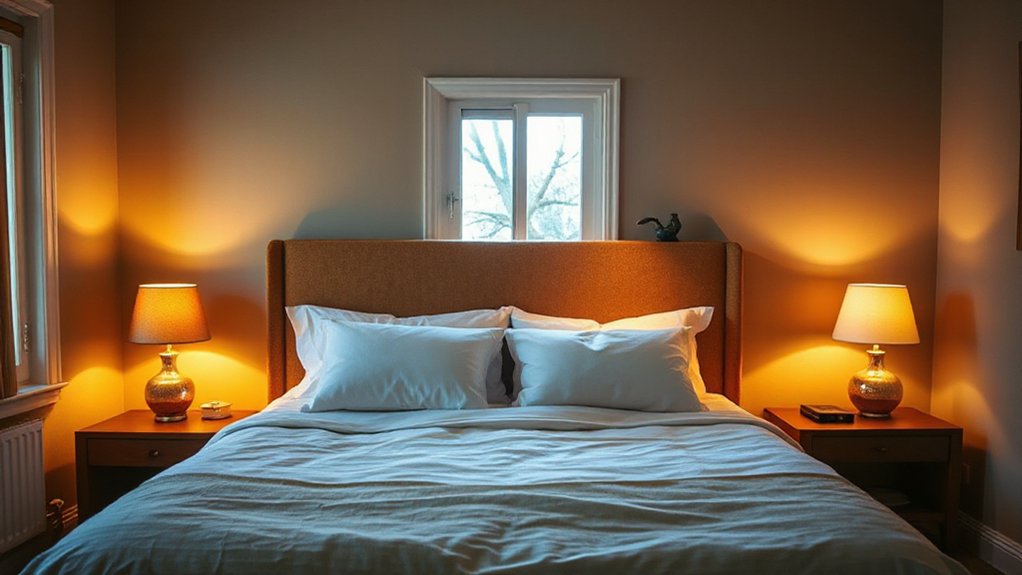
Choosing the right color temperature for each lighting layer matters because it sets the room’s mood and helps tasks feel natural. To balance color harmony and mood enhancement, match temperature to layer purpose and room activity.
- Ambient: choose a soft, warm baseline (2700–3000K) for a welcoming, restful vibe.
- Task: opt for neutral to cool (3500–4100K) where you read or work, keeping details clear.
- Accent: use a slightly warmer or cooler pop (1800–3000K or 4000K, depending on decor) to highlight art without jarring contrast.
Aim for a cohesive spectrum across fixtures, not abrupt shifts. Test with dimmers, adjust, and enjoy a serene, connected space.
Pick Space-Saving Fixtures for Small Bedrooms
If space is tight, pick fixtures that do double duty and stay out of the way. In small bedrooms, choose ceiling-mounted or arc designs that free surface area while delivering ample light. Look for decorative fixtures that combine form and function without crowding walls or tabletops.
Wall sconces, under-cabinet strips, and lift-up pendants save floor space and reduce clutter, letting you keep essential items within reach. Opt for warm to neutral color temperature that feels cozy and cohesive with your palette, and consider dimmable options to adjust mood without swapping bulbs.
Prioritize simplicity: clean lines, soft finishes, and integrated switches. By selecting multiuse pieces and thoughtful placements, you create room for movement, storage, and a welcoming sense of belonging.
Set a Gentle Wake-Up Routine With Smart Lighting
Set a gentle wake-up with smart lighting by using gradual brightness and warm hues that ease you into the day. Create smart lighting routines that start with soft morning light and progress to brighter, cooler tones as you move through routines like dressing and coffee.
Align these settings with morning light synchrony so your body’s clock stays in rhythm.
Gentle Wake Settings
A gentle wake-up routine using smart lighting gradually increases brightness and color temperature to mimic sunrise, helping you wake more naturally. You’ll set a calm progression that respects your rhythm and avoids jarring changeovers.
- Use warm, soft white at low brightness to begin, then ease into brighter hues as you rise.
- Schedule color temperature to shift from amber to neutral white, promoting alertness without shock.
- Pair with vintage fixtures and pendant lighting to reinforce a familiar, inviting morning aura.
This approach feels familiar and inclusive, helping you belong in a shared household without sacrificing modern control.
Keep the system simple: quick taps, presets, and a gentle rise time ensure you start your day with confidence and calm.
Smart Lighting Routines
Choose warm whites to support natural circadian cues, then add a soft ceiling glow plus bedside lamps for layered lighting. Program routines to start at a fixed time, with options to pause if you’re still sleepy or snoozing.
This approach fits your Bedroom aesthetics and reinforces consistent habits, reinforcing a sense of belonging in your space. Keep controls simple: one tap to enable, one tap to tweak brightness.
Regularly review scenes to guarantee they align with seasonal changes and evolving lighting design goals.
Morning Light Synchrony
- Set a 15-minute ramp: begin dim, end brighter, mimicking sunrise and reducing grogginess.
- Schedule gradual cues: align lights with your alarm and natural clock for consistent mornings.
- Maintain optional daylight balance: pair warm hues at first with cooler tones by mid-morning for clarity.
Use Dimmers to Fine-Tune the Atmosphere
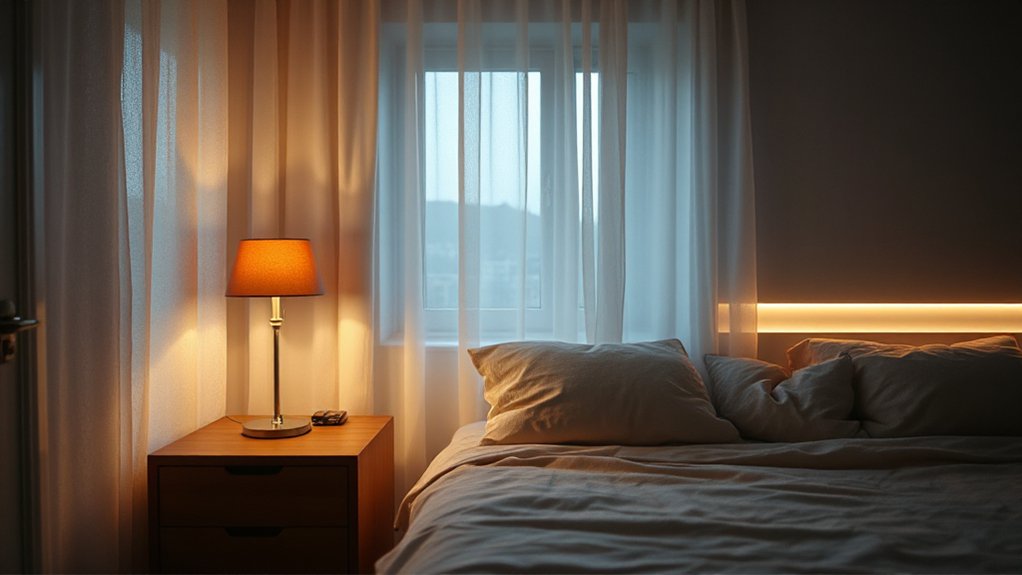
Dimens let you sculpt the mood without changing your fixtures. Actually, the term you want is dimmers, and they let you vary brightness smoothly to suit tasks, moods, or guests.
In practice, you’ll set brightness for reading before bed, then dim it for movie night without reaching for a switchboard. You’ll notice a calmer room when lights aren’t glaring, and you’ll feel more in control of the atmosphere.
Use dimmers on primary and bedside lamps to create zones of light and shadow, guiding focus and comfort. Consider LED dimmable bulbs to maximize Lighting statistics and energy efficiency.
When you plan, choose compatible dimmable fixtures and test scenes, so progressions feel natural and inclusive for everyone sharing the space.
Add Warm Metal Finishes and Soft Textiles
Warm metal finishes and soft textiles fuse practicality with coziness, instantly elevating a bedroom’s warmth without overpowering its design.
You can implement this balance with simple, intentional choices:
- Choose metal finishes and soft textiles that share undertones for cohesion.
- Pair warm brass or brushed bronze accents with plush textiles in earthy hues.
- Layer textures—linen curtains, velvet pillows, and a knitted throw—to add depth without clutter.
Key ideas to remember: metal finishes bring subtle shine and structure; soft textiles introduce warmth and tactility.
Aim for a calm, curated mix that feels welcoming rather than flashy. This approach helps you create a space that looks refined, feels intimate, and invites peaceful, restorative nights.
Metal finishes, Soft textiles.
Highlight Focal Points With Targeted Lighting
Targeted lighting draws attention to the room’s best features and shapes the mood at a glance. You’ll use it to highlight focal points like art, a headboard, or a display shelf without shouting.
Choose fixtures that cast controlled pools of light, so colors read true and textures feel alive. Consider color contrast when selecting bulbs and shades: cool light can sharpen edges, while warm light softens them, helping the eye travel naturally from feature to feature.
Position spotlights or wall washers to skim ceilings and walls, emphasizing ceiling height and spatial rhythm. Keep the rest of the room quiet, so the highlighted elements stand out.
This approach creates a cohesive, welcoming space where you feel seen and connected.
Maximize Natural Light With Reflective Surfaces
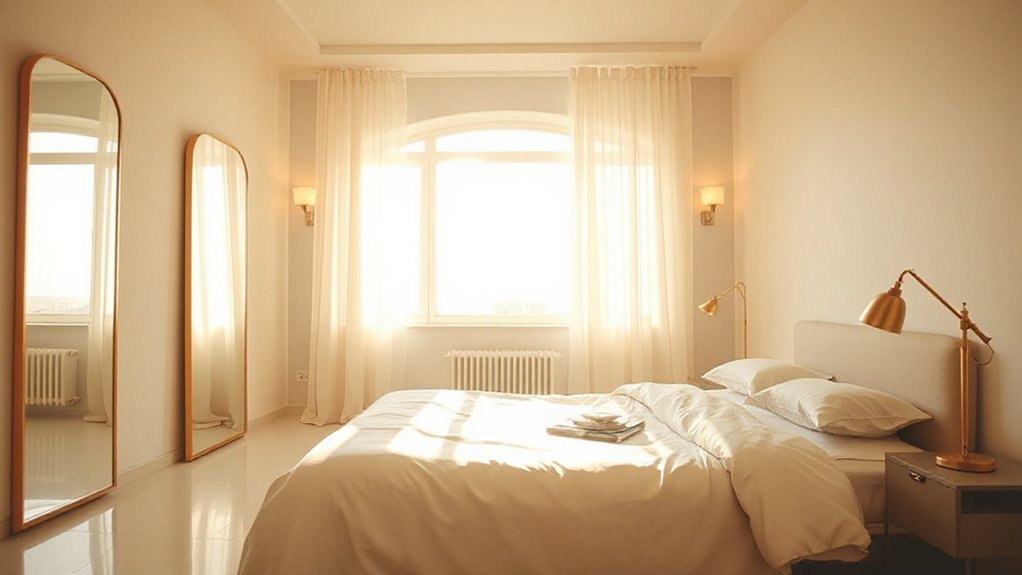
Natural light can transform a bedroom, and reflective surfaces help it travel farther. You’ll boost brightness by using strategic mirror placement and clean, uncluttered angles that bounce light around the room.
Choose surfaces that reflect daylight without creating glare, and position them where they double as decor.
- Mirror placement: place a mirror opposite a window to amplify daylight without crowding walls.
- Surface selection: opt for polished or lightly textured surfaces that scatter light softly, not harshly.
- Framing and balance: pair mirrors with light-colored finishes and minimal frames to maintain calm, cohesive energy.
Reduce Noise With Lighting Accessories and Textural Touchpoints
Acoustic comfort in a bedroom often hinges on how you use lighting accessories and textural elements to dampen noise. You’ll want soundproof accessories that integrate with your lighting plan without clutter, like soft-filtering lamps and cushioned luminaires that absorb impact sounds from footsteps or doors.
Pair these with acoustic panels placed where echoes bounce, such as behind seating or near the headboard, to reduce reflected sound.
Choose fabrics, rugs, and wall coverings with dense textures that also glow softly from your fixtures, enhancing warmth while dampening noise.
Keep wiring neat and conceal cables to prevent additional clutter.
In practice, this approach creates a calmer, more cohesive space you’ll feel connected to.
DIY Quick-Install Lighting Upgrades
You’ll pick up quick-install tips that keep downtime to a minimum while you upgrade key lighting zones. We’ll show you how to layer lighting—ambient, task, and accent—for immediate impact without a full remodel.
This is about practical, concise steps you can implement now to maximize mood and function.
Quick-Install Tips
For quick-install lighting upgrades, start with a plan you can execute in a weekend. You’ll gain momentum by choosing two goals: ambiance and control. Keep it simple, safe, and social—involve a partner or roommate to share the flow and celebrate progress together.
- Select decorative fixtures that fit your space and style, then pair them with smart controls for easy mood shifts.
- Zip-screw, swap, and test wiring in stages, labeling every connection so future tweaks stay painless.
- Schedule a brief dimming and scene-check to confirm your preferred settings, and write down the exact steps for repeatability.
These quick steps create inclusive, practical improvements you’ll feel proud to share with friends and family.
Layered Lighting Tricks
Layered lighting is where quick-install upgrades shine, letting you combine task, ambient, and accent layers for depth and flexibility. You’ll reframe your space by adding dimmable fixtures, smart plugs, and plug-in sconces that are easy to install and remove.
Start with a soft ambient base, then layer in task lighting for reading or desk work, and finish with color-focused accents that support mood. Pick lights with consistent color temperature to avoid clashes, and consider color psychology—cool tones feel calm, warm tones feel cozy.
Aim for energy efficiency by choosing LEDs and timers that minimize waste. Use plug-in options to test layouts before hardwiring, ensuring safe placement away from humidity and drafts.
This approach creates a cohesive, welcoming bedroom you’ll love returning to.
Budget-Savvy Swaps for Low-Cost Lighting Ideas
To stretch your lighting without breaking the bank, swap in practical, low-cost options that brighten a room without sacrificing mood. You’ll gain impact by focusing on efficiency, placement, and texture. Consider these Budget-Savvy swaps:
1) Vintage fixtures with flexible LED bulbs to add character without overspending
2) Decorative bulbs in soft white to create warmth while keeping a modern feel
3) Dollar-and-dorm upgrades like plug-in sconces and clip-on lamps for easy, movable mood lighting
With a smart mix, you’ll elevate contrast, shadow, and atmosphere without costly renovations. Choose thrifted or resale finds for character, then pair them with efficient sources.
This approach centers belonging—rooms feel curated, accessible, and welcoming. Remember: small changes compound, delivering a refreshed, cohesive glow you can maintain without breaking your budget. Vintage fixtures, decorative bulbs.
How Accent Color and Light Work Together
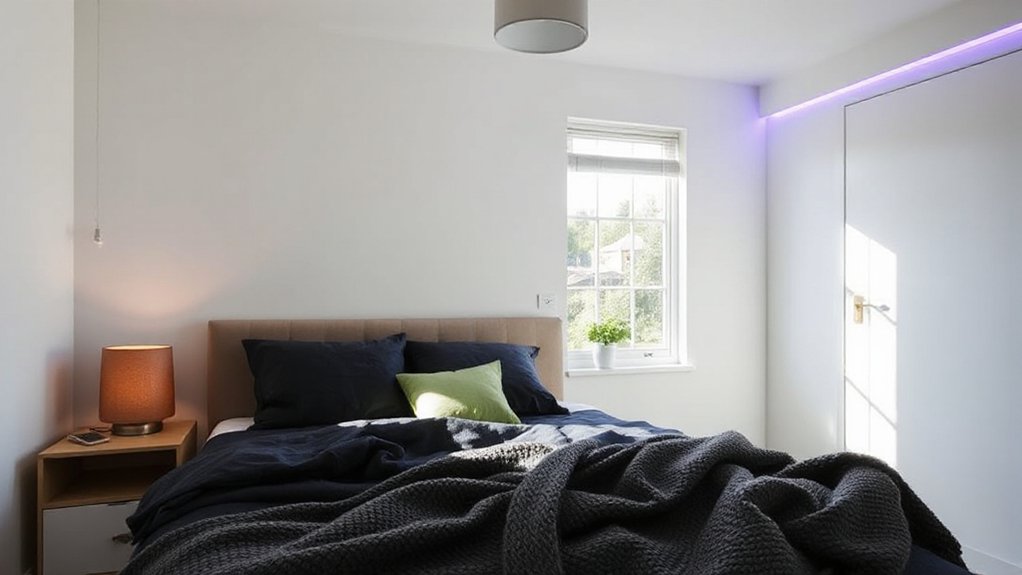
Color sets the mood you want, so pick a base that matches how you want the room to feel.
Let light highlight your accent colors to draw the eye where you want focus.
Use your palette to guide contrast, keeping the overall look cohesive and intentional.
Color Sets the Mood
- Pick one accent color and test it across bulbs and lamps to confirm it sustains mood.
- Dimers or smart controls help you adapt color temperature for different moments.
- Balance bold accents with softer surroundings to maintain cohesion and belonging.
This approach keeps the room practical and purpose-driven, inviting you to live comfortably in the space you’ve crafted.
Light Highlights Accent
Accent color doesn’t just sit on walls or in fabrics—it earns its keep when light reveals it. You use lighting to make the accent pop without shouting. So choose fixtures that wash or pinpoint the hue you want to highlight, then adjust intensity for the moment.
Color psychology guides you: warmer tones feel cozy in evenings; cooler ones feel calm in mornings. Pair complementary temps to avoid muddy results, and rely on lighting ergonomics to reduce eye strain.
Dimmers give you control over how the accent reads throughout the day, while placement matters: a wall sconce beside art or a table lamp near textiles draws attention precisely where you want it.
With thoughtful, purposeful lighting, your accent becomes a confident, cohesive part of the room.
Palette Guides Contrast
You’ve got a handle on making an accent pop with the right fixtures; now pair that color with lighting to shape contrast. Palette guides contrast by aligning hue, brightness, and shadow so your room feels cohesive and welcoming. Use color contrast thoughtfully to highlight textures and architectural features, not overwhelm them. Palette harmony means letting your primary tone breathe while accents finish the story.
- Balance luminance: dim ambient light and lift focal accents to create depth.
- Match temperature: cool whites with cooler accents, warm tones with warmer highlights for unity.
- Test scale: small rooms benefit from bolder, controlled contrasts; larger spaces tolerate subtler shifts.
With these steps, you belong in a room that feels intentional, grounded, and radiant.
Smart Home Options: What to Automate First
Smart home automation should start where you’ll notice the greatest daily impact: the places you touch most and the routines you perform most often.
When you’re revitalizing a bedroom, begin with basics you’ll actually use: smart automation for lights that adapt to activities, wake times, and wind-down moments. Prioritize entry and bedside zones, so you always see what you need without fumbling for switches.
Set up lighting presets for reading, relaxing, and getting ready, then link them to your routine schedules. Choose simple controls—neighborhood-friendly hubs or voice assistants—that feel intuitive, not alien.
Keep your mix of devices reliable and private, with straightforward automations you trust daily. Start small, expand thoughtfully, and you’ll feel instantly more at home.
Troubleshooting Common Bedroom Lighting Issues
If your room’s lighting isn’t meeting your needs, start by checking bulb types and wattage to guarantee you’re using the right brightness and color for each area.
Next, test fixture placement to avoid glare, shadows, or dark corners, adjusting heights and angles as needed.
We’ll explore practical fixes for bulb selection and strategic placement to optimize ambiance and function.
Bulb Type Troubles
Choosing the right bulb type is essential for bedroom lighting that feels true to your needs. When you hit trouble, focus on two basics: Bulb compatibility and wattage concerns.
If a fixture insists on specific bases or dimmer types, don’t force it—swap to the recommended option and test. Keep wattage in check to avoid heat, buzz, or short life.
- Check fixture labeling for base type, dimmer compatibility, and recommended wattage.
- Match bulbs to your dimmer’s rating and your room’s intended mood.
- Evaluate energy use and color temperature to ensure restful, cohesive lighting.
With these steps, you’ll reduce guesswork, feel confident, and enjoy a cohesive bedroom glow that fits your space and routine.
Fixture Placement Fixes
Sometimes the layout of a bedroom won’t support ideal lighting, so you fix it with intentional fixture placement. First, map tasks to zones: reading nooks, desk corners, and bedside sitters.
Use vintage fixtures to add character without overpowering. Position bedside lamps at about 6–18 inches from the headboard for soft, reachable light, and aim for a 40–60 watt equivalent glow to reduce glare.
For overheads, choose a central fixture that spreads evenly or use recessed or track lighting to avoid shadows. Add creative sconces on either side of mirrors or art to balance reflections and depth.
If you have a small space, layer light by combining a ceiling fixture with low, warm lamps. Keep cords tucked and switch placements convenient to foster daily belonging and ease.
Before-and-After: A Simple Lighting Refresh Plan
To refresh a bedroom quickly, start with a simple plan: replace or augment the lighting in three layers—ambient, task, and accent. You’ll see a clear before-and-after, with tangible differences that feel deliberate and welcoming. Focus on a practical sequence that respects energy efficiency while delivering better lighting design.
- Assess current fixtures and swap in dimmable LEDs, aligning color temps for consistency.
- Layer toward a balanced scheme: soft ambient, focused task, and a few well-placed accents to highlight features.
- Test the result after a week, adjusting brightness and placement to preserve comfort and cohesion.
This approach invites belonging, keeps costs sensible, and boosts efficiency without complexity.
Frequently Asked Questions
How Can Lighting Affect Sleep Quality in a Bedroom?
Lighting strongly affects your sleep quality by aiding mood enhancement and Sleep regulation; you’ll feel calmer at night, fall asleep faster, and stay rested. Use dim, warmer tones in evenings to promote relaxation and belonging through controlled ambiance.
What Budget-Friendly Lighting Upgrades Have the Biggest Impact?
You’ll get the biggest payoff with smart bulbs and affordable decorative fixtures; start with smart bulbs for adaptable brightness, then add decorative fixtures to shape ambiance. Anecdote: one dim room feels 5x cozier when layered.
Which Bulbs Create the Coziest Nighttime Atmosphere?
You’ll get the coziest nighttime vibes with warm, dimmable smart bulbs set around you, using a low color temperature. Keep a few lamps on timers, and group scenes to create intimate, comforting moments you’ll feel you belong to.
How Can I Layer Lighting Without Clutter?
Beneath a friendly lighthouse, you layer lighting by stacking decorative fixtures, lamps, and hidden accents, then tie them with smart controls so you adjust scenes without clutter. You’ll feel belonging, practical, and in control while the room glows.
What Are Common Dimmer Compatibility Issues?
Yes, you’ll encounter dimmer compatibility issues when wiring a dimmer switch; check bulb type, wattage, and switch rating. Confirm LED bulbs, CFLs, and incandescent compatibility, and verify total load with your dimmer to prevent flicker or shutdown.
Conclusion
You’ve got the blueprint to refresh your bedroom with lighting, and you’re the one who makes it happen. Start with a clear goal, layer ambient, task, and accent lighting, and pick color temperatures that match each layer. I once revamped a room with a dim lamp, a bright ceiling light, and a warm reading lamp; the contrast felt like waking up from a dream. Your result will be practical, cohesive, and instantly more inviting.