

You’ll start by verifying your basement’s structure, utilities, and moisture sources, then map clear goals, priorities, and a realistic budget. Collaborate with pros to assess limits, plan flexible layouts, and stage a phased timeline that accommodates contingencies. Stay disciplined with permits, codes, and cost tracking, while choosing durable materials and efficient finishes. Keep the project focused on long-term value, and you’ll uncover the key decisions needed to move forward—once you’ve defined the baseline, the next steps become clearer.
Assessing Your Basement Space and Potential
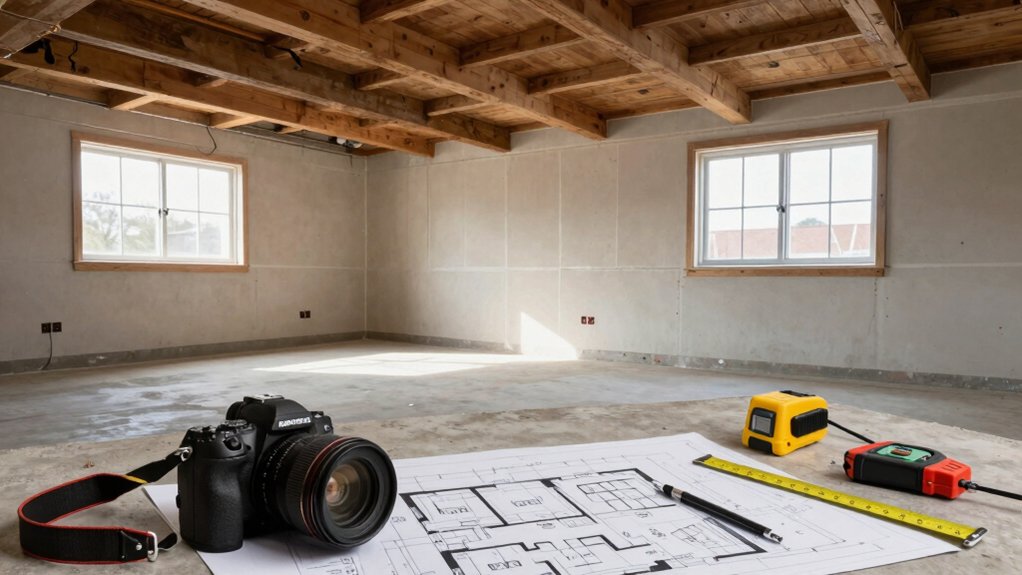
Evaluating your basement space begins with a clear inventory of constraints and opportunities. You map structural elements, ceiling heights, and existing utilities to gauge feasibility and costs, then flag potential constraints that affect layout.
You assess room shapes, daylight availability, and ventilation, identifying where basement lighting can be most effective without excessive wiring.
You examine moisture history, sump locations, and grade slopes to understand drainage needs and waterproofing techniques that will protect finishes.
You quantify renovation baselines: electrical circuits, framing options, and insulating strategies aligned with energy goals.
You collaborate with trades, share data, and refine priorities to keep the project within budget.
Your assessment informs a practical, scalable plan that balances function, durability, and future adaptability.
Defining Clear Goals and Priorities
To start, you’ll set clear goals by identifying your top needs and the outcomes you want from the space.
Prioritize these needs by impact on daily use, safety, and budget, so the essential elements guide your plan.
We’ll keep decisions aligned with cost, feasibility, and timelines, adjusting as you refine expectations.
Set Goals Clearly
Start by setting 3–5 clear goals that reflect how you’ll use the space, how much you’re willing to spend, and the timeline you can commit to. You’ll define success metrics, such as function, budget, and schedule, then translate them into actionable targets.
Use a collaborative approach: confirm constraints with your teammates or family, document decisions, and track changes in a simple plan. Prioritize goals by impact on daily use and long-term value, avoiding scope creep.
Be precise about required features, like storage, insulation, and finishing quality, and align them with your budget. Consider decorating ideas and lighting options early to guide layout, material choices, and cost.
Clear goals prevent surprises, streamline decisions, and keep the project on a realistic path toward completion.
Prioritize Key Needs
Prioritizing key needs follows from your clearly defined goals: identify which features most impact daily use and long-term value, then rank them by cost, feasibility, and timing. You’ll focus on a practical sequence: essential systems first, then space-redefining elements, with aesthetics fitting the budget.
Define non-negotiables for safety, comfort, and function, and tag trade-offs you’re willing to accept. Collaboration with trades and designers clarifies constraints early, reducing change orders later.
When evaluating options, quantify impacts on usability, maintenance, and resale value. Consider decorative accents and furniture placement as optimization levers rather than afterthoughts, aligning them to sightlines and traffic flow.
Document priorities in a living checklist, revisiting them after bidding and early construction phases to ensure alignment with scope and budget.
Budgeting for a Smart and Realistic Project
Careful budgeting sets the foundation for a basement remodel you can complete on time and on target. You’ll start with a clear scope, listing core systems, insulation, and finishes, then assign costs to each line item.
Use a conservative contingency—typically 10%—to cover unforeseen issues without derailment. Track purchases in real time, comparing bids and documenting decisions to prevent scope creep.
Prioritize durable, low-maintenance materials for long-term savings, and align choices with your plan’s performance goals. Build a realistic timeline that factors lead times and delivery delays, then back into milestones for procurement and installation.
Consider how decorative accents and furniture placement affect space planning and load, ensuring design flexibility without exceeding budget. Communicate changes promptly to teammates to maintain alignment and accountability.
Navigating Permits, Codes, and Approvals
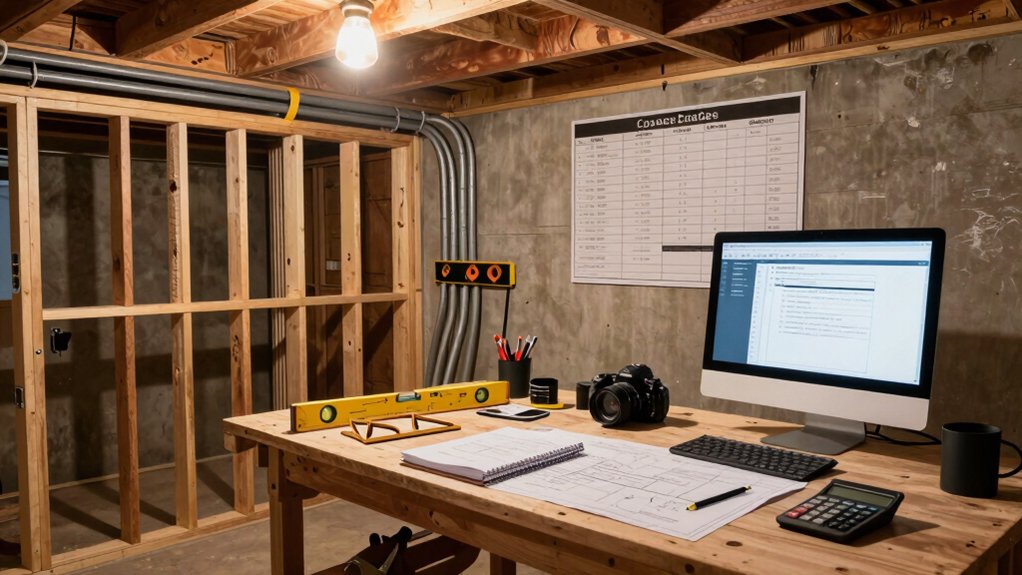
You’ll map out the permit timelines and identify any expedited options so approvals stay on schedule.
We’ll reference code basics and your project scope to make certain compliant design choices from day one.
This collaboration stays budget-minded by prioritizing permit-ready work and clear documentation up front.
Permit Timeline Essentials
Permits drive every basement remodel, so you’ll want a clear plan for steering approvals, codes, and timelines from day one. You’ll map required permits by task—electrical, plumbing, egress, and insulation—then align them with your contractor’s schedule to minimize delays.
Create a shared calendar that flags permit submission dates, plan-review windows, and anticipated inspections, so you stay ahead instead of chasing notices. Build in a contingency budget for review fees and potential scope tweaks, keeping costs visible to stakeholders.
When discussing design choices, favor measurable outcomes: energy efficiency targets, moisture protection, and fire safety. Consider home automation and decorative accents early, ensuring wiring and access routes fit your timeline.
Communicate progress weekly, resolve bottlenecks quickly, and document approvals for future projects.
Code Compliance Guide
Code compliance is your roadmap for steering permits, codes, and approvals without surprises; by mapping applicable standards to each task, you’ll prevent rework and keep the project on budget.
In this guide, you’ll coordinate inspections, document submittals, and track required licenses early, so approvals align with your timeline.
Start with a scope review that identifies code-based constraints for egress, ceiling heights, and fire safety, then confirm criteria with your contractor before work begins.
For electrical wiring, follow National Electrical Code requirements, schedule panel inspections, and verify grounding and AFCI protection.
For plumbing installation, ensure venting, pipe sizing, and moisture-control measures meet code and manufacturer specs.
Maintain clear logs, mark deviations, and pursue variances only when necessary, keeping collaboration tight and costs predictable.
Moisture Management and Waterproofing Essentials
Moisture control is foundational to a successful basement remodel, because unchecked water can undermine framing, insulation, and finishes. You’ll assess existing conditions, prioritize durable barriers, and align methods with budget realities.
Start with a reliable water-resistance strategy: diagnose sources, plan targeted fixes, and coordinate installation with trades to avoid rework. Emphasize proper drainage, exterior waterproofing, and interior vapor management to minimize long-term risk.
Choose materials with proven moisture resistance, and verify continuity of barriers at joints, penetrations, and progressions. Monitor basement humidity during and after work to prevent condensation-driven issues.
Document testing steps and maintain a contingency fund for unexpected fixes. Focus on Water seepage prevention and Basement humidity as performance metrics, updating your plan as conditions change and costs evolve.
Layout, Zoning, and Functional Flow
How will you guarantee everyday use and future flexibility mesh in your basement? Start with a clear zoning map that separates primary living zones from utility areas, preserving headroom and easy circulation. Prioritize a logical flow: entry, gathering space, workstation, and storage, with sightlines that minimize crossing paths.
Use modular furniture placement strategies that can adapt to changing needs without major renovations. Establish clear service zones for electrical, HVAC, and data access, ensuring outlets and outlets locations support current devices and future tech.
Build in flexibility with open-plan segments and defined, non-permanent partitions. Maintain aesthetic balance by selecting cohesive materials, colors, and textures that tie zones together. Balance budget against durability, and document decisions for scalable, phased upgrades.
Lighting, Ventilation, and Insulation Strategies

To support the zoning and flow you mapped, focus on lighting, ventilation, and insulation as integrated systems that align with function and budget. You’ll design ambient lighting layouts that reduce shadows and energy use while preserving task visibility in living, storage, and utility zones.
Pair these with a compact HVAC plan or passive ventilation to maintain air circulation without drafts. Insulation choices should balance comfort and cost, prioritizing thermal breaks, vapor barriers, and sound attenuation where needed.
Control strategies matter: dimmers, sensors, and timers optimize performance and energy efficiency. Guarantee code compliance for egress, combustion air, and moisture management.
Coordinate electricians, HVAC pros, and insulators early to prevent rework. Document layouts, budgets, and performance targets to track progress.
Materials, Finishes, and Durability Considerations
Careful selection of materials, finishes, and durability strategies guides long-term performance and total project cost. You’ll balance moisture resistance, load capacity, and maintainability when choosing components.
Start with the structural shell: sealant compatibility, vapor barriers, and drainage alignment reduce later repairs.
For flooring options, prioritize moisture tolerance, wear rating, and ease of replacement; consider concrete or engineered alternatives if subflooring is compromised.
Wall finishes matter too—select mold-resistant paints, waterproof boards, and proper insulation to minimize cold spots and condensation.
Durability demands proper fasteners, corrosion resistance, and documented warranties. Collaborate with trades to verify installation details, curing times, and inspection points.
Budget-conscious choices come from comparing lifecycle costs, not just upfront price, ensuring performance remains consistent through many seasons.
Phase Planning, Scheduling, and Risk Mitigation
Phase planning sets the project up for success by outlining milestones, sequencing tasks, and aligning crew availability with budget constraints; you’ll map dependencies and build in buffers for weather, inspections, and material lead times.
You approach scheduling with a collaborative mindset, documenting critical paths and contingency options to protect cost and timeline. Identify risk factors early, such as permitting delays or supplier shortages, and assign owners to monitor each risk.
Integrate stormwater management considerations into early design reviews to prevent costly rework, and plan for proper drainage and moisture control alongside structural reinforcement needs.
Maintain ongoing visibility with stakeholders, adjust sequences as conditions change, and reserve a portion of your budget for unexpected subsurface findings or code adjustments. End-to-end clarity keeps the project steady and predictable.
Frequently Asked Questions
How Long Does a Basement Remodel Typically Take From Start to Finish?
Typically, a basement remodel takes 6–12 weeks, depending on scope, permits, and moisture fixes; you’ll track the construction timeline with clear project milestones, coordinate trades, and adjust budgets as issues surface to stay on schedule.
Can I DIY Any Part of the Basement Remodel to Save Money?
Yes, you can DIY some tasks to save money, but prioritize safety and code compliance. Involve a pro for major structural/ventilation work. DIY safety, Budget planning, and collaboration guarantee a cost-effective, technically sound basement remodel with smart limits. Flux capacitor.
What Are Common Hidden Costs Not Shown in Initial Estimates?
Hidden fees and permit costs frequently sneak into basement projects, so you should budget for overruns, inspections, and licensing. You collaborate with pros, track changes, and review contracts closely to prevent surprise charges and keep the budget intact.
How Do I Choose a Reputable Contractor for Basements?
Only 15% of contractors carry all licenses, proof of insurance, and warranties, so verify credentials up front. You’ll compare contractor credentials and remodeling permits, ask for specifics, and collaborate to keep costs predictable and quality high.
What Resale Value Can I Expect From a Basement Remodel?
You can expect a solid investment return, typically boosting your property value by 70%–80% of your basement remodel costs, though results vary with quality, market, and layout. Collaborate with pros, budget wisely, and document value-added features.
Conclusion
You’ve mapped a clear path: assess, plan, and execute with tight budgets and smart choices. By coordinating trades, tracking costs, and prioritizing moisture control, you’ll maximize value without sacrificing safety or comfort. Stay collaborative, document decisions, and revisit priorities as realities shift. Remember: clarity cuts risk, and foresight saves money. In short, your basement remodel succeeds when your plan adapts like a well-tuned system—precise, economical, and resilient.