
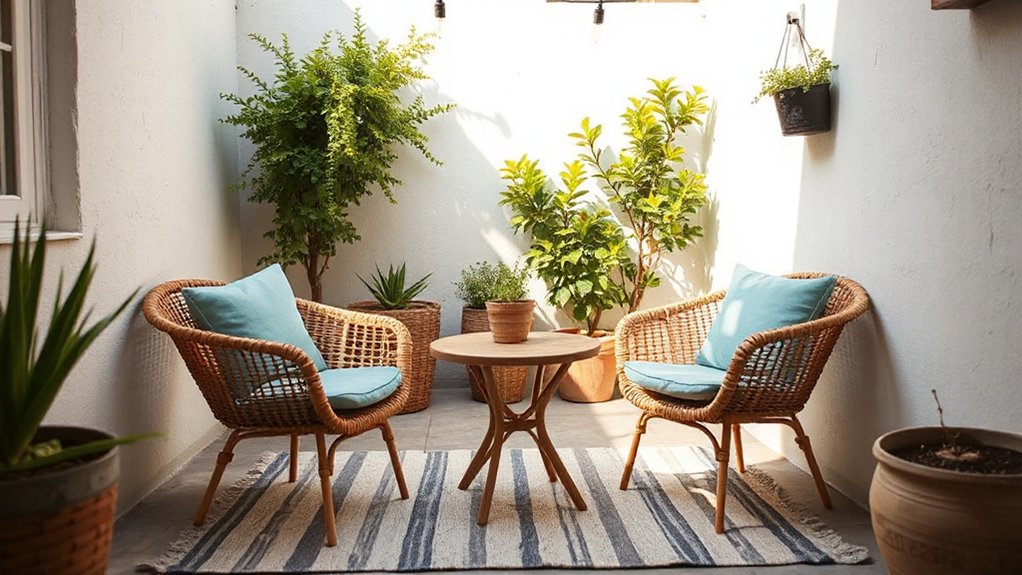
Transform your small patio into a functional retreat by prioritizing compact, multi-use seating and a smart layout. Measure your space, note constraints, and define clear zones with lighting and a focal point like a foldable dining table or garden art. Choose slim, weatherproof pieces, add built-in storage to hide cushions, and layer lighting for evening ambiance. Create cozy nooks with low-profile seating and warm textures, then adjust flow as you test—more tips await if you keep exploring.
Assess Your Space: Measure, Constraints, and Goals
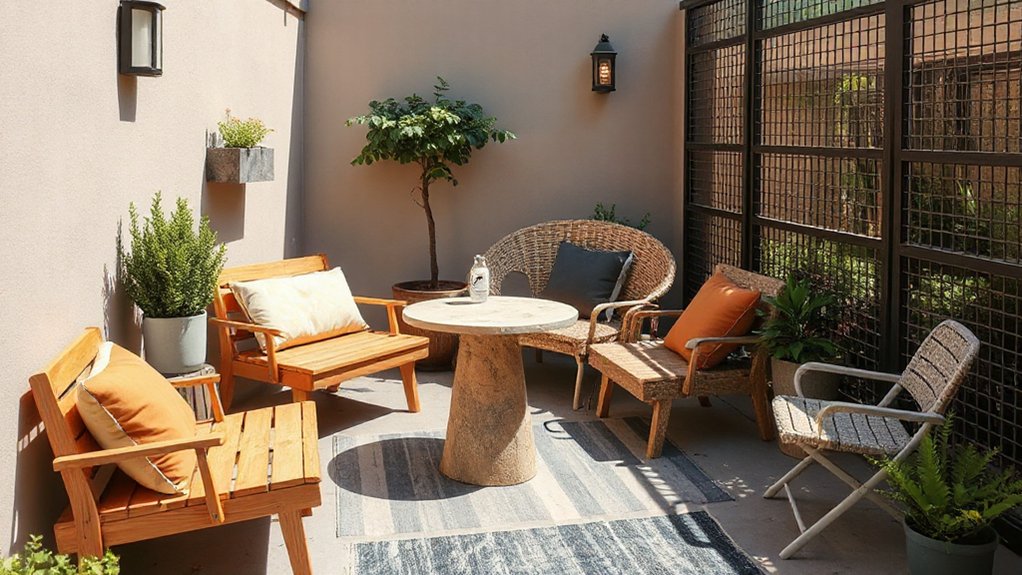
Before you plan furniture and layout, start by mapping your small patio. You’ll measure usable space, noting door swings, fixed features, and sunlight patterns. Identify constraints like drainage, utilities, and wind corridors, then translate them into clear boundaries for seating zones.
Define your goals: comfortable seating for two, occasional entertaining, or a quiet retreat. Consider garden privacy needs—plant screens or trellises as natural dividers without crowding.
Plan for outdoor heating options that blend with your layout, ensuring safe clearance and efficiency. Prioritize modular pieces you can reconfigure as you grow familiar with the space.
Draft a simple, to-scale sketch and annotate dimensions, access paths, and storage spots. With precise mapping, you’ll design a cohesive, welcoming patio that supports belonging and effortless use.
Small Patio Seating: The Essentials You Must Have
To make the most of a small patio, prioritize seating that fits the space while maximizing comfort and flexibility. You’ll want compact, multipurpose pieces: a bench with storage, folding chairs, and a slim dining set that tucks away when not in use. Choose modular options you can rearrange for guests or solitude.
Durable, weather-friendly materials save maintenance time, while cushions with quick-dry foam keep comfort high without heavy care. Garden art should enhance ambiance without crowding, creating a sense of belonging rather than clutter. Zone seating to encourage conversation and easy circulation.
Pest control should be proactive, using natural deterrents and well-sealed, odorless protection for comfort. Keep surfaces clean and simple, letting color and texture guide a welcoming feel.
Choose Compact Seating That Maximizes Every Inch
Can you fit comfort into every inch? You can, by selecting Innovative seating that plays to small-space priorities. Prioritize compact furniture that serves multiple roles—think slender, armless chairs that tuck beside a table, or a bench with hidden storage.
Choose pieces with slim silhouettes and lightweight frames to keep sightlines open. Opt for modular formats you can rearrange in minutes, so routes stay clear and conversations feel intimate.
Elevate comfort with cushions mounted to frames, not loose toss pillows that slip beneath chairs. Consider built-in options like a narrow bench along a wall or a corner seat with a table that slides.
Measure, then confirm height and depth meet you where you gather most. Practical, durable finishes reduce maintenance while enhancing cohesion.
Multi-Use Furniture: Fold, Stack, and Convert for Tight Layouts
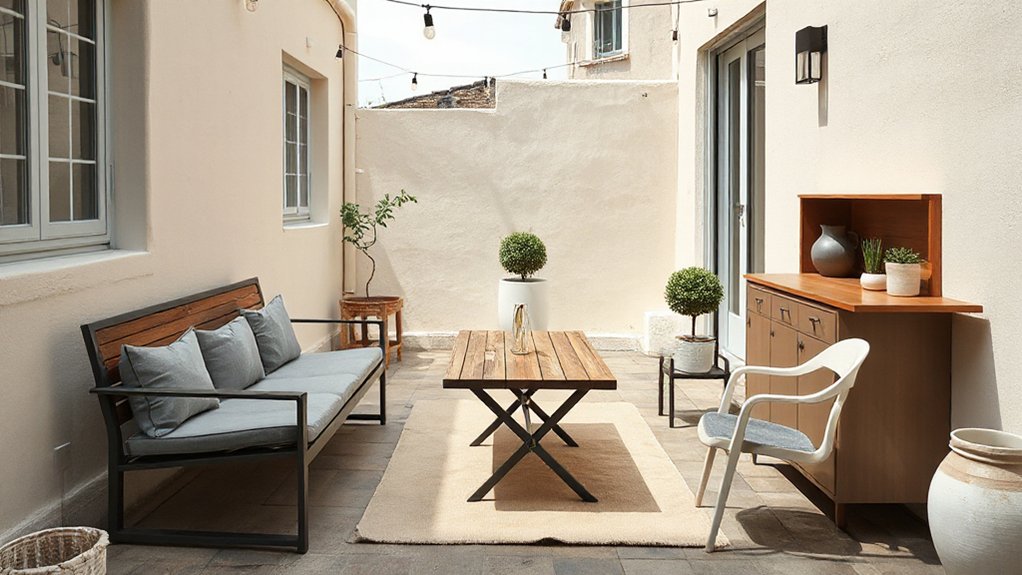
Think about furniture that morphs to fit your space. Multi-use pieces save square footage without sacrificing function. You’ll want folding tables that expand when you host, then tuck away to reclaim floor area.
Choose convertible chairs that morph from dining seating to extra deck-strewn surfaces in moments, so fewer pieces cover more tasks. Look for hinges, locking legs, and built-in storage to reduce clutter and keep decks calm.
Stackable designs mean you can clear seating with minimal effort after meals or gatherings. Prioritize lightweight materials, weather resistance, and integrated wheels for easy rearrangement.
Pair folding tables with convertible chairs for fluid layouts that adapt to guests, meals, and sun angles. You’ll feel supported, organized, and ready to enjoy every outdoor moment.
Create Cozy Nooks: Seating Zones That Feel Intimate
Create cozy nooks by pairing low-profile seating with warm textures and strategic lighting, so intimate spaces feel inviting rather than crowded. You’ll craft zones that invite conversation and linger time, not just sit-and-go moments.
Use a fire pit as a focal point to anchor the layout, with seating arranged in a circle or arc to foster eye contact.
Add outdoor curtains on a light breeze day for subtle enclosure and color cohesion.
Layer textures—woven cushions, faux fur throws, and a jute rug—to heighten warmth without clutter.
Keep traffic clear between zones, and guarantee side tables are within reach for drinks and devices.
- Low-profile sofas or benches with warm textiles
- Fire pit-centered seating circle for connection
- Outdoor curtains to soften boundaries
- Minimal, purposeful accents for cohesion
Modular and Stackable Pieces for Flexible Layouts
Modular and stackable pieces let you adapt a small patio layout on the fly. You’ll prioritize versatility, choosing modular furniture that can reconfigure for guests or daily use.
Stackable chairs save space without sacrificing comfort; tuck them under tables or into corners when not in use. Aim for clean lines and durable materials that resist weather and wear, so your setup remains effortless year-round.
Pair lightweight tables with modular units so you can expand seating for entertaining or collapse for intimate evenings. Consider hidden storage options to keep cushions and accessories organized and ready.
Whether hosting a casual bite or a quiet retreat, these pieces empower you to tailor zones quickly, enhancing belonging through flexibility, functionality, and thoughtful arrangement.
Texture and Color Tricks for Visual Depth

Texture and color are your quickest routes to visual depth on a small patio. You’ll shape perception by pairing textures with purposeful hues, guiding the eye through layers rather than crowding space.
- Color psychology: choose warm tones to create intimacy, cool tones to expand the feel of roominess
- Texture contrast: mix smooth surfaces with mat textures to add tactile interest
- Accents: repeat a unifying color in cushions, planters, and throws for cohesive depth
- Proportions: vary scale—large furniture with small accessories to avoid visual heaviness
Weather-Ready Materials: Durable Choices for All Seasons
From the ideas of texture and color depth, you now want materials that stand up to sun, rain, and temperature swings. Choose Weatherproof fabrics for cushions and throws that resist fading and moisture, so you keep vibrant tones without constant maintenance.
Prioritize rust resistant furniture frames, finished with corrosive-resistant coatings or powder coatings in darker hues that hide weathering.
Opt for compact, all-weather materials like powder-coated aluminum, teak treated for outdoor use, and synthetic weaves that hold shape.
Use quick-dry foams and sealed seams to prevent mold.
Plan for simple, modular pieces you can rearrange as seasons shift, ensuring comfort remains uninterrupted.
With these durable options, your small patio stays cohesive, welcoming, and ready for year-round gatherings.
Seating With Built-In Storage to Cut Clutter
Built-in benches with hidden storage help you keep shoes, cushions, and tools out of sight while maximizing seating.
With smart hinges and tidy compartments, you’ll reclaim surface area without sacrificing comfort.
Let’s explore the best designs and materials that balance durability, accessibility, and clutter control.
Built-In Benches Storage
Benches with built-in storage turn seating into a smart, clutter-cutting solution for small patios. You gain extra space for cushions, blankets, and quick-clean tools without sacrificing comfort or style. Prioritize built-in storage that’s easy to access and fits your daily rhythm, so seating remains inviting rather than a chore.
Guarantee seating comfort by selecting a depth and height that support long conversations and relaxed lounging. Choose hinges and lids that close softly to protect contents and preserve the tidy look. Use durable cushions designed for outdoor use to keep the area welcoming.
Build a cohesive vibe with materials that match your patio palette.
- Dual-purpose benches for seating and storage
- Cushions with weather-resistant covers
- Lids that open wide and close quietly
- Latching sections for organized access
Clutter-Free Patio Solutions
A clutter-free patio starts with seating that hides daily clutter and stays inviting. Opt for stools and benches with hidden storage compartments you can access from seating surfaces. Choose durable materials that resist weather and look welcoming, so you feel at home right away.
Built-in storage keeps cushions, outdoor dining essentials, and small tools out of sight yet easy to grab, reducing clutter as you relax or host. Integrate multi-use pieces—ottomans that double as side tables, benches with removable lids, and planters that conceal vents or hoses.
Consider low-profile storage under dining chairs to conceal napkins and menus. Pair with quiet water features to mask urban noise and enhance ambiance.
This approach supports outdoor dining moments and calm gatherings, fostering belonging.
Lighting to Extend Evenings and Enhance Mood
Strategic lighting can transform a small patio from dim to inviting, letting you extend evenings safely while setting a welcoming mood. You’ll use layered lighting to create Nighttime ambiance without glare, balancing task, ambient, and accent tones. Choose warm color temperatures (around 2700K) to feel cozy and inclusive, then dim for intimate conversations.
- String lights along eaves or railings for soft overhead glow.
- Path lights guide movement and define zones with subtle brightness.
- Lanterns or candles on tables add warmth and focal points.
- Solar or low-voltage options keep installation simple and energy-smart.
Keep cords neat, protect switches from rain, and test lighting before guests arrive.
This approach makes your patio feel like an extension of home, inviting everyone to linger.
Greenery Without Overwhelming: Planters That Breathe Space
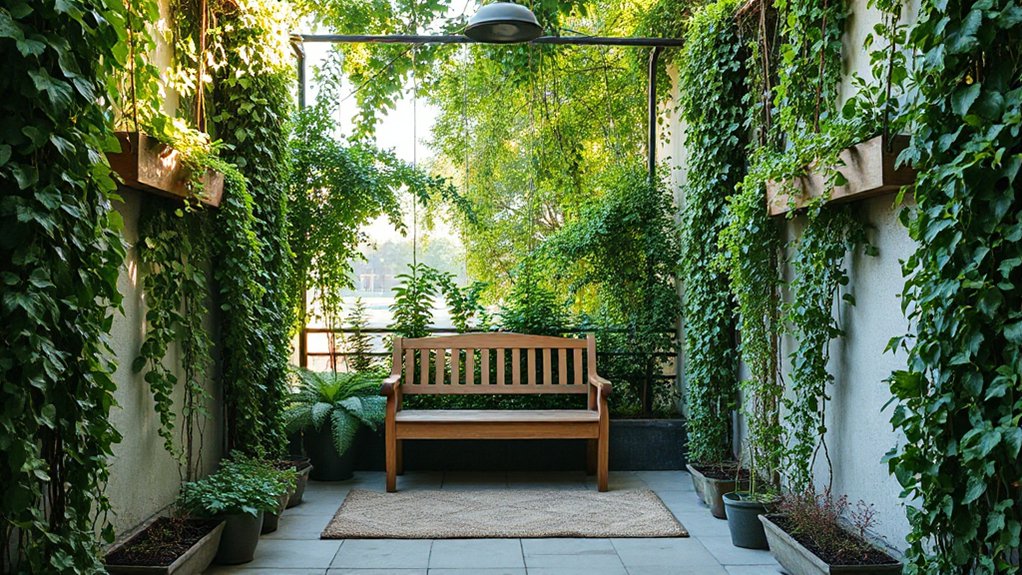
To keep greenery from crowding a small patio, choose planters that breathe space—ticking all the boxes for scale, placement, and maintenance. You want an urban garden that feels intentional, not crowded, so select containers with slim profiles, modular stacks, and gaps between pots.
Place vertical planters where wall or railing space exists, and use shallow, wide troughs for low, spreading plant arrangements that don’t block sightlines. For color and texture, pair compact evergreens with herbs or small perennials, rotating seasonal specimens to keep the look fresh.
Drainage mats and self-watering options reduce upkeep while preserving plant health. Favor planters in neutral tones to blend with surroundings, so greenery enhances rather than competes.
This approach creates belonging through calm, well‑considered plant arrangements.
Visual Tricks: Rugs, Shadows, and Height Variation
Rugs can visually expand a small patio by defining zones and creating the illusion of more space. Shadows add depth perception, helping seating areas feel layered rather than flat.
Height variation, used with cushions and planters, tricks the eye into perceiving more dimension without crowding the floor.
Rugs Create Perceived Size
Lay a rug that extends beyond your seating area to visually enlarge the patio and define zones; the exposed surrounding floor acts as negative space, making the sense of size feel bigger.
- Choose a rug that underlays furniture and aligns with sightlines to create cohesion.
- Select colors and patterns that echo outdoor lighting and garden sculptures for unity.
- Use a durable material with a subtle texture to avoid visual clutter.
- Lay the rug to frame traffic flow, narrowing or widening perceived space without sacrificing comfort.
Rugs anchor the room, guiding the eye and reducing clutter. This one-step trick supports a lived-in sense of belonging, helping guests feel welcome.
Pair with purposeful lighting to extend the effect into the evening. Keep edges clean and resist overly busy prints; simplicity reads larger.
Shadows Add Depth Perception
Shadows can trick the eye into reading depth where there isn’t much, giving a small patio a sense of space and structure. You can use shadow play to define zones—lounge, dining, and entry—without adding furniture.
Position a tall plant or trellis to cast vertical silhouettes that suggest height and distance, guiding movement across the deck. Layered shading, like a pergola with slatted panels, creates alternating light and shadow patches, producing a deliberate depth illusion that makes the area feel larger.
Focus on high-contrast edges along walkways to anchor sightlines and prevent flatness. Keep materials matte to reduce glare, and align cushions and rugs to echo the shadow lines for cohesive rhythm.
The result is a grounded, welcoming patio that reads as thoughtfully designed.
Height Variation Illusion Techniques
Height variation isn’t just about what you place on the floor; it’s how you layer textures, elevations, and shadows to guide the eye. You create depth by mixing rug textures, raised planters, and staggered seating heights, so the space reads larger than it is.
Use layered textures and color contrasts to define zones without walls. Elevate a low coffee table with a taller sideboard behind it to create vertical interest, then anchor seating with a bold rug. Let shadows play across edges to soften transitions and add movement.
Keep lines clean and purposeful.
- Layering textures: rugs, cushions, and throws define micro-zones
- Color contrasts: light versus dark, warm versus cool
- Elevation tricks: varied furniture heights, planters, and decks
- Shadow play: strategic placement for depth and rhythm
Budget-Friendly Upgrades That Feel Premium
Small changes can make a big impact, and you don’t need a big budget to feel premium. You can elevate a small patio with thoughtful, affordable upgrades that read as intentional design.
Focus on cohesive texture and color to create a curated look without overspending. Start with outdoor dining options that mix scale and comfort—opt for a compact table with weatherproof cushions and a simple, durable dining set.
Add a Fire pit as a focal point for warmth and ambiance, paired with heat-resistant seating and a safe, clear perimeter.
Choose lighting that glows softly around entryways and seating corners to extend usability after dark.
Finish with quality accessories—planters, rugs, and a single statement piece—to convey curated polish and belonging.
DIY Accents to Personalize Your Patio Seating
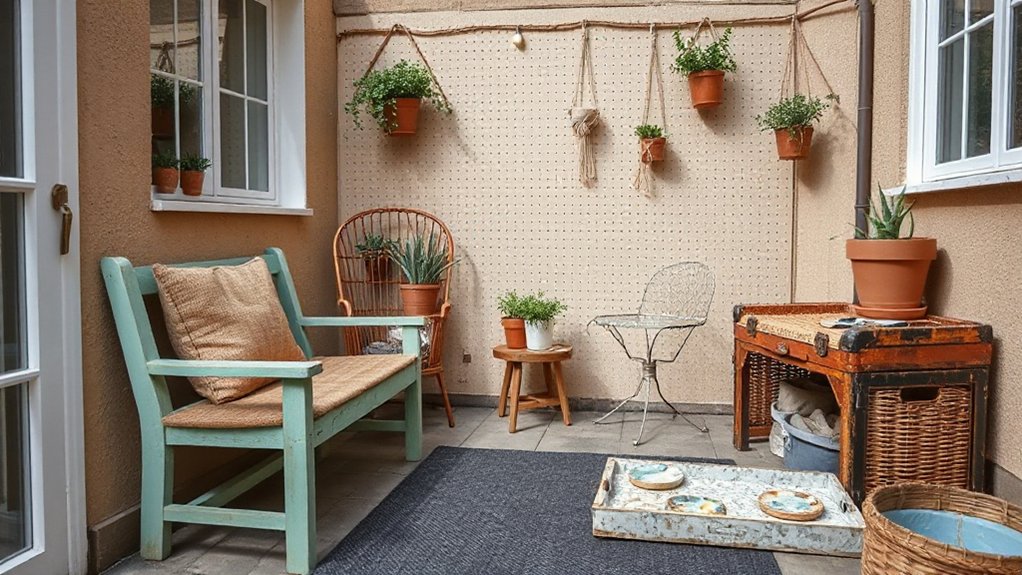
Want your patio seating to feel uniquely yours? You can personalize it with simple, intentional DIY accents that invite belonging and comfort. Focus on garden art that reflects you, then complement with warm lighting fixtures to extend evenings outdoors.
- Create a small gallery on a spare wall with weatherproof frames and seasonal prints
- Stitch quick outdoor cushions covers in colors that echo your home’s palette
- Build a low, decorative plant stand using cinder blocks and wood slats
- Hang string lights or battery-powered lanterns to cast inviting glow
These touches are practical, cost-conscious, and easy to update. By mixing garden art with thoughtful lighting fixtures, you cultivate a space that feels tailored, welcoming, and distinctly yours.
Quick-Start Plan: Implement This Weekend
This weekend, you can kick off a Quick-Start plan with a clear checklist: finalize a Space-Saving Seating layout and choose a budget-friendly deck setup that fits your patio’s footprint.
Prioritize compact, multi-use pieces and simple, tool-free assembly to keep setup fast and disruption minimal.
Stay focused on practical steps, and you’ll transform your patio today with a cohesive, comfortable seating area.
Quick-Start Weekend Plan
If you’re aiming to refresh your patio fast, start with the essentials: choose a compact seating arrangement, add a weatherproof rug, and surface-test lighting for evening usability.
- Define a focal point: garden art that reflects your style and sparks conversation
- Pick a simple grill or outdoor cooking setup you’ll actually use
- Add a compact side table and hidden storage for cushions or tools
- Establish quick-soothing greenery: a single potted plant cluster or vertical wall
Within a weekend, test flow, seating comfort, and lighting zones, then tweak placement. Keep tasks small, measured, and repeatable.
This plan prioritizes belonging—you’ll feel connected to the space as you transform it. Garden art and outdoor cooking become touchpoints, not tasks, helping you enjoy intimate gatherings without overhauling the patio.
Space-Saving Seating Ideas
To fit more seating into a small patio this weekend, prioritize compact, multi-use pieces and clever layouts. Choose stackable chairs, ottomans with hidden storage, and benches that double as steps or side tables.
Opt modular seating that rearranges for gatherings or quiet evenings, reducing clutter. Use upright options—narrow planters, wall-mounted shelves, and corner seating—to maximize floor space without feeling cramped.
Select materials that resist weather and match your garden art for a cohesive vibe, reinforcing belonging through cohesive design. Consider a single focal point: a compact outdoor dining setup with a foldable table.
Integrate cushions in durable, neutral fabrics for comfort and easy maintenance. Keep traffic clear, use removable accessories, and define zones with lighting to extend usability after dark.
This approach blends practicality with inviting atmosphere for all guests.
Budget-Friendly Deck Setup
A quick-start deck setup can transform your outdoor space this weekend by balancing value with impact. You’ll keep things simple, durable, and welcoming, so you feel at home as soon as you step outside.
Plan for an outdoor dining zone and easy, fold‑away seating, then add garden lighting to extend use after sundown. Start with a weatherproof table, two chairs, and a small bench to maximize flexibility.
Choose inexpensive, sturdy materials and quick-install accessories so you don’t overthink the process. You’ll gain confidence by keeping a tight budget and clear layout.
Use this structure:
- Durable table with seating for four
- Folding chairs and a bench for versatility
- Ambient garden lighting accents
- Simple, resilient finishing touches for cohesion
Frequently Asked Questions
How Do I Maximize Seating in a Tiny Balcony?
Yes—maximize seating by using portable solutions and multi purpose furniture that folds, stacks, or nests. You’ll create flexible layers, invite collaboration, and save space while enjoying cozy moments on your tiny balcony.
What’s the Best Foldable Chair Option for Patios?
The best foldable chair option for patios is one that gives you portable comfort and foldable elegance, so you stay comfortable and stylish. You’ll appreciate durable materials, easy setup, compact storage, and a seat that feels like belonging.
Can I Use Vertical Space for Seating Ideas?
Yes, you can; use vertical space with a vertical garden and hanging planters to create seating vibes and shade, then add compact stools beneath, ensuring you feel connected, practical, and part of a lush, belonging-worthy patio community.
How Do I Weatherproof Cushions Affordably?
You weatherproof cushions affordably by choosing outdoor fabric with a treatment, then air-drying fully before storage solutions. Seal zippers, use breathable covers, and rotate cushions seasonally, so you each feel belonging while they endure weather and last longer.
Are Budget Materials Durable for Year-Round Use?
Yes, budget materials can last if you choose proven options and care for them. Budget alternatives like powder-coated aluminum or teak trucks durable material longevity; seal or shade appropriately, clean regularly, and store cushions seasonally for year‑round use.
Conclusion
Your small patio can feel twice as expansive when you design with intent. Start by measuring, pick compact, multi-use seating, and carve intimate nooks with rugs and height tricks. Think modular, foldable, and stackable to reclaim space after sundown. Add DIY accents for personality, then test-drive a weekend plan that fits your routine. With each smart choice, you’ll turn a tight footprint into a welcoming, livable outdoor room—like a well-timed breath that makes the whole scene come alive.