
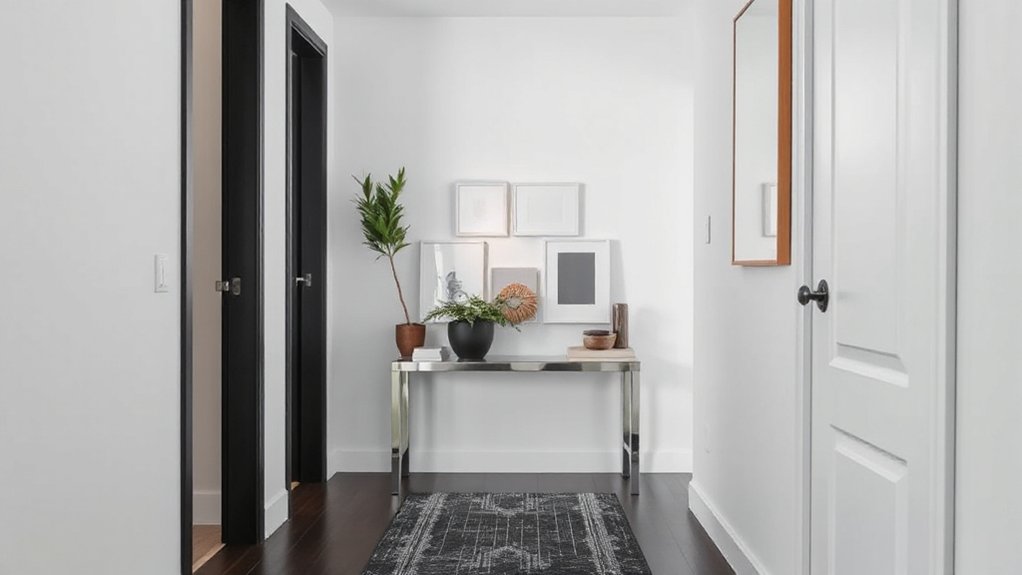
Start with a clear budget cap and map essentials vs nice-to-haves, adding a 15% contingency so surprises don’t derail you. Choose a unifying color palette with 1–2 accent hues, test in natural light, and keep paints cohesive beyond walls. Layer lighting with ambient, task, and dimmable options, then add texture through rugs, textiles, and subtle wall treatments. Use vertical storage, slim modular organizers, and hidden benches to maximize space. Track progress and expect cohesion to build as you go. If you keep going, you’ll learn more.
Set Your Hallway Budget: A Practical Framework
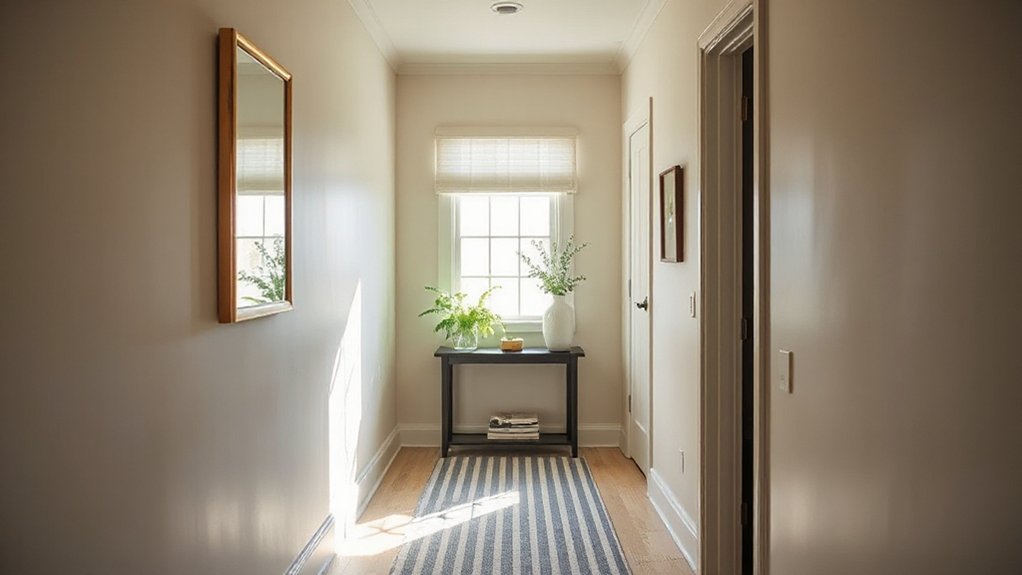
Setting a hallway budget starts with a clear scope and a realistic cap. You’ll map needs, nonnegotiables, and nice-to-haves, then lock the total you won’t exceed.
Treat budget planning as a working contract with yourself: define targets, track them, and adjust as you go. Start by listing essentials—lighting, storage, wall finishes—and assign reasonable costs to each, plus a 15% contingency for surprises.
Prioritize durable materials that feel premium without overreaching, so you don’t dilute value later. When you estimate, seek transparency from suppliers and installers, and compare at least three quotes to avoid overpaying.
For material sourcing, choose versatile options that pair well with multiple styles, ensuring cohesion as you evolve. Stay disciplined, communicate expectations clearly, and you’ll build a hallway you love within budget.
Choose a Unifying Color Palette for the Hallway
Choosing a unifying color palette starts with selecting a base that anchors the space and ties in your existing decor. You’ll build visual harmony by selecting hues that work together, not against each other, and by keeping saturation balanced across surfaces. Color coordination becomes a practical tool, guiding paint, flooring, and accents to act as one cohesive story.
1) Pick a dominant color and support with 1–2 accents to create contrast.
2) Test samples in natural light to ensure true tone and mood.
3) Limit textures and finishes to maintain consistency and calm.
4) Use repeat color cues in decor, artwork, and textiles for continuity.
A thoughtful palette boosts belonging, makes traffic feel intentional, and keeps your hallway serene and stylish.
Lighting Essentials to Brighten an Entryway
Layered lighting is your best friend for a bright, welcoming entryway, so start with a mix of ambient, task, and accent lights.
A budget-friendly fixtures guide helps you swap in efficient options without blowing your budget, like affordable ceiling fixtures, wall sconces, and plug-in lamps.
Focus on placement and brightness to guarantee you illuminate key areas while creating depth and warmth.
Layered Lighting Tips
Effective hallway lighting starts with layered lighting, which combines ambient, task, and accent lights to create a bright, welcoming entry. You’ll boost mood and functionality by planning three layers in each space.
- Ambient base: soft ceiling or wall wash sets the tone without glare.
- Task accents: add a console lamp or sconces to illuminate key zones like a mirror or coat rack.
- Focal highlights: a directed, low-intensity accent draws attention to artwork or architectural features.
- Dimming strategy: install dimmers to modulate mood and energy use.
Layered lighting supports Mood enhancement, helping you feel grounded and connected as you enter. Keep fixtures proportional, and choose warm tones for a cozy, inclusive vibe.
Budget-Friendly Fixtures Guide
As you plan your entryway on a budget, the right fixtures can make a big impact without breaking the bank. Start with a core ceiling light that provides even ambient glow, then layer with task and accent pieces to avoid harsh shadows.
Choose energy-efficient LED options in neutral finishes that blend with vintage lighting styles. Thoughtful placement matters: one central fixture, plus sconces at eye level and a small desk lamp for added warmth.
To maintain cohesion, pick fixtures with clean lines and simple profiles that echo your hall’s features. Integrate indoor plants near lighting to soften glare and add life.
Finish with dimmers for flexibility, and let your budget guide, not limit, your style.
Texture Works: Rugs, Wall Coverings, and Textiles
Texture is the quickest way to add warmth, depth, and personality to a hallway, even on a budget. You’ll harness texture through rugs, wall coverings, and textiles to build confident, welcoming spaces. Focus on balance, contrast, and consistency to avoid clutter.
- Choose a primary rug with durable fibers, then layer smaller runners for textural contrast.
- Pick wall coverings or fabrics that echo colors from your rug to reinforce unity.
- Vary surface textures—smooth paint, a tactile weave, and a plush throw—to invite touch.
- Add a few tactile accents, like linen cushions or a felted wall hanging, to deepen texture.
This approach creates tactile layering and textural contrast, elevating the hallway with intentional, accessible charm.
Space-Saving Storage Solutions That Actually Fit
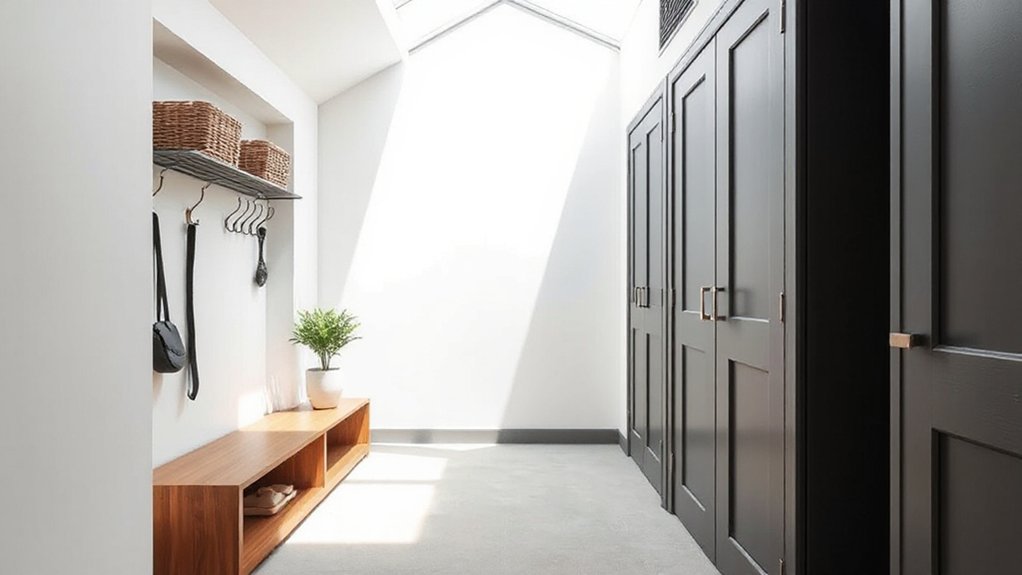
When space is tight, smart storage isn’t optional—it’s essential. You don’t need bulky, costly solutions to gain function; you need thoughtful, compact ideas that actually fit your hallway.
Start with vertical shelving that extends to the ceiling for odds and ends, keys, and seasonal items, freeing floor space for movement.
Choose multiuse furniture, like benches with hidden bins or an entryway console that hides a charging station and mail.
Opt for slim, modular organizers that tuck into alcoves and under stairs, improving space optimization without clutter.
Use labels and transparent bins to reduce decision fatigue, so items are returned where they belong.
With deliberate placement and quality, you’ll feel organized, welcomed, and part of a well-cared-for home.
Smart storage makes belonging effortless.
Hang Art and Mirrors to Create Depth and Light
Want to add depth and light without breaking the bank? Start with art that creates perspective and mirrors that bounce natural light around the hall.
Use strategically placed pieces—larger art for depth and bright mirrors to visually expand the space.
Hang Art For Depth
Need to create depth in a narrow hallway? You can shape the space with purposefully placed art that guides the eye and adds dimension. Focus on composition and contrast to pull the room together. Depth creation comes from layering pieces at varying heights and using color echoes that repeat throughout the corridor.
- Align art at eye level to anchor the wall and invite closer inspection.
- Mix frames and sizes to create a curated, dynamic rhythm.
- Pair bold, small-scale pieces with a larger statement work for balance.
- Use muted matting and glass to soften reflections and extend perceived space.
Remember: art placement matters. Thoughtful arrangement boosts depth, while deliberate simplicity keeps the hallway welcoming and cohesive.
Mirror Light Boosts Space
Mirrors aren’t just for reflection—they light and enlarge narrow hallways too. You can boost space perception with smart mirror placement and thoughtful lighting styles.
Place a tall mirror opposite a window or light source to bounce daylight deeper into the hall, making it feel wider without adding clutter. If you lack wall space, lean a wide-framed mirror on the floor against a wall to create a layered, welcoming vignette.
Choose lighting styles that complement the mirror: warm bulbs soften changeovers, cool tones sharpen edges, and dimming options let you adjust mood for gatherings.
Keep spacing consistent: align edges with art and furniture to preserve flow. This approach reinforces belonging by guiding guests smoothly through your entry, instantly elevating budget-friendly design.
Budget Upgrades: Hardware and Fixtures You Can Do Now
Upgrading hardware and fixtures is one of the quickest ways to refresh a hallway without breaking the bank. You’ll feel confident choosing pieces that align with your style, while staying practical about function.
- Swap out our old knobs and pulls for brushed metal or matte black to elevate cabinets and doors.
- Install a timeless light fixture or updated sconces to transform mood and brightness.
- Replace existing door hardware with cohesive finishes for a polished, inviting entry.
- Add smart storage solutions like wall-mounted shelves or narrow cabinets to keep clutter away.
These moves boost both form and function, helping you feel a sense of belonging.
Consider ceiling treatments and smart storage as anchors for cohesion and upgraded appeal.
DIY Accent Details That Make a Hallway Pop
Spruce up the hallway with small, deliberate details that catch the eye without shouting for attention. You’ll shape impact with DIY accents that feel intentional, not gimmicky.
Begin with color contrast: pair light walls with darker trim or a bold runner to create depth as you walk through. Add texture through a woven rug, a wood mirror frame, or tactile wall panels that replay light and shadow.
Next, art placement matters: group mini canvases at eye level in a cohesive grid, or stagger framed photos along the corridor to guide movement. Keep frames unified in finish to avoid clutter.
Finally, spotlight a single focal piece—like a bright color accent or a striking silhouette—to anchor the space without taking over.
Sustainable Choices: Reuse and Recyclable Materials
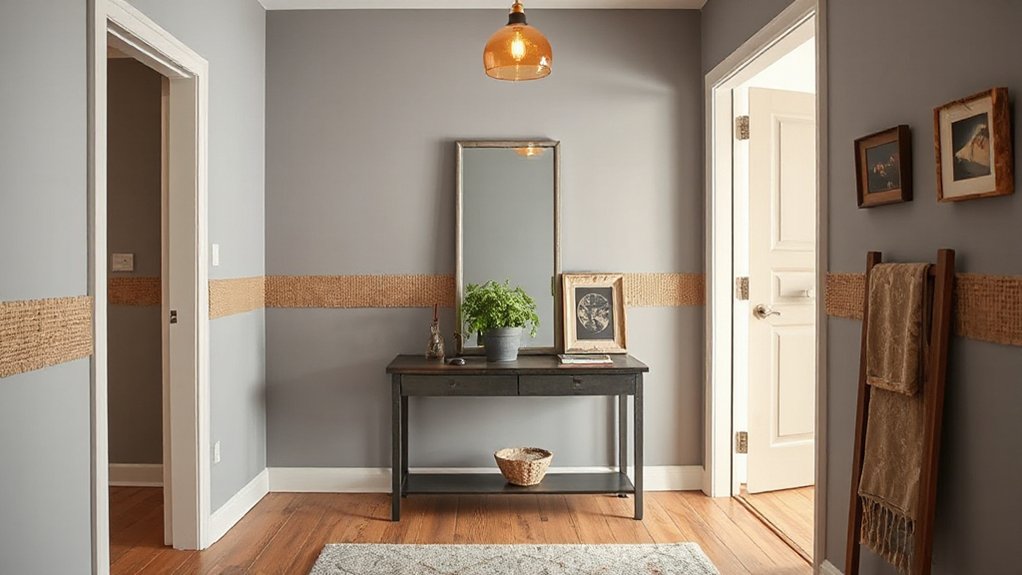
You can transform your hallway with repurposed furniture finds, turning old pieces into practical statement accents.
Add character with recycled material accents that blend texture and sustainability, from rugs to wall decor.
Finish with upcycled lighting solutions that save energy while keeping the space bright and welcoming.
Repurposed Furniture Finds
Repurposed furniture can transform a hallway without breaking the bank, and it’s gentler on the environment too. You’ll see that vintage finds bring character, while furniture repurposing adds practicality without waste. Use these steps to feel connected to the space:
1) Seek balanced silhouettes from thrift shops that echo your style.
2) Sand, paint, or stain to unify hues with lighting and accessories.
3) Add a refurbished console or bench to create functional personality.
4) Pair with simple hardware upgrades for instant polish.
Recycled Material Accents
Look for vintage signage repurposed as wall art or framed panels made from reclaimed wood, which adds warmth and history. Artistic murals crafted from salvaged materials can bring bold texture without a big price tag, especially if you DIY with stencils and leftover paints.
Keep layouts clean: one focal piece, then complementary textures in small doses. Seal surfaces to prolong life and control upkeep.
Mix metals, brick fragments, or tile shards sparingly to avoid visual overload. By prioritizing quality over quantity, you create a cohesive sense of belonging while supporting recycled-material strategies.
Upcycled Lighting Solutions
Upcycled lighting can dramatically cut costs while keeping your hallway bright and stylish. You’ll feel part of a smarter, greener home as you repurpose items and reveal character in every corner. Here’s how to approach it:
- Source vintage bulbs for warm, nostalgic glow that invites connection.
- Choose Upcycled fixtures from thrift stores or DIY builds to add texture without waste.
- Pair dimmable LEDs with repurposed shades for energy efficiency and mood control.
- Label and wire safely, honoring craftsmanship while keeping code compliance intact.
With intention, your space gains personality and cohesion. Vintage bulbs offer timeless charm, while Upcycled fixtures demonstrate practicality without compromising taste.
This approach fosters belonging, proves style can be sustainable, and proves affordable design is within reach.
Greenery Without Clutter: Freshen Up the Hallway
Greenery can refresh the hallway without turning it into a plant jungle. You’ll keep it calm and purposeful by choosing a few well-placed indoor plants that thrive in low light and don’t require constant attention.
Aim for a cohesive look: pair glossy leaves with matte surfaces, and vary heights to create visual interest without clutter. Use decorative vases as strategic accents—place one tall slender vase on a console, another with a single stem by the doorway, and rotate seasonal blooms to keep things fresh.
Protect floors with low-profile planters and consider humidity-friendly species to reduce maintenance. This approach invites everyone to feel welcome, involved, and confident in a smarter, lighter space.
Elevate With Warm Metallic Accents
Warm metallic accents add warmth and polish without breaking the budget. Start with small, high-impact pieces—hardware, mirrors, and light fixtures—that reflect light and elevate your hallway’s look.
Pair these with a restrained palette to keep the shine cohesive and budget-friendly.
Warm Metallic Accents
To elevate a hallway on a budget, incorporate warm metallic accents that catch the eye without overwhelming the space. You’ll add depth with metallic accessories and decorative finishes that feel inviting, not flashy.
- Choose brass or copper-toned pieces as focal points to create warmth.
- Mix matte and polished finishes for texture and depth.
- Place a single statement item at eye level to guide the gaze.
- Balance shine with soft neutrals to preserve harmony and belonging.
These steps make your hallway feel curated yet approachable, so you’ll sense comfort as soon as you walk in.
Prioritize quality over quantity and replace clutter with purpose. The result is cohesive, welcoming, and distinctly yours.
Budget-Friendly Shine
You can elevate a hallway’s shine without blowing your budget by leaning into warm metallic accents that feel curated, not showroom-perfect. To keep things approachable, choose a few dependable pieces—a brass console lamp, copper hooks, or a brushed-nickel mirror—that echo your existing tones.
Balance shine with matte surfaces so the space still feels calm and welcoming. Use color psychology: warm metals pair well with soft neutrals to invite comfort, while small pops of amber or rose gold can energize without overwhelming.
Apply Feng shui principles by placing a reflective surface opposite the door to invite light and flow. Keep arrangements uncluttered; let the metallics breathe.
This practical approach creates belonging through cohesive, thoughtful detailing that elevates without shouting.
Subtle Rug and Lighting C Cues to Zone the Hallway
A subtle rug and carefully placed lighting cues can visually zone a hallway without clutter or costly renovations. You’ll guide the eye with color contrast and pattern layering, yielding a welcoming, cohesive travel through your space.
- Choose a runner with a contrasting edge to define lanes and invite movement.
- Layer light sources (overhead, wall sconces, floor lamps) to create depth and mood.
- Pair a bold, small-scale pattern with a solid field to anchor color without overwhelm.
- Place mirrors or reflective surfaces to bounce light and visually expand the corridor.
This approach feels intentional and homey, giving you belonging through thoughtful detailing. Remember, subtle shifts—soft glow, controlled contrast—transform the hallway into a curated route rather than a pass-through.
Frame the Space: Doorway and Trim Treatments
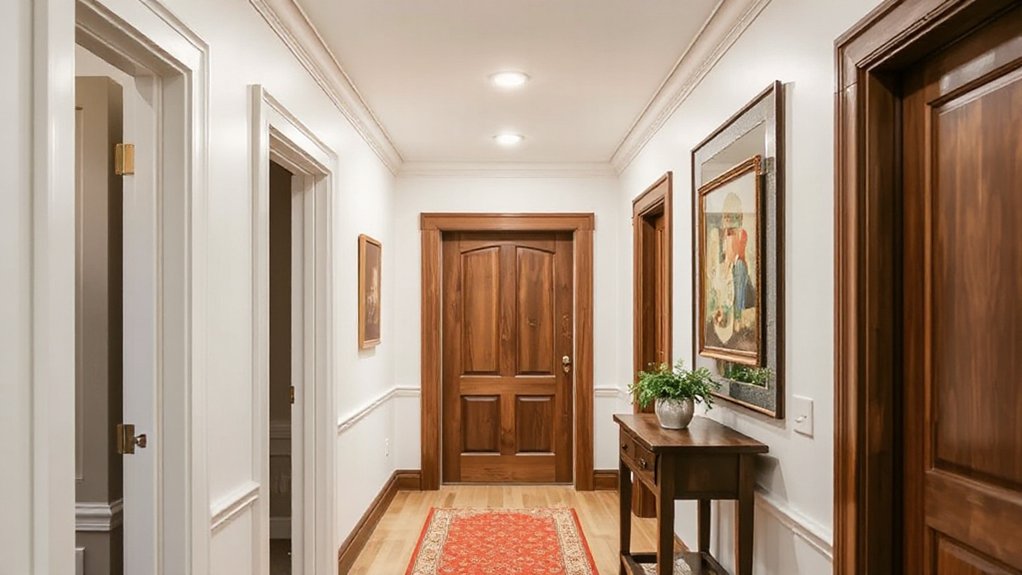
Doorways and trim aren’t afterthoughts; they’re the framing that defines the hallway’s character. You shape perception with smart doorway enhancements that echo your style: a simple arch, flat casing, or a bold contrasting trim that ties rooms together.
Keep lines clean and proportional to the hall’s width to avoid crowding. For trim treatments, choose materials and profiles that balance cost and impact—painted flat stock for a contemporary feel, or a recessed bead for soft texture.
Use consistent casing around doors to unify the space, and consider subtle, budget-friendly upgrades like rounded corners or a cohesive paint color beyond the walls. These choices create cohesion, invite connection, and quietly elevate the entire corridor.
Maintenance Hacks for Longevity and Easy Upkeep
Maintaining that stylish hallway doesn’t have to be complicated or costly. You’ll protect your space with simple routines that fit real life, not perfection.
- Establish daily cleaning routines: quick swipe, dust, and wipe high-touch surfaces to deter grime buildup.
- Create seasonal maintenance checks: inspect lighting, seals, and flooring edges as weather shifts.
- Tackle spills immediately: blot, don’t scrub, to prevent stains and preserve finish.
- Schedule quarterly refreshes: rotate decor, test humidity, and tighten hardware for longevity.
These habits foster belonging by keeping your entry calm and welcoming.
Consistency beats effort, so keep a small, visible checklist. Use affordable, durable materials and standard cleaners to simplify upkeep.
Involve family or roommates in the routine, reinforcing shared space pride. You’ll enjoy a hallway that stays neat, resilient, and stylish with minimal time and expense.
Before and After: Track Your Hallway Transformation Metrics
To measure impact and keep momentum, start tracking clear, simple metrics as you transform your hallway. You’ll compare mood, function, and flow with before-and-after notes, photos, and quick surveys.
Track hallway color ideas, noting which shades feel cohesive with your entryway storage goals and overall home vibe.
Measure practicality by storage changes: how much clutter disappears, how easily you access essentials, and whether new hooks or bins stay organized.
Time saved in daily routines matters too—document seconds shaved off chores or setup.
Use a simple checklist for each stage: plan, implement, review. Share results with your household so everyone feels involved.
The data you collect confirms progress, reinforces belonging, and guides smarter tweaks without waste.
Frequently Asked Questions
How Can I Measure Return on a Hallway Makeover?
You measure ROI by tracking increased home value, faster sale offers, and your daily satisfaction. Compare pre- and post-makeover costs, then weigh design principles and lighting options against your budget. You’ll see tangible benefits, plus stronger belonging.
What Budget Pitfalls Should I Avoid Mid-Project?
Cut costs now by avoiding scope creep, prioritizing must-haves over luxuries, and tracking every penny so you stay on budget. Cost effective materials and DIY decoration tips help you finish confidently, with belonging and purposeful, budget-smart progress.
Are Temporary Solutions Worth It for Hallways?
Temporary solutions can work short-term, but consider hallway durability for long-lasting results; you’ll gain confidence, belong, and avoid repeated fixes. Use affordable, sturdy materials, plan quick upgrades, and monitor wear to extend life without sacrificing style.
How Often Should I Refresh Hallway Decor?
You should refresh hallway decor every 6–12 months to keep it fresh and cohesive. Rotate wall art and swap lighting fixtures seasonally, so you feel connected. This practical update helps you belong and enjoy a balanced, welcoming space.
Can Rental Homes Achieve This on a Tight Budget?
A hypothetical renter finds success by using removable wallpaper and temporary decor; you can too. Rental restrictions matter, but with careful planning you’ll transform the hallway without damage. Choose removable decor, coordinate colors, and keep it budget-friendly.
Conclusion
You’ve got a clear plan and smart savings on your side. Stick to the budget, but don’t skip the punch of color, texture, and lighting—these elevate a hallway fast. Use trays, hooks, and slim storage to keep clutter tucked away. Mix durable materials with easy-care textiles for longevity. Track every change so you see progress, not expense. Keep it simple, you’ll be amazed at how a few thoughtful tweaks can change the whole vibe—like hitting two birds with one stone. Worth it.