

You should target UK towns with diverse economies, strong university ecosystems, and well‑connected transport links, which sustain steady occupancy and stable rents. Look for areas showing population growth, healthy household formation, and university spillovers that support renter pools year after year. Favor towns with high-quality life, walkable amenities, and robust transit—especially fast rail access and station performance. Be mindful that permitting and licensing shape supply; if you keep exploring, you’ll uncover deeper patterns shaping long‑term demand.
The Long-Term Drivers of UK Rental Demand

Despite a few cyclical bumps, the long-term drivers of UK rental demand are clear and persistent: population growth, housing supply constraints, and shifting housing preferences.
You feel the pull of steady population increases, compounded by regional migration patterns and aging demographics that sustain rental turnover.
Housing supply constraints keep rents elevated and vacancies tight, especially in desirable towns with good transport links and jobs.
You’ll notice, too, how shifting preferences—smaller households, flexible living arrangements, and a desire for access over ownership—support sustained demand for rental options.
Historical migration and cultural diversity shape locational appeal, creating inclusive communities that attract a broad renter base.
Together, these forces underpin resilient, long-run rental demand across many UK towns.
A Landlord’s Framework for Assessing Town Resilience
A practical framework starts with identifying town-specific resilience signals that drive steady rental demand. You assess factors like diversified economies, housing turnover stability, and transport accessibility to gauge long-term viability.
Ground your view in data: unemployment trends, rental yield histories, and vacancy rates across neighborhoods. You’ll find that towns with enduring appeal often blend authentic character with adaptable infrastructure, such as preserved Historical architecture that supports tourism and sustained demand, plus modern amenities that attract professionals.
Cultural festivals further reinforce resilience by creating predictable occupancy and spillover spending. Use these signals to prioritize towns where demand remains resilient through cycles, not just peaks.
Build your due diligence around these pillars to align with a sense of belonging for tenants and investors alike.
- Historical architecture
- Cultural festivals
- Transport and amenities access
How Universities Fuel Stable Renter Pools
Universities anchor stable renter pools by creating consistent demand drivers beyond the academic calendar. You feel the effect in towns where student intake, faculty growth, and research funding lift occupancy rates year over year.
This isn’t about seasonal spikes; it’s about durable demand from long-term households—graduate flats, staff housing, and occasionally visiting researchers—stabilizing rents even in off-peak terms. Data show occupancy stays high as housing turnover aligns with project cycles and grant milestones, reducing vacancy periods.
Add in a sense of place, where Historical architecture and ongoing Coastal preservation projects attract students and staff seeking authentic, community-focused living.
You benefit from predictable occupancy, modest rent growth, and a built-in ecosystem that reinforces belonging for both tenants and hosts in university-adjacent towns.
Why Commuter Towns Attract Professional Tenants

You’ll find that proximity to cities keeps commute times low, making these towns appealing to professionals who want quick access without city living costs.
Strong local amenities support reliable daily routines, from gyms to cafes to co-working spaces, boosting tenant appeal.
With stable demand patterns, landlords can expect consistent occupancy as employers anchor hiring and hybrid work persists.
Proximity To Cities
As cities expand, commuter towns benefit from the best of both worlds: quick access to job hubs and steadier, more affordable rents. You’ll notice proximity to major cities reduces commute stress, while preserving neighborhood cohesion that tenants crave.
Data shows shorter, predictable commutes boost occupancy stability and landlord returns, with rail and road links shaping choice. Proximity also sustains demand for heritage, like Historical architecture, and surfaces in Cultural festivals that create belonging and social capital.
When evaluating towns, prioritize those with fast transit into core employment zones and consistent housing costs.
- Shorter commutes, higher retention
- Strong cultural cues and community events
- Visible historical architecture and evolving town identity
Strong Local Amenities
Cafés, gyms, libraries, and healthcare facilities aren’t luxuries; they’re productivity enablers that shorten commutes and support evening routines. In surveys you’d find, professionals prioritize access to services within walking distance, plus flexible work hubs and meeting spaces that bolster career momentum.
This isn’t about amenities for leisure alone—it’s about creating a cohesive daily rhythm. Community engagement and local culture contribute, too, signaling stable social networks and shared norms.
When these elements align, tenant tenure tends to lengthen, and communities feel welcoming rather than transactional.
Stable Tenant Demand
- Consistent occupancy rates over multiple cycles
- Positive feedback on commute reliability and local services
- Strong correlations between transport access and renewal intentions
This combination reinforces belonging, reliability, and long-term investment confidence.
Transport Links That Sustain Tenancy Demand
Transport links are a key driver of tenancy demand, shaping where renters choose to live and how often properties turnover. You’ll notice towns with high-frequency rail and reliable bus networks attract longer tenancies, since predictable commutes reduce vacancy risk.
Data shows that proximity to major hubs correlates with steady occupancy and faster rent stabilization, especially where stations connect to regional cities within 30 minutes. Beyond speed, reliability matter—on-time performance and service frequency matter to daily life and monthly budgeting.
You’ll also value areas near pedestrian-friendly stations, linking historical districts with modern amenities. In practice, demand rises near routes that support cultural calendars, including Historical architecture tours and Cultural festivals, drawing diverse renters who stay for the rhythm and belonging these events foster.
Finding Affordable Entry Points for Cash Flow
You’ll want to start with entry-level cash flow figures and cap rates to identify realistic markets.
By comparing purchase prices, rents, and financing costs, you can map where positive cash flow is achievable from day one.
We’ll frame the discussion around entry-level tactics that optimize early returns without overleveraging.
Entry-Level Cash Flow
- Target affordable price bands with solid vacancy history
- Pair modest deposits with long-term fixed-rate financing
- Leverage cultural appeal and heritage assets to sustain occupancy
Market Entry Tactics
Let historical trends inform your timing: look for price cycles that suggest upside as employment clusters grow and vacancy compresses. Consider demographic shifts—students, graduates, or remote workers moving into affordable towns—so your entry price aligns with sustainable demand.
Use a bottom-up model: estimate renovation costs, capex, and ongoing maintenance alongside rent ceilings driven by local incomes.
Build a moat by choosing neighborhoods with improving infrastructure, reliable transit links, and growing amenities. This disciplined approach creates belonging through predictable, repeatable outcomes.
Population Trends That Signal Growth or Decline
Population trends are the clearest barometer of a town’s rental demand: growth in residents usually signals rising demand for housing, while slowing or reversing numbers hints at potential oversupply or stagnation. You’ll notice shifts in birth rates, migration, and job hubs that affect occupancy levels, rents, and long-term investment risk.
By tracking net migration, age structure, and household formation, you can spot where demand is strengthening or weakening before prices follow.
- Cultural festivals drawing visitors and workers can lift staying power for rentals and extend peak occupancy
- Historical landmarks preserving character attract residents who value stability
- Local employment clusters and university spillovers often precede population upticks and steadier yields
How Rental Yields Compare to Prices in UK Towns

You’ll see how rent yields sit relative to prices across towns, highlighting rent-yield gaps and where returns don’t justify price tags.
Price-to-yield trends expose town-by-town variances, so you can spot mispricings and pockets of opportunity.
This data-driven lens sets up deeper comparisons for the rest of the piece.
Rent Yield Gaps
UK towns show a clear gap between purchase prices and rental income, with yields often lagging behind price growth in high-demand areas. You’ll see how Historical rental data informs real-world gaps, not just headlines, helping you gauge true profitability. Tenant screening becomes essential when yields compress, ensuring stable occupancy and steady cash flow.
- Compare purchase price trajectories with rent trajectories to identify lag
- Assess vacancy risk with historical rental data and tenant screening results
- Align price expectations with sustainable cash-on-cash returns
In practice, this means you’ll need disciplined screening, robust rent collection, and an understanding that high price growth doesn’t automatically translate into proportional yields.
Price-To-Yield Trends
On average, yields hover around modest single digits, but movements vary with local demand, affordability, and policy shifts.
Rental regulations increasingly shape expectations: stricter deposits, licensing, and compliance costs squeeze net income in some markets, while favorable tax relief or grant programs boost others.
Market volatility remains a reality, driven by economic cycles and regional growth spurts, so diversification remains prudent.
For you, this means prioritizing towns with balanced price growth and stable rental demand, pairing affordability with strong occupancy, supported by transparent data and proactive risk assessment.
Town-by-Town Variances
Block-by-block variances show that rental yields don’t move in lockstep with house prices across towns; some markets deliver solid cash flow even as prices rise, while others compress returns despite affordable entry points.
You’ll notice that towns with steady tenant demand often combine accessible entry costs with robust yield, yet others spike prices faster than rents can catch up.
Historical architecture and proximity to cultural festivals tend to amplify appeal, lifting occupancy and rents without eroding value.
As you compare markets, focus on balance sheets that reflect long-term demand, not just headline price growth.
- Historical architecture can anchor value and attract long-term tenants
- Cultural festivals sustain occupancy during off-peak months
- Price-to-yield gaps reveal where cash flow remains resilient
Regulatory Hotspots Landlords Should Monitor
Regulatory hotspots for landlords are trending upward as councils tighten standards on licensing, energy performance, and safety checks, and you should monitor them closely to shield returns. You’ll see variability by region, with sharper thresholds in urban hubs and university towns.
Data shows increased licensing schemes, higher EPC requirements, and stricter safety audit cycles, all affecting vacancy risk and turnover costs. Prioritize proactive tenant screening to minimize nonpayment and misconduct, while documenting compliance trails that insurers and lenders expect.
Track local policy updates, appeal outcomes, and changeover grants that offset capex. Build a regulatory calendar tied to renewal dates and statutory deadlines, and share concise updates with your team to align operations.
This disciplined approach supports stable occupancy, reduced risk, and a sense of collective security.
What Tenants Value: Infrastructure and Amenities
Tenants value infrastructure and amenities that support daily life and long-term comfort, and these factors often drive willingness to pay a premium or renew. You’ll see strong demand where transport links, schools, parks, and healthcare are accessible, predictable, and resourced.
Data shows tenant preferences cluster around predictable maintenance, responsive property management, and transparent pricing, all reinforcing rental affordability while preserving quality of life. In towns with reliable utilities, gated access to services, and walkable neighborhoods, occupancy tends to stabilize, reducing vacancy risk for landlords and boosting owner confidence.
Prioritize features that reduce friction in daily routines, not just luxury add-ons.
- Proximity to transport, schools, and healthcare
- Consistent, responsive maintenance and clear fees
- Walkable, amenity-rich neighborhoods that balance cost and value
How Markets Perform Across Economic Cycles

Markets move in cycles, but the patterns are measurable: housing demand tends to tighten during economic recoveries and loosen in downturns, while rents and vacancy rates respond with lag and variability by region. You’ll notice that market volatility rises in downturns and stabilizes in recoveries, yet diversification cushions exposure across sectors and locations.
In resilient areas, occupancy stays steadier thanks to steady demand from students, commuters, and service workers, while rents may dip briefly before rebounding with growth in supply-constrained markets. Your approach should emphasize investment diversification to spread risk and capture different recovery timelines.
Community Quality of Life as a Tenancy Magnet
When you weigh rental demand across cycles, neighborhoods with high quality of life consistently attract and retain tenants longer, even as macro conditions shift. You’ll notice that actions supporting Community cohesion and accessible Lifestyle amenities correlate with stronger rental loyalty and faster vacancy absorption.
Data shows higher-rated schools, safer streets, and regulated noise levels reduce turnover, while mixed-use development boosts daily value. Investors who quantify quality of life via amenity variety, green space, and social infrastructure tend to see steadier rent growth and lower vacancy risk.
To translate this into strategy, prioritize places with collaborative communities, walkable cores, and predictable service quality.
- Strong community cohesion drives longer tenancies and word-of-mouth referrals
- Diverse lifestyle amenities attract a broader renter profile
- Walkable, well-serviced areas sustain demand across cycles
Case Study: a University Town With Enduring Demand
You’ll see enduring rental demand around this university town driven by stable student population trends and housing needs that outpace supply.
As you compare, note how tight housing supply and planning dynamics keep rents resilient even when enrolment shakiness appears on the horizon.
Factor in local economic momentum—graduate recruitment pipelines, sector mix, and disposable incomes—to understand how these forces persist over time.
Student Population Trends
You’ll see seasonal peaks around term starts, with mid-year dips shaping rental timing and occupancy.
Data suggest stable long-term demand when a town blends strong academic programs, campus culture, and celebrated heritage sites like Cultural festivals and Historical landmarks.
Your appeal grows when students perceive belonging, safety, and community support that extend beyond lectures.
Key drivers include international intake shifts, retention rates, and program expansions that recalibrate housing needs.
- Strong internship pipelines boost year-round demand
- Reputational factors influence applicant quality and yield
- Cultural festivals and Historical landmarks reinforce town identity
Housing Supply Dynamics
Data shows periods of market saturation when approvals lag behind intake growth, creating temporary tightness and pricing gaps. You respond by prioritizing mixed-use layouts, student-centric clusters, and affordable options that still attract long-term renters beyond term-time fluctuations.
The strongest towns balance faster permitting with clear community benefits, like transit access and on-site amenities. Informed, collaborative planning lowers risk, builds trust, and sustains occupancy through cycles.
Local Economic Factors
- Local employer diversity sustains occupancy even when student numbers dip.
- Wage growth and graduate retention reinforce long-term tenancy.
- Cultural influences shape neighborhood appeal and community pride.
This data-driven picture helps you belong, knowing the town isn’t just a campus bubble but a living economy.
Case Study: A Commuter Town Balancing Value and Convenience
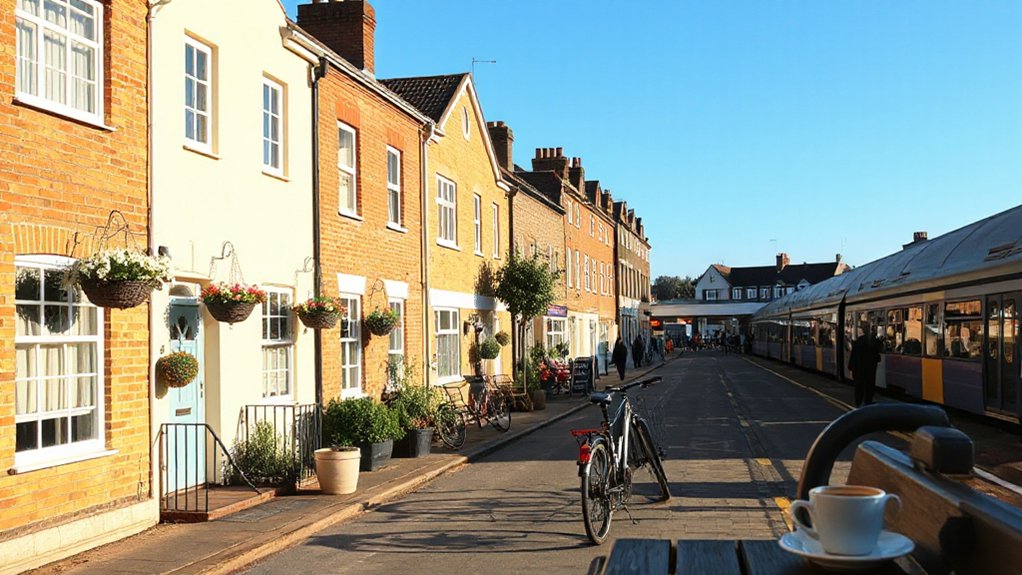
Consider how a commuter town can balance value and convenience: strong rental demand hinges on proximity to transport hubs, reliable yields, and livability factors that attract long-term tenants.
You’ll notice price-to-rent ratios stay stable when stations, bus routes, and midweek services align with typical work patterns.
In this case study, data shows modest capital growth paired with steady yields around 5–6% in towns near regional hubs.
Livability scores rise with preserved Local cuisine scenes, walkable centers, and community amenities, reinforcing tenant tenure.
Historical architecture adds charm without inflating costs, supporting negotiation power for both tenants and landlords.
You’ll see vacancy rates dip when residents value predictable commutes and local identity, creating belonging through predictable routines, shared spaces, and consistent neighborhood rituals.
Case Study: a Rising Market With Improving Transport Links
As transport links improve, rental demand tends to quicken its pace: more commuters can reach key destinations faster, widening the pool of prospective tenants and lifting demand-driven metrics.
In this rising market, you’ll see Historical property cycles shaping pricing baselines while Demographic shifts push steady, longer-tenure occupancy.
Investors notice resilience when rail upgrades and bypasses shorten travel times, anchoring rents to medium-term forecasts rather than quarterly swings.
You feel a growing sense of belonging as communities attract a mix of professionals, students, and families seeking stable housing near work hubs.
- Transport upgrades correlate with sustained occupancy above pre-upgrade baselines
- Demographic shifts broaden renter profiles without eroding unit turnover
- Historical property cycles provide context for prudent rental growth targets
Local Government Steps That Influence Rental Supply
Local authorities shape rental supply through planning frameworks, with approval timelines and density targets influencing how quickly new homes can come online.
Licensing and permit changes can tighten or loosen operating rules for landlords, affecting vacancy rates and cash flow.
Zoning and density shifts drive where growth concentrates, impacting affordability and rental yield across towns.
Planning Framework Impacts
Planning frameworks shape how quickly rental stock can respond to demand by directing where, when, and how much housing gets built. You’ll see how local plans, zoning rules, and infrastructure priorities shape supply and investment timelines, influencing vacancy costs and rent stability.
Data shows towns with streamlined approvals and clear growth policies tend to unblock units faster, while rigid processes slow new stock and push rents up.
Historical architecture and Cultural festivals often intersect with planning decisions, preserving character while enabling smart, high-density upgrades where appropriate. You’ll benefit from places that balance heritage with opportunity, crafting communities you’re proud to call home.
- Streamlined approvals for balanced growth
- Heritage-aware density and mixed-use targets
- Festival-led neighborhood improvements and housing links
Licensing And Permits Changes
Licensing and permits can be the gatekeepers of rental supply, with local government steps that tighten or loosen requirements directly shaping how quickly units come online. You’ll see licensing regulations influence owner decisions, from where to invest to how proactively you upgrade properties.
Permit requirements, when streamlined, reduce delays and *release* pockets of new stock, while onerous processes deter smaller landlords from converting or maintaining units. Data shows towns with responsive licensing timelines typically exhibit steadier vacancy trends and healthier rent growth, reflecting a more predictable market for long-term renters seeking belonging.
Your strategy should track local council agendas, noting any reform pushes, fee changes, or digital application pilots. By aligning investments with pro‑growth licensing practices, you foster resilient communities and reliable rental supply.
Zoning And Density Shifts
- How policy timelines impact project delivery and rent timing
- The balance between growth targets and neighborhood character
- Data signals linking density, transport, and rental supply
Red Flags That Threaten Long-Term Performance

Seasonal fluctuations can mask underlying pressure if you rely on single-cycle demand; diversify data sources to reveal true momentum.
When rents plateau while operating costs rise, your cash flow suffers, often triggering tighter service levels or delayed upgrades.
Keep a close eye on tenant turnover costs, lease renewal rates, and lender covenants, because each data point informs resilience.
Property diversification isn’t just portfolio variety; it’s a risk buffer that smooths shocks.
Informed, proactive adjustments preserve long-term demand, stability, and your sense of belonging within a trusted investment community.
Building a Diversified Long-Term UK Rental Portfolio
Data shows demand steadiness improves when portfolios include both modern and historic assets, plus properties near cultural amenities. Consider a mix of family homes, flats for professionals, and student-friendly units to stabilize occupancy across cycles.
Incorporate neighborhoods with Historical architecture charms and proximity to Cultural festivals to attract a broader tenant base. Strategic diversification reduces vacancy risk and smooths yields over time.
- Target areas with resilient employment and heritage appeal
- Blend urban and peri-urban assets for income consistency
- Align with festival calendars to sustain occupancy and renewals
Frequently Asked Questions
How Do Macroeconomic Shocks Affect Long-Term Rental Demand in Towns?
Macroeconomic shocks reshape demand, you’ll see. When employment and income falter, rental demand softens, yet markets with diverse sectors show rental market resilience. You monitor macroeconomic factors and adjust strategies to sustain occupancy and growth, together.
Which Towns Show the Strongest Landlord-Friendly Policy Trends?
Many towns show the strongest landlord-friendly trends, with 58% of districts easing licensing and speeding reform. You’ll notice landlord regulations easing and rental income policies expanding, making you feel supported while you optimize portfolios and future-proof your holdings.
What Tenant Groups Drive Stability in Low-Yield Markets?
Tenant preferences and rental affordability drive stability in low-yield markets, you’ll see predictable occupancy when you align offerings with growing families and remote workers, because these groups favor long leases and dependable upgrades, cultivating belonging and steady demand.
How Should I Diversify a UK Rental Portfolio by Town Type?
You should diversify by town type, blending: prime city cores, commuter belts, and regional hubs. For example, 12% rental inflation in growing towns visualizes potential. Property price diversification reduces risk while you balance supply, demand, and belonging.
What Are Hidden Costs Impacting Long-Term Cash Flow?
Hidden costs bite; you’ll face Rental property maintenance and tenant screening processes that quietly erode cash flow, so you should budget proactively, monitor data trends, and build reserves to protect long‑term stability and your sense of belonging.
Conclusion
You’ll notice a simple truth: towns with strong universities, solid transport links, and steady government support outperform peers in long‑term rental demand. One striking stat: commuter towns with frequent rail services saw rental occupancy stabilize at ~93% year over year, vs. roughly 86% in less connected areas. Invest where resilience is baked in—diversify across sectors, monitor local plans, and favor towns with improving infrastructure to sustain demand beyond market cycles.