
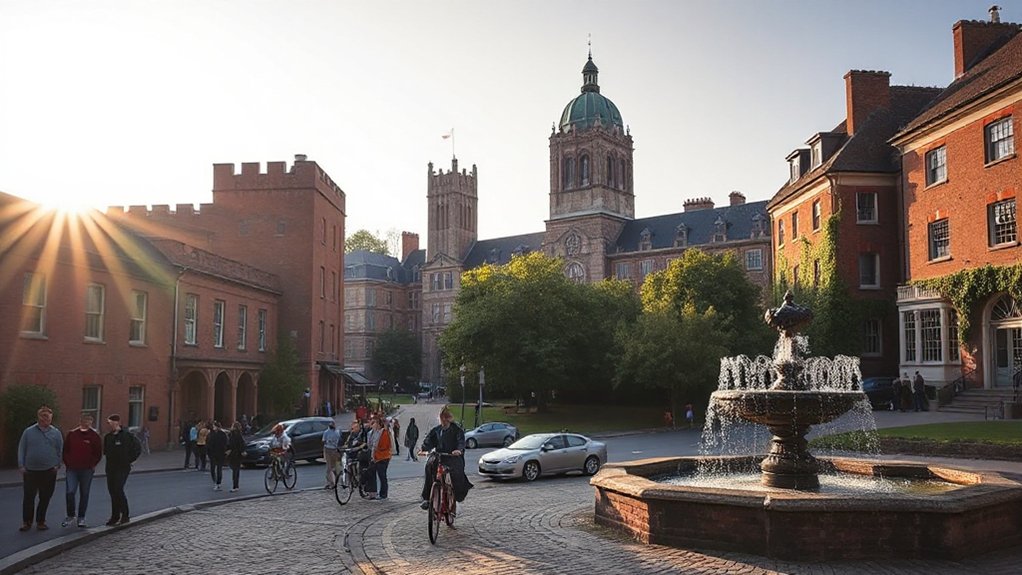
Durham stays a strong university town by tightly coupling research, industry, and public initiatives into data-driven programs that turn discoveries into market-ready solutions. You see collaborations across campus labs, startups, clinics, and civic tech, guided by shared metrics and governance. Culture, housing, and transit are aligned to attract top talent and retain students, while walkable, mixed-use design preserves human-scale appeal. If you keep exploring, you’ll uncover how these elements advance local job growth and inclusion.
Why Durham Is a Hub for University-Town Innovation
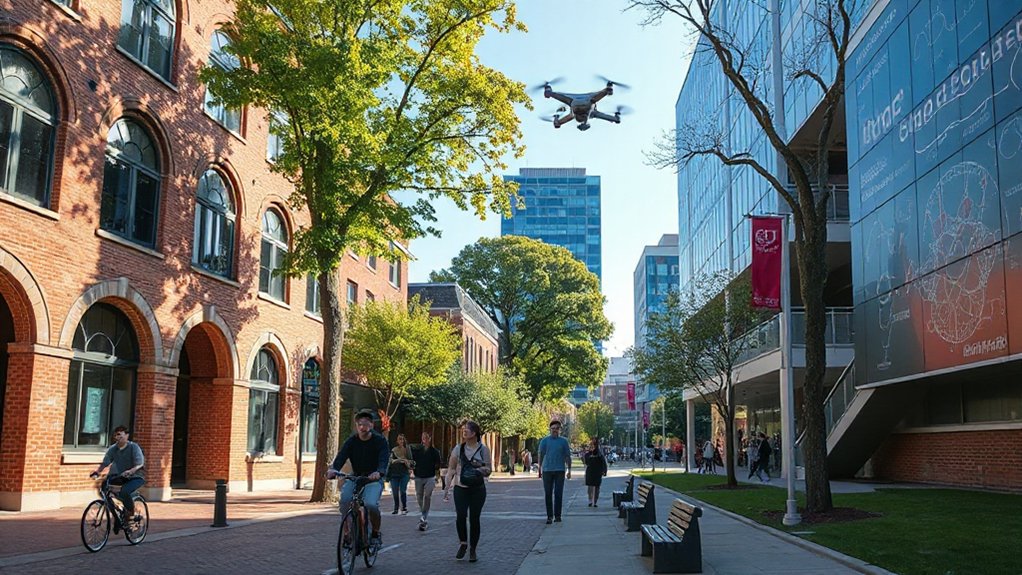
Durham’s status as a hub for university-town innovation stems from a tight alignment between its research institutions, industry partners, and public initiatives. You engage through data-driven programs that translate discoveries into market-ready solutions, with measurable impact on local jobs and infrastructure.
Innovative partnerships link campus labs to startups, clinics, and civic tech, accelerating translation timelines and reducing risk for collaborators. You’ll notice cross-sector governance that coordinates funding, performance metrics, and equity goals, ensuring inclusive access to opportunities.
Cultural diversity informs project design, customer insights, and problem framing, boosting relevance and adoption rates across communities. You experience a transparent pipeline: pilot projects, shared facilities, and fast-tracked procurement that keep initiatives iterative, accountable, and scalable while sustaining a sense of belonging.
How Culture and Community Attract Top Talent to Durham
A thriving cultural ecosystem, coupled with a cohesive community, attracts top talent to Durham by signaling a high quality of life, strong professional networks, and active support for growth.
- Cultural festivals drive cross-sector collaboration, showcase local expertise, and attract researchers and engineers seeking creative environments.
- Community engagement translates data into action, ensuring newcomers find mentoring, volunteering, and civic channels that accelerate belonging and impact.
- Coordinated events and shared spaces sustain a feedback loop, linking academic partners, startups, and cultural institutions to reduce onboarding time for new hires and their families.
This approach yields measurable outcomes in retention, churn reduction, and productivity, while preserving Durham’s emphasis on belonging and rigorous, evidence-based planning.
Affordability and Access: Keeping Students and Locals Engaged
Affordability and access are critical levers for keeping students and locals engaged in Durham’s university ecosystem. You see that affordable housing options correlate with retention and local workforce stability, reducing commute times and housing stress for students.
Data show price growth outpacing income gains in surrounding neighborhoods, underscoring needs for inclusive housing policies and targeted subsidies. You’ll benefit from transparent public transportation routing and fare structures that shorten travel times between campuses, housing clusters, and employment hubs, expanding access to internships and service roles.
When housing and transit are reliably affordable, you strengthen belonging and reduce residency barriers for first‑generation and international students. Prioritizing inclusive pricing, streamlined enrollment support, and measured transit investments sustains a connected, resilient campus‑city ecosystem.
Campus-City Collaboration: Startups, Research, and Local Services
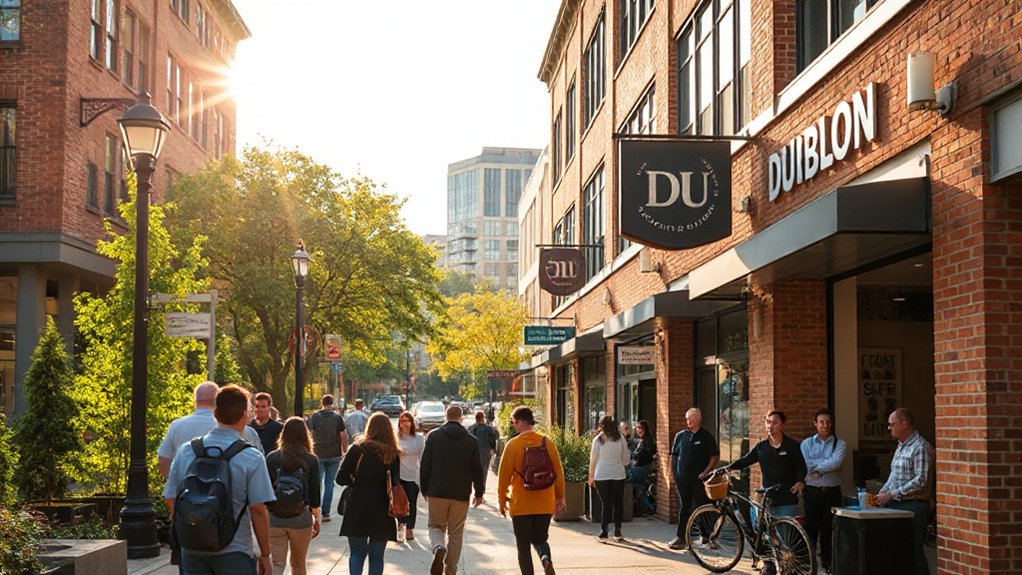
Campus–city collaboration accelerates the flow of ideas from labs and startups into local services and employment. You’ll see structured partnerships converting research into market-ready solutions that strengthen urban infrastructure and public benefits, while ensuring inclusive access and steady local job growth.
- Unified pilots align university capabilities with municipal needs, benchmarking outcomes across urban infrastructure improvements and ongoing maintenance.
- Co-located research hubs pair engineers, designers, and planners with firms to rapidly deploy scalable services, including green spaces optimization and resilience enhancements.
- Data-driven governance harnesses shared metrics to measure impact on neighborhoods, student life, and local employment, validating long-term value for residents and businesses alike.
Sustaining Durham’s Human-Scale Appeal for Universities
Sustaining Durham’s human-scale appeal hinges on deliberate design choices that preserve walkability, accessible public spaces, and a vibrant local economy while scaling research and student activity. You monitor the balance between dense campus cores and surrounding neighborhoods, ensuring pedestrian networks prioritize safety, speed, and wayfinding.
Data show that mixed-use blocks sustain on-foot transit to classrooms, libraries, and cafés, fostering consistent student engagement and spontaneous collaboration. Historic preservation acts as a social anchor, preserving character while supporting adaptive reuse that lowers development costs and reduces disruption.
You prioritize inclusive programming, measuring participation across demographics to strengthen belonging. By aligning infrastructure investments with local businesses and cultural venues, you maintain a resilient economy that supports sustained inquiry, retention, and a shared identity among students, faculty, staff, and residents.
Frequently Asked Questions
How Does Durham Support Long-Term Student-Life Beyond Graduation?
Durham supports long-term student life by fostering robust alumni networks and lifelong learning programs, linking graduates to mentoring, career resources, and continuing education. You access data-driven outcomes, engage communities, and belong through sustained, actionable connections beyond graduation.
What Transportation Solutions Best Serve Campus-To-Town Daily Needs?
You’ll optimize daily trips with a Campus shuttle and robust Bike infrastructure, improving reliability and safety; data shows higher rider satisfaction and reduced car trips, fostering belonging as you ride efficiently between campus and town each day.
How Are Local Businesses Adapting to Campus-Driven Demand Cycles?
You see Campus entrepreneurship thriving as students’ spending cues drive seasonal spikes, while Local retail evolution adapts with flexible hours and micro‑units; you’re part of this data‑driven ecosystem, benefiting from predictable demand, networked collaboration, and community belonging.
Which Neighborhoods Are Prioritizing Affordable Housing for Students?
“Where there’s a will, there’s a way.” You prioritize Affordable housing in student neighborhoods, citing zoning data and rental occupancy trends, showing you actively target neighborhoods with affordable housing density and student-ready amenities for belonging.
How Does Durham Measure the Impact of University Partnerships on Residents?
You measure it by community engagement metrics and economic development indicators, tracking resident benefits, collaboration outcomes, and long-term importance. You analyze data on partnerships, quantify spillovers, monitor equitable access, and adjust strategies to strengthen belonging for all Durham residents.
Conclusion
You see it in the numbers: Durham sustains a tight feedback loop between campus and community. You’ll notice rising startup activity, steady research grants, and a living-wage economy that supports students and locals alike. The data show culture and affordability don’t compete here—they coexist, fueling talent retention. So, you stay engaged, you invest in cross-sector partnerships, and you benefit from a human-scale city that quietly scales with universities, not against them. In short, Durham works because it’s grown to fit learning.