
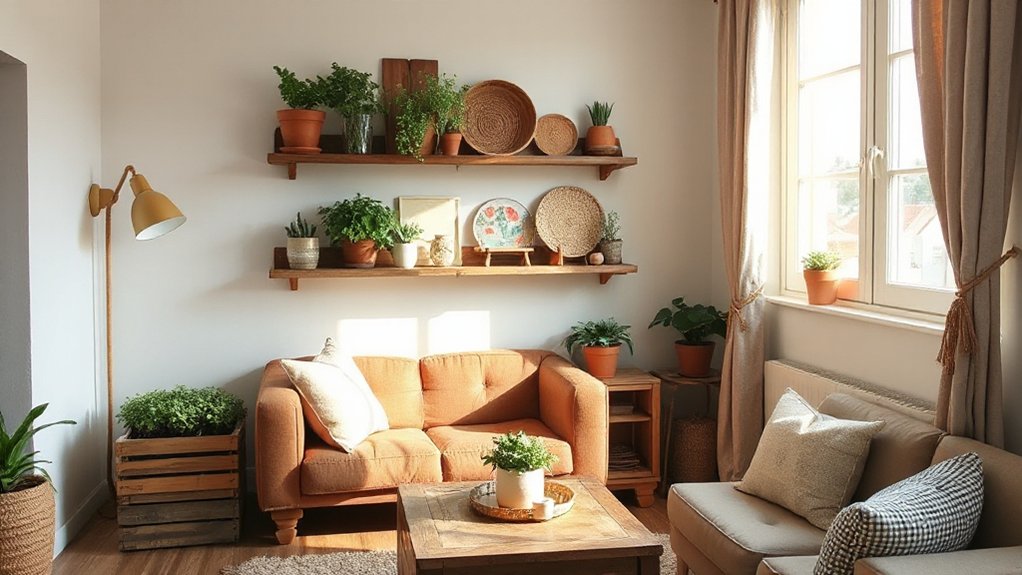
Set a clear budget and goals before you start, then pick only the essentials to avoid impulse buys. Try budget-friendly upcycling—refinish furniture, repurpose jars for organizers, and refresh thrifted decor with paint or fabric. Transform rooms with cohesive paint, simple textures, updated hardware, and layered, affordable lighting. Maximize small spaces with vertical storage and multi-functional furniture. Save long-term by sealing drafts, switching to LEDs, and using programmable thermostats. If you keep exploring, you’ll discover more cost-saving tricks and practical projects.
Set Your Budget and Goals for a Low-Cost DIY Refresh
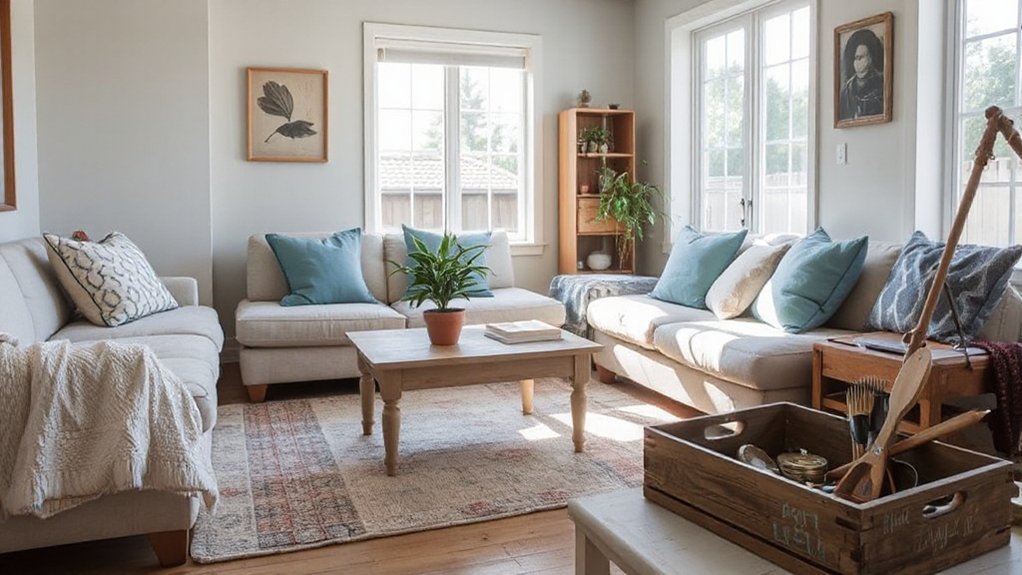
Set a clear budget and concrete goals before you pick up a tool. You’ll start strong by outlining what you can spend and what you want to achieve, not what you wish for someday.
Budget planning helps you prioritize essentials, avoid impulse buys, and measure progress as you go. Define your room’s needs: fresh paint, new hardware, or faster fixes that boost daily comfort. Pair each item with a realistic cost and a deadline to keep yourself accountable.
Then set clear, achievable goals—one tangible improvement at a time—that foster belonging and pride in your space. Keep goals specific: finish a wall, swap fixtures, or declutter areas that feel cramped.
With disciplined budget planning and goal setting, you stay practical, cooperative, and motivated.
Then, Find Budget-Friendly Upcycling Projects That Work
Now that you’ve pinned down a sensible budget and clear goals, it’s time to stretch those dollars with budget-friendly upcycling projects that actually work.
Start with simple Recycling furniture ideas, like sanding worn surfaces and re-staining to refresh color without replacing it.
Use leftover materials to craft organizers from old jars and boxes, turning clutter into usable storage.
Embrace repurposing decor by pairing thrifted finds with fresh fabric or paint to create cohesive accents that feel new without costing a fortune.
Prioritize projects that boost daily living—chair cushions, 桌面 organizers, and wall shelves—so you’ll actually use them.
Keep a running list of low-cost materials, and involve family to share the effort and pride.
Small, smart updates add up to a welcoming home.
Transform Rooms With Budget Painting, Finishes, and Lighting
Color and light can dramatically transform a room without a big budget. You can start with fresh paint in a cohesive color palette, choosing warm neutrals for walls and a bold accent for an affordable focal wall.
For DIY finishing touches, use low-cost textures like faux plaster with simple brushes or sponges to add depth without pricey materials. Swap outdated hardware and switch plates for a quick facelift that costs little but feels new.
When it comes to lighting, layer inexpensive lighting fixtures—ambient ceiling lights, task lamps, and a shelf light—to create mood and function without overhauling wiring.
Maximize Small Spaces With Smart, Inexpensive Storage Hacks
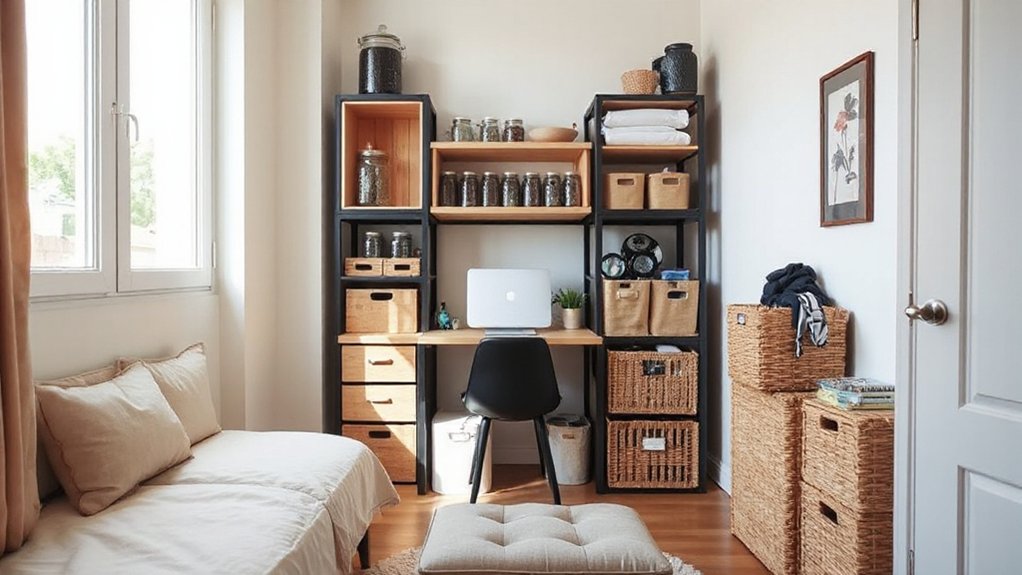
belonging and comfort in your home.
Save Money Over Time With Simple Energy Tweaks
If you want to cut costs without sacrificing comfort, start with small, simple energy tweaks you can do today. You’ll notice energy efficiency isn’t about big changes, it’s about mindful habits and smart upgrades.
Begin by sealing drafts around doors and windows, then switch to LED bulbs to boost cost savings without sacrificing light quality. Use programmable thermostats to curb heating and cooling when you’re out or asleep, and layer clothing or blankets instead of cranking the thermostat.
Unplug idle electronics and solar-charge portable devices when possible. Insulate pipes and doors under sinks to reduce heat loss.
With these practical steps, you build a routine that respects your budget while fostering a sense of belonging through shared, affordable efficiency gains.
Frequently Asked Questions
How Can I Assess Hidden Costs Beyond Materials for DIY Projects?
You should assess hidden costs by budgeting for tools, cleanup, permits, and potential repairs before you start.
Track timelines and labor needs during project planning, so you don’t overrun schedules or inflate costs.
Consider waste disposal, fasteners, and minor equipment replacements, since these add up quickly.
Compare rental versus purchase, and build in a contingency for surprise issues.
What Safety Gear Is Essential for Beginners on a Budget?
You should start with essential safety gear: Personal protective equipment like sturdy gloves, clear eye protection, a dust mask, and hearing protection.
You’ll keep costs down with Budget friendly safety tips, such as choosing reusable PPE, selecting ANSI-rated options, and prioritizing comfort to encourage consistent use.
You’ll feel part of a practical community that looks out for one another, so you stay safer, save money, and finish projects with confidence.
Which Tools Yield the Best Value for Multiple Projects?
Think of this like a Swiss Army knife in your toolbox: you want tool versatility that covers many jobs.
For best value, pick a quality set with a good drill/driver, a cordless impact, a versatile saw, and a few basic bits.
Budget friendly options exist when you buy modular or combo kits.
You’ll save money, time, and effort, and feel you belong in a community that builds smart.
How Can I Prioritize Projects by Impact and Cost?
You’ll prioritize by impact and cost by doing a quick impact assessment and budget planning first.
Identify projects that save the most money or improve safety, then compare up-front costs, maintenance, and durability.
Rank them, tackling high-impact, low-cost wins first.
Track ROI and adjust as prices change.
Involve your household for buy-in, so you feel supported.
This practical approach helps you belong, stay on track, and maximize value with every dollar you spend.
Are There Free or Low-Cost Design Resources and Guides?
Yes, you can find free or low-cost design resources and guides. Look for design inspiration on blogs, YouTube channels, and library databases, plus free printables from home improvement sites.
Start with color schemes that fit your space, then collect ideas that match your budget. Seek printable mood boards, and join local maker or neighborhood groups for feedback.
You’ll feel like you belong as you share insights, compare options, and refine your space with practical, cost-conscious steps.
Conclusion
You’ve set a tight budget, mapped simple goals, and picked up upcycling ideas that actually work. With budget paint, clever finishes, and affordable lighting, you refresh rooms without breaking the bank. Smart storage frees space, while small tweaks trim clutter and boost daily use. Energy tweaks save more over time than you’d expect. Stay practical, lean, and patient—your home gains comfort one affordable step at a time. And yes, even a bell-bottom lamp from 1972 can spark modern clarity.