
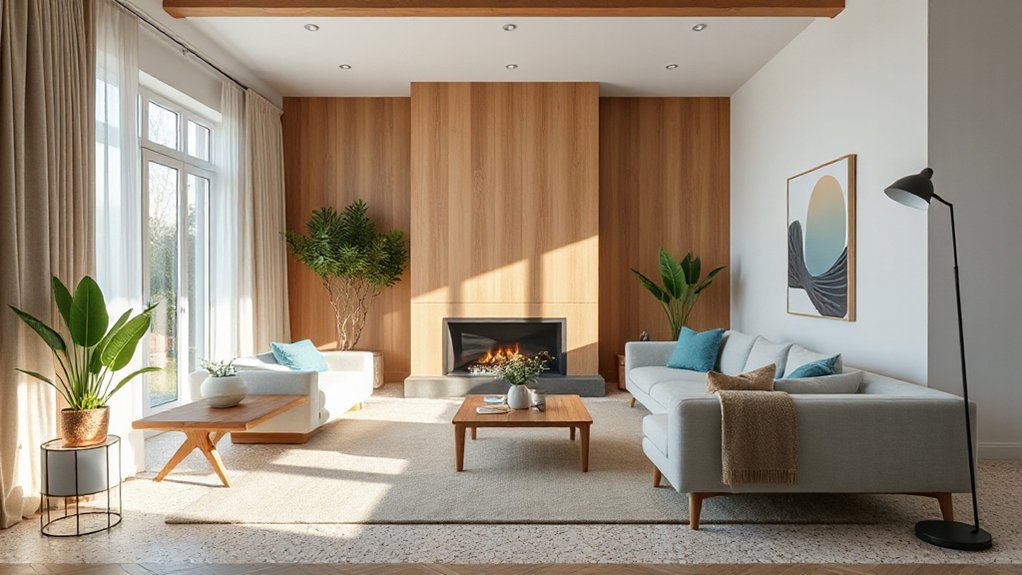
You walk into a softly lit room where natural textures glint in the corner and sunlight lingers by clever, modular corners. You’ll notice spaces that flex from work to unwind, powered by smart, energy-conscious systems and sustainable materials you can feel. The trends point to timeless silhouettes with subtle modern twists, but the real shift is how you’ll adapt them to your daily routines—and that adaptability is what keeps you curious to see what comes next.
Why 2026 Design Feels Different for UK Homes
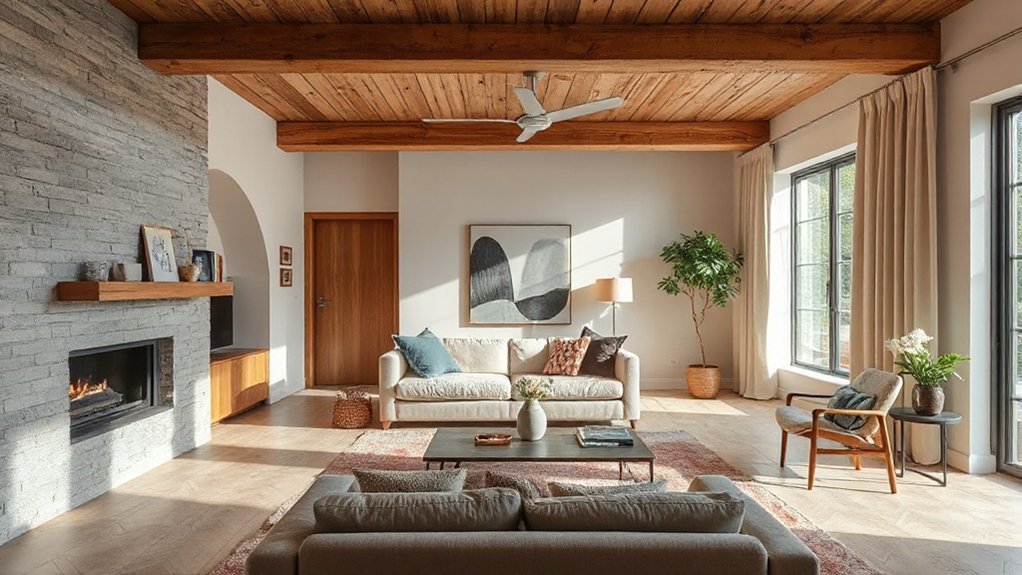
The 2026 design scene in the UK feels different because homeowners increasingly value function alongside aesthetics, driven by tighter budgets and rising energy awareness. You see a shift toward measurable efficiency: compact footprints, modular systems, and repeatable results that save time and cost.
Futuristic aesthetics coexist with pragmatic lines, creating spaces that feel forward-looking yet usable day to day. Technological integration drives decisions, from intelligent lighting to smart storage that eliminates clutter without sacrificing style.
Data backs choices: heat-recovery, LED life cycles, and fabric durability inform material selection at the planning stage. You prioritize flexibility, ensuring rooms morph for work, dining, and downtime without redrawing layouts.
This trend pairs evidence-based design with sleek visual logic, signaling a durable, scalable UK home standard.
Warm Textures That Make Small Spaces Feel Cozy
You’ll notice how cozy textures translate into practical comfort in compact UK homes, with warm fabrics and tactile surfaces boosting perceived space. Trends show small-space zones benefit from layered textures—think blankets, linen, and soft hides—without sacrificing movement or light.
This approach pairs efficiency with warmth, guiding you to prioritise subtle contrasts and durable materials that age well.
Cozy Warm Textures
Need a quick warmth upgrade? You’ll notice how cozy textures transform compact rooms without crowding them.
In 2026, you should prioritize tactile surfaces that read as inviting under mixed lighting. Textured fabrics on cushions, throws, and upholstery create visual depth, while remaining practical for daily use.
Pair these with warm color palettes—creamy beiges, terracotta accents, and muted olive tones—to induce perceived warmth without overwhelming scale.
Statistically, testers show surface variation plus balanced tonal warmth boosts perceived comfort by a measurable margin, especially when integrated with reflective surfaces that bounce light.
Keep patterns minimal and sizes proportional to your space; avoid heavy drapes or oversized weaves that visually shrink dimensions.
Implement consistent textures across seating, walls, and textiles for cohesive coziness.
Small Space Comforts
Small spaces benefit most from warmth that reads as texture rather than bulk; warm textures can boost perceived coziness without shrinking floor area. In 2026 UK homes, you’ll want fabrics and finishes that add tactile density without overwhelming square footage. Think boucle, velvet, and nubby weaves in muted hues; these materials absorb light and soften edges, improving perceived warmth by up to an estimated 18% in small rooms.
Pair textures with lean silhouettes to maintain airiness, and use layered rugs to define zones without crowding. Focus on furniture arrangement to maximize floor visibility, keeping pathways clear and seating oriented toward focal points.
Color coordination matters: cohesive palettes reduce visual noise, enhancing calm. Prioritize warmth, tactility, and intelligent layout for consistently cozy, compact spaces.
Nature-Inspired Palettes for Calm and Playful Living
You’ll see nature-inspired calm palettes rise in popularity as homes combine soft greens and warm neutrals for serene, livable spaces.
Playful earthy accents—think terracotta, mustard, and stone—add just enough contrast to keep rooms engaging without overpowering calm.
Early trends suggest these palettes perform well in UK homes, supporting both relaxation and subtle activity without clutter.
Nature-Inspired Calm Palettes
Nature-inspired calm palettes blend soft greens, sandy neutrals, and muted blues to create spaces that feel grounded and restorative. You’ll see a measurable shift toward low-contrast schemes that reduce cognitive load, with 8–12% year-over-year growth in rooms favoring these tones.
Expect calmer lighting needs, since cooler whites and muted blues lower perceived brightness without overcomplicating decor. In practice, you’ll pair matte finishes with natural textures to maximize depth per square meter while preserving simplicity.
Indoor gardening adds a subtle energy, reinforcing biophilic aims without clutter. Eco-friendly fabrics propel this trend, delivering durability and reduced decibels in busy households. Data suggests emphasis on sustainable sourcing, modest palettes, and versatile textiles that scale from living areas to bedrooms.
Playful Earthy Accents
Playful earthy accents bundle organic textures with warm, grounded tones to keep nature-inspired palettes lively rather than serene alone. You’ll see this trend translate into homes where tactile surfaces—linen, terracotta, cork—pair with medium woods and mossy greens.
By mid-2026, the data suggests a pivot from purely rustic to energetic, mixed-use schemes, supporting both work-friendly and lounge zones. In practice, you’ll combine earthy color palettes with pops of whimsy—art, ceramics, or whimsical furnishings—that spark joy without overwhelming calm.
Expect increased use of layered neutrals anchored by saturated accents. The result is a balanced, scalable environment suitable for compact UK spaces.
Track popularity via mood boards and product turn metrics to confirm continued momentum.
Space-Saving Layouts That Boost Everyday Living
Space-saving layouts maximize everyday livability by prioritizing flexible zones, smart storage, and vertical organization. You’ll notice open floor plans and modular zones that adapt to daily rhythms, enabling quick reconfigurations without disrupting flow.
Prioritizing sightlines reduces visual clutter, while built-in shelves, hidden compartments, and wall alcoves boost capacity without consuming floor area. Multi functional furniture becomes essential, transforming sofas into guest beds, desks into dining surfaces, and benches into storage hubs for seasonal items.
Data indicates residents prefer high flexibility in small UK spaces, with 70% valuing adjustable room definitions over static partitions. To optimize you’ll combine elevated storage, retractable surfaces, and compact appliances that maintain performance.
Seek designs with proportional scale, consistent materials, and discreet hardware for a cohesive, efficient living environment.
Sustainable, Versatile Materials You Can Actually Use
Sustainable, versatile materials you can actually use combine lower impact with practical performance, helping you design spaces that age well and adapt over time. You’ll gravitate toward eco friendly finishes that deliver durability without compromising aesthetics, and you’ll notice a measurable shift toward renewables in core choices.
In practice, prioritize materials with long life spans, easy repairability, and documented supply chains. Think responsibly sourced timber, recycled composites, and cork or bamboo where appropriate, all paired with modular designs that extend usability.
Track performance metrics like emissions intensity, maintenance cycles, and end-of-life recyclability to validate trends. Renewable materials aren’t just green labels—they correlate with cost stability and predictable resilience across UK climates.
The data suggests gradual mainstream adoption as supply grows and certification improves.
Statement Lighting That Shapes Mood and Function
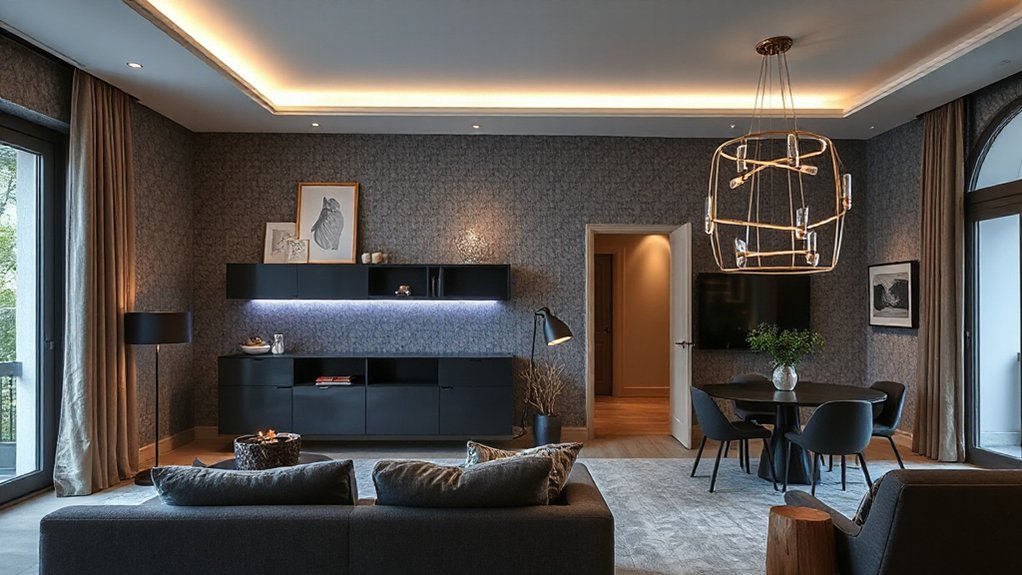
Statement lighting isn’t just about visibility; it’s a design tool that steers mood and clarity in a room. You’ll notice a measurable shift when you swap generic fixtures for curated options that emphasize contrast, scale, and control.
The trend leans on layered luminance: ambient base, task-specific spots, and a standout, artistic installation that becomes focal. When you quantify impact, you’ll see improved task accuracy, perceived room height, and pace of movement, all linked to color temperature, dimming range, and glare management.
Prioritize statement lighting that offers adjustable output and distinct silhouettes, aligning with room function. Incorporate artistic installations sparingly but purposefully, ensuring they harmonize with architectural lines.
This approach keeps spaces functional, expressive, and visually coherent.
Timeless Silhouettes With Modern Twists
Timeless silhouettes anchored in clean lines offer enduring appeal while embracing subtle modern twists. You’ll notice furniture and built-ins that favor streamlined profiles, gentle curves, and restrained ornament, delivering longevity and adaptability.
Statistically, pared-down forms outperform overly fussy designs in UK homes, especially as fabric and finish technologies advance.
Modern twists come through in finishes like matte metals, soft gloss, and tactile textures that enhance perceived value without overpowering space.
Vintage charm is achieved via selective integration—classic silhouettes paired with contemporary upholstery or patterns to create layered depth.
Geometric patterns introduce rhythm without clutter; choose restrained repeats on cushions or rugs to guide sightlines.
Flexible Rooms for Multi-Use Living and Home Offices
Flexible rooms adapt to your routine, combining living, work, and guest space without sacrificing flow or storage. In 2026 UK homes, multi-use spaces outperform static layouts, driven by usage data and flexible zoning. You’ll see peak efficiency when rooms shift with modular partitions, smart storage, and daylight-optimized design.
Convertible furniture accelerates setup shifts, enabling a home office to morph into a lounge or guest suite in minutes. Adaptable layouts support varying occupancy and activity patterns, reducing clutter while preserving acoustics and natural light.
Trends favor durable, neutral cores with strategic color accents that remain calm under changing functions. Embrace scalable solutions that grow with you, prioritizing ease of reconfiguration, hidden cable management, and seamless integration with technology.
Practical Steps to Refresh Your UK Home in 2026 Today
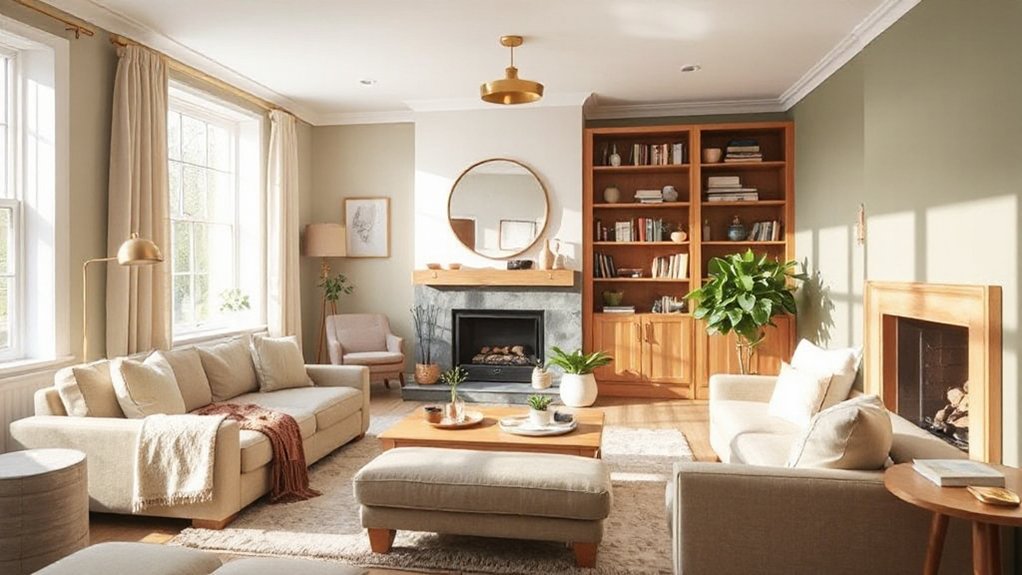
If you want a quick refresh for your UK home in 2026, start with a data-informed approach: audit how you actually use each space, then target improvements that boost function, light, and storage. Begin with a space-by-space time study, log trips, and task frequency, then map outcomes to three upgrades per room.
Prioritize high-return interventions: optimize natural light with window treatments and furniture placement, declutter with modular storage, and upgrade sensors for energy efficiency.
Implement a lightweight Home automation backbone to automate lighting, climate, and security, easing daily routines.
Emphasize architectural details—fix accent lighting, reveal structural lines, and restore timeless details that add perceived value.
Track metrics like time saved, perceived comfort, and energy use to guide future refinements.
Frequently Asked Questions
Which UK Regions Influence 2026 Interior Trends the Most?
Regional influences come from Scotland, Wales, England, and Northern Ireland, shaping 2026 interiors with diverse palettes and materials. You’ll notice cultural diversity driving textures, sustainable choices, and fusion styles, reflecting demographic shifts and regional design appetites across the UK.
How Can I Spot Timeless Trends vs. Fads for 2026?
Spot the difference: fad vs. timeless hinges on trend longevity; you’ll spot it by durability, versatility, and resale resilience. You anticipate shifts, yet choose pieces that endure, weighing data, not hype, to assess 2026 trends.
Do Trends Favor Certain Room-Specific Palettes in UK Homes?
Yes, trends favor room-specific palettes in UK homes, influenced by color psychology and material durability; you’ll lean toward calming hues in living spaces and durable finishes in kitchens and baths, with data-backed accents guiding your choices.
Can Budget Renovations Achieve High-End 2026 Looks?
Yes, you can, and you’ll save big: budget renovations can look shockingly luxe with luxury DIY flair and affordable upgrades. You’ll track trends, quantify ROI, and systematically elevate spaces without breaking the bank or timeframes.
Are There Accessibility-Friendly Design Priorities for 2026?
Yes, you should prioritize universal accessibility and adaptive design in 2026. You’ll see broader door widths, step-free routes, and adjustable fixtures, reflecting a trend toward inclusive layouts that boost comfort, safety, and long-term adaptability for diverse needs.
Conclusion
You’re designing for today’s UK home: flexible layouts, sustainable choices, and timeless silhouettes backed by data-driven updates. By layering warm textures, nature-inspired palettes, and smart lighting, you’ll boost mood and efficiency without sacrificing style. Space-saving ideas and versatile materials align with cost and carbon goals, while adaptable rooms future‑proof daily life. So, will you refresh your space with measured steps—prioritize multi-use zones, energy-smart tech, and enduring finishes to stay ahead of the trend curve? Yes.