
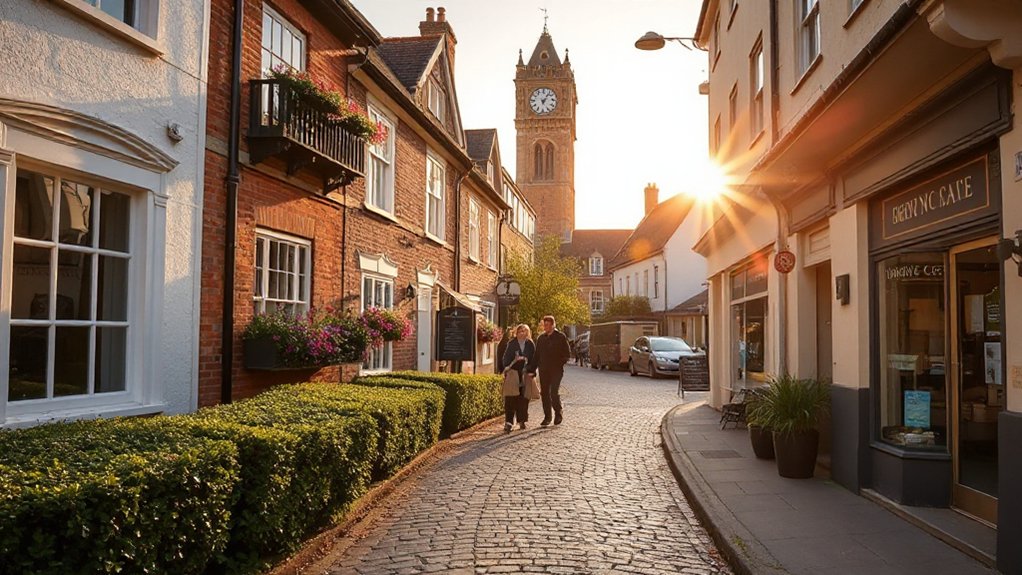
To pick the best UK towns for first-time buyers, focus on affordable homes, solid transport links, good schools, and steady price growth supported by clear cost and mortgage data. Prioritize North-of-London towns with lower prices and decent rail access, growing commuter towns with job prospects, and coastal or inland options offering value, lifestyle, and stable demand. Track price-to-rent ratios, council support, and local services to avoid overpaying—dive deeper to see how these factors shape your plan.
How to Evaluate Towns for First-Time Buyers: Criteria That Matter

Evaluating towns for first-time buyers starts with practical criteria you can verify quickly. You’ll compare housing costs, mortgage availability, and local council support programs, focusing on affordability and stability.
Prioritize walkable centers, reliable transport links, and clear school performance data to reduce risk. Track property turnover rates and recent price growth to gauge market momentum without overpaying.
Gauge job access by noting major employers, apprenticeship schemes, and local industry trends. Assess safety metrics, digital connectivity, and public services like healthcare facilities.
For intangible value, consider historical architecture and local cuisine as signals of a town’s cultural sustainability, which often correlates with long-term desirability.
Consciously map social belonging by speaking with residents and visiting at different times to confirm your fit.
North of London on a Budget: Affordable Towns to Consider
If you’re looking north of London on a budget, several towns stand out for affordability without sacrificing access to jobs, transport, and services. In towns like Peterborough, Lincoln, and Grimsby, housing costs remain sensible relative to incomes, with median prices particularly below southern equivalents.
Transport links are practical, offering rail connections to the capital within hours and reliable bus networks for local travel. Local councils often cite low council tax bands and targeted first-time buyer schemes, supporting steady ownership progression.
You’ll find historical landmarks that anchor town pride, and markets delivering fresh produce and local cuisine worth savoring. These communities emphasize belonging through schools, clubs, and local events, making affordable ownership a sustainable, long-term choice rather than a quick fix.
Stronger Commuter Towns With Growing Job Prospects
Stronger commuter towns are increasingly prioritizing robust job growth alongside dependable transport links, making them compelling for first-time buyers who still want options beyond central hubs. You’ll see predictable earnings growth with diverse sectors and growing local entrepreneurship, supported by affordable housing relative to metro cores.
These towns preserve character—often with historical architecture—while modernizing infrastructure to shorten commutes. Cultural festivals create social cohesion and local demand, boosting small businesses and creating a sense of belonging.
- Growth analytics show wage and employment diversification aligning with improving rail and road connectivity.
- Housing costs remain below big-city levels, with steady appreciation driven by commuting appeal and local amenities.
- Cultural assets, including historical architecture and festivals, deepen community identity and attract newcomers.
Values-based choice: solid job prospects, reachable hubs, and a connected, welcoming atmosphere.
Coastal Towns Offering Value and Lifestyle Perks

Coastal towns combine affordable living with a high-quality lifestyle, delivering strong value for first-time buyers who want ocean air without ocean-front prices. You’ll find consistent price-to-rent ratios and rising but controllable entry costs in well-placed pockets along the coast.
Beachfront living is feasible where demand remains stable but not feverish, with markets showing slower price acceleration than inland hotspots. A disciplined approach to choosing a Coastal community means prioritising transport access, local services, and social infrastructure that reinforces belonging—libraries, markets, and joined-up green spaces.
Data show good resale resilience when communities sustain employment and impulse-friendly amenities. Your practical decision should balance mortgage affordability with lifestyle perks, ensuring you gain connection, sun, and steady, long-term value.
Inland Towns With Solid Transport Links and Good Schools
Inland towns with solid transport links and strong school networks offer dependable accessibility and performance data you can trust. You’ll see how frequent rail or road connections reduce commute times.
While school quality metrics support stable property values and long-term affordability. This discussion focuses on inland accessibility benefits, moving beyond coast-perk tradeoffs to practical, data-backed considerations.
Solid Transport Links
Are inland towns with solid transport links and strong schools delivering real value for first-time buyers? Absolutely, because reliable connectivity underpins predictable commute times, property liquidity, and local economies. You’ll see that strong transport networks correlate with higher resale resilience and simpler daily life, backed by data on commuter rail frequencies, road reliability, and service coverage.
In these towns, fast links to universities, business parks, and regional centers translate into practical benefits for belonging and stability.
- Efficient rail and bus schedules minimize travel stress, keeping time for family and community events.
- Consistent road networks reduce unexpected delays, supporting predictable budgeting and planning.
- Proximity to historical landmarks and local festivals enhances quality of life and social cohesion, without sacrificing accessibility.
Strong School Networks
Data shows nearby primary and secondary outcomes drive parental choices, shaping demand in all directions and stabilising property pricing. When evaluating neighborhoods, look for schools with clear performance metrics, sustained leadership, and engaged parent networks; these factors correlate with safer, more supportive streets and active local life.
Neighborhood safety isn’t optional—it reinforces routine use of parks, libraries, and sports facilities, creating a predictable rhythm to everyday living.
In inland towns, balanced transport access and reputable schools underpin belonging, confidence, and smart, lasting investments.
Inland Accessibility Benefits
Accessible transport and reliable schools together sharply raise inland town appeal. You’ll value towns where quick rail links meet solid local education, creating predictable daily routines and long-term stability.
Inland towns with these assets deliver practical advantages: reliable commutes, affordable housing growth, and stronger community identity. Rural charm and cultural events blend into a cohesive lifestyle, not just scenery.
- Access that cuts commute time and enhances weekend flexibility.
- Schools consistently performing above regional norms, supporting long-term residency.
- Community-driven events that reinforce belonging, from markets to festivals.
These factors translate into tangible data: steady demand, resilient neighborhoods, and a clear path to ownership. You gain certainty, a rooted town experience, and the shared pride of a place where culture, schooling, and transport converge.
First-Time Buyer Schemes and Incentives You Should Know
First-time buyers have several government-backed schemes and incentives designed to reduce upfront costs and monthly payments, making homeownership more attainable. You’ll find options that limit deposits, cap mortgage payments, and boost affordability without sacrificing security.
In practical terms, these schemes often allow smaller deposits, shared ownership, or staircasing to full ownership over time, helping you establish roots in a community you love. Data shows the impact: lower initial equity requirements can widen your qualifying pool and shorten time to move in.
Be mindful of ongoing costs—property taxes and mortgage rates still shape monthly budgets. Evaluate whether incentives align with long-term plans, ensuring that a trusted lender and clear affordability metrics support your sense of belonging in your chosen town.
Starter Homes, Flats, and Terraces: What Fits Your Budget

Starter Home Budgets, Flat Purchase Considerations, and Terrace Property Fit set the baseline for your choice. Do the math on upfront costs, monthly payments, and renewal risk.
Then compare flat advantages like lower maintenance with terrace options offering space and potential value. This practical frame helps you weigh what fits your budget while aligning with your lifestyle and market trends.
Starter Home Budgets
For many first-time buyers, budgets hinge on three common options: starter homes, flats, and terraces. You’ll want clear ranges to compare towns, so here’s a practical snapshot of starter home budgets based on recent surveys and market data.
- Starter homes: Typically £180,000–£260,000 in regional hubs, with higher value near historical landmarks and thriving neighborhoods.
- Flats: Often £120,000–£190,000 in commuter towns; higher in cities with strong local cuisine scenes and cultural appeal.
- Terraces: Commonly £150,000–£230,000, balancing traditional charm with renovation potential and accessibility.
This framework helps you assess fit, track price trends, and align choices with belonging—finding communities where you’ll feel at home.
Flat Purchase Considerations
Buying a flat can be a smart move when you’re balancing cost against lifestyle, especially in commuter towns or cities with strong cultural appeal. When you compare starter flats, consider price per square foot, ongoing service charges, and energy efficiency, not just headline price.
Luxury apartments often offer better build quality, better insulation, and quieter living, but may carry higher annual fees and limited outdoor space.
Historic preservation can enhance character and resale value, yet may restrict renovations and require additional permissions.
Prioritize locations with solid transport links, safe surroundings, and community amenities like parks or local markets.
Run a transparent budget that includes maintenance, insurance, and potential renovation costs.
Your choice should align with your long-term plans, housing market outlook, and sense of belonging within the neighbourhood.
Terrace Property Fit
Could a terrace be the sweet spot between cost and lifestyle for first-time buyers? Terrace property fits a practical budget while delivering community vibe. You’ll compare starter homes, flats, and terraces by cost per square foot, maintenance, and resale trajectory, then choose based on long-term value. Data shows terraces commonly lower upfront price than detached equivalents, while offering enhanced social proximity and street activation.
- Cost-efficiency and energy considerations: terraces often share walls, reducing heating bills and risk of quiet issues, with predictable upkeep.
- Lifestyle fit: nearby amenities, local cuisine, and walkability support belonging, plus easier access to historical architecture for character.
- Market signals: record demand for heritage terraces preserves value, while flats may suit ultra-budget scrapes and flexibility.
Consider these factors to align your budget with a place that feels like home.
Comparing Cost of Living and Mortgage Affordability
When comparing cost of living and mortgage affordability, you should anchor decisions to actual monthly expenses rather than listing sticker prices alone. You’ll compare housing costs, council tax, utilities, and transport fees, then consider mortgage rates and required deposits to estimate true monthly commitments.
Use local salary benchmarks and typical debt-to-income ratios to gauge sustainability, not just price tags. Across towns, historical landmarks and local cuisine influence everyday spending and quality of life, shaping discretionary budget allocations.
Track a 12-month average for energy, fuel, and groceries to avoid seasonal distortions. This data-driven approach helps you feel connected to a community rather than overwhelmed by numbers, reinforcing belonging while you evaluate risk, long-term stability, and potential for mortgage affordability.
Local Amenities That Ease the Move: Schools, Healthcare, Parks
Local amenities like schools, healthcare, and parks directly affect both daily life and long-term affordability for first-time buyers. You’ll see how nearby institutions shape life quality and resale value, guiding prudent relocation choices.
Data shows proximity to good schools correlates with stable property demand, while accessible healthcare reduces out-of-pocket risks. Parks and community spaces encourage active living and social belonging, supporting healthier budgets over time.
- Proximity metrics: school ratings, clinic access, park acreage per resident, and their impact on moving decisions.
- Local calendars: how local festivals and community events drive daytime footfall, safety, and neighborhood cohesion.
- Practical planning: enrollment windows, transport links, and cost-of-living considerations tied to public services.
Real Buyer Experiences: What First-Timers Wish They Knew

Many first-time buyers underestimate how much the real experience of buying shapes outcomes beyond the price tag. You’ll see that property valuation surprises aren’t just about stickers on a brochure; they reflect negotiation, survey findings, and local demand cycles.
In practice, you’ll track how offers align with market trends, adjusting expectations as data shifts. You’ll gain confidence by reviewing comparable sales, time-on-market, and lender conditions, letting numbers guide decisions rather than impulse.
Real buyers learn to ask for disclosures early, avoid overreaching, and place contingencies that protect progress.
Belonging comes from transparency: share findings with trusted advisors, comment on price trajectories, and calibrate your plan as evidence accumulates.
Your ability to interpret valuation signals accelerates certainty, reduces stress, and anchors prudent, timely moves.
A Simple Decision Framework for Comparing Towns
To compare towns effectively, start by weighing living costs against local wage levels and housing options to see where you get the best value.
Next, assess the road network quality—commutes, congestion, and reliability—to gauge practical daily impact.
This framework helps you prioritize where small cost differences yield meaningful time and stress savings.
Compare Living Costs
When comparing towns for a first-time purchase, start with a clear, data-driven view of living costs that matters most to you: housing, utilities, transportation, groceries, and local taxes.
- Housing affordability index (price-to-income, rent levels) relative to your budget
- Ongoing monthly costs (utilities, council tax, insurance) and typical bills
- Daily spend and accessibility (transport, groceries, dining) balanced with cultural events and local cuisine
This framework helps you compare towns with precision, not guesses. Use actual bills, recent council tax bands, and transport fares.
In practice, you’ll find places where housing sits within your means yet offers vibrant life—restaurants, markets, and events that reinforce belonging. Cultural events and local cuisine become meaningful indicators of livability, not just flavor, shaping your long-term happiness in your new home.
Road Network Quality
A strong road network directly affects commute times, reliability, and daily convenience, so start with objective measures: average driving and congestion scores, road condition indices, and connectivity to major routes. You’ll compare towns by concrete metrics: peak-hour speeds, time-to-work, and accident rates, then map access to motorways and bypasses.
A high score in road maintenance reflects timely repair windows, resurfacing cycles, and pothole dashboards, reducing vehicle wear. Use a standardized framework to appraise congestion resilience, noting whether routes degrade gracefully under incidents.
Data supports belonging: communities with reliable corridors feel more connected, supportive, and safer. Prioritize towns that balance traffic congestion relief with continuous maintenance funding, ensuring durable access to services, schools, and work without sacrificing quality of life.
Next Steps: Turning a Shortlist Into a Buy Plan
Now that you’ve shortlisted options, the next step is to turn those picks into a concrete buy plan you can act on. Ground your plan in data, not vibes, by mapping each town against set criteria like price-to-rent ratios, transport links, and school quality. Track market trends to avoid overpaying and to time steps like offer submissions or mortgage approvals.
- Create a decision framework: weight price, growth potential, and liquidity; set thresholds for action.
- Build a financing timeline: secure pre-approval, align deposit, and plan contingencies for rate shifts.
- Schedule regular reviews: compare your shortlist against real-time data on property investment metrics and local demand signals.
This approach reinforces belonging by aligning your goals with measurable outcomes and shared market knowledge.
Frequently Asked Questions
How Long Does It Take to Complete a Property Sale in These Towns?
You’ll typically see a sale complete in 6–12 weeks, depending on your property survey and mortgage approval process. You’ll feel supported as data guides timelines, with transparent steps and belonging through steady progress and proactive lender coordination.
Which Towns Have the Strongest Recent Property Price Growth?
Some towns show the strongest recent property price growth, driven by favourable buyer demographics and solid property market trends; you’ll notice momentum in places with jobs and amenities, despite short-term noise.
Are There Hidden Costs Beyond Stamp Duty in First Purchases?
Yes—there are hidden costs beyond stamp duty, including mortgage costs and associated fees. You’ll want to budget for arrangement fees, valuation charges, and ongoing service charges, ensuring you compare lenders, terms, and total-cost scenarios to feel confident.
How Reliable Are Local Council Development Plans for Buyers?
Local planning transparency stands uncertain; development plan updates vary by council. You’ll gauge reliability by checking public dashboards, consultation results, and update frequencies, then compare against national guidelines to feel secure and belong in informed decisions.
What Are Typical Rental Yields in These Town Options?
Rental yields vary by town, but expect 4–7% in steady markets; consider demand drivers. You’ll gauge Rental market strength and Investment potential by local occupancy, rents, and growth trends, then decide where your portfolio fits and belongs.
Conclusion
Decide with data, not vibes. Compare towns against your budget, commute, schools, and healthcare access, then test with a shortlist scorecard. If a town’s price trend, job growth, and transport links align, you’re closer to a solid buy. Use real-world buyer experiences to spot hidden costs and benefits. Have you run the numbers for at least three candidates and checked mortgage-affordability stress cases? A disciplined framework turns a list into a confident, value-driven choice.