
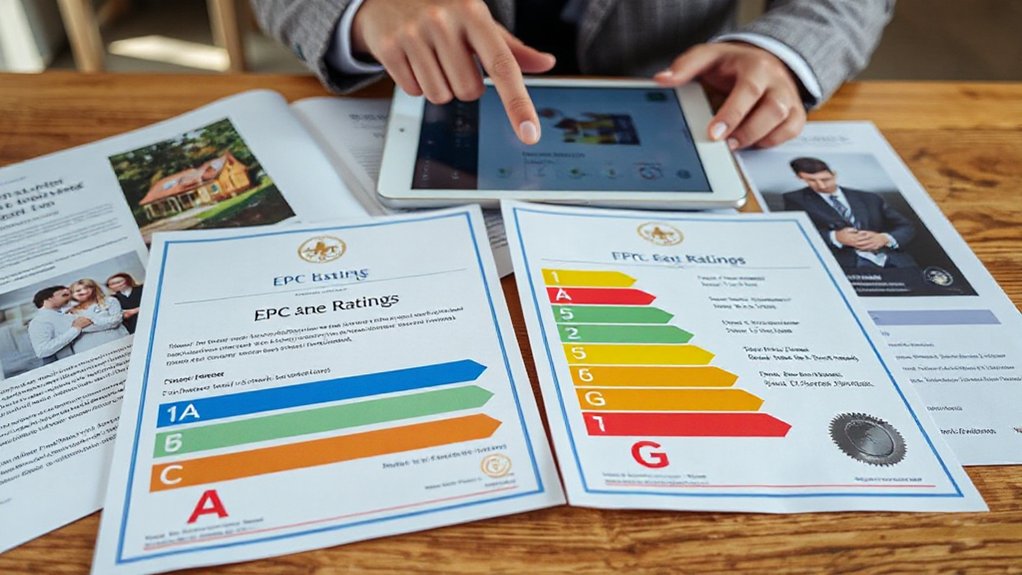
When you’re comparing EPC ratings, you’re looking at future monthly costs as a guide to comfort and budget. A higher letter (A–G) usually means lower bills, but focus on the whole picture: property type, insulation, and systems matter as much as the score itself. Compare similar homes, sizes, and layouts to avoid apples-to-oranges. Use bands to forecast payback, upgrades, and resale value. Want practical steps and real-world examples? There’s more to uncover below.
What an EPC Says About Monthly Energy Costs

An EPC isn’t just a label; it’s a snapshot of how much you’ll spend on energy each month. When you read it, you’re not just comparing numbers—you’re choosing a path toward energy efficiency and predictable bills.
Your monthly costs reflect building fabric, heating and cooling needs, and appliance efficiency, so a higher rating often signals lower ongoing payments. You’ll notice that small improvements can compound into meaningful cost savings over time, especially if you’re starting from mid-range habits or older systems.
Use the EPC as a planning tool to prioritize renovations, efficient heating, and smarter occupancy practices. Your goal is to align comfort with budget, creating a sense of belonging and confidence in your home’s long-term energy performance.
Decoding the EPC Scale: Letters, Numbers, and What They Mean
Honing in on the EPC scale, the letters A to G sit alongside numbers to show energy efficiency, with A as the best and G the field’s low end. You’ll see an integrated picture: the letter/s and number together guide decisions, not just labels. You understand that higher letters align with lower energy costs and smarter performance, while lower letters flag upgrades to contemplate.
This scale helps you compare homes quickly, without getting buried in jargon. Historic preservation and energy retrofits often collide here, since aging properties may need upgrades to climb the ladder. With this lens, you’ll evaluate potential improvements before purchase.
- Compare baseline efficiency
- Identify cost-effective retrofits
- Plan long-term value growth
How Regional Rules Change Your Energy Cost Picture
Regional rules shape energy costs by setting what you can heat, cool, and power in a home. When your region caps certain equipment or incentives, your energy bill shifts accordingly, even if your EPC stays similar.
Regional policies influence appliance choices, thermostat ranges, and insulation standards, subtly steering usage patterns and peak demand. You’ll notice price signals that reward efficiency and penalize waste, shaping your monthly spend without changing basic needs.
Subsidies and rebates sweeten upgrades, making efficient systems more affordable and accelerating payback timelines.
Know that these rules create a visible, localized cost picture, not a universal one. Tracking policy updates helps you align home improvements with available energy subsidies, maximizing savings while meeting local standards and comfort expectations.
Compare EPCs on the Same Property Type and Size
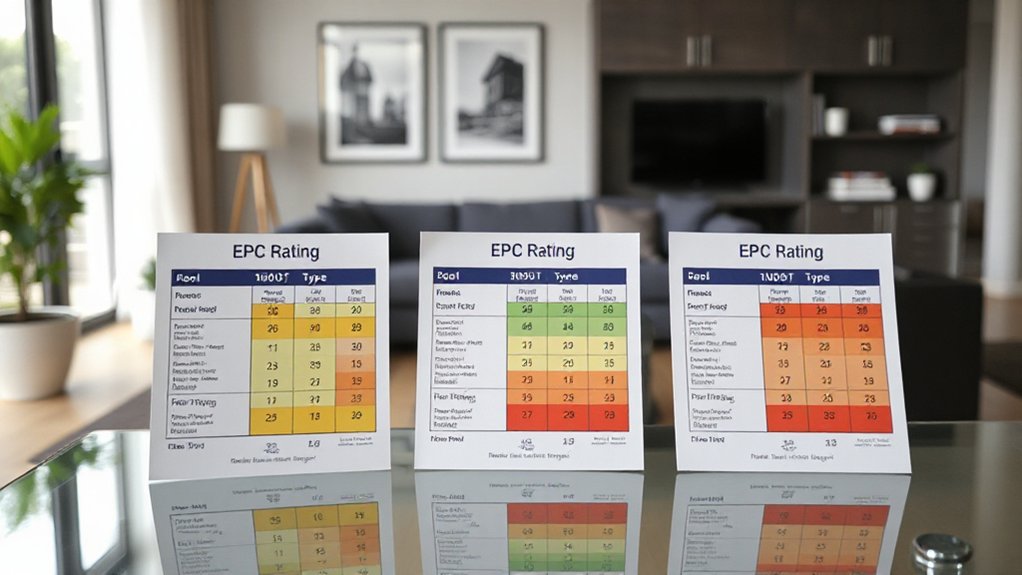
When you compare EPCs for the same property type and size, focus on the energy performance gaps that matter for your home layout and systems. You’ll spot how different designs optimize or hinder comfort, then target improvements that fit your living rhythm. Keep your eye on practical upgrades that translate to real wins, not just numbers.
- Identify gaps tied to your floor plan and how rooms share heat or cooling.
- Compare how energy efficient appliances and insulation choices affect daily use.
- Consider how Solar panel integration could enhance performance without overhauling your layout.
Estimate Monthly Utility Costs From EPC Bands
To estimate monthly costs, use EPC bands as a starting point and translate A–G ranges into ballpark figures you can compare quickly.
You’ll see how small band shifts imply meaningful changes in utility outlay, so focus on the EPC band cost insights that matter for your budget.
This sets up clear utility expense projections you can validate with real quotes and your usage patterns.
Estimating Monthly Costs
Estimating monthly utility costs from EPC bands helps you spot the financial impact of a home’s efficiency at a glance. When you compare bands, you’re reading more than bills—you’re gauging property valuation and how market trends shape future costs.
This clarity guides confident decisions and reinforces your sense of belonging in a smart, informed community.
Here are quick ways to use EPC data:
1) Match bands to expected monthly costs to forecast long‑term ownership expenses.
2) Compare similar homes in your market to spot value shifts tied to energy performance.
3) Consider how improvements may alter resale appeal and overall valuation.
Using EPC insights keeps you aligned with market realities, helping you invest where efficiency pays off.
EPC Band Cost Insights
By focusing on EPC Certification, you understand the credibility behind the ratings and what it means for your monthly bills. Energy Efficiency isn’t abstract here; it guides how you compare homes, targeting changes that shift you toward lower costs and better comfort.
You’ll learn where minor upgrades yield meaningful savings and where larger investments matter most for long-term value. This insight isn’t about fear of high bills, but about belonging to a community that makes informed, practical choices.
Use it to gauge affordability, plan improvements, and feel confident in your home’s true running costs.
Utility Expense Projections
- Understand how band improvements translate to monthly savings
- Leverage smart meters to monitor usage in real time
- Consider renewable energy integrations for long-term stability
Energy Features That Move the Needle (Insulation, Windows, Heating)
You’ll see that insulation, windows, and heating power your energy profile more than you might think.
Better insulation reduces heat loss, tighter windows cut drafts, and efficient heating lowers both bills and EPC bands.
Consider how these three pillars interact to move the needle on overall energy performance.
Insulation Impact Essentials
Are you maximizing comfort and savings with the right insulation, windows, and heating?
Insulation impact isn’t a vague bonus—it’s a verifier of value. You’ll feel steadier temperatures, lower bills, and fewer drafts when you prioritize roof insulation and thoughtful window upgrades. The EPC journey rewards structural choices that minimize heat loss and optimize air sealing.
Focus on habits that deliver long-term payoff: solid infill, continuous gaps sealed, and efficient glazing when you upgrade. Your sense of belonging grows as your home becomes a consistent sanctuary, not a seasonal expense.
- Roof insulation foundations set the baseline for energy stability.
- Window upgrades reduce heat transfer and enhance overall comfort.
- Targeted sealing and insulation strategies maximize every degree you save.
Window and Heating Efficiency
Window upgrades reduce heat gain in summer and heat loss in winter, stabilizing indoor temps and lowering exhausting energy use. Look for double or triple glazing, low-E coatings, and tight frames that minimize drafts.
Pair these with efficient heating systems, since a modern boiler or heat pump often yields the biggest gains for your comfort budget. Prioritize system sizing and zoning to avoid overworking equipment.
The result is fewer cold snaps, steadier comfort, and a rating that reflects thoughtful energy stewardship. Belonging grows from practical improvements you can see and feel.
Quick Wins: Achievable Savings From Upgrades
To kick off, focus on upgrades that deliver quick, measurable energy savings and pay back fast. You’ll gain momentum by choosing changes that show clear results, building confidence and a sense of belonging in your energy‑savvy community.
Start with practical moves that don’t disrupt daily life but cut bills and emissions. Energy audits reveal where to start; act on high‑impact tweaks first, then layer in additional gains. Consider options that align with solar incentives to maximize value and speed.
1) Seal leaks and upgrade insulation in trouble spots to lower heating and cooling loads.
2) Improve heating and cooling efficiency with a smart thermostat and targeted equipment tune‑ups.
3) Install efficient lighting and appliances, pairing with solar incentives where available.
Reading the Recommendations Section in an EPC
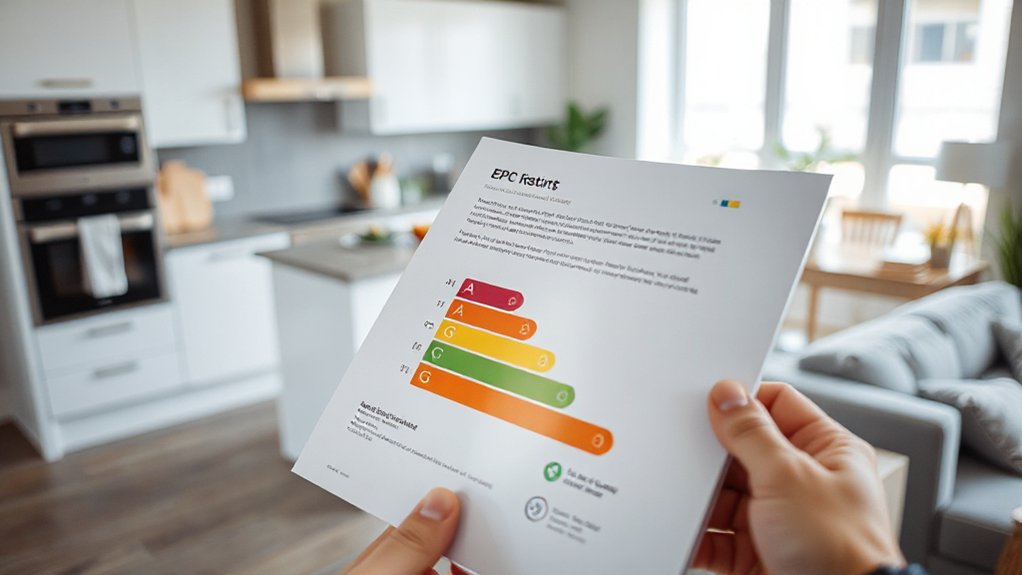
Each recommendation links to a potential cost, payoff, and timeframe, helping you judge real-world value. Use rating interpretation to gauge how improvements move your home’s overall score, then map options to your budget and timeline.
Don’t get lost in jargon; seek clear, actionable phrases like “insulation upgrade” or “boiler retrofit.” Prioritize low-hanging wins that boost comfort and efficiency without overwhelming you.
The section serves as a practical guide, not a sales pitch, so you can decide confidently which upgrades align with your priorities and household belonging.
EPCs for Flats, Houses, and Rentals: What Changes by Type
EPCs differ by property type, so flats, houses, and rental homes each carry distinct scoring quirks and benchmarks. You’ll notice how floor area, shared spaces, and occupancy pattern shift the rating visualization, shaping what buyers expect and trust. Your goal is clarity, not guesswork, so know that EPC certification paths vary by asset class and tenure.
1) Flats often emphasize compact layout efficiency and building services.
2) Houses weigh insulation, thermal mass, and roof/wall assemblies differently.
3) Rentals factor in turnover, landlord responsibilities, and compliance timelines.
This nuance helps you compare offers with confidence, ensuring you see the right opportunities. By framing ratings through the lens of type, you belong to a community choosing informed, responsible homes.
Interpreting Airtightness and Insulation Indicators in the EPC
Airtightness and insulation are your first stops for understanding how a home holds heat and where energy slips away. In an EPC, look past the letter grade to what that score says about your daily comfort. Airtightness indicators reveal where drafts enter and how effectively the building seals against climate swings.
You’ll translate numbers into practical fixes, prioritizing gaps around joints, windows, and service penetrations. Consider insulation materials and how they perform in your climate, since density, thickness, and installation quality shape warmth retention.
Compare homes by not just ratings, but the robustness of airtightness standards and the suitability of insulation materials for long-term energy savings. Strong indicators point to fewer cold spots and lower heating bills, fostering confident decisions.
How the Age of a Building Shapes the EPC
Older buildings carry a different energy fingerprint than new builds, and that shapes how their EPCs read. In this topic, you’ll see how building age influences energy performance, not just current systems but legacy design. You’ll understand why older shells often show gaps, while newer cores reflect tighter envelopes. The key is timing: renovation timing matters for EPC upgrades, as improvements stack with existing fabric to shift ratings more effectively.
- Consider retrofit sequencing: prioritize envelope upgrades before mechanical changes to maximize impact.
- Align projects with longer-term energy goals to sustain improvements across EPC cycles.
- Factor in historical features and limitations that affect cost-benefit decisions and long-term comfort.
This lens fosters belonging by matching your home’s pace to practical, affordable improvements.
Practical Questions to Ask Sellers or Agents About EPCs
When you’re evaluating a property, asking the right questions about EPCs helps you separate guesswork from facts and plan improvements wisely.
Start with the basics: what’s the current EPC rating, and when was it last updated? Ask whether there are proposed upgrades or energy-saving features already in place.
Inquire about cost estimates for recommended improvements and expected impact on rating. Request a breakdown of energy sources, consumption patterns, and potential for renewable energy installations.
Probe the seller’s or agent’s knowledge of sustainable materials used in the building and any certification benefits tied to them.
Seek clarity on incentives, maintenance schedules, and warranties for efficiency measures. This helps you feel connected to a practical, forward-thinking home journey.
What to Do When Nearby EPCs Differ Significantly
When nearby EPCs differ markedly, you’ll need to weigh what each rating implies for energy costs and retrofit needs.
I’ll help you interpret gaps, so you see whether variance is due to building envelope, heating system, or data accuracy.
Then we’ll map practical steps for buyers to verify details, compare implications, and decide your negotiation and due-diligence priorities.
Nearby EPC Variance Impacts
Nearby EPC readings can vary more than you’d expect, so what should you do when nearby ratings differ considerably? You’re not alone in this. Use the variance to guide smarter decisions, not to undermine confidence. Focus on practical steps that protect your wellbeing and budget, like verifying data sources and considering local factors—quiet streets, insulation, and sun exposure.
- Compare how Energy audits treated neighboring homes and ask for documentation to confirm methodology.
- Assess whether Solar panels or other upgrades could harmonize future ratings, weighing upfront costs against long-term savings.
- Prioritize consistency over trendlines, and seek a reputable assessor for a harmonized view.
This approach builds clarity, belonging, and value, empowering you to choose with assurance.
Interpreting Rating Gaps Clearly
If nearby EPCs diverge sharply, first determine whether the gap stems from data or context, then address the practical implications for your decision.
When you compare, focus on energy efficiency patterns, not one-off numbers, and seek common denominators across buildings.
Use clear rating interpretation to translate labels into real-world implications for comfort, bills, and maintenance.
If data quality varies, document assumptions and favor robust sources; if context differs, adjust expectations for location, usage, and upgrades.
Ask for explanations behind outliers and request updated assessments where possible.
Remember, you belong in a decision community that values transparency and consistency.
Your aim is to interpret ratings with honesty, aligning choices to long-term value, not superficial labels.
Energy efficiency clarity empowers steadier, smarter investments.
Practical Steps For Buyers
If EPCs nearby differ markedly, your first move is to confirm whether the gap comes from data quality or context. You’ll then compare the underlying assumptions, like occupancy, heating, and insulation, to align the figures.
When in doubt, seek a property-specific assessment or a second accredited rating.
- Verify data sources and scenario details to isolate true differences.
- Prioritize practical improvements with quick payback, such as energy efficient appliances and enhanced insulation, before negotiating.
- Ask about solar panel benefits and potential eligibility for incentives to understand long‑term value.
Using EPC Data in Offer Strategy and Negotiation
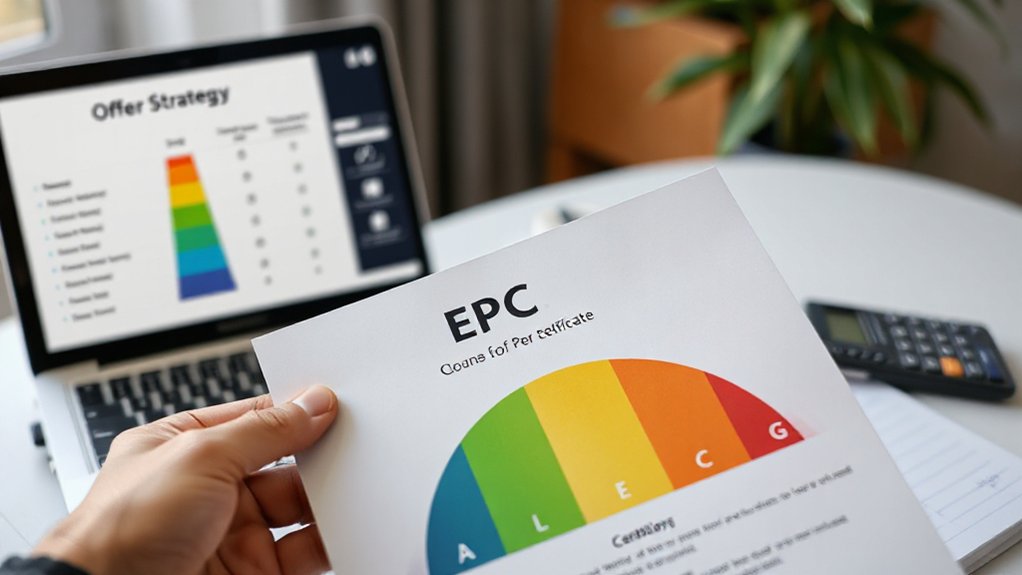
EPC data should shape your offer strategy from the start, not just the final negotiation. You’ll use the EPC as a living lens, guiding your bid based on predicted running costs and value.
Identify properties with favorable energy profiles, and lean into them when you want stronger negotiating leverage. Highlight aspects like lower annual energy use and efficiency upgrades as reasons for value, rather than as excuses for overpaying.
When discussing price, pair your stance with concrete savings scenarios, so your offer reflects long-term occupancy costs. Mention Renewable incentives or energy-saving potential to bolster appeal without appearing hawkish.
Consider smart meters as a credibility signal—showing you can monitor and verify efficiency post-purchase. This approach builds trust, clarity, and a mutually beneficial path forward.
Balancing EPCS With Price and Location: a Decision Framework
Balancing EPCS with price and location requires a clear, structured approach: energy performance should inform tradeoffs, not dictate them. You’ll weigh how a higher EPC saves on operating costs against purchase price and neighborhood value. Use a decision framework to quantify benefits, recognize risks, and preserve momentum toward a livable, affordable home.
1) Compare long-term savings from Renewable incentives and expected maintenance costs, not just upfront price.
2) Assess location factors (schools, transit, amenities) that enhance resale, offsetting energy gaps.
3) Create a scoring system that balances EPC with price and location, updating as incentives or costs shift.
This approach keeps you connected to community value while prioritizing practical, measurable gains in comfort and affordability.
Tools and Resources for Quick EPC Comparisons
To compare EPCs quickly, start with trusted tools that deliver side‑by‑side scores and actionable insights. You’ll compare ratings at a glance, filter by location, and pin down what drives improvements.
Seek dashboards that explain score components, not just the final number, so you feel confident in your next steps. Use resources that highlight Renewable incentives tied to energy upgrades and show cost‑benefit timelines, so your decisions align with long‑term value.
Look for smart home integrations that demonstrate how automation and monitoring impact efficiency scores in real life, not just theory. Prioritize guides and calculators with plain language and transparent data sources, so you stay grounded in reality.
With these tools, you gain clarity, belonging, and a practical path forward.
Common EPC Pitfalls Buyers Should Avoid
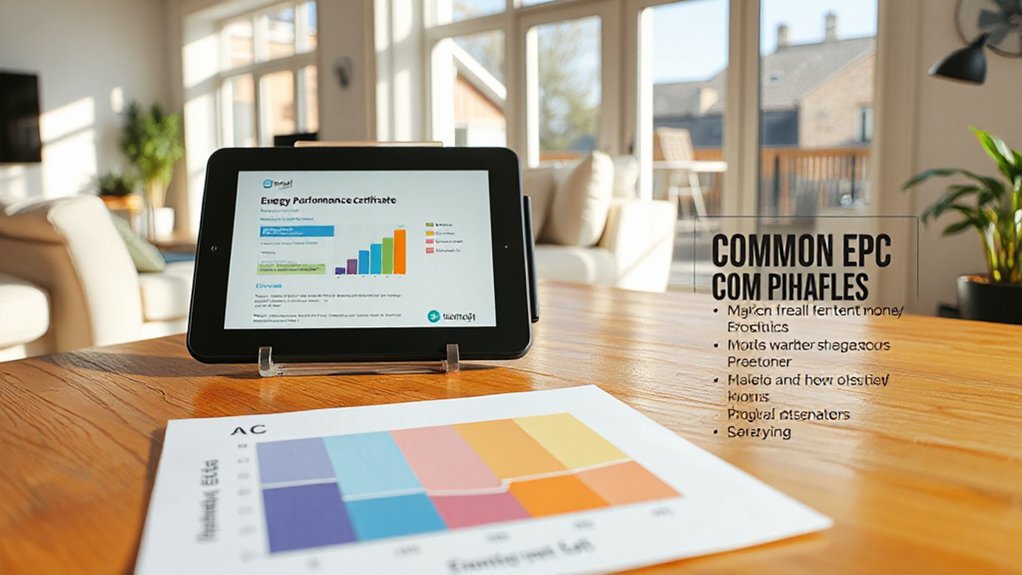
Watch out for EPC calculation pitfalls that can mislead your comparisons, like relying on estimates instead of verified data.
You’ll want to confirm the method and date of the rating, and beware inflated or outdated figures.
Pair every rating with trusted energy ratings sources to guarantee you’re not trading accuracy for speed.
EPC Calculation Pitfalls
- Compare apples to apples: guarantee the same property assumptions, dwellings, and energy use profiles across assessments.
- Watch for Energy myths: exclude optimistic retrofits or seasonal biases that inflate scores.
- Check rating consistency: confirm the same calculation method and data inputs across documents to avoid surprises at offer stage.
Stop ambiguity before you commit; clarity builds belonging and confidence in your energy future.
Trustworthy Energy Ratings
Focus on energy efficiency claims backed by verifiable measurements, not flashy labels alone. Question rating accuracy when a property’s numbers seem out of sync with recent improvements or local performance data.
Compare assessments from multiple accredited assessors and check the methodology, calibration, and date of issue. Beware missing recalculations after renovations, or inconsistent scales across regions.
Seek corroborating details like heating system efficiency, insulation quality, and occupancy assumptions.
Do EPCs Matter for Newer Builds?
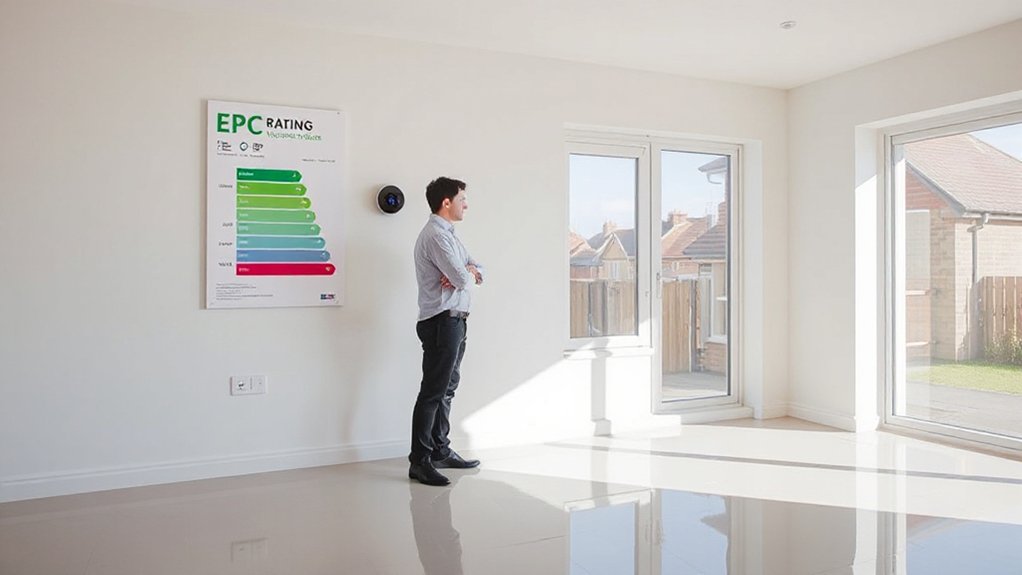
- Understand how construction materials influence energy efficiency and EPC scores.
- Compare how different building standards affect future running costs.
- Verify that the chosen materials align with current regulations and your goals.
Case Studies: Real Buyer Decisions Guided by EPCs
You’ll see how Case-Driven EPC Choices translate into tangible outcomes for buyers, from lower energy costs to smarter retrofit decisions.
Practical Buyer Outcomes emerge when you compare EPCs side by side, weighting real-world performance over hype.
These case studies spark discussion on which metrics truly drive value and how you apply them to your own buying decisions.
Case-Driven EPC Choices
Case studies show how buyers lean on EPCs to rank homes by energy efficiency and long-term cost. You’ll see choices shaped by real-world trade-offs, not just numbers, as you compare comfort, bills, and value. Use EPCs to forecast monthly spend, then couple that insight with your priorities—comfort, sustainability, or resale appeal.
Energy efficient lighting and Renewable energy sources often headline quality upgrades, signaling savvy, future-ready homes.
- You identify top performers whose improvements align with your budget and lifestyle.
- You weigh upfront costs against long-term savings, prioritizing rooms that affect daily living.
- You choose properties whose EPC trajectory suggests stable, predictable expenses rather than surprises.
Practical Buyer Outcomes
In real-world decisions, EPCs guide buyers toward tangible outcomes rather than abstract metrics. You see, practical outcomes hinge on energy efficiency and cost certainty, not just labels.
A buyer with a high-efficiency home reduces monthly expenses, smoothing budget planning even when mortgage rates rise. You’ll compare two properties by expected energy use, not just upfront price, and you’ll value long-term savings over flashy specs.
When mortgage rates shift, the lower operating costs of an efficient home can offset higher interest, preserving affordability.
These case studies show you how to translate EPCs into action: ask about typical utility bills, verify improvements, and check resale value with energy performance in mind.
Belonging comes from making informed, confident choices that align values with long-term financial well-being. Energy efficiency matters. Mortgage rates matter.
Final EPC-Focused Decision Checklist
With the Final EPC-Focused Decision Checklist, you’ll quickly verify that a property’s energy credentials align with your goals and budget. This checklist keeps you grounded, ensuring you feel welcome in your choice and confident about long-term costs.
Focus on practical signals, not hype, so you belong to a community of informed buyers.
- Evaluate energy labels against your budget, prioritizing long-term savings over flashy claims.
- Confirm presence of energy efficient appliances and opportunities for renewable energy integration.
- Assess maintenance needs and local incentives, ensuring ongoing affordability and support.
Frequently Asked Questions
Do EPC Ratings Predict Long-Term Maintenance Costs Reliably?
EPC ratings don’t reliably predict long-term maintenance costs, but energy efficiency helps you estimate ongoing expenses. You’ll gain clearer cost estimation guidance when you consider maintenance history alongside rating, enabling smarter decisions that reinforce belonging in responsible homeownership.
How Often Can EPCS Be Updated After Renovations?
You can update EPCs after renovations as often as necessary, but typically every 2–5 years; Renovation impact should be assessed, and Rating frequency increases if major changes occur, ensuring your home’s performance stays accurate and you feel included.
Do EPCS Account for Solar Panels or Microgeneration?
Yes, EPCs can reflect solar panels and microgeneration, but treatment varies by locale. You’ll see solar panel impact and microgeneration effects considered, often boosting efficiency ratings when generation reduces net consumption, yet schemes differ and timing matters for accuracy.
Are EPCS Weighted Equally Across Different Property Ages?
No, EPCs aren’t weighted equally by property age. You’ll see energy efficiency factors shift with age, reflecting construction standards; newer homes often start higher, while older ones may require more improvements to boost energy performance and comfort.
Can Tenants Request an EPC Rating From Landlords Legally?
Did you know that 85% of tenants expect energy efficiency? Yes, you can request an EPC rating from landlords legally. You have Tenant rights and Legal obligations on awareness, disclosure, and timely improving inspections, ensuring transparency and fair treatment.
Conclusion
In short, you should compare, compare, compare—consistently, consistently, consistently. You’ll estimate, estimate, estimate—accurately, practically, clearly. You’ll consider, consider, consider—costs, comfort, long-term value. You’ll check, check, check—ratings, rules, regional quirks. You’ll align, align, align—your budget, your lifestyle, your timeline. You’ll use, use, use—the EPC as a tool, not a verdict. You’ll decide, decide, decide—with confidence, clarity, conviction. You’ll progress, progress, progress—toward smarter, sustainable, satisfying homeownership.