
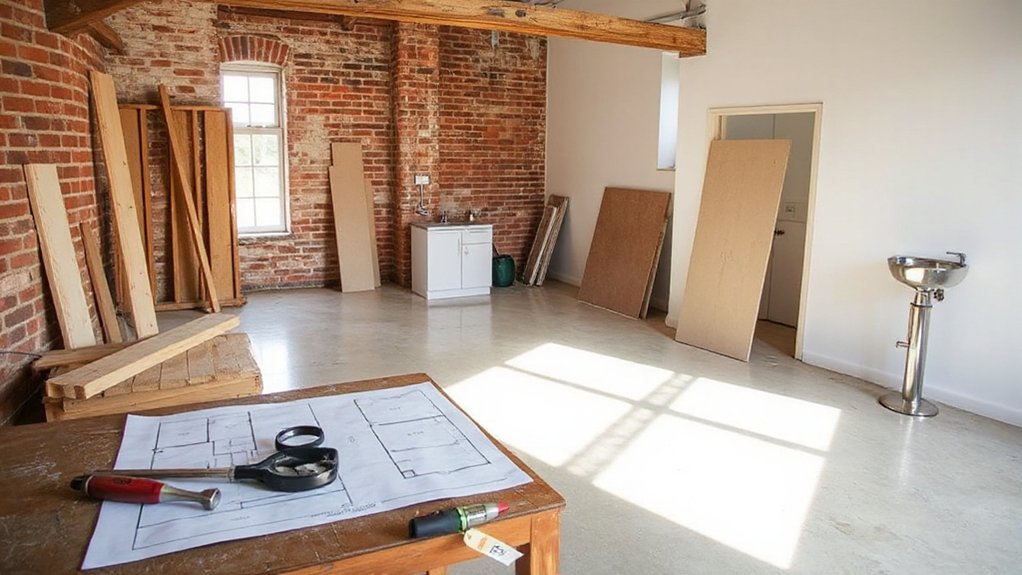
Think of a garage conversion as a controlled transformation, akin to turning a utilitarian space into a measured living zone. You’ll weigh structural scope, insulation, and systems like heating and electrical, knowing costs hinge on finish levels and compliance. Budgets can sway with drainage or damp remediation, planning permissions, and professional fees. The question becomes how to balance quality with value while avoiding surprises—a consideration that invites you to assess needs, constraints, and contingencies before committing.
Garage Conversions in the UK: Is It Right for Your Home?
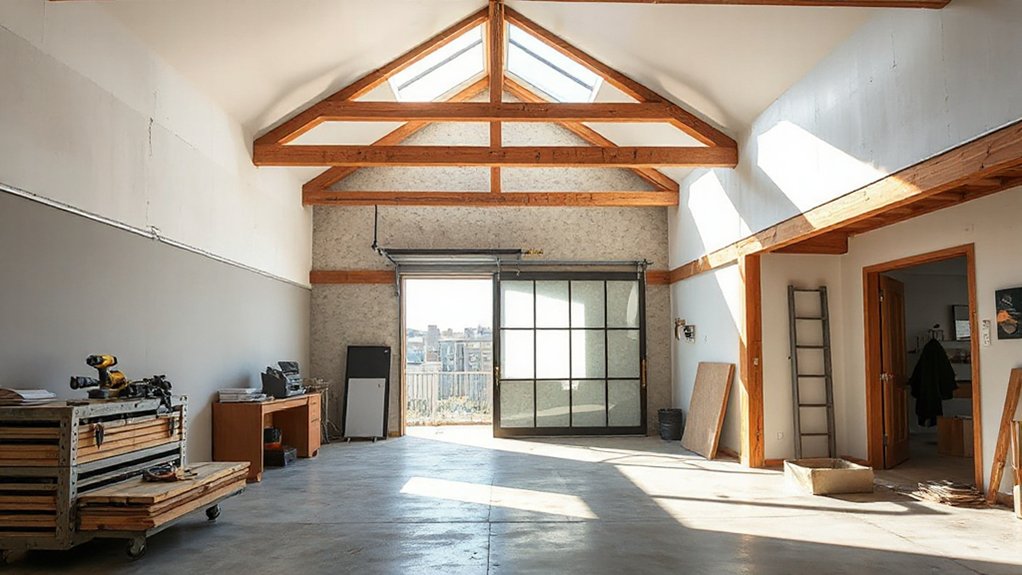
Garage conversions can add valuable living space and, in many UK homes, represent a cost-effective alternative to extensions. You assess suitability by structural integrity, floor height, and existing utilities, recognizing that not every garage matches internal habitable standards without modification.
The primary objective is to create a functional, compliant room that aligns with your home’s bespoke layout while preserving external aesthetics. Consider Garage aesthetics as a design discipline: proportion, materials, lighting, and acoustics influence perceived space and resale value.
Storage solutions should be integrated into the plan, avoiding clutter and ensuring easy access to seasonal items. You should consult a qualified professional to verify load-bearing capacity, insulation performance, and ventilation, ensuring compliance with current building practices and long-term durability.
This analysis supports a well-founded decision about suitability for your property.
Do You Need Planning Permission or Building Regulations?
You’ll first assess Planning Permission basics to determine whether your garage conversion triggers consent thresholds.
Then, you’ll examine Building Regulations scope to guarantee structural and safety compliance, including any necessary approvals.
Finally, you’ll compare Permitted Development limits to see what changes you can implement without full permission.
Planning Permission Basics
Planning permission and building regulations determine whether a garage conversion requires formal consent. The decision hinges on the intended use, structural alterations, and site specifics.
If you’re expanding living space within the dwelling, you’ll likely encounter planning permission considerations, especially where alterations affect visibility, impact on access, or roofline.
Building regulations assess safety, energy efficiency, and quality of construction, regardless of permission outcomes.
You should verify with your local planning authority whether Permitted Development rights apply to your property type and scale.
If consent is required, apply before any substantial work, and align design with local planning guidance.
Consider Garage aesthetics and Storage solutions as part of initial planning, ensuring that proposed changes preserve character while meeting statutory standards.
Building Regulations Scope
Building regulations govern the technical standards for construction, safety, energy efficiency, and accessibility, and they apply regardless of whether planning permission is required. In this scope, you determine compliance pathways for a garage conversion by evaluating structural alterations, fire safety compartments, and insulation performance.
You’ll verify whether works fall under build notice or full plan submission, noting that many interior modifications still trigger regulatory controls even when exterior changes are limited. You must ensure services connections, drainage, and ventilation meet mandatory criteria, with attention to thermal performance and accessibility features where applicable.
Garage aesthetics influence compliance details, particularly regarding fire separation and continuity of insulation. Material selection matters for durability and risk mitigation; choose systems that align with building envelope requirements and long‑term maintenance considerations.
Permitted Development Limits
Permitted development and planning permission rules determine whether a garage conversion can proceed without formal planning consent. In many cases, internal changes and modest exterior alterations fall within allowed development rights, subject to size, location, and usage constraints.
You assess limits by checking the garage’s dimensions, proximity to boundaries, and any extension plans, as these influence eligibility under the General Permitted Development Order and local constraints.
If the project remains within permitted size, height, and footprint, you may avoid full planning permission, though Building Regulations still apply for structural integrity, insulation, and fire safety.
You should consider potential conditions linked to adjacent properties and excluded uses. Garage aesthetics and storage solutions are optimized under compliant schemes, reducing project delays and costs while preserving compliance.
What Will a UK Garage Conversion Cost: A Practical Budget Guide
Estimating costs starts with identifying the key Cost Factors that influence a garage conversion, such as structural alterations, insulation, finishes, and services.
You’ll then anchor your plan to a practical Budgeting For Conversion framework that allocates allowances for design work, permissions, and contingencies.
This discussion sets a precise baseline for how these elements shape overall expenditure and project viability.
Cost Factors Overview
Undertaking a garage conversion in the UK involves several cost drivers that directly influence the overall budget. You’ll assess structural requirements, insulation levels, and building regulations compliance to determine baseline costs.
Mechanical systems, including heating, electrical, and ventilation, contribute considerably and should be specified with appropriate performance standards.
Finishes, fixtures, and fittings vary by quality tier, influencing overall expenditure without altering scope.
Access considerations, drainage, and damp remediation can introduce unexpected expenses if neglected in early planning.
Storage solutions affect space planning and material costs; plan efficient layouts to maximise usable area.
For practical value, consider Garage storage integration and durability when selecting components.
DIY tips may reduce labor expenditure only for non-technical tasks; professional trades remain essential for critical installations.
Budgeting For Conversion
Budgeting for a garage conversion requires translating the identified cost drivers into a practical, itemized plan. You should establish a baseline scope, then allocate allowances for structure, insulation, electrical, plumbing, and finishes.
Create a work breakdown structure that lists trades, materials, and contingencies, with explicit unit costs and delivery timelines. Include separate line items for garage aesthetics to define finishes, fixtures, and lighting quality, ensuring consistency with overall design intent.
Plan for storage solutions early to avoid retrofit penalties. Consider compliance costs, such as building regulations, ventilation, and energy efficiency upgrades, and embed a risk provision—typically 10–15% of total.
Track actuals against budget weekly, updating forecasts as scope evolves. A disciplined process minimizes overrun risk while delivering a credible, measurable conversion budget.
Core Renovation Costs: Insulation, Windows, and Heating
To achieve effective thermal performance in a garage conversion, you must prioritise core renovation costs for insulation, windows, and heating.
You evaluate envelope performance first: select high-grade garage insulation with appropriate thickness and low U-values to minimize heat loss. Proper installation avoids gaps that create thermal bridges, ensuring continuous coverage around walls, doors, and ceilings.
Window installation should emphasize thermal efficiency, unit performance, and compliance with building standards, favouring double or triple glazing, draft-proof frames, and appropriate spacers.
Heating design must balance heat source, controls, and distribution to maintain stable indoor conditions without oversizing.
Budget allocation should reflect trade-offs between insulation quality, window performance, and efficient heating systems, optimising long-term operating costs and comfort while meeting regulatory requirements.
Plumbing and Electrical: What’s Typical and What It Costs
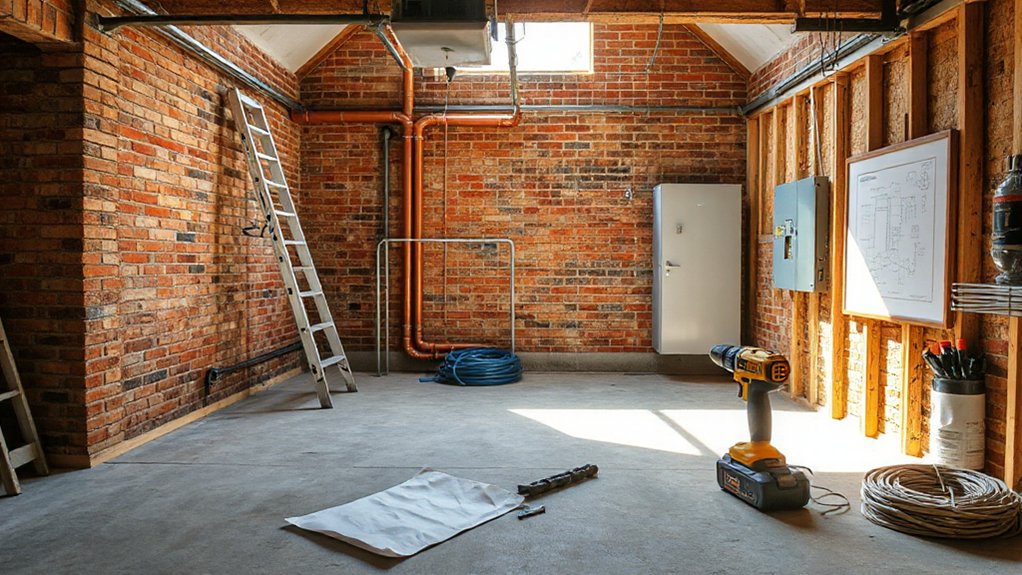
After optimizing envelope performance with insulation, windows, and heating, the next focus is plumbing and electrical systems, which underpin safe, compliant, and functional space. You should plan for a dedicated mains feed, appropriate breakers, and RCD protection, with a detailed load assessment to avoid overloading circuits.
Plumbing fixtures require compliant pipe sizing, venting, and corrosion-resistant materials, plus a practical layout that minimizes run lengths and cold-water delays.
For electrical, install sufficient sockets, lighting, and a fused spur for heat or tools, with accessible isolation points. Expect costs to reflect material quality, labor, and compliance testing.
Budget for retrofit challenges, such as re-routing services.
Prioritize Garage aesthetics and storage solutions, ensuring discreet, functional integration with concealed cabling and clean, accessible plumbing routes.
Finishing Touches That Add Value: Finish Levels, Fixtures, and Layout
Finishing touches can dramatically elevate a garage conversion by aligning finish levels, fixtures, and layout with intended use and value targets. You determine finish levels that balance durability with aesthetics, selecting plaster, drylining, or plasterboard where appropriate, then specify robust skim coats and undercoats for a smooth final surface.
Decorative finishes are employed judiciously to avoid excess cost while enhancing perceived quality, particularly in access corridors and social areas. Lighting fixtures should be chosen for function and energy efficiency, with layer lighting to support work zones and ambient spaces.
Layout considerations prioritize flow, door positioning, and mezzanine or storage integration without compromising headroom. Finish schedules must be documented, costed, and coordinated with MEP elements to maintain project precision.
Smart Saving Moves That Don’t Skimp on Value
Smart saving moves can preserve value in a garage conversion without sacrificing quality or durability. You optimise cost by upfront planning and disciplined scope, targeting elements that yield long-term performance.
Prioritise efficient builders’ rates and competitive material sourcing, but never compromise structural integrity.
Focus on garage insulation to minimise energy losses and maintain stable internal conditions, reducing ongoing utility costs and tenant complaints.
Select high-efficiency windows and doors with appropriate U-values to balance warmth and light, avoiding over-specification.
Plan for Rental potential by configuring adaptable layouts, durable finishes, and compliant ventilation.
Use modular systems where possible to reduce waste and allow future upgrades.
Document decisions for accountability, ensuring conformance with building regulations and warranty terms.
This approach delivers value without rationalising quality compromises.
When to Hire Pros vs DIY: A Practical Checklist
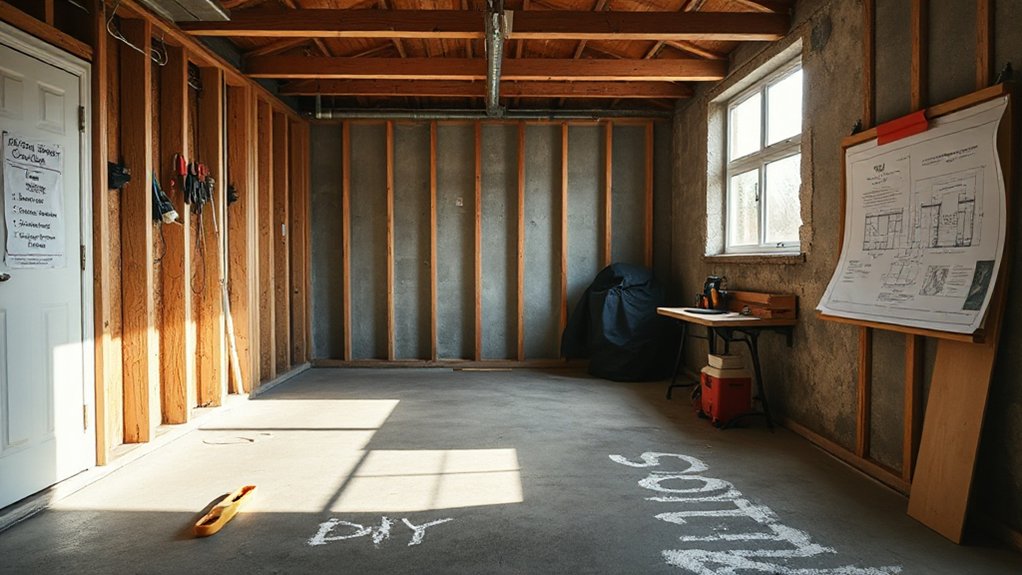
Determining whether to hire professionals or DIY a garage conversion hinges on risk, scope, and compliance. You should assess structural demands, electrical and plumbing implications, and local planning or building regulations before committing.
If the project involves load-bearing alterations, gas services, or complex insulation strategies, engage licensed trades and approved inspectors. For straightforward tasks like installing garage insulation or finishing surfaces, you may proceed if you have documented knowledge, appropriate tools, and risk controls.
Create a checklist: required permits, structural surveys, energy performance targets, and fire safety standards.
Reserve professional input for driveway resurfacing decisions that affect drainage or access, while DIY work can cover non-critical finishes.
Always document quality assurances and warranties to protect long-term performance and compliance.
Frequently Asked Questions
What Grants or Subsidies Are Available for Garage Conversions in the UK?
Yes, you may access grants or subsidies through local authorities and energy schemes. You’ll pursue garage insulation improvements, confirm planning permissions are assessed, and verify eligibility for grants targeting energy efficiency and retrofit programs for your project.
How Long Does a Typical Garage Conversion Take From Start to Finish?
A typical garage conversion takes 4–8 weeks from start to finish. You’ll review Garage design details early, then manage inspections and approvals. Expect Conversion costs to reflect design complexity, insulation, and finishing quality, with intermediate milestones and contingency planning.
Can a Garage Conversion Affect Home Insurance Premiums?
Yes, a garage conversion can affect your home insurance premiums. When evaluating risk, insurers consider Garage insulation quality and adherence to Building regulations; improvements may lower premiums, while poor insulation or noncompliance could raise them, subject to policy specifics.
Are There Energy Efficiency Certifications or Ratings Required?
Yes, energy efficiency certifications are not universally mandatory, but you may need to meet energy standards for building regulations. Certification requirements depend on local authority; you’ll typically provide calculations or certificates showing compliance with energy standards.
What Resale Value Uplift Can Be Expected From a Conversion?
You’ll typically see a resale uplift of about 5–20% depending on quality, location, and design. For garage design and conversion costs, plan high-end finishes to maximize value while meeting local standards and efficiency targets.
Conclusion
Imagine your garage as a seed pod: with the right planning, it can sprout into valuable living space. The journey hinges on budget discipline, sensible scope, and compliant design. Plan for structural work, insulation, heating, and utilities; account for permissions, fees, and contingencies. If you balance frugality with quality, the upgrade grows roots deep and true, weatherproofing your home while boosting value. Choose pros for complexity, DIY cautiously for refinement—then watch your space mature into comfort.