
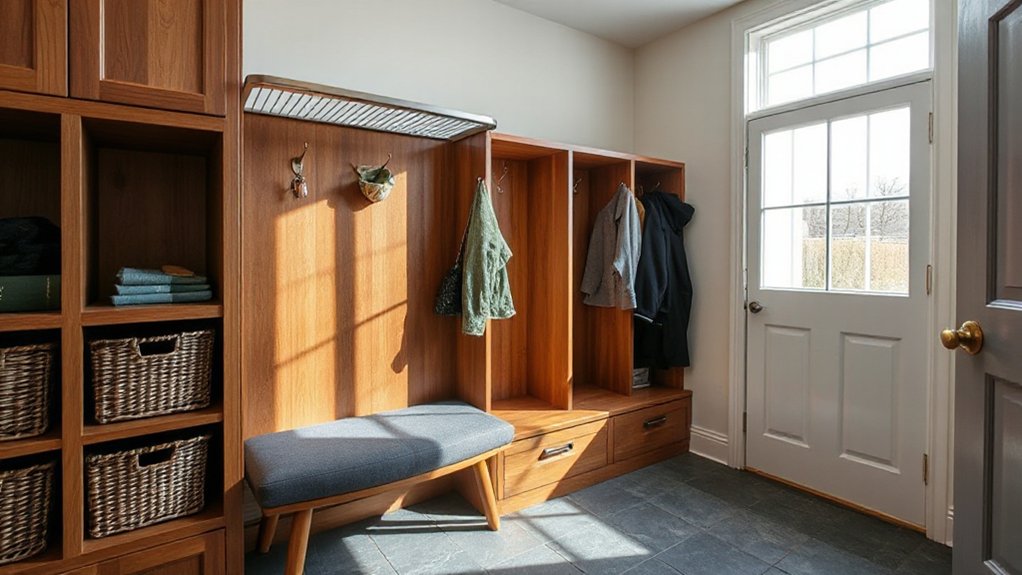
Transform your entryway with practical DIY mudroom ideas that maximize space and curb clutter. Start by evaluating your area, map traffic flow, and designate zones for coats, bags, and shoes. Build budget-friendly cubbies, sturdy hooks, and labeled bins that suit your family. Add weather-ready mats, a bench with hidden storage, and kid- or pet-friendly features for safety. Use layered lighting and a mirror to expand the space. Want more step-by-step tactics and tips? Keep going to refine your plan.
Why a Mudroom Transforms Your Daily Routines
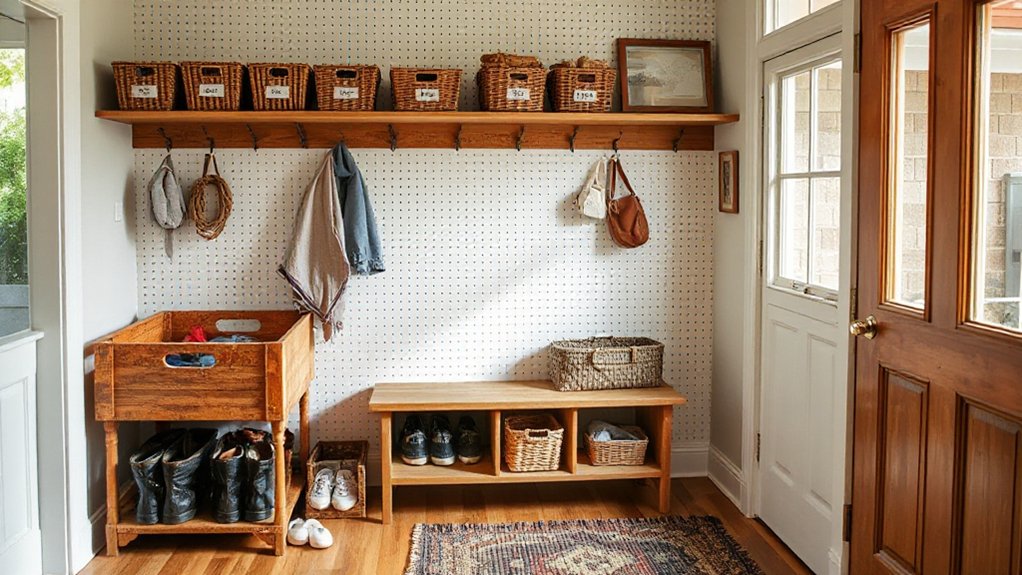
A mudroom isn’t just an entryway—it’s a dedicated staging area that streamlines your daily routine. When you prioritize organization here, you cut clutter, save minutes, and reduce stress before you even step through the door.
Mudroom decor sets the tone for efficiency, guiding your daily rituals with deliberate zones for coats, shoes, and bags. By choosing practical storage and durable materials, you create a reliable system that you’ll actually use, day after day.
The payoff goes beyond tidiness; you gain a calmer, predictable flow that anchors belonging in your home. With an eye for historical styles, you can blend timeless charm with modern function, ensuring your mudroom feels both welcoming and enduring.
Your routine, transformed.
Assess Your Space: Measure, Map, and Prioritize
Start by surveying the space you’re working with: measure every wall, door swing, and ceiling height, then sketch a simple map that shows current features like outlets, windows, and built-ins.
With measurements in hand, you can quantify constraints and opportunities, guiding you toward efficient space optimization.
Prioritize zones that handle daily tasks—shoe storage, coats, and quick-access hooks—so traffic patterns stay smooth.
Consider vertical potential: tall cabinets, wall hooks, and over-door organizers maximize footprint without crowding.
Map electrical outlets and lighting needs to avoid hotspots and shadows at key moments.
In your plan, note design considerations such as durability, low maintenance finishes, and ease of cleaning.
When you align metrics with needs, you’ll feel confident, purposeful, and wholly at home in the mudroom you’re building.
Pick a Mudroom Style That Fits Your Home
Choose a mudroom style that fits your home by testing how well it suits your space and daily flow. Start with a style suitability check—does the vibe match your decor and practical needs?
Consider how the mudroom supports your home’s flow, ensuring it feels natural and organized.
Style Suitability Check
To pick a mudroom style that fits your home, start by evaluating your entryway’s architecture and existing finishes; the goal is a seamless shift, not a borrowed look.
Before you decide, check fashion compatibility: does the style align with your home’s character and your daily routines?
Next, assess material suitability for high-traffic use, moisture, and cleaning needs. Choose durable surfaces that resist wear and feel cohesive with nearby rooms.
Consider storage forms that support your rhythm—hooks, cubbies, benches—in a layout that respects traffic flow.
If you love warmth, lean toward natural textures; if you prefer minimalism, opt for clean lines and low maintenance.
Ground your choice in practicality, ensuring every element supports belonging and everyday confidence.
Home Flow Alignment
When you pick a mudroom style that fits your home, start by mapping the entry’s traffic patterns and adjacent rooms to guarantee a natural flow. Focus on sightlines from the main foyer and how coats, boots, and bags enter and exit.
Choose storage locations that minimize detours and clutter, so every habit reinforces order. Plan lighting that guides transitions—functional mudroom lighting should illuminate steps and seating without glare.
Align door hardware with the style and ease of use you expect, ensuring smooth, inviting entry points. Keep a consistent palette and materials to support seamless movement between zones like kitchen, garage, and living spaces.
A thoughtfully aligned flow reduces friction, strengthens belonging, and makes daily routines feel effortless.
Core Storage Zones: Coats, Bags, and Shoes
Start by designating clear zones for coats, bags, and shoes so every item has a home. Use practical storage options—hooks for outerwear, labeled bins for accessories, and a dedicated shoe shelf or cubbies—to keep daily routines efficient.
Aim for a streamlined system that you can expand as your family grows, with quick-access spots near the entry for fast, clutter-free mornings.
Coats, Bags Organization
Coats, bags, and shoes are the core storage zones that set the daily rhythm of a mudroom. You’ll keep entry habits cohesive by prioritizing quick access and clear paths. Think in zones: outerwear near the door, bags at eye level, and daily shoes out of the way. Practice efficient bag sorting and clothing layering to reduce clutter and speed routines.
- Establish a dedicated coat rack with labeled hooks for family members
- Use a shallow bin or tray for purses, backpacks, and travel bags
- Create a daily-use shoe shelf with a no-slip mat
- Rotate items by season to maintain balance and accessibility
This approach supports belonging, minimizes decision fatigue, and streamlines every arrival.
Shoes Storage Zones
Choose a setup that fits your mudroom’s footprint—narrow racks, staggered cubbies, or a single wide shelf. When selecting shoe material, opt for durable, easy-to-clean options that tolerate mud and moisture.
Pair the storage with a simple mat and a bench to encourage changing shoes mindfully. Consider labels or color-coding to reinforce belonging and shared responsibility.
Finally, guarantee easy access and visible maintenance cues so everyone contributes to a tidy, welcoming entryway and consistent storage aesthetics.
Budget-Friendly DIY Cubby Solutions for Any Nook
Transform any small entryway into an organized space with budget-friendly DIY cubby ideas that fit virtually any nook. You’ll reclaim clutter with simple, sturdy builds you can assemble in a weekend, using affordable materials and modular layouts. Each cubby serves a purpose, from for shoes to small accessories, while keeping Mudroom decor cohesive and inviting. Follow these basics for quick success and cleaning tips that last.
- Measure wall space, sketch a grid, and choose stackable bins that match the dimensions.
- Use plywood or MDF panels with quick-trim edges; paint in a coordinating color.
- Label fronts for family members to reinforce belonging and ownership.
- Seal wood surfaces and wipe down weekly to maintain grime-free cubbies and easy cleaning.
Custom Hooks and Hangers to Maximize Vertical Space
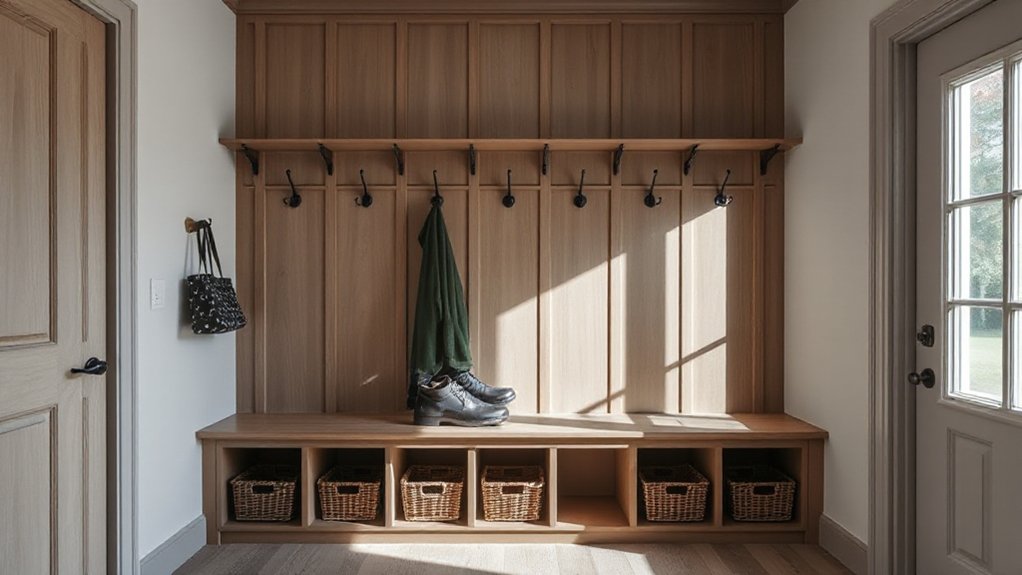
Rising to the challenge of tight entryways, custom hooks and hangers let you layer storage up the wall without adding bulk. You’ll organize daily essentials by zone, so coats, bags, and hats are easy to grab on your way out.
Choose sturdy materials and finishings that match your mudroom’s vibe, then position hooks at varying heights for adults and kids alike. Vertical hangers maximize small footprints, turning wasted wall space into practical storage real estate.
Use a mix of single hooks, double hooks, and slim rails to keep items tidy and accessible. Labeling or color-coding helps everyone contribute to the system, reinforcing belonging through shared responsibility and collaboration.
Your mudroom becomes calm, functional, and welcoming.
Quick-Access Magnetic Organizers for Small Items
Small items tend to vanish in a busy mudroom, but quick-access magnetic organizers keep them visible and reachable. You’ll love how magnetic accessories simplify entry routines, turning clutter into clarity. Choose slim magnetic strips or magnetic boards placed at eye level for fast grabs and drop-offs, improving small item storage without sprawling trays.
- Mount near the door for staples like keys and lanyards.
- Use labeled tins or magnets to categorize screws, coins, and receipts.
- Pair with a shallow tray to catch change and quick-dip items.
- Add a reflective surface to help you spot misplaced objects quickly.
These simple magnetic accessories offer reliable, accessible storage, fostering belonging and order as you move through your day.
Repurposed Furniture: Turn a Console Into a Command Center
Repurposed furniture can anchor a mudroom without buying new pieces. You turn a console into a command center by prioritizing flow, function, and fairness to your daily routine.
Start with a sturdy top for phones, keys, mail, and a charging station; add labeled baskets or bins for smaller items, so clutter never stacks up. Install hooks or a slim rack for outerwear, and dedicate a shallow drawer or tray for receipts and coupons.
Keep essential items within reach, and reserve a drawer or cabinet for seasonal gear. Integrate garden decor touches or a small plant to signal you’ve arrived home.
You’ll appreciate a seat-friendly console that doubles as harmony between entryway and living areas, while accommodating outdoor seating aesthetics and practical, welcoming organization.
Under-Bench Storage Ideas to Hide Messes
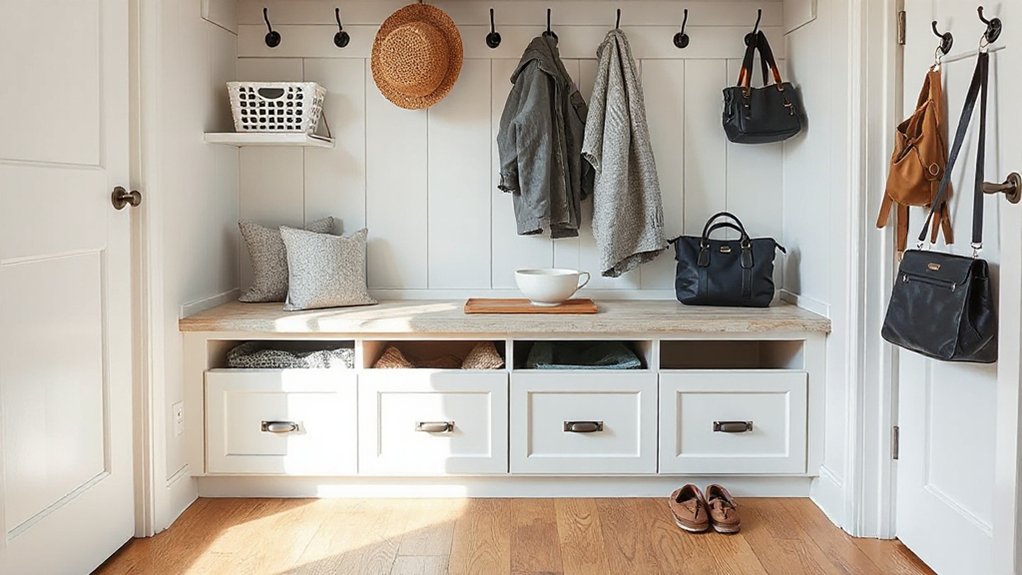
Think about a hidden compartment design that stays out of sight but is easy to access when you need it.
Pair slim bin organization with a compact footprint, so you maximize storage without crowding the bench area.
Choose durable lid solutions that resist daily wear while keeping messes neatly concealed.
Hidden Compartment Design
Hidden compartments under the bench offer a clean, practical way to hide mudroom clutter while keeping everyday essentials within arm’s reach. You’ll gain discreet storage that blends with your space, supporting a calm, organized entryway. Use these ideas to implement a hidden compartment that feels intentional and secure.
- Plan a lift-front or hinge-door design for quick access.
- Choose materials that match your bench and withstand daily use.
- Include a small gasket or soft-close mechanism to reduce noise.
- Label or color-code interior bins for easy self-organization.
This approach creates secret storage that minimizes visual mess while maximizing function.
With thoughtful placement, you’ll maintain a welcoming mudroom that still feels personal and belonging-worthy.
Slim Bin Organization
Ever try slim bin organization under the bench to keep mud and clutter contained without sacrificing access? Under-bench bins give you quick, discrete storage for shoes, towels, and grime-prone items, so your entry stays neat at a glance.
Choose shallow, labeled containers that slide smoothly; this keeps daily pulls and cleans simple. Allocate zones for wet gear, dry toys, and cleaning tips supplies, and use lids sparingly to maintain visibility.
Install with adjustable rails to accommodate varying bin widths, ensuring a snug fit under benches of different depths. Pair with mudroom decor accents—hooks, baskets, and a slim shoe rack—to reinforce order.
This approach reduces mess, supports efficient cleaning, and helps you feel like you belong in a well-organized space.
Durable Lid Solutions
- Use hinged, weatherproof lids with magnetic or latch closures for quick access.
- Opt for breathable liners inside bins to reduce odor buildup.
- Select lids with edge guards to prevent wear from boots and buckets.
- Install a low-profile lid to maximize under-bench clearance without sacrificing capacity.
Built-In Bench vs Free-Standing: Pros, Cons, and Costs
A built-in bench integrates seamlessly with your mudroom’s structure, offering a tidy, space-efficient solution that can double as storage with cubbies or drawers beneath. You’ll assess built-in vs free standing by weighing integration, cost, and maintenance.
Built-ins feel cohesive and can add resale value, but installation may require carpentry, permits, and higher upfront investment. Free-standing benches cost less upfront, are flexible, and move with you, yet they can look separated from the room and need periodic alignment.
Consider space constraints, foot traffic, and how you’ll use the bench daily. In most cases, Built in vs free standing presents clear pros and cons: durability, customization, and cost versus adaptability and ease.
Choose the option that optimizes organization, comfort, and belonging in your mudroom.
Weather-Ready Accessories: Mats, Trays, and Drainage
Weather-ready accessories keep mud from spreading, starting with mats that trap dirt and dry shoes, plus trays that corral wet items and catch spills. You’ll create a cleaner, more welcoming entry by choosing weatherproof textiles and durable materials, so maintenance stays simple and your space feels cohesive with your entryway decor.
- Mats that absorb moisture without showing wear, staying put on slick floors
- Trays with drainage channels to guide puddles toward a tray’s lip
- Racks or hooks that organize leathers, gloves, and umbrella silhouettes
- Floor mats and runners that tolerate foot traffic and season changes
Keep the layout practical: place a high-traffic mat at the door, a tray near the bench, and a small catch-all by the coat rack. Belonging starts with smart, weatherproof choices.
Brighten the Entry: Lighting and Mirrors
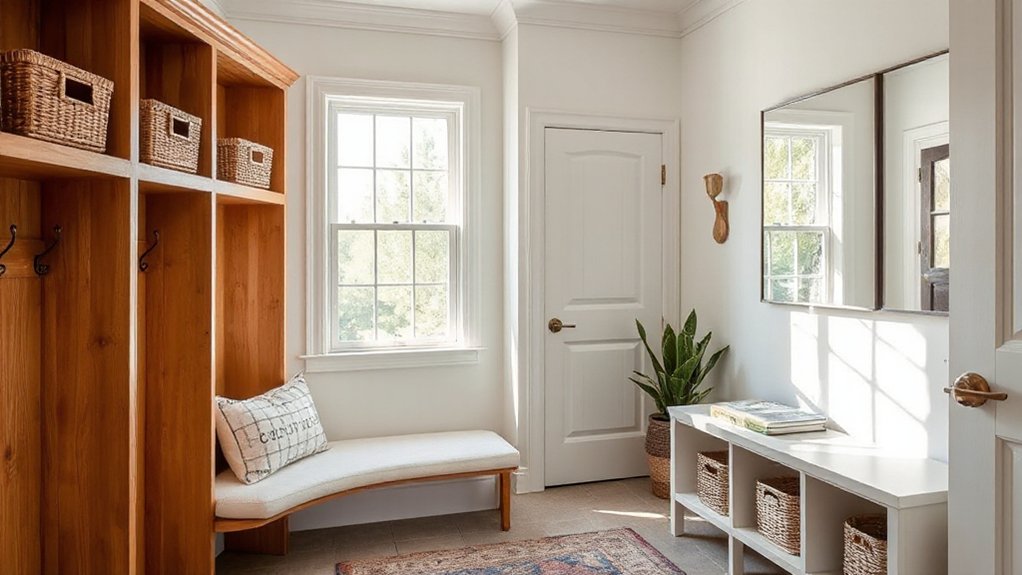
Brighten the entry with lighting and mirrors that amplify space and guide arrivals. You’ll choose lighting thoughtfully to reduce shadows and create a welcoming mood, balancing task light and ambient glow.
Favor layered lighting: a ceiling fixture for general use, plus wall sconces or a slim floor lamp near key zones like the bench or coat rack. Consider dimmers to adjust the intensity for different times of day.
For mirrors, apply smart mirror placement to multiply light and visually expand narrow layouts. Place a mid-sized mirror opposite a window or a light source to bounce brightness without glare.
Guarantee reflections show tidy, functional areas for a quick, stress-free first impression. Keep wiring concealed and switch placement convenient for effortless daily routines.
DIY-Friendly Organization Systems That Work Today
With lighting and mirrors set to maximize space, you can implement organization that sticks. You’ll choose DIY-friendly systems that you can install this weekend, not someday. Start simple, then scale as needed.
1) Use labeled bins and a shallow, wall-mounted cubby for daily items, so everyone knows where to go.
2) Install a vertical hook rail plus a slim bench with storage, keeping coats, bags, and shoes off the floor.
3) Create a dedicated cleaning routine station with a small shelf for sprays and microfiber cloths, preserving mudroom decor.
4) Add a compact magnetic strip or pegboard for tools and seasonal gear, so clutter stays contained.
These systems promote belonging, efficiency, and consistency in every entryway.
Kid- and Pet-Friendly Mudrooms: Safety and Accessibility
Kid- and pet-friendly mudrooms demand safety and ease of access as top priorities. You design for daily activity with clear pathways, rounded corners, and stable shelving at reachable heights.
Prioritize child proofing safety by locking cabinets, securing cords, and tucking away hazard items. Use non-slip mats and low-height hooks so everyone can participate without frustration.
For pets, incorporate pet accessibility features like wide, unobstructed doorways, washable mats, and a dedicated, easy-to-clean area for coats and toys.
Install a durable, water-resistant surface treatment and consider a labeled, color-coded system to guide family members.
Build routines around consistent placement of gear, so kids and pets grow confident in the space and feel valued in the home.
Seasonal Reconfigurations: Adapting Through the Year
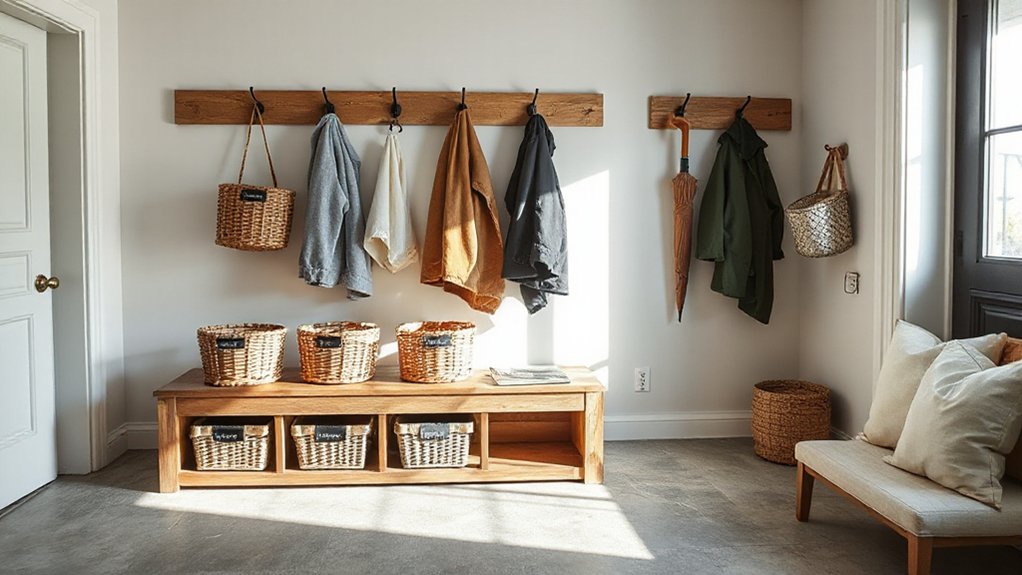
Seasonal reconfigurations keep a mudroom functional year-round by aligning storage and workflows with the weather. You’ll swap items, not spaces, to honor seasonal decor while preserving flow. Start with a quick audit of current gear, then rotate based on forecasted needs.
- Prioritize accessibility by placing frequently used items at eye level during each season.
- Rotate seasonal decor and labels to reinforce belonging and ease of use.
- Create a compact swap zone for coats, boots, and accessories to minimize clutter.
- Update a simple checklist for maintenance and quick seasonal adjustments, so you stay proactive.
A deliberate storage rotation boosts efficiency and morale, helping your family feel rooted and supported. You’ll notice faster routines, less chaos, and a space that genuinely welcomes everyone.
Maintenance Hacks to Keep It Clutter-Free
Maintenance hacks keep your mudroom tidy without demanding endless time or money. You’ll stay organized by simple, repeatable actions that fit real life.
Create a quick Cleaning routine: a 5-minute nightly sweep, shoe wipe, and bin check to prevent buildup. Pair it with a weekly reset of hooks and baskets, so items return to their homes.
Establish a clear maintenance schedule: designate daily, weekly, and monthly tasks, and honor them as nonnegotiable routines.
Use labeled bins and a compact cabinet system to minimize decisions and clutter.
Involve everyone in the household so you all feel ownership and belonging. Kind reminders or a shared checklist help sustain momentum.
Consistency beats intensity, delivering steady order without burnout.
A Step-by-Step Plan: Your Before-and-After Roadmap
Start with a clear vision and a simple plan. You’ll craft a before-and-after roadmap that keeps you centered on practical results and a sense of belonging. Here’s your step-by-step guide:
- Assess current flow and identify pain points, focusing on mudroom decor and entryway seating.
- Define a target layout that supports daily use, with zones for coats, bags, and shoes.
- Gather essential pieces and simple storage, prioritizing quality and accessibility.
- Implement, test, and adjust in small shifts until the space feels welcoming and organized.
With each step, you build confidence, reduce clutter, and create a space that invites family and guests to belong.
Frequently Asked Questions
How Can Mudrooms Improve Daily Organization Quickly?
Mudrooms improve daily organization quickly by creating a dedicated, drop-and-go zone you actually use. You’ll store coats, bags, and shoes out of sight yet within reach, so morning routines stay smooth.
Choose entryway decor that guides habit: labeled bins, a bench, and hooks at a family-friendly height.
Use color schemes that calm clutter and boost focus. You’ll feel grounded and welcome, knowing everything has a place, and you belong in a tidier home.
What Budget Tricks Maximize Small-Space Storage?
Your budget tricks maximize small-space storage by prioritizing efficiency over flair, like a compact gear kit you can trust. Use storage baskets to corral daily items, and wall mounted shelves to free floor space.
Choose uniform baskets for a cohesive look and label them for quick finding. Install shelves at varying heights to fit shoes, coats, and accessories.
You’ll feel a sense of belonging as everything has a home, stays visible, and stays organized.
Are DIY Hooks Durable for Heavy Coats Year-Round?
Yes, DIY hooks can be durable for heavy coats year-round if you choose sturdy materials and proper mounting. Use solid wood, metal, or reinforced composites, and suspend from wall studs with heavy-duty screws.
Distribute weight with multiple hooks and add backing plates for coat storage. Regularly tighten hardware and avoid cheap coatings that corrode.
When you invest care, you’ll feel confident and belong, knowing your hooks’ durability supports busy mornings without sag or pull.
How to Prevent Mudroom Clutter During Busy Weeks?
You can prevent mudroom clutter during busy weeks by staging gear near the door and sticking to routines. Use entryway decor that cues ordering: a designated drop zone, labeled bins, and a slim bench with hooks.
Keep Shoe storage solutions handy, and limit extras to what you actually use daily. Charge everyone to put items away, and do a 5-minute nightly reset so your mudroom stays welcoming and organized for all.
Which Materials Resist Wear and Moisture Longest?
You want materials that resist wear and moisture the longest, and you’ll find weather resistant paint and moisture proof storage top choices.
Choose solid wood or high-grade composites sealed with weather resistant paint for floors and walls, plus metal hardware treated for corrosion resistance.
Use moisture proof storage bins and cabinets with tight seals.
Prioritize quick-dry finishes, stainless steel or anodized aluminum, and seamless joints to keep your mudroom durable and inviting for everyone.
Conclusion
A well-organized mudroom changes daily routines from chaos to control, fast. Start by measuring, mapping, and prioritizing what matters most, then design around core zones for coats, bags, and shoes. Use budget-friendly cubbies, savvy hooks, and kid- or pet-friendly layouts to keep habits simple. For example, a tight 8×6 ft nook became a drop zone with labeled bins and a magnetic key tray, cutting morning chaos by 40%. Your space, your smoother days.