
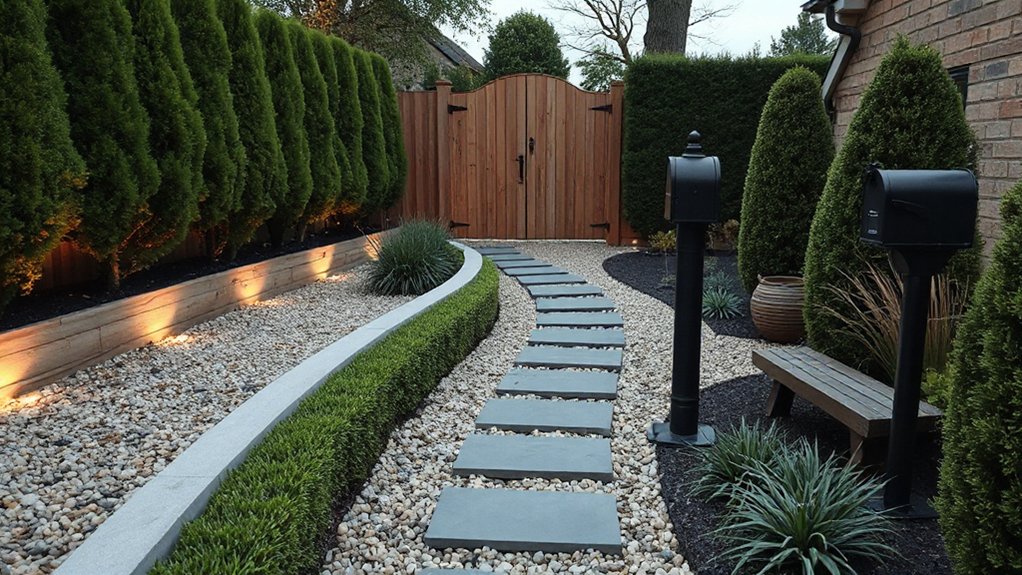
Garden paths in modern UK homes should guide foot traffic calmly while boosting curb appeal. Choose durable, slip-resistant materials like textured concrete or permeable pavers, balancing cost and long-term value. Mix low-maintenance plantings to stabilize soil and soften edges, and add lighting to extend usability. Permeable joints and edging improve drainage, while seasonal palettes keep interest year-round. For narrow plots, use space-enhancing textures and reflective surfaces. Want more practical steps you can apply soon?
Why Garden Paths Matter in Modern UK Spaces
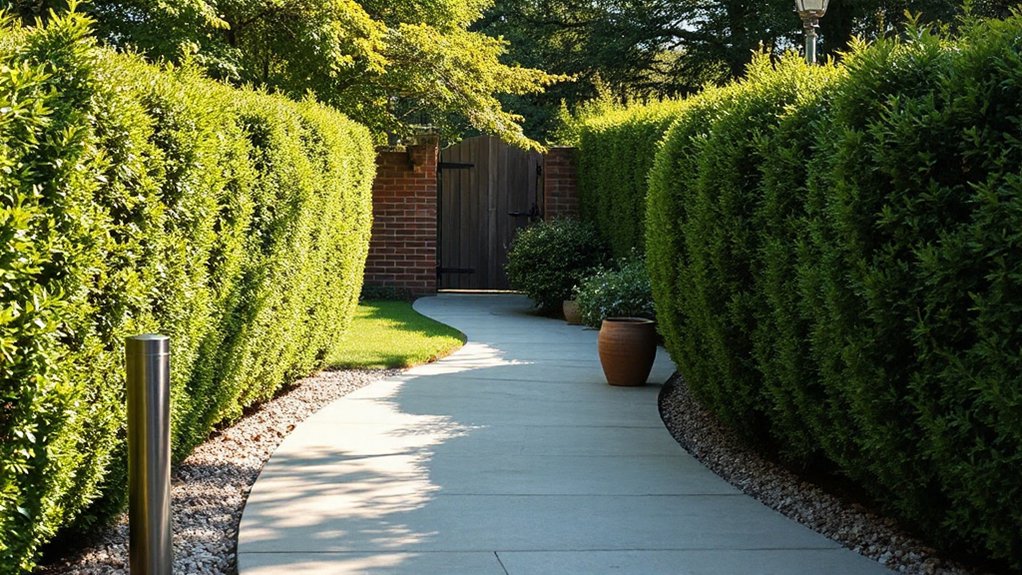
Garden paths aren’t just decorative; they structure how we move through outdoor spaces and how we experience them. In modern UK spaces, you’ll notice paths that guide you calmly, linking entry, seating, and viewpoints into a coherent whole.
Their influence goes beyond utility; they shape a sense of belonging, inviting daily rituals and quiet moments of reflection. When you design with purpose, you align movement with landscape ambiance, reinforcing garden aesthetics through thoughtful materials, spacing, and rhythm.
Consider how a path directs attention to focal points, from a blooming border to a shaded seating nook. Plant arrangements along edges soften edges, reduce noise, and create intimate corridors.
You’ll feel purposeful, connected, and grounded as you navigate your thoughtfully structured outdoor room.
How to Choose Durable Path Materials for UK Weather
When choosing path materials, prioritize weather-resistant options that stand up to UK rain, frost, and shade.
You’ll balance durability with cost, selecting materials that offer long-term value rather than just a low upfront price.
Consider maintenance needs and expected longevity to avoid frequent repairs and keep your garden paths looking sharp.
Weather-Resistant Materials
Choosing durable path materials for UK weather starts with understanding typical conditions: frequent rain, freezing temperatures, and seasonal shifts. You select weather-resilient options by prioritising slip resistance, low maintenance, and long-term stability.
Concrete slabs with textured surfaces provide grip when wet, while engineered stones resist cracking from frost. Porous pavers reduce puddling, helping you avoid icy patches, and resin-bound aggregates offer seamless façades with flexible resilience.
For softer landscapes, consider permeable options nearby planting borders to manage runoff and nurture moisture balance.
Pair the surface with practical details: correct edging, proper drainage, and compatible finishes that won’t fade quickly. Think about garden lighting integration and how your path frames planting borders, creating a welcoming, cohesive route that feels both sturdy and inviting.
Durability Versus Cost
Durability and cost aren’t mutually exclusive, and your best choice balances long-term performance with upfront and ongoing expense. In the UK, you’ll weigh materials that resist frost, wet days, and freeze-thaw cycles against installation and maintenance costs.
Consider surface strength, slip resistance, and load tolerance, then compare life expectancy and replacement cycles. You’ll benefit from opting for tested composites, stained concrete, or engineered stone that withstands heavy use and seasonal swings.
Choose options that blend with your garden art while enabling wildlife habitats—think permeable joints for drainage and soil pockets for pollinator-friendly plants. Prioritize scalable options you can upgrade gradually, since flexibility sustains value.
Practical selection means budgeting for protection, seasonal cleaning, and a design that ages gracefully with your home.
Maintenance And Longevity
Weather can put paths to the test, so you’ll want materials that stay dependable year after year. To maximize maintenance and longevity, choose resilient options suited to UK weather, freeze–thaw cycles, and damp seasons.
Prioritize angular joints and solid foundations that resist shifting and weed growth, reducing ongoing upkeep. Consider permeable surfaces that manage water runoff, lowering erosion risk while supporting drainage.
In practice, inspect regularly for cracks, shifting slabs, or loose edges, and address issues early to prevent costly repairs. Garden pests and plant growth around edges can undermine stability, so seal edges and use edging that deters encroachment.
Plan for routine cleaning and occasional resealing, aligning with garden fertilization cycles to sustain nutrient-rich soil without compromising durability.
Low-Maintenance Plantings That Guide the Eye
You’ll shape the path with year-round texture cues that keep the eye moving without extra effort.
Use silhouettes for quiet paths to create a calm, legible route, and place evergreen focal points to anchor long views.
This approach guides attention efficiently, balancing practicality with visual interest.
Year-Round Texture Cues
Texture that lasts shapes the path year-round: by choosing low-maintenance plantings with varied leaf forms, color, and height, you guide the eye without constant upkeep. You’ll benefit from plants that provide tactile and visual interest in every season, so the route feels cohesive, not cluttered.
Prioritize textures—soft grays, waxy greens, bronze tints—and mix foliar contrast with compact silhouettes. Seasonal blooms punctuate interest without demanding high maintenance, while evergreen structure keeps a reliable backbone.
Use garden sculptures as focal points to anchor movement and create pause points, enhancing rhythm. Plan soil-friendly bed edges that suppress weeds and improve moisture retention.
With practical placement and durable materials, you command a welcoming, belonging-filled path that remains engaging through rain, frost, and sun all year.
Silhouettes For Quiet Paths
When you design quiet paths, silhouettes matter more than color bursts: bold shapes that read from a distance create calm guidance while keeping maintenance low. You shape the experience with clean lines and scalable forms that repeat along the way, so the eye travels smoothly without distraction.
Choose plantings that stay compact yet expressive, preferring architectural greens, grasses, and low-growing perennials that hold their form in every season. These silhouettes reduce upkeep while offering visual rhythm, helping visitors feel welcomed and connected.
Consider integrating flower arrangements that echo the path’s curves without crowding viewlines, and guarantee margins support wildlife habitats—nectaries, concealed nesting spots, and shelter for pollinators.
You’ll cultivate a quiet, confident approach that invites belonging and care.
Evergreen Focal Points
Use compact conifers, viburnum, or boxwood to create predictable anchors at key turns or entrances. Plant them at varied heights to add depth, but keep spacing practical for easy care.
Pair these greens with garden art or subtle floral accents to punctuate seasonal interest without clutter. The result is a calm, coherent journey—one that feels thoughtful and inclusive.
Maintain density through light pruning, ensuring shapes remain legible from a distance. Your path becomes both welcoming and purposeful, a quietly confident invitation.
Gravel or Paving: Which Path Texture Fits Your UK Garden?
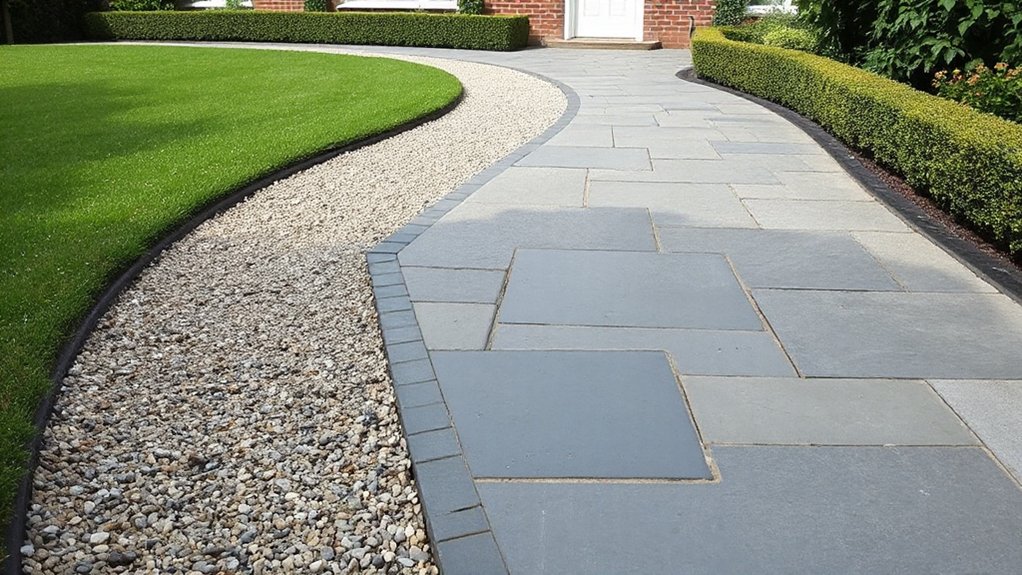
Gravel or paving? You’ve got to choose a texture that anchors your garden’s feel and flow. Gravel offers permeability, softer footsteps, and a tactile rhythm that invites you to linger. It pairs well with garden art and sculptural pieces, giving your path a casual, becoming backdrop.
Paving, by contrast, delivers order, durability, and a clean line that guides you confidently from door to door. If your aim is a wildlife habitat, porous gravel invites insects and small critters, while stepping stones or permeable patio slats support easy maintenance and drainage.
Consider a mixed approach: a gravel core with bordered paving accents for structure. Whichever you pick, align it with your planting, seating, and seasonal color to cultivate belonging and purposeful everyday use.
Create the Illusion of Space in Narrow Plots
Could you make a narrow plot feel roomier by tricking the eye with lengthwise lines and lighter tones? You can, by choosing a cohesive garden path that extends away from the viewer. Use narrow, straight paving or decking to draw the gaze along the length, not across the width, making the space feel deeper.
Lighter grays, creams, and soft beiges reflect light and reduce harsh shifts. Pair them with a single, consistent border to avoid visual clutter. Incorporate garden art at focal points to punctuate progress without interrupting flow.
Place seating where it’s seen from the house, inviting you in. Consider planting zones with varied height and color to soften edges while maintaining rhythm. This approach respects scale, belonging, and practical upkeep.
How to Light a Path Safely and Stylishly
Well-lit paths not only guide you safely after dark but also elevate curb appeal, so choose lighting that highlights key features while staying low-key. You’ll create a welcoming route that doubles as architecture, not glare. Focus on even illumination, avoiding harsh shadows, and use warm tones to feel inviting.
Invest in robust, sealed fixtures for UK weather, and conceal cables where possible to keep lines clean. Pair path illumination with subtle accent lighting to emphasize edges, textures, and plant silhouettes. Aim for low glare, energy efficiency, and ease of maintenance so the setup remains enjoyable over time.
- Select IP-rated fixtures with warm LEDs
- Use diffusers or baffles to soften brightness
- Position lights at intervals for even coverage
- Hide cables and choose discreet encasements
garden lighting enhances safety and belonging.
Ensuring Accessibility: Slopes, Steps, and Grip
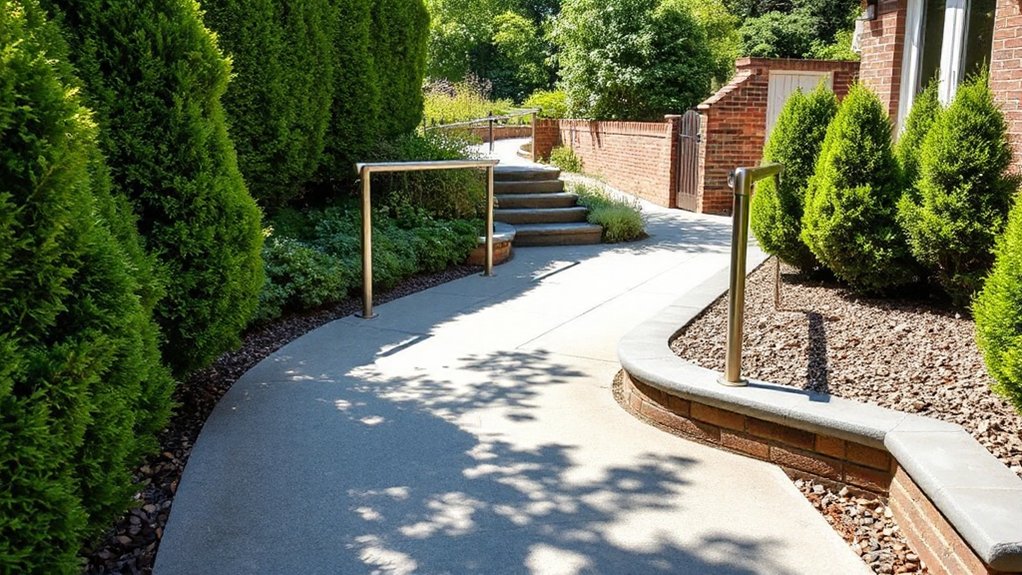
As you plan accessible paths for UK homes, slopes, steps, and grip demand clear design choices that blend safety with style. Start with gentle gradients, aiming for ramps that meet local guidance while preserving landscape appeal. Use slip-resistant surfaces and tactile indicators to support navigation for all users, not just mobility-impaired residents.
When configuring steps, choose shallow rises and broad treads, with sturdy handrails on both sides and contrasting nosings for visibility. Ensure grip by selecting textured materials and proper lighting along transitions.
Integrate accessible design principles into planting and edging so paths remain inviting, not clinical. Prioritize safety features that are consistent and low maintenance, reinforcing a sense of belonging for every visitor and resident.
Embedded Seating and Hidden Storage Along the Path
You’ll find that embedded seating blends utility with charm, offering a natural pause along the path while keeping the route clear for others.
Hidden storage solutions should be concealed yet accessible, so you gain practical space without clutter.
Prioritize path comfort by choosing seating heights, materials, and layouts that invite rest while maintaining a smooth, tripping-free surface.
Embedded Seating Ideas
Ever considered how embedded seating along a garden path can transform a route into a quiet, usable edge? You’ll gain practical, inviting moments where you pause, chat, or simply breathe in the garden.
Build benches from the path’s edge, using low-profile materials that blend with outdoor furniture and withstand UK weather. Integrate subtle garden lighting to extend use after dusk, while keeping sightlines clear and secure.
Comfort comes from generous depth, back support, and accessible height, so everyone feels welcome. Choose durable finishes and easy maintenance to sustain belonging year-round.
- Integrate built-in benches with armrests for comfort and accessibility
- Choose materials that harmonize with surrounding outdoor furniture and fencing
- Install discreet garden lighting to guide and extend evening use
- Use soft, weather-resistant cushions for welcoming seating without clutter
Hidden Storage Solutions
Hidden storage along a garden path keeps essentials close at hand without disturbing the line of sight. You’ll design clever hidden compartments beneath seating and along edging, so everyday tools, gloves, and hose fittings live where you walk, not in a shed.
Concealed storage integrates smoothly with the path’s material, maintaining a tidy, cohesive look while preserving outdoor flow. Choose durable, weather-resistant surfaces that hinge or lift easily, and label interiors for quick grabs.
Build small access points at convenient heights, avoiding trip hazards, and guarantee drainage isn’t compromised. Consider modular drawers hidden behind seating backs or under narrow benches, so you gain volume without visual clutter.
This approach reinforces belonging: practical, quiet, and readily available when you need it.
Pathway Comfort Enhancements
Pathway comfort hinges on seating that invites lingering and storage that stays out of sight yet within reach. You’ll shape a practical route by embedding benches at intervals and concealing compartments under seating or alongside walls, ensuring tools and cushions stay tidy.
Along with comfort, consider wildlife-friendly features that support birds and pollinators without clutter. This approach blends Garden furniture with discreet storage, so the path feels calm and intentional, not cluttered. You’ll enjoy a sense of belonging as you pause, chat, or observe nearby wildlife habitats.
- Embed curved benches with hinged lids for easy access to tools and cushions.
- Install low-profile planters that double as seating edges and wildlife-friendly microhabitats.
- Choose durable, weatherproof materials to reduce upkeep and keep storage hidden.
- Integrate lighting and sensors to extend evening usability without glare.
Permeable and Drought-Smart Options for Sustainability
Permeable surfaces and drought-smart planting go beyond aesthetics; they reduce runoff, recharge groundwater, and cut water use while supporting a resilient, low-maintenance garden.
You’ll design with porous pavements, gravel rows, and permeable turf that let rain soak in, reducing puddles near doors and foundations.
Pair this with drought-smart planting: native grasses, hardy perennials, and wildflower meadows that flourish with minimal irrigation.
Choose rain barrels and smart irrigation to apply water where it’s needed, not wastefully on hard surfaces.
As you plan, consider vertical gardens to maximize small spaces, layering greenery upward for privacy and microclimate benefits.
This approach fosters belonging, showing you value community, ecology, and thoughtful, practical design you can sustain season after season.
Year-Round Charm: Color Palettes and Seasonal Interest
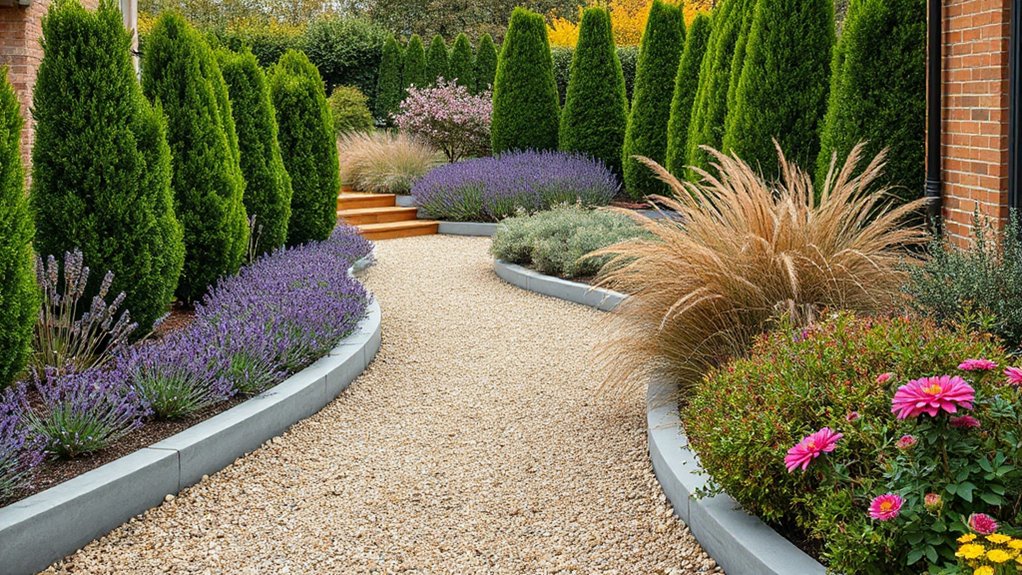
Year-round charm starts with a cohesive color story that shifts with the seasons, so your garden remains inviting from winter frost to summer glow. You’ll design with intention, pairing Seasonal flowerbeds and Ornamental grasses to create rhythm, texture, and continuity across borders and paths.
- Choose a core palette that evolves gently—cool tones in winter, warming accents in spring and summer.
- Use *seasonal bridges* to bridge seasons, keeping foliage and blooms visible year-round.
- Play with contrast: silvery grasses beside deep greens, or bold florals against muted leaves.
- Plan focal color moments along sightlines to guide visitors through your garden’s story and path.
Your space earns belonging when color, form, and movement feel deliberate and welcoming.
A Simple Maintenance Plan to Keep Your Path Pristine
Maintaining a pristine garden path requires a simple, repeatable routine you can stick to week after week. You should start with a quick sweep to catch debris, then wash the surface with a gentle hose or brush. Clear edges keep materials from spilling into plant beds and maintain a tidy line of sight for visitors.
Weekly you check for loose pavers or mortar and reset them promptly, preventing trips and costly repairs. Seasonally, prune encroaching plants and refresh mulch to deter weeds while guiding foot traffic.
Choose Garden path designs that suit your site, ensuring durable materials and slip resistance. Consider Plant selection tips that stabilize soil, reduce erosion, and complement the path’s mood without crowding it.
Consistency builds belonging and lasting curb appeal.
Budget-Friendly Upgrades That Transform a UK Garden Path
Transforming a UK garden path on a budget is all about smart upgrades that punch above their price. You’ll shape a welcoming, durable entry without overextending yourself by focusing on impact, not expense. Think tactful color, texture, and natural elements that invite both people and pollinators.
Practical choices create a sense of belonging for visitors and residents alike, while adding charm that lasts season after season. When done well, inexpensive changes become lasting improvements you’re proud to share as part of your home.
- Refresh with affordable, soil-friendly gravel and a defined edge to elevate structure and drainage.
- Add garden art as focal points—simple sculptures or painted stones that reflect your style.
- Create a wildlife habitat with native plants and nectar-rich blooms along the path.
- Install low-cost lighting to extend usability and ambiance safely.
Frequently Asked Questions
Can Garden Paths Increase Property Value in UK Homes?
Yes, a well-crafted garden path can boost curb appeal and property value. You’ll enhance garden aesthetics, improve accessibility, and elevate landscape design, making your home feel inviting and cohesive, so potential buyers see belonging and lasting quality.
Do Children-Safe Path Materials Exist for UK Gardens?
Yes, you can. You’ll choose child friendly surfaces and non toxic pathway materials, ensuring grip and drainage. You’ll verify certified, low-toxicity options, install with edging for safety, and feel confident your family belongs in a safer garden space.
Are There Self-Watering Path Garden Options?
Yes, you can; self-watering path options exist. You’ll benefit from integrated self watering systems built with eco friendly materials, delivering steady moisture while reducing maintenance. It feels practical, insightful, and belonging, as you craft a confident, low-effort garden route.
How Long Do Permeable Pavers Last in UK Weather?
Permeable pavers typically last 20–40 years in UK weather, depending on foot traffic and installation. You’ll maximize longevity with regular paver maintenance, proper sub-base preparation, and strong weather resistance measures to keep your path sturdy and inviting.
What’s the Quickest Way to Install a New Path?
Install a new path in a day with quick-setting mortar, compacted base, and edge restraints. Path material options include compact pavers or slabs; consider installation techniques like screeding, joint filling, and slope for drainage. You’ll belong on solid, practical paths.
Conclusion
In your garden, a path isn’t just a route—it’s a quiet invitation. Picture sunlight stitching through gravel, rain glimmering on paving, and your eye gliding toward a hidden bloom. You’ll move with intent, the space guiding you softly, year-round. With smart materials, low-maintenance plantings, and a touch of texture, your path stays pristine and practical. Invest a little now, and you’ll enjoy steady charm, welcome guests, and feel the garden respond to every season with confident ease.