
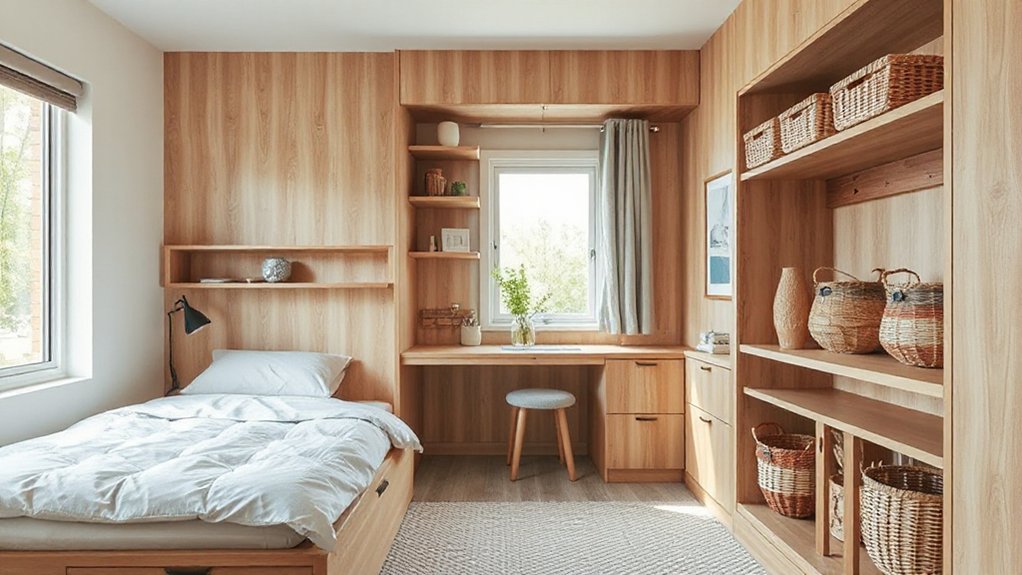
Measure first to map every inch of your tiny bedroom, noting doors, windows, outlets, and ceiling height. Define your storage needs before buying—prioritize clothing, bedding, and essentials, then plan access points and pet-friendly solutions. Choose multifunctional, space-saving furniture and vertical storage like tall bookcases and wall shelves. Use under-bed drawers or lift beds, modular units, and shallow hidden panels to keep surfaces clear. With these steps, you’ll gain calm, organized space—and there’s more to come if you keep going.
Measure First: Map Your Tiny Bedroom for Max Storage
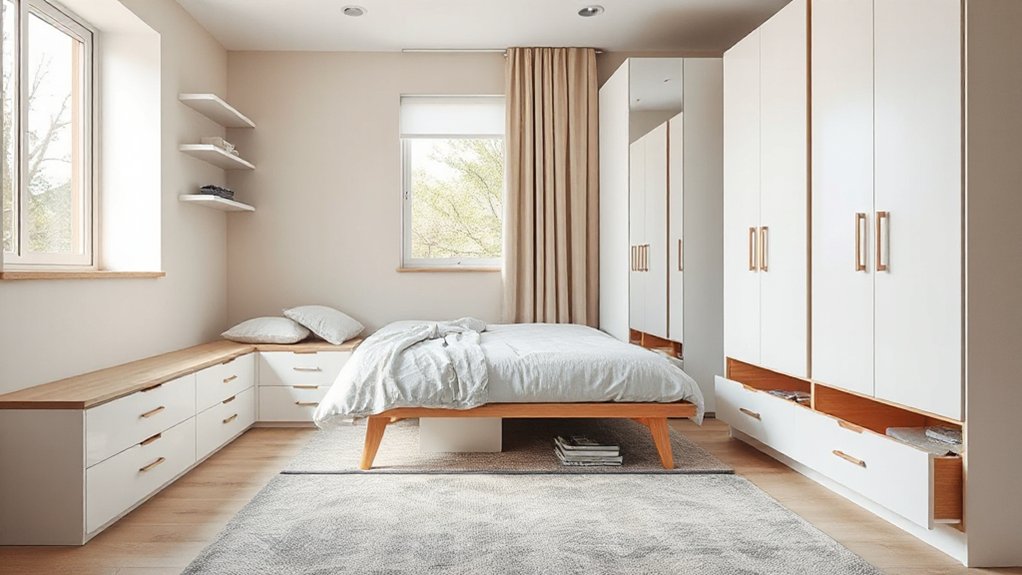
Start by pulling out a tape measure and sketching your room to scale. You’ll map doors, windows, outlets, and built-ins, then note ceiling height and wall lengths. Measure twice, record once, and transfer numbers to a clean plan.
Keep your goal in mind: max storage without clutter. Mark zones for beds, seating, and walkways, ensuring passage feels natural. Use the measurements to test potential layouts on paper before moving furniture.
Consider color schemes early, as they influence perceived space and cohesion, and decide lighting options that support storage tasks.
Prioritize reachable, modular solutions—floating shelves, under-bed drawers, and wall-mounted bins—that won’t crowd floor area.
Document irregularities, like alcoves or chimney breasts, so you can tailor storage precisely and belong to a confident, organized space.
Define Your Storage Needs Before Buying Anything
Before buying anything, define exactly what storage you need based on how you use the room. Start by listing must-haves: clothing, linens, shoes, and daily essentials.
Identify what items you actually use weekly versus monthly to avoid overpacking.
Consider access points: where you stand to reach items, and how often you’ll open drawers or doors.
Prioritize solutions that blend into a cohesive look, since Vintage decor thrives on harmony.
Measure available walls and corners to prevent crowding, and sketch a rough plan to confirm fit.
Think about pet friendly storage too—hidden bins under beds or low cabinets keep hazards away from paws.
Finally, set a budget and color scheme, so every purchase supports function, flow, and belonging.
Choose Multifunctional Furniture That Saves Floor Space
Look for coffee tables, ottomans, and beds that hide compartments or convert for different uses.
This approach reduces clutter while keeping your layout open and practical.
Multi-Use Furniture Pieces
When space is tight, choose furniture that serves more than one job. Multi-use pieces maximize every square foot without feeling cluttered. Look for benches with hidden storage, beds with drawers, or desks that flip into compact vanities. They should blend with your color schemes, so the room still feels cohesive and calm.
Prioritize sturdy construction and smooth mechanisms to avoid daily frustrations. Choose finishes that complement decorative accents, creating a polished, intentional vibe rather than a patchwork look.
Opt for modular designs you can rearrange as needs change, and consider hidden compartments for rarely used items. This approach keeps you organized, promotes belonging, and reinforces a sense of control in a small space.
Practical, durable choices empower you to live comfortably.
Hidden Storage Strategies
Hidden storage is the fuel that lets a tiny bedroom breathe. You’ll embrace multifunctional furniture that saves floor space without sacrificing comfort. Start with an ottoman or bench that opens for linens, a bed frame with built‑in drawers, and wall‑mounted shelves that double as bedside tables.
Choose pieces with hidden compartments for seasonal wear, chargers, and tricky clutter. Opt for storage under slim platforms or steps that lead to a raised bed, so you gain height and order.
Use decorative accents to unify color schemes while keeping surfaces clear. Keep a consistent palette and modular crates tucked behind doors for quick access. This approach creates cohesion, belonging, and calm—where every item has a home and room for living.
Vertical Storage Hacks That Add Inches Without Crowding
To free up floor space, stack storage upward with purpose-built solutions like tall, slim bookcases, wall-mounted shelves, and pegboard organizers. You’ll maximize vertical real estate without crowding the room, keeping pathways clear and eyes focused upward.
Choose units that blend with your color schemes, using cohesive finishes to create a calm, unified feel. Add decorative accents sparingly—small plants, framed quotes, or minimal art—to personalize the setup without distraction.
Keep frequently used items within easy reach at mid-height, reserving upper shelves for seasonal or infrequently used belongings. Use modular systems that can grow with you, so your space remains adaptable and inviting.
This approach signals belonging: you belong here, organized and confident in your vertical, uncluttered haven.
Under-Bed Storage: Drawers, Bins, and Lift Beds
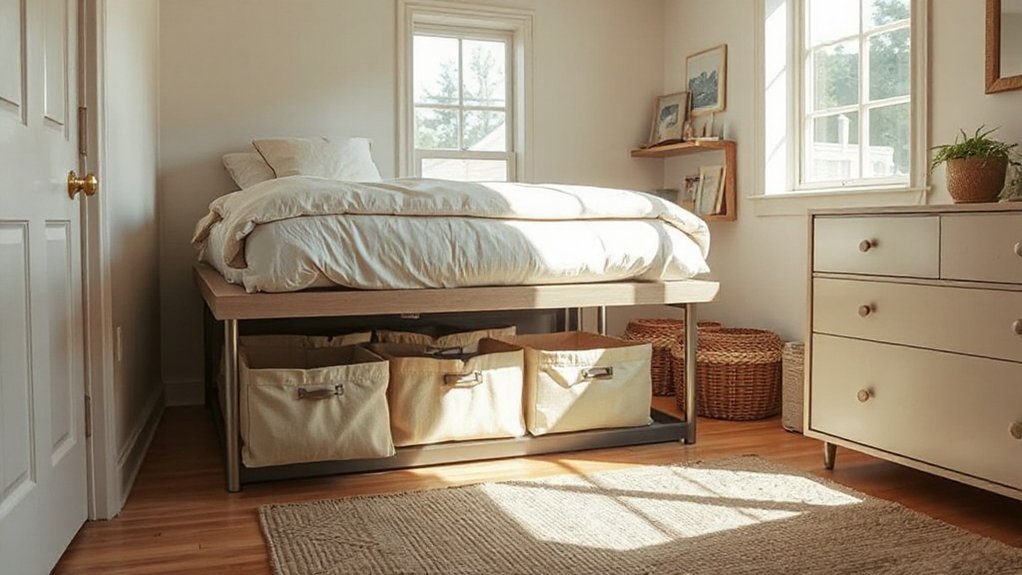
Under-bed storage makes the most of your tiny bedroom by tusing the space you already have. You’ll maximize floor area by choosing low-profile drawers, rolling bins, or lift beds with integrated compartments.
For under bed organization, pick solutions that glide smoothly and stay level on uneven floors. Foldable fabric bins keep dust out and contents visible, while clear plastic boxes reveal what you stored without digging.
When you opt for a lift bed, guarantee safe gas springs and a sturdy frame that supports weight evenly. Label containers so you know where things belong at a glance, and use compact storage techniques like vertical dividers inside drawers.
This approach delivers accessible, clutter-free space you can be proud of.
Built-Ins on a Budget: Modular, Seamless Integration
Built-ins on a budget can dramatically expand storage without complicating your layout. You’ll design modular pieces that fit your room’s dimensions and flow, avoiding clutter while keeping surfaces clean and usable.
Start with a neutral base: stackable storage containers and open shelving units that blend with existing finishes, so the room reads cohesive rather than busy. Choose pre-finished panels or inexpensive MDF with a veneer to save costs while remaining durable.
Plan for accessibility—keep daily items within easy reach and reserve high or low shelves for seasonal or bulk storage. Use modular units that can reconfigure as needs change, so your space grows with you.
This approach creates a seamless, intentional look you’ll feel proud to invite guests into.
Closet Optimization: Shrink Your Wardrobe Without Sacrificing Style
Closets don’t have to swallow your style or your space. You can shrink your wardrobe without sacrificing impact by prioritizing function over volume.
Start with Closet organization basics: remove duplicates, keep only pieces you actually wear, and color-code for quick visibility.
Next, implement smart folding, uniform hangers, and slim storage bins to maximize every inch.
Embrace wardrobe downsizing by digitizing receipts and catalogs, then curate seasonal rotations so you only store what’s in use.
Invest in adjustable hanging rods and shallow shelves to accommodate varying lengths and accessories without crowding.
Use doors or slim inserts for jewelry, belts, and scarves, reducing visible clutter.
The result is a refined, practical closet that supports daily routines while preserving personal style.
Wall-Mounted Storage Systems to Keep Surfaces Clear
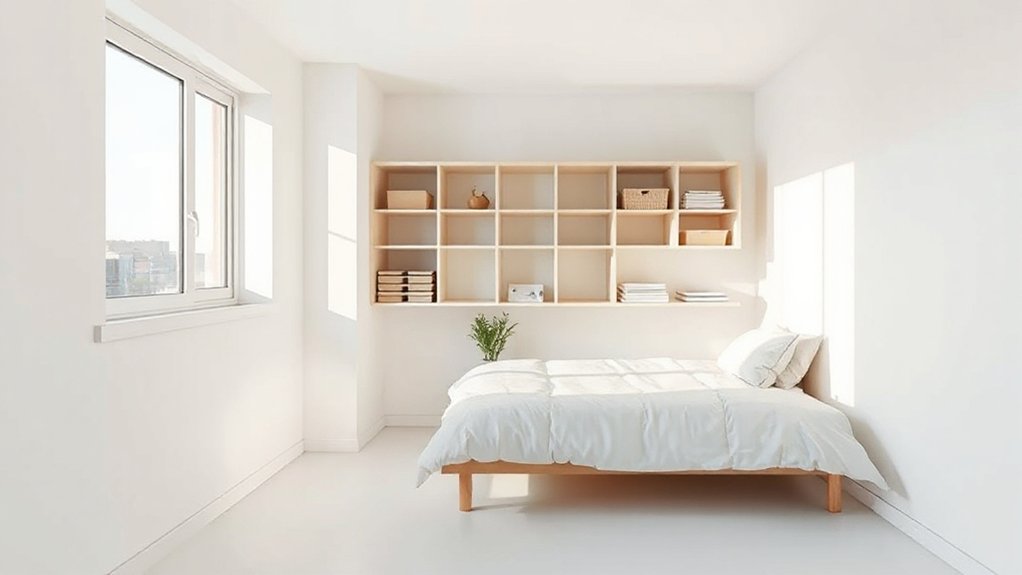
Wall-mounted storage systems free up surfaces by putting essentials where you can reach them, without tangling floor space. Consider wall-mill storage solutions for slim, sturdy options.
Weigh floating shelves for lightweight items along with their load limits. Before mounting, follow safety tips to guarantee brackets and anchors are secure and evenly spaced.
Wall-Mill Storage Solutions
Imagine rethinking surface clutter with a few smart wall-mounted storage systems that keep desks, counters, and nightstands clear. Wall-mill storage solutions harness vertical space without piling on bulk. Choose slim HyTech rails or magnetic bins that snap into place, so you customize daily access.
Install low-profile hooks near your workstation for cords and headphones, keeping surfaces free for work and study. Use concealed brackets to hide cables and maintain a clean look.
Pair units with strategic lighting: Creative lighting above work zones draws attention to order, while decorative accents add personality without crowding your walls. This approach delivers reliable function, a cohesive feel, and a sense of belonging in a compact room.
Floating Shelves Benefits
Floating shelves offer a straightforward way to reclaim surface space without crowding a tiny bedroom. You’ll gain storage that blends with your room, not against it, keeping floors clear and surfaces calm.
When chosen thoughtfully, these shelves become wall decor as well as utility, reinforcing a welcoming vibe you can call home.
- Maximize visible storage without bulk by selecting slim profiles and neutral finishes that match your style.
- Use corners and under-windows to place books, plants, or keepsakes, turning dead space into functional focal points.
- Layer items at different heights for visual interest while preserving a clean, cohesive look.
Floating shelves, wall decor, and intentional placement work together to make your space feel larger and more personal.
Mounting Safety Tips
To keep surfaces clear and safe, plan mounting with weight limits and hardware appropriate for your wall type, whether plaster, drywall, or masonry. You’ll check your shelf kit’s weight capacity and avoid overloading supports. Use anchors rated for your wall and distribute loads evenly across multiple attachment points.
Secure mounting hardware to studs whenever possible; if studs aren’t present, choose toggle bolts or masonry anchors matched to wall material. Level matters—measure twice, drill once, and use a laser level for accuracy.
Don’t mix mounting surfaces with liquids or heat sources, and keep cords tidy to prevent pullout. Regularly inspect mounts for looseness, and tighten as needed. This attention to mounting safety protects belongings and supports a confident, organized space.
Hidden Storage Behind Doors and Stairs
- Hidden compartments: install shallow pull-outs or lift-open panels in closet doors or stair nooks to store seasonal gear or small keepsakes.
- Door organizers: hang slim pockets or racks on interior doors for keys, chargers, and accessories, keeping surfaces clear.
- Stairs as storage: add shallow drawers or a recessed shoe rack under treads for footwear and everyday items.
These options emphasize hidden compartments and door organizers for a tidy, inviting space.
Zoning Your Tiny Room for Calm and Function
You’ll define clear zones so you can rely on calm pathways and purposeful storage. Maximize vertical storage and choose multi-function furniture that keeps the room flexible without clutter.
This approach keeps each area—sleep, work, and gear—distinct yet integrated for everyday use.
Define Clear Zones
Want a calm, functional tiny room? Define clear zones so every square foot works. You’ll create a simple flow: sleeping, dressing, and living areas separated by sight lines, rugs, or a low shelf, so clutter doesn’t feel merged. Use color coordination to unify zones and reinforce function, not chaos. Keep the palette cohesive, with a few contrasting accents for depth. Add decorative accents that signal purpose in each area, like a bedside lamp for rest or a compact desk for work. This clarity boosts belonging, because you know where things belong and why.
- Map zones with furniture placement and visual cues.
- Choose a restrained color scheme, then temper with intentional decorative accents.
- Store within zones to prevent crossover clutter.
Maximize Vertical Storage
Maximizing vertical storage is the next step to keeping a tiny room calm and functional. You’ll reclaim floor space by stacking shelves, using tall wardrobes, and wall-mounted organizers that blend with your zones.
Prioritize closed storage above visible clutter to preserve calm sightlines, and choose modular units you can adjust as your needs shift.
Color psychology guides your choices: cool tones visually recede, making walls feel higher, while selective accent colors highlight storage zones without shouting.
Apply Feng Shui principles by placing frequently used items at chest or shoulder height for easy reach, and keep pathways clear to encourage open movement.
Label groups clearly, so you know where things belong, reducing search time and boosting your sense of belonging and control.
Multi-Function Furniture Choices
Multi-function furniture is your fastest route to calm, defined zones in a tiny room. You’ll stack purpose with presence, so each piece earns its keep and supports both storage and function. Plan with intention: lightweight, movable units become room dividers that don’t trap you.
Focus on furniture arrangement that creates clear boundaries without clutter, and choose color schemes that unify zones rather than shout. Stay concise: pick pieces that serve two roles and hide extras behind doors or drawers.
- Use a storage ottoman or bench at the foot of the bed to conceal essentials while defining seating and entry flow.
- Choose a lofted bed or wall-mounted desk to free floor space and maintain open sightlines.
- Pair magnetic or modular shelves with a slim media console to keep surfaces clean and zones distinct.
Smart Decluttering: A Repeatable System That Lasts
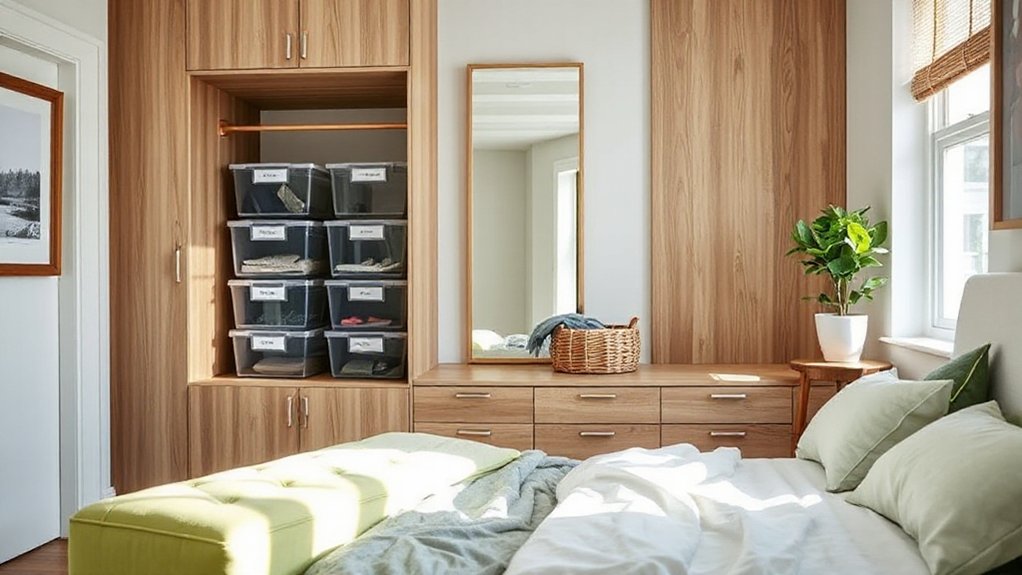
Smart decluttering isn’t a one-off purge—it’s a repeatable system you can use month after month. You’ll set clear goals, then categorize belongings into keep, donate, sell, or recycle.
Start with a 10-minute sweep to build momentum, then schedule a 15-minute weekly check-in. Use consistent criteria: function, condition, and joy, trimming items that no longer serve you.
Label storage zones by use, not size, so your tiny bedroom feels intentional and calm. Incorporate vintage decor thoughtfully—preserve pieces that spark meaning, don’t crowd with surplus.
For mood, apply color psychology: store-related items near calming hues and reserve bright accents for frequent access zones. Reassess quarterly, refining your system as life changes.
This creates belonging through order, not deprivation, and sustains fewer possessions with lasting clarity.
Lighting and Color to Make Storage Feel Bigger
Lighting and color can make storage feel bigger without adding a square inch. You’ll leverage color psychology and smart lighting to visually expand small spaces, guiding the eye to organized zones. Choose light, cool neutrals as base tones and add accents that reflect your personality, not clutter.
Use lighting fixtures that brighten shelves and corners evenly, avoiding heavy shadows that shrink the room.
- Position lamps to illuminate storage edges, not just ceilings.
- Use cool whites (neutral or daylight) for main lighting and soft, warm accents to create depth.
- Apply reflective surfaces or matte finishes that bounce light without showing dust.
This approach reinforces belonging: you see order, you feel calm, you claim more usable space.
Scandinavian-Minimal Storage for Calm, Efficient Spaces
Scandinavian-minimal storage centers on clean lines, function, and calm, uncluttered surfaces. You keep essentials visible, but drawers and shelves hide the rest behind matte whites, ash tones, and soft grays.
Prioritize pieces with simple silhouettes and no excess hardware so your space breathes. Choose modular units you can reconfigure as your needs shift, preserving flexibility without clutter.
Color psychology guides your palette: cool neutrals reduce visual noise, while warm wood accents add coziness and belonging.
Natural materials matter: real wood, stone, and linen textures enrich tactility and long-term durability.
Implement clever entryways, under-bed drawers, and wall-mounted organizers to maximize floor area.
You’ll enjoy efficient storage that feels serene, intentional, and belonging‑driven, not cramped or crowded.
Durable, Compact Containers That Get Used Daily
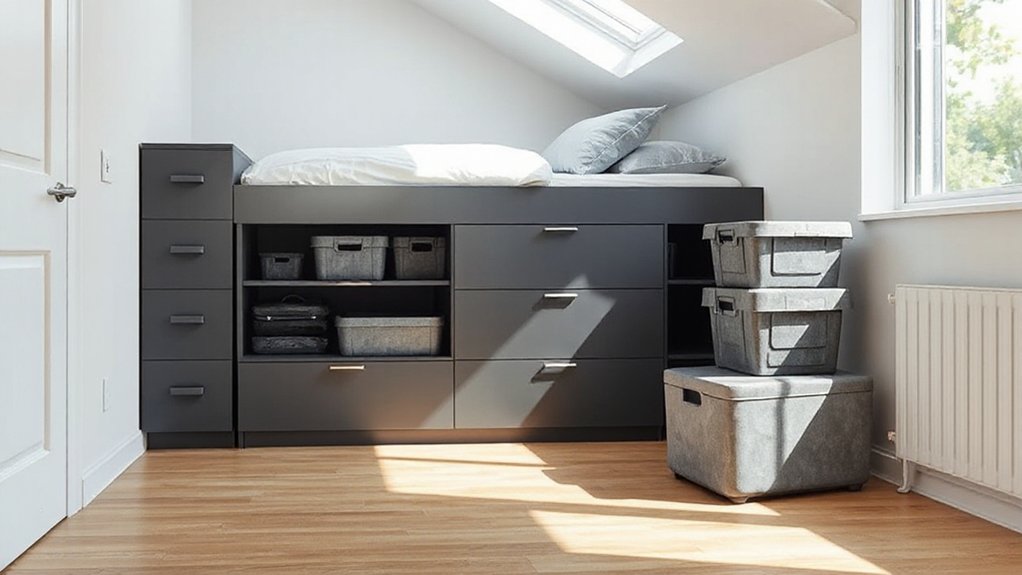
You’ve set up a calm, modular storage system; now you’ll want containers that hold up to daily use without adding clutter. Durable containers and compact solutions keep your space cohesive, so choose options you can rely on every day.
Look for BPA-free materials, reinforced seams, and secure lids that seal without struggle. Sizes should fit your routines: grab-and-go morning, late-night wind-down, and weekend organizing sessions.
1) Stackable, space-efficient bins with tight lids
2) Airtight, shallow containers for snacks and meds
3) Durable acrylic or silicone modular boxes for easy visibility
These choices prioritize function and belonging: you’ll trust what you store, and your tiny bedroom stays calm, orderly, and welcoming.
Budget-Friendly DIY Storage Ideas That Really Work
If you want functional storage on a tight budget, start with repurposing and simple additions that make a big impact. You’ll unlock big wins by using vertical wall shelving, modular crates, and under-bed drawers that fit your space without crowding it.
Look for vintage decor elements—ash, pine, or painted steamer trunks—that blend character with practicality, adding storage without shouting “new” furniture.
Optimize energy efficiency by choosing compact LED lighting nearby and labeling shelves to reduce unnecessary rummaging, so you use less power and keep surfaces clear.
Build a tidy system with clear bins, hooks, and magnetic strips for small items. This approach feels intentional and affordable, giving you belonging in a space that works as hard as you do.
Hide Clutter in Plain Sight With Smart Organization
When you’ve already carved out storage on a tight budget, the next step is to hide clutter in plain sight with smart organization. You’ll frame a calm, inviting space by pairing color psychology with functional layout and ergonomic design. Keep surfaces clear and use coordinated bins that blend with your walls. Group essentials by frequency of use and keep daily items within easy reach.
1) Choose dual-purpose furniture and label storage with color-coded lids to signal purpose at a glance.
2) Use shallow, open-front bins for quick access while maintaining a tidy, breathable feel.
3) Implement a centered, low-hanging shelf system that reduces reach strain and visually elongates the room.
Maintenance Habits to Prevent Storage Overload
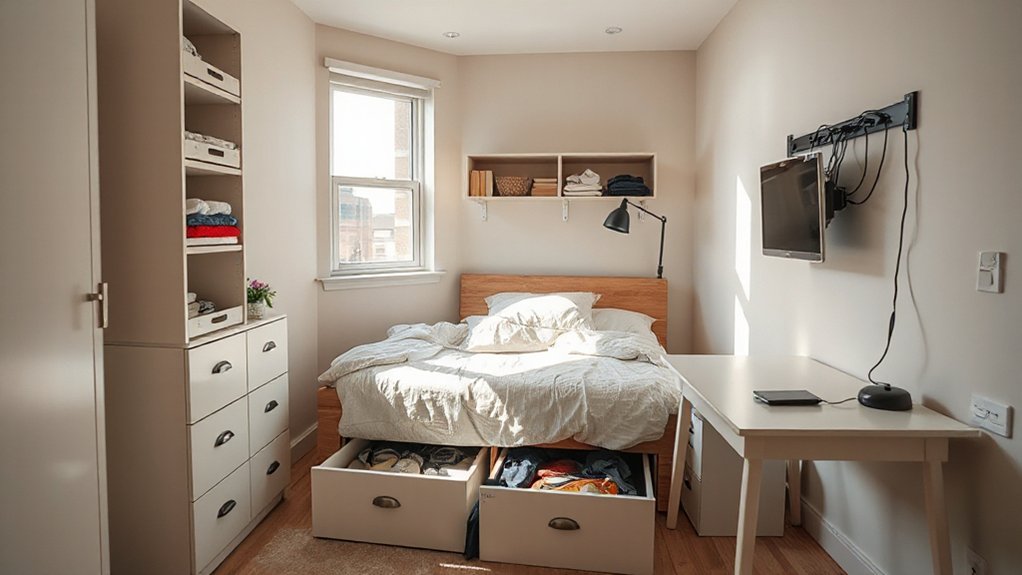
Set up a regular decluttering routine to keep your storage from piling up, so you only keep what you truly use.
Schedule seasonal maintenance checks to catch items you’ve outgrown or no longer need.
Stay disciplined with a quick, repeatable process to prevent overload and keep your space usable.
Regular Decluttering Routine
Establish a regular decluttering routine so your tiny bedroom stays calm and usable. You’ll spot storage myths and avoid overbuying solutions that don’t fit your space, keeping you confident in your choices.
By addressing clutter triggers, you’ll reduce stress and reclaim every inch for what matters most.
- Schedule a 15-minute daily sweep to remove items you didn’t use last week.
- Sort swiftly into keep, donate, or discard piles, then commit to processing them within 24 hours.
- Reassess once a month, adjusting storage aims to prevent relapse and reinforce belonging.
Seasonal Maintenance Checks
Each season, perform a short Seasonal check: skim for items you no longer use, donate or discard, and rotate seasonal gear to established bins. Keep a simple checklist visible near the wardrobe to ensure consistency.
Climate prep matters, so wipe down surfaces, vacuum vents, and inspect humidity controls to prevent moisture damage and mold. Repack off-season clothing, bedding, and accessories in labeled containers.
Reassess furniture placement if your needs shift, and document changes for next year. This disciplined cadence builds belonging and confidence in your space, reinforcing smarter, calmer storage decisions.
Quick-Start Plan: Implement These Steps This Weekend
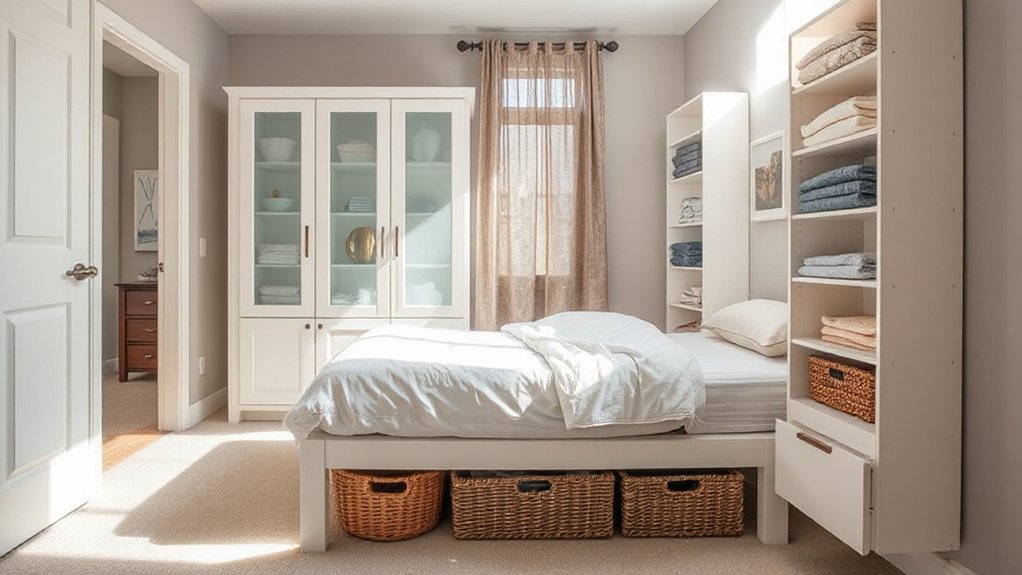
If you want fast results, start this weekend by prioritizing two simple goals: clear the clutter and create instant storage space. You’ll gain momentum by focusing on practical, proven steps that fit a tiny bedroom. This plan uses color contrast and lighting accents to make storage feel permanent, not temporary.
- Map high-visibility spots for vertical storage, choosing colors with strong contrast to walls to make units pop.
- Install compact organizers behind doors or under beds, aligning with your natural traffic flow for immediate, usable space.
- Add soft lighting accents near shelves and storage nooks to reveal organization and invite you to maintain it.
Quick wins compound into a calmer room, boosting belonging and confidence.
Frequently Asked Questions
How Do I Measure a Tiny Bedroom Accurately for Storage?
You measure a tiny bedroom by snapping a quick grid: door to wall, window, and any built-ins, then note lengths with a tape measure.
Mark wall corners, then subtract door swings and baseboard intrusions.
Use a laser level for accuracy and jot measurements in a dedicated notebook.
Plan around furniture arrangement and lighting optimization, validating fits with movement space.
This practical approach helps you feel connected, confident, and like you belong in a well-organized space.
What Is the Fastest Way to Declutter a Small Space?
Declutter fast by deciding in under 15 minutes: grab a tote, set a timer, and ask “Do I love or use this?” If uncertain, it goes out.
You’ll feel the space breathe as you edit, ignore sentiment, and keep only essentials. Use decorative shelving and hidden compartments to organize instantly, so everything has a home.
You’ll gain belonging through order, simplicity, and a room that mirrors your deliberate, confident rhythm.
Which Low-Cost Storage Hacks Yield the Biggest Impact?
You’ll get big impact from creative shelving and multi functional furniture. Use wall-mounted shelves at varying heights to maximize space and keep floors clear.
Choose ottomans and benches with hidden storage, plus beds with drawers or a lift mechanism.
Opt modular cubes that fit tight corners, and pegboard walls for flexible organization.
Keep a daily declutter rhythm, label bins, and rotate seasonal items.
These low-cost hacks create belonging through practical, purposeful storage you can trust.
How Can I Integrate Storage With Existing Architectural Features?
You can integrate storage with existing architectural features by using built-in shelves and recessed niches that echo the room’s lines.
Prioritize Closet organization near wardrobes, and add floating cabinets that don’t crowd traffic.
Incorporate Under bed solutions like drawers or fabric bins to maximize flat space.
Choose multifunctional pieces—benches, desks, or beds with storage—to create cohesion.
You’ll feel settled, included, and efficient as you balance form with practical, breathable design.
What Maintenance Routines Keep Storage Organized Long-Term?
Like a well-tended garden, your storage thrives on daily care. You maintain order by a simple routine: wipe surfaces, return items to designated spots, and rotate seasonal gear.
Schedule monthly checks to rebalance clutter, and keep Creative shelving and multifunctional furniture dust-free and accessible.
Create rhythms, label boxes, and respect limits to feel you belong in a calm, organized space.
Consistent cues reinforce ownership, so your tiny room stays functional, inviting, and steady.
Conclusion
You’ve mapped the room, picked smart furniture, and stacked storage high enough to impress even a tiny closet. Don’t pretend it’s magic—it’s math and elbow grease. If you trip over a tote, move it; if you forget a spare charger, label it; if you hoard snacks, invest in a labeled bin. In short: maximize, organize, and maintain. Weekend plan complete, sanity intact, and your bedroom now breathes like a grown-up space—without requiring a demolition crew or a loan. You’re welcome.