
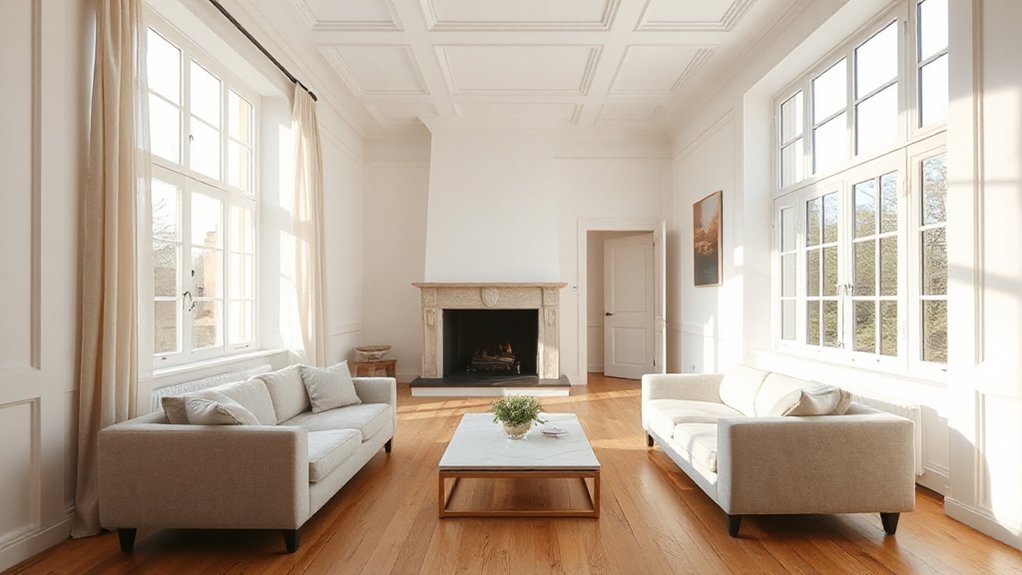
Maximise daylight by using large, well-placed windows and align them with seating and walkways to boost flow. Choose light, cool-toned neutrals with satin or eggshell finishes, and keep clutter minimal to enhance airiness. Use slim, low-profile furniture, reflective surfaces, and textures that add depth without bulk. Layer ambient, task, and accent lighting with dimmers, and add budget-friendly updates like decluttering and reflective finishes. If you keep exploring, you’ll uncover more practical tweaks to brighten every UK room.
What Makes a UK Home Feel Bright and Airy
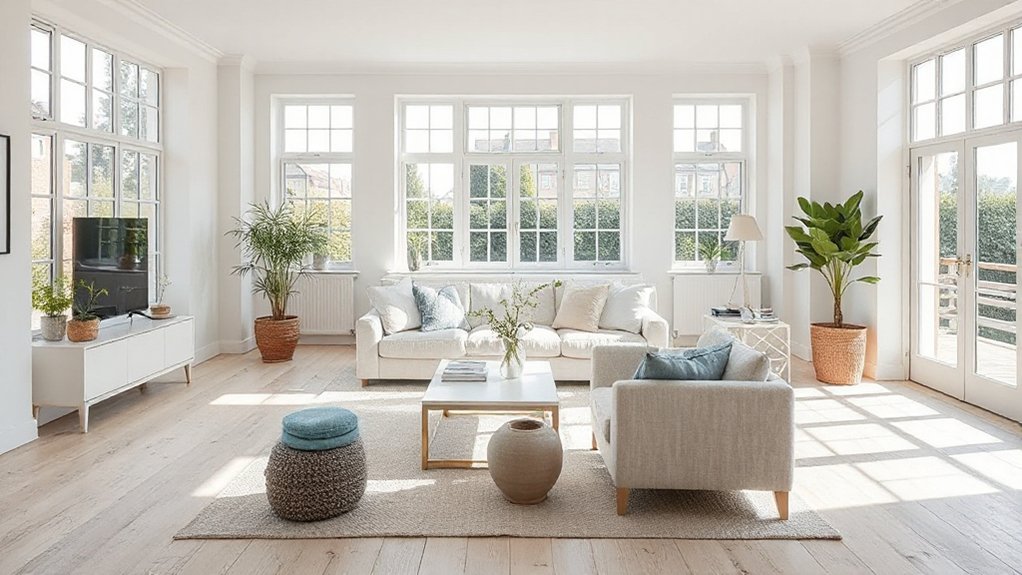
Natural light is the simplest, most powerful tool for making a UK home feel bright and airy. You’ll notice a difference when you prioritize clean lines, reflective finishes, and uncluttered layouts that invite energy to circulate.
Embrace home automation to control lighting, blinds, and climate with ease, so rooms stay evenly bright without glare or heat buildup.
Choose eco-friendly materials for paints, flooring, and furniture that reduce emissions and maintain a breathable, healthy atmosphere.
Keep ceilings high and windows unobstructed to maximize daylight penetration.
Use a cohesive color palette with soft neutrals and strategic pops of colour to enhance depth and warmth.
With intentional choices, you create a welcoming space where you belong and feel instantly refreshed.
Maximize Natural Light Through Window Design and Space Planning
To maximize natural light, tune your window design to frame bright views and reduce obstructions.
Plan your space layout to keep high-contrast furniture away from windows, allowing light to spill deeper into rooms.
Start with practical tweaks like larger glazing, light-reflecting finishes, and a clear, circulatory layout that guides daylight where you want it.
Maximize Window Light
Maximizing window light starts with thoughtful placement and sizing: prioritize large, well-placed windows and avoid heavy obstructions in front of them. You’ll naturally invite daylight deeper into rooms by aligning openings with seating areas and walks, so you feel connected to the outdoors.
Choose window treatments that adjust light without blocking ambience—slim frames, sheer panels, and adjustable blinds let you modulate glare while preserving views. Position indoor plants near bright windows to reflect light and add texture to your space.
Guarantee rough frames and hardware stay minimal to maintain a clean, airy look. Don’t underestimate ceiling heights or transom windows for extra brightness.
With purposeful planning, you foster a welcoming, vibrant home where every room feels brighter and more intact.
Strategic Space Layout
Place sofas and storage against walls to keep the center open, inviting daylight to permeate deeper. Consider window scale and proportion; larger panes or daylight-mimicking glazing can brighten corners without sacrificing energy efficiency.
Use mirrors strategically to reflect light toward darker zones, creating a sense of airiness. Draw from historical influences and regional architecture to inform proportions, textures, and materials that resonate with your home’s character while maintaining practicality.
This approach fosters belonging, clarity, and calm throughout your space.
Paint and Colour Strategies for Reflective, Light-Enhancing Surfaces
When you’re aiming to brighten a space, choose paints and colours that bounce light rather than absorb it. You’ll prioritise light-reflective surfaces and cohesive color schemes that read as larger than their footprint.
Begin with white or pale neutrals on walls to maximize daylight; pair them with cooler undertones to prevent yellows from creeping in.
Color psychology guides you to select hues that feel calm and welcoming, supporting a sense of belonging. Use satin or eggshell paint finishes on walls for subtle sheen that reflects without glare, reserving matte for ceilings to avoid dullness.
Introduce accents sparingly through soft greens or blues, maintaining harmony.
Consistency in finishes and undertones guarantees a polished, airy interior that remains inviting.
Light-Weight Furnishings That Create Visual Airiness
You’ll want lightweight materials that feel almost invisible, so your spaces read as more open and breathable. Pair airy color schemes with furnishings that breathe—think slim profiles, translucent finishes, and fabrics that skim rather than cling.
Keep clutter to a minimum, because even a few well-chosen pieces can amplify airiness and polish.
Lightweight Materials Matter
Lightweight materials can make a room feel more expansive without sacrificing function. You’ll notice how choosing light frame joinery and slim profiles can transform spaces without visual clutter.
Prioritize lightweight materials that still deliver durability, so your rooms feel airy yet solid. In practice, lean furniture pairs with open-plan layouts to reveal architectural details and natural light, reinforcing a sense of belonging.
When you select pieces, consider how they interact with your walls and flooring; keep tones cohesive to maintain calm, uninterrupted sightlines.
For construction, favor modern construction methods that reduce heft without compromising safety or performance. This approach supports easy reconfiguration over time, enabling you to refresh spaces as needs evolve, while preserving a polished, welcoming atmosphere.
Airy Color Schemes
Could airy color schemes paired with light-weight furnishings truly make a room feel larger? Yes. You’ll brighten walls with high, soft whites or pale neutrals, then keep furniture to slim profiles and low heights. This creates generous sightlines and dodges visual heaviness.
Embrace color contrast sparingly—a charcoal sofa against ivory walls or a pale rug with darker floorboards—so accents read clearly without crowding mood. Use decorative accessories strategically: a single, sculptural lamp, a glass vase, a mirror that reflects light, and textiles in tonal variations. These pieces provide depth without weight.
Prioritize materials that breathe and surfaces that reflect, not absorb, light. With deliberate contrast and selective embellishments, your space feels open, cohesive, and welcoming to all who enter.
Minimal Clutter Impact
Airy rooms rely on furniture that stays out of the way rather than dominating the space. You’ll achieve this with minimal, lightweight pieces that don’t crowd sightlines or corners. Choose compact, multipurpose items that offer storage without bulk, and opt for low-profile silhouettes that heighten airiness.
Prioritize clutter reduction by limiting accessories to a few meaningful, coordinated items rather than shelves groaning with decor. When possible, mount or wall-hang essentials to free floor space and enhance flow.
Use transparent or pale finishes to reflect light while preserving warmth. Size and proportion matter: scale furnishings to the room, not the trend.
This approach supports space optimization and fosters a calm, connected environment where everyone feels welcome and able to contribute to a brighter home.
Texture and Material Choices for Depth Without Clutter
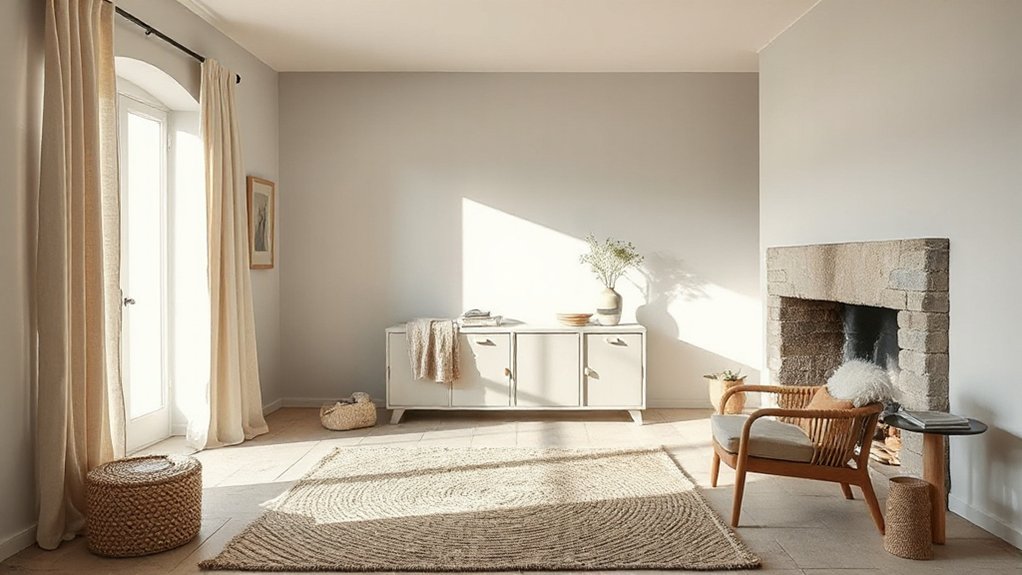
Texture and material choices add depth without clutter by focusing on tactility, contrast, and cohesive finishes. You’ll create a calm, inviting atmosphere by selecting materials with natural textures and consistent tones.
Think in layers: a soft woven rug, smooth plaster walls, and a tactile timber surface that finishes with a matte seal. Prioritize material contrast that reads clearly from room to room, but keep the palette cohesive to avoid busy progressions.
Introduce textured accents strategically—think cushions, a ceramic planter, or a woven shade—so surfaces don’t compete, but still feel tactile.
Choose finishes with longevity and easy upkeep; matte or satin sheens reduce glare while enhancing depth. The result is a polished, breathable space where belonging feels effortless and you’re never overwhelmed by clutter.
Layout Tricks to Banished Dark Corners and Improve Flow
Maximize natural light by choosing reflective surfaces and strategically placed mirrors to bounce daylight into dark corners.
Focus on improving spatial flow with open sightlines and thoughtful furniture placement that guides movement naturally through rooms.
Tackle dark nooks by brightening them with slim lighting, lighter finishes, and compact storage that keeps pathways clear.
Maximize Natural Light
To banish dark corners and improve flow, start by shaping rooms around natural light—prioritize open sightlines and strategically placed mirrors to bounce daylight deeper into the space. You’ll maximize brightness by aligning furniture with windows and choosing low-profile pieces that don’t clutter view lines.
Consider ceiling height; taller ceilings invite airiness, but keep proportions balanced so light feels deliberate, not dwarfed. Use window treatments that can disappear when the sun’s strongest, like light linens or motorized shades, to preserve glare-free daylight.
Reflective finishes on floors and walls amplify the glow without introducing clutter. Calibrate lighting to complement daylight, ensuring soft, even illumination as daylight fades.
Improve Spatial Flow
Want a floorplan that guides people naturally through the space? You can improve spatial flow by prioritising sightlines, furniture scale, and entry points. Create gentle, logical paths that invite movement from room to room without abrupt stops.
Use open plan zones to connect functions, but avoid visual clutter by keeping unsightly storage out of sight and pairing low-profile pieces with lighter finishes to preserve airiness. Elevate ceiling height ideas by aligning vertical elements—taller shelving, slim light fittings—to draw the eye upward, expanding perceived space.
Position seating to face main circulation routes, not dead ends, so conversations and tasks feel effortless. Consistent materials and a restrained palette reinforce unity, making your home feel welcoming, cohesive, and truly yours.
Ban Dark Nooks
Dark corners drain brightness and disrupt flow, so addressing them is a quick win for more usable space. You banish them with practical tweaks that feel natural in your home, not flashy showpieces.
- Choose a window treatment that brightens without crowding
- Reorganise furnishings to pull light toward the centre
- Use reflective finishes and light colours on walls
- Add a slim, vertical mirror to expand perceived depth
- Illuminate with layered lighting to erase shadows
In each step, prioritise cohesion: a Dark corner becomes a considered nook, not an afterthought.
You’ll notice how improved flow guides traffic and conversation, making every room feel welcoming. Authority comes from consistent, quiet choices that fit your home’s rhythm and your sense of belonging.
Reflective Surfaces and Bright Palettes to Amplify Light
Reflective surfaces and bright palettes are practical tools for boosting light in UK homes. You’ll notice how mirrors, glass, and metallic accents bounce daylight across walls, while glossy finishes keep spaces feeling open.
Choose reflective decor that aligns with your room’s scale; large mirrors work best in living rooms and halls, while brass or chrome details add subtle shimmer without overpowering.
Pair light, airy tones with deliberate color contrasts to anchor the space—think soft neutrals with charcoal frames, or pale walls highlighted by a single bold accessory. Keep the palette cohesive so you feel connected, not chaotic.
Prioritise texture to prevent flatness: a velvet cushion, a woven rug, and smooth ceramics create depth while preserving brightness. This approach invites belonging and confident, calm living.
Layered Lighting Solutions for Day and Night
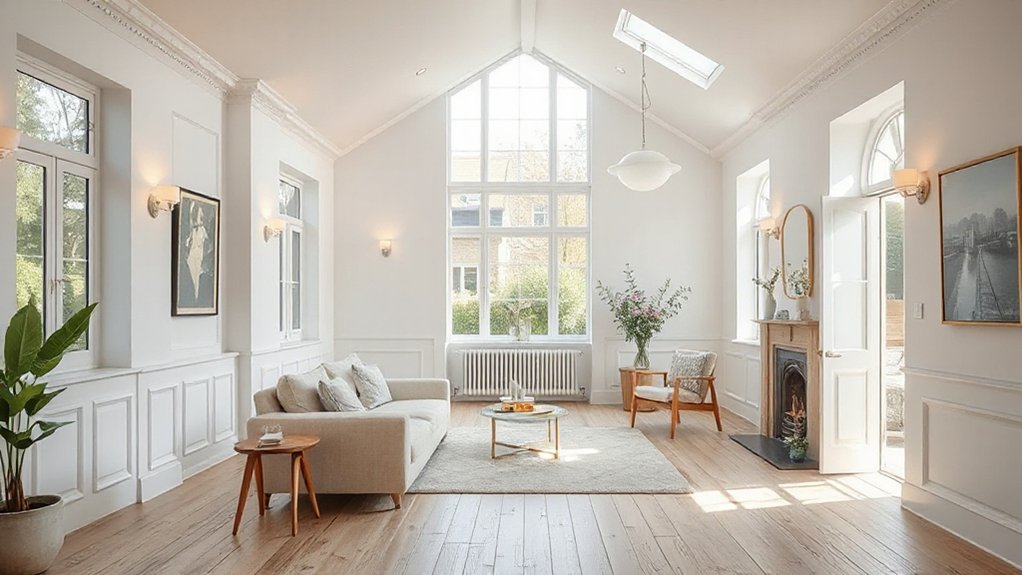
Layered lighting is your easiest route to day-to-night versatility in UK homes. You’ll blend ambient, task, and accent layers so spaces feel balanced, not busy, from dawn light to evening glow. Use dimmers to shift softly and speedily. Choose warm white bulbs for coziness that still reads as bright and polished.
Strategic placement highlights textures, frames, and architectural features, while night illumination guides paths without glare.
- Ambient base with ceiling or recessed fixtures
- Task lights at desks, counters, and reading nooks
- Accent LEDs to emphasize artwork or architecture
- Dimmers to modulate mood and function
- Night illumination for safety and atmosphere
This approach builds a cohesive, welcoming environment you can adjust with confidence, strengthening your sense of belonging in every room.
Budget Hacks for a Bright Makeover on a Budget
Even with a tight budget, you can achieve a bright, refreshed look by prioritizing outputs over inputs: focus on impactful changes that brighten surfaces, expand light, and feel effortless. You’ll maximize impact with affordable furniture placed to reflect natural light and open sightlines, and you’ll swap heavy, dark pieces for streamlined silhouettes.
Embrace DIY decor to customize texture and color without overspending—painted accent walls, light fabrics, and reflective finishes all count. Choose mirrors strategically to bounce daylight around rooms, creating an airy feel.
Keep surfaces clean and uncluttered; decluttering instantly boosts perceived brightness. Opt for multi-functional pieces and thrifted finds refreshed with fresh coats of white or pale neutrals.
This approach builds belonging: practical, stylish upgrades you can enjoy together.
Quick Checks to Maintain a Bright, Airy Home
Maintaining a bright, airy feel is about quick, repeatable checks you can do weekly. You’re creating a sense of belonging through order, so keep routines simple and effective.
- Inspect windows and blinds; wipe dust, then open for natural light
- Refresh indoor plants and check soil moisture, removing droop when needed
- Fluff cushions and align seating to keep spaces inviting
- Quick restore of vintage textiles by airing, shaking, and spot-cleaning
- Declutter surfaces, returning items to their proper spots for calm, airy surfaces
These small, deliberate actions protect light and airiness, reinforcing a confident, lived-in ambience.
You’ll notice the room feels brighter after each routine, and your home stays welcoming for guests and family alike.
Frequently Asked Questions
How Does Ceiling Height Affect Perceived Brightness in UK Homes?
Ceiling height affects perceived brightness: higher ceilings can amplify light distribution, making rooms feel airier, while lower ceilings concentrate light. You’ll notice subtler shadows and more even illumination when you optimize ceiling height with reflective finishes and strategic lighting.
Can Rugs Disrupt or Enhance a Bright, Airy Feel?
Rugs can enhance brightness by adding Texture contrast and softening echoes, or disrupt it if dark or busy. Choose Pattern selection thoughtfully; lighter, subtle patterns keep space airy, while bold textures create warmth, belonging, and practical, polished cohesion.
Do Dark Wood Tones Ruin a Light, Sunny Vibe?
Dark furniture won’t ruin a light, sunny vibe if you balance it with ample wall colors and bright accents; you’ll feel grounded yet expansive, like a calm, confident space that invites belonging and practical, polished living.
Which Energy-Efficient Windows Best Boost Daylight Exposure?
You should choose energy-efficient windows with high daylight potential, favoring uPVC or timber alternatives, and pair them with smart window placements. Use window treatments that minimize glare, and align placement with sun paths to maximize bright, welcoming interiors.
How Do Seasonal Daylight Changes Influence Interior Brightness?
Like sunshine spilling over a windowsill, you’ll notice seasonal daylight variations gently shift brightness. You adapt with blinds, layering, and reflectors, ensuring seasonal sunlight remains balanced and inviting, so your space stays bright, cohesive, and welcoming year-round.
Conclusion
To keep your home light and buoyant, you’re stitching daylight into every corner with smart layout and airy materials. Think of windows as open mouths for sunshine, paints as mirrors that bounce it around, and layered lighting as a day-to-night heartbeat. Choose lightweight furnishings, texture without clutter, and reflective surfaces to amplify glow. With steady maintenance and budget-friendly tweaks, your space stays bright, welcoming, and effortless—like a breath you can almost see.