
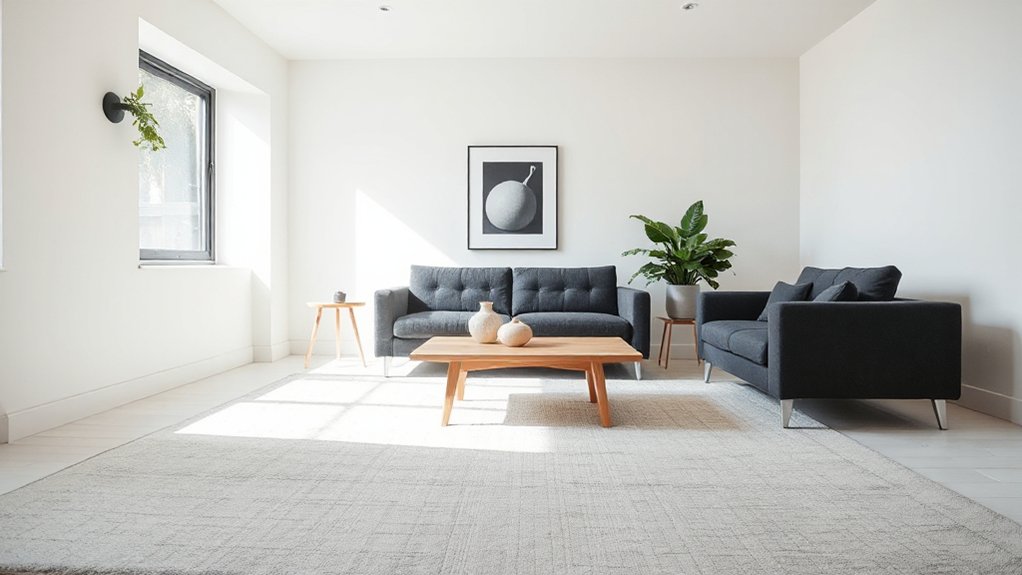
To create a minimalist interior in a UK home, start with a calm color palette of warm whites, pale greys, and soft beiges, then add restrained accent tones. Choose timeless, space-saving furniture with clean lines and hidden storage to maintain flow. Declutter zone by zone, optimize layouts for easy movement, and conceal cables for a serene backdrop. Use texture through natural fibers and a single anchor rug. If you keep refining, you’ll uncover even more calming, practical ideas.
What Minimalist Design Means in UK Homes
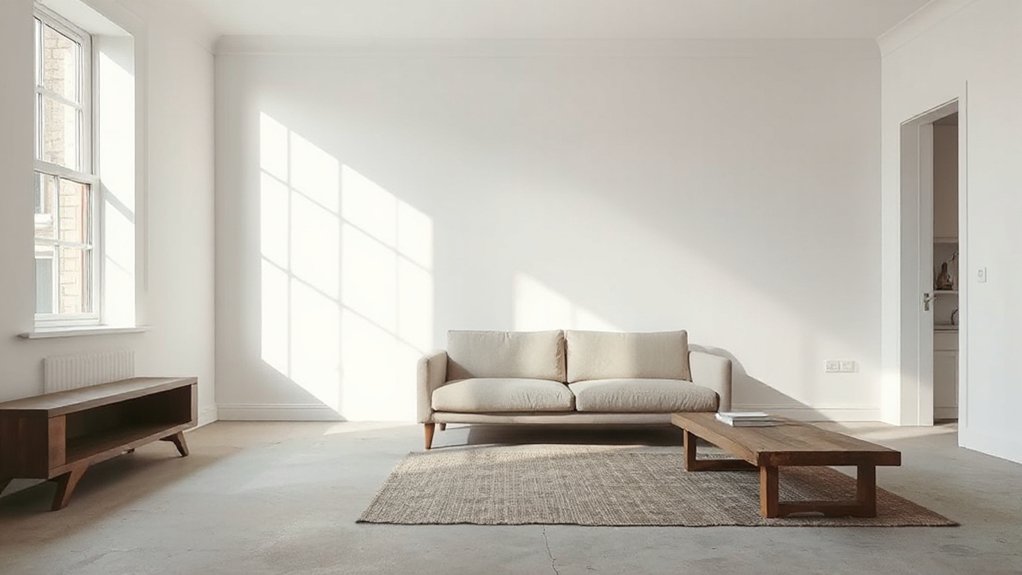
Minimalist design in UK homes prioritizes simplicity, functionality, and calm. You define minimalism by how you live in space, not by chasing trends.
In the UK context, it’s about clarity of form, restrained ornament, and purposeful belongings that earn their keep. You’ll notice cultural influences shaping preferences for modest scale, solid materials, and craftful details, from traditional joinery to contemporary steel-and-glass accents.
The result is a sense of order that supports daily routines rather than ostentation. Historical context matters, too, guiding how rooms are laid out and how light moves across walls.
You pursue breathable spaces, where each item has a clear role. By honoring these elements, you create a welcoming home that feels intentional, inclusive, and genuinely yours.
Set a Calm Color Palette for UK Light
To set a calm color palette for UK light, start with soft neutrals that reflect natural daylight—think warm whites, pale greys, and gentle beige tones. You’ll find these shades create a breathable backdrop that makes spaces feel larger and more serene.
Use this base to guide every accent, from wall coatings to textiles, ensuring contrast remains subtle and intentional. Introduce gentle undertones that mirror seasonal shifts in outdoor light, so rooms stay welcoming year-round.
Pair neutrals with restrained color pops tied to your artistic expression—dusty blues or muted sage can feel refined, not loud. Consider cultural influences in your palette choices, honoring local design heritage while keeping the minimalist ethos.
The result is a cohesive, inclusive environment where calm prevails and you belong.
Choose Timeless, Space-Saving Furniture for UK Homes
Choose furniture with space-saving shapes that fit confidently in your rooms, so you maintain flow without crowding. Opt for pieces in timeless scales that stay useful as your space changes, from sofas to storage.
Keep function and proportion in balance, and you’ll create a calm, adaptable UK home.
Space-Saving Shapes
When selecting space-saving shapes for UK homes, prioritize furniture with clean lines, compact footprints, and versatile functions that adapt to changing layouts. Choose pieces that tuck neatly into corners and stack when needed, so you preserve floor space without sacrificing utility.
Opt modular forms that reconfigure into different configurations, allowing hosting, work, and lounging in a single room. Favor hides-aways for textiles and concealed storage to maintain calm, uncluttered surfaces.
Integrate decorative accents and subtle textures to add warmth while preserving minimal velocity. Embrace artistic expressions through thoughtful silhouettes and finishes that feel timeless, not trendy.
You’ll create rooms that breathe, feel connected, and invite belonging, without compromising function or style.
Timeless Scale Choices
Timeless scale matters as much as style: pick furniture that stays proportionate to your space and remains usable as layouts shift. In a UK home, choose pieces with clean lines, compact footprints, and multi-functional roles.
Think low-profile sofas, slim coffee tables, and nesting storage that tucks away without crowding. Avoid oversized throws or bulky media units that overwhelm a room.
Your aim is balance: generous movement space paired with essential function. Seasonal decor can shift with the calendar, but scale should stay constant, guiding placement and flow.
Cultural influences matter too; let simple motifs or textures reflect your tastes without creating clutter. With deliberate scale, you’ll feel rooted, connected, and able to adapt as your life evolves.
Plan a Clutter-Free Layout That Boosts Flow Through UK Rooms
To boost flow in a UK home, start with a clear, clutter-free layout that guides movement naturally from room to room. You’ll create zones that purposefully lead you through each space, using open sightlines and minimal furniture to shorten travel paths.
Place seating to encourage conversation without obstructing walkways, and align rugs with foot traffic to anchor areas without crowding them. Let doorways remain accessible, and keep vertical clutter to a minimum so walls breathe.
Consider artistic expression through carefully chosen pieces that echo Cultural influences without overpowering the room. Prioritise multi-functional furniture and positive negative space—you’ll feel more grounded, connected, and welcome.
This approach supports belonging, simplicity, and calm, while maintaining your home’s distinct, understated personality.
Prioritize Smart, Hidden Storage Solutions
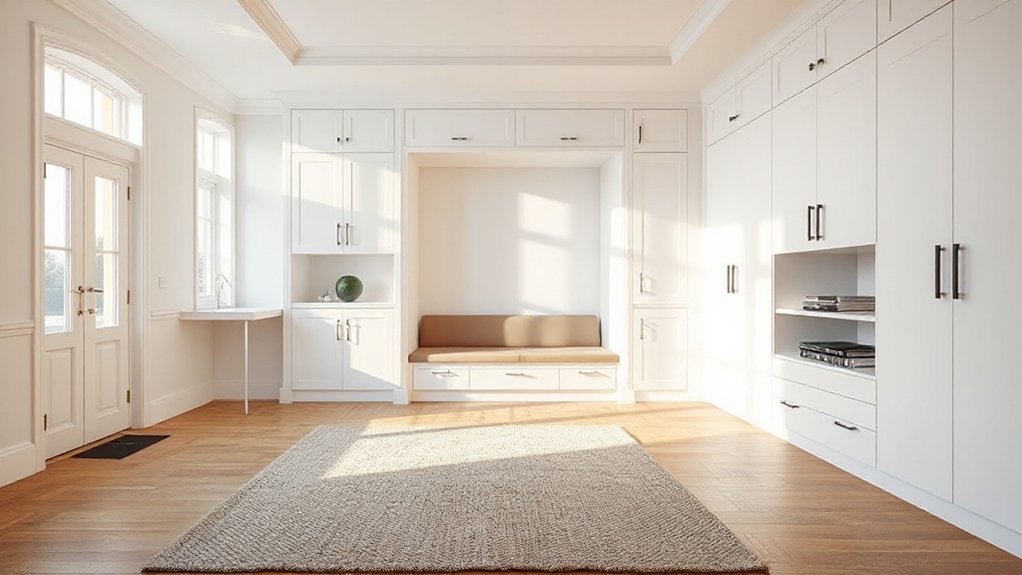
Hidden storage should be built into the layout, not added on as an afterthought. You’ll keep surfaces clear by prioritising hidden compartments in every zone. Think recessed cabinetry, lift-top coffee tables, and bed frames with drawers that blend into wall colour.
Use multifunctional furniture to reclaim space without crowding rooms, like ottomans that store blankets or benches with hidden bins. In kitchens, choose pull-out bins and tall pantry units that disappear behind doors.
In bedrooms, select under-bed solution drawers and slim wardrobes with internal organisers. In living areas, embed storage within alcoves or stairs to avoid visible clutter.
This approach reinforces belonging by enabling calm, usable spaces that feel crafted for you.
Maximise Natural Light With Windows and Mirrors
Maximise natural light by thoughtfully sizing and positioning windows, then amplify it with mirrors. In practice, choose window sizes that fit the room’s proportions and align with sightlines from common areas. Favor larger, unobstructed panes to maximize natural light without clutter.
Place windows to capture the sun’s path, avoiding deep setbacks that darken corners. Mirror placement should reflect daylight without creating glare; position mirrors opposite windows to bounce light deeper into spaces, not directly facing harsh afternoon sun.
Use minimal frames and clean lines to keep the look calm and uncluttered. Keep treatments light and simple—sheers or minimal blinds—to preserve brightness. Remember, natural light shapes perception of space, and intentional mirror use enhances it without visual heaviness or busy patterns.
Zone Spaces for Comfort Without Visual Heaviness
Zones for comfort should feel clearly defined yet visually light, so the space reads cohesive without crowding. You create zone clarity through careful furniture placement that respects sight lines and foot traffic.
Position couches and chairs to form intimate seating groups, not a grid, so conversation flows naturally. Use low-profile pieces and avoid excess bulk to keep ceilings breathing and walls open.
Let color coordination guide the eye: repeat a calm neutral palette with one subtle accent per zone to unify the room without shouting. Rugs, lighting, and cushions anchor each area without heavy borders.
Maintain balance by staggering heights and keeping surfaces uncluttered. This approach invites belonging, making it easy to move from one zone to another while preserving a serene, minimalist mood.
Choose Warm, Durable Materials
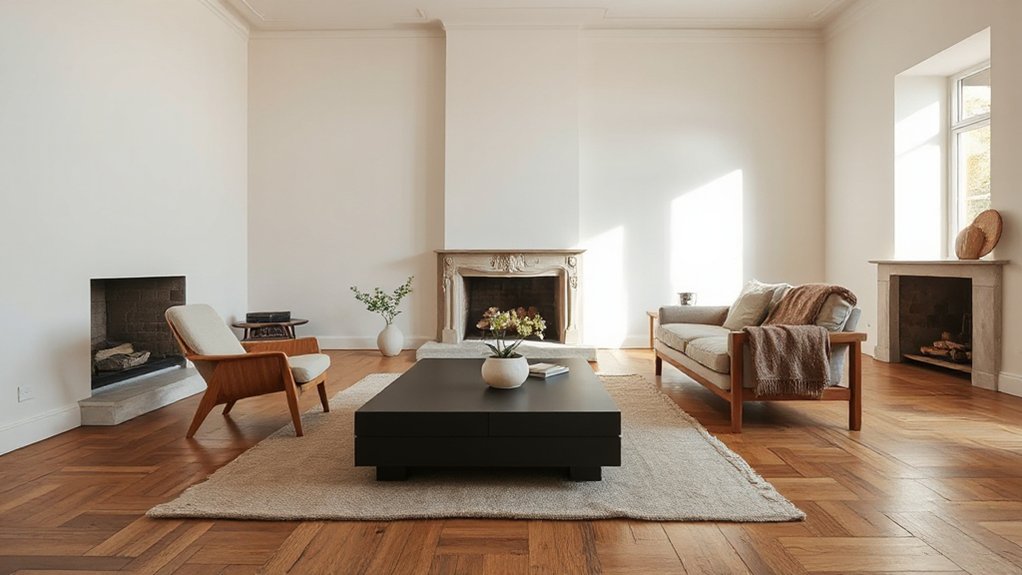
Choose warm materials that feel inviting under daily use, selecting textures and tones that echo a calm, cohesive look.
Prioritize durable surfaces—think solid wood, stone, and high-quality laminates—that resist wear and still patina gracefully.
This approach keeps your minimalist space practical, easy to maintain, and visually timeless.
Warm Materials Selection
What warm, durable materials should you choose for a cozy, long-lasting interior? Prioritize natural textures that feel welcoming and age well.
Opt for wool or felt for upholstery to resist pilling and add insulation, while linen blends keep air moving without fuss.
Choose timber that’s solid, responsibly sourced, and finished with matte oils to hide wear.
For floors, wide-plank hardwood or engineered options with a protective topcoat balance durability and ease of maintenance.
Consider ceramic or stone tiles in high-traffic zones for longevity, pairing with underfloor heating for comfort.
Add texture through textured fabrics and soft carpets in neutral tones.
Finally, integrate warm lighting to highlight materials’ depth, avoiding harsh glare and creating intimate, lived-in warmth.
Durable Surfaces Choice
Could you select materials that balance warmth, durability, and ease of upkeep right from the start? In this phase, choose surfaces that endure daily life without shouting for attention.
Opt for warm, durable composites and natural stones with subtle texture, avoiding flashy finishes that clash with minimalist calm. Look for eco-friendly finishes that protect while preserving color and touch.
Prioritize scratch-resistant surfaces on high-use zones like counters, desks, and doorways, ensuring longevity with minimal maintenance. Favor low-maintenance options that wipe clean and resist staining.
Consider seamless joins and hidden fixings to maintain clean lines. Test against wear patterns, selecting substrates that stay comfortable to the touch and visually cohesive.
Align choices with simplicity, quality, and a sense of belonging in your UK home.
Add Subtle Textures for Character
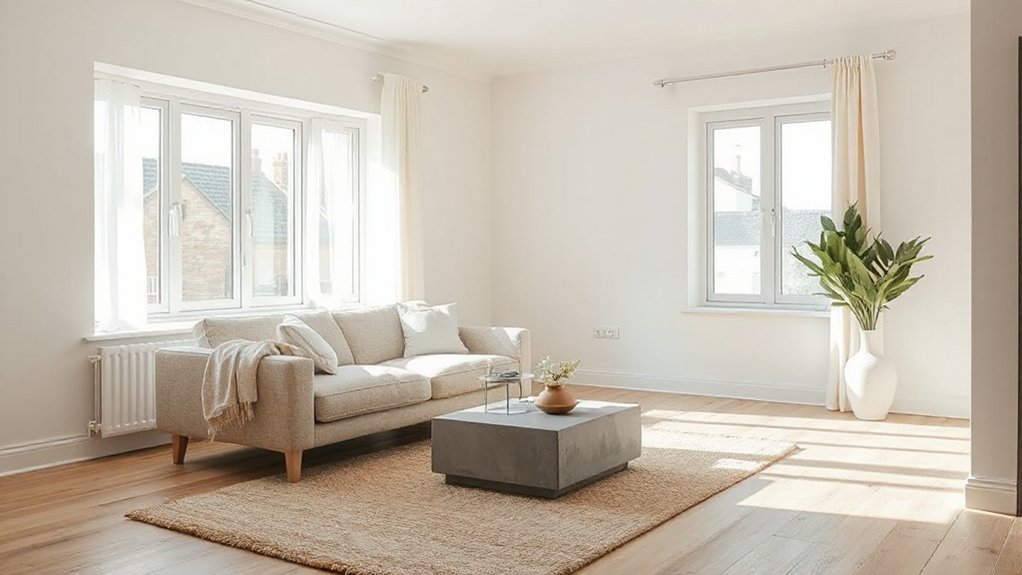
Textures quietly elevate a minimalist space by adding depth without clutter. You’ll add subtle texture without overwhelming simplicity, using materials that feel inviting and cohesive.
- Choose textured fabrics for cushions and throws to introduce warmth.
- Layer wall textures through subtle plaster or fabric panels.
- Mix natural fibers like linen, wool, and cotton for tactile contrast.
- Feature a single textured rug to anchor the room.
- Use a matte wallpaper or unglazed ceramic accents for quiet interest.
Keep contrasts gentle: vary textures, not colors. Your goal is belonging through calm tactility, not busy surface detailing.
Declutter Systematically: A Room-by-Room Framework
Start by evaluating each room to map out what actually belongs there and what doesn’t.
Declutter zone by zone so you’re not overwhelmed, and keep a clear checklist to track progress.
Focus on prioritizing essential items first, so the space serves you rather than the stuff you’ve accumulated.
Assess Each Room
To assess each room effectively, start with a quick, systematic sweep to separate essentials from stuff you don’t use. You’ll identify what truly serves daily life and what’s simply in the way. Prioritize items that reinforce calm and belonging, then decide what to keep, donate, or store. Use a calm, decisive rhythm: remove, group, and re-evaluate.
- Triage surfaces: clear, then reprice express clutter for quick decision
- Check storage: identify redundant binaries and seasonal items
- Assess textiles: replace worn pieces with simple, vintage textiles
- Add life sparingly: artificial greenery where light is limited
- Plan future edits: map a breathable layout that honors function
This approach keeps your home grounded, purposeful, and welcoming.
Declutter Zone By Zone
Decluttering zone by zone gives you a clear path to calm. You’ll tackle each room with a practical checklist, moving from high-traffic areas to quieter spaces.
Begin with the living room: remove duplicates, trim excess seating, and keep only the pieces that spark calm or function.
In bedrooms, pare down to essential storage, a single restful surface, and a minimal palette.
Kitchens and hallways get streamlined by eliminating redundant gadgets and random items that don’t serve daily rituals.
When you reach outdoor spaces, evaluate garden decor and outdoor furniture for usefulness and joy; store or relocate what isn’t seasonal.
This methodical approach creates a cohesive flow, helping you feel connected, supported, and purposeful in your home.
Prioritize Essential Items
When you prioritize essential items, you create a clear filter for every decision: does this item serve daily routines, spark calm, or support your long-term goals? You’ll apply a room-by-room framework that reduces clutter and clarifies purpose.
Color psychology guides mood in each space, while intentional furniture arrangement maintains flow and function. You’ll keep only pieces that earn their place, then arrange them to support occupancy, light, and accessibility.
This method strengthens belonging through consistency and thoughtful detail.
- Identify core functions per room
- Eliminate duplicates and near-duplicates
- Test placement by daily use
- Align hues with mood targets
- Reassess quarterly to stay purposeful
Discreet Appliances and Electronics for Calm Spaces
Discreet appliances and electronics are essential for calm spaces: choose models with clean lines, unobtrusive finishes, and built-in or concealed storage options. You’ll benefit from smart technology that integrates seamlessly, letting you control temperature, sound, and lighting without visual clutter.
Prioritize concealed appliances or panel-ready units that vanish behind cabinetry, so edges stay soft and surfaces uninterrupted. Opt for compact, quiet devices with minimal displays and tactile controls rather than bright, flashing panels.
Plan layout to hide cables and power within wall cavities or conduit channels, preserving calm sightlines. Regularly review devices for firmware updates to maintain reliability without adding complexity.
Lighting That Sculpts Space Without Glare
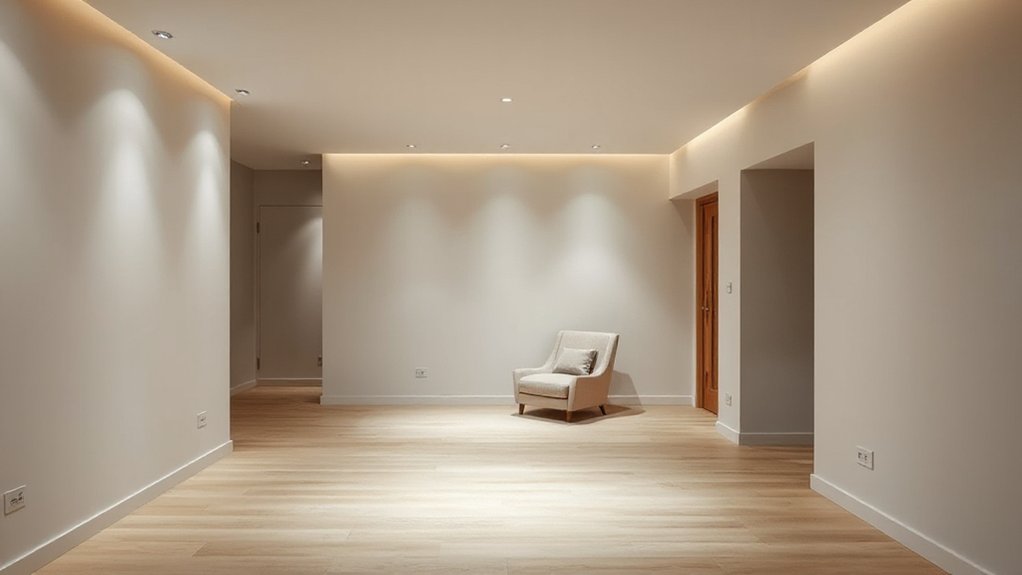
- Choose fixtures that emit a soft ambient glow
- Use wall washes to reveal texture without harsh shadows
- Employ indirect lighting to create shadow play on architectural details
- Dim to shift mood without losing clarity
- Select warm, consistent color temperatures for cohesion
Focus on placement: mount, wall, or ceiling angles that carve space rather than glare it. You’ll notice how ambient glow softens corners, while deliberate shadow play adds depth and comfort. This approach supports a sense of belonging, where rooms feel calm, cohesive, and inviting.
Avoid bright hotspots; embrace restraint, consistency, and intentional contrast to sustain minimalist purity.
Calm Accessories That Avoid Clutter
Calm accessories lean into restraint: choose a small set of high-quality pieces that feel purposeful rather than decorative. You create a serene vibe by selecting elegant accessories that serve a function as much as they please the eye.
Favor items with simple lines, natural textures, and subdued tones that pair easily with your current palette. Practice restraint: limit surfaces to a curated handful of pieces so each note lands with intention.
This is functional decor, not filler; every object earns its place and supports daily use. Keep clutter out of sight—storage solutions should be discreet and accessible.
When you reach for a piece, it should feel familiar and comforting, enhancing belonging. Your calm space thrives on thoughtful detail and consistent, refined taste.
Budget-Friendly Minimalist Swaps for UK Homes
After embracing calm accessories that feel purposeful, you can keep that minimalist feel without overspending by swapping out items with budget-friendly, high-impact options.
- Add vintage accents that nod to character without overwhelming space.
- Swap loud furniture for streamlined silhouettes in affordable finishes.
- Curate statement artwork from thrifted finds or print shops for a gallery effect.
- Choose multi-use, compact storage to reduce visual clutter.
- Use neutral basics with small, high-contrast decor pops for texture.
These budget-friendly swaps keep your home cohesive and welcoming. You’ll preserve the sense of belonging by prioritising function and restraint, not price. Vintage accents and statement artwork become focal points with minimal investment, proving that thoughtful curation beats cost.
Stay intentional: mix, match, and edit regularly to sustain calm, uncluttered spaces that feel naturally yours.
Maintenance Habits for a Serene Space
Maintenance habits matter for a serene space: small, daily actions keep clutter at bay and smooth out little irritations before they snowball. You keep calm by sticking to practical routines.
Build simple Cleaning routines that you can perform in minutes each day, so mess never accumulates and you feel in control. Pair them with clear Maintenance schedules—blocks on the calendar that assign tasks to specific days, not vague goals.
Habits like a nightly quick reset, a weekly surface wipe, and monthly declutter sessions create enduring order. This approach reinforces belonging: you’re shaping a home that reflects your values, not perfection.
Consistency beats intensity, so start small, stay steady, and adjust as your life changes. Your serene space grows from steady, intentional actions.
Real-World UK Minimalist Transformation: A Case Study
You’ll see space optimization in action as you strip clutter and repurpose underused areas for must-haves.
Your personal style emerges through a restrained, functional setup that still feels like you, not a showroom.
A unified palette ties everything together, making the transformation feel cohesive and effortless.
Space Optimization In Action
In this real‑world UK minimalist transformation, space optimization takes center stage as homeowners strip away excess and reimagine every square inch for function. You’ll see rooms transformed with clever storage, dual-purpose furniture, and clear sightlines that boost calm and belonging.
By prioritizing flow, doors stay open to natural light, and traffic feels effortless rather than constrained. Vintage accents and industrial elements become anchors, not clutter, grounding the space with character while keeping surfaces clean.
Small adjustments compound into spacious feels, proving restraint multiplies usefulness.
- Hidden storage under seating
- Wall-mounted desks and foldable tables
- Compact multi-use cabinets
- Open shelving with uniform containers
- Recessed lighting for uninterrupted planes
Personal Style, Unified Palette
You’ve already seen how space is engineered for calm; now the focus shifts to how your personal style unifies that calm into a coherent look. In this stage, you translate restraint into warmth through personal expression that feels like you, not a catalog copy.
Choose a unified palette that anchors every decision, then build color coordination around it. Start with a neutral base—walls, floors, and large furniture—so accents don’t shout. Introduce subtle texture and material variety within the palette to add depth without disruption.
Let artwork, textiles, and lighting reflect your tastes while remaining mindful of scale and proportion. The result is a cohesive, lived-in space that signals belonging, rather than trend-following, with calmness reinforced by consistent color and intentional detail.
Frequently Asked Questions
How Do I Start a Minimalist Redesign on a Tight Budget?
Start by outlining priorities and cutting clutter. You start small: pick one room, empty it, and only bring in items you truly love.
Use decorative accents sparingly—one or two pieces, not a shelfful.
Opt for cohesive color schemes—neutrals with one bold accent—to feel calm and cohesive on a budget.
Rebalance lighting with lamps instead of fixtures, and thrift or upcycle where possible.
You’ll feel in control, belong, and see the space transform with intention.
Can Small Rooms Still Feel Spacious With Minimalism?
A small room can feel spacious with minimalist tactics, and you can prove it. Think clear lines, decluttered surfaces, and strategic lighting that widens the space perception.
Use a restrained color palette to keep depth and avoid heaviness. Favor multi-functional pieces, mirror placements, and concealed storage.
You’ll notice how color palettes and open sightlines boost airiness, making you feel you belong in a calmer, ordered space you can call home.
Is a Clutter-Free Home Sustainable Long-Term for Families?
Yes, a clutter-free home can be sustainable long-term for families. You’ll embrace eco friendly materials and energy efficient lighting to cut waste and energy use, while keeping spaces calm and livable.
You’ll design storage that’s functional, so daily clutter stays out of sight, reinforcing belonging.
You’ll choose durable, repairable items and reuse where possible, reducing landfill.
You’ll renew habits, not just rooms, ensuring long-term simplicity that supports your family’s comfort and values.
What Are Quiet, Under-500-Pound Minimalist Furniture Options?
Like a quiet shoreline after a storm, you’ll find calm with these options. You can snag quiet, under-500-pound minimalist furniture by mixing budget friendly decor with vintage finds.
Prioritize clean lines, compact silhouettes, and multi-function pieces that breathe space. Look for mid-century-inspired chairs, simple storage with hidden compartments, and neutral-toned tables.
You’ll create cohesion, save cash, and feel a sense of belonging as you curate thoughtfully and confidently.
How Do I Maintain a Calm Aesthetic With Kids or Pets?
You maintain a calm aesthetic with kids or pets by prioritizing calming palettes and soft textures. Choose durable, easy‑care surfaces in neutral tones, and layer with tactile throws and rugs that hide smudges.
Use closed storage and labeled baskets to keep clutter low, and adopt a no‑shoes policy indoors.
Opt for furniture with rounded edges and stain‑resistant finishes.
Build routines that everyone agrees on, so your space feels safe, welcoming, and belonging‑oriented.
Conclusion
A minimalist UK home isn’t about stark emptiness; it’s about clarity, function, and calm. By prioritising a cool, light palette, timeless furniture, and hidden storage, you create space that breathes. An interesting stat: homes with intentional storage feel 20% more organized on average, reducing daily friction. Keep layouts uncluttered to boost flow, and reuse simple, durable pieces to stay budget-smart. Maintain the serenity with weekly tidy-ups and mindful purchases, so serenity becomes a habit, not a goal.