
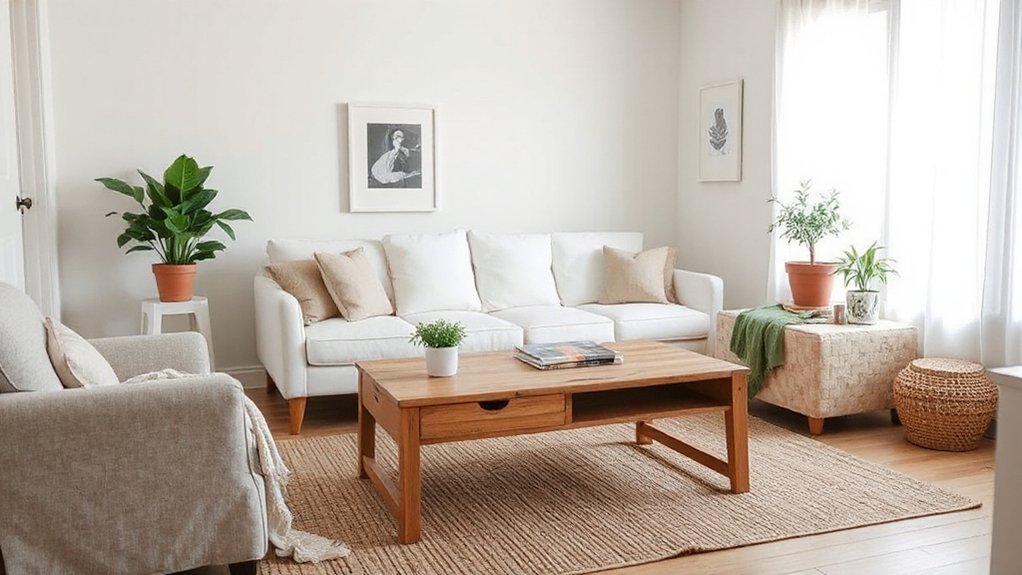
To create a stylish living room on a budget, start with comfort and durability: choose a solid sofa and easy-clean basics as your foundation, then layer warmth with textured textiles and vintage accents. Build a cohesive look around a core color plus 2–3 accents, and plan a 3-point budget: essential comfort, durable basics, and future flexibility. Optimize layout for clear sightlines and flow, thrift smartly for statement pieces, and refresh with low-cost decor tweaks. You’ll uncover more practical steps ahead.
Define the Core Goals of a Budget-Friendly Living Room
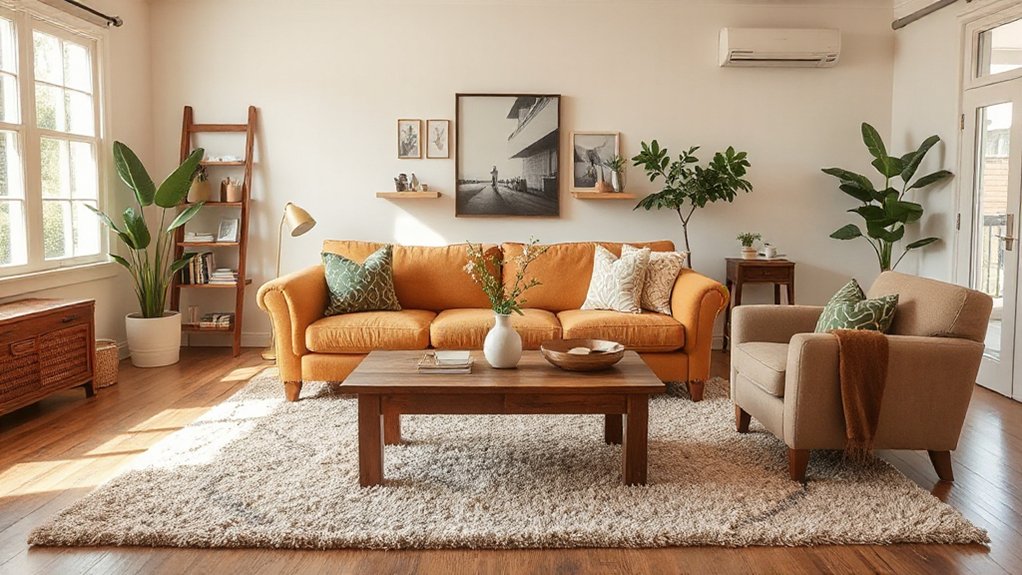
To define the core goals of a budget-friendly living room, start by identifying what you must achieve within your money limits: comfort, durability, and a welcoming vibe.
You shape the space to feel like you belong, not just to impress. Prioritize comfort by choosing supportive seating and materials you won’t regret after weeks of use.
Durability comes from solid frames, easy-clean fabrics, and modular pieces you can reconfigure as needs shift.
A welcoming vibe comes through thoughtful lighting, warm textures, and a cohesive color story.
Include vintage accents to add character without overspending, and plan for subtle tech integration that enhances daily life without clutter.
Your goals guide choices, ensuring style, function, and value align in harmony.
Set a Realistic Budget and a 3-Point Prioritization Plan
Setting a realistic budget is your first concrete step, then lock in a clear 3-point prioritization plan to keep costs in check: essential comfort, durable basics, and smart flexibility for future changes.
You’ll allocate funds by function, not impulse, ensuring your space remains welcoming to you and your guests. Begin with essential comfort—sofas, seating that lasts, and a reliable layout—then move to durable basics like storage and sturdy surfaces.
Leave a small buffer for smart upgrades that endure, such as timeless accents or versatile textiles. Treat budgeting like Budget travel or even vintage clothing shopping: seek value, patience, and story.
This approach strengthens belonging, keeps you confident, and lets you adapt when tastes evolve.
Create a Cohesive Color Palette on a Budget
Start by picking a core color and a couple of complementary accents you can reuse across furniture, textiles, and wall treatments. You’ll build cohesion by repeating these hues in throws, cushions, and small art frames, so everything feels intentional.
Rely on color psychology to choose moods—calm neutrals for serenity, richer accents for vibrancy—without overcommitting. Limit yourself to two or three primary tones, plus one contrasting highlight to avoid chaos.
When selecting paint samples, test in rooms with natural light at different times of day, and compare chips against fabrics you already own.
Aim for balance: lighter walls with deeper accents or vice versa. Trust your eye, keep the palette flexible, and know you’re crafting a space that belongs to you and your guests.
Layout Foundations: Maximize Space and Flow
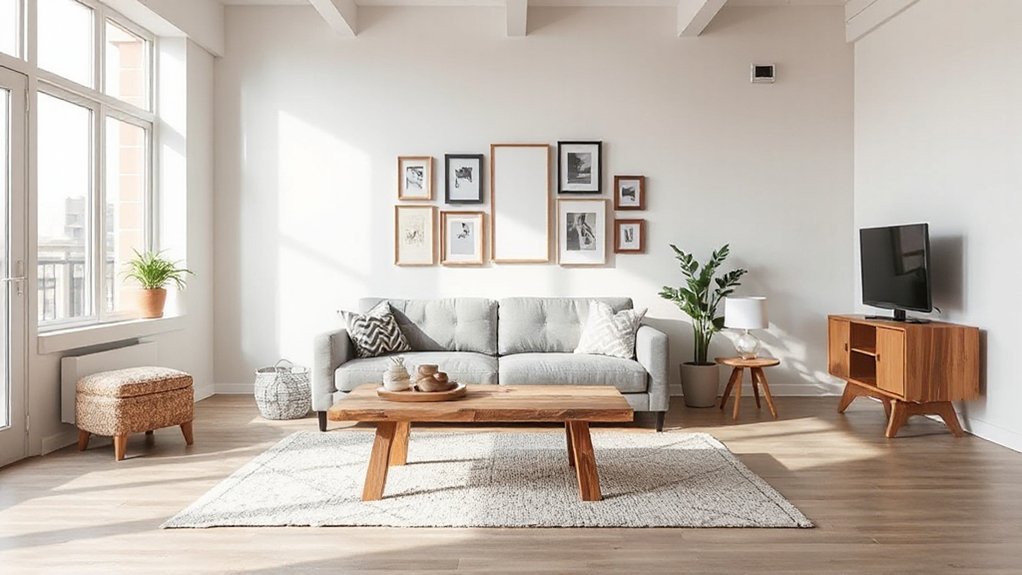
Ever wondered how to make a small living room feel larger and flow more naturally? You can shape space with intentional layout foundations. Start with furniture placement that prioritizes clear sightlines and easy circulation. Align pieces to walls to create defined zones without crowding.
Use lighting design to add depth: a mix of overhead, task, and ambient sources smooths edges and creates warmth. Choose compact, multi‑functional furniture to free floor area. Keep pathways at least 30 inches wide to avoid bottlenecks.
Emphasize symmetry for calm balance and easy navigation.
- Prioritize open pathways and clear sightlines
- Place seating to face traffic patterns
- Use wall‑mounted or slim profiles
- Layer lighting to dissolve shadows
- Choose versatile pieces for flexibility
Thrift Store Scores: How to Find High-End Looks for Less
Thrift stores aren’t just for finds on a budget—they’re gold mines for high-end looks if you know how to shop them. You’ll transform your living room by focusing on proportion, color, and texture, not price tags.
Begin with a mission: identify statement pieces that feel timeless, then build around them. Look for vintage finds with solid construction, quality fabric, and a patina that adds character. Seek simple shapes that pair with your existing furniture, so you can mix new and vintage seamlessly.
Practice art curation by selecting a few complementary pieces—serve a cohesive balance and avoid overcrowding. Don’t overlook hardware, frames, and lighting; these accents pull room themes together.
With intention, thrifted finds become a curated, inviting space you proudly call home.
DIY Upgrades That Look Professional
You can start with the DIY Upgrades Basics to build solid skills for a professional look.
Use Budget-Friendly Materials to keep costs down without sacrificing finish, and apply Pro Finish Techniques to achieve durable, showroom-ready results.
This discussion will map simple steps to practical, high-impact upgrades you can implement now.
DIY Upgrades Basics
When you’re upgrading on a budget, focus on small, high-impact changes that look professional. DIY upgrades Basics help you build confidence with simple, controllable tasks. Prioritize precision, choose clean lines, and keep surfaces uncluttered to echo minimalist decor.
Start with quality tools, measured planning, and reversible changes so you can adjust anytime. Blend vintage finds with modern pieces for character without overwhelming the space.
- Choose a single statement piece to anchor the room
- Refinish a wood surface for a subtle upgrade
- Replace dated hardware with matte metal pulls
- Paint accents in a cohesive, neutral palette
- Curate a few meaningful accessories for texture and warmth
Incorporate vintage finds thoughtfully, keep lines clean, and let minimalist decor guide balance. You’ll gain confidence and a refined, cohesive look.
Budget-Friendly Materials
Start with upholstery: vintage fabrics can add character without a premium price if you select durable blends and neutral bases. Reupholster a chair or refresh cushions to change the room’s vibe affordably.
For surfaces, laminate or veneer with a matte finish delivers a polished, built-in feel that’s easy to clean.
Lighting and hardware matter, too: artistic framing on mirrors or frames elevates walls without a full renovation.
Use textiles strategically—curtains, throws, and pillows create cohesion.
Pair artisanal pieces with clean lines to keep the space feeling curated, not cluttered.
Pro Finish Techniques
- Refined paint edges with light scuffing for authentic wear
- Chalk or glaze accents to enhance depth
- Wax or sealant for longevity on furniture
- Metallic or matte contrasts to balance tones
- Refinish, not replace, for vintage finds with modern polish
Smart, Budget-Friendly Furniture That Fits Your Style
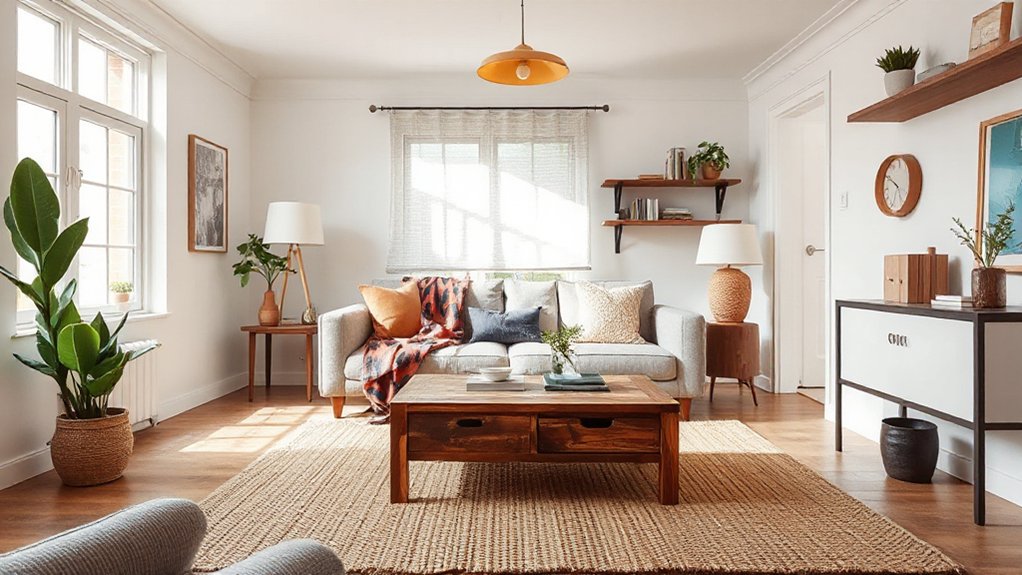
Smart, budget-friendly furniture can transform a living room without breaking the bank. You don’t need designer labels to achieve a cohesive look: mix versatile pieces, quality basics, and smart storage to suit your lifestyle.
Prioritize comfort with a sturdy sofa and a space-saving coffee table that doubles as storage. Opt for neutral foundations—gray, taupe, or cream—then add personality with accents.
Vintage accents bring character without a premium price when found secondhand or repurposed. Minimalist decor keeps your space calm and functional, so choose clean lines and uncluttered surfaces.
Seek modular seating that adapts to gatherings, and layer with affordable textiles for warmth. You’ll craft a space that feels like you—intentional, welcoming, and easy to maintain.
Layer Texture for Depth Without Overspending
Layer textures add depth without breaking the budget by mixing affordable fabrics, finishes, and surfaces. You’ll get richer visual interest by layering materials—think a woven rug, a velvet cushion, and a wood-toned accent—without overspending.
Start with a simple rule: pair two low-cost textures with one contrasting material to create dimension.
Layered Textures, Low Cost
Layered textures add depth to a budget-friendly living room by combining inexpensive materials with smart placement. You’ll create contrast without clutter by mixing textiles, finishes, and accessories, then rotate pieces seasonally to renew the room.
- Choose a base like a neutral couch and add varying textures: knits, boucle, and linen.
- Layer throws and cushions in different weights for visual interest.
- Introduce wall art and window treatments for color and softness.
- Add a woven rug to ground furniture and define zones.
- Use affordable accents (candles, baskets) to finish the look without overspending.
This approach keeps you rooted in a warm, cohesive space where belonging feels natural and fresh.
Mix Materials For Depth
Mixing materials adds depth without draining your budget. You’ll layer textures to create a richer room without piling on costs. Start with a solid foundation of durable essentials—sofas and chairs in affordable upholstery, then add contrast with varied textiles.
Pair a tight weave with a nubby throw, or mix velvet cushions with a cotton cover for tactile interest. Use wood, metal, and ceramic accents to echo color tones across scales, keeping the palette cohesive.
Consider living room upholstery in broad, budget-friendly choices and introduce pattern through pillows, rugs, and curtains. Wall art choices should be deliberate but inexpensive: a few framed prints, a textile wall hanging, or a scaled mirror to bounce light.
The goal is tasteful depth that invites gathering and belongs.
Budget-Friendly Lighting That Elevates the Room
Looking for lighting that makes a room feel bigger and brighter without breaking the bank? You can achieve this with thoughtful, affordable options that feel premium. Focus on color psychology and practical lighting technology to shape mood and visibility.
Layer light sources, use warm temperatures, and pick fixtures that distribute light evenly. Simple upgrades like dimmers or LED bulbs in adjustable fixtures can transform atmosphere without a full remodel.
- Use layered lighting: ambient, task, and accent for depth
- Choose warm LEDs (2700–3000K) to cozy up the space
- Opt for dimmers to control mood on demand
- Minimize glare with diffused shades and frosted bulbs
- Mirror placement and light-colored walls amplify brightness
These choices foster belonging, practicality, and a polished feel on a budget.
Rugs, Textiles, and Softness on a Small Budget
You can upgrade your space with layered textiles and a well-chosen rug that anchor the room without breaking the bank. Start with a solid rug as a base, then add coordinating cushions, throws, and curtains to create depth and softness.
Think in layers and accessories—small changes, big impact, and simple, budget-friendly coordination.
Layered Textiles And Rugs
Start with a neutral base rug, then layer smaller runners or woven pieces for contrast. Choose textiles that invite touch: linen, wool, jute, or cotton blends. Use pillows, throws, and a lightweight textile wall or ceiling decor to frame seating and draw the eye upward.
Keep layouts functional; measure clear pathways and avoid overwhelming busy patterns. Wall art can anchor layers, while intentional ceiling decor adds dimension.
- Neutral base rug, then layered accents
- Vary textures, not colors, across pieces
- Mix scales: large, medium, small patterns
- Coherent color family for cohesion
- Place textiles to emphasize zones and flow
Accessorize With Soft Elements
Soft textures are a budget-smart way to make a small living room feel bigger and cozier. You’ll transform the space by layering inexpensive textiles—throws, cushions, and curtains—that echo your color scheme without shouting.
Choose a dominant hue and pick two accent tones to weave through fabrics and rugs, ensuring color coordination across surfaces. A medium-sized rug anchors the seating area, while plush cushions add depth without clutter.
Keep furniture arrangement simple: align seating to create a natural conversation circle and leave clear sightlines to windows or art. Choose textiles with durable weaves and easy-care finishes for practicality.
Minimal patterns prevent visual chaos; solid bases with a few subtle textures feel refined. This approach boosts warmth and belonging while staying budget-minded.
Artwork and Decor: Found Treasures vs. Bought New
Found treasures can elevate a room just as effectively as store-bought pieces, and they often bring personality you won’t find in mass-market decor. You’ll fuse charm with cohesion by mixing vintage finds and fresh, affordable buys, creating artistic displays that reflect you. Focus on balance, not overlap; let statements dominate while smaller pieces support them. Curate with intent: rotate a few pieces seasonally to preserve interest without clutter. Prioritize quality over quantity, and use framing, mats, and lighting to elevate each item.
- Seek vintage finds at flea markets and thrift stores
- Group objects to tell a story rather than scatter them
- Use uniform frames or a shared color palette
- Layer textures to add depth and warmth
- Display art at eye level for maximum impact
Greenery and Natural Elements on a Shoestring
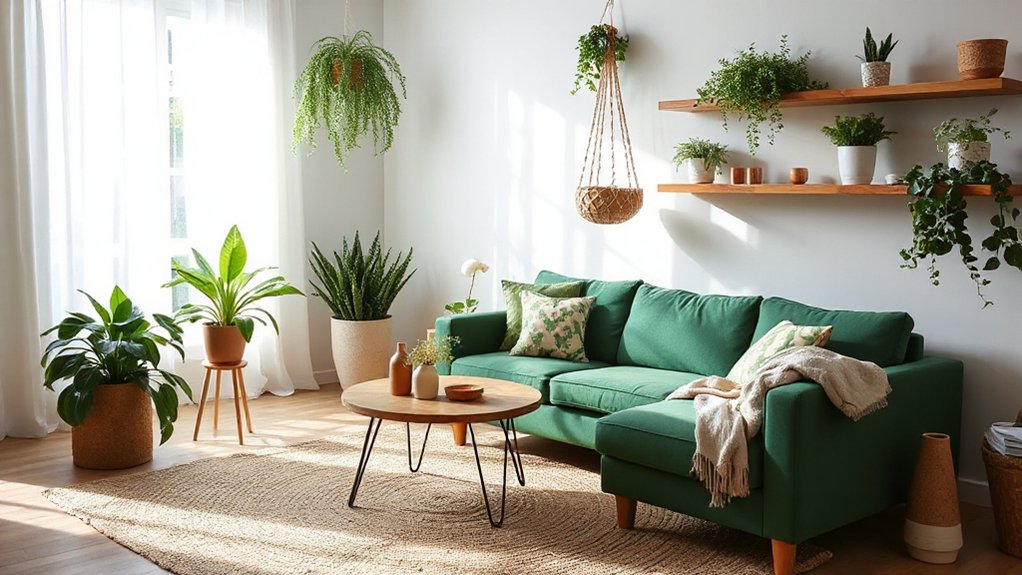
You can elevate your living room with lush plants on a budget by choosing hardy, low-cost varieties and smart containers.
Use DIY greenery accents like painted jars, repurposed tins, or wall-mounted planters to maximize impact without breaking the bank.
Pair these with frugal natural elements such as sun-kissed driftwood, bundled grasses, or stones to create a cohesive, fresh look.
Lush Plants on a Budget
Want lush greenery without breaking the bank? You can create a thriving green corner using smart buys and simple care tips. Focus on plants that suit indoor lighting and existing window treatments to reduce stress on your space and wallet.
Choose low-maintenance varieties, group them for impact, and repurpose containers to save costs. Watering routines and placement follow your lighting, so you’ll avoid overwatering and sunburn.
Use shelves or hanging hooks to maximize space without buying furniture. With thoughtful selection, you’ll feel a sense of belonging as your greenery warms the room and your routine.
- Assess your indoor lighting before buying
- Pair plants with your window treatments for sun control
- Prioritize hardy, slow-growing species
- Reuse jars and tins as planters
- Rotate plants for even growth and interest
DIY Greenery Accents
Need budget-friendly greenery accents that still feel deliberate? You create impact with simple, scalable greenery touches. Start with compact succulent arrangements placed at eye level on a console or shelf to anchor color without overcrowding.
Mix textures by pairing glossy succulents with airier ferns in separate pots for visual rhythm. Expand greenery through DIY wall art: mount pressed leaves or small potted plants in a ready-made frame for a low-cost focal point.
Choose a cohesive palette—greens, whites, and earthy tones—to maintain calm and belonging. Rejuvenate old surfaces with a lightweight, breathable planter wall or hanging baskets, keeping cords hidden.
Maintain balance by reserving one vignette per 8–12 square feet, ensuring space breathes while still feeling intentional.
Frugal Natural Elements
Natural textures pulled from the outdoors can transform a budget room into a cohesive retreat, so mix greenery with simple natural elements to stretch impact. You’ll create warmth without overspending by choosing versatile, durable pieces and keeping care simple. Focus on natural accents and eco-friendly choices that feel intentional, not cluttered.
- Choose table-top greens and compact pots for flexibility
- Use untreated wood, jute, or cotton for small accents
- Opt for regional plants to reduce cost and carbon footprint
- Repurpose glass jars as planters or storage
- Layer textures with woven textiles and natural fibers
With these practical choices, you build a welcoming space that reflects belonging, durability, and budget mindfulness.
Your Focal Point: Adaptable Centerpiece Ideas
A strong focal point anchors a living room without breaking the bank. You’ll choose an adaptable centerpiece that stays flexible as your space changes. Start with a simple base—a solid bowl, a tray, or a stack of books—and layer height with inexpensive accents.
Rotate elements seasonally to refresh the look without buying new items. Consider a minimalist sculpture, a bold vase, or a display of favorite photos in uniform frames to create cohesion. Use scale wisely: the centerpiece should command attention but not overwhelm seating.
Maintain balance by repeating color or material elsewhere in the room. The goal is a focal point that feels intentional, not loud. With adaptable centerpiece ideas, you invite belonging and effortless style every day.
Seating Arrangements That Encourage Comfort and Conversation
To foster comfort and conversation, arrange seating so people can face each other within a natural, intimate circle or semi-circle. You’ll create flow that invites dialogue, not crowding. Use a mix of seating heights to avoid rigid lines, and keep pathways clear for easy conversations.
Position a sofa as a centerpiece with armchairs at slight angles, plus a low coffee table for shared space. Integrate vintage accents and statement lighting to anchor the look without shouting. Favor flexible pieces you can regroup for larger gatherings.
Keep upholstery durable and easy to clean to sustain belonging.
- Create a central focal point with a balanced trio of seating
- Place chairs at 60–90 degrees to the sofa for inclusivity
- Add a compact coffee table for shared props and drinks
- Mix textures with vintage accents for warmth
- Use statement lighting to unify the room’s mood
Maintenance Habits to Preserve a Chic Look
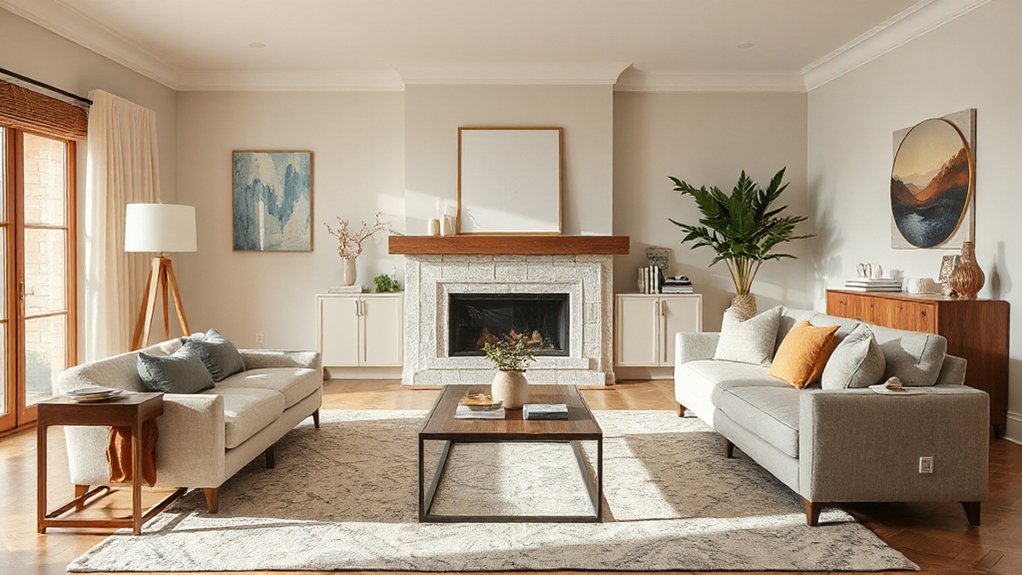
Maintenance isn’t optional if you want a chic look to last. You keep that vibe by setting simple routines you actually follow.
Dust weekly with a microfiber cloth, targeting surfaces that show fingerprints or smudges, and vacuum fabric pieces to prevent wear patterns.
Rotate cushions and throws so wear stays even, and spot-clean spills promptly to prevent stains from setting.
Invest in smart storage; keep vintage decor out where it’s protected but visible, reducing clutter that dulls the room’s cohesion.
For tech integration, conceal cords and organize remotes in a stylish tray. Clean screens and speakers with manufacturer-approved products, avoiding harsh chemicals.
Schedule a quick five-minute refresh daily, and you’ll preserve a timeless, cohesive environment without sacrificing comfort.
Quick Cosmetic Tweaks That Transform the Vibe
Add a few quick cosmetic tweaks to lift the room without a full overhaul: swap in a bold throw pillow or two, refresh with a lighter or darker rug to shift the base tone, and swap out a dated lamp or vase for a sculptural piece that anchors the space.
- Color psychology: choose hues that evoke calm or energy to align with how you want the room to feel
- Furniture arrangement: reflow seating to optimize sightlines and traffic flow
- Texture play: mix soft, glossy, and matte surfaces for depth
- Accent neutrals: anchor bold colors with grounding neutrals
- Lighting layering: combine ambient, task, and accent lights for mood control
Common Budget Mistakes and How to Avoid Them
Common budgeting slips show up even when you’ve scoped a small refresh. You’ll avoid them by naming nonnegotiables before you shop, so you don’t chase every trend.
Plan a simple color story and stick to it, using color coordination to maximize impact with fewer pieces.
Allocate a realistic cushion for delivery or return costs, and don’t let impulse buys erode your total.
When you price budget shopping, compare similar items, track hidden fees, and seek quality over quantity.
Measure every space and mock up layouts to ensure scale works.
Prioritize multifunctional pieces that serve as storage or display, reducing clutter.
Finally, set a deadline to purchase, so you finish strong without regrets.
You’ll feel confident, connected, and proud of a cohesive, affordable living room.
Frequently Asked Questions
How Can I Measure Return on Small Decor Upgrades?
You measure ROI by tracking perceived value and resale impact, then do a cost analysis and ROI assessment of each upgrade. You’ll compare total costs to improved room appeal, usability, and time saved, informing smarter, communal choices.
What’s the Best Month for Budget-Friendly Furniture Sales?
Spring is your friend: the best month for budget-friendly furniture sales is April. You’ll snag Budget shopping deals and Seasonal sales, guiding your choices with smart timing, practical picks, and a sense of belonging in savvy, stylish living.
How to Mix New and Thrifted Safely in One Room?
You mix new and thrifted safely by pairing vintage accents with cohesive color coordination, balancing textures and finishes. Inspect quality, avoid overpowering motifs, and set a unifying base; trust your space to feel authentic, welcoming, and confidently yours.
Which Fabrics Stay Clean in High-Traffic Living Rooms?
You should choose fabrics with high fabric durability for high-traffic spaces, and prioritize Cleaning maintenance, so spills are simple to manage. You’ll feel confident, practical, and included as you select materials that resist wear and clean easily.
How Often Should I Refresh Accessories for Impact?
Refresh every 4–6 weeks for fresh impact. You’ll stay aligned with DIY projects and Seasonal trends, keeping spaces cohesive and inviting. Actively adjust accents, swap textiles, and invite feedback—you belong when you curate confidently and consistently.
Conclusion
To wrap it up, you’ve got a clear path: prioritize goals, budget wisely, and curate a cohesive look. Stick to a plan, swap, don’t overspend, and reuse what you already own where possible. Maintain balance with color and texture, and let lighting do the heavy lifting. Remember: “less is more”—quality over quantity keeps a space chic longer, while thrifted finds can punch above their price. You’ll end up with a stylish, functional living room you’re proud of.