
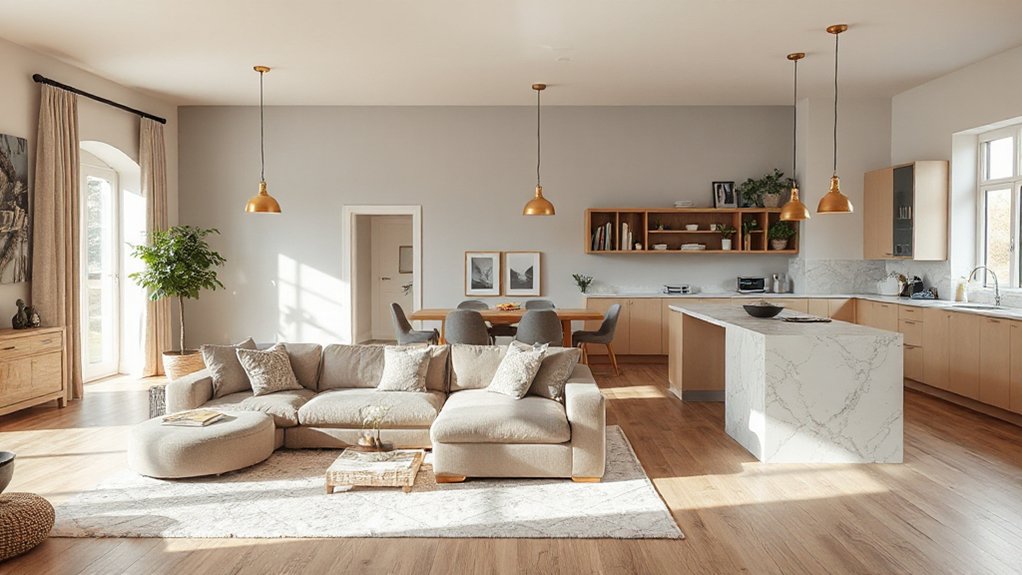
Open-plan UK homes work best when you clearly zone spaces with smart furniture and rugs, keeping sightlines and light intact. Combine living, dining, and kitchen into flexible zones, then anchor them with area rugs and thoughtful seating. Maximize daylight with strategic window choices and layered lighting, plus textures and indoor plants to soften hard edges. Use cohesive color and hidden storage to maintain calm. Integrate period features subtly and tailor layouts to your home type—more specifics await if you keep exploring.
How Open-Plan UK Homes Work: Key Design Criteria
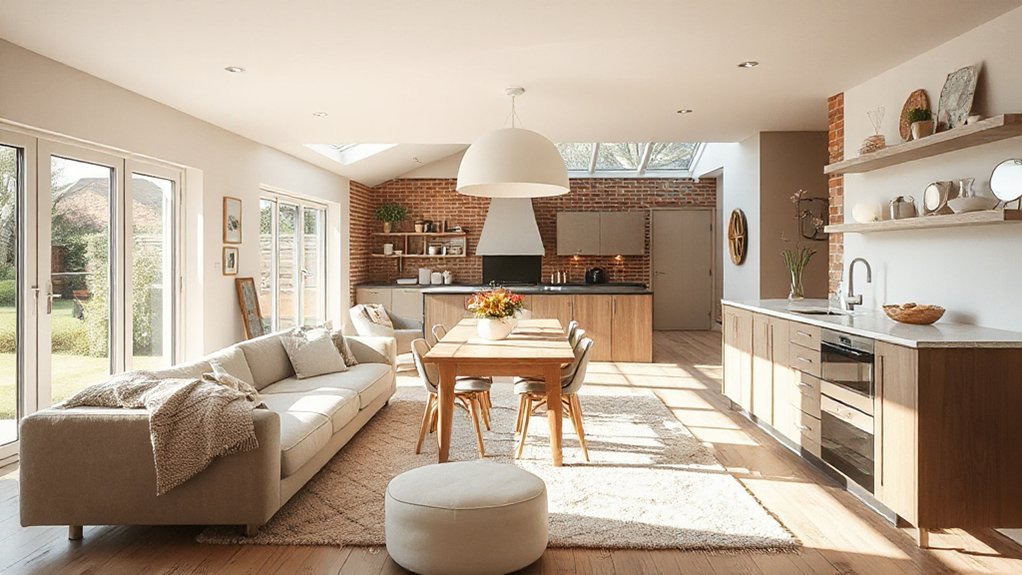
Open-plan UK homes combine living, dining, and sometimes kitchen spaces into one flexible zone, so the layout must support flow and function. You design around clear sightlines, natural traffic paths, and adaptable zones that still feel cohesive.
Prioritize open plan layouts that keep the space bright and connected while preserving quiet corners for focus. Use lighting layers and subtle contrasts to define areas without walls, and guarantee acoustic control to prevent noise bleed between functions.
Establish zoning strategies with furniture placement, rugs, and storage buffers that respect sightlines and movement. Aim for consistent materials and finishes to reinforce a unified feel.
Plan practical circulation routes, ample seating, and accessible storage to reinforce belonging and ease of living in daily routines.
Zone Open-Plan Spaces With Furniture and Rugs
To zone open-plan spaces effectively, place furniture and rugs to guide movement and define functions without blocking sightlines. You establish zones with deliberate furniture placement and rug selection, ensuring flow remains intuitive and inviting. Keep sightlines open while creating intimate pockets for conversation, work, or dining.
1) Position sofas and armchairs to form natural seating groups, avoiding clutter near entryways.
2) Use area rugs to anchor each zone, aligning furniture legs with rug edges for cohesion.
3) Choose low-profile pieces to preserve views and ease navigation between zones.
4) Vary textures and tones subtly to delineate space without crowding the room.
Lighting and Daylight Planning for Open-Plan UK Homes
Maximise natural light by orienting key living areas toward windows and reducing glare with smart glazing choices.
Use lighting layering techniques—ambient, task, and accent lights—to adapt to changing daylight and create depth in open spaces.
You’ll balance daylight with controllable fixtures and blinds to maintain comfort and energy efficiency throughout the day.
Natural Light Maximization
Natural light is your most affordable, impactful design tool in open-plan UK homes. You shape brightness with intention, not luck, and you invite belonging by keeping spaces open and airy.
- Optimize window treatments to control glare while preserving views.
- Position furniture for natural focal points, not blocking light flow.
- Use indoor plants to diffuse light and add depth without crowding walls.
- Choose light-coloured finishes that reflect daylight across surfaces.
Apply shade strategies seasonally, and pair sheer curtains with strategic glazing to balance privacy and openness. Maintain sightlines between zones to sustain a cohesive feel.
Prioritize daylight in core living areas, kitchens, and work nooks for daily well-being. This practical approach guarantees bright, inviting spaces where everyone feels included and purposeful.
Lighting Layering Techniques
Layering lighting across your open-plan UK home lets daylight work with artificial light to shape mood and function. You balance ambient layers with task and accent lighting to create zones without walls.
Use dimmable ceiling and wall lights to establish a constant base, then introduce directed lamps at focal points like seating nooks or dining alcoves.
Consider daylight-aware placement: mirror a window’s brightness with soft, diffuse sources so glare stays away and continuity remains.
Keep color temperature consistent within each layer to avoid jarring shifts.
Integrate plug-in options for flexibility, and route cables neatly to preserve calm spaces.
Cohesive Color Systems for British Interiors
A cohesive color system grounds an open-plan British interior by tying diverse zones together with intentional restraint. You create unity through consistent undertones, balanced contrasts, and deliberate tempo. Color harmony guides choices, while palette coordination keeps rooms feeling adjacent, not competing.
Choose a core to anchor each area, then layer supporting shades to reflect light and function.
- Establish a dominant hue with subtle variation across walls, textiles, and furniture.
- Introduce two or three accent tones that echo architectural features or UK-influenced materials.
- Maintain tonal progression rather than abrupt shifts between zones.
- Document a simple swatch map to assure coherence during updates and purchases.
Natural Textures to Soften Hard Edges
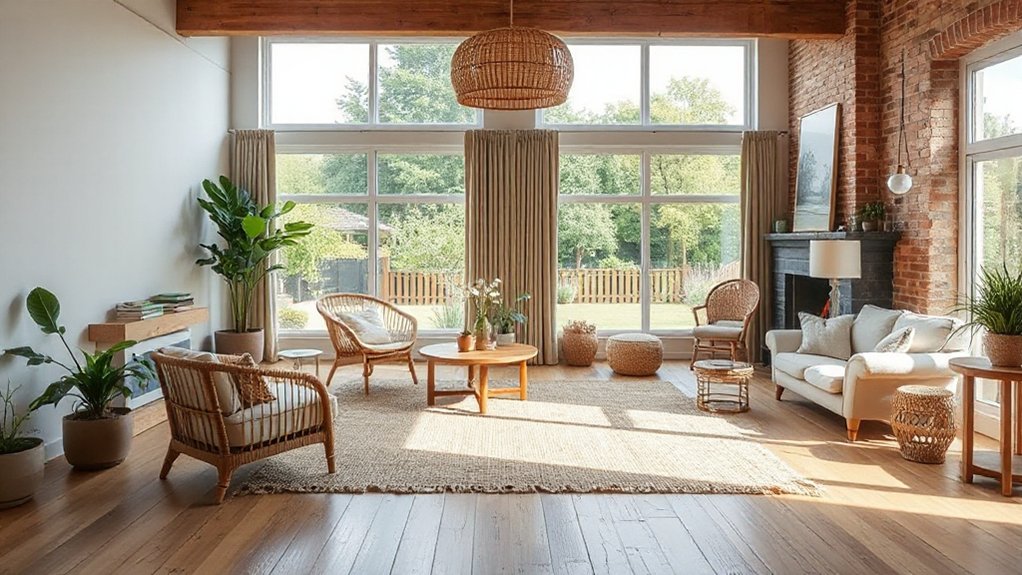
Softening hard edges in open-plan UK homes starts with tactile textures that invite touch and slow the eye. You create a calmer flow by layering natural surfaces that contrast with sleek finishes. Prioritize textural contrast to define zones without barriers: a woven rug against polished concrete, a linen throw over a leather sofa, or timber shelving near glass.
Choose tactile materials that feel welcoming to daily living—cotton, wool, jute, or sisal—so spaces read as warm and inhabited. Balance is key: pair rigid lines with soft textiles to reduce glare and echo.
Keep maintenance simple by selecting durable, easy-care options. The result is a cohesive, lived-in environment where textures invite lingering and belonging.
Practical Storage That Calms Open-Plan Spaces
Hidden storage nooks give you discreet places to tuck away everyday bits without signaling clutter.
Pair them with calm clutter systems that keep essentials organized and visually quiet.
Together, they create open-plan calm by reducing visible mess while preserving easy access.
Hidden Storage Nooks
- Install push-latch cabinets behind seating or under stairs, blending with wall color.
- Create built-in benches with lift-up seats for linens, chargers, or games.
- Integrate under-window storage that disguises as seating, using soft-close drawers.
- Use hidden drawers in coffee tables and media consoles for remotes and cables.
Hidden storage and concealed compartments should feel seamless, practical, and evidence of thoughtful craft that enriches belonging in your home.
Calm Clutter Systems
Choose furniture with built-in drawers and baskets that blend into minimalist decor, reducing distractions while maximizing function. Color coordination matters: limit palettes to two or three harmonious tones to promote serenity and quick item retrieval.
Label storage simply and position frequently used items at eye level for effortless access. Use closed cupboards to hide clutter, and open shelves sparingly to display curated essentials.
Establish a quick daily reset ritual, so spaces feel lived-in yet uncluttered. With calm systems, you foster belonging by inviting collaboration, respect, and shared routines.
Acoustic Design for Sociable Open-Plan Living
Good acoustics are essential in open-plan living because sound travels freely across spaces. The right design minimizes noise spill while preserving sociability. You’ll shape a calmer background to conversations, meals, and projects without closing the space off.
Focus on practical, proven methods that invite togetherness while respecting individual pockets of quiet.
- Prioritize soundproofing techniques at key thresholds (doors, partitions) to contain voices without sealing rooms.
- Use acoustic paneling strategically on walls and ceilings to absorb echoes where conversations peak.
- Choose soft textures and layered furnishings to diffuse sound naturally and add warmth.
- Plan zones with varied ceiling heights or rugs to interrupt sound paths while maintaining flow.
Heating and Warmth Without Visual Clutter
Smart heating should blend into the design, not compete with it, so you can stay warm without visual clutter. In open-plan UK homes, choose solutions that hide ritual heating without sacrificing efficiency.
Start with radiator covers that are slim, vented, and in a neutral finish to reduce glare while preserving airflow. Pair them with strategic placement to maintain room balance, not block foot traffic or sightlines.
Invest in thermal curtains to trap heat at the surface without bulky blinds or heavy textures, ensuring quick, seasonal comfort.
Prefer underfloor or wall-mounted options where possible, keeping radiators unobtrusive.
Layer warmth with rugs and soft lighting, so you feel grounded and secure, not crowded, in your shared living space.
Integrating Period Features Into Open-Plan Modern Homes
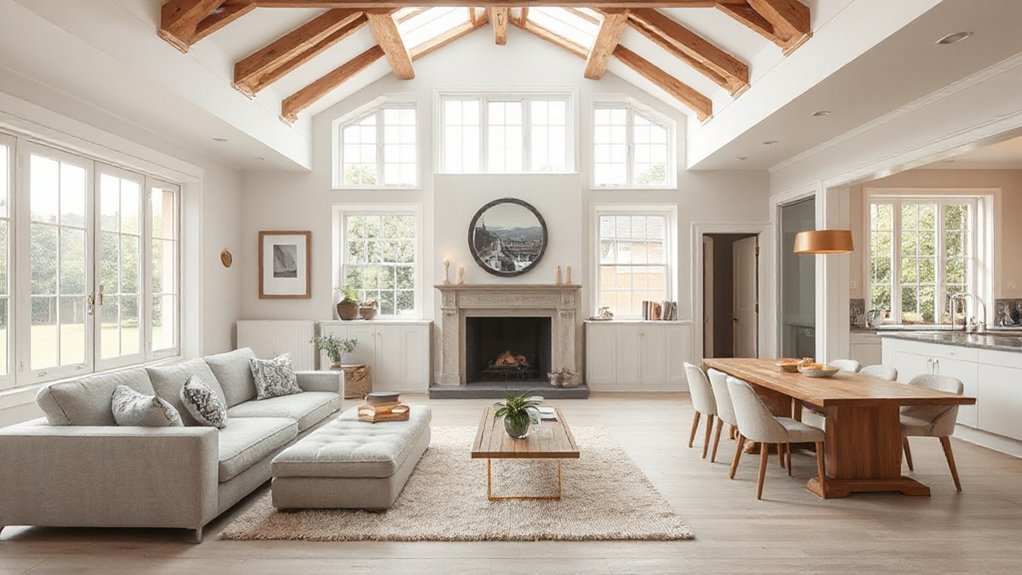
- Identify architectural moments you love, like cornices or plaster detailing, and reveal them selectively to anchor zones without overwhelming sightlines.
- Pair period features with contemporary finishes in the same palette to harmonize old and new.
- Use lighting to spotlight history—wall sconces, shaded lamps, and ambient uplighting emphasize character softly.
- Preserve rhythm through cohesive furniture layouts that honor original volumes while supporting modern activity.
Kitchen–Living Zone Layouts for Practical Flow
Open-plan kitchens and living areas demand clear zones that support daily routines without breaking flow. You’ll map practical zones with deliberate furniture arrangement, so progression feels natural rather than chaotic.
Start by placing the island or peninsula to anchor prep and casual dining, creating a gentle visual divider from lounge seating. Use zoning techniques like low-profile storage, rugs, and lighting to mark each area without walls.
Align work zones for efficiency: fridge, sink, and cooktop in a triangle, with counter space accessible from both living and kitchen. Choose seating that mirrors the room’s rhythm, ensuring sightlines remain open.
Avoid clutter and keep pathways clear for safe, easy movement, especially when you’re entertaining or supervising family activities. Your layout should invite conversation while streamlining chores.
Soft Furnishings That Enhance Sound, Warmth, and Style
Soft furnishings play a key role in shaping sound, adding warmth, and elevating style in open-plan UK homes. You’ll reach a cohesive, welcoming vibe when you combine texture, color, and function. Textile layering and thoughtful placement create intimacy without shrinking space, while subtle Acoustic panels blend into decor.
- Layer soft textiles—curtains, rugs, cushions—in complementary tones to dampen echo and add tactile richness.
- Pair heavier fabrics with lighter weaves to balance warmth and airiness, avoiding muffled rooms.
- Use Acoustic panels with finishes that echo your scheme, turning them into design accents rather than afterthoughts.
- Place textiles strategically around seating zones to cue conversation and foster belonging without clutter.
Tailoring Open-Plan Design to Different UK Home Types
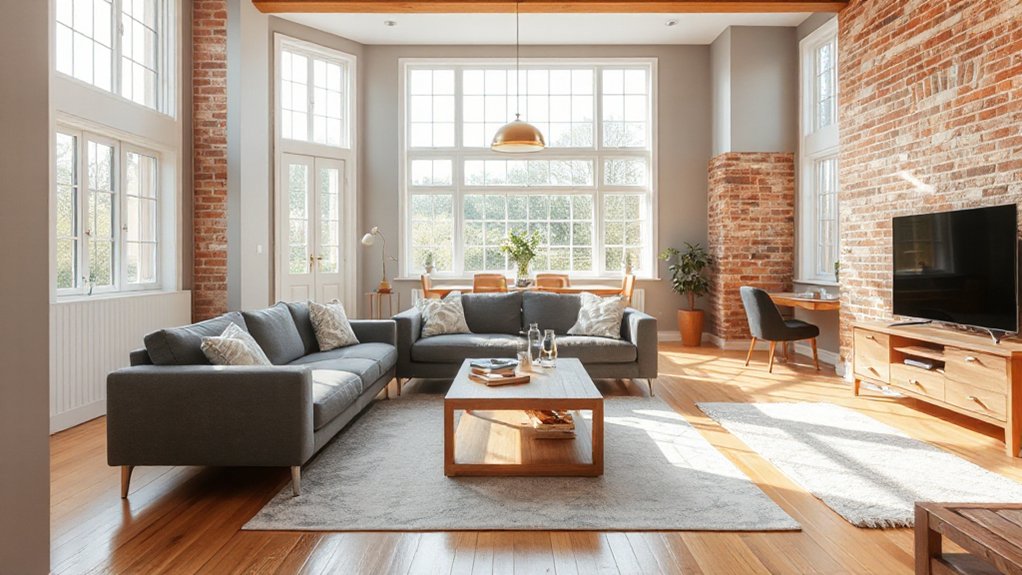
Open plan zoning becomes purposeful: kitchen, dining, and lounge areas read as connected yet distinct, with clear sightlines and ambient progression. Consider ceiling height, natural light, and entry points to determine where to anchor furniture placement.
Choose scalable furnishings that flex with habits and seasons, avoiding clutter. In terrace, compact, or rural homes, create intimate corners through screens, rugs, and vertical storage that preserve openness without sacrificing coziness.
Align finishes and textures to your home’s character, ensuring cohesion. This method builds belonging, clarity, and confidence in every space you use.
Frequently Asked Questions
How Can I Maximize Privacy in Open-Plan Layouts?
To maximize privacy in open-plan layouts, start with clear zones using smart furniture placement and subtle dividers. You’ll create intimate areas without walls.
Use decorative screens to carve spaces while preserving light, texture, and flow. Position seating to face away from shared zones, and add tall plants or bookcases as soft boundaries.
Layer rugs and lighting to define corners, so you feel connected yet sheltered. Maintain cohesion with consistent materials and colors for belonging.
What Budget Ranges Suit UK Open-Plan Renovations?
Budget ranges for UK open-plan renovations vary, but you’ll typically plan around £15,000–£50,000 for mid-range updates.
£50,000–£100,000 is typical for substantial reconfigurations.
And more than £100,000 is usually for premium overhauls.
Focus on affordable wins first: furniture arrangement to define zones, and lighting solutions to set mood.
Prioritize durable finishes and scalable storage.
You’ll feel more confident and connected when your space supports daily life, gatherings, and a sense of belonging.
Keep a flexible contingency for surprises.
Which Flooring Works Best for Acoustics and Flow?
Ever wonder what floor keeps noise down and space flowing? For acoustics and flow, choose soundproofing options that suit open-plan living and prioritize seamless progression.
Consider solid-wood or engineered timber for durability and warmth, or high-quality laminate with acoustic underlay for budget-friendly durability.
Avoid thin tiles in main living zones.
Prioritize flooring durability and underfoot comfort to foster belonging, and pair with area rugs to dampen sound without breaking the flow.
Ready to decide?
How Do I Measure Room Proportions for Zone Design?
To measure room proportions for zone design, you start by snapping a grid: measure length and width, note ceiling height, and record doorways and windows.
Divide the space into zones using sightlines and furniture footprints, not fixed walls.
For accuracy, draft a quick sketch with scale and label each zone’s function.
Use furniture placement to balance flow, and maximize natural lighting by aligning key pieces to capture light across each area.
What Planning Permissions Affect Open-Plan Changes in the UK?
Yes—planning permissions shape open-plan changes in the UK. You’ll need Building Regulations for structural safety, ventilation, insulation, and fire safety. You may also require Listed Building Consent if your home is listed.
Start with a feasibility check, then consult your local planning authority. If you’re in a conservation area or your home is a listed building, expect tougher scrutiny.
Plan alterations carefully to balance aesthetics with compliance and community considerations.
Conclusion
So you’ll embrace open-plan and call it unified living, right? But here’s the irony: all the clever zoning, soft textures, and light tricks won’t fix crowded kitchens, noisy nights, or awkward echoes in a Victorian terrace. You’ll still crave walls—just smarter ones. Plan with purpose, choose cohesion over chaos, and admit you’re designing for people, not trends. Practical elegance isn’t a statement; it’s a quiet, daily compromise that makes the home feel wonderfully human.