
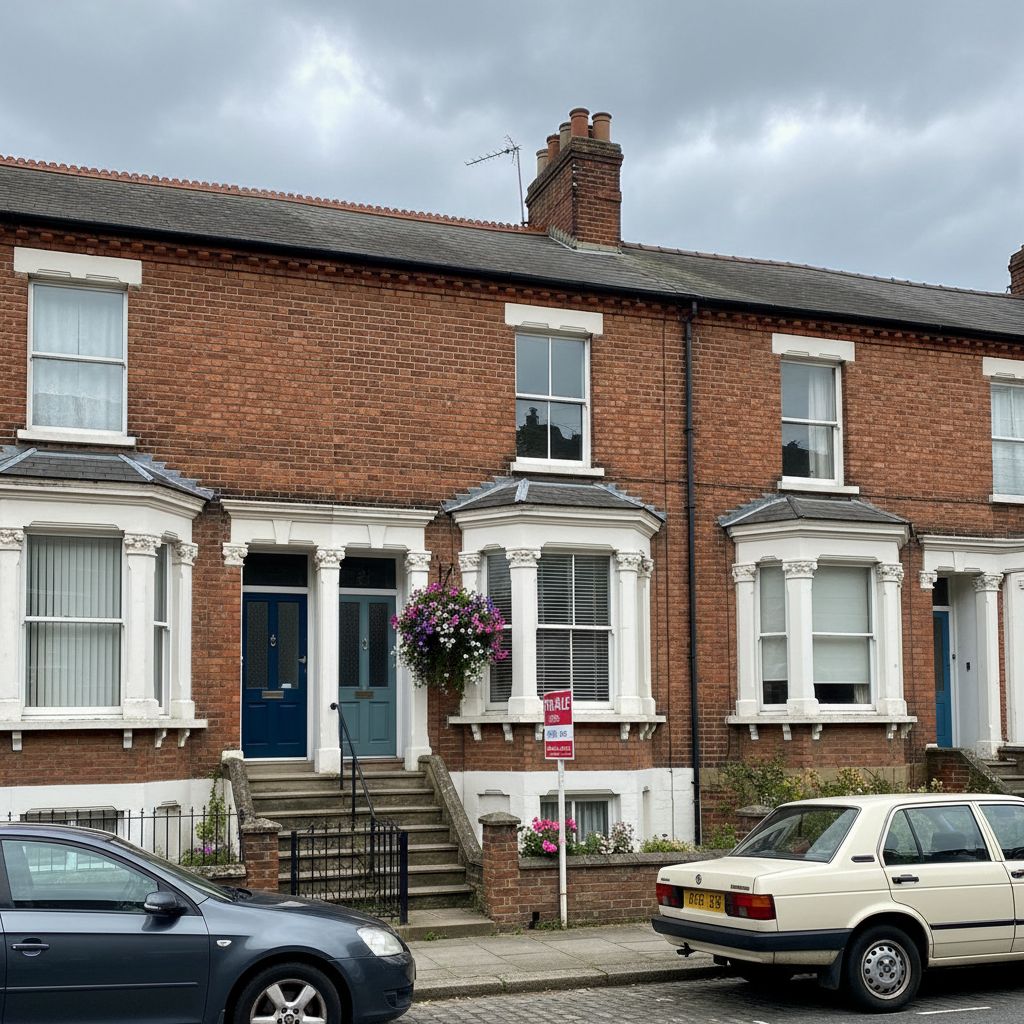
Choosing to sell your property through a local estate agent is the first decision. What you ask that agent before you sign anything — and throughout the sale process — is the second, and in many ways more consequential, decision. The estate agent you instruct is working for you. Their fee comes from your sale proceeds. That relationship should be one of informed partnership, not passive delegation. This is where Wooster & Stock, the leading estate agents Sydenham has, stand out from the crowd.
Too many vendors sign an instruction agreement after a single valuation meeting, accepting the agent’s pitch at face value and assuming the rest will take care of itself. It won’t. The difference between a well-managed sale and a poorly managed one — in terms of the price achieved, the time it takes, and the stress involved — is significant, and it is largely determined by the quality of the agent you choose and the rigour with which you hold them to account throughout the process.
The questions in this guide are those every vendor should ask: before instructing an agent, during the marketing period, when offers arrive, and through the conveyancing phase to completion. Ask them all. Get the important answers in writing. And treat any agent who is unwilling to answer clearly and directly as an agent worth reconsidering.

Questions to Ask Before Instructing Any Agent
These are the due diligence questions — the ones that determine whether a specific agent is actually the right choice for your property, before you commit to anything.
What is your valuation based on, and can you show me the comparable evidence?
Every agent will give you a valuation figure. The question is what that figure is actually based on. Ask the agent to walk you through the comparable properties — ideally three to five recent sales of similar properties within reasonable proximity — that support their recommended asking price. A credible valuation is grounded in specific recent transaction data from the Land Registry or their own sales records, adjusted for differences in size, condition, and location.
Be sceptical of an agent who gives you a valuation figure without showing their working. Be particularly sceptical of a valuation that is meaningfully higher than the others you receive — a practice known as “overvaluing to win the instruction,” where an agent quotes an inflated asking price to secure your business, then manages you down to a more realistic level once you’re contractually tied to them. Ask specifically: “Is this the price you expect to achieve, or the price you’d recommend we start at?” The answer to that question is often revealing.
What are your full fees, and are there any additional charges?
Estate agent fee structures in the UK are not standardised, and the headline percentage is rarely the whole story. Ask for a complete written fee schedule before signing anything. Beyond the standard commission (typically 1–1.5% plus VAT for a sole agency instruction in most UK markets, higher in London), watch for:
- Withdrawal fees if you take the property off the market before a sale completes
- Tie-in periods that prevent you instructing another agent
- Marketing fees charged upfront or deducted from proceeds (professional photography, floor plans, premium portal listings)
- Additional charges if the sale proceeds via a specific route (auction, part-exchange)
- VAT — confirm whether all quoted fees are inclusive or exclusive
Ask specifically: “What will my total cost be in three different scenarios — a quick sale at asking price, a sale after three months at a reduced price, and a sale that falls through after offer acceptance?” A good agent should be able to answer all three clearly.

What is your track record for properties like mine in this area?
Generic market experience is less useful than specific relevant experience. Ask the agent how many properties similar to yours — in type, price bracket, and location — they have sold in the past twelve months. Ask what their average sale-to-asking-price ratio was for those properties, and what their average time to sale was. These are factual questions about performance, not subjective claims, and a reputable agent should be able to answer them with data.
Also ask: “What percentage of your agreed sales actually complete?” A high fall-through rate — anything significantly above 20–25% — may indicate problems with their buyer qualification process or their sale management after offer acceptance.
Are you a member of a professional body and a government-approved redress scheme?
Membership of ARLA Propertymark (for letting), NAEA Propertymark (for sales), or equivalent accreditation from RICS demonstrates a minimum standard of professional practice. More importantly, every estate agent in the UK is legally required to be registered with a government-approved redress scheme — either The Property Ombudsman (TPO) or the Property Redress Scheme. These schemes provide you with a formal complaints route if the agent acts improperly. Confirm membership of a redress scheme before signing anything, and ask which scheme they are registered with so you know where to go if things go wrong.
What notice period is required to terminate the agreement, and are there any tie-in clauses?
This question is essential before you sign. Most estate agent agreements include a sole agency period — typically four to twelve weeks — during which you cannot instruct another agent. After the initial period, a notice period applies, usually two to four weeks. However, some agreements contain extended tie-in periods or commission clauses that remain in effect even after you have switched agents — meaning you could owe commission to your original agent if a buyer they introduced subsequently makes an offer through a different agent.
Read the agreement carefully, and ask the agent explicitly: “If I’m not satisfied with your performance, how and when can I end this agreement, and what would I owe you?” Get the answer confirmed in writing.
What is your marketing plan for my specific property?
This question goes beyond “we’ll list it on Rightmove and Zoopla” — which every agent, online or local, will do. Ask specifically:
- Which portals will the property be listed on, and will it have a featured or premium listing?
- Who does the photography, and can you see examples of their previous work?
- Will there be a floor plan and, where relevant, a virtual tour?
- Do they have a specific database of registered buyers in your price range who will be notified directly before or on the day of listing?
- Do they conduct open day viewings, and have they found these effective for similar properties?
- What is their social media and digital marketing approach beyond the portals?
Photography quality has a direct, measurable impact on click-through rates on portal listings and, consequently, on viewing numbers. An agent who uses a dedicated professional property photographer is a different proposition from one who sends a negotiator with a smartphone. Ask to see examples before agreeing.
Questions to Ask During the Marketing Period
Once your property is live, the relationship with your agent shifts from selection to performance management. These are the questions that keep the agent focused and the marketing honest.
How many enquiries, viewings, and second viewings have we had, and what is the feedback?
Ask for this information weekly, in writing. A well-run agency will have systems that track enquiry levels, viewing numbers, and the feedback gathered from viewers. If enquiry levels are high but viewings are not converting, the problem is likely the photography or the listing. If viewings are happening but no offers are materialising, the feedback from viewers is the diagnostic tool — and an agent who is conducting accompanied viewings professionally should be gathering it consistently.
Ask specifically: “What are viewers saying about the property, and what is the most common concern or hesitation?” If the same issue comes up repeatedly — price, a particular feature, a condition concern — that is information you need to act on.
Has the pricing level been tested in the market, and is a price adjustment warranted?
After four to six weeks without an acceptable offer, the pricing conversation becomes necessary. Ask the agent directly: “Based on the viewing feedback and current comparable sales, is our asking price still correct?” A good agent will give you an honest answer, supported by updated comparable evidence, rather than simply validating the original figure to avoid a difficult conversation.
Be wary of an agent who responds to a lack of activity by suggesting you wait rather than review the price — particularly if comparable properties at similar or lower asking prices are moving. A property that sits on the market in London for more than six to eight weeks without a viable offer has almost certainly been overpriced, and addressing that promptly costs far less than the stigma of an extended marketing period.
Are viewings being conducted professionally, and are all enquiries being followed up promptly?
You have the right to ask how your viewings are being managed. Who is conducting them — a senior negotiator with knowledge of the property, or a junior member of staff? Are buyers being given adequate time and information? Are post-viewing follow-up calls being made within 24 hours?
It is also reasonable to occasionally check your own listing anonymously — searching for it as a buyer would, to verify that the presentation, description, and portal prominence are as you’d expect. If you find errors, poor-quality images, or a listing that has dropped off the featured placement you paid for, raise it with the agent immediately.
Questions to Ask When You Receive an Offer
Receiving an offer is not the moment to relax — it is the moment to ask the right questions before making any decision.
Is the buyer financially qualified, and what is their proof of funds or mortgage in principle?
Before engaging seriously with any offer, ask the agent what financial checks have been carried out on the buyer. For a cash purchase, is the buyer able to provide evidence of available funds? For a mortgage purchase, do they have a current mortgage in principle from a lender, and has the agent spoken to their broker about the likelihood of a formal offer? An unqualified buyer who makes an enthusiastic offer but subsequently fails to secure mortgage approval is worse than no offer at all — you lose time, you potentially lose other buyers, and you go back to square one.
Is the buyer in a chain, and what does the chain look like?
Ask the agent to walk you through the chain position in detail. Is the buyer chain-free? If not, have they had an offer accepted on their current property? Is their buyer also chain-free or in a further chain? How many links are above and below your sale? A long, complex chain is a genuine risk factor — the more parties involved, the more opportunities for the transaction to collapse. The agent should know the chain position before presenting the offer to you, and if they don’t, they should be finding out.
Is the offer genuinely the buyer’s best, or is there room to negotiate?
Ask the agent for their honest assessment. “If we counter at [X], what is the realistic likelihood of the buyer meeting us there?” A good agent who has had a genuine conversation with the buyer and their agent will have a feel for where the ceiling is. An agent who tells you to accept immediately without any attempt to negotiate, or conversely who pushes you to hold out unrealistically, is one who either hasn’t done the groundwork or isn’t managing the negotiation in your best interest.
Also ask: “Are there any other interested parties we should be aware of before making a decision?” If another viewing is scheduled tomorrow with a buyer who has been waiting for a property like yours, that changes your calculation.
What is the buyer’s preferred timeline for exchange and completion?
Understanding the buyer’s timing requirements before you accept an offer allows you to assess whether their needs are compatible with yours, and to use any flexibility on your part as a negotiating point. A buyer who needs to complete within six weeks may be willing to pay slightly above their initial offer for a vendor who can commit to that timeline. A buyer who wants a six-month completion may be less competitive than the offer figure suggests.
Questions to Ask Between Offer Acceptance and Exchange
The post-offer period is where most sales either succeed or fail, and it is where vendor engagement — and ongoing pressure on the agent to actively manage the process — matters most.
Where are we in the conveyancing process, and what is the current hold-up?
Ask this question weekly during the conveyancing phase and expect a specific answer. “Waiting on the solicitors” is not a specific answer. Who specifically is waiting for what, from whom, and by when? A proactive agent will be chasing both sets of solicitors, flagging delays before they compound, and escalating when progress stalls. If your agent is passive and unable to tell you where each element of the process stands, that passivity is costing you time and increasing the risk of a collapsed sale.
Has the buyer’s survey raised any issues, and how are they being handled?
Most buyers commission a survey, and most surveys raise some concerns — ranging from trivial observations to significant structural findings. When a survey result prompts a buyer to raise a price reduction request, the agent’s handling of that negotiation is critical. Ask the agent: “Has the survey flagged anything material, has the buyer raised a renegotiation, and how are you approaching it?”
You are not obliged to accept any survey-based reduction, but you are well served by understanding what was found, whether it is reasonable, and what the market comparables suggest about its impact on value. An agent who presents a renegotiation request without context, without their own assessment of whether it’s justified, and without a recommended response strategy, is not managing your sale effectively.
Are all parties in the chain progressing at a comparable rate?
Chain synchronisation is one of the most complex elements of a UK residential transaction. If your sale is ready to exchange but a party elsewhere in the chain is not, your completion date is determined by the slowest link. Ask the agent what they know about progress elsewhere in the chain, whether any specific party appears to be a vulnerability, and what is being done to accelerate progress where it is stalling.
What happens if the sale falls through — and what is your plan?
Ask this question before it becomes relevant, not after. If the buyer withdraws, or a survey collapses the deal, or a chain party fails to complete, what is the agent’s immediate plan? Do they have the next most interested buyer from the initial marketing period still in contact? Will they relaunch immediately, and at what price? An agent who has a clear answer to this question is an agent who has been managing your sale proactively throughout. An agent who is caught off guard by the question probably hasn’t been thinking three steps ahead.
The Questions That Separate Good Agents From Average Ones
Beyond the specific questions at each stage, there are a handful of broader questions that reveal the quality of an agent more directly than any technical query.
“What would you do differently if this were your property?” — this invites the agent to step out of the sales pitch and give you their genuine professional view.
“What is the most common mistake vendors make at this stage?” — a good agent will have seen every mistake made many times over and will give you a specific, honest answer.
“What aren’t you telling me that I should know?” — ask this at key decision points throughout the sale, particularly before accepting an offer and before exchanging contracts. It creates a moment of genuine reflection that occasionally surfaces something important.
The vendor who asks probing, informed questions throughout the sale process gets better service from their agent, makes better decisions, and achieves better outcomes. The agent who delivers under that scrutiny is the agent who was worth instructing in the first place.