
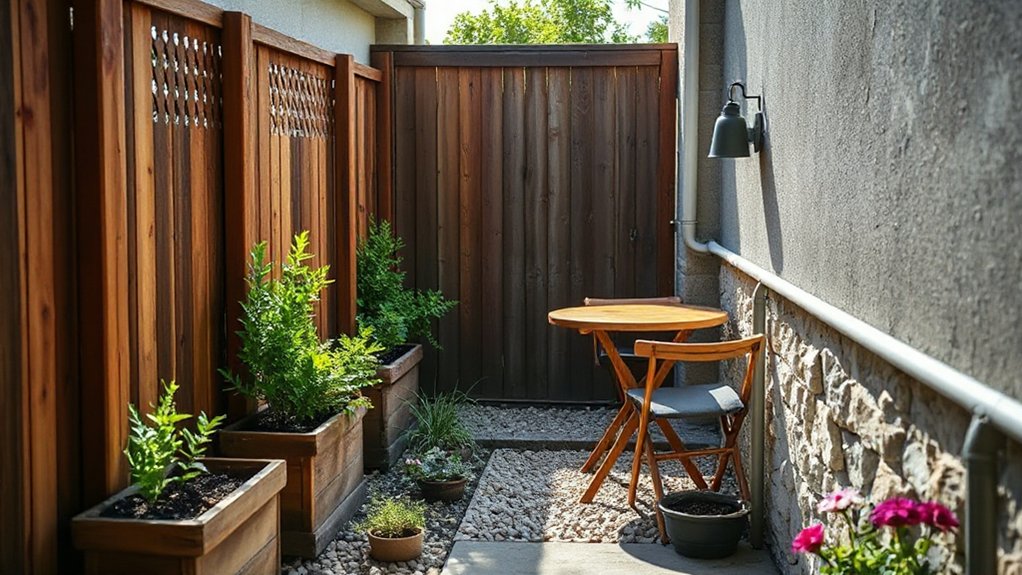
To maximize a narrow garden, start by measuring width and depth, note sun exposure, and guarantee at least 18 inches of clearance for movement. Choose compact, weatherproof seating like 2–3 ft benches, slim dining chairs, and foldable tables. Use vertical planters and corner alcoves to free floor space, and layer textures with light colors to visually widen the area. Opt for modular, stackable, or built-in options for flexibility and storage. Want more practical tips and sourcing ideas? Keep reading.
Assess Your Narrow Garden: Measure Width, Depth, Sun, and Access
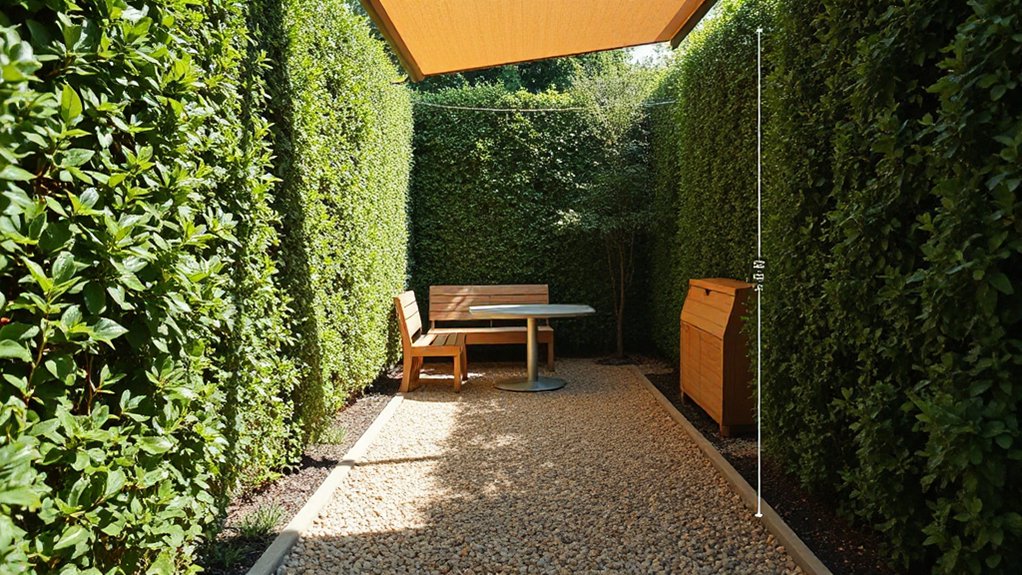
Before you design an outdoor seating area, start by mapping your narrow garden. You’ll measure width and depth to know how much real space you have for furniture, pathways, and planters.
Note sun exposure at different times of day, so you can align seating with shade or warmth.
Check access from doors, gates, and neighboring areas; assure you won’t block footpaths or services.
Observe existing features like walls, fences, and fixed structures that influence layout.
Consider garden art as focal points you can sit near or around without crowding.
Plan plant selection to frame views, create height, and soften edges.
Document data in a simple sketch or grid, then compare options that fit your measurements, comfort, and sense of belonging.
Define Criteria for Seating in Tight Spaces (Width, Depth, Weight, Weather)
To fit seating in a tight space, you’ll start with narrow space metrics and a clear seating footprint so every inch counts.
Consider how weight and weather resistance affect placement and choose options that stay secure during wind or rain.
Narrow Space Metrics
Designing seating for a narrow garden starts with clear metrics: width, depth, weight, and weather resistance. You’ll choose garden furniture that fits tight gaps without crowding paths, and you’ll factor seasonal exposure into durability. Your goal is reliable comfort that feels welcoming, not cramped, so outdoor decor should invite conversation rather than compete with plants.
- Measure precisely: width and depth of the seating area, plus the chair footprint, ensuring at least 18 inches of clearance for movement.
- Weight and placement: lightweight pieces for easy rearrangement, heavy enough to withstand gusts, with secure anchors if needed.
- Weather readiness: rustproof frames, fade-resistant finishes, and cushions with quick-dry fabrics.
These metrics keep your space cohesive, practical, and inviting.
Seating Footprint Limits
What counts as a seating footprint in a tight space hinges on four core criteria: width, depth, weight, and weather resilience. You’ll assess options by footprint metrics that fit your narrow plan without crowding walkways or light.
Width determines how many chairs can align along a wall; depth zaps the urge to overhang into the corridor, preserving movement. Weight matters for safe, movable setups you can rearrange seasonally. Weather resilience guides material choices that endure sun, rain, and humidity without extra bulk.
Prioritize garden furniture that tucks neatly when not in use and remains stable on uneven surfaces. Seek seating comfort without compromising flow, so guests feel welcome rather than cramped.
The right footprint fosters belonging and practical, uncluttered charm in your intimate outdoor room.
Weather-Resistant Weight Considerations
Weather-resistant weight matters more in tight spaces than you might think: heavy enough to stay put in gusts, yet light enough to move when you need a layout change.
- Define criteria by width, depth, weight, and weather exposure, so you choose pieces you can rearrange without tools.
- Prioritize materials that resist rust, fading, and moisture, keeping your seating area fresh for seasonal plantings and pest prevention routines.
- Test a few configurations indoors or on a patio first, then place in your narrow space to confirm stability and flow.
This approach helps you craft intimate, adaptable seating zones you can enjoy with neighbors and guests, fostering belonging while staying practical and prepared for changing seasons.
Layout Patterns That Free Space in Alleys and Along Edges
To free space along alleys and edges, start with simple, vertical or low-profile elements that don’t crowd the view: narrow pathways, rail planters, and wall-mounted shelving. You’ll create perception of openness by stacking function upward and keeping sightlines clear.
Use garden fencing as a subtle boundary that defines edges without blocking light or airflow. Install irrigation systems with discreet tubing and drip emitters tucked along baseboards or under mulch; this reduces maintenance and visual clutter while keeping plants hydrated.
Choose modular blocks or narrow trellises that can be rearranged as your space shifts. Keep seating areas tucked near corners, so movement stays fluid.
Finally, layer textures—painted walls, light gravel, and vertical greenery—to invite belonging without overwhelming the alley’s scale.
Choose Compact Seating by Width: Chairs, Stools, and Benches That Fit
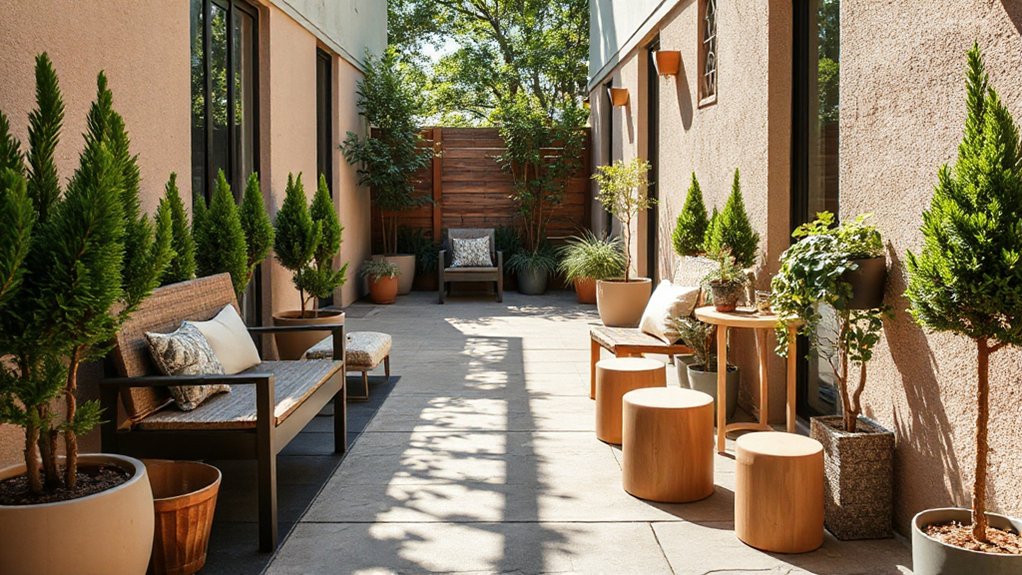
Choose compact seating by width to maximize path and planting space without sacrificing comfort. You’ll compare width-friendly chairs, slim stools, and narrow benches that fit through doorways and between borders.
This discussion focuses on compact options—their fits, uses, and how they transform tight spots into usable, inviting nooks.
Compact Seating Options
Ever wonder which compact seating fits best in a narrow garden? You’re about to choose smartly for comfort and flow, not clutter. There’s real value in pieces that tuck in, invite conversation, and honor your garden decor and plant arrangements.
Below are three fits that respect width without sacrificing function.
1) Narrow bench (2–3 ft wide): suits paths, doubles as ambient seating, keeps sightlines open.
2) Stackable stools: lightweight, multi-use, easy to store after gatherings.
3) Slim dining chairs: two or three around a narrow bistro table, perfect for intimate meals.
Opt for materials and finishes that weather well, and match colors to the landscape. This careful mix reinforces belonging and effortless togetherness.
Width-Friendly Chair Styles
When space is tight, pick chair styles by width to maximize seating without crowding paths. Width-friendly options keep flow clear while inviting everyone to pause and chat.
Opt chairs that are slim in profile but sturdy in seat depth, so feet don’t splay and passage stays open. Consider armless designs to save inches at the front and sides, and choose stackable or foldable versions for seasonal decor shifts.
Materials should be lightweight for easy rearrangement, yet durable enough for outdoor exposure, with cushions that dry quickly and feel cozy—addressing indoor comfort even outdoors.
Pair compact chairs with weatherproof fabrics in neutral tones, then add a pop of color through cushions or throws. This approach fosters belonging, practicality, and a crisp, inviting vibe.
Benches And Stools Fitments
Benches, stools, and compact chairs are your go-to for narrow-minded layouts: they fit without crowding walkways, and they layer seating options for guests while keeping the path clear. You’ll see how each piece serves multiple spots—from entryways to tucked corners—without stealing space from plants or movement.
Rustic materials meet modern designs, creating a versatile, welcoming vibe that fits your sense of belonging.
1) Choose slim-profile benches with built-in storage to handle cushions and blankets while staying under 48 inches long.
2) Opt for stackable stools in natural wood or aged metal for flexibility on a tight patio or along a winding path.
3) Pick curved seats or cantilevered designs to nudge seating closer without obstructing feet or foliage.
Corner Nooks and Alcoves: Maximize Seating Without Crowding
Corner nooks and alcoves can be smart seating goldmines in a narrow garden. You’ll transform tight gaps into cozy retreats by shelving low, narrow benches that tuck against walls, leaving floor space open for movement.
Choose compact furniture with slim profiles and pair with soft, weathered cushions to invite lingering without crowding. Position seating to create intimate edges, not long fajts of wasted space.
Use garden art as focal points in alcoves to draw the eye and define zones, while plant selection frames seating with fragrance and color. Keep sightlines clear by limiting bulk behind chairs, and use lateral planters to guide foot traffic.
This approach makes belonging automatic: everyone finds a seat, a view, and a moment to breathe.
Vertical Space Wins: Selecting Vertical Planters and Mounting Options
Vertical space matters in narrow gardens, so choose vertical planters and mounting options that are sturdy, accessible, and visually integrated. You’ll tap into creative planting by pairing textures and colors up the wall, turning blank surfaces into inviting greenery.
Prioritize vertical mounting that stays level, supports weight, and minimizes damage to your architecture. With thoughtful placement, you’ll create a green promenade that feels welcoming rather than crowded.
- Choose lightweight, drapable containers for flexibility and easy rearrangement.
- Create staggered levels to break vertical monotony and enhance sightlines.
- Confirm all mounts are rated for outdoor use and securely anchored.
Ground-Saving Strategies: Fold-Away Tables, Nesting Options, and Stacking
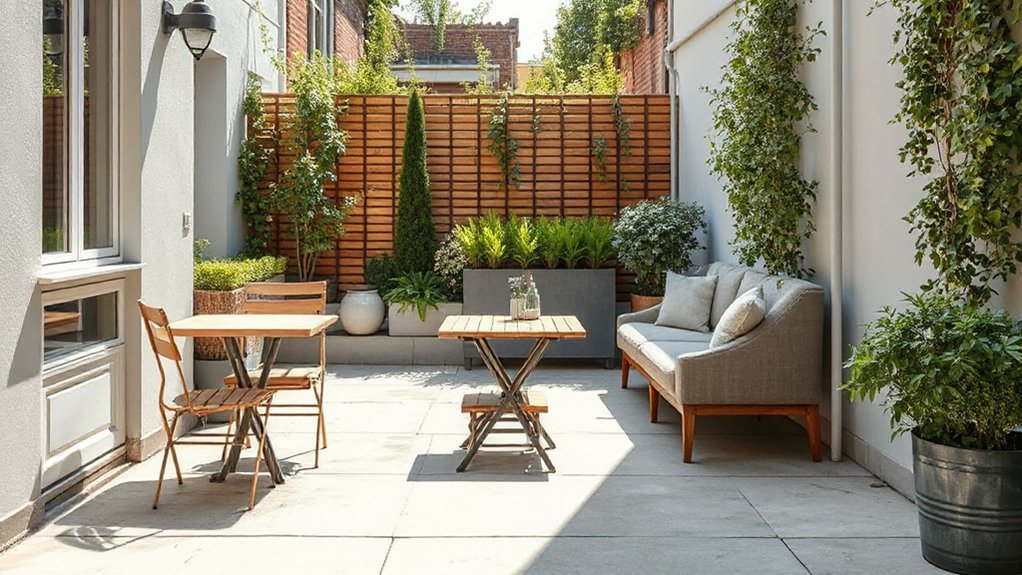
You’ll explore fold-away tables, nesting, and stacking as smart ways to free up floor space without sacrificing seating.
Consider how a compact table can fold flat after meals, how nesting pieces tuck neatly together, and how stackable chairs multiply when guests arrive.
These techniques keep your narrow garden flexible, organized, and ready for different gatherings.
Fold-Away Table Tactics
When space is tight, fold-away tables deliver instant surface area without hogging the deck. You’ll gain versatility without sacrificing flow, and that feeling of belonging grows as your seating adapts to gatherings. Use them to host dinners, games, or drinks, then tuck them away to reclaim your narrow footprint.
- Choose fold away tables with lightweight frames and slim profiles for easy handling.
- Pair with space saving furniture like slim stools or built-in benches that disappear when not needed.
- Mount options or brackets to keep leaves flush and stow neatly against walls or railings.
In practice, optimize height and surface texture for comfort, accessibility, and durability, so every inch serves a purpose. Fold away tables make hosting effortless and inclusive.
Nesting and Stacking Solutions
Opt for nesting tables or stools that stack flat, then unfold only when you need extra surface. Prioritize units with durable, weatherproof finishes and easy-grip edges for one-handed handling.
Consider plant compatibility—place taller items toward the back to reduce shade on sun-loving species, and keep lightweight pieces accessible for quick reconfiguration.
Urban wildlife appreciates shelter-free, clutter-free zones, so keep patterns simple and materials cohesive. By integrating these concepts, you create a flexible, welcoming space that feels both organized and belonging.
Slim Dining Solutions: Compact Tables and Chairs for Narrow Layouts
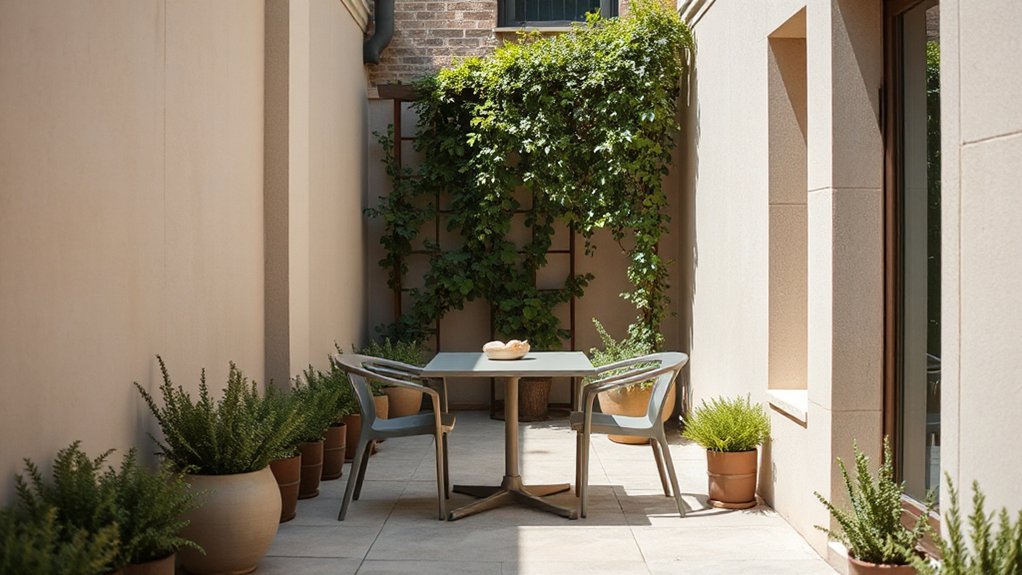
If you’re working with a narrow garden, compact dining pieces can transform the space without crowding it. You’ll enjoy a practical approach that keeps movement comfortable and guests connected.
Choose slim-top tables, foldable options, and chairs with slender frames to maximize floor area while still feeling welcoming. These selections become outdoor accessories that blend with the landscape and spruce up your alfresco routine.
- Slim café tables paired with folded chairs for easy stowaway flexibility
- Wall-mounted drop-leaf dining sets to save floor space while seating two
- Stackable or nesting chairs that shift from meals to moments of relaxation
Your goal: garden furniture that feels intimate, not crowded, and invites lingering conversations under open skies.
Built-In Benches With Storage: Seating Plus Organization
Built-in storage benches give you seating that doubles as a clever organizer, so you can reclaim outdoor floor space without extra cabinets.
With hidden compartments and lift-up seats, you’ll keep cushions, tools, and seasonal decor neatly tucked away.
This approach pairs practical seating with compact organization, perfect for narrow garden layouts.
Built-In Storage Benches
A built-in storage bench blends seating with tidy organization, making small outdoor spaces feel more expansive. You’ll gain extra hiding spots for cushions, planters, and tools, while keeping the path clear for flow. With the right finish, it reads as a natural extension of your garden, complementing garden art and attracting wildlife habitat rather than clutter.
- Choose weatherproof timber or composite with a hinged lid to access hidden storage without sacrificing aesthetics.
- Integrate passive ventilation and drainage to prevent mold and keep essentials dry.
- Pair with narrow, decorative cushions and low planters to invite lingering and improve microclimates.
This approach stays practical, concise, and inclusive, so you feel you belong while designing with intention and purpose.
Seating With Hidden Compartments
When you design, choose lids that lift smoothly or hinge quietly to minimize interruptions during conversations or meals. Use compartments for seasonal accents, extra pillows, and small planters, so your seating stays inviting rather than cluttered.
Consider modular configurations that let you reconfigure for gathering or quiet moments, amplifying that sense of belonging. Thoughtful materials and finishes keep the look cohesive, while hidden compartments quietly support everyday use, preserving flow and accessibility.
Compact Outdoor Organization Solutions
If you want tidy, accessible storage in a narrow garden, built-in benches with integrated storage offer a smart, compact solution. You’ll gain seating plus hidden organization that stays out of sight yet within reach, so every inch counts. Choose drawers or lift-up tops that suit your rhythm of use, and keep maintenance simple with sturdy finishes.
- Maximize impact with bench storage that doubles as a display for garden art, blending function with style.
- Plan for plant selection by reserving a shallow, accessible bin for clipped clippings or seasonal accents.
- Integrate modular dividers to sort tools, cushions, and seeds, ensuring a calm, cohesive space.
This approach feels deliberate, welcoming, and belonging-ready, turning small corners into thoughtful living spaces.
Multi-Use Privacy Screens for Narrow Gardens
Because narrow yards demand flexibility, multi-use privacy screens can quickly transform tight spaces into welcoming zones. You’ll gain room for seating, shade, and a hint of enclosure without sacrificing airflow or light.
Choose panels that fold, stack, or hinge to reconfigure layouts as you entertain or unwind. Integrate garden art with screens to add personality and a focal point, while keeping the view open beyond the border.
Opt for materials that endure your climate and ease maintenance, such as lightweight aluminum, durable wood composites, or woven screens.
If you value wildlife, select designs that allow small creatures to pass and perch, creating a natural wildlife habitat.
Leverage planters and trellises to soften edges, enhance privacy, and invite conversation.
Color, Texture, and Visual Expansion in Small Spaces
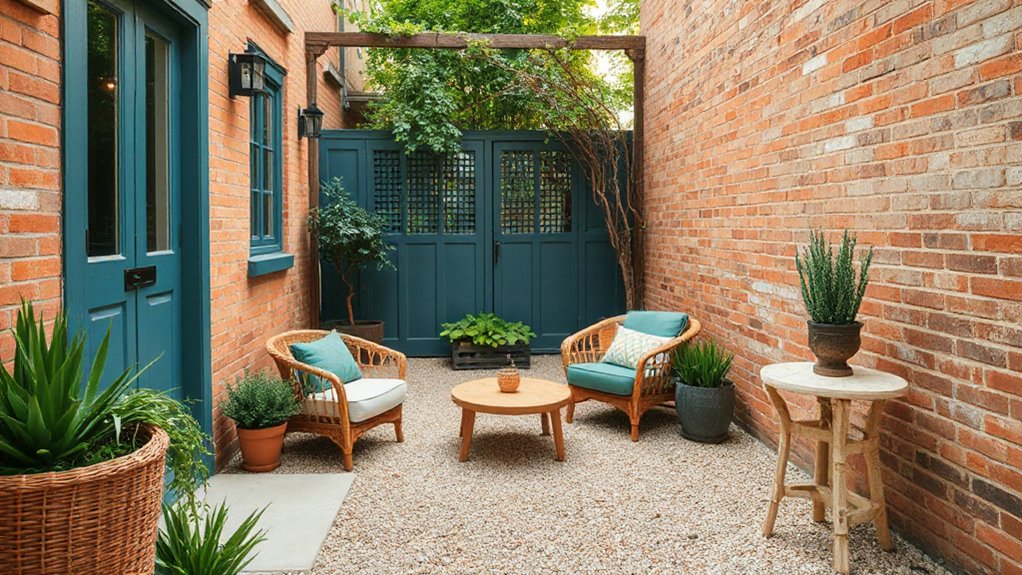
Color and texture are your fastest route to the illusion of space in a narrow garden: bright accents bounce light, while varied surfaces break up monotony.
To grow the sense of air and width, choose cohesive color palettes and tactile contrasts that feel like belonging.
- Use a unified color palette across furniture, cushions, and planters to avoid visual clutter while still adding personality.
- Mix textures—smooth resin, woven fabric, and rough stone—to create depth without crowding the space.
- Opt for garden furniture in lighter tones with slim profiles; pair with compact greenery and reflective surfaces to expand perceived area.
Tip: let color accents repeat in small doses around the seating zone for harmony, not chaos.
Lighting That Makes a Narrow Garden Feel Roomier
Good lighting can transform a narrow garden from a squeeze into a room-like retreat. You’ll want layers that don’t crowd space: a few focused task lights for seating areas, plus soft, ambient glow along paths or walls. Choose compact fixtures and wall-mounted options to keep floors clear, enhancing perceived width.
Use warm, inviting color temperatures to foster belonging and comfort after sunset. Elevate depth with uplights on tall plants or vertical structures, drawing the eye upward and creating vertical roominess. Integrate nighttime ambiance with subtle steps or risers lit gently to guide movement without glare.
Consider solar lighting for easy, low-maintenance power, pairing efficiency with eco-friendly charm that stays discreet until you need it.
Maintenance Tips to Keep Seating Pristine in Outdoor Spaces
Regular upkeep keeps outdoor seating looking fresh and inviting, so you’ll get more use out of your space. You’re preserving comfort and belonging with simple routines that respect seating ergonomics and fabric durability.
- Inspect cushions and frames weekly, tightening bolts and checking joints to maintain proper seating ergonomics.
- Treat outdoor fabric care as a regular habit: brush loose dirt, spot-clean stains promptly, and follow product labels for softening and UV protection.
- Schedule seasonal deep cleans and weather protection, storing cushions when not in use and covering furniture during storms or harsh sun.
Where to Source Compact Seating for Narrow Gardens and Practical Buying Tips
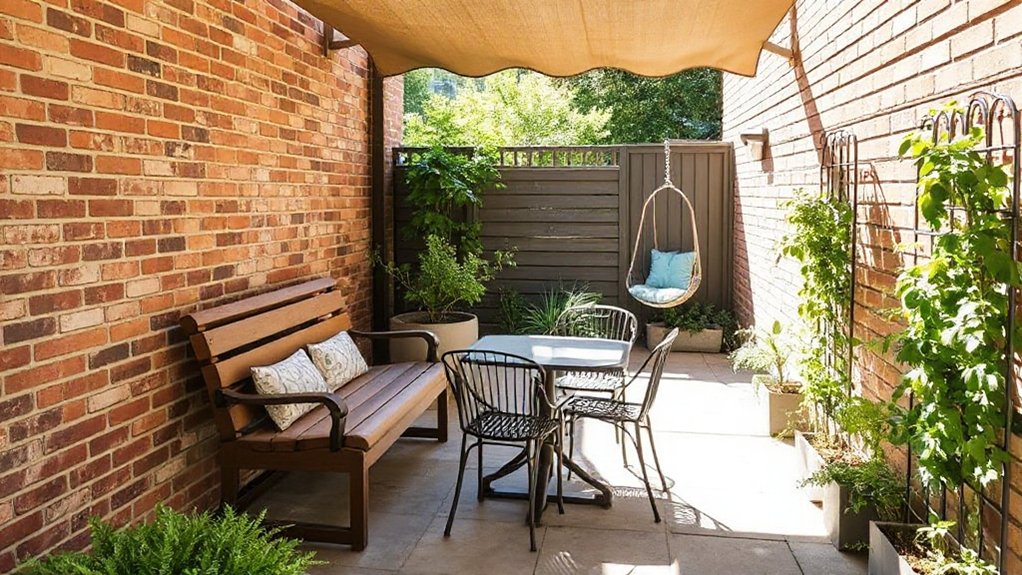
If you’re working with a narrow footprint, compact seating is a smart investment that fits without crowding paths or doors. Start with options labeled as “compact” or “slimline,” and verify dimensions before you shop.
Look for modular pieces you can rearrange to suit occasions, but keep a core set that fits through the doorway. Choose outdoor furniture that stacks or folds for easy storage during off-season months.
Prioritize materials that resist weather and wear, like powder-coated metal, teak, or durable resin wicker. Consider integrated storage cushions or benches with hidden compartments to hide garden decor essentials.
Buy from retailers with clear return policies and real-world photos, and support local shop windows for personalized service and a sense of belonging.
Frequently Asked Questions
How Can I Maximize Comfort in a 2–3 Ft Wide Seating Area?
You maximize comfort in a 2–3 ft wide seating area by choosing compact, ergonomic furniture, layered cushions, and versatile garden accessories; pick a cohesive color schemes and small, breathable fabrics to create inviting, belonging-rich, functional spaces.
What Are Light-Weight Options for Frequent Rearrangement?
Portable furniture and collapsible designs give you light-weight options for frequent rearrangement, letting you reconfigure spaces easily, stash connections neatly, and still feel included. You’ll move, store, and mingle effortlessly, creating cozy, adaptable seating that fits your pace.
Which Materials Resist Weather for Narrow, Exposed Spots?
Weather resistant materials last longer, and you won’t regret choosing them for exposed spots; durable outdoor textiles shrug off rain. You belong here, so you’ll pick practical options, keep rearranging easily, and still feel stylish, ironically wind-resistant.
How Do I Stabilize Seating on Uneven, Narrow Surfaces?
You stabilize seating on uneven narrow surfaces by using level ground, adjustable feet, and non-slip pads, then add ground stabilization under chairs and decorative edging to define paths and prevent shifts, fostering belonging and safe, steady enjoyment.
Can I Combine Seating With Storage in a Tight Nook?
Yes, you can combine seating with storage in a tight nook using multi functional furniture and compact storage solutions. You’ll gain practical, space-saving seating that reinforces belonging, while keeping belongings tucked away and easily accessible for daily, shared outdoor moments.
Conclusion
You’ve learned to tune your narrow garden for comfort without crowding it. With careful measuring, you’ll avoid tight spots and awkward gaps, while compact seating breathes easy along edges and in alcoves. Embrace subtle color and texture to visually expand your space, and use lighting to soften boundaries. Regular maintenance keeps things serene, not fussy. When in doubt, opt for lighter, multi-purpose pieces. In short, small choices, big ease, quietly widening your outdoor room.