
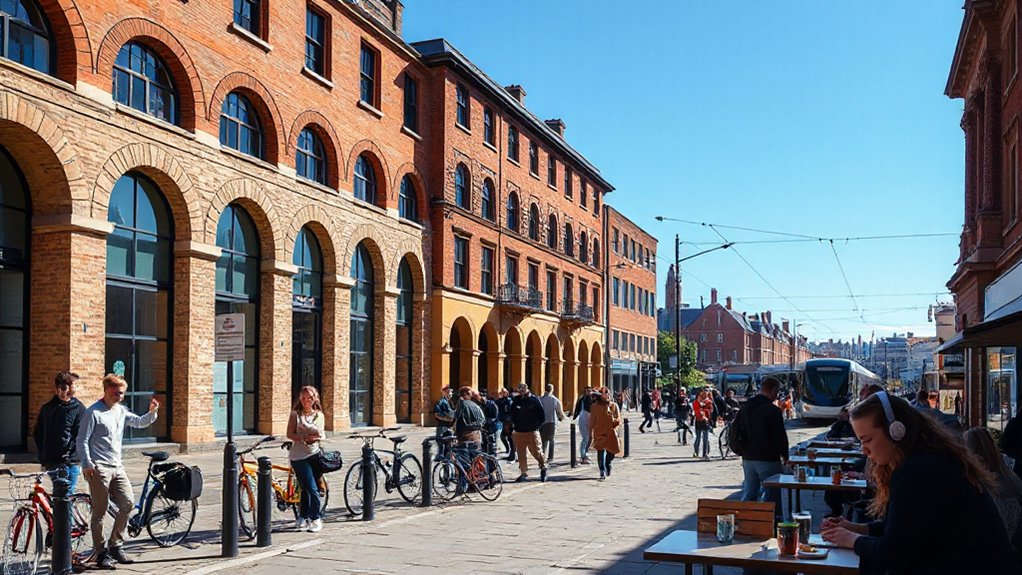
Nottingham stays a top student market because its campus-city ecosystem links learning, industry, and startups into tight feedback loops. You’ll find strong industry ties, affordable housing options, and vibrant study spaces that drive collaboration and retention. Local graduates stay nearby, boosting regional employment and investment while reducing onboarding costs for employers. Market data show steady international enrollment and rising demand, tempered by housing supply and rent pressures. Keep exploring to see how planning aligns supply with student needs.
Why Nottingham Feels Like the Ideal Student City
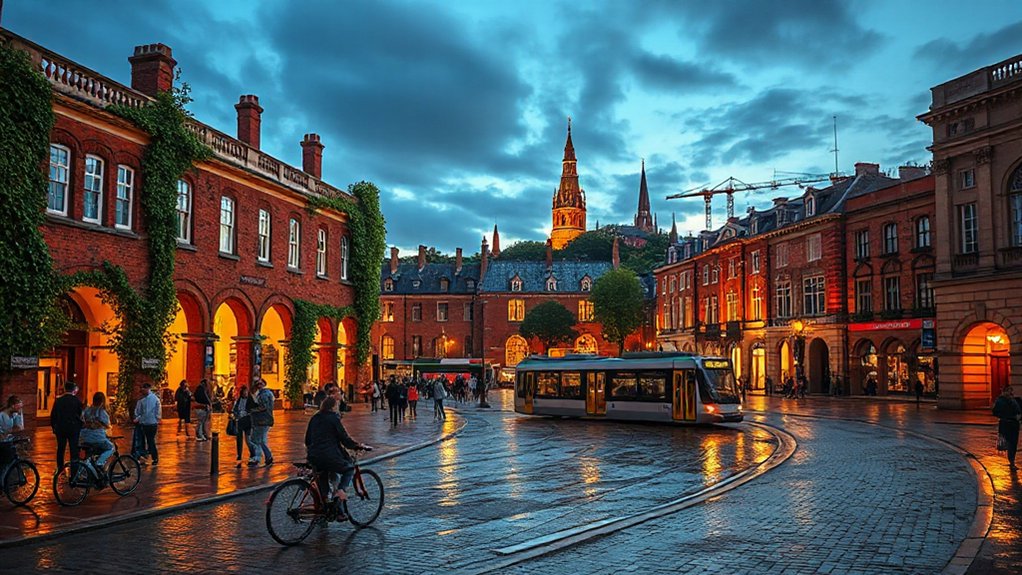
Nottingham stands out as an ideal student city because its university ecosystem is tightly integrated with the city’s daily life, creating a dense campus-to-community web that reduces movement costs for newcomers.
You’ll notice how Student entrepreneurship patterns emerge from this setup: campus spaces incubate ideas, local firms adopt student-led ventures, and mentors bridge classroom theory with real-market feedback.
Data show high startup density near university districts, complemented by affordable co-working hubs and accessible funding streams.
Campus sustainability underpins both demand and retention, with energy-efficient housing, green transit, and waste-reduction programs lowering living costs while signaling long-term value to students.
You benefit from a market-aware environment that rewards collaboration, practical experimentation, and steady networks, enhancing belonging through shared purpose and measurable societal impact.
The University Ecosystem Behind Nottingham’s Talent
How does a university-driven ecosystem shape the region’s talent pipeline? You’ll see a structured flow from research labs to local enterprises, underpinned by data on graduate outcomes and industry placement rates.
The ecosystem’s strength rests on robust alumni networks that mentor, connect, and open doors, creating short feedback loops between campus and market. Industry collaborations translate research into scalable solutions, accelerating employability and startup formation.
You’ll notice coordinated programs across disciplines, shared facilities, and targeted funding aligned with regional demand, not just academic interests. This alignment boosts retention and attracts inbound talent, reinforcing Nottingham’s knowledge economy.
In short, a transparent, metrics-driven university framework translates into steady skill pipelines, reinforcing belonging and opportunity for students, graduates, and local employers alike.
Living on a Budget: Costs and Value in Nottingham
For students and young professionals, budgeting in Nottingham means balancing competitive living costs with strong value in housing, transit, and everyday essentials. You’ll find costs trend with market cycles, but overall affordability remains reinforced by competition among landlords and service providers.
Data points show housing, transport, and food together stretch income without sacrificing access to culture and opportunity.
4 key points:
- Budget shopping lowers discretionary spend while maintaining quality
- Affordable dining options cluster near campuses and transit hubs
- Transit passes offer predictable monthly costs and broad coverage
- Utilities and internet remain among the most predictable monthly expenses
You’ll notice disciplined spending supports a sense of belonging, enabling consistent participation in study, work, and social life. This market-aware approach keeps Nottingham competitive for long-term budgeting.
Where to Study: Libraries, Cafés, and Creative Workspaces
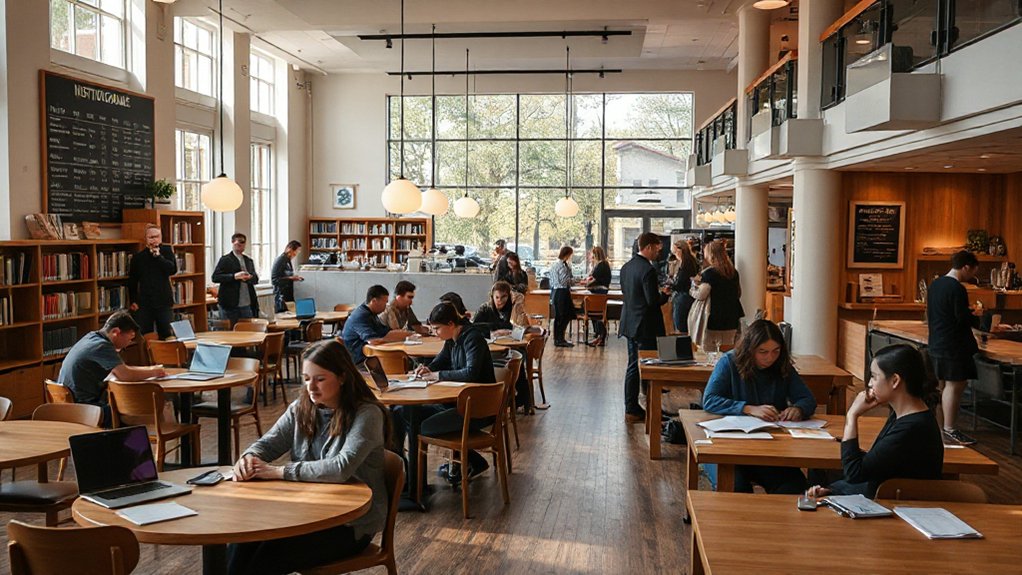
Across campuses and city centers, study spaces balance noise, access, and cost, revealing where you’ll maximize focus without sacrificing time for collaboration. You’ll notice Nottingham’s libraries offer structured quiet and targeted study zones, supporting consistent study habits and deep work.
Library resources—catalogs, databases, and staff guidance—boost efficiency, turning research into streamlined progress.
Cafés provide ambient energy for drafting and brainstorming, though you’ll want clear boundaries to protect concentration.
Creative workspaces integrate tech hubs, collaboration rooms, and flexible seating, appealing to project-based schedules and group work.
Data shows higher utilization in mixed-use spaces near campuses, correlating with longer study blocks and higher retention rates.
In this market, belonging comes from choosing environments that align with your pace, goals, and access to peer networks.
How Nottingham Connects You to Internships
Nottingham isn’t just about study spaces; it’s a conduit to internships that align with your field and timeline. You’ll see how opportunities arise from university–industry ties, local startups, and regional employers who value fresh talent.
The market data shows steady internship opportunities across disciplines, supported by structured programs and focused matchmaking. Networking events amplify this effect, turning brief encounters into concrete collaborations.
4-point highlights:
1) Curated internship listings updated weekly
2) Targeted employer engagements aligned with your major
3) On-campus and virtual networking events that boost visibility
4) Feedback-driven placement and accelerator opportunities
This ecosystem reduces search friction and builds confidence, so you feel you belong in professional spaces from day one. You’re not just studying; you’re mapping your career trajectory with real-world relevance.
Getting Around: Transport That Supports Campus Life
Getting around campus is more than a convenience—it’s a strategic asset, supported by a network that aligns routes, schedules, and cost with student life and academic timetables. You’ll find Public transport integrated with class timetables, reflecting peak load patterns and reliable maintenance windows.
Data show consistent on-time performance and broad coverage, enabling spontaneous study groups and evening labs. Bike sharing adds resilience, offering flexible, affordable options that reduce wait times and campus congestion.
In Nottingham, service frequency and fare structures signal market responsiveness to student budgets and part-time work cycles. You gain predictable mobility, lower carbon impact, and enhanced social belonging when transit options mirror your daily rhythms and campus events.
The result is a transportation ecosystem that strengthens retention and academic focus.
Housing Options for Students: On-Campus, Shared, and Beyond
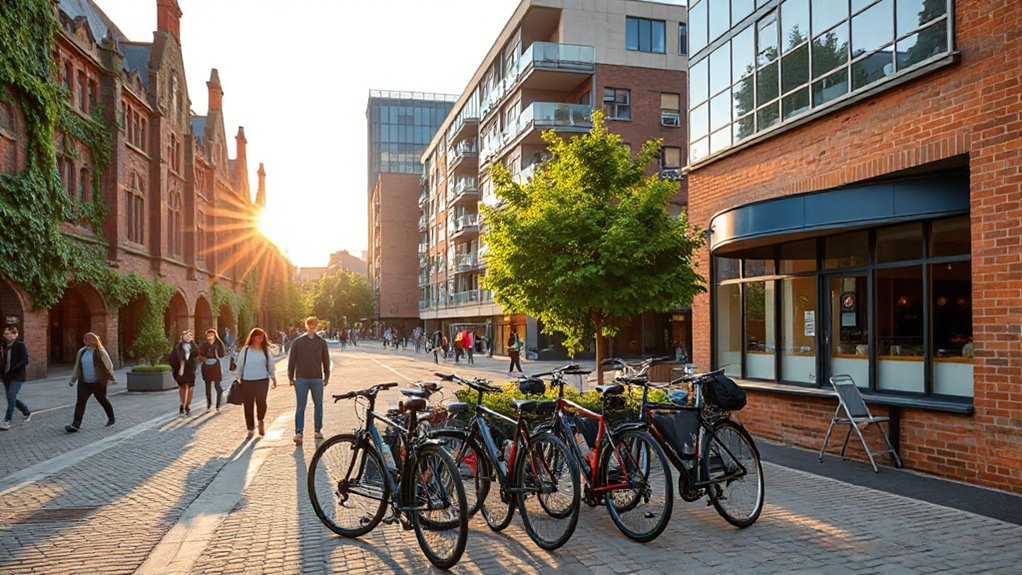
You’ll compare On-Campus Living Options, Shared Housing Dynamics, and Beyond Campus Alternatives to map demand, affordability, and utilization trends for Nottingham’s student population.
Data show how occupancy rates, rent-to-income ratios, and turnover influence decision-making across these segments.
This market-aware view sets the stage for evaluating who chooses each option and why, shaping future housing supply and policy adjustments.
On-Campus Living Options
Campus traditions and student clubs anchor social routines, reinforcing retention beyond academics. The following points highlight reliability and choice:
1) Variety across building types supports diverse budgets
2) Proximity to study spaces reduces commute fatigue
3) Inclusive events and services bolster belonging
4) Transparent lease terms stabilize budgeting across terms
Data indicates higher renewal rates where communities foster collaboration and mentorship, reinforcing a stable, market-aware outlook for Nottingham’s on-campus ecosystem.
Shared Housing Dynamics
Market signals—seasonal turnover, rent per room, and duration of leases—guide affordability decisions and financing alternatives for students. When matched with nearby amenities, transit access, and proximity to universities, these dynamics foster a sense of belonging that extends beyond dormitory walls.
Institutions and landlords increasingly bundle utilities, internet, and support services, stabilizing costs for households. In this view, rental affordability emerges as a collaborative outcome rather than a fixed constraint.
Beyond Campus Alternatives
Beyond campus, students increasingly weigh options that meld affordability with practicality, leveraging off-campus networks, purpose-built housing, and micro-neighborhoods to balance budget, commute, and social life.
You’ll see demand shift from traditional dorms to flexible arrangements that preserve Campus traditions while integrating athletics access and community amenities. Data show price-per-bedroom drops when shared or near transit hubs, yet social cohesion rises with mixed-use sites and resident managers.
This warrants targeted development that aligns with athletic programs and student clubs, fostering belonging without sacrificing convenience.
- Evaluate proximity to campuses, gyms, and transit for best daily balance.
- Prioritize purpose-built and managed housing to maintain quality and safety standards.
- Leverage social programming that sustains campus traditions off-campus.
- Align leasing cycles with academic calendars to support predictable budgets.
City Center Living: Culture, Food, and Social Spaces
City center living in Nottingham blends culture, food, and social spaces into a compact, data-driven landscape for students. You’ll notice high accessibility to art galleries and street food clusters, fueling daily routines with variety and immediacy.
Footfall analytics show consistent evening density near cultural venues, supporting affordable, spontaneous socializing without long commutes.
Rental benchmarks indicate compact units near transport hubs deliver the strongest value-per-square-foot, while co-working and study-friendly cafés sustain productivity with social incentives.
Market feedback highlights a growing preference for mixed-use blocks that combine dining, entertainment, and study zones, reducing frictions between obligations and leisure.
You belong here when you value daily immersion in a diverse, craft-oriented scene that reinforces peer networks and campus significance.
Student Support: Services and Communities That Help You Thrive
Student support in Nottingham campuses combines targeted services with vibrant communities to boost retention and well-being. You’ll find mental health resources, career counseling, academic advising, and peer-led networks integrated into daily life, aligning support with your goals.
Data shows higher persistence where accessible, visible, and responsive services exist, and Nottingham’s mix caters to diverse needs.
- Mental health services and outreach that reduce stigma and waiting times
- Career counseling integrated with job fairs, internships, and industry partnerships
- Academic advising paired with tutoring and study skills workshops
- Inclusive student communities and mentorship that foster belonging and resilience
This ecosystem emphasizes timely intervention, measurable outcomes, and market-aware programming, helping you thrive both academically and personally.
Nottingham Graduates Staying Local: Success Stories
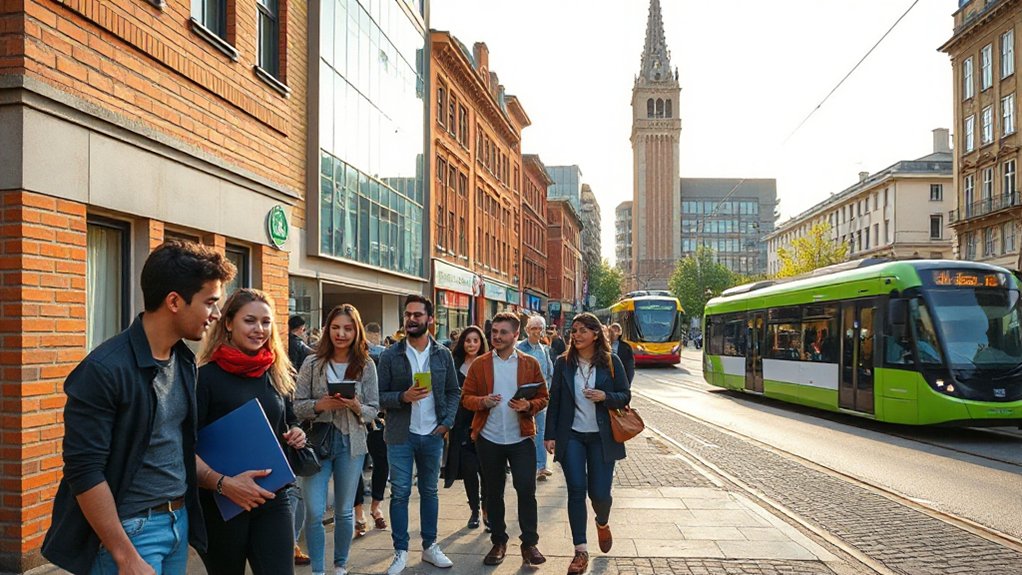
Nottingham’s robust support ecosystem for students often translates into local retention after graduation. You’ll see this reflected in alumni staying close, contributing to a feedback loop that strengthens local employment and investment.
Data indicate a steady share of graduates remaining within 15 miles of campus, sustaining a skilled labor pool that firms actively seek. Alumni entrepreneurship flourishes when knowledge networks, mentors, and startup spaces are readily accessible, creating visible case studies that reassure newcomers they can build here.
Local employers report lower onboarding costs and faster time-to-productivity with graduates who already understand regional markets. For students evaluating careers, this means you’re not just earning a degree—you’re joining a connected community with tangible opportunities to advance locally, now and post-graduation.
Sustainable Living for Students in Nottingham
- Choose housing with high EPC ratings and proximity to transit.
- Prioritize bike-friendly routes and affordable e-scooter access.
- Opt for meal plans featuring locally sourced, seasonal produce.
- Leverage university sustainability programs for incentives and audits.
Market trends indicate steady demand for verified green credentials, translating into long-term value and community cohesion.
Trends Shaping Nottingham’s Student Market
You’re seeing steady enrollment momentum and growth in Nottingham, with year-over-year increases that signal a rising demand base for both degree courses and supplementary programs.
Housing demand dynamics are tightening the market, as student intake outpaces supply and rental competition intensifies in key districts.
These trends set the stage for analytical scenarios on pricing, capacity planning, and targeted recruitment strategies.
Enrollment Momentum and Growth
Enrollment momentum in Nottingham’s student market has accelerated over the past five years, driven by stronger applicant pools, rising international demand, and targeted recruitment efforts. You’ll see the impact in both enrollment volumes and cohort quality, supported by data-driven outreach and strategic partnerships.
International partnerships and research collaborations anchor these gains, expanding pathways and enhancing student experiences. Four key drivers stand out:
1) Expanded international partnerships increasing joint programs and admissions pipelines
2) Rising demand from diverse geographies fueling higher application rates
3) Targeted recruitment aligning programs with labor-market needs
4) Strengthened retention through integrated academic and career services
This momentum signals sustainable growth, reinforcing Nottingham’s appeal as a belonging-driven market where study, collaboration, and career outcomes intersect.
Housing Demand Dynamics
Housing demand in Nottingham’s student market is being shaped by tight rental supply, rising rent pressures, and the rapid influx of international and commuter students, which together are intensifying competition for a limited number of purpose-built options. You’ll notice occupancy rates near peak college intake, with vacancies shrinking in core districts.
Data show rental trends trending upward for one- and two-bedroom flats, while sector-standard rent controls remain unevenly applied. Affordability gaps widen as housing costs outpace average student stipends, prompting more selective housing choices and longer search windows.
Market signals point to sustained demand, even as lenders and developers test new financing for PBSA and mixed-use builds. Understanding these dynamics helps you align expectations with available supply, fostering belonging through transparent, data-driven decisions.
Practical Tips to Make the Most of Your Time in Nottingham
Nestled as a student hub with a dynamic mix of campuses, Nottingham rewards efficiency and savvy planning: start by mapping your week around core class times, cheap food options, and reliable transport routes to minimize wasted hours. You’ll gain leverage by aligning study blocks with peak campus events and local cuisine suggestions, turning opportunities into measurable outcomes.
- Prioritize time blocks that pair lectures with nearby dining for reduced transit and refreshed focus.
- Track affordable meal options by district and budget weekly spending to spot savings.
- Schedule transportation around timetable peaks to cut wait times and delays.
- Attend targeted campus events to expand networks and access exclusive resources.
This data-driven approach boosts belonging, signaling you’re aligned with Nottingham’s market rhythms and community.
Frequently Asked Questions
How Affordable Is Nightlife for Students in Nottingham?
Nightlife in Nottingham is fairly budget-friendly for students, you’ll find budget friendly venues and affordable drink prices, especially midweek. You’ll feel included as you compare venues with data-driven choices, aiming for value, social variety, and community belonging.
Which Neighborhoods Are Best for First-Year Students?
You’ll want to take into account Beeston, Sneinton, and The Park for first-year living. They offer strong campus amenities nearby and efficient local transportation, aligning with your need for belonging while data shows rental demand clusters in these neighborhoods.
Do Part-Time Jobs Regularly Fit Around Lecture Schedules?
Part-time jobs can fit around your lectures with flexible scheduling and clear planning. You’ll achieve effective part-time integration, balancing studying and work; data shows steady demand, and belonging grows when you schedule thoughtfully and align shifts with peak class availability.
How Safe Is Student Housing in Popular Areas?
You’ll find student safety is strong in central, popular areas, with visible security and community monitoring, though some districts show housing quality variations. Data shows consistent improvement and market awareness, helping you feel you belong while evaluating risks and protections.
What Support Exists for International Students in Nottingham?
You’ll find support for international students in Nottingham through cultural integration programs and language support, juxtaposing welcoming services with rigorous academic resources; you’ll access mentoring, visa guidance, and career workshops, creating belonging in a data-driven, market-aware environment.
Conclusion
You’ll feel the pulse of Nottingham like a data-etched map—the river “study-habits” glow, campus lights tracing predictable peaks in demand. You see the market harmonize: affordable rents, abundant libraries, ready-made internships, and a steady stream of graduates staying local. The city behaves like a living dashboard, where affordability, opportunities, and culture align to sustain the student market. If you read the numbers, you’ll choose an environment that mirrors your ambitions—and keeps renewing itself with every cohort.