
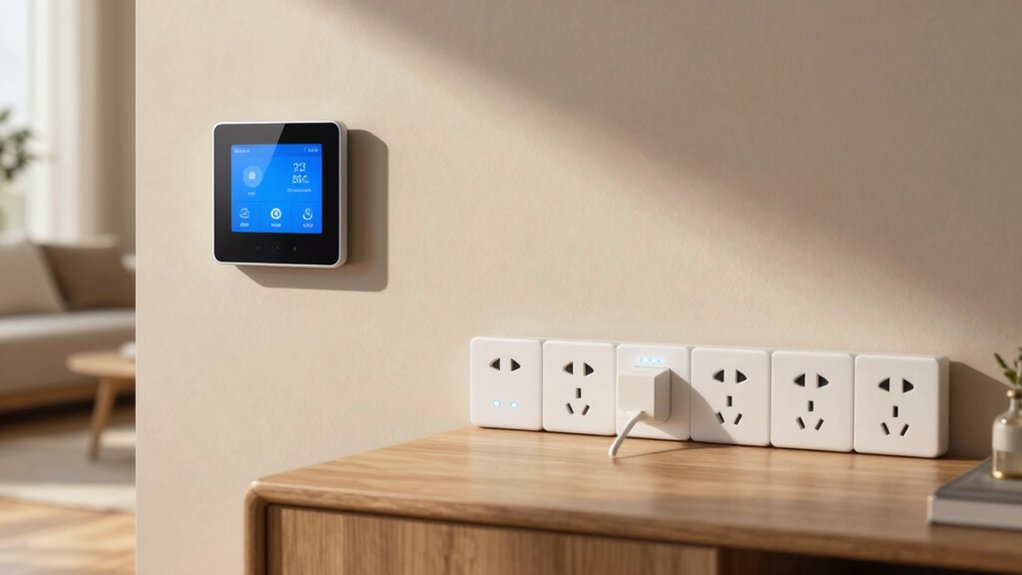
Automating your thermostat, lights, and plugs cuts waste by matching energy use to real activity. With smart thermostats, occupancy-based schedules and zoning prevent heating or cooling in empty rooms, while adaptive learning refines setpoints for steady savings. Smart lighting auto-adjusts to occupancy and daylight, plus dimming lowers bill shocks. Smart plugs cut phantom loads and coordinate devices, so idle gear stays off. Set up scenes and routines that reflect your day, and you’ll release ongoing efficiency as you optimize further.
What Smart-Home Energy Savings Look Like in a Typical Home
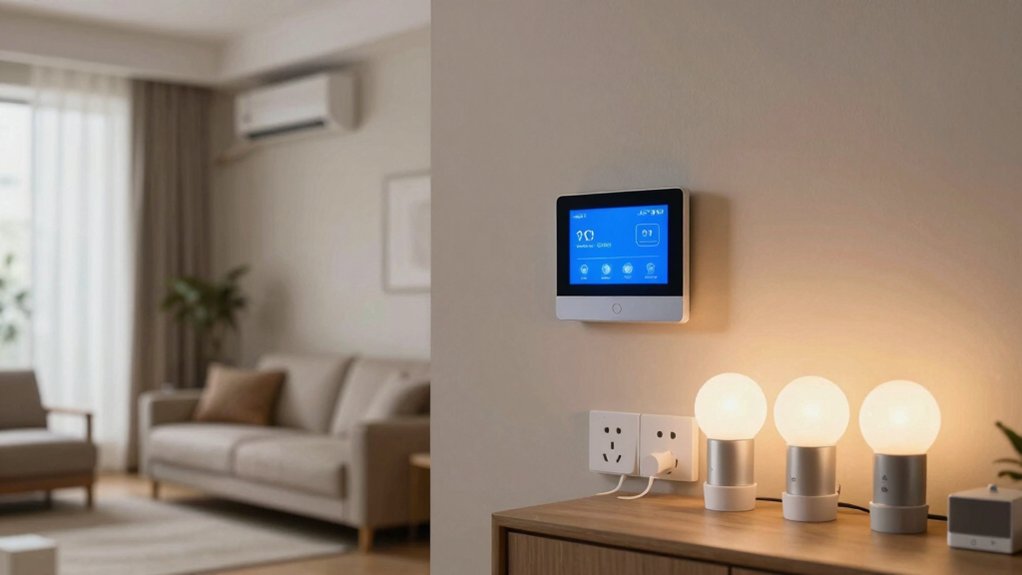
Smart-home energy savings start with simple, automatic controls that reduce waste without you noticing. In a typical home, you’ll see lights and outlets tailored to your routines, plus devices that learn when you’re away. Remote monitoring lets you confirm usage in real time and catch idle devices that quietly sip power.
You’ll notice shrinking monthly bills as common circuits dim auto-magically and stay off when rooms aren’t in use. Energy audits reveal inefficiencies you’d overlook, like phantom loads or mismatched schedules, so you can target fixes quickly. The result is steady, predictable savings without ongoing effort.
With these basics, you gain control, comfort, and a clearer path to deeper efficiencies later.
How to Cut Heating and Cooling Waste With Smart Thermostats
Smart thermostats can dramatically cut heating and cooling waste by aligning a home’s climate control with actual use. You’ll start by enabling occupancy-based scheduling, so heat or AC runs only when you’re present.
Use zoning strategies to segment days or rooms with different needs, preventing overheat in unoccupied spaces. Pair the thermostat with adaptive learning that updates setpoints over time, reducing trim losses during shoulder seasons.
Don’t overlook insulation improvements; sealing leaks and improving insulation lowers HVAC load, making smart programming more effective and responsive.
Set target ranges by season and time of day, then trust alerts to flag unusual consumption. Regularly review energy reports, adjust routines, and maintain equipment to sustain measurable reductions.
Reducing Lighting Waste and Boosting Comfort With Smart Lighting
Lighting waste isn’t inevitable: smart lighting setups trim it while boosting comfort. You’ll minimize excess light and maximize usability by choosing color temperature appropriate to activity and time of day, then syncing with your routines.
With light automation, you schedule fixtures to match occupancy and daylight, so rooms aren’t lit when unused. Use dimming to maintain task visibility without overpowering brightness, reducing energy use while preserving atmosphere.
Prioritize zones and scenes that reflect real needs—crescent mornings, focused work, and cozy evenings—so you’re never overlit. Consider occupancy sensors for frequently vacated spaces and daylight sensors to leverage natural light.
This approach pairs efficiency with comfort, delivering consistent visibility without waste and supporting long-term energy habits.
How Smart Plugs Curb Phantom Loads and Build Energy-Smart Habits
Even though phantom loads can quietly drain your energy, smart plugs directly cut that waste by powering off devices when they’re not in use. You’ll reduce standby power seepage and simplify daily energy management, while keeping devices ready when you actually need them.
With device synchronization, your plug network can coordinate between chargers, consoles, and lamps, avoiding partial power draws and unexpected warmth.
- Cut standby power by switching off idle gear without unplugging.
- Sync devices so a single command powers multiple peripherals on or off.
- Build habits by placing smart plugs in routine-centered spots (desk, entertainment, charging).
Using smart plugs, you gain predictable energy behavior, faster payback, and a clearer view of where energy goes each day.
Set Up Schedules, Sensors, and Scenes That Actually Save Money
Now that you’ve cut phantom loads with smart plugs, you can lock in real savings by setting up schedules, sensors, and scenes that actually save money. Start with routine optimization: align thermostat setpoints with occupancy patterns and off-peak hours, so climate control runs only when needed.
Use device integration to coordinate lights and plugs with your routine—dim or switch off fixtures when rooms are unused, and preheat or pre-cool only during cheaper windows. Create scenes that reflect real-life activity, like “Away,” “Morning,” and “Cinema,” so devices auto-adjust without manual taps.
Prioritize simplicity; avoid overly complex rules that drift. Regularly audit automations for energy impact, and disable those that no longer prove cost-effective. Implementing thoughtful schedules and sensors keeps energy savings consistent and scalable.
Conclusion
You’ll feel the difference when automation becomes routine. Think of your home as a smart garden: a thermostat that drinks the draft, lights that dim with sunset, and plugs that stop drawing on idle. In one week, a typical household saves up to 10–15% on energy bills with minimal effort. It’s not magic—it’s precise control: schedules, sensors, scenes. Start small, monitor results, and let routines grow, quietly turning waste into value.