
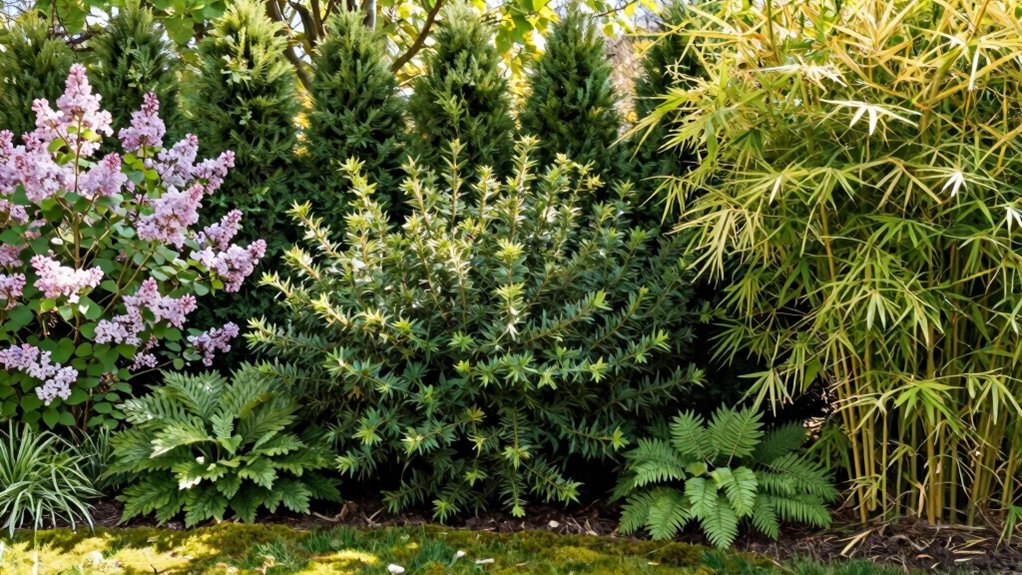
A natural fence starts with clear privacy goals and a layered mix of fast-growing evergreens, deciduous shade trees, and climbers trained on trellises. Choose dense, disease-resistant evergreens for year‑round coverage, add texture with varied leaf shapes and colors, and use layered planting to close gaps while keeping air flowing. Tailor picks to sun, soil, and microclimate, and employ mulch and drip irrigation to cut maintenance. Ready to design a breathable, wildlife-friendly screen that lasts—there’s more to learn.
Define Your Privacy Goals for a Green Fence
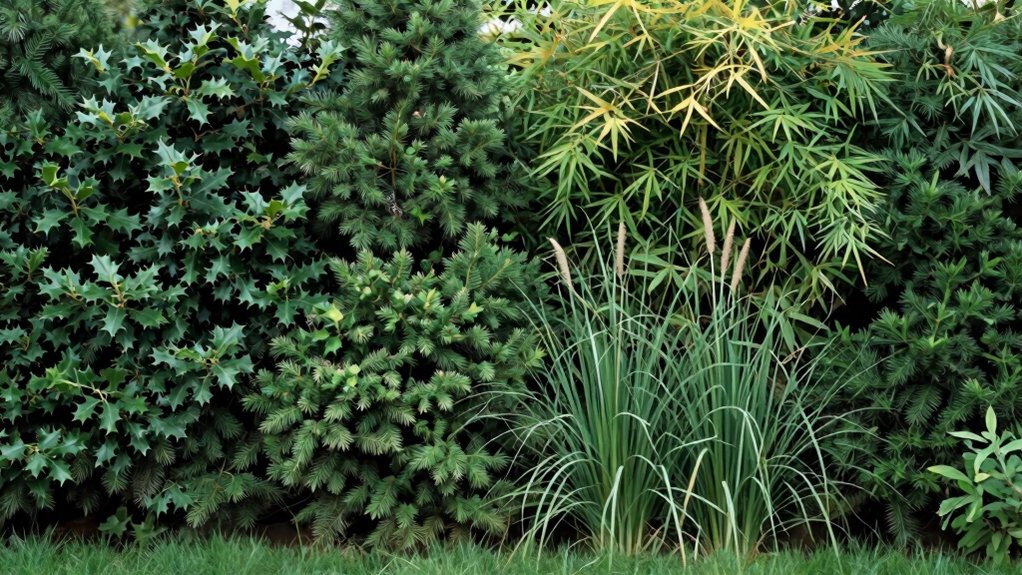
To define your privacy goals for a green fence, start by identifying why you want screening and what you want to screen from (neighbors, street traffic, or a lively yard). You’ll craft a clear brief you can use with suppliers and designers.
Pinpoint height, density, and year-round appeal, then match plant choices to your climate, maintenance tolerance, and aesthetic.
Consider how garden art can accent the fence without compromising coverage, and plan for pest control as part of ongoing health and resilience.
Document acceptable gaps for light and airflow, plus seasonal changes you expect.
Your goal: a coherent, durable screen that reinforces belonging—privacy you can see, feel, and share.
Choose Fast-Growing Evergreens for Privacy Screening
Looking for rapid, reliable privacy? You want evergreen screening that works season after season. Choose fast-growing evergreens that deliver consistent density and year‑round cover.
Focus on species with strong root systems, disease resistance, and adaptable light needs to maintain privacy without gaps. A diverse mix enhances evergreen diversity, reducing risk from pests or climate shocks and creating a resilient hedge structure you can trust.
For tight urban spaces, consider columnar or columnar-rounded forms that maximize screening with minimal footprint.
Plant spacing should align with mature width, and incorporate staggered plantings to avoid visible gaps during establishment.
Regular pruning keeps density high and ensures a neat, natural fence. With thoughtful selection and maintenance, you’ll enjoy a private, inviting border that feels like belonging.
Deciduous Shade Options That Refresh Your View
Deciduous shade trees offer seasonal drama while invigorating your view with dappled light and changing color. You’ll select options that refresh your privacy without permanent screening, balancing openness with relief from sun.
Focus on structure, height, and layered canopy to preserve sightlines while inviting outdoors. Choose deciduous trees that provide ample seasonal foliage and reliable height growth, allowing your space to breathe in winter and bloom in spring.
Species with strong branching and wide crowns offer shade during peak heat and reveal evolving scenery as leaves drop. Consider site sun exposure, soil type, and root behavior to avoid conflicts with foundations or utilities.
With careful selection, you gain more than shade—you gain dynamic, welcoming views that belong to your landscape. Deciduous trees. Seasonal foliage.
Leaf Texture and Color for Year-Round Interest
Texture and color are your year-round signals, guiding how you observe and experience your landscape as seasons shift. You build privacy with leaf texture and color that read as a cohesive whole yet reward close inspection.
Favor evergreen contrasts to anchor structure in winter, while seasonal hues create depth in spring and fall. Aim for foliage diversity across textures—serrate, broad, and needle-like leaves—so wind, light, and soundscape shift feel tactile and dynamic.
Use dark greens for backbone, lighter variegation for accents, and waxy versus matte surfaces to catch sun differently. Plan a palette that persists through drought and cold, yet responds to growth.
When textures align with color, your space becomes inviting, intimate, and visually resilient year after year.
Plant Picks by Sun, Shade, Soil, and Climate
To choose plants that thrive, match selections to sun, shade, soil, and climate first, then consider form and function. You’ll select species that meet light and moisture patterns, ensuring reliable growth with minimal maintenance.
In sun, favor drought-tolerant, dense options that form a solid screen; in shade, opt for moisture-loving, evergreen varieties for year-round privacy.
Assess soil texture and pH, choosing roots and shoots compatible with your site’s nutrients. Climate matters: pick cold-hardy or heat-tolerant cultivars that will endure seasonal swings.
For structure, prioritize trellis integration with climbers that resist wind and disease while delivering instant privacy.
Seek wildlife friendly options that provide nectar or berries without becoming invasive.
You belong here when your landscape feels cohesive, resilient, and welcoming.
Layered Planting for Dense, Multi-Season Privacy
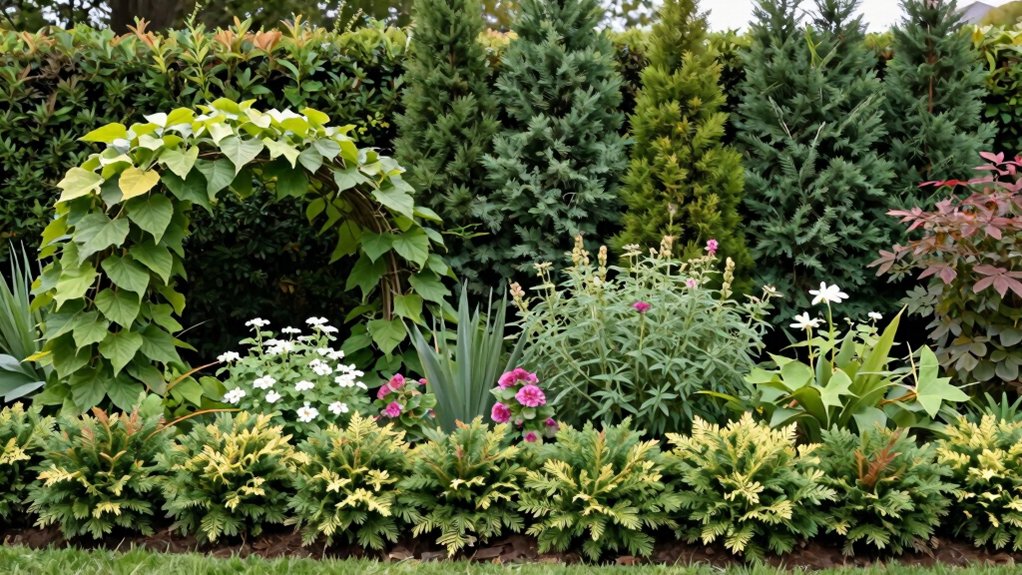
Layered planting builds dense, year-round privacy by layering shrubs, grasses, and climbers at different heights and maturities. You create vertical layering and seasonal diversity, guaranteeing year-round coverage and texture. Implement these steps:
- Align towering evergreens with mid-height shrubs to form an outer screen.
- Add fast-growing grasses and groundcovers for quick fill and movement.
- Integrate flowering climbers to cover fences or trellises for seasonal color.
- Vary maturities so gaps never form, maintaining privacy across seasons.
This approach ensures you feel protected and connected to your landscape.
With deliberate placement, you’ll enjoy a cohesive, layered border that signals belonging while resisting intrusion and visual clutter.
Maintenance Moves: Pruning, Feeding, and Succession
Maintenance moves guarantee your privacy borders stay dense and healthy year-round. You prune with intent, removing dead or crossing limbs to preserve structure and air circulation. Feed when soils show nutrient limits, applying balanced formulations at the right season to support new growth without encouraging excess sap.
Succession planning matters: map your steps so replacements appear naturally as mature plants age, keeping density intact. Integrate landscape lighting to highlight shooters and maintain visibility without inviting gaps; use low-voltage options to minimize maintenance while reducing shade pockets.
Irrigation systems simplify care—program regular, deep watering to roots, not foliage, and adjust for seasonal evapotranspiration. Track results, adjust schedules, and stay consistent; your border remains cohesive, private, and welcoming to your space.
Designing for Noise Reduction and Microclimates With Foliage
Noise dampening and microclimates start with your foliage strategy: dense, layered plantings break up sound paths and create temperature and humidity pockets that calm outdoor spaces.
Prioritize a foliage density plan that balances air movement with meaningful mass to shield seating areas and pathways.
Consider how species selection, heights, and spacing interact to sustain both noise reduction and comfortable microclimates over time.
Noise Dampening Microclimates
When you’re shaping a landscape for sound reduction, you can harness microclimates created by foliage to dampen noise while cooling heat islands. You’ll design layered plantings that alter wind and air flow, creating quiet pockets behind screens and around seating areas. Precision matters: choose species with dense foliage, sturdy branches, and year-round coverage to sustain acoustic benefits.
- Map problem zones and place shrubs to intercept lines of sound before they reach outdoor rooms.
- Pair evergreen canopies with deciduous screens to maintain year-round performance and seasonal light.
- Integrate groundcovers and low walls to absorb footstep and vehicle noise at grade level.
- Use garden sculptures and subtle outdoor lighting to anchor the space and enhance perceived privacy.
These steps deliver calm, cohesion, and a welcoming sense of belonging.
Foliage Density Strategy
A foliage density strategy targets both noise reduction and microclimate shaping by layering plantings to create variable airflow and sound barriers. You design with intent, pairing ground cover beneath taller layers to minimize gaps, then layering shrubs and small trees to form a continuous, breathable wall.
This approach sustains privacy without feeling claustrophobic, while inviting airflow that moderates temperature swings. Use ground cover to seal low, exposed spaces and reduce reflected sound, enhancing overall calm.
Guide vine training along trellises or arbors to increase vertical density without crowding interior spaces. Align plant selection with microclimate goals: drought-tolerant species in hot zones, moisture-loving varieties where shade matters.
Regular pruning preserves shape, avoids thinning gaps, and keeps the living screen coherent year-round for a welcoming, belonging-rich landscape.
Quick-Start Budget-Friendly Strategies to Begin Today
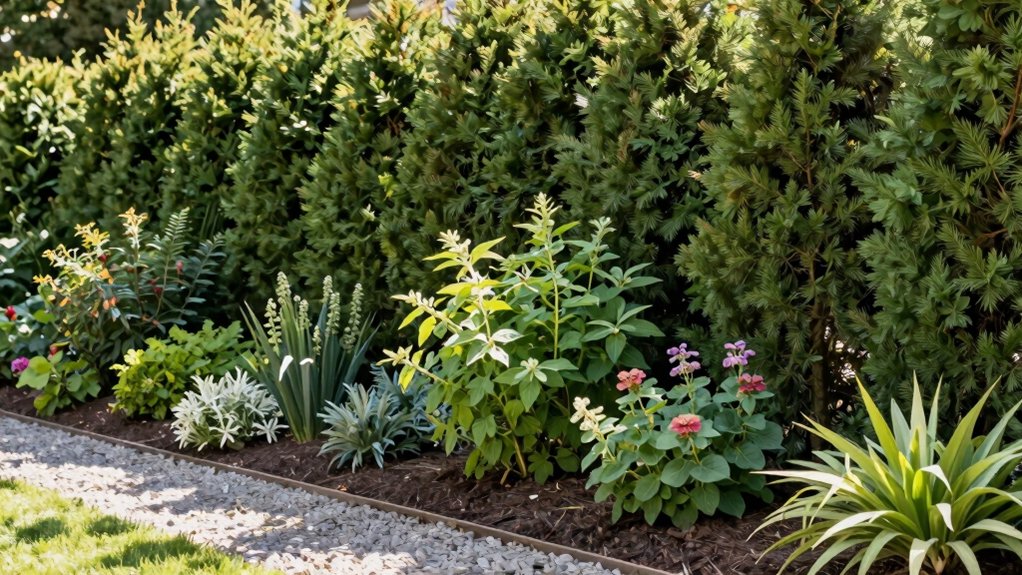
Start today with a practical, budget-friendly plan that quickly boosts privacy in your yard. You’ll build immediate enclosure while saving costs, then layer in plants for long-term density. Consider these starter moves:
1) Pick fast-growing, adaptable natives—think sticks-to-shrubs approach, not high maintenance.
2) Layer screens with evergreen cuttings or hedging species to create visual rhythm and year-round privacy.
3) Mulch heavily and install a drip system to conserve water and reduce upkeep.
4) Add quick-to-install accents that attract urban wildlife and convey botanical symbolism—native grasses, flowering shrubs, and tactile textures.
This approach creates belonging through shared landscape cues, supports local wildlife, and sets expectations for ongoing growth. You’ll see early screening, then deeper privacy as roots establish.
Frequently Asked Questions
How Tall Should a Privacy Screen Be for Effective Screening?
A privacy screen should be about 6 to 8 feet tall for effective screening, depending on nearby sightlines. Consider plant height considerations, growth rate, and privacy screen height needs to make certain you feel protected and included.
Which Plants Deter Pests While Maintaining Privacy?
You’ll want pest resistant plants that also shield you: choose natural pest deterrents like lavender, rosemary, salvia, and lemon verbena. They deter pests, provide privacy, and create a welcoming, belonging-filled landscape you’ll proudly maintain.
Can Privacy Strategies Affect Outdoor Lighting and Sun Exposure?
Sure thing: yes, privacy strategies can influence outdoor lighting and sun exposure. You’ll balance solar shading with plant placement to preserve outdoor ambiance, cut glare, and guarantee you still enjoy daylight without feeling cut off. It’s a win-win.
How Do Roots Impact Nearby Sidewalks or Foundations?
Roots can invade sidewalks or foundations, causing cracks and upheaval. You should monitor growth, install root barriers if needed, and consult a pro to prevent root invasion and foundation damage while preserving your sense of belonging and security.
What Maintenance Schedule Keeps a Hedge Dense Year-Round?
To keep a hedge dense year-round, follow a consistent pruning schedule with precise pruning techniques and a regular watering schedule. You prune lightly, then gradually, ensuring even growth, and you water deeply between sessions to maintain overall health and belonging.