
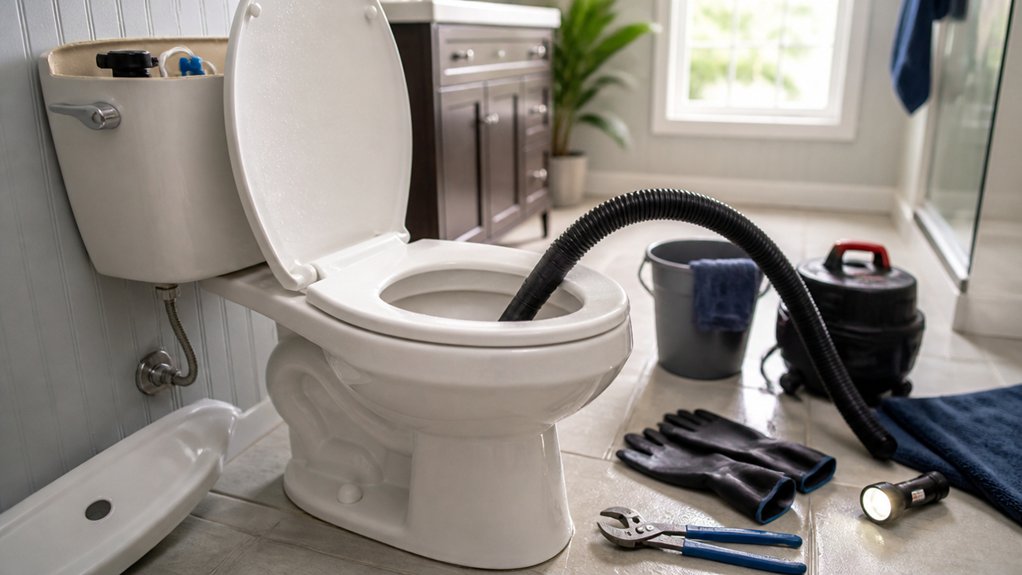
Stop Flushing and Check the Toilet Trap
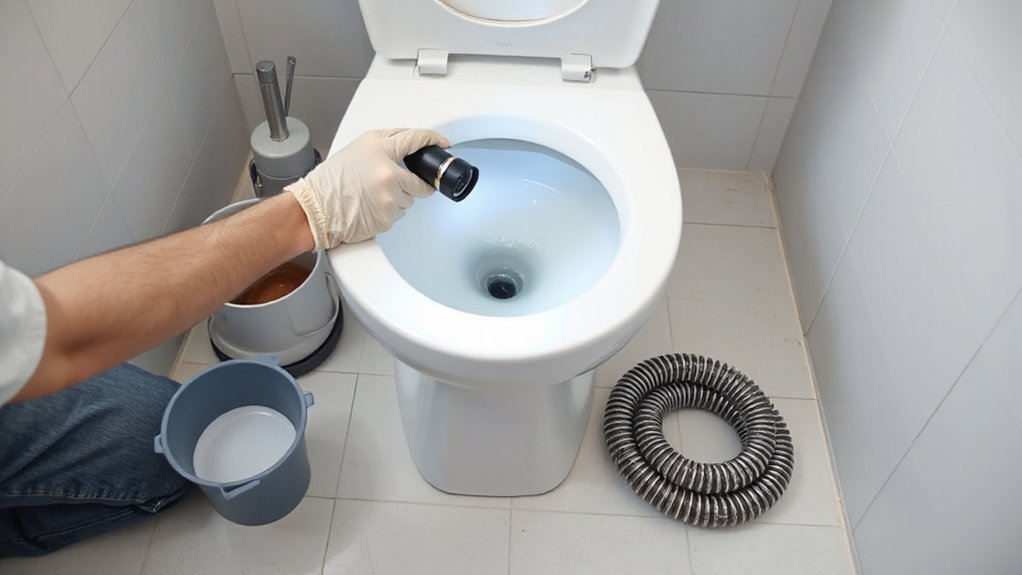
If the loo won’t clear properly after something’s dropped in, stop flushing straight away to avoid forcing it deeper into the trap or causing an overflow. Lift the lid, keep children and pets back, and put on rubber gloves; you’re dealing with contaminated water under UK hygiene standards.
Next, check what you can see. Look into the pan and along the outlet at the base; Toilet bowl design often hides the trapway bend, so use a torch and view from different angles. Note the water level and how quickly it settles—these Water flow dynamics hint whether the item’s lodged near the front of the bend or further back. If the cistern keeps refilling, turn off the isolation valve or the stopcock to prevent accidental flushing. Don’t add chemicals.
Tools for Removing an Object From a Toilet Trap
Before you try fishing anything out of the trap, gather the right kit so you don’t crack the pan, contaminate your hands, or shove the object deeper. Put on long-cuff rubber gloves and safety specs, and lay old towels or an absorbent pad around the Toilet bowl. Keep a bucket, jug, and sponge handy to lower the Water level and prevent splashes. Use a torch to see into the trapway. A flexible grabber tool or small inspection claw gives reach without scratching the glaze. A wet-and-dry vacuum (set to wet) can pull small items if you control the seal. For stubborn blockages, use a proper toilet auger, not a sink snake, to avoid damaging the pan. Disinfectant spray and bin bags finish the setup.
Try to Grab the Object Safely by Hand
If you can see the object in the toilet trap, you may be able to remove it by hand, but you’ll need to protect yourself first. Pull on sturdy waterproof gloves, keep your hands clear of sharp edges, and reach in slowly to get a firm grip without forcing anything. Once you’ve retrieved it, place it straight into a bag, wash your hands thoroughly, and disinfect the area.
Wear Protective Gloves
Although it’s not the most pleasant job, you’ll often get the quickest result by putting on sturdy rubber gloves (washing-up gloves at minimum) and trying to retrieve the object by hand, but only when you can clearly see or feel it near the trap without forcing anything. Choose protective gear that fits snugly so you don’t lose grip in the water. If you’ve got them, wear eye protection and old clothes, and keep the bathroom well ventilated. Turn on the light, close the lid when you’re not working, and keep children and pets out. Treat the water as contaminated: avoid touching your face, and set a bin liner nearby for used gloves and wipes. Afterward, practise strict hand hygiene with hot water and soap, then disinfect any splashes promptly.
Reach Carefully And Retrieve
Once you’ve got your gloves on and can see or feel the item near the trap, reach in slowly and keep your wrist straight so you don’t scrape yourself on the porcelain. Work by touch, not force, and stop if you feel resistance or sharp edges. Grip the object firmly, then pull it out in one steady motion to avoid dropping it deeper. If it’s slippery, use a folded cloth for extra purchase, but don’t push it further in. Put the item straight into a sealable bag for safe object disposal, especially if it’s contaminated. Flush once to confirm the bowl clears, then do trap cleaning: scrub the visible trapway, disinfect the pan, and wash your hands thoroughly. If you can’t reach it, stop and call a plumber.
Use a Closet Auger to Pull It From the Trap
If you can’t reach the item by hand, use a closet auger (toilet auger) to snag it from the trap without cracking the pan. Pick an auger with a vinyl or rubber sleeve, feed it in slowly, then rotate to hook the object rather than forcing it deeper. Keep gloves and eye protection on, stop if you meet solid resistance, and pull the auger out steadily with the item secured.
Choose The Right Auger
Choose an auger with a sturdy crank, smooth cable feed, and a rubberised boot that sits on the pan outlet. Check the cable tip: it should be rounded, not sharp. For Plumbing safety, wear gloves, open a window, and keep bleach away from the bowl to avoid fumes. Do quick Auger maintenance: rinse, dry, and lightly oil the cable after use, then store it capped.
Hook And Extract Object
After you’ve seated the closet auger’s rubber boot snugly against the toilet outlet, feed the rounded tip into the trap and turn the crank clockwise with steady pressure. You’re aiming to feel the cable meet the obstruction; when resistance increases, stop forcing it. Reverse slightly, then re-crank to let the hook bite. Keep your other hand on the shaft so it doesn’t whip, and wear rubber gloves and eye protection.
Once you’ve snagged the item, pull back slowly while turning counterclockwise to keep tension. If it slips, reposition and try again rather than yanking. Place the recovered object in a bucket, then flush-test with a half-bucket of water first. This careful approach supports Toilet maintenance and safe Plumbing troubleshooting in UK homes.
Last Resort: Remove the Toilet to Clear the Trapway
When every other method has failed and the toilet still won’t clear, removing the pan gives you direct access to the trapway and makes it far easier to retrieve whatever’s lodged inside. Turn off the isolation valve, flush, then bail the Toilet bowl to minimise spills into your Plumbing system and onto the floor. Lay towels, wear gloves, and crack a window.
Undo the cistern supply, then remove the pan bolts. Rock the pan gently to break the seal, lift with straight back, and set it on cardboard. Plug the soil pipe with a rag to stop odours. Inspect the trapway from both ends and remove the item with long-nose pliers or a flexible grabber. Fit a new pan connector or wax ring, refit bolts, reconnect water, and test for leaks.
When to Call a Plumber for a Stuck Toilet Trap Item
Removing the pan can clear most stubborn blockages, but some stuck items in the toilet trap need a professional before you risk cracked porcelain, leaks, or a contaminated mess. Call a plumber if you can’t see or grip the item, the pan won’t reseal cleanly, or you’ve forced a wire, coat hanger, or auger and now the flush backs up elsewhere. Stop immediately if you smell sewer gas, notice water staining around the base, or the cistern keeps refilling—those signs suggest a damaged seal or pipework. If the obstruction is a solid toy, toothbrush, or sanitary item lodged deep, you’ll likely need specialist retrieval tools and a plumbing inspection. You should also book Toilet replacement if the trap’s cracked or the pan’s chipped.
Frequently Asked Questions
What Types of Objects Commonly Get Stuck in Toilet Traps?
You’ll commonly find wipes, sanitary products, children’s toys, cotton buds, small bottles, and limescale buildup stuck in toilet traps. For toilet maintenance, you’ll use plumbing tools carefully, wear gloves, and turn off the isolation valve.
Can I Use Chemical Drain Cleaners to Dissolve a Trapped Object?
No, you shouldn’t rely on chemical drain cleaners to dissolve a trapped object. Chemical reactions can damage the pan and seals. Follow Safety precautions: ventilate, wear gloves/eye protection, avoid mixing products, and call a UK plumber.
How Much Does a Plumber Usually Charge to Remove a Trapped Item?
You’ll usually pay £80–£200: you call, you book, you pay. Expect higher rates for Emergency repairs. Check if Plumbing insurance covers call-outs. Isolate water, avoid chemicals, and confirm hourly rates, VAT, and parts.
Will a Stuck Object Cause Sewer Gas Smells or Toilet Leaks?
Yes—you can get sewer odor and toilet leaks if it disturbs the water seal or cracks fittings. You shouldn’t ignore it; isolate the water, ventilate, avoid chemicals, and call a UK plumber urgently.
How Can I Prevent Children From Dropping Items Into the Toilet?
After your toddler dropped Dad’s keys, you’ll prevent repeats with Toilet safety and Child proofing measures: fit a lockable toilet seat, keep the lid shut, store bathroom items high, supervise visits, and teach rules.
Conclusion
Clearing a toilet trap is like guiding a lost traveller through a tight tunnel: you don’t force it, you lead it out. You’ve stopped flushing, protected your hands, and tried the gentlest tools first. If the auger won’t budge it, removing the pan can be the safest route—shut off the isolating valve and watch for sharp edges. When there’s sewage, cracks, or repeated blockages, call a qualified UK plumber.