
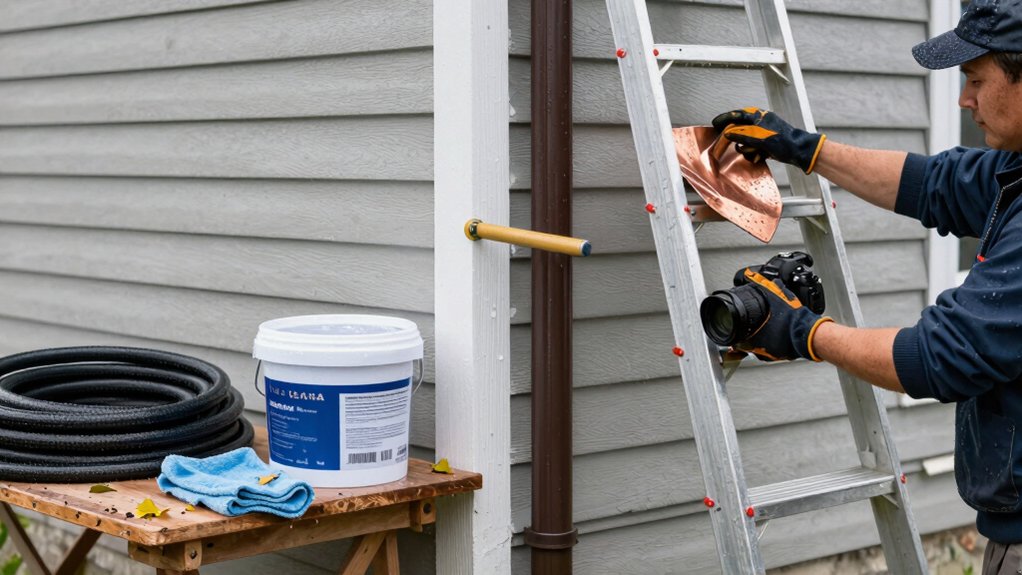
To clean and repair gutters before winter, inspect for clogs, leaks, and ice dam risks, and confirm downspouts direct water away from your foundation. Gather gloves, eye protection, a sturdy ladder, scoop, and hose, then set up a safe, organized workspace. Clean gutters from the downspout outward, flush with water, tighten hangers, and seal small cracks with UV-stable sealant. Patch punctures and test drainage, ensuring a slight downward slope toward outlets. If issues persist, you’ll learn more soon.
Identify Winter Gutter Problems (Clogs, Leaks, Ice Dams) and Set Your Drainage Goals
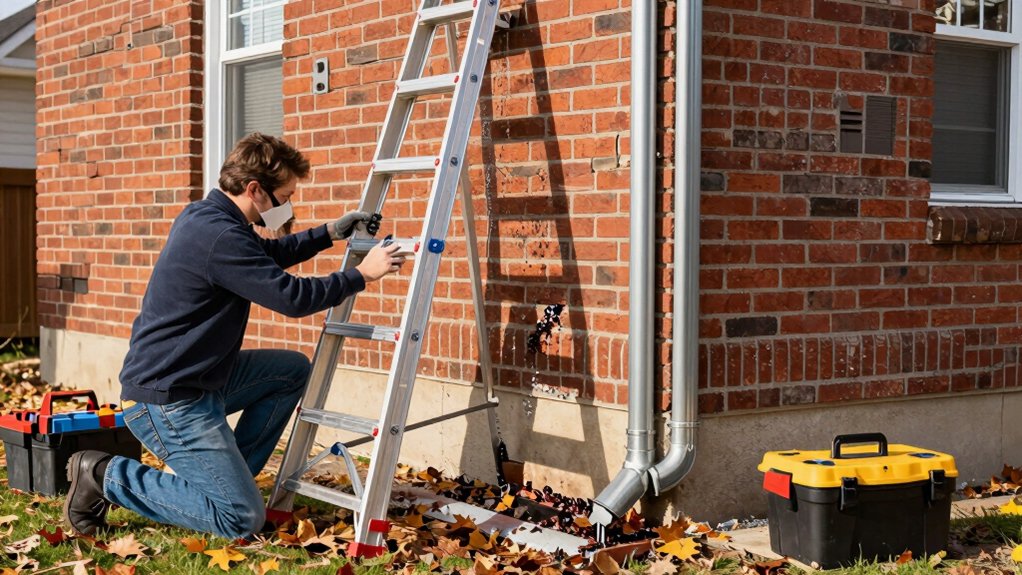
Winter gutter problems don’t fix themselves, so start by identifying clogs, leaks, and ice dams and then set clear drainage goals. You’ll inspect for debris buildup, loose joints, and warped sections, noting every issue with purpose.
Clogs slow flow, leaks waste water, and ice dams threaten interior damage; rank these by urgency to shape your plan. In gutter maintenance terms, confirm that downspouts channel rain away from foundations and that gutters sit level or slope correctly to promote drainage.
Your winter preparations should include targeted fixes and a maintenance schedule you can trust. By defining priorities now, you create a reliable, safe system you’ll feel confident protecting your home with all season.
This mindset reinforces belonging through responsible cleanup and consistent caretaking.
Gear Up: Tools, Safety Gear, and Workspace Prep
Before you pick up a tool, gather the essentials and set up a stable workspace so you can work efficiently and safely. You’ll want solid gloves, eye protection, a durable ladder, and a sturdy bucket to whisk debris away.
Choose rain gutter materials that suit your home and climate, and verify fasteners, hangers, and brackets are sound before you begin. Keep a scoop, a trowel, and a hose or pressure sprayer within reach for quick, decisive work.
Plan for seasonal maintenance by labeling parts and storing tools clean and dry. Clear the area of pets and obstacles, and surface-protective mats help prevent slips.
This focused setup gives you confidence, reduces rework, and reinforces belonging through organized, effective gutter care.
Clean Gutters in Five Practical Steps
With your tools and workspace ready, you’re set to tackle the gutters efficiently. First, remove loose debris by hand or with a small scoop, working from the downspout toward the edges to prevent clogs.
Next, rinse with a garden hose on a moderate spray to flush remaining dirt and recheck flow.
Third, inspect brackets and hangers; tighten loose fasteners and replace missing shields to maintain proper slope.
Fourth, wipe the interior surfaces with a cloth to remove stubborn grime, ensuring no residues trap moisture.
Fifth, perform seasonal inspections after rainfall, test water flow, and note any needed repairs.
This approach reinforces gutter maintenance discipline, reduces ice risks, and fosters belonging within a well-kept home care routine.
Patch Leaks and Restore Drainage Fast
If leaks are evident, patch them quickly to restore drainage and prevent water damage. You’ll seal small cracks with a UV-stable gutter sealant or epoxy, aiming for a watertight joint that stands up to winter rain.
For loose connections, tighten hangers and screws, then re-secure gutter sections to prevent wobble that worsens leaks. Use a patch kit on punctures, and apply the compound evenly to avoid bulges that trap debris.
After patching, test with a careful water spray along the seams to confirm flow paths are clear. Prioritize proper slope, ensuring a slight downward pitch toward downspouts for efficient drainage.
This gutter maintenance mindset protects siding, foundation, and landscape, while your proactive leak repair reinforces a sense of belonging and responsibility.
Prevent Clogs Year-Round and Know When to Call a Pro
Prevent clogs year-round by adopting a simple, proactive routine: inspect and clean gutters at key intervals, and address potential blockages before they cause damage. You’ll reduce surprises by scheduling two DIY inspections per season—spring and fall—and a midseason check after heavy storms.
During DIY inspections, look for warped hangers, loose fasteners, and sagging sections, then secure or replace as needed. Clear debris with a scoop or trowel, flush with water, and verify downward drainage from every gutter outlet.
Install gutter guards if you consistently battle debris, but continue annual cleanouts. If you notice persistent clogging, uneven flow, or leaking joints, call a pro for a precise assessment and professional repair.
This approach reinforces belonging through responsible gutter maintenance and informed decisions.
Frequently Asked Questions
How Often Should I Clean Gutters in Autumn Before Winter?
You should clean gutters weekly in autumn to prevent leaf debris buildup and pest prevention issues, especially after storms; frequent checks keep your system clear, protect your home, and help you feel responsible, proactive, and part of a safe community.
Can DIY Fixes Handle Severe Ice Dam Damage Safely?
Can you safely handle severe ice dam damage yourself? DIY fixes aren’t recommended for major damage; instead, assess quickly, call a pro. You can pursue ice dam prevention and gutter reinforcement with trusted, professional guidance. You belong safeguarding your home.
What’s the Best Way to Detect Hidden Leaks?
You’ll detect hidden leaks by inspecting joints and seals for moisture, runoff patterns, and softened fibers in the gutter material; test with water, watching for damp spots. Track water runoff to confirm concealed gaps and address promptly.
Are Gutter Guards Worth Installing for Long-Term Prevention?
Gutter guard types offer protection, cost benefit analysis favors installation, and you’ll sleep better knowing guards reduce clogs. You’ll choose, you’ll install, you’ll rely on the system—and you’ll share trusted, practical results with your neighbors.
When Is Professional Help Necessary for Major Repairs?
Yes—seek professional help when repairs risk personal injury or roof damage; major leaks, sagging beyond safe limits, or extensive fascia damage require experts. Ask for safety precautions and repair cost estimates upfront, and verify licensing and insurance.