
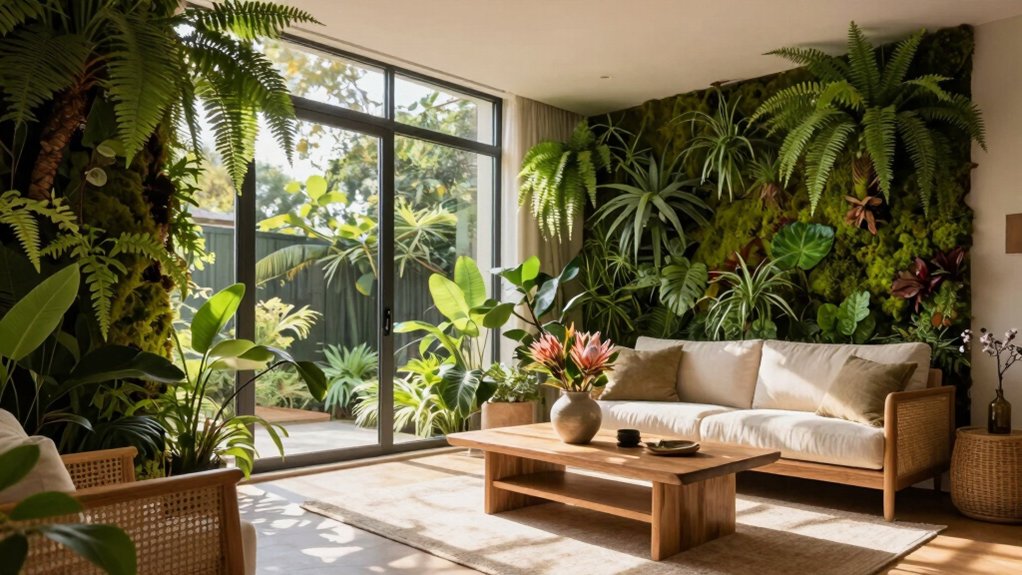
To bring the outdoors inside, start with a core biophilic palette of five natural colors to guide mood and coherence, then select plants by available light, space, and scale, ensuring healthy growth and air purification. Incorporate natural materials—stone, wood, varied textures—and use daylight-maximizing strategies like skylights, windows, and mirrors for depth and even illumination. Create green focal points with modular vertical gardens and pair textures to reduce clutter. If you keep exploring, you’ll uncover practical steps and maintenance tips.
Start With a Core Biophilic Palette: 5 Natural Color Combinations
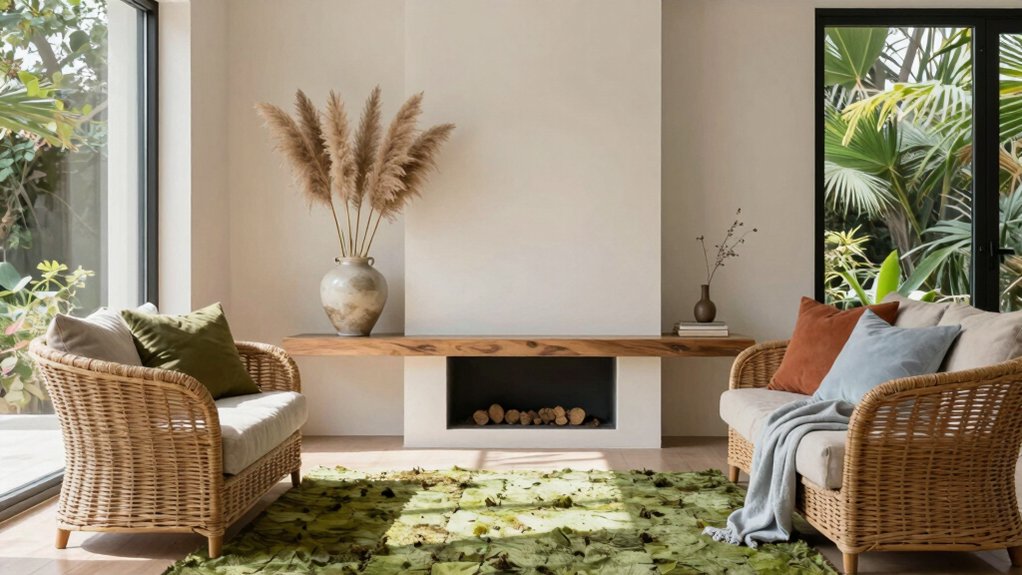
A core biophilic palette anchors design decisions in nature’s cues, guiding how colors influence mood, perception, and comfort. You’ll pair hues that mirror soil, foliage, and sky, creating coherent relationships across spaces.
Color psychology informs you which tones soothe, energize, or ground, while natural lighting shifts perceived color temperature throughout the day. Use warm neutrals to invite belonging, tempered by cooler accents to prevent fatigue during long tasks.
Consider the contrast you’ll expose under daylight versus artificial light, ensuring legibility and depth remain intact. Limit chroma to a deliberate five-swatch core, then introduce subtle variations for texture.
This approach reduces visual noise, preserves continuity, and supports cognitive ease, enabling occupants to feel connected to place without distraction.
Choose Plants by Light, Space, and Scale
To choose plants effectively, assess light, space, and scale first, then align selections to those constraints. You’ll optimize success by matching a plant’s natural light needs to your environment, avoiding overexposure or under-illumination.
Consider plant placement to minimize drafts and maximize microclimates that support growth. In smaller rooms, group compact species with varied textures to create depth without crowding; in larger spaces, select specimens with architectural presence to anchor zones.
Always measure available height, width, and clearance for mature size, then contrast with ceiling lines and furniture layouts. Balance verticals with horizontals to maintain sightlines and accessibility.
Prioritize healthy growth indicators: steady color, new foliage, and uniform growth. This disciplined approach yields confident, belonging-filled interiors framed by natural light.
Incorporate Natural Materials: Stone, Wood, and Textures
Incorporating natural materials like stone and wood, along with varied textures, grounds a biophilic design by connecting interiors to the outdoors. You leverage material honesty to foster tactile engagement, durability, and a sense of place, while guaranteeing performance meets contemporary expectations.
Prioritize sustainable sourcing and eco-friendly finishes to minimize environmental impact and support responsible forestry and quarry practices. This approach yields a timeless palette that ages gracefully and reduces embodied energy.
- Select stone surfaces with low VOC sealants and documented provenance to guarantee durability and reduced emissions.
- Choose wood with certified sustainable sourcing and finishes that resist wear without masking grain or warmth.
- Integrate textiles and textures that reveal natural variation, enhancing depth while maintaining clean, cohesive aesthetics.
Maximize Daylight: Windows, Skylights, and Reflective Surfaces
Maximize Natural Light and leverage reflective surfaces to extend daylight deeper into interiors, reducing reliance on artificial lighting.
You’ll see how strategic window placement, skylights, and interior mirrors or polished finishes illuminate workspaces and living zones more evenly.
This approach improves visual comfort, energy efficiency, and occupant well-being while supporting precise daylight-responsive design decisions.
Maximize Natural Light
Strategically placed windows, skylights, and reflective surfaces reveal abundant daylight, reducing reliance on artificial lighting and improving occupant comfort.
You optimize natural light by aligning glazing with interior tasks, selecting appropriate lighting fixtures, and coordinating with window treatments to modulate glare. This approach preserves color accuracy and enhances perceived room size, while lowering energy use.
- Coordinate daylight goals with window treatments and lighting fixtures to balance brightness and privacy.
- Prioritize glazing choices and placement that maximize usable daylight without creating hot spots or glare.
- Leverage architectural features and reflective surfaces to distribute light evenly across work areas and living zones.
Reflective Surface Benefits
Reflective surfaces amplify daylight by bouncing natural and artificial light deeper into interior spaces, reducing the need for additional luminance while preserving color fidelity. You’ll notice brighter rooms without harsher glare when surfaces are carefully chosen and positioned.
Mirror benefits arise not from decoration alone but from strategic reflection that extends sightlines and creates perceived depth, supporting a calmer, more connected atmosphere. Reflective surfaces should be integrated with daylight planning: place them opposite windows to shuttle light across work zones, seating areas, and passages.
Consider material performance—latency, finish, and cleanliness affect fidelity over time. In controlled quantities, they balance illumination, reduce energy demand, and enhance biophilic cues.
This approach reinforces belonging by making environments feel expansive, coherent, and responsive to your daily rhythms.
Create Green Focal Points: Indoor Vertical Gardens
Indoor vertical gardens transform blank walls into living focal points that energize spaces and improve air quality. You’ll design with purpose, ensuring plant health while reinforcing a sense of belonging to a shared, breathable environment. This approach creates a compact urban jungle that feels intentional rather than inert.
1) Choose modular panels and a reliable irrigation system to sustain consistent moisture and nutrient delivery.
2) Select a balanced mix of foliage—lush greens for visual depth, and species with air-cleaning benefits—to maximize air quality and tactile interest.
3) Monitor light exposure and temperature, documenting adjustments to preserve plant health and overall system performance.
Texture and Material Compatibility: Pairing Finishes With Nature
Texture and material compatibility matters because surfaces set the tone for biophilic spaces and influence both perception and performance. You design with purposeful pairings that respect natural cues and daily use.
Textural harmony emerges when you balance tactile cues—soft fabrics against hard surfaces, and matte versus gloss finishes—so that materials feel purposeful, not decorative. Favor understated grains, warm neutrals, and sustainable fibers to reflect nature’s cadence while supporting durability.
Introduce material contrast with intention: a rugged wood floor beside a smooth ceramic or stone feature, or a linen-clad wall with a concrete-inspired fireplace surround. This pairing guides wayfinding, reduces visual clutter, and strengthens belonging.
When finishes coexist thoughtfully, occupants sense order, comfort, and continuity with the outdoors.
Mental Wellbeing: Biophilic Design Triggers for Calm
Biophilic design leverages natural cues to calm the mind, translating material choices and spatial rhythms into measurable effects on stress, mood, and attention. You experience calm through deliberate triggers that align with human perception, producing predictable reductions in arousal and improvements in focus.
By integrating nature sounds and outdoor views, you create temporal and spatial scaffolds that anchor you in the present, supporting sensory precision and cognitive ease. These triggers work best when embodied in legible patterns, consistent lighting, and natural textures that reinforce a sense of belonging.
- Prioritize subtle nature sounds and frequent outdoor views to stabilize arousal.
- Align materials and lighting with diurnal rhythms to reinforce calm states.
- Curate vistas and soundscapes so they recur without competing stimuli.
Maintenance and Air Quality: Practical Plant Care
Regular watering schedules and consistent checks keep your plants healthy, supporting both growth and indoor air quality. You’ll want to tailor watering to each species and soil type.
Monitoring leaf vitality is an early indicator of root or moisture issues. In tandem, select air-purifying species and maintain their care routines to optimize pollutant removal without neglecting overall plant health.
Regular Plant Watering
Adequate watering is essential for healthy indoor plants, yet over- or under-watering remains the most common care error. Your watering routine directly affects plant hydration, root health, and overall vigor.
Consistency matters more than intensity, so tailor schedules to species, pot size, and indoor conditions. Observe soil moisture at root level, not just the surface, and adjust for seasonal shifts.
Below, practical steps keep you confident in care without overthinking.
1) Check moisture weekly and water only when the top inch feels dry, ensuring even distribution.
2) Use room-temp water and consider a gradual soak to avoid run-off and root rot.
3) Label each plant with its specific cadence to maintain uniform, evidence-based hydration.
Air-Purifying Plant Care
Air-purifying plant care focuses on maximizing both plant health and indoor air quality. You manage species selection, placement, and routine maintenance to sustain filtration benefits without compromising aesthetics.
Begin with air purifying plant selection that suits your space’s light, humidity, and temperature, ensuring leaves aren’t crowded or stressed.
Regularly inspect for pests and dust; wipe foliage and prune as needed to maintain photosynthesis efficiency.
Water according to species needs, avoiding overwatering, which can foster mold and root rot.
Rotate plants periodically to balance light exposure and prevent growth imbalance.
Implement practical indoor gardening tips, such as grouping purifiers away from direct vents to avoid drying out leaves.
Document care schedules to foster belonging, consistency, and confidence in your biophilic design commitment.
Low-Budget Biophilic Upgrades: Quick Wins
Low-budget biophilic upgrades deliver immediate impact without costly overhauls. You can strengthen a sense of belonging by integrating simple, deliberate choices that echo nature and function.
- Use budget friendly decor like potted herbs on a sunny sill, paired with neutral textures to ground the space.
- Add DIY natural accents, such as handcrafted wooden frames or stone clusters, that reflect outdoor materials without heavy investment.
- Optimize light and scent with low-cost options—cultivate small greenery displays and use citrus peels or essential oils to shape a fresh, outdoor-like atmosphere.
These quick wins reinforce your environment as a responsive, familiar place, aligning practical design with personal well-being and sustainable habits.
Frequently Asked Questions
How Does Biophilic Design Influence Indoor Air Quality?
Biophilic design improves air quality by reducing pollutants and boosting ventilation rates through natural ventilation strategies and greenery. You’ll notice better indoor air quality, lower CO2, and a calmer environment that fosters belonging and perceptive, authoritative clarity.
Can I Implement Biophilic Design in Rented Spaces?
You can implement biophilic design in rented spaces with rent friendly modifications and temporary natural elements. You’ll create a sense of belonging, using adaptable, non-permanent features that respect lease terms while enhancing air quality and wellbeing.
What Budget Breaks Down for a Full Biophilic Remodel?
A full biophilic remodel cost varies, but you’ll benefit from a precise cost analysis and disciplined budget planning. You’ll prioritize lighting, materials, and living features, balancing aesthetics with function to make certain a cohesive, belonging-focused, code-compliant upgrade.
Which Natural Scents Trigger Relaxation Without Overpowering?
Researchers note 60% report reduced stress with calming scents; you’ll likely notice quicker relaxation with essential oils in aromatherapy. You should choose lavender or bergamot, maintaining subtlety to avoid overpowering, and tailor blends to your space.
How Long Before Benefits of Biophilic Design Become Noticeable?
Benefits start within days to weeks, depending on consistency of plant placement and natural lighting. You’ll notice calmer rooms as you optimize plant placement and maximize natural lighting for sustained biophilic effects.