
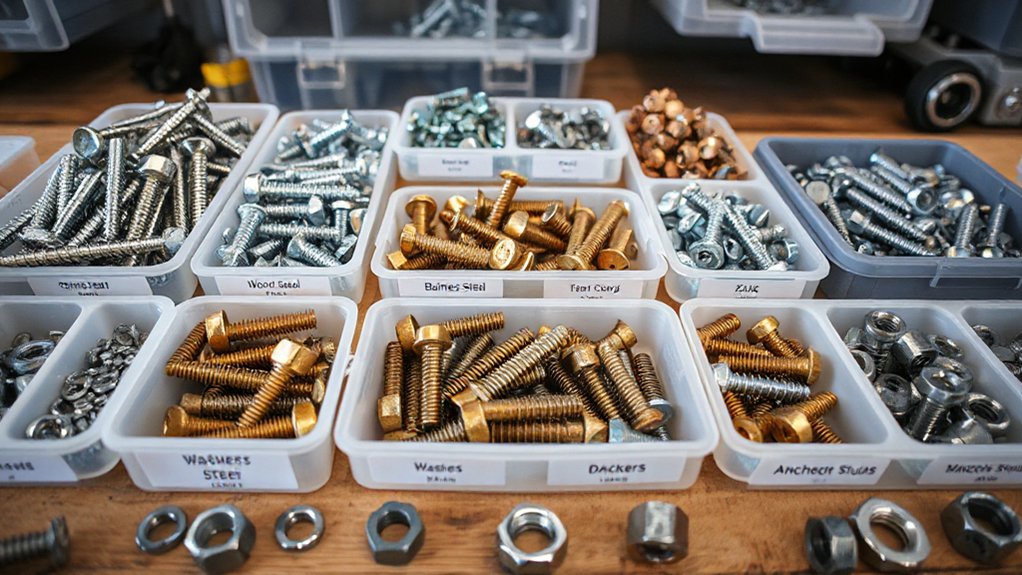
When you compare fasteners for home projects, you weigh screws, nails, bolts, anchors, and specialty fasteners by purpose and substrate. Screws give precise, removable joints with strong withdrawal and shear resistance; nails enable fast, economical sheathing but less removability; bolts provide high clamping and easier disassembly for structural tasks. Anchors suit masonry or hollow walls, while specialty fasteners optimize specific loads. Always check load ratings, installation tips, and material compatibility—then you’ll choose with confidence, and more details await your next step.
Core Fastener Categories: Screws, Nails, Bolts, Anchors, and Specialty
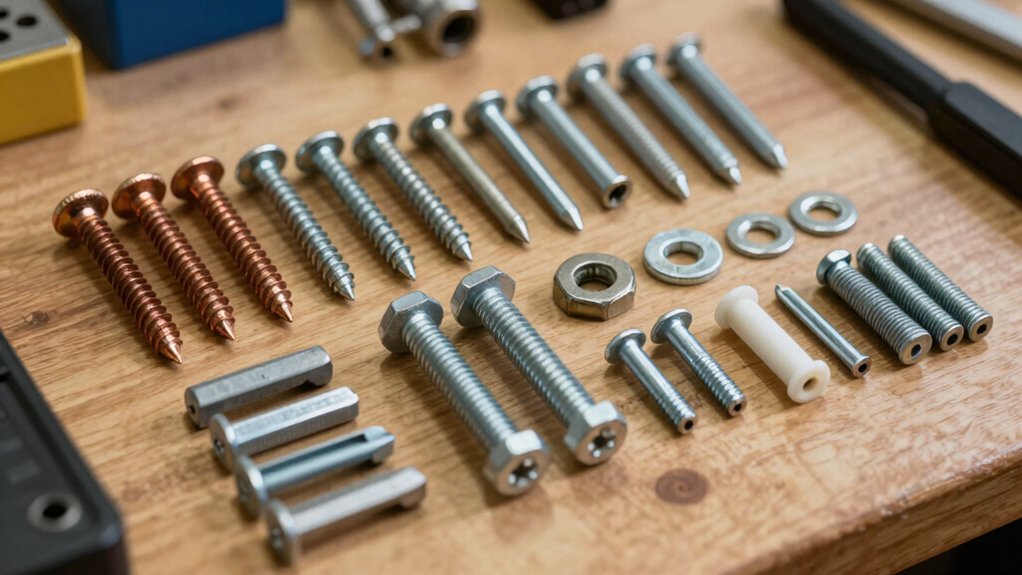
Fasteners fall into five core categories: screws, nails, bolts, anchors, and specialty fasteners.
You assess each category by load path, withdrawal resistance, and installation effort, then choose with authority. Screws deliver precision fastening and removal capability, ideal for joints that endure vibration; nails offer speed and shear resistance for framing, while bolts provide superior clamping and disassembly when high strength matters.
Anchors transfer loads into substrates, essential for masonry or concrete applications, and specialty fasteners address unique demands like weather sealing or electrical compatibility.
Consider fastener corrosion and long-term exposure—coatings, alloys, and galvanization determine longevity. Reusability matters: reusable fasteners save time and material cost when design changes occur.
Your decisive selection balances performance, durability, and lifecycle costs, yielding robust assemblies and faster project completion.
Choose Fasteners by Material: Wood, Masonry, Metal, and Drywall
You’ll weigh wood fastener types, masonry mounting options, and the roles of drywall and metal connectors to match material needs with load and substrate.
Consider how wood fasteners differ in grip and corrosion resistance, how masonry anchors distribute force, and how drywall and metal connectors minimize wall damage while securing fixtures.
This material-focused lens sets the framework for selecting the right fastener family for each project scenario.
Wood Fastener Types
Choosing the right wood fasteners starts with the material you’ll be joining and the load it must bear. You select fastener types by wood species, thickness, and installation environment, then match diameter, length, and drive to maximize pull resistance.
Wood screws offer high shear performance and easy removal, while decking screws resist corrosion for outdoor use. Confirm ring-shank options for fibrous or decaying substrates, and consider confirmat or furniture screws for precision joints.
Wood fastener coatings matter: zinc, ceramic, or polycoated finishes reduce corrosion under moisture exposure. Environmental factors—humidity, temperature swings, and decay risk—drive coating choice and alloy selection.
Use pilot holes to prevent splitting and ensure proper seating. Keep fasteners aligned with grain direction to minimize stress concentration and retain structural integrity.
Masonry Mounting Options
When mounting to masonry, select fasteners that match the substrate and load requirements, then pair them with anchors designed for brick or concrete. You evaluate base material, shear and withdrawal needs, and vibration exposure to choose durable components.
For most high-load fixtures, use masonry drill bits to begin clean holes and prevent cracking; then secure with anchors engineered for masonry—mortar anchors for light to moderate loads, sleeve or wedge anchors for heavier applications.
Compatibility matters: choose stainless or galvanized steel to resist corrosion, and verify embedment depth and edge distances to avoid stone or brick failure. Avoid over-penetration that weakens the substrate.
Test fit, tighten to specified torque, and confirm levelness before proceeding. This disciplined sequence yields secure, long-lasting mounting performance.
Drywall and Metal Connectors
Drywall and metal connectors require selecting fasteners by the substrate to guarantee secure, long-lasting joints. You assess drywall installation and metal framing demands, then pick fasteners that align with material properties and load paths.
Drywall screws deliver rapid shear performance and anti-wuck behavior in gypsum layers, while thread design minimizes stripping risk in paper-faced boards.
For metal framing, use self-drilling or self-tapping screws with corrosion resistance to handle repeated assembly cycles and structural loads. Avoid overdriving, which weakens sheets, and choose corrosion-resistant coatings for damp environments.
Pair drywall and metal connectors with washers or clips only when necessary to distribute load without embedding. Precision fastening reduces panel flex and joint crack potential, delivering predictable performance under thermal and acoustic stresses.
Your choice prioritizes strength, reliability, and efficient installation.
Compare the Pros and Cons: Screws, Nails, and Bolts
Screws, nails, and bolts each have distinct strengths and weaknesses, so selecting the right fastener depends on load, material, and environment. You’ll choose screws for high withdrawal and shear resistance when you need disassembly; bolts for multiple assemblies and structural integrity; nails for quick, economical joining in noncritical, sheathing-like tasks.
Consider driving method, grip length, and material compatibility to avoid splitting or loosening over time. Evaluate load duration, vibration, and thermal changes to prevent failure paths.
Fastener durability matters: screws often offer superior torque retention, bolts excel in clamped joints, and nails provide rapid, forgiving installation. Corrosion resistance should guide material choice in exposed or moist settings.
Balance ease, strength, and lifecycle costs to achieve lasting performance with minimal maintenance. Your decision should maximize safety and efficiency.
Anchors and Specialty Fasteners: When to Use Them
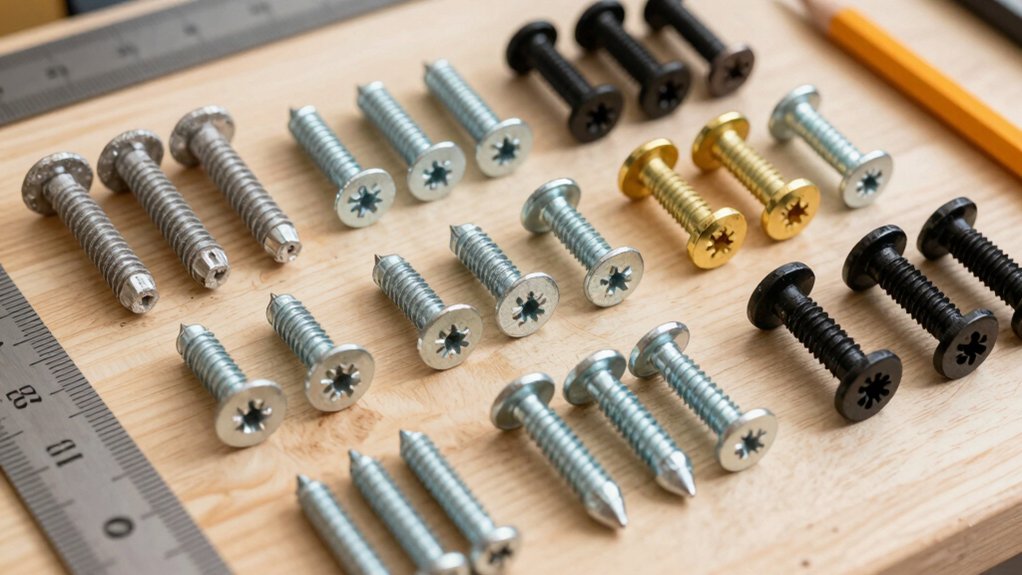
Anchors and specialty fasteners address specific substrates, loads, and installation conditions that standard screws or nails can’t reliably handle. You select anchor types based on substrate integrity, pull-out resistance, and vibration considerations, then match fastener geometry to the fixture.
You’ll use corrosion resistance where moisture or chemicals are present, and rely on expansion or lag-type mechanisms for heavy loads. Choose sleeve anchors for concrete, toggle bolts for hollow walls, and threaded studs for mounting brackets with precision alignment.
Specialty fasteners, including epoxy anchors and anti-rotation screws, optimize shear and pull-out performance in challenging conditions. In practice, you assess substrate, load, and installation constraints, then deploy the most effective anchor type and corresponding fastener combination to ensure permanent, secure, code-compliant results.
Read Load Ratings and Master Safe Installation Tips
To read load ratings accurately, know that each fastener and anchor lists its capacity under defined conditions such as substrate, installation depth, and withdrawal or shear direction. You’ll compare ratings across materials, coatings, and installation methods, then select components that meet or exceed your project’s load demands.
Focus on fastener durability, ensuring the product maintains strength over time, and check corrosion resistance for exposure environments. Documented factors include temperature, moisture, and vibration, which influence long-term performance.
Master safe installation by following torque specs, using the correct driver and bit, and verifying alignment before loading. Use appropriate anchors for hollow vs. solid substrates, avoid overdriving, and pause to inspect for signs of wear after each test.
This disciplined approach yields reliable, code-compliant joints.
Avoid Common Pitfalls and Quick Fixes for Strong Joints
To prevent weak joints, you should avoid over-torquing fasteners, which can strip threads or crush wood.
Next, verify material compatibility to prevent galvanic or bonding failures that undermine strength.
Finally, size the fastener correctly for each substrate and load to make certain of a secure, durable connection.
Avoid Over-Torquing Joints
Over-tightening joints is a common mistake that weakens fasteners and damages materials, so you should tighten to specification and stop as soon as you meet resistance.
You’ll maximize joint integrity by selecting appropriate fastener type and applying torque with a calibrated tool. Reference torque specs from manufacturers, avoid guesswork, and verify fit before assembly.
Use a thread gauge to confirm proper thread engagement and to prevent cross-threading, which can falsely indicate resistance and mask true overload.
Monitor for signs of binding, stripping, or crushing softer substrates, and back off to the specified torque immediately.
Consistency matters: uniform torque across all fasteners ensures even load distribution, boosting corrosion resistance and overall strength.
Precision, not power alone, yields durable, repeatable results.
Prevent Material Compatibility Pitfalls
However you approach it, material compatibility matters most when choosing fasteners and substrates; mismatches can undermine strength and invite corrosion or failure. You must assess substrate chemistry, coatings, and environment before selecting a fastener type.
Consider galvanic potential, temperature, and moisture exposure to prevent accelerated degradation. Pair dissimilar metals with appropriate barriers or select compatible alloys to maintain fastener longevity.
Choose coatings and finishes that resist wear without compromising attachment integrity, and verify load paths align with substrate strength. Avoid underestimating surface preparation, as oils or contaminants can compromise seating and clamping.
Document material choices for future maintenance, ensuring replacements match performance expectations. Prioritize corrosion resistance in coastal or humid settings, and tailor hardware to the task, not just the appearance.
Ensure Proper Fastener Sizing
Choosing the right fastener size is the foundation of a strong joint. You must assess load, material thickness, and withdrawal risk before selecting fastener materials. Size errors undermine strength, so verify diameter, length, and thread type align with the substrate and load path. Don’t guess; calculate pullout resistance and edge distance to prevent splitting.
Use appropriate fastening tools to drive to the correct depth without undertorquing or overdriving, which can loosen joints over time. Consider counterbore or countersink requirements for flush surfaces and ensure compatibility with coatings or corrosion resistance needs.
For shear, shear strength must exceed expected forces; for withdrawal, ensure embedding depth meets minimums. Document choices, test on scrap when possible, and standardize procedures to avoid pitfalls and ensure repeatable performance.
A Simple Decision Framework: Pick the Right Fastener With Confidence
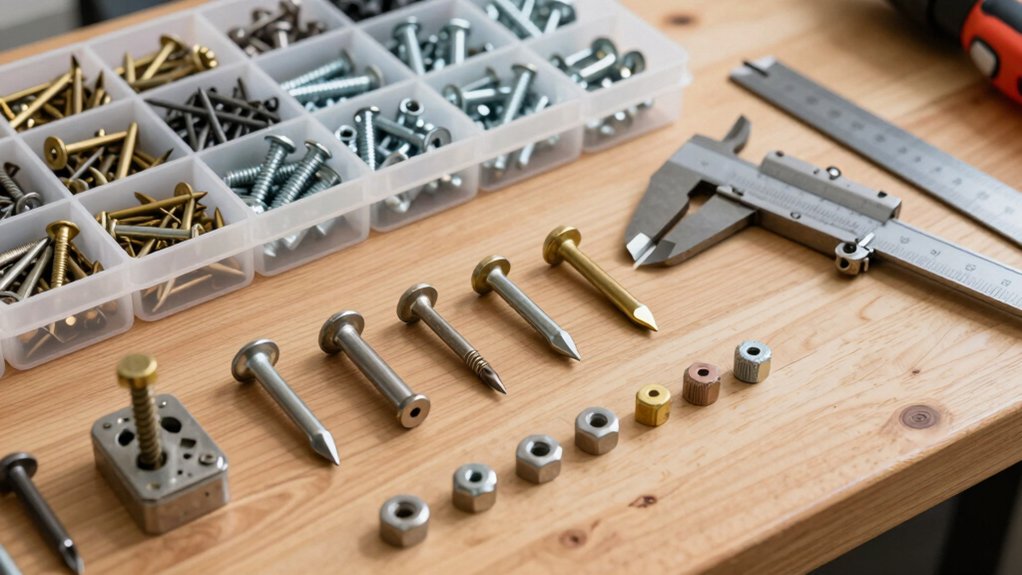
A simple decision framework helps you pick the right fastener with confidence by aligning material, load, and environment first, then narrowing choices to practical options. You’ll frame the problem—what is being joined, the expected forces, and exposure—before scanning candidates.
Prioritize compatibility: metal or composite substrates, shear versus tensile demand, and corrosion risks drive material selection. Quantify load tolerances, factor safety margins, and installation constraints to eliminate irrelevant options quickly.
Leverage established guidelines and your experience to converge on a small set of viable fasteners, then test fit and verify performance under anticipated conditions. This approach keeps you decisive, minimizes future failures, and reinforces control.
Recognize fastener history and innovative fastening technologies as context, not crutches, to sharpen judgment.
Frequently Asked Questions
How Do Different Fasteners Affect Project Longevity and Warranty?
Different fasteners affect longevity via corrosion resistance and material compatibility; when mismatched, failures undermine warranties. You guarantee durability by selecting corrosion-resistant fasteners suited to substrate, avoiding galvanic reactions, and documenting compatibility to protect warranty terms.
Are There Hidden Costs When Switching Between Fastener Types?
Yes, there are hidden costs when switching types. You should perform cost estimation and verify material compatibility to avoid surprises, since incompatibilities and rework drive expenses, especially if coatings, strengths, or thread types misalign with your project’s needs.
Can I Reuse Old Fasteners Without Weakening Joints?
You should not reuse old fasteners, as they risk reduced joint strength. Consider fastener compatibility, and note potential fastener corrosion over time; if corrosion is present, replace. Reusing compromised hardware undermines integrity and safety.
Which Fasteners Are Best for Outdoor Vs Indoor Use?
Quickly choose weather-resistant outdoor fasteners and corrosion-protected indoor options; you’ll maximize durability, reduce maintenance, and dominate projects with certainty. You weigh weather resistance against indoor needs, selecting corrosion protection where moisture, salts, or humidity threaten your joints.
Do Fasteners Require Specific Tools or Adapters to Install Correctly?
Yes, fasteners often require specific installation tools, or adapters, for proper function. Make certain fastener compatibility with your substrate and hardware, and use the correct installation tools to avoid stripping, misalignment, or failure.
Conclusion
You stand at the workbench, fingers dusted with sawdust as the decision unfolds before you like a diagram of possibilities. Each fastener whispers its purpose: screws bite, nails endure, bolts secure, anchors ground, specialty tools tailor fits. Read the material, weigh load and access, then pick with confidence. When the joint finally settles, you’ll hear the quiet click of a task well done—precise, practical, and built to last.