
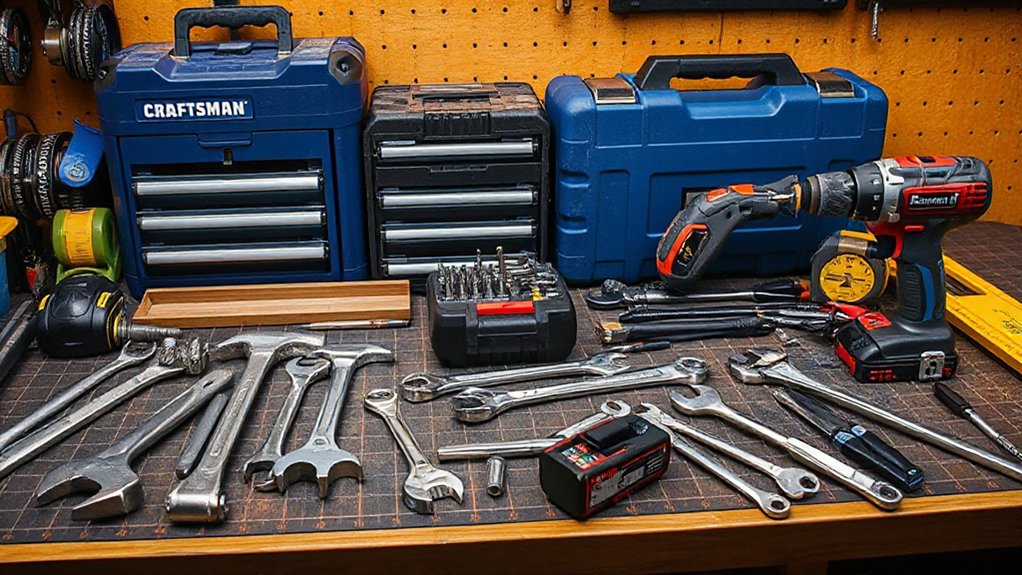
You’ll compare Craftsman tool sets by matching your home-improvement tasks to build quality, value, and organization. Start with core components—sockets, wrenches, and ratchets for frequent jobs—then evaluate screwdrivers and drill bits for quick fixes. Balance power tools for speed with hand tools for precision, and consider professional-grade versus homeowner sets based on usage and warranty. Prioritize logical set layouts and reliable service. If you keep exploring, you’ll uncover concrete criteria to choose confidently.
Key Considerations When Choosing Craftsman Tool Sets for Home Use
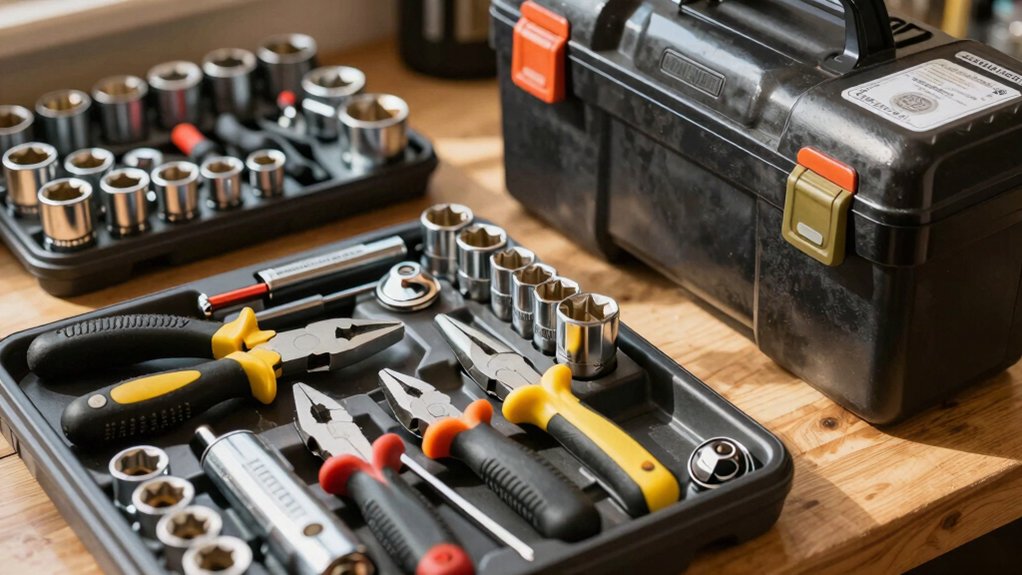
When choosing Craftsman tool sets for home use, start by evaluating the types of projects you tackle most often and the environments where you’ll work; this helps determine the right mix of wrenches, sockets, screwdrivers, and specialty bits.
You’ll want an analytical read on Brand reputation, focusing on reliability, warranty consistency, and service availability.
Compare Price comparison across sets that cover your core needs without bloating the toolkit.
Prioritize models that balance build quality with practical coverage, avoiding overkill.
Assess compatibility with your existing tools to maximize future value.
Consider future projects and whether the set scales with expansion.
Finally, confirm support options and return policies to ensure you retain leverage in purchases and upgrades.
Core Components: Sockets, Wrenches, And Ratchets You’ll Use Most
You’ll want to compare essential socket sizes, focusing on common metric and SAE ranges for broad compatibility.
Consider wrench grip comfort to gauge long-term usability, and assess ratchet mechanism durability for repeated use.
This analysis sets up how these core components influence overall toolkit effectiveness.
Essential Socket Sizes
Are you juggling a mix of metric and SAE fasteners? The essential socket sizes you’ll rely on are defined by practicality, not guesswork. Start with a core set: 3/8-inch drive for general automotive and household work, plus 1/4- and 1/2-inch drives for smaller fasteners and tougher leverage, respectively.
Include standard hex and deep sockets to cover recessed fasteners and stubborn bolts. Prioritize a balanced range in both metric and SAE, typically 4–14 mm and 5/16–9/16 inch, expanding as projects demand.
Guarantee quick access to both shallow and deep sockets, so you don’t chase fittings. Precision measurement matters: verify sizes with a calibrated gauge, and organize by drive size and measurement system.
Ergonomic design–conscious grips and clear labeling speed tool changes, enhancing power and control.
Wrench Grip Comfort
Grip comfort matters because it directly affects control, fatigue, and torque accuracy during use. When evaluating wrenches, focus on how ergonomic handle designs align with your grip, whether you’re fastening tight bolts or loosening stubborn nuts. A properly contoured grip reduces slip risk and improves transfer of force, enabling sustained power without sacrificing precision.
Pay attention to material feel and durability, as grip material selection influences vibration absorption and overall stability during extended sessions. Consider texture, radius, and diameter to ensure your fingers maintain consistent contact under load.
In objective terms, tools with balanced weight and well-placed knurls deliver measurable gains in torque consistency and workflow efficiency. Prioritize ergonomic considerations that support decisive, high-impact performance across frequent fastener tasks.
Ratchet Mechanism Durability
Durability in ratchet mechanisms, sockets, and wrenches hinges on quality core components and how they interact under load. You assess torque tolerance, gear engagement, and pawl wear to predict long-term performance.
The ratchet mechanism must resist skipping and backdrag under high duty cycles, while ensuring smooth engagement across cycles. Durability testing should simulate real-world stress: repeated fastener cycles, corrosion exposure, and grit intrusion.
Materials matter: hardened steel with precise tolerances maintains bite without excessive play. Coatings reduce wear and seizing, preserving reliability. Wrench and socket interfaces must preserve alignment to avoid slippage that strains the mechanism.
Screwdrivers And Drill Bits: Essentials For Quick Fixes
Screwdrivers and drill bits are the foundation of quick, precise repairs, serving as the primary implements for driving screws and creating exact holes. You’ll evaluate configurations by grip, tip design, and compatibility with fasteners, ensuring efficient assembly and disassembly.
In this context, screwdriver varieties determine engagement quality, minimizing cam-out and stripping under load. Drill bit sizes dictate hole geometry, affecting insert alignment and material removal.
A balanced kit pairs magnetic bits, compact profiles, and varied shaft lengths with standardized bit metrics for predictability. Prioritize corrosion resistance, bit durability, and chuck compatibility to sustain performance across projects.
You’ll benefit from clear labeling and modular expandability, enabling rapid scene adaptation. In short, precise choice of screwdriver types and drill bit sizes accelerates repairs without sacrificing control or durability.
When To Rely On Power Tools Vs Hand Tools
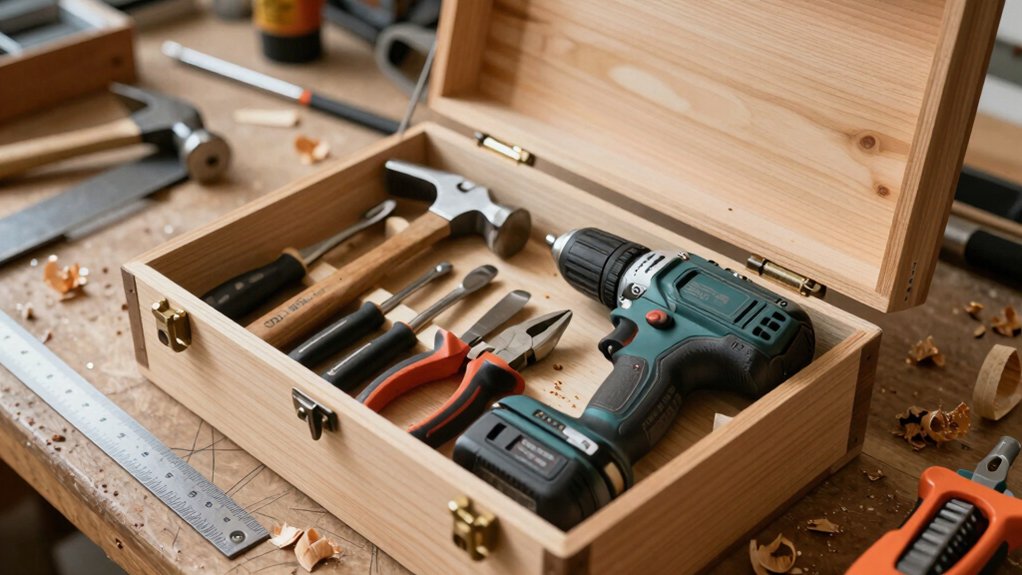
Power tools speed up tasks that require high torque, frequent drilling, or repeated cuts, but they aren’t always the best choice for precision or control. You should rely on power tools when speed, consistency, and repeatability matter, such as large-hole drilling or framing, where fatigue would degrade performance.
For fine, delicate work, hand tools offer tactile feedback and nuanced control that reduce error risk. Consider ergonomic handle design: a comfortable grip improves accuracy and reduces strain over long sessions. When accuracy is essential, switch to hand tools for adjustments, smoothing edges, or fine-tuning joints.
For storage efficiency, prioritize compact storage solutions that keep your setups portable without sacrificing access. Balance your toolkit to blend power when needed with hand tools for precision, ensuring dependable results.
Professional-Grade Vs Homeowner Kits: Where To Invest
Professional-grade kits typically justify higher upfront costs with better steel, tighter tolerances, and longer service life, while homeowner sets prioritize value and versatility.
You should evaluate long-term payback: higher initial price often yields reduced maintenance, fewer replacements, and faster workflow.
In power-demanding tasks, professional-grade components maintain accuracy under load, supporting repeatable results.
Homeowner kits excel in breadth, offering adaptable tools for diverse tasks at a lower entry price, but may suffer from wear-sensitive joints and cheaper metals over time.
Brand reputation matters: trusted brands typically align with tighter tolerances and more stringent QA, delivering consistency across sets.
Price comparison matters too, yet you must weigh total ownership costs, including potential upgrades.
Invest where you perform the most frequent, high-impact tasks and expect durability, not just immediacy of cost.
Organizing And Storing Your Craftsman Toolkit
Organizing and storing your Craftsman toolkit starts with a clear system that matches how you work; a well-structured setup saves time and protects tools. You should map tool categories to workflows, minimizing search steps and reducing misplacement.
Use modular storage with labeled bins and shallow racks to keep frequently used items within reach. Consistency matters: mirror your label systems across drawers, trays, and cases so every tool has a fixed home.
Prioritize vertical storage to maximize workspace and ease of access. Implement dedicated spaces for sockets, bits, and measuring tools, and consider a portable organizer for on-site tasks.
Regular audits prevent clutter buildup, ensuring you maintain peak readiness. Storage solutions should be scalable; plan for growth as your toolkit expands.
Durability And Warranty: What You Should Expect
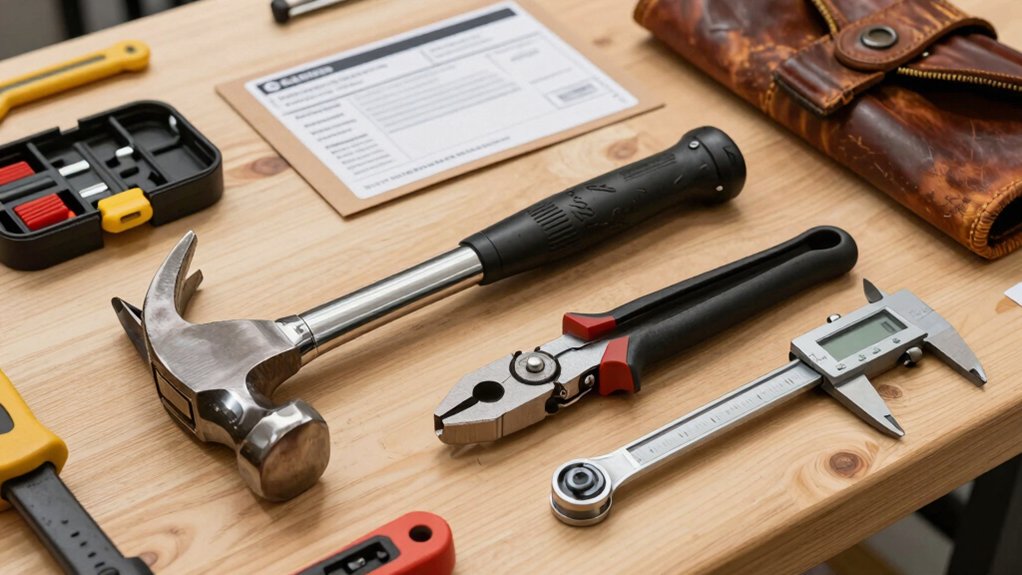
You should expect solid durability from Craftsman tool sets, with a focus on build quality that holds up under regular use. Warranty coverage depth matters, so you’ll want clear terms on what’s protected and for how long.
This section starts by comparing how the materials and manufacturing standards translate into real-world reliability.
Warranty Coverage Depth
Warranty coverage depth matters because a tool set’s durability hinges on both materials and policy terms. You assess tool set warranties by comparing claim processes, service networks, and exclusions, not just sticker price. Coverage depth reveals how thoroughly repairs or replacements are supported after failure, impact, or misuse.
You’ll want clear duration, legitimate transferability, and defined coverage for common components like blades, ratchets, and casings. Examine return-to-service timelines and whether wear parts are included, since those factors affect total ownership cost.
A strong policy should specify conditions for accidental damage, workmanship, and coverage limits per incident. Balance coverage depth against upfront cost to determine true value, ensuring the warranty reinforces reliability during demanding projects and avoids hidden out-of-pocket expenses.
Build Quality Assurance
Durability and build quality determine whether a tool set holds up under real-world use, not just how it’s priced or packaged. You’ll assess constructs like materials, finishes, and tolerances to gauge capability under load. Look beyond branding to confirm consistent performance, smoother operation, and fewer failures over time.
Craftsmanship matters: reinforced housings, robust switchgear, and precise fit between bits and drivers signal reliable uptime. Craftsmans branding and quality control influence expectations, but real-world tests reveal true resilience.
In terms of tool aesthetics, a clean, logically organized set reduces user fatigue and speeds worksites without compromising strength. Expect clear documentation on warranty scope, straightforward parts availability, and responsive service.
With these criteria, your selection prioritizes durability, repeatability, and ongoing support.
How To Compare Craftsman Sets: A Practical Decision Framework
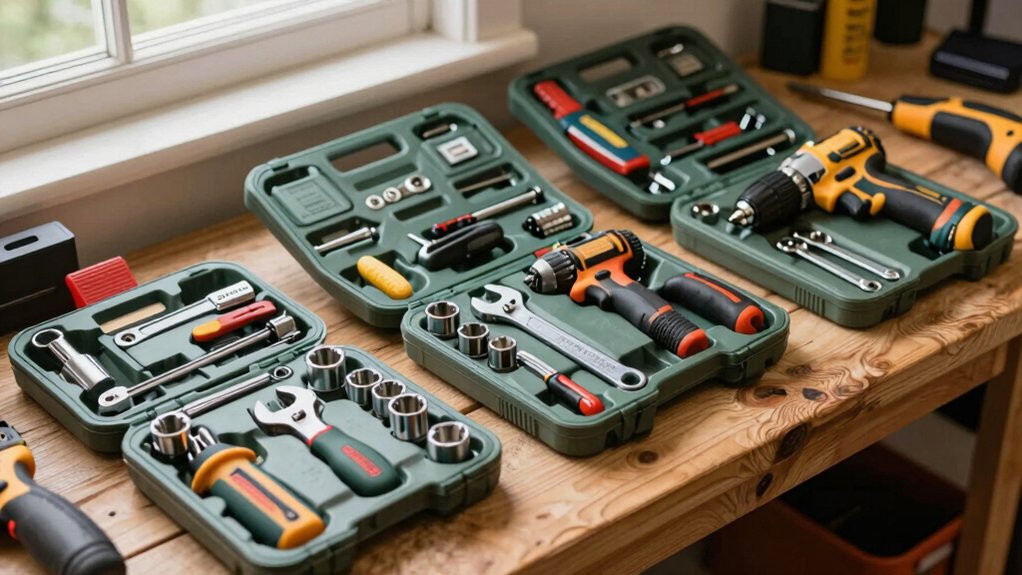
To compare Craftsman tool sets effectively, start with a clear framework: define your tasks, budget, and preferred tool types, then map each set’s core components to those requirements.
You’ll assess material compatibility, noting which metals, fasteners, and finishes each kit handles without compromise.
Next, weigh brand reputation by evaluating warranty terms, service accessibility, and historical reliability in real-world projects.
Compare tool counts, component quality, and bit sets against your scope—do you need heavy hitters or versatile, compact options?
Examine design ergonomics, swapability, and storage solutions to ensure swift, continuous work.
Finally, synthesize findings into a decision matrix: score alignment with tasks, price-per-use, and long-term maintenance.
Your choice should maximize uptime, reduce waste, and deliver measurable value.
Frequently Asked Questions
Do Craftsman Sets Include Lifetime Warranty Coverage Specifics?
Yes, Craftsman sets include lifetime warranty coverage, but you’ll face warranty limitations and coverage exclusions. You should review terms carefully, as some components aren’t covered, and exclusions apply to normal wear, misuse, and non-authorized repairs.
Are Metric and SAE Tools Mixed in Standard Sets?
Some say mixing metric and SAE in standard sets mirrors a single forge—power split. You’ll want measurement compatibility checked, because tool material differences can affect fit and durability; choose cohesive sets for synchronized, decisive, reliable performance.
Which Sets Are Best for Automotive Projects at Home?
You’ll want an automotive specialist set with deep sockets and robust ratchets; it’s ideal for engine repair. Choose metric, SAE, and impact-friendly tools, and guarantee durability and organized storage for precise, powerful, professional results.
How Heavy Are Typical Complete Craftsman Tool Sets?
Typical complete Craftsman tool sets weigh about 20–60 pounds, depending on contents and case. Tool weight varies by bit set vs. full socket/cratchet assortments. Storage options matter; consider compact, stackable cases for easy transport and organization.
Do Any Kits Include Organized Carrying Cases?
Like threads weaving order from chaos, you’ll find some kits include organized carrying cases. Carrying case organization matters; tool storage solutions streamline access, reduce drift, and boost efficiency for ambitious projects. You get efficiency, organization, power.
Conclusion
In choosing a Craftsman set, weigh core components, like sockets, wrenches, and bits, against your typical projects. Assess power vs. hand tools, and decide if a homeowner or professional kit fits your needs. Prioritize organization, durability, and warranty, then compare across models with a practical decision framework. You’ll save time and avoid buying excess. Don’t put all your eggs in one basket—balance versatility with quality, and you’ll have a toolkit that stands the test of time.