
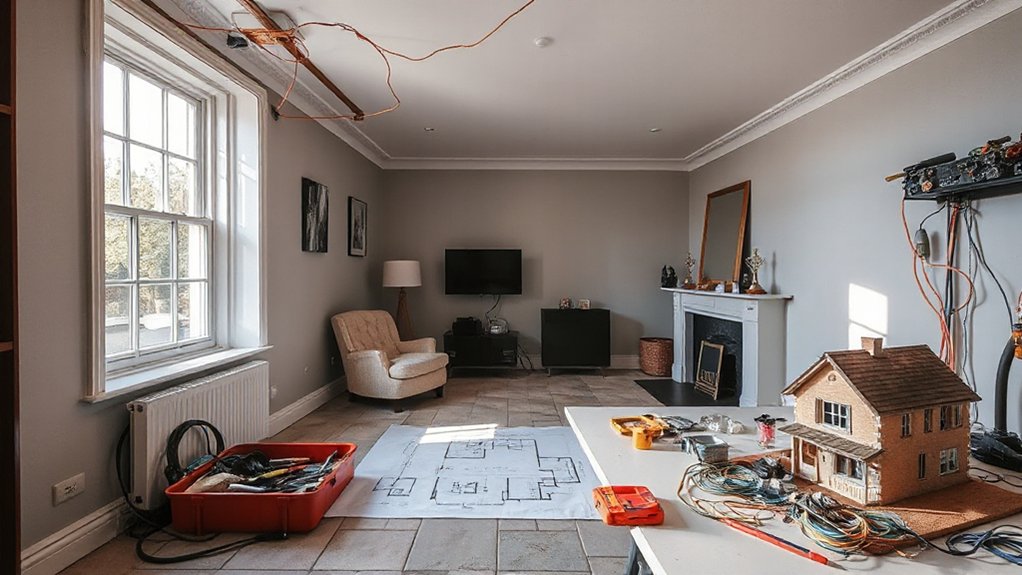
Rewiring a UK home isn’t just about swapping cables; it’s a structured project that factors in property size, layout, age, and regulatory requirements. You’ll balance materials, labour, permits, and inspections, with costs that scale from smaller semis to larger, intricate homes. As you map a plan, consider access, outdated wiring, and potential upgrades that affect price and timelines, and keep a close eye on quotes and compliance steps so you’re prepared when you commit to a scope.
Why Rewiring Your UK Home: Scope, Regulations, and Costs

Rewiring a UK home is a structural upgrade that directly affects safety, reliability, and compliance. You assess scope by surveying existing circuits, fuse boards, and earthing, then determine required upgrades to meet current wiring regulations and BS 7671 standards.
You’ll encounter historical wiring patterns that may complicate routing, necessitating careful planning to minimize wall openings and preserve structure. Regulations enforce dedicated circuits for high-demand appliances, RCD protection, and proper residual current devices, which influence cost and schedule.
Aesthetic considerations matter in concealment strategies, as you balance accessible diagnostics with minimal wall disruption. You’ll document materials, labeling, and test results to demonstrate compliant installation, reduce future maintenance, and support insurance and resale.
The objective is a safe, reliable, and legally compliant electrical system.
How Size, Layout, and Wiring Age Drive the Price
The price to rewire scales with your home’s size and room layout, as more square footage and complex routing increase labor and material needs.
Older wiring generally costs more to upgrade due to asbestos concerns, outdated circuits, and accessibility, which raise inspection and testing requirements.
Understanding how space, flow, and wiring age interact helps forecast variability in quotes and plan for contingencies.
Size and Layout Impact
How do size, layout, and wiring age drive price when rewiring a UK home? You assess total floor area, room count, and corridor complexity to determine material quantities, labor time, and access challenges.
Larger homes raise conduit runs, switch and socket placement, and temporary disconnections, increasing both parts and labor costs.
Complex layouts with thick walls, multiple storeys, or irregular geometries demand extended routing, more junction boxes, and additional containment systems, elevating labour rates and risk management.
Wiring age affects permit requirements, inspection steps, and contingency planning for vintage wiring and outdated circuits. Expect higher replacement rates and compatibility checks for existing mains, fused connections, and earth bonding.
These factors influence cost more than cosmetic finishes, and they tie to electrical safety and regulatory compliance.
Wiring Age Variability
Size, layout, and wiring age together set the baseline cost by defining what must be replaced, upgraded, or reconfigured. Wiring age variability affects materials, labor, and risk assessments, so you’ll quantify a project’s scope from existing installations.
Older homes often exhibit outdated wiring color schemes and degraded cable insulation, increasing diagnostic time and replacement needs. Age-related issues drive decisions on panel upgrades, breaker replacements, and conduit re-routing to meet current code, which adds both material and labor costs.
Layout complexity, such as multi-story routes, dense rooms, or hidden cavities, amplifies coil lengths, junctions, and accessibility challenges. You’ll prioritize safety-first approaches: test for insulation resistance, identify obsolete insulation types, and plan phased rewiring to minimize disruption and ensure future reliability.
What a Rewire Covers: Core Components and Services
You’ll review the core components and services included in a rewire, starting with the scope of materials, labour, and associated tasks.
Expect a precise breakdown of components, from cables and devices to installation and commissioning, with clear delineation of labour and material responsibilities.
We’ll also cover testing, certification, and how these elements influence overall cost and compliance.
Core Components Included
A rewire typically includes all components essential to a functioning, up-to-date electrical system: new consumer unit (fuse box), securely wired circuits, new or upgraded wiring throughout, new outlets and switches, earth and bonding upgrades, and thorough testing.
You’ll work through a defined scope that prioritises reliability, fault detection, and compliance. Core components cover the distribution board, circuit upgrades, and protective devices, plus updated earthing arrangements to meet modern standards.
You’ll also standardise cable routes, fix routing to avoid stress points, and guarantee accessible locations for maintenance.
Electrical safety is central, with tested continuity, insulation resistance, and polarity checks recorded. Renovation permits may be required for compliance, inspection readiness, and to satisfy local regulations.
The result is a logically structured, code-compliant system ready for future loads and devices.
Labor And Materials Scope
Labor and materials scope for a rewire encompasses the specific electrical trades work and components needed to deliver a compliant, up-to-date system. You identify all required trades, including diagram reviews, conduit installation, terminations, and panel upgrades, to guarantee coordination with defensive design and local regulations.
The scope covers wiring materials, consumer units, protective devices, outlets, switches, and fixed appliances, selecting sizes, gauge ratings, and compatibility for load calculations. You’ll specify containment methods, route planning, and thermal management, plus temporary power provisions during replacement.
Documentation includes material lists, approvals, and safe-access procedures. Focus remains on electrical safety, cable routing discipline, compromise-free connections, and durable finishes.
Testing And Certification Coverage
How is testing and certification coverage guaranteed for a rewire, and what core components and services does it include? You’ll verify installations against electrical safety and certification standards, using a structured testing regime.
Start with insulation resistance, continuity checks, and earth fault loop impedance to confirm circuit integrity. Then perform polarity verification, RCD/RCBO functionality, and leakage current testing to ensure protective devices respond correctly.
Inspect wiring routes, bonding, and jacketing for compliance with routing and containment requirements. Documentation accompanies field tests: as-built diagrams, circuit schedules, and test certificates aligned to certification standards.
Final commissioning confirms correct operation of switches, outlets, and lighting circuits under normal and fault conditions. The package typically includes a fixed scope of testing, a formal certificate, and recommendations for remediation where deviations appear, guaranteeing electrical safety throughout the distribution system.
Compliance Essentials: Part P, NICEIC, and Approvals
Compliance with Part P, NICEIC standards, and required approvals is crucial when rewiring a UK home. You’ll verify electrical installation work with local building control and confirm competency documentation is complete before commissioning.
Part P covers combining safety, notification, and records, so you’ll plan a compliant scope, identify designated competent persons, and submit necessary notifications early.
NICEIC involvement signals ongoing regulatory compliance and quality assurance, including contractor accreditation and scope of works alignment with approved technical standards.
You’ll document test results, commissioning methods, and certificates, preserving traceability for future inspections. Expect inspections at milestones and a final sign‑off to satisfy legal requirements.
Electrical safety is the core objective, reducing hazards and safeguarding occupants, while regulatory compliance supports long‑term asset integrity and market confidence.
Smart Wiring and Energy Upgrades That Boost Value

Smart wiring and energy upgrades can considerably boost a home’s value by enhancing efficiency, reliability, and future-proofing. You’ll optimize circuits with dedicated loads, surge protection, and NACB-rated panels to reduce nuisance tripping and improve backup performance.
Implement Smart wiring to enable centralized control, integration with home assistants, and scalable expansion for EV charging, battery storage, and high-bandwidth data.
Energy upgrades focus on high-efficiency lighting, heat pump-ready circuits, and advanced metering, enabling demand response and reduced ongoing costs.
Document compliance for retrofit portions, clearly delineating existing versus new wiring, and guarantee proper separation of low-voltage and mains circuits.
Plan for future maintenance, including thermostat, solar, and energy management system interfaces, to preserve value without unnecessary rework.
Regional Costs and How Quotes Influence Your Budget
Regional costs for rewiring a UK home vary considerably by location, labor market conditions, and material availability; understanding these factors helps you set a realistic budget from the outset.
You assess regional disparities by consulting multiple suppliers and local electricians to compare labor rates, permit fees, and contingency needs.
Quote accuracy hinges on detailed scoping: clause out circuit counts, containment routes, accessory costs, and compliance tests in each proposal.
When quotes differ, request itemized line items and unit rates to isolate drivers such as accessibility or permit regimes.
Use a standardized framework to normalize estimates across regions, enabling apples-to-apples comparisons.
Document assumptions, project duration, and weather or supply risks.
This disciplined approach prevents hidden charges and strengthens your budgeting posture.
Planning Timelines, Budgeting, and Common PItfalls
Planning timelines for a UK house rewiring project hinges on realistic sequencing and disciplined budgeting. You map tasks to milestones, then estimate durations based on contractor capacity, permitting lead times, and supplier schedules.
Create a phased plan: design, permission steps, wiring, inspection windows, and final certification. Budget with clear line items for materials, labour, and contingency, then track variances weekly.
Build in electrical safety testing and commissioning as gate handovers, not afterthoughts. Account for renovation permits and potential delays from local authority responses, utility coordination, and access constraints.
Request fixed-price quotes with defined inclusions to reduce change orders later. Schedule buffers around peak trades activity and holidays.
Document decisions, maintain traceable revisions, and prepare a completion dossier for compliance checks and warranties.
Frequently Asked Questions
How Long Does a Full House Rewire Typically Take to Complete?
A full house rewire typically takes several weeks, depending on size and layout. You’ll schedule electrical safety checks and guarantee wiring standards are met, while tradesmen work methodically; expect phased progress, tests, and inspections throughout the process.
What Are the Hidden Costs Not Covered by Quotes?
Hidden fees often sneak in—average inspection costs can add up to 300–600, depending on scope. You’ll want to itemize extras, confirm inclusions, and budget for permits, disposal, and provisional labor to avoid overruns and guarantee compliance.
Does Rewire Require a Building Warrant or Just Part P Approval?
You need Building Regulations compliance, not just Part P approval for a full rewire. You’ll typically require electrical permits and a building warrant where applicable, ensuring inspections align with approved plans and technical standards throughout the project.
Can a Rewire Be Phased to Reduce Upfront Expenses?
Yes, you can adopt a phased approach to a rewire, spreading costs. Use budgeting strategies, allocate per-phase milestones, guarantee regulatory compliance, and coordinate procurement and trades to minimize downtime and unexpected expenses.
How Does Insurance Impact Rewire Costs and Coverage?
“Prevention is better than cure,” you learn: insurance coverage can mitigate rewiring impact by covering material faults, labor, and temporary power loss; confirm policy specifics, exclusions, and required electrical certifications to avoid gaps in coverage.
Conclusion
Conclusion: Rewiring your UK home is a precise, methodical investment, not a quick fix. By matching scope to age, layout, and circuit complexity, you’ll secure compliant, safe power and enable future-ready upgrades. Yes, costs look high upfront, but informed planning with detailed quotes prevents surprises and minimizes disruption. If you’re hesitant, remember that professional assessment and Part P/NICEIC approvals aren’t optional extras—they’re essential steps that protect your property, safety, and long-term value.