
An interesting part of preparing for a RICS survey is the clarity it adds to the inspection process. You’ll want every room accessible, paths clear, and pets secured so the surveyor can work efficiently. Gather the right paperwork, plan entry routes, and note any repairs or alterations with evidence. If you establish a precise schedule and honest expectations, you’ll avoid delays and guarantee accurate results—but there are specifics you should consider first.
What a RICS Surveyor Will Assess on Arrival
A RICS surveyor arrives prepared to conduct a focused inspection, beginning with a clear assessment of access and safety. You’ll be asked to confirm entry points, stairs, and any hazards that could impede movement.
On arrival, the surveyor notes exterior conditions, including roofline, walls, and guttering, to gauge immediate concerns.
Inside, expect a concise check of visible structural elements—flooring, beams, and load-bearing walls—plus signs of damp, mould, or efflorescence.
The surveyor also tests utilities for basic functionality and safety compliance.
For Property valuation considerations, they record relevant features, finishes, and market-quality aspects that influence value.
Throughout, they document observations objectively, reserving judgment until measurements, where needed, are completed.
You’ll receive a brief initial briefing, with clear next steps and any immediate safety recommendations.
Gather Essential Paperwork for a RICS Survey
Gather your property documents now so the surveyor can verify details and plan the visit.
Confirm ownership information and note any co-owners or liens to avoid delays.
Prepare clear access information, including keys or entry instructions, to guarantee a smooth arrival.
Gather Property Documents
To prepare for a RICS survey, assemble all essential documents before the visit. You should provide recent property records, including title deeds, previous surveys, and any planning approvals.
Compile recent invoices for major repairs, guarantees, and warranties, plus energy performance certificates and floor plans where available.
Gather insurance documents and utility bills to establish ongoing costs.
Collect boundary and occupancy details if known, and note any alterations or extensions with dates.
Bring photographs of exterior and interior conditions that illustrate current issues.
Organize documents in a logical order, using labeled folders or a binder.
This preparation supports accurate property valuation and informs survey techniques, allowing the assessor to focus on physical assessment rather than chasing paperwork.
Keep digital copies as backups.
Verify Ownership Details
Verify ownership details early to prevent delays; confirming title status and related rights guarantees the survey proceeds on solid legal footing. You should gather essential ownership documents before the visit, focusing on clear proof of who holds title and any co-ownership arrangements.
Conduct ownership verification by obtaining the latest title register extract, the official transfer deeds, and any covenants or easements affecting the property. Prepare copies of mortgage details and any recent charge statements that influence ownership interests.
Ensure names match property records, and note any discrepancies for resolution. Include a plan or diagram if multiple parcels exist.
Title confirmation reduces back-and-forth during the appointment, speeding data collection and survey accuracy. Maintain organized, legible records for the RICS surveyor’s review.
Prepare Access Information
Access information should be organized and ready before the surveyor arrives; having it on hand minimizes interruptions and keeps the visit efficient. You should gather all essential paperwork in a single, clearly labeled folder. Include proof of ownership or tenancy, recent property plans, and any prior RICS reports, if available.
Prepare a list of access instructions for each area the survey will assess, noting doors, gates, and locked spaces. Confirm all documents are legible and up to date.
Bring Identification for all responsible occupants to satisfy access permissions checks. Provide Visitor identification details if required by the surveying team, and verify contact numbers for on-site coordination.
Store digital copies as backup in a secure, accessible location. Review permissions with household members to prevent delays.
Create a Precise Access Plan for the Visit
To start, map out your Access Point Timing so the surveyor arrives when spaces are accessible and safe.
Guarantee Entry Path Clarity by marking a clear route from the street to the primary entry, avoiding locked doors or potential hazards.
Confirm any time-sensitive constraints with the surveyor to prevent delays and keep the visit efficient.
Access Point Timing
Carefully map out every access point the RICS surveyor will need to visit, noting exact locations, entry requirements, and any potential obstacles or security restrictions.
You’ll schedule visits to align with the surveyor’s workflow, minimizing delays and maintaining safety. Plan entry windows that accommodate door access codes, concierge checks, and gated entries, ensuring you’ve authorized on-site personnel for each point.
Prepare a clear sequence that reduces backtracking and avoids peak-crowd times in common areas. Document required forms, keys, and fobs, and confirm temporary access for contractors if needed.
Provide a single point of contact for coordinating arrival times and changes. Use entry scheduling notes to guide the surveyor efficiently, and maintain up-to-date details to support smooth access coordination throughout the visit.
Entry Path Clarity
A precise access plan guides the surveyor through each step of the visit, reducing delays and miscommunications. You should map a clear entry path from the street to the main access points, labeling doors and thresholds, so the surveyor can navigate without hesitation.
Prioritize entryway organization: designate a single, unobstructed zone for drop-offs, tools, and documents, and remove obstacles that could slow movement.
Guarantee exterior steps, ramps, and handrails are well-lit and free of clutter.
Post concise directions at the entry, emphasizing routes to stairs, lifts, and service areas.
Improve signage clarity with legible, weather-resistant markers and universal symbols.
Provide a contact point for questions, and keep keys or access codes secure but readily accessible for the surveyor.
Tidy Rooms to Reveal Structural Conditions
Decluttering and organizing rooms can help a RICS surveyor assess structural conditions more accurately, as hidden issues are easier to spot when surfaces and edges are clear. You should focus on creating open sightlines to walls, floors, and ceilings, removing excess furniture, and tidying storage areas.
Make sure that large items don’t obscure access to key structural elements, such as corners, skirting, and junctions. Keep walking routes free of trip hazards to allow thorough inspection.
When arranging items, consider furniture arrangement so that walls and floor finishes remain visible for note-taking and measurements. For the survey, limit decorative clutter that could obscure evidence of damp, cracking, or deformation.
Decor selection should be neutral and non-distracting to avoid misinterpretation of surface conditions.
Address Safety and Accessibility Before the Survey
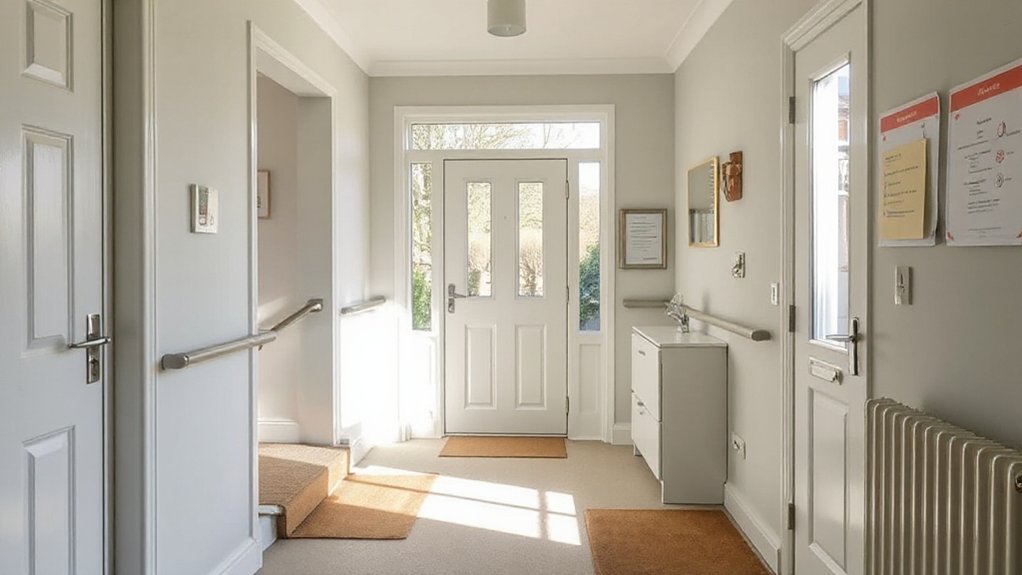
Before the survey, guarantee safety and accessibility by addressing potential hazards and preparing clear access routes for the surveyor. You should inspect walking paths, stairwells, and entryways for loose items, wet surfaces, or uneven flooring, and remove or mark them to prevent trips.
Confirm exterior steps are well lit and free of clutter, with handrails secure. Identify any access restrictions, such as locked gates or narrow doors, and arrange temporary accommodations if needed.
Clear the route from outside to main internal spaces the surveyor will visit, including parking proximity and doorway widths. Note any temporary safety measures you implement for the visit.
Emphasize accessibility improvements made, and provide documentation if requested.
Document Repairs and Known Issues With Evidence
When documenting repairs and known issues, list each item with a concise description, location, and current condition. Then attach verifiable evidence such as photos, dates, and inspection notes.
You should frame the record as structured damage documentation, guaranteeing entries begin with the issue, followed by its origin or contributing factors, and any immediate safety concerns.
Include repair records that detail workmanship, materials, contractor names, and completion status.
For each item, note the last assessment date and who conducted it, plus any recommendations or follow-up actions required.
Store evidence in a consistent, accessible format and reference it within the entry.
Maintain objectivity, avoid speculation, and ensure completeness to support appraisal, compliance, and future maintenance planning.
Plan Timing and Set Expectations for the Day
To start the day efficiently, establish a clear plan of the survey visit: confirm arrival time, scope, and any access requirements, and share who’ll accompany the surveyor.
You should outline a realistic timetable, allowing time for property valuation notes and brief pauses between inspections.
Communicate constraints, such as restricted areas or required pets or stairs usage, to prevent delays.
Confirm which survey equipment will be used and where it will be deployed, avoiding surprises that slow progress.
Prepare a single point of contact for the visit to resolve on-site questions quickly.
Provide written instructions for access routes, parking, and any necessary permissions.
This pre-planning minimizes disruption, accelerates data collection, and supports accurate results without compromising safety or compliance.
Communicate Transparently to Ensure Accurate Results
Transparent communication is essential to produce reliable findings. You should present accurate, current information about your property and any relevant history to the surveyor.
Prior to the visit, prepare a concise summary of improvements, defects, and known issues that could affect the property valuation.
During the assessment, answer questions directly and avoid withholding details that may influence judgment. If you’re unsure about a fact, state that you don’t know rather than guessing.
Maintain open client communication by providing context for any features that might impact conclusions, such as recent renovations or unusual boundaries.
This approach reduces misinterpretation and supports a fair property valuation, while demonstrating professionalism and cooperation during the RICS survey process.
Frequently Asked Questions
What Can I Do to Minimize Inspection Disruption for Pets?
To minimize disruption for pets, you’ll separate them in a quiet room with food and water, gate access, and toys. Guarantee pet safety by securing cords, removes hazards, and schedule breaks; practice calm routines to aid disruption minimization.
How Should I Handle Layers of Furniture During the Visit?
Furniture clearance keeps the path clear; you should move fragile items first, then position heavier pieces to form a logical flow, ensuring clutter management remains minimal. You’ll act efficiently, avoiding delays, and you’ll preserve a professional, calm environment throughout.
Will the Surveyor Need Access to Locked Areas or Basements?
Yes, you may need to grant access permissions and allow basement access. You should guarantee doors are unfastened and pathways clear, so the surveyor can inspect all relevant areas without delays or safety concerns.
Can I Request a Written Preliminary Findings Report?
Like a clear compass, you can receive a written preliminary findings report. You should request it, and guarantee pre survey checklist details are included. Expect precise surveyor communication and confirm expectations, timelines, and any post-survey steps in writing.
How Long After the Visit Will Findings Be Communicated?
Typically, you’ll receive findings within 1–2 weeks after the inspection, depending on complexity. Expect clear next steps and a formal report. Communication methods may include email or portal updates, with summary notes posted promptly for your reference.
Conclusion
As you ready your home for the RICS survey, you’ll benefit from clear access, organized paperwork, and safe, predictable conditions. By reviewing known defects and gathering plans, warranties, and previous reports, you help the surveyor work efficiently. Guarantee rooms are tidy, hazards removed, and pets secured. Set a realistic schedule and share transparent details to support accuracy. Will you take this proactive approach to enable a precise, thorough assessment and a smooth, professional visit?