
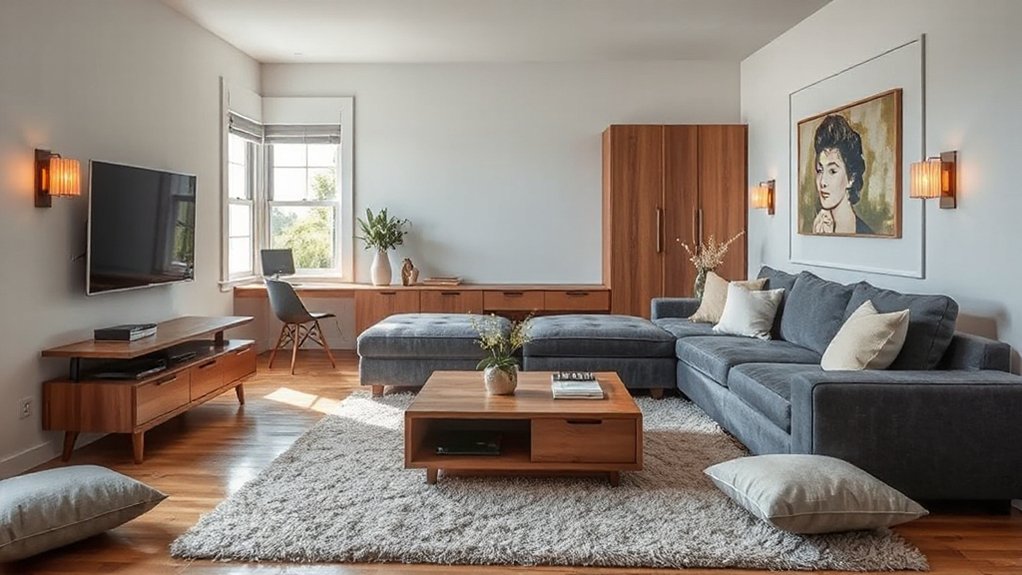
To create a multi-functional living room, clearly define three core zones: work, lounge, and socializing, then align seating, storage, and lighting to flow between them. Use flexible modular furniture that reconfigures quickly, with hidden storage to keep surfaces spotless. Choose a timeless color palette and layered lighting for focus, ambience, and relaxation, plus acoustic treatments to reduce noise. Signal zone shifts with decor and lighting, building a cohesive, adaptable space that grows with you—and you’ll uncover more design strategies as you continue.
Define the Living Room’s Core Functions: Work, Relax, Entertain
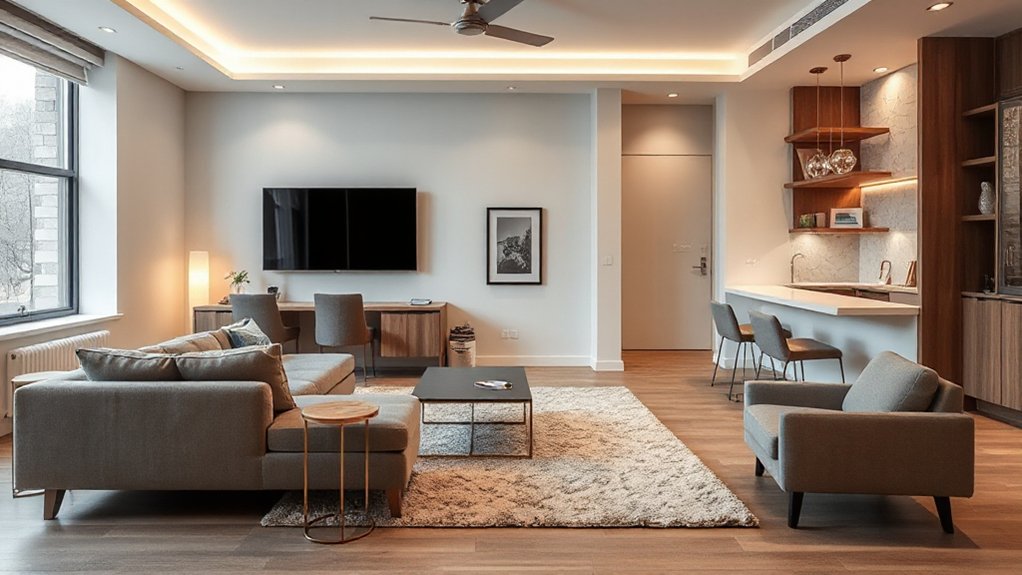
To define the living room’s core functions—work, relax, and entertain—start by aligning layout, equipment, and zones with each purpose. You’ll map dedicated areas so you sense flow, not friction, and you’ll set shifts that reduce clutter and cognitive load.
With work, prioritize a stable surface, supportive seating, and quiet sightlines to minimize distraction. For relaxation, balance soft textures, warm lighting, and a focal point that invites pause.
Entertaining hinges on flexible seating, clear sight lines, and accessible tech. Focus on living room ambiance that invites conversation while maintaining personal boundaries.
Consider furniture ergonomics to sustain comfort across tasks, and design zones that feel belonging, unified by shared style and purpose. This clarity guides practical, visionary choices.
Design Flexible Seating That Scales for Any Moment
Flexible seating must adapt to shifting needs, so pick pieces that can reconfigure quickly and hold their comfort across tasks. You design for moments, not just rooms, by prioritizing flexible configurations that invite collaboration, quiet focus, and spontaneous gatherings.
Favor modular arrangements that snap into place without chaos, letting you scale from intimate chats to full-house entertainment in minutes. Opt chairs, ottomans, and low lounges that stack, slide, or rotate, preserving sightlines and access.
Choose upholstery and cushions with durable fabrics and balanced firmness to support long work sessions or relaxed lounging. Measure pathways to avoid trip hazards, and build in intuitive zones that feel owned by you and your guests.
When seating scales with intention, your living room becomes a confident, inclusive space for every moment.
Hide Storage Smartly to Keep Surfaces Clutter-Free
Hidden storage turns clutter into clean surfaces by tucking away essentials with purpose-built compartments. You’ll balance surface usability with hidden capacity, choosing multi-purpose furniture that houses items without shouting for attention.
This approach keeps flow seamless while expanding function, so every square inch serves a clear, practical goal.
Hidden Storage Solutions
Ever wish shelves and surfaces could stay clear without sacrificing function? You can achieve this with deliberate hidden storage that blends into the room’s identity. Start with pieces that combine artful form and practical depth, like coffee tables with lift lids or ottomans that tuck away blankets, remotes, and chargers.
Prioritize built-in options that use vertical space—sliding panels, bookshelf backs, and hidden compartments within seating—to keep essential items accessible yet out of sight. Concealed compartments should be mapped to typical daily routines, so you avoid overhauls later.
Choose materials and finishes that echo the room’s palette, ensuring cohesion. The goal isn’t emptiness; it’s intentional simplicity, where hidden storage supports flow, reduces clutter, and reinforces a shared sense of belonging.
Surface Clutter Prevention
To keep surfaces clear, integrate smart storage that places everyday items out of sight yet within arm’s reach; use shallow drawers, sofa arms with compartments, and slim tray inserts that corral remotes, chargers, and mail without disrupting the surface you rely on.
You’ll cultivate a calm, purposeful living room where decorative accents shine rather than shuttle chaos. Prioritize surface organization by choosing modular trays, labeled baskets, and discreet USB hubs tucked into hidden hollows.
Each piece should feel intentional, not cramped, because belonging grows from clarity, not clutter. Consider daily rituals: a quick evening reset, a designated drop zone, and a rotating display that honors memory and function.
The result is a practical, visionary space where comfort meets order.
Multi Purpose Furniture
- Optimize with convertible beds that switch from lounging to sleeping without visual clutter.
- Use modular shelving to reconfigure storage zones as activities evolve.
- Pair hidden compartments with accessible surfaces to maintain speed and calm.
Choose a Timeless Color Palette That Grows With You
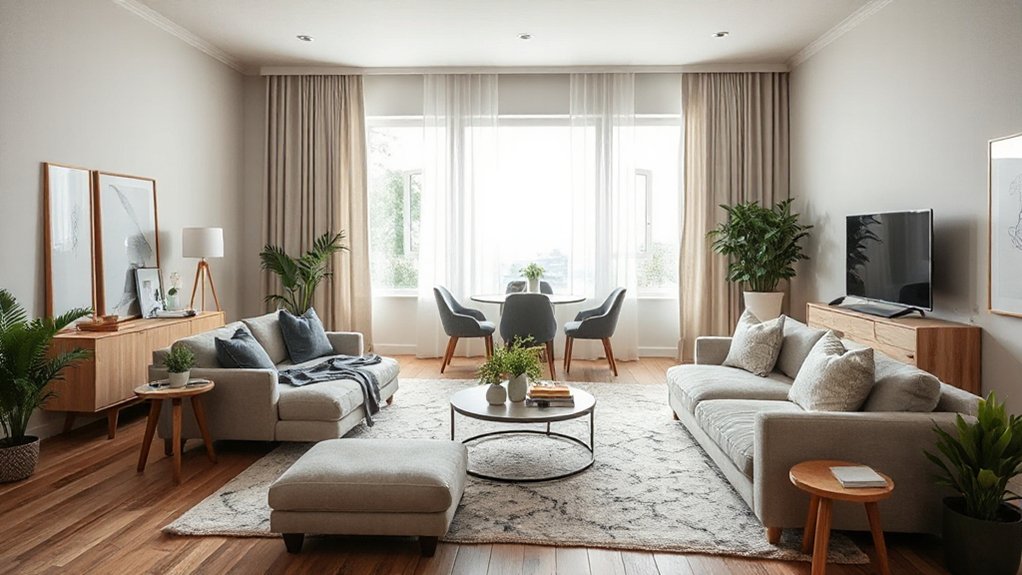
You start with Timeless Hue Foundations that anchor your space, then build a Growth-Friendly Palette with adaptable undertones.
Consider neutrals as a steady backbone and layer in durable accents that can evolve over time without repainting.
The goal is clarity, versatility, and a future-facing harmony that supports changing furnishings and moods.
Timeless Hue Foundations
A timeless color palette starts with flexibility: choose hues that anchor the room today and adapt as your tastes evolve tomorrow. You’ll build a foundation that supports a busy, multi-functional space, balancing color harmony with deliberate material contrast.
- Select a versatile base (neutrals or soft midtones) to anchor seating, walls, and rugs, ensuring cohesion as furnishings shift.
- Introduce accent colors through textiles and art, letting them evolve with mood and seasons without overpowering the core palette.
- Prioritize contrast in texture and finish—matte walls against glossy accents, warm woods with cool metals—to reveal depth and personality.
This approach feels purposeful, inclusive, and aspirational: you belong here, and the room grows with you.
Growth-Friendly Palette Options
Growth-friendly palettes keep your living room versatile as tastes shift. You’ll choose adaptable shades that anchor furniture while inviting evolving accents. A growth friendly palette options typically centers on neutral bases—creams, taupes, soft grays—paired with layered textures to add depth without shouting color.
Introduce versatile color schemes through controlled pops: a muted accent, then swap textiles or artwork to refresh the mood without remodeling. Leverage midtones and earth tones to sustain warmth as your needs change, from hosting to quiet study.
Prioritize high-quality materials that wear well, so your space remains cohesive amid updates. This approach supports belonging by inviting participation from guests and family, while keeping the room practical, future-ready, and aesthetically calm.
Hide Tech, Keep Life Simple: Seamless Everyday Use
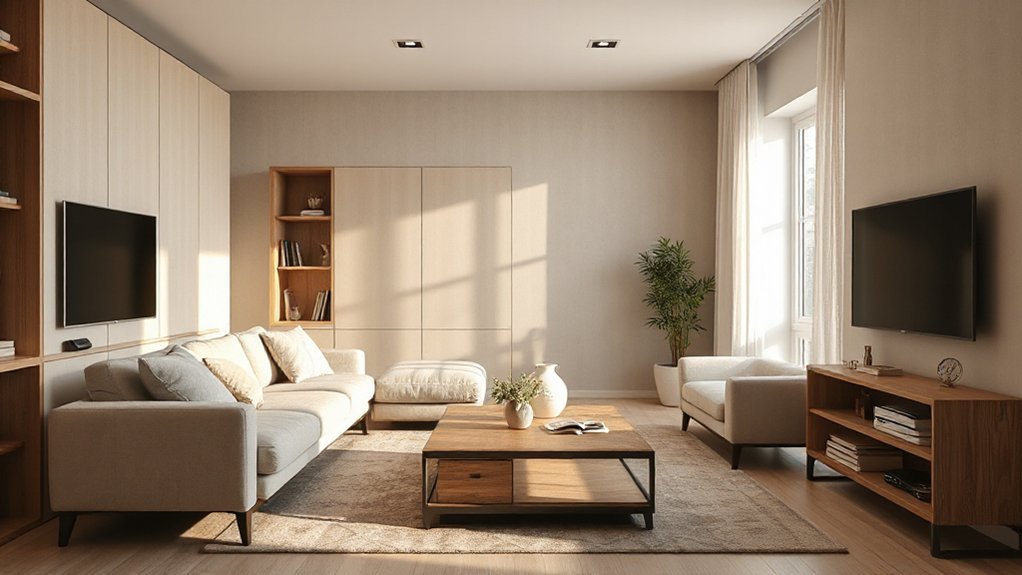
Hidden tech should blend into daily life, so your living room stays calm and usable without sacrificing function. You design around simple prompts, not flashy interfaces, so every device serves a clear purpose and vanishes when unused.
By prioritizing smart technology with thoughtful placement, you preserve space for connection, conversation, and rest. Minimalist decor anchors experiences, letting utility feel like care rather than clutter.
- Hide cables, tuck remotes, and choose furniture that doubles as storage.
- Schedule routines that automate lighting, climate, and media without overwhelming you.
- Prioritize tactile, intuitive controls and partner them with a clear display of essential information.
This approach feels inclusive, practical, and visionary, inviting everyone to belong in a serene, responsive space.
Zone by Activity: Work, Lounge, and Socialize in One Room
To truly tailor a living room to multiple activities, zone the space by purpose—work, lounge, and socialize—so each area supports its task without competing with others. You’ll design distinct zones that share a cohesive color story and natural light, letting you switch gears without clutter.
For work, opt quiet corners, ergonomic seating, and clear surfaces that invite focus.
In the lounge, cultivate comfort with layered textures and adaptable seating for intimate chats or solo relaxation.
Socialize zones should invite conversation with sightlines and accessible surfaces.
Use artistic expression in decor accents and a mindful rotation of Seasonal decor to signal gradual change between zones.
This approach builds belonging: you’ll feel understood, capable, and connected as you move through purposeful, balanced spaces.
Pick Multi-Functional Furniture That Really Works
Choosing multi-functional furniture that truly works means selecting pieces that adapt to each zone’s needs without crowding or complicating the space. You’ll prioritize versatility, so furniture performs several roles without sacrificing style or flow. Think rhythm over clutter, purpose over novelty, and long-term usefulness over quick trends.
- Convertible beds that switch from sleeping to seating in seconds, keeping a compact footprint when stored
- Modular shelves that reconfigure across walls, corners, and islands to balance display, storage, and accessibility
- Benches and ottomans with hidden storage, doubling seating and organization while remaining lightweight
This approach creates belonging through adaptivity, clarity, and shared use. You gain confidence in a cohesive system that evolves with daily life and future needs, without wasted space.
Plan Lighting and Acoustics for Every Moment
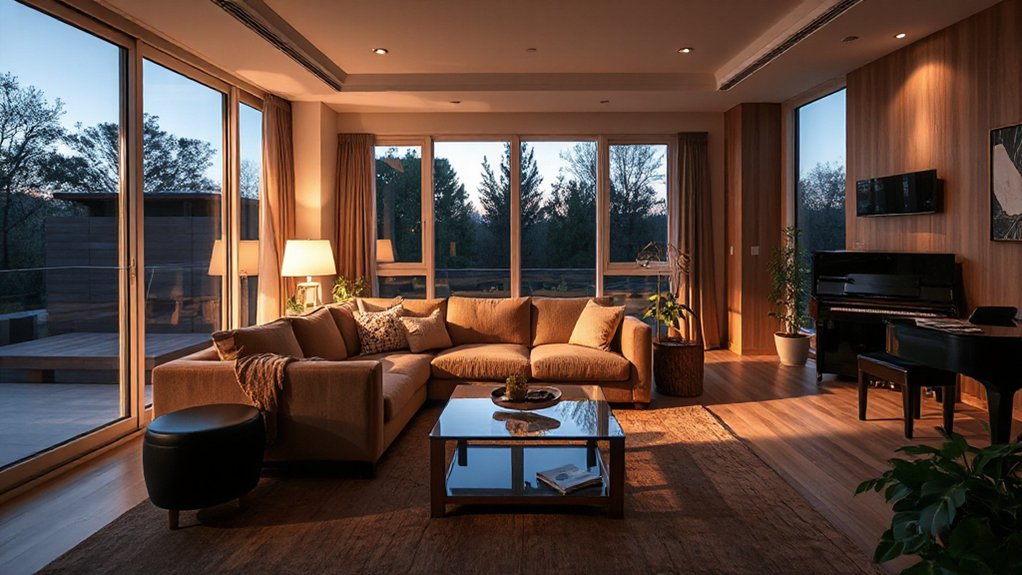
Lighting and acoustics shape every moment in a multi-functional living room, so start with a clear plan that supports shifts from work to social to relaxation.
You’ll map zones with layered lighting: bright task light for focus, warm mixed tones for collaboration, and gentle dimming for wind-down.
Pair this with adaptive acoustics that keep speech intelligible yet intimate.
Use ambient ambiance to set mood without glare, and deploy sound-absorbing panels where conversations rise or echoes linger.
Soundscaping strategies harmonize furniture, rugs, and soft materials to tame reverberation while preserving energy.
Schedule controls that sync with routines: quick presets for meetings, casual evenings, and quiet reading.
This thoughtful integration makes the space feel intentional, belonging-worthy, and resilient to evolving moments.
Frequently Asked Questions
How Can I Balance Aesthetics With Practical Storage Needs?
You balance aesthetics with storage by choosing wall mounted solutions and modular decor that adapt. You prioritize clean lines, measurable storage, and flexible layouts, so space feels cohesive, connected, and belonging, while it stays practical, organized, and visually inspiring.
What Budget-Friendly Multipurpose Furniture Works Best?
Like a swiss army knife, you’ll choose convertible sofas and modular shelving for budget-friendly versatility. You’ll prioritize comfort and function, using modular shelving to adapt spaces, and a convertible sofa to transform rooms on demand, seamlessly.
How Do I Adapt the Room for Seasonal Changes?
To adapt for seasonal changes, you implement seasonal decor and adjust temperature control, so you feel comfortable year-round; arrange flexible zones, use breathable fabrics, smart thermostats, and modular accents that invite belonging and practical, forward-thinking living.
What Snippets of Color Influence Mood in Multifunctional Spaces?
Color psychology guides your choices to boost mood enhancement; you’ll select warm neutrals for calm focus, and saturated accents to energize zones. You feel belonging as you test palettes, observe responses, and adapt lighting, textures, and art accordingly.
How Can I Optimize Safety With Flexible Seating Layouts?
You slip into a safe, adaptive space where modular furniture locks into place and adjustable lighting follows your steps; you anticipate paths, avoid tripping hazards, and cultivate belonging by designing clear sightlines and stable, flexible seating everywhere.
Conclusion
You can’t freeze a room into one mood—and that’s the point. The secret is blending function with flexibility: zone by activity, stash clutter behind clever storage, and choose furniture that scales with your life. Objection: it won’t stay cohesive. Instead, it learns your rhythm—soft lighting for evenings, bright surfaces for work, sound-dampening tech for chats. With a timeless color base and hidden tech, your living room stays purposeful, welcoming, and ready for anything you throw at it.