
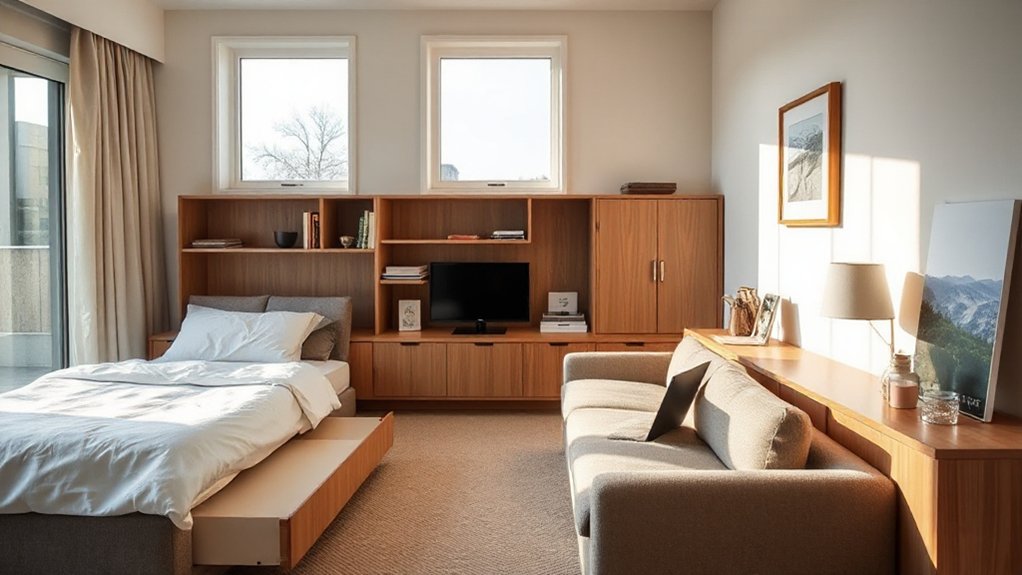
To create a multi-functional guest room, start by clarifying goals and constraints—primary functions (sleep, lounge, work, storage), space budget, and guest needs. Design flexible zones with modular furniture, a sofa bed or wall bed, and layered lighting for work, rest, and ambient mood. Maximize storage with vertical, hidden, and labeled systems while controlling acoustics and sightlines for privacy. Test the layout with a walk-through and refine based on real-use data; more details await.
Clarify Goals for a Multi-Functional Guest Room
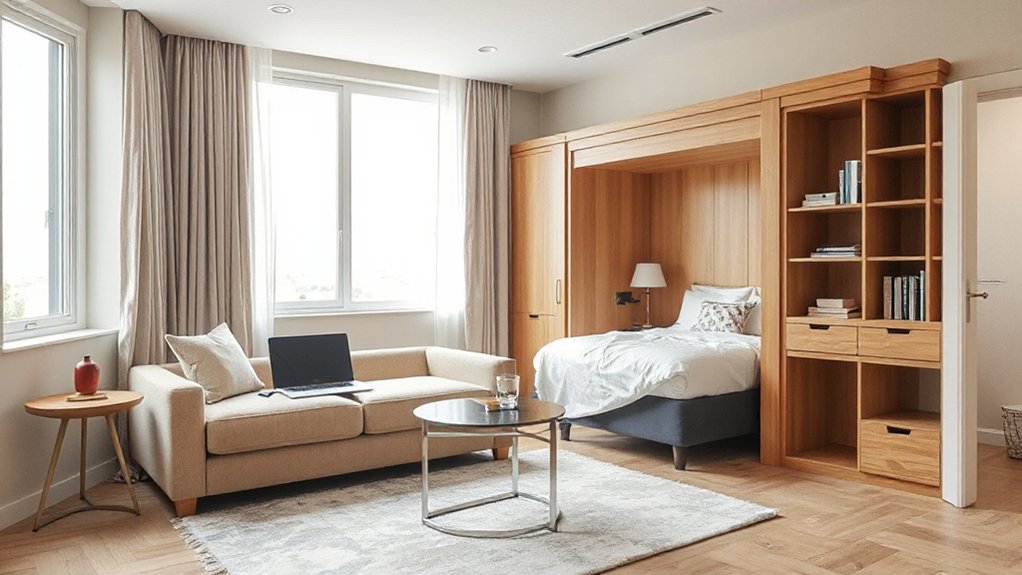
Start by defining how the space will serve guests today and adapt as needs evolve. You’ll clarify goals by listing core functions: sleeping, lounging, working, and storage, then map each to measurable outcomes.
Prioritize guest comfort by specifying mattress quality, lighting levels, and climate control, ensuring quick adjustments without disrupting flow.
Align room aesthetics with a cohesive palette, durable textures, and flexible furnishings that flex for varied stays.
Set practical targets for noise containment, accessibility, and easy multi-use progressions—so a room can morph from a quiet retreat to a compact workspace or a daytime living area.
Document success metrics, solicit feedback, and schedule iterative refinements.
Clear goals foster belonging, guiding decisions that balance function, comfort, and style.
Identify Space, Budget, and Guest Needs to Set Constraints
Start by mapping your available space, noting fixed features and clear circulation paths that constrain layout options.
Then align your budget with essential needs—prioritize durable, modular pieces that maximize function without overspending.
Finally, translate guest preferences into concrete constraints to guide decisions on sleeping arrangements, storage, and privacy within the budget and space limits.
Identify Space Limits
Before you plunge into decorating, map out the space, budget, and guest needs to set clear constraints. You’ll measure floor area, door clearance, and storage depth to identify usable zones and traffic flow.
Prioritize flexible furniture that tucks away, like a sofa bed or wall bed, so you can switch from living to sleeping without clutter.
Choose lighting and outlets that support reading, charging devices, and ambient mood without overbuilding.
When you select materials, favor Eco friendly materials that endure daily use and are easy to clean.
Blend practical durability with a sense of place by incorporating Historical inspirations through textures and patterns rather than heavy models.
Leave margins for future tweaks, so the room evolves with your guest’s needs.
Budget and Needs Alignment
Now that you’ve mapped the space, it’s time to align budget and guest needs to set clear constraints. You start by cataloging essentials: bed type, storage, and a workspace if needed, then estimate costs for each.
Prioritize flexibility: a sofa bed or foldable table can serve multiple functions without excess spend.
Define guest privacy needs early—consider door privacy, lighting, and sound dampening to keep everyone comfortable.
Identify seasonal decoration opportunities that won’t strain the budget; lightweight, durable accents can shift with holidays without a full redo.
Build a sourcing plan that aligns with your design goals and climate realities, anchoring decisions to data on usage frequency and turnover.
Clear constraints reduce waste and foster belonging for every guest.
Create Flexible Zones for Living, Working, and Sleeping
Think in terms of separate zones that adapt to your guests’ needs: a living area for lounging, a compact workspace that doubles as a guest surface, and a sleeping niche with integrated storage.
Start with a workable layout that prioritizes sightlines, access to outlets, and hidden storage to keep clutter out of sight.
Use modular furniture and data-backed sizing guidelines to balance comfort, flow, and durability across all three zones.
Flexible Zones For Living
Flexible zones let you adapt a single space for living, working, and sleeping without swapping furniture or sacrificing comfort. You’ll segment areas with low-profile screens, subtle rugs, and lighting that shifts mood and focus.
Use a sofa bed or wall-mounted murphy bed to toggle sleeping space without crowding. A compact desk near natural light supports brief work sprints, while a lounge nook invites unwinding after travel tips and guest etiquette moments you share.
Plan zones by traffic flow: keep daily activities away from sleeping corners, and guarantee acoustic separation with soft textiles. Data shows responsive zoning boosts perceived room size and ease of use, strengthening belonging.
Your guests feel cared for, informed, and at home, even during brief visits.
Workable Guest Room Layouts
Three practical layouts let you flexibly zone a guest room for living, working, and sleeping without reassembling furniture. You’ll map zones with benches, modular screens, or a compact wardrobe wall to create distinct areas that still feel cohesive.
Use color psychology to cue function: calm, muted tones in sleeping corners; warmer, energizing accents near the workspace; and soothing neutrals that unify every zone.
Place a sofa bed to convert instantly between seating and sleeping, and position a small desk within natural light for focus moments.
Prioritize art placement to anchor each zone—one large piece by the bed, a gallery rail near the desk, and a simple statement in the living area.
This approach balances practicality with belonging and growth.
Sleep-Haven And Storage
From the prior layouts, you’re already primed to segment space for living, working, and sleeping; now it’s time to harden that sleep-haven while keeping storage flexible. You’ll design a compact, comfortable zone that balances function with calm, using smart storage to support decor flexibility and guest comfort.
Build a dual-purpose sleep area with a comfortable bed, breathable linens, and quiet lighting. Integrate hidden storage under the bed and modular cabinetry for folded clothes and essentials. Use a small, welcoming rug and texture to reduce hospital feeling.
Position a compact desk nearby for remote tasks without intruding on rest. Keep surfaces clear and rotate decorative accents seasonally.
- Clear zoning cues with scalable storage modules
- Quiet, low-glare lighting for evening use
- Hidden storage behind or under furnishings
- Lightweight, switchable decor elements
Choose a Versatile Bed Solution That Fits Your Space
A versatile bed can instantly transform a guest room into a multifunctional space, so start by sizing it to your floor plan and guest needs. You’ll prioritize clear load paths, mattress comfort, and easy conversion mechanics that minimize setup time.
Choose a solution that aligns with your room’s proportions and traffic flow, then test in real life: open, close, and sweep for obstructions. Design-minded, you’ll pair practical tech with refined finishes—think hidden storage, quiet hydraulics, and durable upholstery.
Incorporate decorative accents and a cohesive color schemes approach to unify the bed with surrounding zones, so guests feel welcome and cared for. Measure, compare, and optimize for daily use, storage capacity, and guest privacy, ensuring it fits your space without compromising style or function.
Pick Modular Furniture for Small Rooms
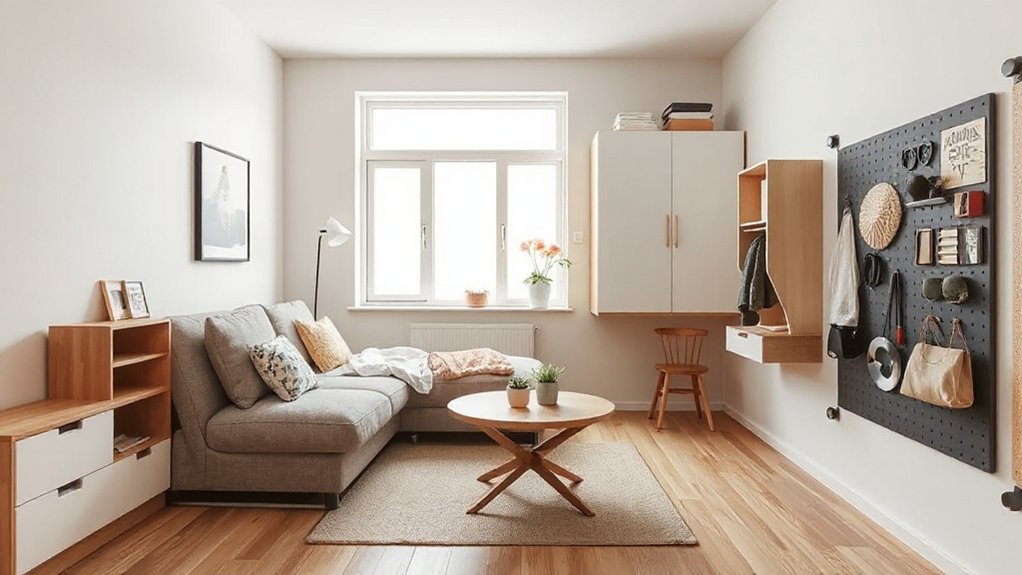
If space is tight, you’ll optimize every inch by choosing modular furniture that can reconfigure on demand. In small rooms, modular pieces adapt to guests without clutter, preserving flow and personality. Look for stackable, foldable, and lift-ready options that serve multiple functions with clean lines and hidden storage.
Prioritize pieces that pair comfort with efficiency, so each square foot supports rest, work, and casual living. Data shows modular systems reduce moving costs and long-term purchases, while maintaining resale value. Choose finishes that echo your decor to reinforce belonging and warmth.
- Flexible seating that doubles as sleeping surface
- Wall-mounted or floating units to save floor space
- Nesting tables and ottomans for instant surface variety
- Hidden storage within compact frames
Modular furniture, Small rooms.
Build Smart Storage Without Crowding the Floor
Smart storage strategies keep a guest room functional without crowding the floor. Think clearly labeled storage zones for guests, slim furniture that adds capacity, and hidden closet solutions that stay out of sight yet reachable.
This approach balances data-driven efficiency with design sense, so every inch serves a purpose without feeling cluttered.
Storage Zones For Guests
Hidden clutter stresses guests and drains space, so design zones that keep essentials accessible without cluttering the floor. You’ll create compact, clearly defined storage zones that minimize trips and maximize flow, guided by data on guest expectations for quick access and privacy.
Prioritize discreet compartments for clothes, toiletries, and tech, plus visible cues like welcome signage to set a calm tone. For hygiene, place a small tray near the bed with sanitizer, tissues, and a spare mask.
Use labeling and color coding to reduce search time and misunderstandings. Balance function with warmth to foster belonging and ease.
- Accessible drawers for daily outfits
- Corner shelves for toiletries and chargers
- Hidden hampers with liner
- Welcome signage and quick-access essentials tray
Slim Furniture Essentials
Slim furniture is the backbone of a smart guest room because it frees floor space while expanding storage. You’ll optimize layouts with multi-functional pieces: a bed frame with built-in drawers, a slim desk that tucks beside seating, and nesting tables that stack when not in use.
Choose vertical storage, like tall cases and wall-mounted shelves, to keep circulation open. Select compact seating that doubles as guest bedding, maximizing utility without clutter.
Materials matter: light-toned woods and matte finishes feel airy and adaptable to varied decor. Integrate vintage artwork and botanical accents to anchor a cohesive, welcoming vibe without overpowering the space.
Measure clearance around doors and pathways, then test movement to guarantee comfort, accessibility, and a sense of belonging.
Hidden Closet Solutions
When you’re expanding storage without adding clutter, built-in concealment and versatile closet zones are your best tools. Hidden closet solutions maximize your guest room’s footprint while delivering practical access.
Use zones to separate for-season items, daily wear, and guest essentials, so you never crowd the floor. Integrate slim cabinetry, pull-out baskets, and adjustable rods to tailor depth and height.
Opt for doors that blend with wall color or mirror panels to visually expand the space. Labeling and clear bins speed retrieval, reducing disruption during stays.
Data shows concealed storage lowers perceived clutter by up to 40%, boosting comfort and belonging.
- Hidden closet architecture
- Adjustable, space-maximizing components
- Clear labeling and modular bins
- Seamless door integrations for visual cohesion
Hidden closet, storage solutions.
Optimize Lighting for Work, Rest, and Play
A well-lit guest room supports work, rest, and play by letting you switch zones without rearranging furniture. You’ll optimize lighting with layered options: ambient for mood and efficiency, task lighting at desks, and accent lights to sculpt textures.
In practice, assign dimmable fixtures to living areas and desks, so you can raise or lower brightness without clutter. Use color temperature deliberately—cooler temps for focus, warmer tones for winding down.
Color coordination across fixtures and lamps reduces visual noise, aiding quick transition between areas. Dimmed wall sconces paired with a discreet desk lamp create clarity without glare.
Track lighting can highlight art or storage, reinforcing a sense of belonging. Collect data from occupants and adjust zones after a few days for lasting comfort.
Choose Calming Colors and Adaptable Decor Palettes
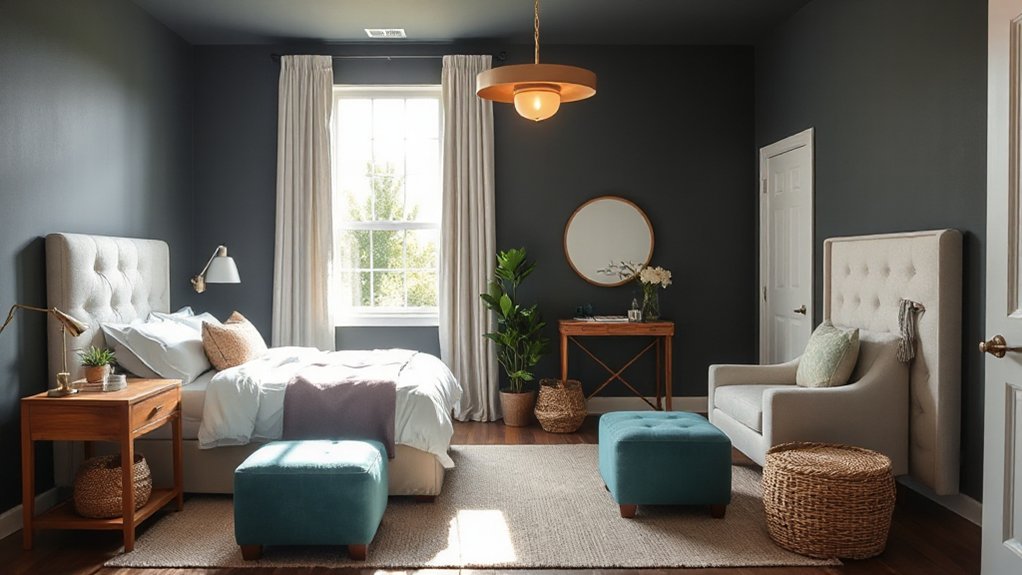
To set a calming, flexible guest space, start with soothing color palettes that pair well with a neutral backdrop.
Use adaptable decor elements—soft textiles, reversible accents, and modular furnishings—that can reconfigure for work, rest, or guests.
Base decisions on data: test swatches in natural light, track perceived calmness, and prioritize items that scale across uses.
Soothing Color Palettes
- Color psychology: choose soft neutrals, muted blues, or warm greens to foster relaxation and inclusivity.
- Paint finishes: opt for matte or satin for calm walls that resist scuffs while feeling cozy.
- Contrast carefully: low-contrast trim enhances cohesion without harsh edges.
- Layered undertones: add subtle warmth through undertones in furniture and textiles to unify the palette.
Flexible Decor Elements
Start with a flexible color system: pick a calm base (soft neutrals or muted blues) and build a small, interchangeable swatch set—think 2–3 complementary accents and 1–2 seasonal pops. You’ll keep a flexible palette that adapts to guests’ needs without remodeling.
Use artificial lighting to shift warmth and mood across the day, aligning task, ambient, and accent tones for comfort.
Choose decorative accents that are easy to swap: textured throws, ceramic vessels, and adaptable wall art that can travel with the room.
Prioritize form and function in every choice—storage-ready furnishings, dual-purpose surfaces, and scalable textiles.
This approach supports belonging by inviting personalization while preserving a cohesive look, so guests feel seen and relaxed in a curated, livable space.
Neutral Backdrop Staples
- Choose a cohesive palette of soft neutrals with 1–2 calming accent hues.
- Integrate art that mirrors the palette and increases perceived room height.
- Use scalable textiles (throws, pillows) for adjustable coziness.
- Favor simple, multiuse furniture to maximize function and flow.
Design a Workstation That Blends Into the Room
A workstation that blends into the room starts with a thoughtful typology: choose a compact desk or wall-mounted surface that tarts seamlessly with the surrounding decor instead of shouting “office.” Prioritize a neutral color palette, integrated cable management, and a height that matches your chair’s ergonomics so work equipment disappears when not in use.
Design for flexibility: use a foldaway surface, magnetic accessories, and modular storage that can reconfigure without visible clutter. Ground the setup in data: measure daylight, acoustics, and user flow to minimize disruption for guests, while preserving usability.
Style-wise, reference Outdoor decor and Kitchen accessories to keep textures cohesive. Conclude with a clear cord cutoff and a discreet charging hub for seamless, belonging-focused productivity.
Add a Cozy Retreat Nook for Guests
To make guests truly rest easy, carve out a cozy retreat nook that feels intimate yet unobtrusive. You design it for quick, calming seamless shifts from day to night, prioritizing guest comfort with a compact footprint and purposeful angles.
Use data-backed lighting and seating to reduce fatigue and encourage presence without clutter. Choose decor accessories that signal hospitality—soft textures, a small reading lamp, and a low-profile chair that invites conversation or quiet reflection.
- Smart lighting layering for dimming and warmth
- Compact, ergonomic seating with supportive posture
- A small surface for personal items and tech charging
- Neutral, warm tones that enhance perceived space and calm
Use Textiles and Accessories That Enhance Comfort and Function
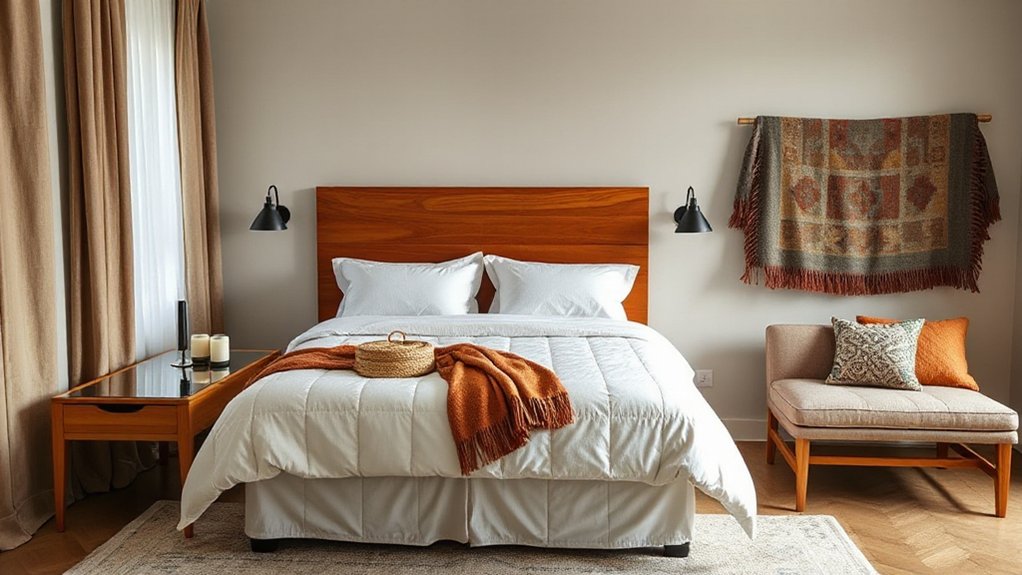
Textiles and accessories should elevate comfort without clutter, so pick layered fabrics and purposeful accents that support rest, storage, and easy use. You’ll optimize sleep quality with duvet covers in breathable blends and a lightweight quilt for seasonal flexibility. Then layer cushions to invite lounging without crowding the bed.
Textile layering helps zoning: a tactile rug by the seating area anchors the space while reducing noise, and soft blinds or drapes control light for late arrivals.
Pair accessory accents with smart storage—woven baskets under a bench, a slim wall shelf for essentials, and a foldable side table within reach. Choose durable, easy-care options to maintain consistency, and design with intention so guests feel seen, supported, and at home.
Textile layering reinforces calm, practical comfort.
Plan Quick-Transition Setups for Daily Use
If you want daily use to feel effortless, plan quick-transition setups that switch from guest-ready to guest-ready-with-minimal effort in seconds. You’ll design micro-stations that streamline tasks and respect guest privacy, while keeping the room feeling cohesive and welcoming.
Use a simple color palette, labeled containers, and a lightweight foldable surface to reduce clutter. Data shows consistent routines cut turnover time by 40%, so test each anchor: sleeping area, work nook, and hospitality basics.
Pair practical storage with a calm Room fragrance strategy to signal transition without overwhelming senses.
- Quick-access essentials and labeled bin system
- Hidden storage for lines, chargers, and towels
- Subtle Room fragrance cues like a diffuser within reach
- Privacy-minded placement of a small screen or silhouette screen
Maximize Vertical Space With Built-In Shelving
Built-in shelving is your vertical secret weapon: it frees floor space, keeps essentials at hand, and adds architectural interest without clutter. You’ll maximize storage without sacrificing flow by planning tall, modular units that align with doorways and desk zones.
Select adjustable shelves to accommodate varying objects—bedside lamps, decorative accents, and spare linens—while preserving clean sightlines. Use open shelving for everyday items and closed panels for seasonal gear, maintaining a calm, cohesive vibe.
Integrate color schemes that ground the room: a restrained palette on shelving supports, with accent hues echoing textiles elsewhere. Feature decorative accents in curated clusters to create focal points without overcrowding.
Realistically, measure clearance around bed and seating, then tailor spacing to daily routines for consistent belonging.
Address Sound and Privacy in a Shared Space
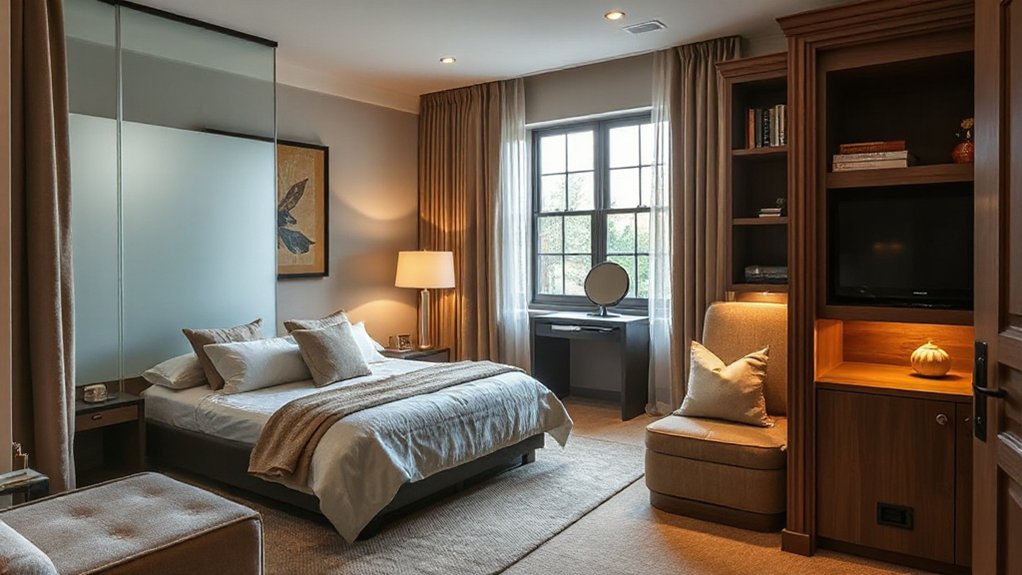
Sound and privacy are nonnegotiables in a shared guest room, so start by zoning the space to create a clear boundary between sleep and work or lounge areas. You’ll gain calm, better sleep, and guest comfort by design decisions that reduce noise leakage and visual intrusion.
- Implement soundproofing techniques like acoustic panels, door seals, and soft textiles to absorb impact noise.
- Create privacy barriers with partial walls, shelving, or curtains that block sightlines without isolating you from the room’s social flow.
- Use brown-noise or gentle ambient sound devices to mask disturbances for both sleepers and workstations.
- Choose fabrics, rugs, and window coverings with dense textures to dampen echoes and provide a tactile sense of seclusion.
Create Guest-Friendly Tech: Outlets and Charging Spots
Outlets and charging spots should be plentiful, visible, and easy to reach from both the bed and seating areas. You’ll design for guest tech by blending power with form, so outlets sit where people naturally rest devices.
Install a mix of USB-C, USB-A, and standard outlets in bedside lamps, headboards, and side tables, plus hidden above-desk banks for work zones.
Consider wireless charging pads integrated into nightstands or coffee tables to reduce cable clutter.
Elevate charging stations with surge protection, clear labeling, and cable management that’s subtle yet accessible.
Prioritize universal faceplates and future-ready upgrades to support guest tech needs without reconfiguring layouts.
Data shows well-placed charging stations boost satisfaction and repeat stays, signaling thoughtful hospitality and belonging.
Test the Layout With a Practical Walk-Through
As you walk the space, simulate real guest use by moving through sleeping, lounging, and workspace zones to spot friction points and adjust flow, sightlines, and reach. You’ll assess clearance, seating comfort, and outlet placements, then note how natural light and privacy affect mood.
Use quick adjustments to refine layout, ensuring each zone supports intention without crowding. Track data on space-to-furniture ratios, turning radii, and line-of-sight corridors to justify tweaks.
Observe how artistic expressions and gardening tips subtly influence atmosphere, from color accents to greenery balance. This practical walk-through translates design choices into lived experience, guiding you toward a cohesive, welcoming retreat.
- Map path flows and turning clearances
- Test furniture scale against room zones
- Verify accessibility and charging reach
- Document mood with subtle plant and art updates
Maintain and Evolve the Room Over Time
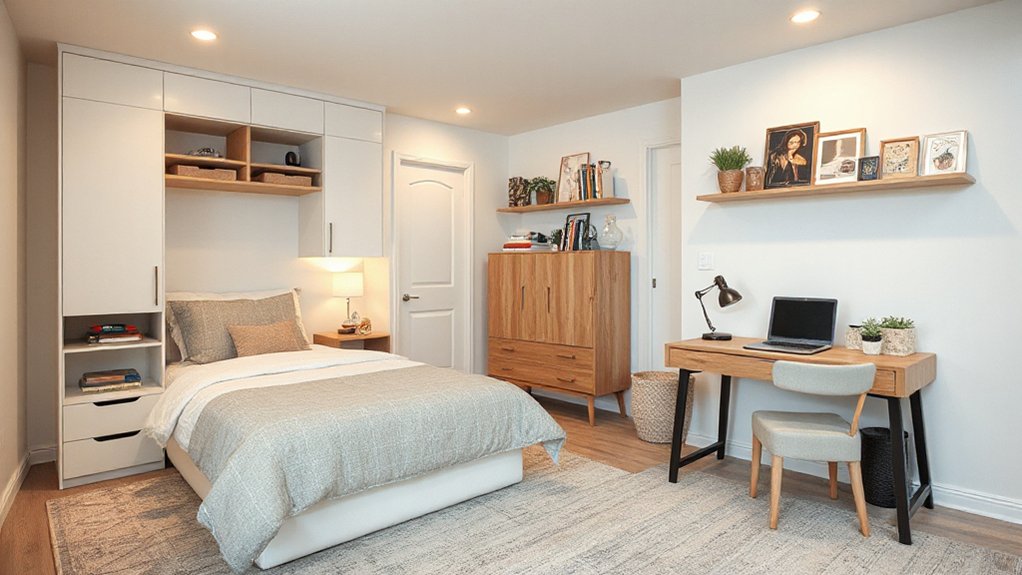
Maintaining and evolving the room means building a living system you can tweak over time, not a one-off setup. You’ll track usage patterns, adjust storage, and swap textiles to match guests’ needs and seasons.
Start with modular storage for travel essentials and daily supplies, so you can reconfigure quickly without a full redo.
Observe guest etiquette cues—how they unpack, where they linger, what comforts matter—and codify those insights into small improvements.
Use data from bookings or feedback to justify upgrades, like a dedicated charging nook or a multi-tasking desk.
Prioritize durable, easy-care materials that welcome repeat visits.
Schedule quarterly tweaks, not yearly revolutions, to stay fresh.
Invite input from hosts and neighbors to reinforce belonging and hospitality.
Frequently Asked Questions
How Do I Balance Privacy With Openness in a Shared Guest Room?
You balance privacy with openness by zoning spaces, using sliding screens, smart storage, and quiet corners; address privacy concerns with sound-dampening panels, while openness strategies include visible shared zones and flexible furniture to foster belonging.
What Is the Best Multi-Use Setup for Limited Ceiling Height?
A compact, best multi-use setup for limited ceiling height uses convertible furniture and smart storage. You’ll save space with wall beds, fold-out desks, and modular seating. These space saving solutions foster belonging, practicality, and data-driven, design-focused confidence.
How Can I Hide Bulky Tech and Cords Effectively?
Tidy cables, hide bulky tech, and streamline power. You’ll use cable management, concealed storage, and smart outlets; you’ll mount discreet hubs, route cords behind panels, label fixes, and savor a serene, belonging-filled, clutter-free space.
Which Materials Resist Wear From Frequent Guest Use?
You should favor solid woods and high-density upholstery that resist wear from frequent guest use, prioritizing durable finishes and bite-proof fabrics. This approach boosts furniture durability and upholstery longevity, while you create a welcoming, design-driven space everyone feels they belong in.
How Often Should I Refresh Decor Without Changing Function?
Your decor should refresh every 3–6 months, you won’t lose function, you’ll gain energy. Embrace decor trends subtly and plan seasonal updates, so your space feels belonging and data-driven, not flashy, while staying practical and cohesive.
Conclusion
You’ll master a guest room that actually earns its keep, not just a spare bed with mismatched sheets. You’ll choreograph zones, test layouts, and pick modular, space-smart pieces that flex with needs and budgets. You’ll data-drive decisions with usage notes and comfort metrics, then tweak like a designer-scientist. In short, you’ll design a multifunctional haven so guests feel valued while your sanity stays intact—the ultimate plot twist in a home that finally behaves. Satirical, practical, elegantly efficient.