
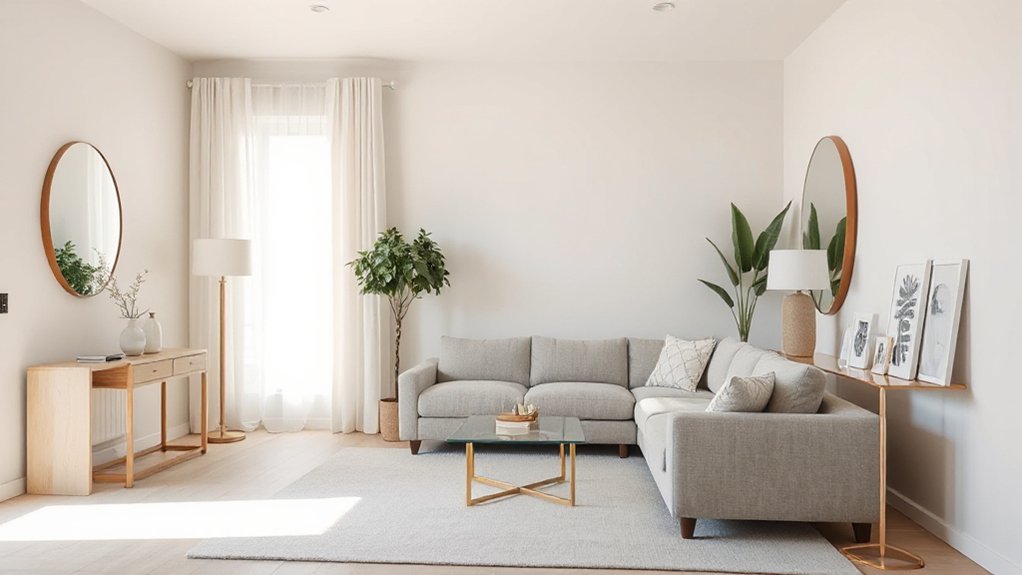
To make a small living room feel bigger, start by defining your space goals and routes—aim for calm, sociable zones with clear traffic flow. Let in light with sheer drapes, mirrors, and light, neutral paints. Choose space-saving furniture, like slim sofas and wall-mounted storage, and use multi-functional pieces that reconfigure for gatherings or quiet moments. Create depth with layered lighting and restrained color, then establish cohesive zones that feel open. If you keep applying these tweaks, you’ll discover even more ideas.
Define Your Small-Space Challenge and Bigger-Feel Goals
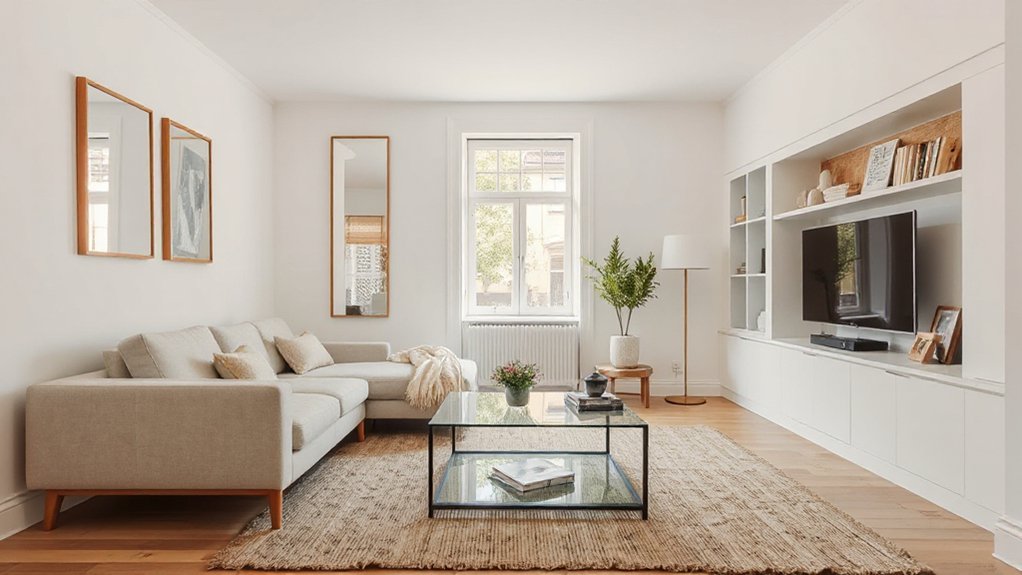
To tackle a small living room, start by defining the exact challenge and the bigger-feel you want to achieve. You’ll map how traffic flow, seating reach, and focal points interact with daily rituals, preserving space for connection.
Pin your bigger-feel goals—calm, sociable, organized—and reference them as you choose colors, textures, and layouts. Color psychology guides mood: lighter neutrals open walls, soft blues invite conversation, and warm accents cue comfort without crowding.
Apply Feng shui principles by arranging seating to face entrances, balancing elements, and avoiding clutter near doorways.
Establish measurable, practical steps: select a primary color, designate a single storage strategy, and test energy shifts over a week.
Align decisions with belonging—your home reflects who you’re and who you may become here.
Let in Light: Quick Wins to Maximize Natural Light
Ever wonder how to flood a small living room with daylight without swapping out windows? You can maximize natural light with quick, practical moves.
Start by choosing light, sheer window treatments that filter glare while keeping sight lines open. Avoid heavy drapes that halt brightness and crowd walls.
Move toward strategically placed mirrors to bounce daylight deeper into the room, creating an impression of greater space.
Keep plant placement mindful: place bright, light-loving greens near windows to reflect light without blocking it.
Clear clutter to let sun travel freely, and paint walls in a soft, neutral tone that amplifies illumination.
Finally, trim window frames visually with minimal casing and frequent maintenance to prevent dust dimming rays.
These steps deliver brighter rooms and stronger belonging.
Choose Space-Saving Furniture That Frees Floor Space
A compact sofa can seat comfortably without crowding, while wall-mounted or floating storage keeps surfaces clear.
Prioritize pieces that combine hidden compartments with slim profiles to maximize usable room without sacrificing function.
Compact Sofa Solutions
If you want more floor space in a small living room, start with compact sofas that fit the room’s scale without sacrificing comfort. You’ll gain clarity and cohesion by selecting pieces designed for space optimization, not just style.
Choose a sofa with slim arms, lower back height, and modular options that can reconfigure as your needs change. Prioritize leggy designs that keep sightlines open and reduce visual clutter.
To guide you, consider these steps:
- Measure accurately and pick compact sofas that match your room’s proportions.
- Opt for light fabrics and neutral tones to enhance openness.
- Add versatile accents (ottomans with storage, nesting tables) that don’t crowd the floor.
This approach fosters belonging, practicality, and a calmer, more functional living space.
Wall-Mupported Storage
Wall-supported storage frees floor space without sacrificing storage capacity, making your small living room feel more open and organized. You’ll optimize every inch by choosing wall mounted shelving that runs efficiently along usable wall real estate, turning vertical space into practical storage.
Pair it with floating cabinets for concealed storage above seating or entertainment zones, keeping surfaces clear and tidy. Install units at eye level to create a cohesive line that visually expands the room.
Use modular designs you can add to over time, so your setup grows with you. Prioritize soft-close hinges and durable finishes to reduce noise and maintenance.
This approach builds belonging by giving you reliable, accessible storage that respects your need for calm, uncluttered shared spaces.
Create Depth With Color, Contrast, and Light
To create depth in a small living room, you’ll use color, contrast, and light to define planes and draw the eye farther back. You’ll harness color psychology to set mood, choosing neutrals for cohesion and bold accents to anchor focal points. Pair lighting techniques with deliberate contrast to sculpt space and guide attention.
- Use layered lighting—ambient, task, and accent—so the room reads deeper as shadows fall behind furniture.
- Apply a restrained color palette on walls and larger pieces, then introduce contrast with textiles and art.
- Create visual depth with mirrors or glass surfaces that reflect light without clutter.
This approach is practical, precise, and inclusive, helping you feel you belong in a thoughtfully designed room.
Build Seamless Storage That Keeps Foot Traffic Clear
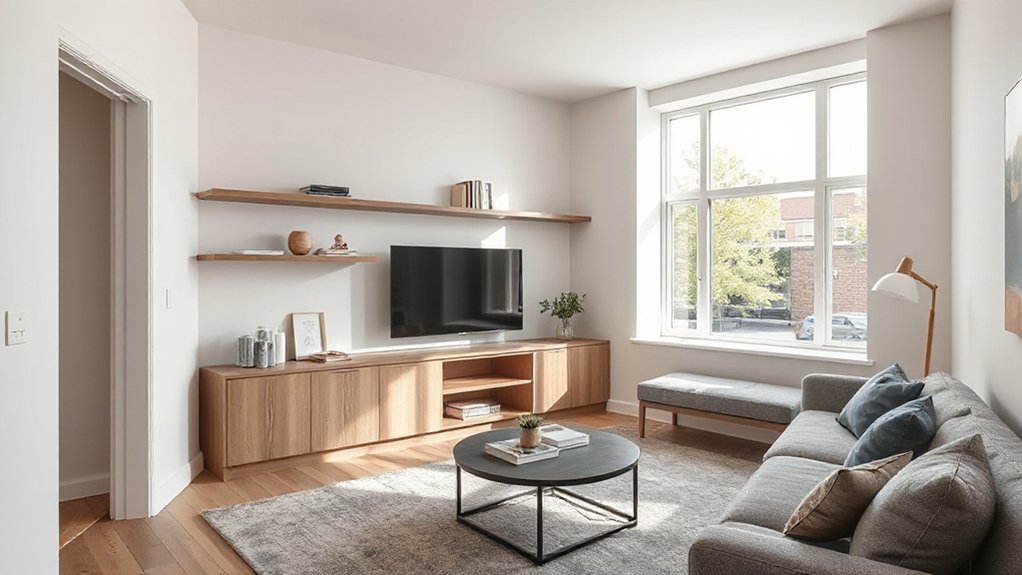
Start with built-in range storage to keep essentials off the floor and out of sight.
Prioritize clear pathways by hiding cords, buffers, and small furniture that could trap foot traffic.
As you design, guarantee every storage piece supports both function and flow without creating clutter.
Built-In Range Storage
- Align the built-in range with adjacent cabinetry for a continuous line that unifies the room.
- Use shallow, pull-out drawers for spices, cookware, and utensils to reduce rummaging.
- Choose integrated panels that hide appliances and create a clean, welcoming kitchen atmosphere.
This approach earns comfort and belonging every time you cook, while preserving sightlines and space. Built-in range, kitchen cabinetry work together to support effortless movement and a cohesive, relationships-first vibe.
Clear Pathways First
Clear pathways should guide every design choice, so storage stays seamless without crowding walkways. You organize with intention: assign a dedicated spot for every item, then build storage that serves that need without creating obstacles. Opt recessed shelving, slim consoles, and wall-mounted cabinets to keep floor space open and traffic smooth.
Think Feng Shui principles—place frequently used items within easy reach and avoid clutter that blocks energy flow. Use Acoustic Design ideas, like soft textiles and cushioned surfaces near common seating, to absorb noise from foot traffic and conversations.
Label bins for quick return, use drawer dividers, and choose furniture with built-in storage to reduce stray items. This approach reinforces belonging, keeps movement effortless, and preserves a calm, expansive feel.
Add Texture and Accessories for Airy Visuals
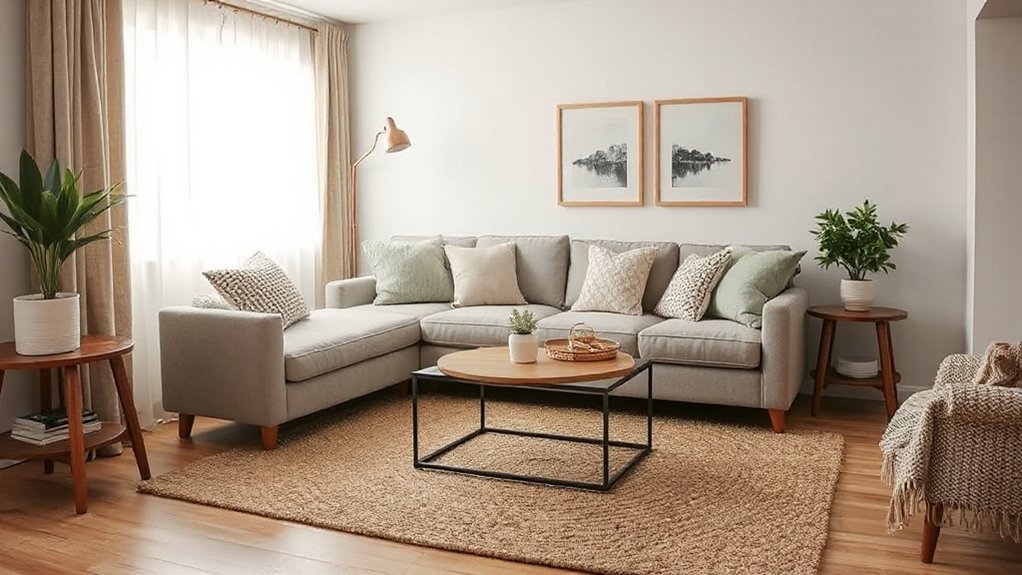
To create airy visuals in a small living room, add texture and thoughtful accessories that catch light and keep lines clean. You’ll optimize space by choosing Textured fabrics and decorative accessories that feel cohesive, not cluttered. Prioritize items with reflective or matte finishes to bounce light without weight.
- Layer textures: a soft throw, linen cushions, and a wool rug to add depth without crowding.
- Select light-colored accessories: metallic accents, glass vases, and ceramic books for visual air.
- Limit each surface: one focal display, one plant group, one decorative basket to maintain calm.
Keep scale in mind, and rotate pieces seasonally to preserve freshness. This approach creates belonging without overstatement, helping your room feel inviting and expansive.
Define Zones Without Heavy Partitions
You can define distinct zones in a small living room without heavy partitions by using furniture placement and visual cues. Start with a clear primary seating area, then carve a subtle secondary zone with rugs, lighting, and a lower sofa back or console to create boundary lines.
Choose pieces that float rather than crowd walls, so sightlines stay open and inviting. Use height, color, and texture to guide zone delineation without creating walls, applying partition alternatives that feel seamless.
Align lamps and side tables to emphasize the conversations and activities you want in each area. Keep clutter tucked away and maintain a single, cohesive palette for unity.
This approach strengthens belonging while preserving flow and flexibility.
Deploy Scalable, Multi-Functional Pieces That Grow With You
As your space evolves, choose scalable, multi-functional pieces that adapt with you rather than outgrow, helping you preserve open sightlines and cohesive zones. You’ll prioritize modular furniture that can reconfigure for gatherings or quiet evenings, and opt for adaptable layouts that shift with needs.
This approach keeps rooms feeling expansive while you grow into your space.
Start with a modular sofa that can reassemble into different seating setups, plus a table that folds or extends as needed.
Choose storage and media furniture with hidden compartments to maintain clean lines and flexible use.
Select seating that doubles as terminals for work, dining, or lounging, so every inch serves a purpose.
This mindset reinforces belonging, ensuring your small living room remains usable, welcoming, and forever adaptable.
Stay Flexible: Quick Fixes for Future Changes
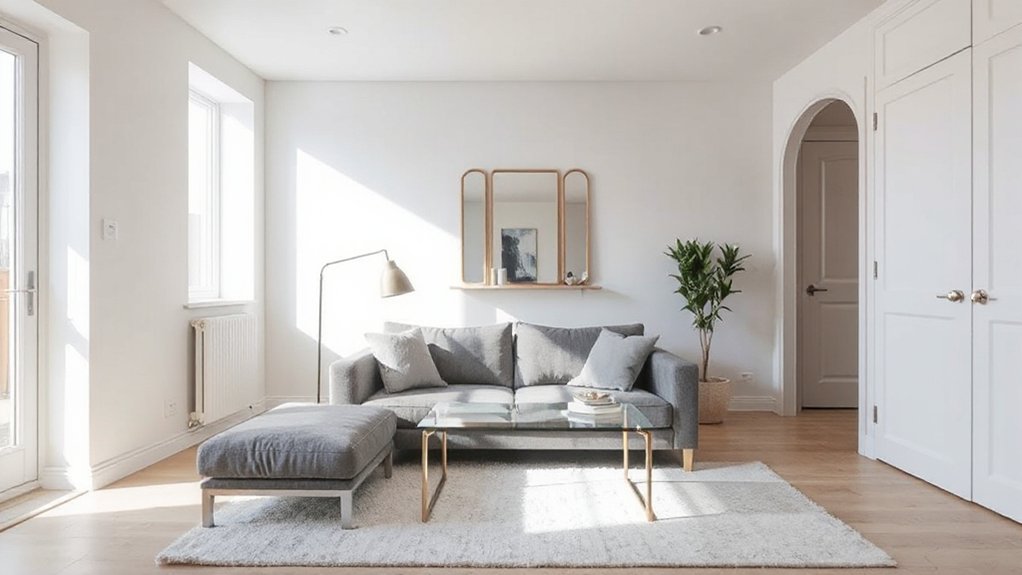
Even when you’re aiming for a clean, expansive feel, stay flexible with quick fixes that adapt as life changes. Start with Flexible furniture that shifts as needs evolve—think modular seating, nesting tables, and wall-mounted storage you can relocate.
Keep room flow open by delaying fixed accents; choose portable lighting and mirrors you can reposition to alter scale. Embrace adaptable layouts: position seating to invite conversation, then reconfigure for workouts, meals, or movie nights without reworking the room.
Use neutral bases and removable textiles to refresh the mood in minutes. Label zones subtly with rugs or lighting instead of walls. Finally, choose multifunctional pieces that reveal new uses over time, reinforcing belonging through effortless, smart adaptability.
Frequently Asked Questions
How Can I Measure a Small Room for Better Layout Decisions?
You’ll measure the room by walls, doorways, and windows, then jot down lengths and widths. Start with the longest wall, add alcoves or built-ins, and sketch notations for clearances.
Use a tape measure, note door swings, and include natural light zones.
Prioritize furniture placement and space planning, ensuring at least 18 inches between pieces for flow.
Use these measurements to test layouts on paper, then trust your instincts for a welcoming, functional setting.
What Lighting Combos Instantly Create Perceived More Space?
Ambient lighting and task lighting instantly reshape perception by layering glow and focus.
You’ll want ambient lighting—soft, even overhead or wall-washed—it fills shadows and enlarges the space.
Add task lighting at key zones like seating and reading corners to create depth without clutter.
Use dimmers to adjust mood, and keep color temperature consistent for coherence.
You’ll feel more connected and intentional, as these combined lighting choices invite belonging and practical comfort.
Can Color Tricks Make a Room Feel Taller Without Repainting?
Color tricks can make a room feel taller without repainting. Use color illusions like cool, light accents and vertically oriented accessories to draw the eye upward, creating Visual expansion.
Opt for sheer window treatments and contrasting trim to emphasize height, and keep furniture low and streamlined to preserve ceiling line readability.
You’ll notice a steadier sense of height, calmer cohesion, and a room that feels taller without major changes.
Which Multifunctional Items Save Real Floor Area Most Effectively?
You should prioritize multi purpose furniture that folds, nests, or stacks, because it saves real floor area most effectively. Choose pieces with built‑in space saving storage for blankets, remotes, and chargers.
A sofa bed, storage ottoman, and wall‑mounted drop leaves maximize flexibility without crowding.
Opt for modular units you can reconfigure as needed, and keep pathways clear. You’ll feel a stronger sense of belonging when your gear tucks away neatly and stays accessible.
How Do I Hide Cords and Clutter Without Visualizing Partitions?
Cable management hides cords and clutter concealment, so you create calm instead of chaos. You streamline outlets with a single power strip, route cables along baseboards, and stash excess in a chic trunk or cord box.
You mount devices behind furniture and use wireless options where possible. You label circuits, tuck remotes, and angle screens to reduce eye clutter.
You’ll feel belonging as your space breathes, organized, intentional, and welcoming.
Conclusion
You’ve lit a room with fewer walls, and your space breathes where you once held it in. Let each item be a key and every corner a doorway, guiding light like a compass you trust. When furniture whispers, it’s because space listens. Use color as a gentle horizon, texture as wind through curtains, and storage as a clear path you walk daily. Stay adaptable; the room isn’t finished, it’s evolving—simply, effectively, yours.