
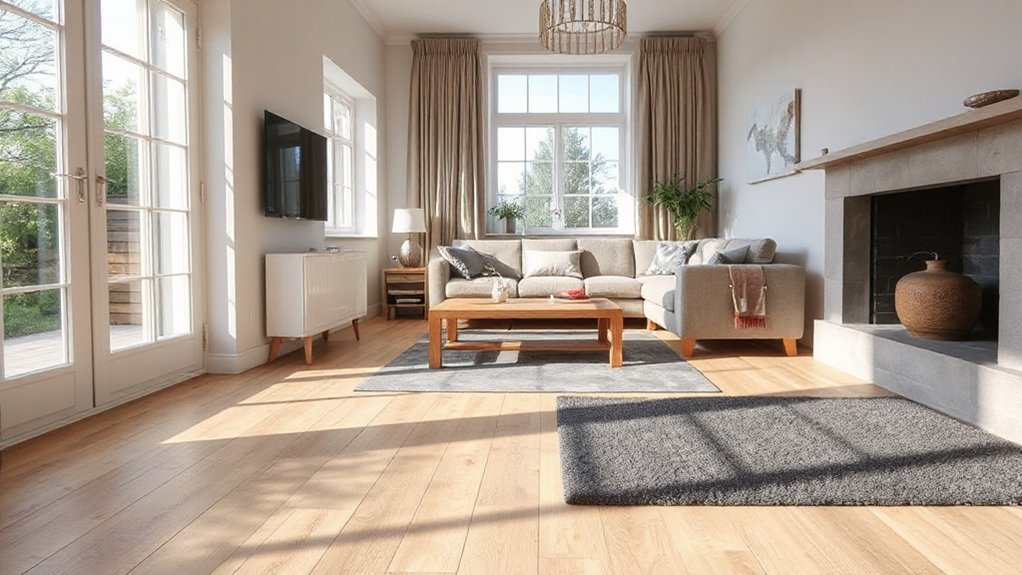
Choosing interior flooring in the UK starts with balancing comfort, durability, and moisture resilience across rooms. For high-traffic areas, choose resilient options like high-density laminate, luxury vinyl, or porcelain tile with tight seams. Bedrooms benefit from softer textures, such as carpets or engineered timber. Consider continuous underfloor insulation and moisture barriers to cut drafts and condensation. Test samples in real light and foot traffic, then compare durability and maintenance costs. Ready to learn more actionable picks and a quick decision framework.
How UK Homes Floor and Insulate for Comfort
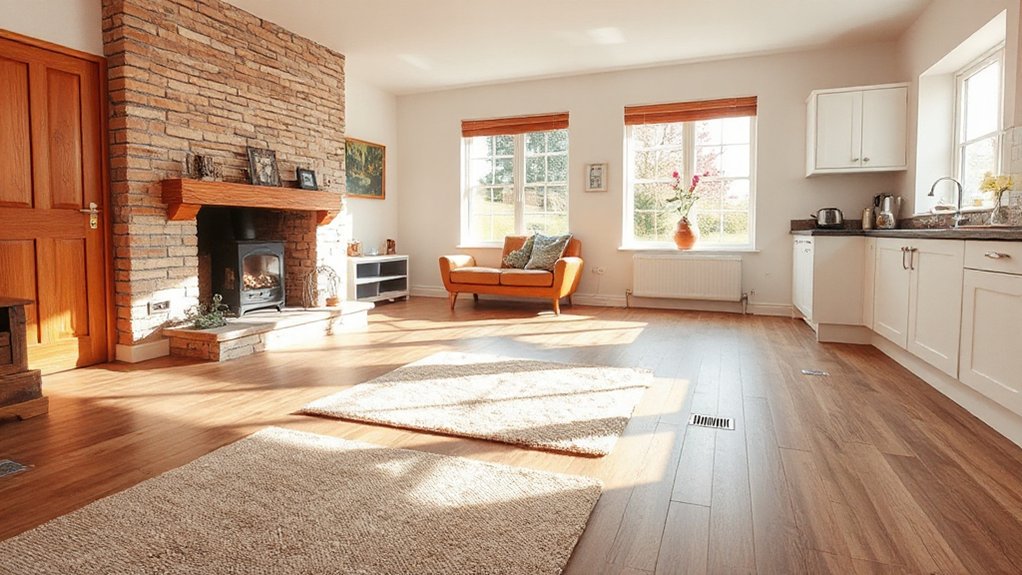
Good insulation and a solid floor combination keep UK homes warm and comfortable year-round. You’ll prioritize continuous insulation beneath and around living spaces, pairing it with a floor that minimizes cold transfer.
Choose a substrate that reduces drafts, then add a single, well-sealed layer of underfoot warmth—think engineered timber or a dense carpet underlay for comfort and efficiency.
Custom insulation helps tailor performance to your home’s quirks, sealing gaps where heat escapes.
For mood and practicality, integrate ambient lighting above and near zones that feel chilly, so warmth appears even when the sun fades.
Orient your layout to high-traffic areas, placing rugs over chilled zones to boost feel and resilience.
This approach delivers steady warmth, reduced bills, and a sense of belonging throughout your home.
Choose the Right Underfoot Feel for Comfort
Choosing the right underfoot feel starts with matching your floor finish to how you live. You want a surface that aligns with daily routines, foot traffic, and the pace of your home.
Underfoot softness matters in front of the sofa, in bedrooms, and along cozy pathways, giving you inviting warmth without sacrificing practicality. For high-traffic areas, seek materials that offer resilience and consistent comfort, so you don’t compromise on ease of use or quick maintenance.
In living spaces, a gentler feel can transform lounging into a sanctuary, encouraging conversation and connection. Consider how shoes come off, how kids play, and how pets roam.
Select a finish that balances comfort with ease, creating a welcoming, cohesive home where everyone belongs.
Durability for Busy Hallways and Living Rooms
Durability in busy hallways and living rooms means selecting materials and configurations that stand up to constant foot traffic while still feeling welcoming. You’ll lean toward resilient surfaces that resist scuffs, dents, and wear without looking clinical.
Choose engineered wood with a tough lacquer, high-density laminate, or robust luxury vinyl planks for easy maintenance and quick recovery after impacts. Consider solid or engineered stone-look porcelain tiles in high-traffic zones for longevity and a premium feel.
Prioritize secure installation, slip resistance, and simple edge detailing to reduce maintenance needs. Aesthetic options matter: think muted tones that hide dirt, or warmer shades that invite gathering.
Flooring trends favor durability-forward designs, easily refreshed with area rugs or subtle blends, keeping spaces cohesive and inclusive.
Moisture Resilience: Humidity, Condensation, and Spills
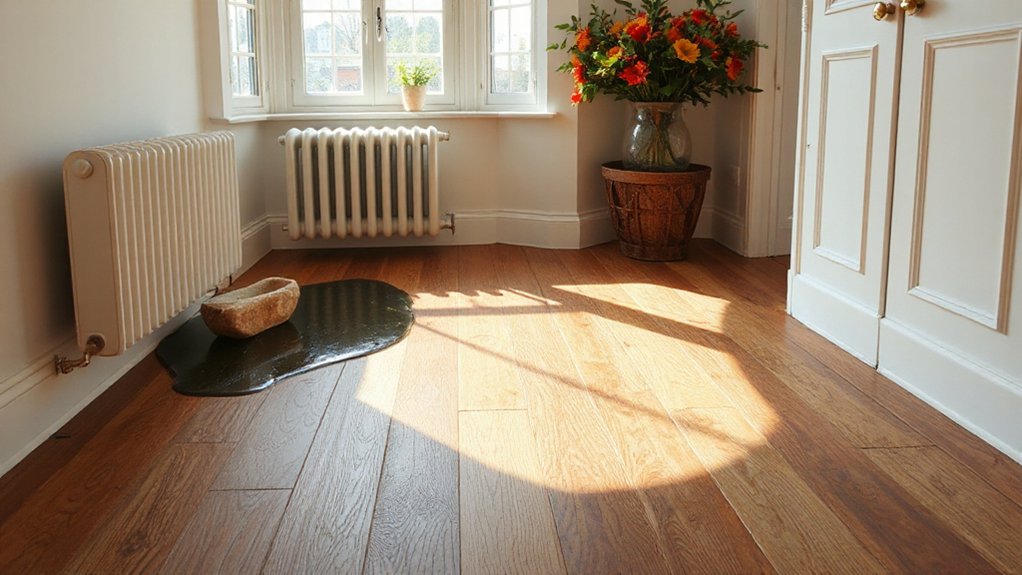
You’ll want to tighten humidity control, prevent condensation, and shield spills with flooring that’s built for moisture resilience. Start with practical humidity management tips, and choose materials that resist warping and fading when moisture is present.
We’ll cover condensation prevention measures and spill-resistant flooring options to keep surfaces durable and easy to maintain.
Humidity Management Tips
Humidity is often the hidden culprit behind warped boards and peeling finishes, so start by controlling moisture at the source. To keep floors stable, monitor humidity levels and tackle spills immediately with absorbent cloths.
Improve air quality with practical ventilation strategies: open windows during dry days, run exhaust fans in kitchens and bathrooms, and consider a balanced strategy that circulates air without creating drafts.
Dehumidifier effectiveness matters; choose a model sized for your space and set it to a steady relative humidity around 45–55%.
Seal gaps around doors, vents, and floor edges to prevent moisture ingress.
Regularly inspect underfloor voids for damp pockets, and address leaks promptly to protect finish integrity and floor longevity.
Condensation Prevention Measures
Moisture control doesn’t stop at drying spills and managing air; condensation can form across cool surfaces and hidden pockets, so you must stop it before it affects floors.
To prevent buildup, install effective ventilation systems that exchange indoor air without drafts, and run them consistently, especially in kitchens and bathrooms.
Use moisture barriers beneath flooring where possible, and seal gaps around pipes and along edges to minimize cold surfaces where humidity condenses.
Maintain steady indoor temperatures, avoid rapid hot-cold swings, and vent clothes dryers outside or via a dedicated exhaust.
Choose flooring with acoustic or thermal benefits that tolerate minor moisture exposure.
Regularly inspect underfloor spaces for damp patches, and address leaks promptly to preserve comfort, durability, and a sense of home.
Spill-Resistant Flooring Options
Spill-resistant flooring protects your space by resisting water, wine, and other common messes without warping or staining. In UK homes, you want a solution that feels reliable under daily challenges, not fussy maintenance.
Look for materials that are inherently moisture resilient and easy to clean, so you don’t second-guess every spill. Prioritize tight seams, water-resistant finishes, and protective topcoats that resist mold and warping.
A practical choice is vinyl or composite boards with grout-like joints that repel liquids, plus a stain-proof surface treatment for everyday life.
Consider subfloor preparation and proper drainage to sustain performance. Spill resistant, stain proof options help you create a calm, confident environment where family moments stay uninterrupted and flooring remains welcoming.
Flooring Materials 101: Wood, Laminate, Vinyl, Tile, Carpet
When choosing flooring, you’ll weigh wood, laminate, vinyl, tile, and carpet for durability, cost, appearance, and how they handle traffic and moisture.
Wood delivers warmth and heritage; laminate mimics wood at lower cost with easier maintenance; vinyl offers resilience, water resistance, and design versatility; tile provides durability and cool, crisp aesthetics; carpet adds comfort and acoustic softness.
Consider installation needs, subfloor condition, and long-term care.
For decorative patterns, you can create distinct zones or focal points, while color options tend to define mood and perceived space.
Choose textures and finishes that suit your home’s lighting and traffic.
Align materials with your lifestyle, budget, and sense of belonging in the space, ensuring harmony with trims, furnishings, and family routines.
Weather and Flooring: How UK Climate Affects Performance
UK weather directly tests flooring performance: temperature swings, humidity, and seasonal dampness affect how materials behave over time. You’ll feel the impact in how joints seal, boards flex, and finishes wear. To thrive, consider climate considerations and robust insulation strategies that keep spaces stable and comfortable year‑round.
- Choose flooring with dimensional stability and moisture resistance to cope with UK humidity shifts.
- Pair it with underlayment and continuous insulation strategies to minimize heat loss and cold drafts.
- Seal junctions and air-tight gaps to prevent condensation and movement that degrade performance.
Maintenance and Longevity: Cleaning, Refinishing, and Repairs
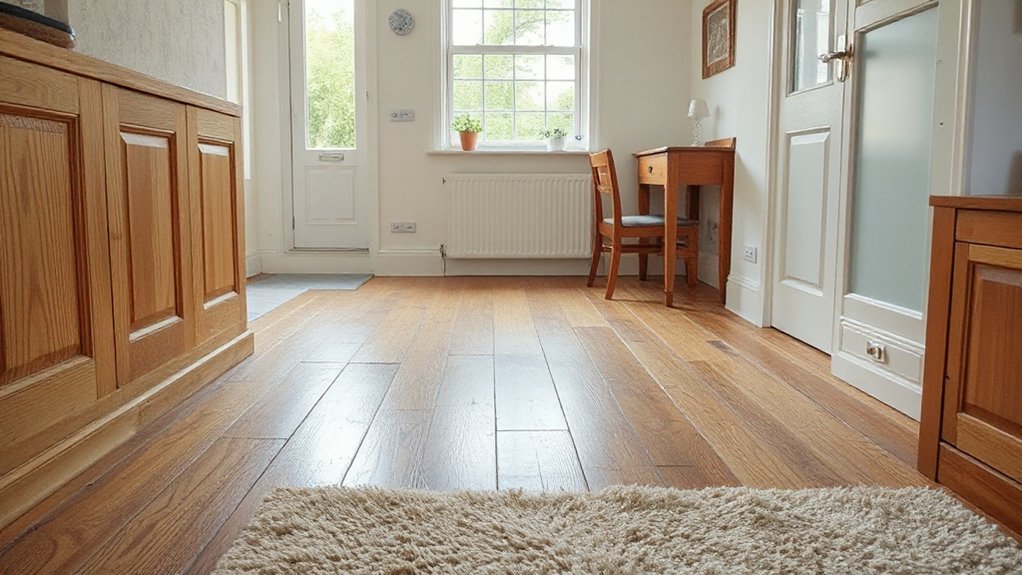
Maintenance and longevity hinge on disciplined cleaning, timely refinishing, and proactive repairs. You keep floors looking their best by establishing consistent Cleaning routines that fit your daily life, not a chore chart you’ll abandon.
Vacuum or sweep regularly to prevent grit that dulls finishes, then wipe with a damp cloth for spots. When wear appears, apply the appropriate finish or refinishing step promptly to halt progression.
If damage occurs, use targeted Repair techniques—patch small gouges, reseal seams, and restore grip where needed. Choose products compatible with your flooring type and climate, and follow manufacturer guidance closely.
Smart Budgeting: Cost, Installation, and Value
Smart budgeting for interior flooring means knowing upfront costs, installation options, and long-term value so you can choose a solution that fits both your space and your wallet.
Budget planning and cost comparison guide you to practical choices without compromising style or comfort. You’ll weigh initial price, installation labor, and future maintenance to determine true value.
- Compare total installed costs, including underlay, prep, and disposal, to avoid hidden fees.
- Assess long-term durability and maintenance needs to predict lifecycle costs and resale appeal.
- Balance aesthetics with budget, choosing materials that deliver comfort, performance, and a shared sense of belonging in your home.
Room-by-Room Picks: Living Room, Hallways, Kitchen, Bedrooms
In the living room, prioritize durability to handle daily traffic, spills, and furniture rearrangements without constant upkeep.
For bedrooms, prioritize comfort with softer textures and warmth underfoot to improve rest and relaxation.
We’ll compare practical picks across living spaces and bedrooms to help you balance resilience with comfort.
Living Room Durability
Living rooms see a lot of daily use, so durability matters more than style alone. You want flooring that resists spills, scratches, and heavy foot traffic without breaking the bank. Prioritize construction quality, surface finish, and underfoot feel to sustain long-term appeal.
Eco-friendly options can align with performance, longevity, and your values, while still delivering a warm, inviting space. Consider how the floor ages with sunlight and daily wear, and choose finishes that resist denting and fading.
Aesthetic considerations matter, but they shouldn’t compromise resilience. Your choice should balance practicality with comfort, so the room remains welcoming for family and guests.
- Choose dense, textured surfaces for grip and scratch resistance.
- Opt for seals and finishes that protect against moisture and wear.
- Plan for repairability and easy replacement of damaged sections.
Bedroom Comfort Choices
When choosing bedroom flooring, prioritize comfort underfoot, quiet performance, and easy maintenance, since this room should feel inviting and restful after a long day. You’ll want materials that stay warm underfoot and soften sound, so you wake refreshed.
Prioritize textures that feel soothing under bare feet, then pair with color coordination that promotes calm rather than contrast. Consider carpet for maximum softness and insulation, or engineered wood for a softer feel with durable wear.
Textured finishes add depth without glare, helping hide minor wear. Choose wakeful hues like muted blues, warm taupes, or soft greys that harmonise with bedding and curtains.
Keep progression simple across zones, and select flooring that’s easy to clean, resistant to spills, and fits your daily routine.
Quick Decision Framework: Test, Compare, Choose
A quick decision framework helps you pick flooring fast and with confidence: test options, compare results, and choose the best fit for your space. You’ll feel assured by a structured approach that respects both design aesthetics and energy efficiency, keeping your home cohesive and comfortable.
Follow these steps to decide quickly, without second-guessing.
1) Test samples in your rooms for real lighting, foot traffic, and acoustics.
2) Compare durability, maintenance, and running costs to find the strongest long-term value.
3) Choose a flooring that harmonizes with the vibe you want and supports efficient heating and cooling.
This framework helps you belong—confidently selecting materials that look right, save energy, and align with your daily rituals.
Frequently Asked Questions
What Are the Best Uk-Friendly Floor Types for Allergy-Prone Homes?
You want the best UK-friendly floor types for allergy-prone homes, and here’s the answer: choose hard-surface options like ceramic or porcelain tile, polished concrete, or vinyl with low VOCs, plus hypoallergenic underlays.
These reduce dust and mold buildup while staying durable.
Opt for Eco friendly materials and easy-to-clean finishes to support ongoing care.
They offer aesthetic versatility and fit a welcoming, belonging-driven home.
You’ll feel confident, practical, and at home with this setup.
How Does Underfloor Heating Affect Different Flooring Options?
Underfloor heating can raise comfort by delivering consistent warmth, but it works best with compatible flooring. Radiant warmth is most effective with engineered wood, ceramic, porcelain, and natural stone, while thick carpet can hamper heat transfer.
Regarding energy efficiency, you’ll often see a 10–30% drop in running costs when paired with well-insulated floors. You’ll notice smoother temperature control, quicker response, and a sense of belonging in a cozy, family-friendly space.
Which Floors Resist Moisture From Typical UK Humidity Best?
You’ll want moisture resistant materials like porcelain, ceramic, stone, and vinyl, paired with proper underlayment and vapor barriers.
Humidity control techniques—good ventilation, dehumidifiers in damp rooms, and ensuring gaps for air flow—keep doors and windows dry.
Choose tiles or polished stones in moisture-prone zones for durability, while engineered wood with waterproof cores or laminate rated for moisture resistivity can work with care.
Belonging comes from sensible, proactive protection.
What Is the True Cost per Square Meter for Common Options?
Cost comparison: the true cost per square meter varies by material, but you can plan confidently with rough targets.
Vinyl luxury planks run around £20–£40/m² installed, laminate about £15–£30/m², engineered wood £40–£90/m², ceramic tile £25–£60/m², and solid wood £60–£120/m².
Material pricing shifts with finish and underlay.
You’ll gain belong by choosing value—durability, not just price—and budgeting for installation, shifts, and a quality moisture barrier.
How Durable Are Floors in Pet-Friendly UK Households?
Pet-friendly floors in UK homes stay durable with the right choices. You’ll want scratch-resistant finishes and textured surfaces to handle pet scratches, while tight joints resist moisture and fur buildup.
Regular flooring maintenance keeps you confident—vacuum, wipe, and re-seal as needed.
With smart materials and proper care, you’ll enjoy long-lasting performance, comfort, and a sense of belonging in your space.
Choose durable options, reduce scratches, and maintain beauty over time.
Conclusion
Your choice guides comfort through every step you take. Picture your floors as a story you live on daily: warm carpet for late mornings, sleek wood for confident steps, or tough vinyl that seasons life in busy hubs. Consider footfall, moisture, and mood, then balance cost with longevity. Test samples, compare textures, and trust what feels right underfoot. With smart budgeting and room-by-room picks, you’ll finish with floors that endure, delight, and anchor your home.