
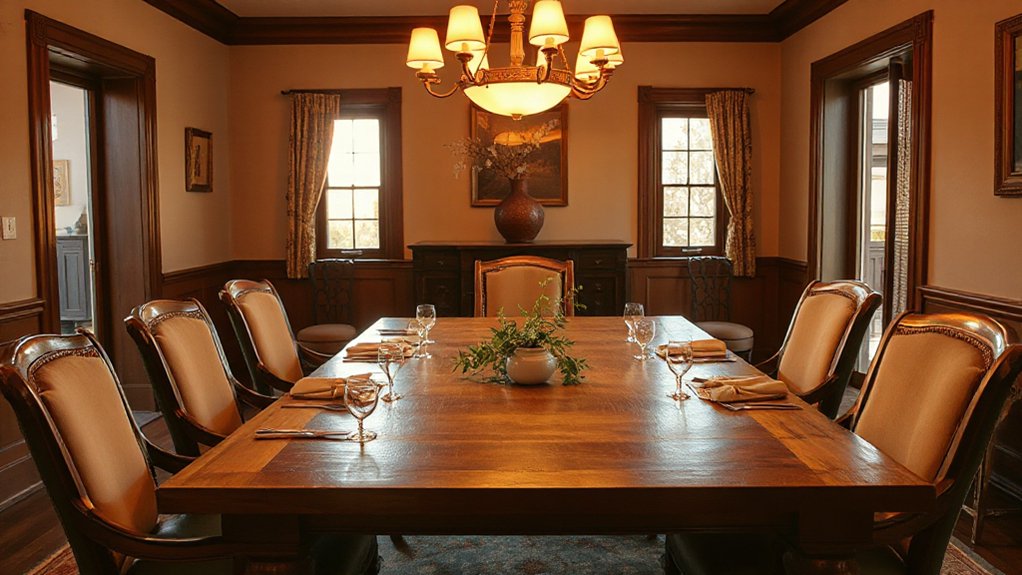
To create a warm, inviting dining room, start with a cozy, personal vibe: pick a focal point like a handcrafted table or fireplace, then layer textures—knits, linen, and leather—alongside natural materials such as wood and stone. Choose a welcoming color palette of two warm neutrals with a soft accent, and keep saturation low. Plan seating for conversation, add ambient, task, and accent lighting, and tuck in seasonal accents and subtle found objects for warmth. Want more specifics? Stay close.
Define Your Cozy Dining Room Vibe
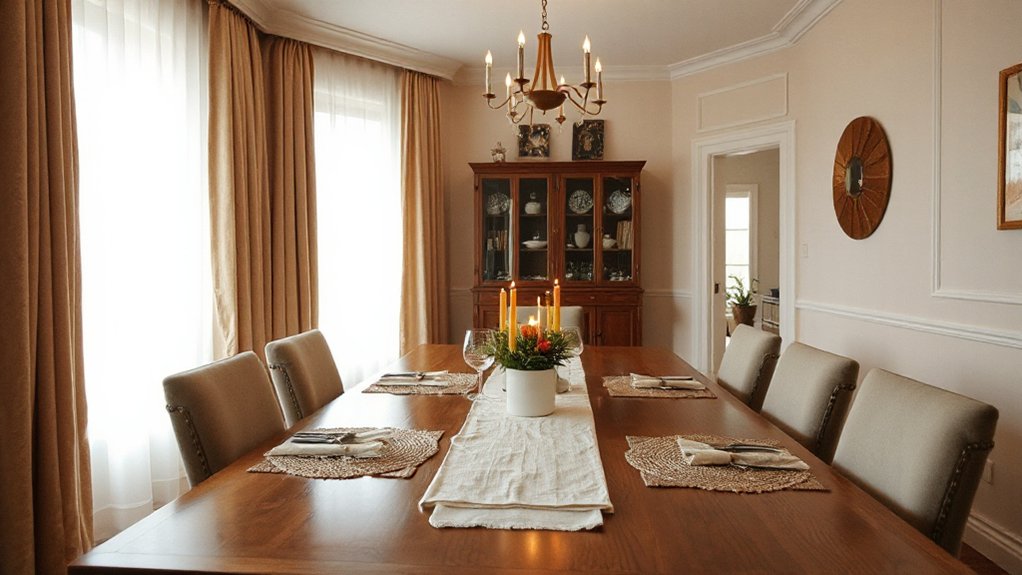
To define your cozy dining room vibe, start by envisioning how you want the space to feel: warm, intimate, and welcoming. You’ll shape the mood with practical choices you can live with daily.
Begin by selecting a focal point—whether a handcrafted table, a fireplace, or a soft-glow chandelier—and let others echo its character.
Choose decorative accents that reflect your story: textures, metals, and crafts that invite touch and conversation.
Integrate seasonal decor in a way that’s simple to swap, so you never feel crowded or dated.
Prioritize comfortable seating, easy-clean surfaces, and clear sightlines for effortless conversation.
Keep clutter minimal, lighting adjustable, and color restrained; then add small, meaningful touches that remind you and your guests you belong.
Choose a Welcoming Color Palette and Textures
Choosing a welcoming color palette and textures starts with a simple rule: pick two warm neutrals as your base and add one soft accent that echoes your room’s personality.
You’ll build color harmony by balancing earthy beige, warm taupe, or creamy ivory with a gentle pop of terracotta, sage, or blush. Keep saturation low for everyday calm, then introduce texture layering to deepen interest.
Options include a stitched leather chair, chunky knit throws, linen drapes, and a sisal rug. Consider undertones and lighting so neutrals read cohesive rather than flat.
Test swatches side by side, and view at different times of day. The goal is a timeless, inviting space where textures invite touch and colors quietly affirm belonging.
Pick a Focal Point and Plan Seating for Conversation
Start with a clear focal point, like a dining table or a built-in console, so the room reads on purpose.
Plan seating to face that point and guarantee conversations travel eye to eye, not across awkward gaps.
Check flow and sight lines from entry to seating so guests can move, mingle, and see the focal point without crowding.
Focal Point Placement
A strong focal point anchors the dining room and guides seating for conversation, so start by picking a feature you genuinely love—an eye-catching chandelier, a bold wall color, or a panoramic window view.
With focal point placement in mind, arrange furniture to create a clear, inviting flow that centers on that feature. Position the table so conversations stay oriented toward the focal point and away from distractions, while ensuring walkers and guests move comfortably.
Use complementary textures and lighting to reinforce visual balance, avoiding competing elements that pull attention. Consider scale: the focal point should feel anchored, not overwhelmed.
This approach fosters belonging, practicality, and timeless charm, helping everyone feel included in the room’s rhythm and mood.
Seating for Conversation
When you pick a focal point and plan seating around it, you establish a natural flow that invites conversation. You choose a central feature—perhaps a warm table group or a comfortable sideboard—and arrange seating to face it softly.
Prioritize sofa arrangements that create intimate clusters without blocking traffic, so people can lean in without feeling crowded. Allow for at least two conversation corners: a main seating circle and a quieter nook for private chats.
Consider window treatments that frame light without glare, keeping eyes at conversational eye level. Keep you aware of clearance around chairs so guests can sit and stand easily.
Finish with a simple rug to define zones and a coherent, welcoming palette.
Flow and Sight Lines
From that point, arrange seating to promote conversation without blocking passages to the kitchen or living spaces. Keep pathways wide enough for movement and natural light to reach every seat.
If you have tall architectural details, test sight lines from chair to door and window, adjusting angles as needed.
Consider a rug that anchors the table while guiding traffic. Use accents that echo the focal point to unify the room, enhancing a sense of belonging.
Natural light strengthens warmth; celebrate it with unobtrusive window treatments and reflective surfaces.
Layer Lighting: Ambient, Task, and Accent for Warmth
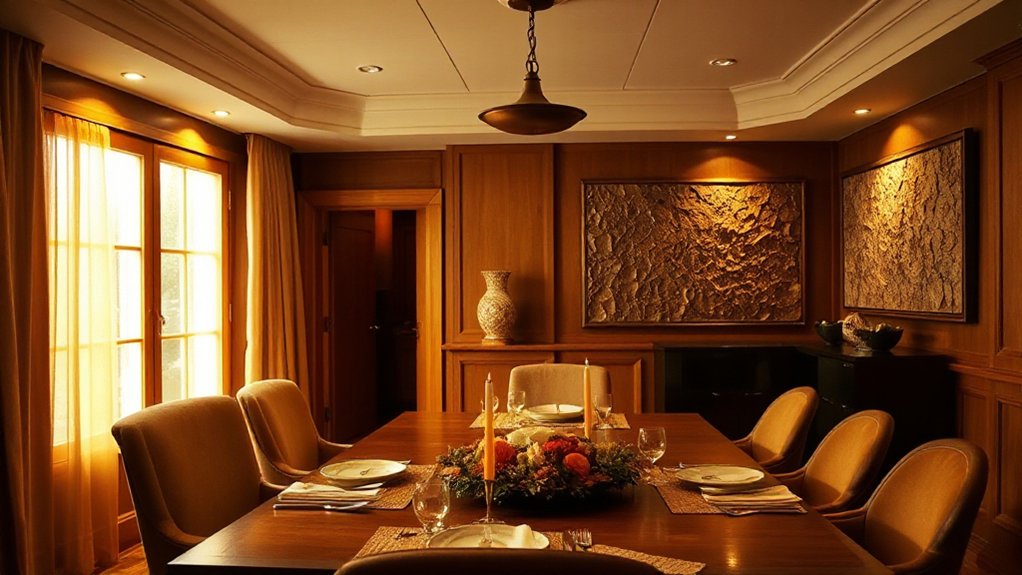
To create a warm, inviting dining room, you’ll layer lighting into three distinct categories: ambient, task, and accent. You’ll balance soft overall glow with focused illumination for dining and detail, ensuring every guest feels at ease.
Choose chandelier placement to anchor the table without glare, then add wall sconces to sculpt shadows and invite conversation. Dimmer switches let you shift mood from bright to intimate in moments. Select warm bulbs in a consistent color temperature for a cohesive feel.
Layered lighting should highlight textures, artwork, and architectural features, while avoiding harsh contrast. This approach builds belonging by shaping a calm, inclusive space.
- Start with a central chandelier that complements your table size and ceiling height
- Use wall sconces to soften corners and frame the dining area
- Pair dimmable options for flexible ambience
- Choose warm, inviting color temperatures (2700–3000K)
- Place lighting to avoid direct glare on faces and tableware
Select Furniture That Encourages Lingering
Choose comfortable seating options that invite lingering, with cushions and support that you can test in person.
Pair a properly sized table with chairs that fit your space, ensuring easy movement and a balanced feel.
Layer cozy textiles like upholstery, throws, and soft rugs to add warmth and tactile interest without overcrowding the room.
Comfortable Seating Options
Comfortable seating should invite guests to linger, so choose pieces that balance support with coziness. You’ll find that upholstery and thoughtful construction make every meal feel like a welcome retreat, not a quick pass through.
Opt for seating that supports good posture while inviting conversation, with cushions that compress softly under relaxed bodies. Upholstered chairs and bench seating work with varied setups, letting you mix intimate and communal moments.
Prioritize durable fabrics, easy maintenance, and solid joints. This combination creates a timeless foundation for lingering, laughter, and connection.
- Plush, supportive cushions that rebound quickly
- Upholstered chairs with sturdy frames for long gatherings
- Bench seating to foster sightlines and ease
- Semi-firm to medium-density foam for comfort and longevity
- Tight-fit, stain-resistant fabrics in warm tones
Proportional Table Sizing
Sizing the table to your space and seating is key to prompting lingering conversations. When you pick a table, consider table proportions that fit both room and routine. You want enough surface for plates, candles, and shared dishes without crowding chairs or feeling distant from guests.
Aim for generous legroom and a comfortable distance between guests so conversation flows naturally. Balance the table length with seating capacity; avoid oversized surfaces that dominate, or tiny ones that feel crowded.
Seating harmony matters: align chair width with table width, and leave space for movement around the table edge. A well-proportioned setup makes guests instinctively linger, fostering inclusive, relaxed dining energy.
Practical choices, thoughtful measurements, and timeless scale create belonging that lasts.
Cozy Textiles Layering
Layering soft textiles is what invites guests to linger, so start with a foundation of comfort and tactile warmth. You choose upholstery, rugs, and window treatments that invite smooth touch and visual calm, then layer fibers to build depth.
Focus on fabric patterns and textile layering that feel cohesive, not busy, so the room breathes and people settle in. Think natural fibers, tight weaves, and subtle textures that play together as you move from chair to chair.
- Thick wool throws draped across a chair for instant touch and warmth
- Low-pile rug under the table to reduce noise and invite feet to settle
- Linen napkins in a quiet pattern for everyday elegance
- Velvet cushions to add color, sheen, and comfort
- Textured curtains that soften light and frame conversation
Add Textiles and Textures: Throws, Cushions, Rugs
Textures and textiles instantly warm a dining room, so start by choosing throws, cushions, and a rug that complement your table and lighting. Pick textiles with durable, washable fabrics in midweight weaves for everyday use.
Balance color and texture by layering solids with subtle patterns to avoid visual chaos. Coordinate with your color palette using cohesive Color swatches that echo wall tones and furniture finishes.
For throws, select a medium-weight knit or brushed wool for softness and warmth without bulk. Cushions should mix textures—linen, velvet, or bouclé—in reverent repetition of your scheme.
Rugs anchor the space; opt for a low-pile or flat weave that tolerates foot traffic while adding warmth underfoot. Textile patterns should feel intentional, not fussy, enhancing togetherness rather than competing with lighting.
Personalize With Found Objects and Handmade Centerpieces
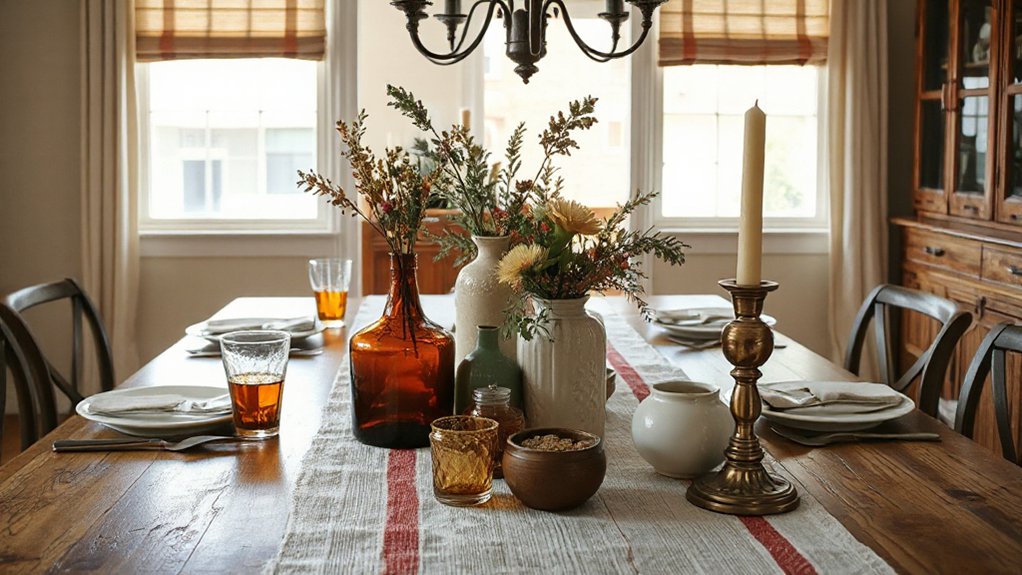
Personalize the dining room by collecting found objects and crafting handmade centerpieces that reflect your taste without stealing the scene. You’ll curate pieces that tell a story yet stay quiet on the table, so conversation remains the focus.
Choose objects with meaning, weight, and texture, then group them thoughtfully to avoid chaos. DIY centerpieces deepen the room’s warmth when you balance scale, color, and proportion.
The result feels personal, affordable, and timeless, inviting guests to linger.
- Found object decor that sparks memory without shouting
- Handmade centerpieces built from simple materials
- Layered textures that invite touch and comfort
- Subtle metallic or natural accents for cohesion
- A clear focal arrangement that supports conversation
Introduce Natural Elements: Wood, Plants, Linen, and Stone
Natural elements anchor the dining room in warmth and calm. You’ll balance wood, plants, linen, and stone to create tactile detail that lasts.
Start with a solid wood table as the anchor, then layer in organic materials for texture and depth. Choose chairs with a natural finish and comfortable proportion, so lingering dinners feel effortless.
Incorporate live or dried greenery in simple vessels to bring life without clutter. Linen textiles—napkins, runners, and curtains—soften edges and absorb sound, enhancing intimacy.
Stone accents, like a simple backsplash or a tabletop tray, ground the space with quiet gravity. Think natural accents and organic materials as your everyday palette, practical, timeless, and welcoming to every guest.
Scent and Sound: Small Cues for a Homey Atmosphere
You’ll start with gentle room aromas and soft ambient melodies to set a welcoming tone as guests arrive. Use a few well-chosen scents and low, unobtrusive music to shape the mood without overpowering conversation.
Keep the cues subtle and consistent, so the atmosphere feels timeless and effortless.
Gentle Room Aromas
A gentle aroma and soft background sounds can quietly anchor a dining room, making meals feel calmer and more inviting. You’ll choose calm notes that mingle with conversation, not overpower it, and you’ll practice restraint with scent diffusion to avoid fatigue.
For quick impact, mix Aromatherapy blends with a small diffuser bottle and monitor nearby airflow. Keep bottles away from heat and direct sunlight.
You’ll layer scents by using subtle, complementary accords in rotation, so guests feel held by continuity rather than novelty. The goal is a welcoming, timeless atmosphere that reinforces belonging here.
- use a gentle Aromatherapy blends profile that remains consistent
- position scent diffusion away from diners and vents
- diffuse for short intervals, then pause
- rotate notes seasonally for comfort
- pair soft scents with quiet surroundings
Soft Ambient Melodies
Place speakers so sound travels evenly without concentrating in one corner. Keep volume low enough to hear each other clearly, yet present enough to feel company. Curate a rotating set of ambient soundscapes—piano, strings, or nature-inflected textures—that creates continuity from kitchen to dining area.
Pair music with lighting and occasion, adjusting as guests arrive or linger. This mindful setup reinforces belonging, making the space feel intentional, welcoming, and comfortably lived in.
Practical Tips for Small Spaces and Seasonal Adjustments
Small spaces demand clever layout and flexible pieces; start by maximizing vertical and wall storage so you can keep the table clear for dining. You’ll notice how smart zoning makes every meal feel welcome, even on a crowded weeknight.
For Seasonal decor, rotate accents with the season so the room feels fresh without crowding surfaces. Make small space storage your ally: choose slim cabinets, floating shelves, and nested options that tuck away easily. Keep cords and clutter out of sight to preserve a calm, warm vibe.
When guests arrive, greet them with a sense of belonging, not furniture chaos.
- Embrace compact, versatile furniture that adapts to gatherings
- Use hidden storage to maintain a clean, cozy table
- Layer textures for warmth without bulk
- Swap seasonal decor in quickly, never cluttered
- Create a clear path to dining and conversation
Frequently Asked Questions
How Can I Hide Clutter Without Compromising Coziness?
Yes—and you can hide clutter without losing coziness. Start with smart storage solutions: slim cabinets, wall niches, and decorative baskets tucked under sideboards.
Choose decorative accents that double as organizers—woven trays, a stylish ottoman with storage, and labeled containers.
Keep surfaces clear but inviting with a single, purposeful centerpiece.
Maintain flow by guiding cords into storage, and rotate items seasonally so the space feels calm, personal, and welcoming.
What Seating Arrangement Boosts Conversation Most?
The seating arrangement that boosts conversation most is a U- or horseshoe shape with chairs close enough for eye contact. You’ll foster shared energy by including a center focal piece everyone can glance at between remarks.
Consider meal timing: place conversations around courses to pace interaction and keep energy steady.
Prioritize seating comfort with cushions and adjustable heights. This setup invites belonging, encouraging you to speak freely and listen attentively, building comfortable, lasting connections.
Which Lighting Color Temperature Feels the Warmest?
You’ll find the warmest feel with a low color temperature, around 2700K to 3000K, giving ambient lighting that cozies up conversations. You’ll notice it looks most inviting near candlelit hues, yet stays practical for meals.
Choose dimmable fixtures so you can adjust the ambient lighting as the evening evolves. Your space becomes timeless and welcoming when you align color temperature with your decor, creating belonging through soft, consistent illumination.
How Do I Mix Textures Without Visual Chaos?
Yes—focus on consistency, then introduce texture gradually. You mix textures by building textural layering: pair smooth wood with soft textiles, leather, and woven elements. Then balance surfaces with subtle patterns.
For Pattern mixing, keep a unified color palette and repeat one motif in small amounts across fabrics, rugs, and cushions. Prioritize comfort and cohesion; avoid clutter.
You’ll feel invited and anchored, as you add tangible depth without visual chaos, creating rooms that welcome everyone.
How Can I Make a Dining Room Feel Bigger?
Make a dining room feel bigger by choosing light, cohesive color schemes and smart furniture placement.
You create space the moment you pick softer neutrals with subtle warmth and keep contrast minimal.
Picture an allegory: the room whispers, “I am spacious when I breathe.”
Align furniture away from windows, use a slim table, and float armless chairs to open sightlines.
Color schemes and furniture placement shape flow, inviting belonging and practical daily use.
Conclusion
You want a dining room that feels warm, inviting, and truly yours, so design around comfort, function, and charm. Define the vibe, select textures and colors, plan seating for easy conversation, and layer lighting for depth. Choose furniture that invites lingering, add personal touches, and bring in natural elements. Infuse scent and sound cues thoughtfully, and tailor for small spaces and seasons. Create a practical, timeless space that welcomes, nourishes, and endures. Enjoy the comfortable glow, every day.