

Cardiff remains a high-demand rental city because you benefit from a strong student pipeline and steady job growth, supported by regeneration and excellent transit links that keep occupancy elevated and yields stable. Demand clusters around affordable, two-bedroom flats and purpose-built student options, with energy-efficient, remodel-ready stock boosting appeal. The city’s culture, nightlife, and walkability drive longer tenancies, while proactive maintenance and data-driven management sustain price discipline. Want more factors shaping this trend? Keep exploring the drivers ahead.
Cardiff Rental Market: A Quick Snapshot
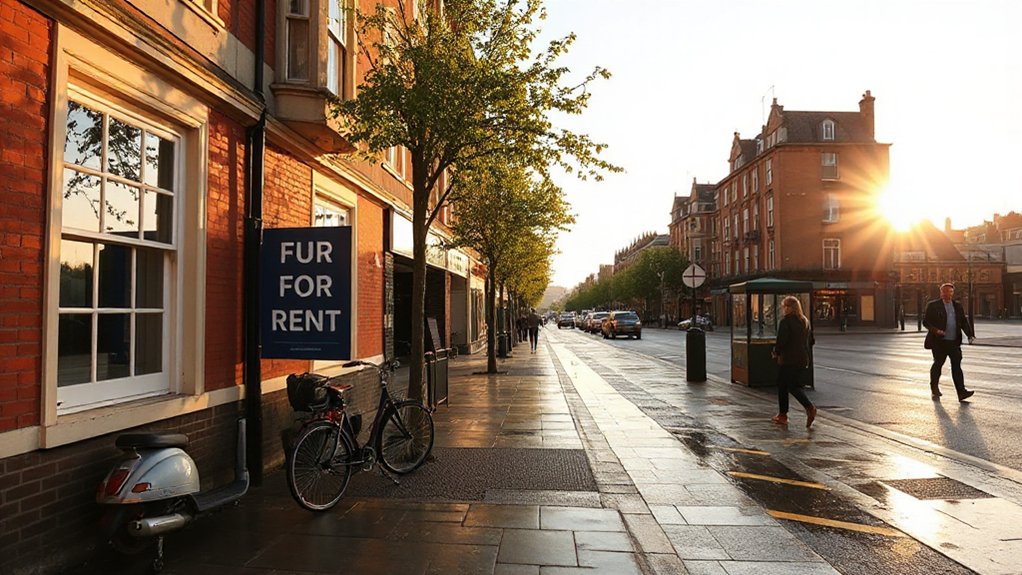
Cardiff’s rental market is tight and growing, with occupancy stays near peak levels and rents rising steadily year over year. You feel the momentum when you analyze occupancy data and cap rates, seeing a city that blends stability with opportunity.
Historical architecture anchors desirable pockets, while green spaces boost tenant appeal and retention, creating durable demand across price bands.
Supply growth remains incremental, reinforcing price discipline and reducing vacancy risk for investors. You’re not guessing—you’re aligning with a market that rewards careful geographic targeting, with submarkets around transport hubs and university corridors offering reliable rents.
Demographics skew toward renters seeking belonging in vibrant, walkable neighborhoods. The result: a resilient landscape where data-driven decisions translate into steady cash flow and long-term equity.
What Drives Cardiff’s Rental Demand
A mix of demand catalysts keeps Cardiff’s rental market resilient: a steady student and graduate pipeline, steady job growth in key sectors, and a housing stock that balances charm with affordability relative to peers.
You’ll see historical trends informing today’s choices, with buyers and renters prioritizing locations near employment hubs and transit.
Rental velocity remains robust as households seek predictable yields and predictable costs, while landlords target asset classes that weather cycles.
Market predictions point to steady, modest rent appreciation aligned with regional income growth, supported by a resilient university footprint and employer diversification.
Investors should quantify vacancy risk, diversification across submarkets, and capital needs for maintenance to preserve performance.
In Cardiff, belonging comes from data-guided, long-horizon decisions that respect community and returns.
Who Demands Cardiff Rentals: Students and Young Pros
Demand for Cardiff rentals centers on students and early-career professionals who value proximity to campuses, employers, and transit hubs. You seek practical, data-backed choices that reinforce community and opportunity, not just space.
Cardiff’s mix favors walkable cores, compact units, and properties aligned with growth sectors, all while honoring historical architecture and environmental sustainability.
- Proximity to universities and workplaces drives retention and turnover efficiency
- Rent-to-income balance and cap-ex ethics shape leasing decisions
- Transit access boosts occupancy rates and reduces vacancy cycles
- Demand for refurbished, energy-efficient buildings signals ESG alignment
- Community amenities create belonging without sacrificing mobility
You win when you invest in well-located, sustainable stock that respects history while catering to ambitious, connected renters.
How Cardiff Stacks Up on Affordability

Finding affordability in Cardiff comes down to price-to-income signals, unit mix, and how quickly rents adjust to changing demand. When you compare entry-level rentals to median wages, the city shows a tighter cap rate around value-focused stock.
You’ll notice demand stays anchored where rent affordability aligns with living standards, guiding investor confidence and tenant belonging alike. Data indicate a steady path for affordable housing, with modest rent growth relative to income growth and selective development of mid-market units.
Vacancy remains a healthy signal, reducing risk for portfolios targeting stability. In aggregate, Cardiff’s affordability profile supports risk-adjusted returns while preserving community access.
For you, this balance translates to predictable cash flows, resilient occupancy, and inclusive growth.
Cardiff’s Tech and Creative Sectors: Rentals Behind the Buzz
Cardiff’s tech and creative sectors are driving a distinct rental dynamic that investors should track alongside affordability. You’ll see demand consolidate around mixed-use spaces that support collaboration, with demand driven by startups, satellites, and scale-ups anchored near cultural hubs.
Data shows sustained rent growth in amenity-rich districts, underscored by tenant turnover patterns tied to project cycles and studio needs. Historical architecture adds character value, while the culinary scene supports prolonged stays for top talent.
If you’re evaluating exposure, you’ll prioritize properties with flexible layouts, high-speed infrastructure, and proximity to innovation clusters. This isn’t just buzz—it’s measurable, transactional momentum fueling stable ROI and community appeal.
- Growth corridors near creative hubs
- Flex-space and live-work viability
- Access to transit-adjacent amenities
- Proximity to historical architecture appeal
- Culinary-scene attractiveness as retention driver
Getting Around Cardiff: Transport Links for Renters
How well connected is Cardiff for renters, and what does that mean for ROI? You’ll see a city with robust rail links, frequent bus routes, and walkable city core, all translating to swift commutes and higher occupancy.
Rail hubs connect to London in about 2 hours, empowering remote working and flexible schedules, while compact cores keep maintenance costs predictable.
Investment appeal rises when daytime and evening demand converge, especially near trunk stations and university corridors. For international students and hybrid workers, transit accessibility boosts retention and lease duration.
Data shows decreasing vacancy cycles as transit-friendly neighborhoods outperform, offering steady yields. Prioritize properties within a 10-minute walk of a major station, and you’ll access stable, long-term demand in Cardiff’s growing rental ecosystem.
Regeneration Projects and What They Mean for Rentals
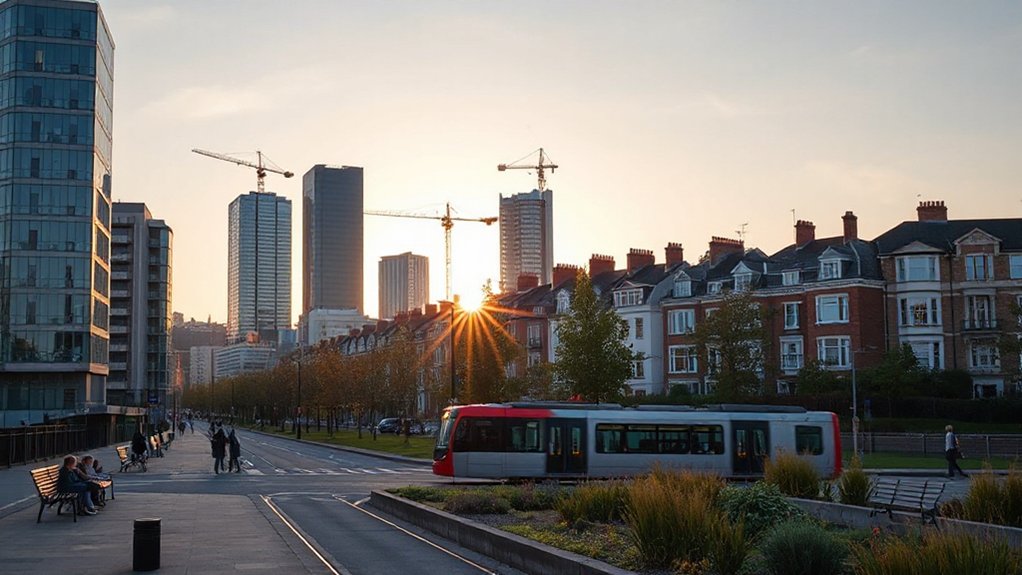
Regeneration projects are reshaping demand signals, with upgraded infrastructure and new amenities lifting rental appetite in both core and fringe areas. You’ll see stronger occupancy and premium rents as communities renew.
While infrastructure growth expands catchment and accessibility for tenants. These efforts deliver community renewal benefits that attract longer tenancies and attract more investment activity.
Regeneration Impact on Demand
Regeneration projects are reshaping Cardiff’s rental landscape by lifting neighborhood desirability, boosting new-build supply, and attracting investment-grade tenants who prioritize upgraded amenities and infrastructure.
You’ll see demand shift toward areas with preserved Historical architecture and proven climate resilience, signaling smarter, long-term value. Data shows higher rent growth in regenerated zones, driven by modern aesthetics, walkable cores, and energy-efficient features.
Investors target mixed-use developments that combine housing with services, creating stable occupancy and resilient yields.
- Higher occupancy in upgraded neighborhoods
- Stronger rent pipelines near refreshed cores
- Preference for energy-saving, climate-resilient homes
- Demand for authentic character alongside modern comforts
- Long-term value from strategic, place-based regeneration plans
Infrastructure Growth and Rentals
Infrastructure growth is reshaping Cardiff’s rental outlook by expanding mobility, expanding amenities, and enhancing service ecosystems that tenants value. You’ll see regeneration lift occupancy as transport links shorten commutes, and mixed-use districts deliver walkable living.
Data signals stronger demand density around new hubs, with rental yields stabilizing as amenities scale—schools, healthcare, leisure, and tech services converge. Investment appetite rises where public-private partnerships facilitate faster development timelines and clear regulatory pathways.
Historical architecture is preserved within modern refurbishments, offering character alongside efficiency. Environmental sustainability drives cost savings and tenant appeal, with energy-efficient retrofits and sustainable materials reducing utility bills and carbon footprints.
You gain belonging through neighborhoods that balance heritage with forward momentum, where stable rental growth aligns with long-term investment fundamentals.
Community Renewal Benefits
Community renewal programs directly boost rental performance by transforming underused sites into vibrant, walkable districts. You’ll see higher occupancy, shorter vacancies, and steadier rent collection as amenities, safety, and social cohesion improve.
Data shows regeneration drives value through sustained footfall and premium yields, while investors benefit from diversified income streams and lower turnover.
Community engagement and renewable energy initiatives further enhance appeal, reducing operating costs and attracting eco-conscious tenants.
Cardiff’s regeneration pipelines align with market demand for livability, sustainability, and neighborhood identity, delivering measurable rent growth and resilience.
- Higher occupancy and faster leases
- Reduced vacancy risk via community partnerships
- Energy savings from on-site renewables
- Enhanced tenant retention through belonging
- Elevated neighborhood desirability and investment confidence
Cardiff Rental Stock: Which Property Types Attract Tenants
You’ll see rental demand cluster around efficient, high-amenity flats and compact family homes, driven by tenant preferences and yield outcomes.
Cardiff’s stock mix matters: signalling strong appetite for purpose-built flats and well-located terraced homes can steady occupancy and cash flow.
We’ll unpack how current stock dynamics map to rents, vacancy, and next-move demand to guide smarter investments.
Tenants’ Preferred Property Types
Cardiff renters gravitate toward property types that balance comfort, cost, and practicality, with two-bedroom flats and purpose-built student accommodation consistently gaining traction due to affordability and location. You’ll find tenant preferences skew toward models that maximize utility, flexibility, and predictable cash flow, reinforcing a stable demand base for mid-market units and student-ready stock.
Property styles that emphasize efficient layouts, durable finishes, and smart-feature upgrades attract longer tenancies and higher renewal rates, supporting strong occupancy. Investors benefit from targeting scalable, low-void portfolios that align with university cycles and commuter trends.
- Two-bedroom flats и purpose-built student accommodation as core pillars
- Modernized studios for solo renters seeking efficiency
- Duplexes in high-growth corridors
- Compact, well-equipped common areas
- Flexible lease structures and inclusive bills
Cardiff Rental Stock Dynamics
Cardiff’s rental stock dynamics hinge on a balanced mix of mid-market flats, purpose-built student accommodation, and adaptable spaces that can weather university cycles and economic shifts.
You’ll notice demand concentrates where rental stock aligns with student intake, graduate programs, and commuter reach, creating stable occupancy and predictable yields.
Data shows mid-market flats outperform premium segments during slower phases, while purpose-built student blocks retain occupancy through term cycles.
Investment focus should target properties with scalable layouts, quality finishes, and access to amenities that boost retention.
Historical architecture adds charm and resilience, elevating value without overpricing, while proximity to cultural hubs sustains rent credibility.
Local cuisine immersion enhances tenant experience, supporting renewals.
Lifestyle Perks: Culture, Nightlife, and Tenant Appeal
The city’s cultural and nightlife ecosystems drive steady tenant demand, with diverse venues, live events, and a compact core that translate into higher occupancy and shorter downtime between leases. You’ll see value in how historical landmarks and the culinary scene anchor weekends, while weekday options keep occupancy resilient.
Data shows consistent rent appreciation in micro-neighborhoods centered on arts, food halls, and transit access, signaling durable yields. Your marketing approach should emphasize belonging, curated experiences, and predictable renewal momentum.
The result is a community where tenants stay longer, invest locally, and refer friends, boosting occupancy stability and rent growth.
- Diverse venues and live events near transit
- Short lease cycle benefits and renewal momentum
- Historical landmarks as anchor attractions
- Culinary scene driving weekend footfall
- Community-oriented amenities reinforcing belonging
Keeping Cardiff Rentals Fresh: Maintenance and Management Best Practices
Keeping rental stock fresh is how you sustain the high occupancy and rent growth Cardiff already shows. You optimize maintenance cycles with data-backed schedules, minimizing downtime and maximizing cash flow.
Proactive inspections reveal repair costs before they explode, protecting net yields and supporting a steady rent increase trajectory. You invest in durable fixtures and low-maintenance finishes that appeal to tenants seeking efficiency and quality, boosting tenant retention.
Digital work orders and transparent communication cut response times, enhancing satisfaction and reducing vacancy risk. You benchmark turnover costs against comparable markets, calibrating incentives and lease terms to preserve occupancy while protecting investment metrics.
Where to Invest in Cardiff: Market Hotspots and Submarkets

If you’re targeting rapid occupancy and strong rent growth, focus on Cardiff’s market hotspots: central districts with dense amenities, efficient transport links, and high job concentration.
- Historical trends show steady rent appreciation in core neighborhoods and rising demand from young professionals.
- Submarkets near tech hubs and universities deliver resilient occupancy and premium yields.
- Market forecasts project continued growth driven by regeneration schemes and new transit projects.
- Peripheral cores offer value plays with upside as infrastructure expands and prices normalize.
- Demand-supply dynamics favor mixed-use districts with accessible services and vibrant nightlife.
These insights empower you to target assets with high land value, predictable cash flow, and a sense of belonging for renters in Cardiff’s evolving tapestry.
Navigating Shifts in Demand: What Could Change the Cardiff Rental Picture
Shifts in demand can reshape Cardiff’s rental picture faster than headlines imply, so you want to watch signals that rewrite occupancy and rent trajectories. You’ll assess absorption rates, turnover costs, and seasonality to gauge where demand lands next.
Population growth, commuting patterns, and local employment cycles converge to push rents higher or compress yields. Affordable housing initiatives and rental regulations will temper spikes, guiding your risk toolkit and targeting zones with durable rent growth.
Look for policy momentum that stabilizes supply alongside demand, rather than short-term distortions. Data-driven dashboards, submarket overlays, and tenant-mipeak insights help you align capital with belonging—investing where communities stay, amenities scale, and occupancy stays resilient through cycles.
This framing keeps you nimble and council-aware as Cardiff evolves.
Frequently Asked Questions
What Unseen Factors Influence Cardiff Rental Demand Beyond Affordability?
Student housing dynamics, not just price, influence demand: you notice steady rental turnover, proactive property management, growing employer clusters, and university-driven stability. You align investments with demographics, retention programs, and market intel to foster belonging and maximize returns.
How Do Seasonal Trends Affect Cardiff Tenancy Turnover?
Seasonal fluctuations drive tenancy turnover, with peak shifts during semester starts and holidays. You’ll observe higher churn around term beginnings due to Student influx, while summer slowdowns stabilize occupancy, preserving yields for investors seeking belonging in Cardiff’s market.
Which Neighborhoods Attract Long-Term Rental Tenants Most?
You’ll find Pontcanna and Cathays attract long-term tenants, driven by amenities and schools. You measure success in Property management metrics, Rental regulations compliance, vacancy duration, and cap rates, and you’ll feel a community‑oriented, investment‑savvy sense of belonging. But wait, flux.
What Role Do Lease Lengths Play in Cardiff’s Market Stability?
Lease flexibility stabilizes Cardiff’s market, boosting tenant retention by reducing turnover. You’ll see longer leases when options align with incomes and incentives, improving occupancy and cash flow. You belong investing where data-backed terms drive steady, loyal occupancy.
How Do University Calendars Reshape Monthly Rental Calendars?
First, the cycle tightens when universities shift terms, so student housing demand spikes at term starts and eases after exams; academic schedules reshape monthly calendars for landlord planning and occupancy, driving data-driven, investor-focused adjustments.
Conclusion
Cardiff’s rent story sits between steady occupancy and rising yields, a paradox that markets crave. You’ll see demand from tech grads and nightlife-seekers, yet affordability pockets keep entry points manageable. Juxtapose high student pull with institutional investment, and you get a market that grows even as wages lag. Demand hotspots spark redevelopment, while sound upkeep guards cash flow. In short, optimism and risk coexist: data-backed demand meets disciplined management for durable, above-average returns.