
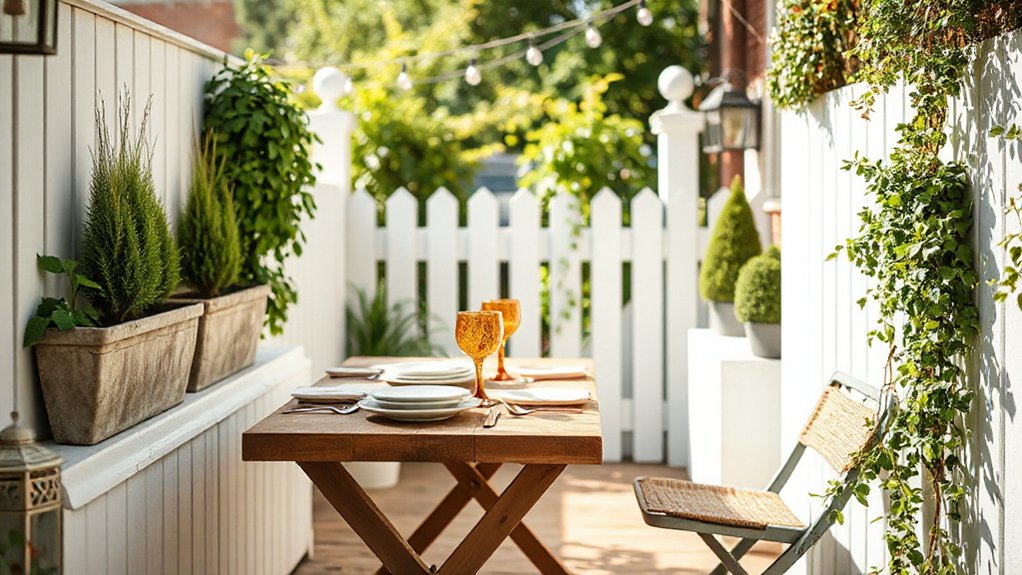
Create a compact outdoor dining zone by maximizing every inch with smart, multiuse pieces. Choose space-saving tables and foldable chairs, and layer textures with woven rattan, timber, and metal. Add vertical greenery on trellises and hanging planters to expand feel without crowding. Hide clutter with storage benches and covert prep stations, and keep loose items protected in weatherproof boxes. Light zones clearly with warm string lights and task lamps. Seasonal updates keep it fresh. You’ll discover more ideas just ahead.
Why Tiny Gardens Deserve Smart Outdoor Dining
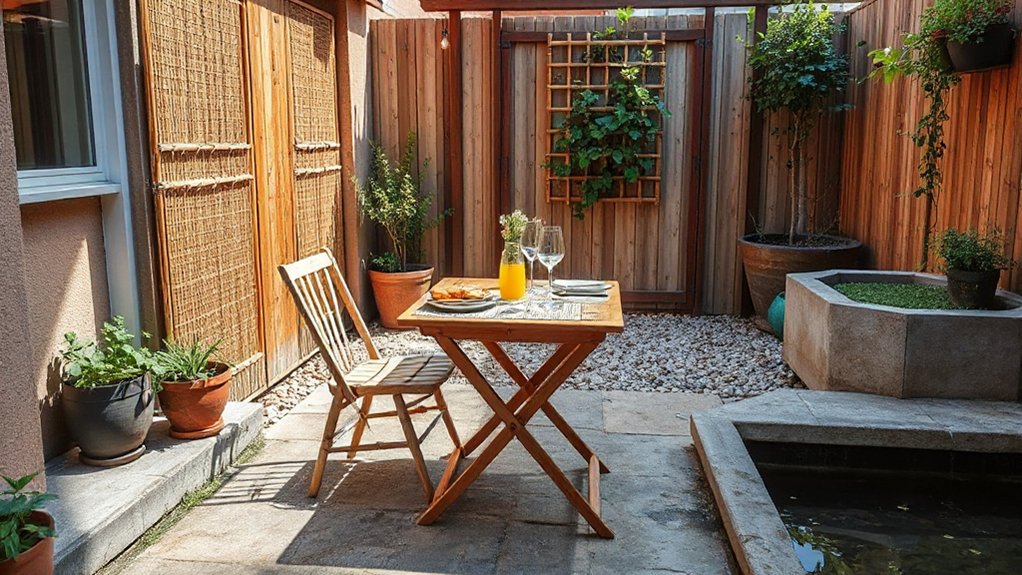
Small spaces don’t have to mean small gatherings. You can turn a tiny patch into a warm, welcoming dining nook, because smart choices beat size every time.
Prioritize garden aesthetics with layered textures: a compact table, foldable chairs, and planters that define edges without crowding. Use outdoor decor to create a focal point—perhaps a hanging lantern or a bold rug underfoot—to anchor the scene.
Choose vertical options: trellises, wall shelves, or hanging pots to add depth without consuming square footage. Lighting matters: soft, warm bulbs make meals feel intimate after sunset.
Create zones for socializing and smart storage for essentials, so everything you need is within reach. Tiny footprint, big sense of belonging, clear, inviting vibe.
Define Your Compact-Dining Goal: Comfort, Usability, and Style
To define your compact-dining goal, start by naming the three essentials—comfort, usability, and style—and then map them to your space.
You’ll tune seating depth and cushions for comfort, choose a table height that keeps conversation flowing, and pick sturdy, compact chairs you actually enjoy using.
Usability means clear flow, accessible storage, and easy-clean surfaces that resist weather.
Style comes from cohesive outdoor decor and garden accessories that reflect you—whether that’s a warm rustic vibe or sleek modern lines.
Prioritize multipurpose pieces, like a bench with hidden storage, and mix textures for depth.
Visual cues, like a small rug under the dining area or pendant lighting, create belonging and invite daily gatherings.
Keep expectations realistic, then adapt as your garden grows.
Plan the Layout: Measure, Zones, and Workflow
Start by measuring the space to mark clear zones for cooking, dining, and movement.
Map a smooth workflow that keeps hot grills away from seating and lets you move from prep to serve with minimal steps.
Use simple lines or color coding to visualize paths and adjust before you lay anything down.
Measure For Zones
Measure your space by zones so flow is clear and you can plan paths, plantings, and seating without guesswork. Start with a quick map: outline sun, shade, and high-traffic areas, then assign zones for dining, prep, and relaxation.
In compact gardens, zones should feel close yet distinct, like cozy pockets that invite gatherings. Use color cues and simple boundaries—gravel paths, low hedges, or planters—to mark edges without blocking sightlines.
When you measure, consider door swings, chair radii, and swing ranges of shade cloths. Prioritize multiuse features: a slim console bench becomes a serving surface, and a foldable table clears space for entertainment.
This approach supports garden decor and outdoor entertainment, creating belonging through thoughtfully zoned, inviting moments.
Plan Smooth Workflow
With your zones in place, map a smooth workflow that keeps dining, prep, and relaxation effortless. Start by defining a clear dining area near the entrance, a compact prep zone within reach of prep tools, and a shaded retreat for breaks. Use sight lines to connect each zone: a straight path from door to table, then to storage, then to seating.
Prioritize accessibility: place frequently used items within arm’s reach, not behind obstacles. Integrate Garden art as focal points that guide movement and energy, such as a low statue or hanging sculpture that signals the prep edge.
Consider Plant selection that thrives in your light and scale, avoiding overhangs that hinder passage. Final check: trim clutter, maintain open space, and keep airflow steady.
Seating That Feels Luxurious in Small Footprints
Ever considered how to make a small outdoor space feel luxurious without crowding it? You can achieve this with thoughtful seating that maximizes comfort and perception of space. Choose compact, sculptural pieces with clean lines and soft cushions in neutral tones to create a refined foundation.
Position a single, standout chair or bench as a focal point, then add slim-back stools that tuck neatly under a table. Build a sense of depth with layered textures: woven rattan, weathered timber, and a touch of metal for contrast.
Integrate garden herbs at the edges for fragrance, and hang a piece of outdoor art to draw the eye upward. Parkside lighting, like low lanterns, adds warmth without clutter, inviting belong and lingering conversations.
Foldable Tables That Save Space Without Sacrificing Looks
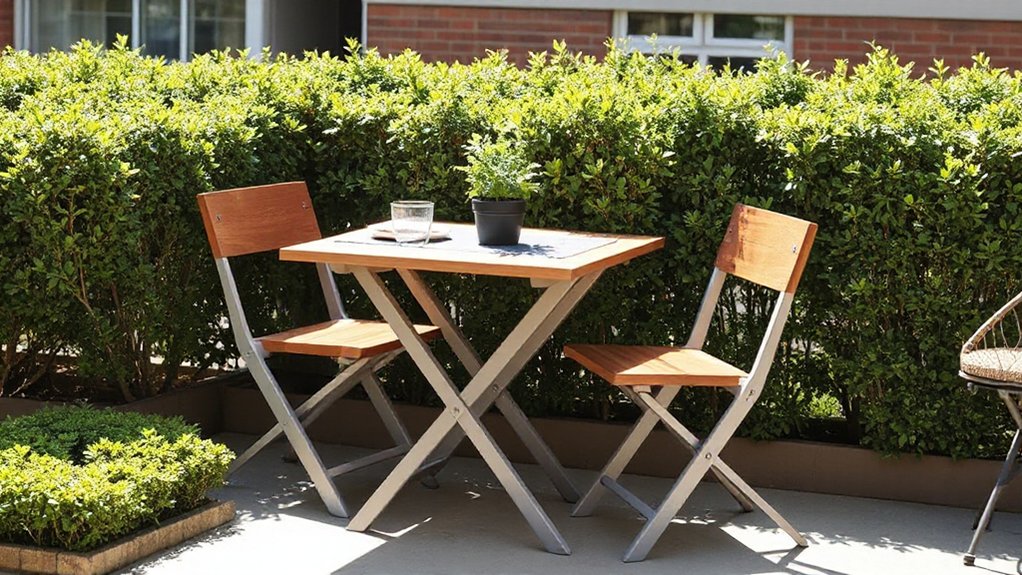
Space-saving design shines when your table folds flat without wobble, so you can stash it out of sight yet keep it ready for gatherings.
Look for a sturdy frame and a slim profile that still seats your crew comfortably, with a finish that resists weather and looks sharp.
Keep the setup simple: choose a foldable option that’s easy to deploy, maintain, and stylish enough to elevate your compact dining space.
Space-Saving Design
Foldable tables are your best friend when every inch counts. You’ll gain space without sacrificing style, because a compact table folds flat against a wall or pops into a corner when not in use.
Choose a design with slim legs and a light frame to avoid visual bulk, or opt for a central pedestal that frees legroom for more chairs. Pair with foldable chairs that tuck neatly underneath, maximizing the footprint for gathering.
Use modular mats and a small graphic rug to anchor the area, and add garden art or outdoor decor as focal points to create belonging.
When entertaining, extend the tabletop with a simple leaf, then store it away just as quickly.
Practical, polished, perfectly suited for intimate brick-and-planter environments.
Sturdy Yet Stylish
You’ll want a foldable table that balances sturdiness with sleek design, so choose a solid core or aluminum frame paired with a reinforced top. This combination keeps garden furniture reliable without bulk, making your outdoor decor feel intentional and inviting. Practical, compact, and expressive, the right table anchors meals and conversations alike.
- Opt for a compact, weather-ready finish that cleans easily and resists scuffs.
- Look for locking legs and a light-but-strong leaf option to expand when needed.
- Favor neutral tones that complement greenery while still standing out as a focal piece.
Choose materials and hardware that endure, then invite friends to gather. Your space gains cohesion, and outdoor dining becomes a welcoming extension of home.
Stackable Chairs for Easy Reconfiguration
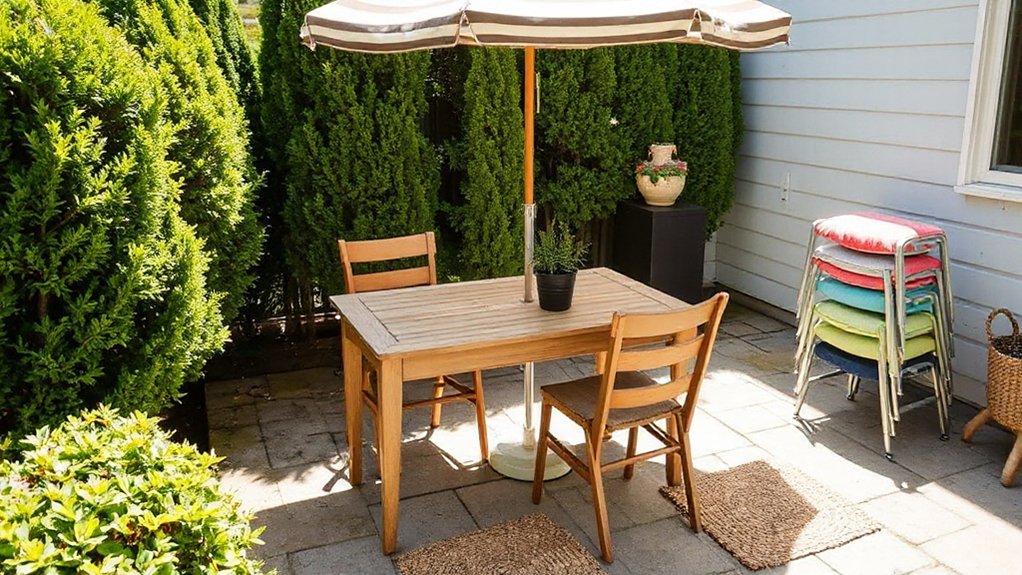
Stackable chairs make quick room reconfigurations a breeze, so you can switch from a casual lunch setup to a cozy evening dining zone in minutes. You’ll love how lightweight frames mean you move them without strain, stacking neatly to free floor space.
Look for smooth edges, sturdy legs, and a comfortable seat that invites lingering rather than quick turnover. When guests arrive, you can instantly create a conversational circle by pulling chairs from the stack and pairing with a compact table.
For storage, choose a slim rack or wall hooks to maintain tidy, accessible space. This approach delivers reconfiguration flexibility, practical setup, and a welcoming ambiance that says you belong here.
Compact Dining Sets: Perfect Size, Lasting Style
Compact dining sets strike the right balance between footprint and function, giving you everything you need without crowding a small outdoor space. You’ll appreciate pieces sized for cozy corners, with durable finishes that stand up to weather and wear. The goal is lasting style that matches your outdoor aesthetics while remaining practical for everyday meals and chats.
- Choose compact tables with extendable leaves to adapt from quick lunches to gatherings
- Favor lightweight, stackable chairs for easy reconfiguration and storage
- Select all-weather materials and clean lines that hide wear and stay timeless
With the right set, you create inviting moments you truly belong to, where compact meets comfort. Your outdoor dining becomes effortless, cohesive, and beautifully intentional.
Vertical Greenery to Frame Meals and Hide Clutter
Vertical greenery can transform a small dining nook by creating a living backdrop that both frames meals and conceals clutter. You’ll choose climbing plants that suit light and exposure, then train them on garden trellises to form a soft, vertical border.
Opt for compact varieties with quick coverage to avoid waiting months. Position trellises behind seating to visually expand the space without crowding it, and stagger plant height for depth.
Set a maintenance rhythm: weekly water checks, occasional pruning, and deadhead to keep tidy lines. Use clean pots and neutral finishes to enhance the greenery, not compete with it.
This approach invites you to linger, feel connected, and enjoy a clutter-free, ever-changing focal point. Climbing plants, Garden trellises.
Hidden Storage for Cushions, Tools, and Toys
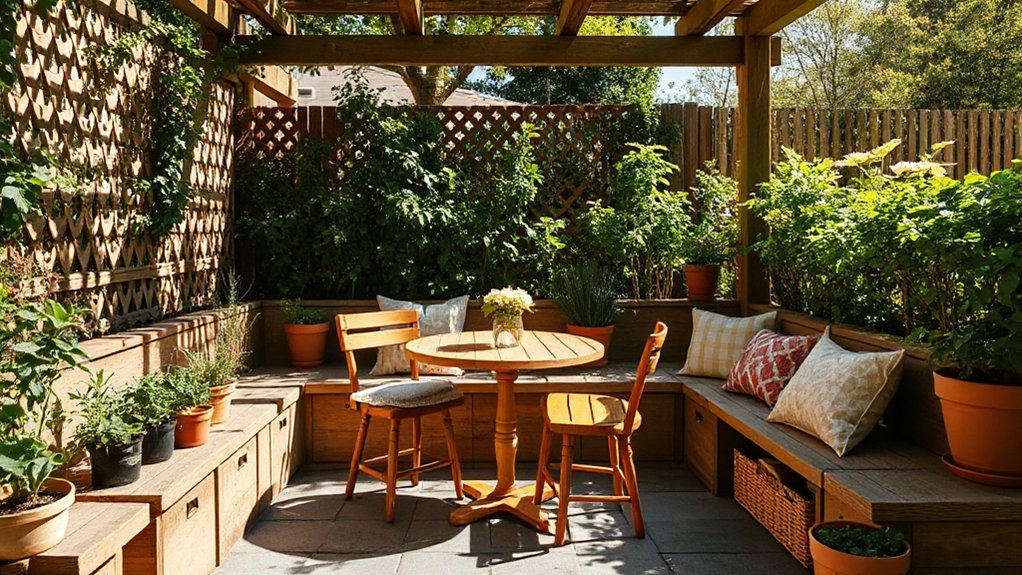
Hidden storage lets you keep cushions, tools, and toys within reach while preserving the clean lines you created with vertical greenery. You’ll feel the space breathe easier when you choose discreet options that blend in.
Look for hidden compartments in storage benches or under raised seating, so daily items vanish from sight yet stay accessible. A smart bench with a lift lid doubles as seating and a stash spot, keeping clutter off the patio floor.
Labeling small bins inside a weatherproof box helps you grab what you need fast. Prioritize durable materials and simple mechanisms that invite everyone to contribute and feel at home.
- Hidden compartments in storage benches
- Lift-lid benches for daily cushions
- Weatherproof boxes for toys and tools
Multi-Functional Furniture for Changing Moods
Choose furniture that adapts to how you want to use the space: flexible seating modes for quick shifts from chat to buffet, transformable surfaces to host families or display gear, and cozy ambient lighting to set mood without clutter.
Keep everything compact, with pieces that move or fold into a slim footprint and light up the area with a warm glow. You’ll create a dynamic, comfortable yard that changes with your plans and feels instantly inviting.
Flexible Seating Modes
- Fold-away chairs beside a compact table for quick meals
- Stowable benches that double as side tables
- Modular cushions that reassemble into a lounge cluster
Transformable Surface Space
Use multi-height options to switch moods—lower for lounging, higher for quick meals. Integrate durable storage drawers for utensils, napkins, and garden art accents that spark personality. Mix plant varieties along the edge to soften lines and guide flow.
Let the artful arrangement hint at a story rather than only function, inviting guests to linger. Practical, connected design reinforces a shared garden experience.
Cozy Ambient Lighting
Soft lighting changes everything, turning a compact deck into a cozy lounge in minutes. You’ll feel more at home when the glow defines zones, not just visibility. Keep it simple: think warm string lights overhead, a lantern decor touch on corners, and a dimmer for mood shifts.
This approach supports flexible seating and changing moods without clutter. You’ll create intimate corners you can gather in, then disperse as needed, all while staying barely noticeable from a distance.
- string lights overhead for a soft canopy that expands the space
- lantern decor on tables and edges to add warmth and charm
- portable lamps or candles that you can move with the gathering
With these elements, your compact garden feels welcoming, cohesive, and endlessly adaptable.
Zoning by Light: Dining, Lounging, and Prep Zones
To maximize function in a compact garden, zone your outdoor space by light: designate dining, lounging, and prep areas in distinct, sun or shade conditions to keep traffic flowing and tasks efficient. You’ll map zones where sun thrives for meals, shade keeps conversations cool, and partial light guides prep without glare.
Choose furniture and paths that follow these light cues, so guests instinctively move from herb-scented prep corners to relaxed seating, then to the dining table. Use garden herb accents near the prep zone to remind you of fresh flavors, and add a small outdoor art piece in the lounge area for personality and pace.
Maintain clear sightlines, tidy passages, and a welcoming feel for everyone seeking belonging.
Illumination Tricks to Extend Dinners Past Sunset
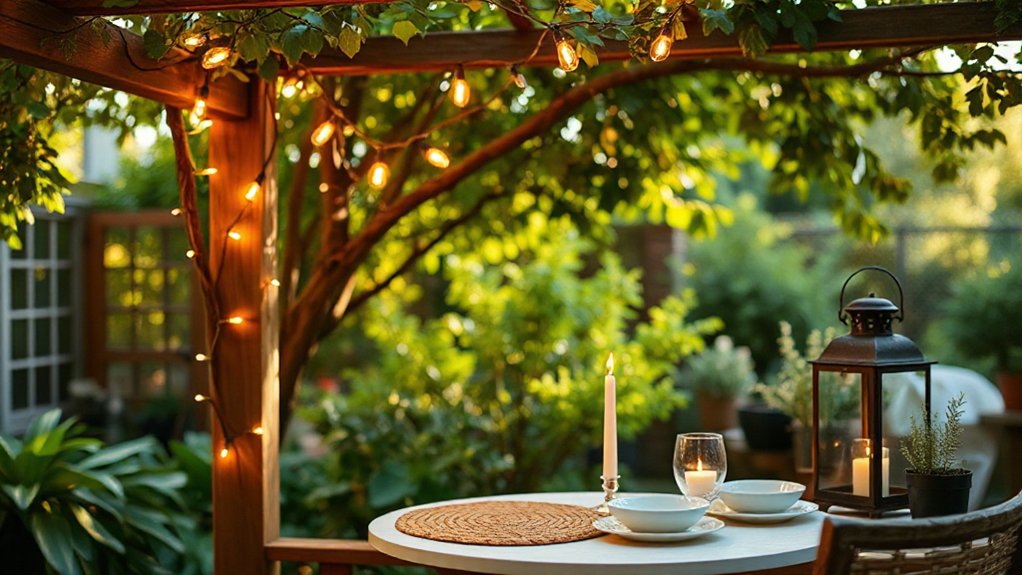
String lighting isn’t an afterthought; it’s a daily tool you can tune to extend dinners well past sunset. You’ll shape ambiance by balancing brightness, color, and placement, so your table feels inviting, not washed out.
Think layers: a warm glow above, softer pool lighting along pathways, and a spotlight on the plate for focus. Use garden art accents and outdoor decor to reflect your vibe without clutter.
Dimmer switches keep the mood flexible, and solar sconces on a timer save energy. Keep cords hidden and safe for foot traffic, and test glow from multiple angles to avoid glare.
- Layered glow with warm tones above, along edges, and near seating
- Edges and steps lit for safety, spotlight on centerpiece
- Artful garden decor accents to unify the scene
Weather-Smart Textiles and Finishes That Endure
Weather-smart fabrics and finishes keep outdoor dining comfortable year-round without constant fuss. You’ll choose weather resistant fabrics that shrug off rain and sun, so your seating stays inviting longer.
Look for UV protective finishes on cushions and awnings; they guard colors against fading and reduce heat buildup you notice at the table. When you store, pick items with tucked seams and outdoor-grade threads that resist pilling and fraying.
Layer textiles that dry quickly, like performance blends, so you can wipe, fold, and go. Treat accessories with water-repellent spray in a light, even coat, then air dry.
Match finishes—coatings, frames, zippers—that resist rust, corrosion, and sun damage, keeping your dining nook cohesive, durable, and welcoming through changing seasons.
Color and Material Palettes That Expand Perceived Space
Color and material palettes can make a compact dining area feel larger by reflecting light and guiding the eye. You’ll choose hues that feel airy, then pair textures that stay practical in a small space. Favor high-contrast accents to create depth without crowding sight lines, and lean on color psychology to evoke calm and sociability.
Material durability matters, so pick sturdy surfaces that wear well with weather and daily use. Keep finishes smooth and corners soft to avoid visual clutter.
- Light, cool tones as base, with warm accents to invite gathering
- Durable, low-maintenance surfaces in matte or satin sheens
- Consistent wood or metal accents to unify furniture and planters
Easy-Clean Surfaces and Maintenance Routines
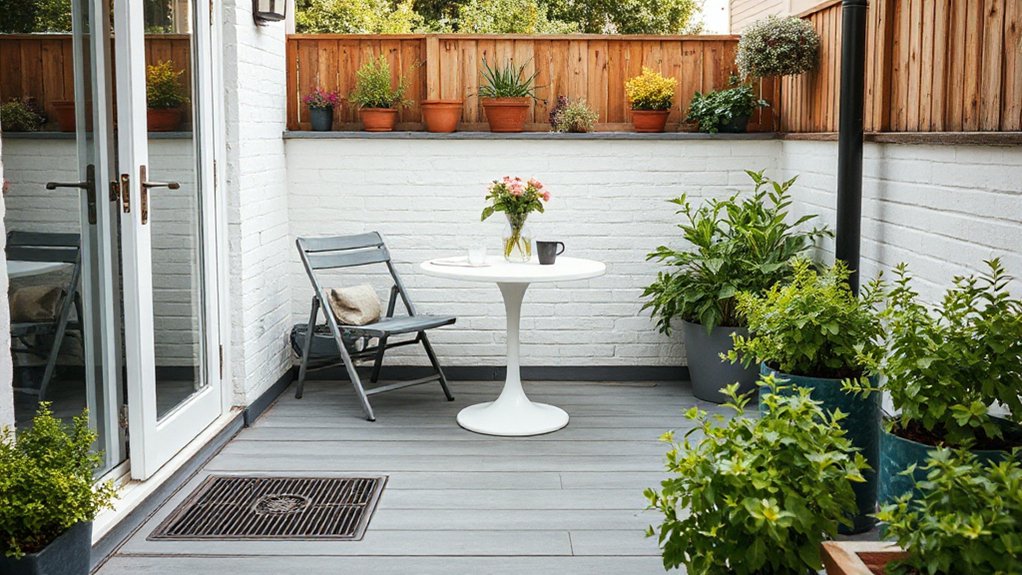
Keeping outdoor dining surfaces clean is essential in a compact garden, so set up a simple routine you’ll actually follow. You’ll wipe down edges after each use, then do a quick sweep and damp wipe at day’s end.
Choose Eco friendly materials that resist stains and are easy to refresh with a microfiber cloth. For maintenance, apply a mild cleaner or soap solution and rinse, avoiding harsh chemicals near herbs or seating zones.
Establish a weekly light scrub on tabletops and a monthly seal or coat if you have wood, to prevent grime buildup.
Keep pest prevention top of mind by storing cushions dry and using snug covers.
A tidy, low-effort routine builds belonging and confidence in your space.
Pull-Out Bars and Covert Prep Stations for Tiny Kitchens
Could a pull-out bar transform a tiny kitchen into a functional hub? Yes. You’ll gain surface area without sacrificing flow, and that sense of belonging grows each time you entertain.
Pull out bars feel integrated, not temporary, when you choose a slim profile, durable finish, and wireless-closed hinges.
Covert prep stations hide tools behind cabinet fronts, keeping counters clear and inviting. You’ll appreciate how smoothly everything slides in, the ease of cleaning, and the way guests notice the thoughtful workspace rather than clutter.
- pull out bars maximize efficiency without crowding the room
- covert prep stations keep essentials nearby yet out of sight
- tactile, quiet hardware supports calm, social cooking moments
Lighting Layouts That Guide Traffic and Safety
Even in a compact outdoor setting, smart lighting guides traffic and enhances safety by clearly delineating paths, steps, and seating zones. Start with low, warm glow along walkways to create a welcoming rhythm, then place brighter task lights near dining and prep areas.
Use dimmers to adjust mood without harsh glare, keeping safety top of mind after dusk. Integrate garden art accents with subtle uplights to add depth without clutter, and let outdoor decor pieces cast soft shadows that cue movement and prevent trips.
Favor consistent color temperature for cohesion, and keep cords tucked away or concealed in discreet channels. Round out the scene with solar or battery-powered options for easy maintenance, inviting everyone into the space as part of the community.
Seasonal Rotation: Keeping a Tiny Dining Space Fresh Year-Round
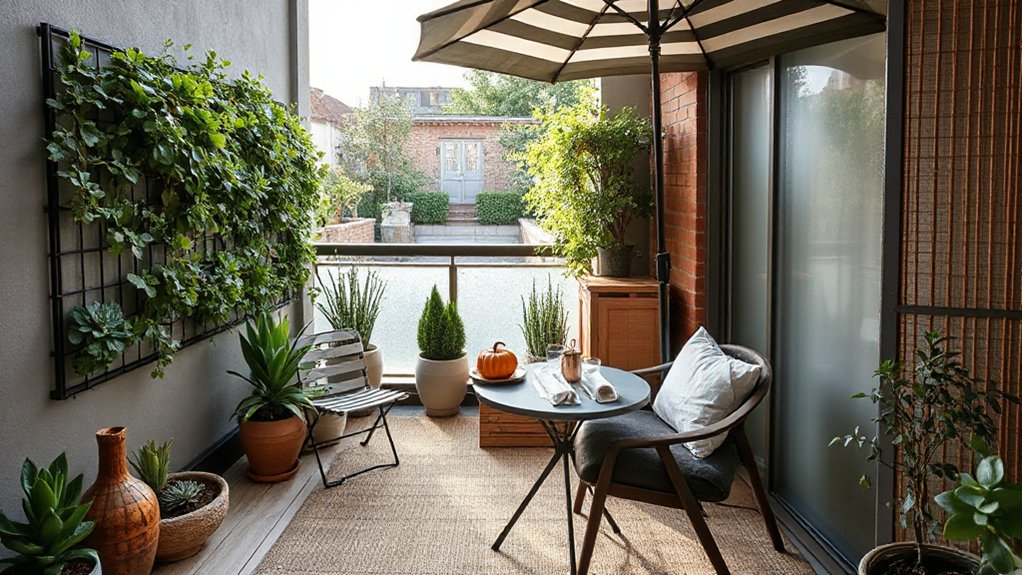
Seasonal rotation keeps a tiny dining space feeling fresh without a full redo. You adapt to the calendar by swapping elements rather than rebuilding your nook, preserving flow and belonging in every season. Use seasonal foliage as quick visual anchors, switching textures and colors with a few potted accents or a compact trellis.
Keep climate adaptations in mind: lightweight fabrics in summer, weatherproof cushions in winter, and shade provisions for sunny months. The goal is effortless renewal that reads intentional, not chaotic.
- Swap textiles and planters to reflect the current season
- Layer lighting and shade for day-to-night comfort
- Group a few hardy, year-round greens to anchor the space
Frequently Asked Questions
How Do I Prevent Rain From Cluttering a Tiny Dining Area?
To prevent rain clutter in a tiny dining area, invest in rainproof furniture and use clever covers; secure weather resistant decor, like magnets or hooks, and keep cushions in a breathable storage box after showers for quick setup and coziness.
What Fabric Choices Resist Weather and Fading Best?
Weather resistant textiles plus fade resistant fabrics will serve you best; choose solution-dyed acrylics, polyester blends, or olefin. They resist sun and rain, dry quickly, and stay vivid, so your space feels cohesive, welcoming, and confidently cared-for.
Can I Hide Utilities Without Compromising Access?
Yes, you can hide utilities while keeping access. Use discreet panels, hinged doors, and removable skirting for utility concealment, and guarantee access maintenance with labeled, easily reachable access points. Maintain cohesion with seating or storage to belong.
How Often Should I Rotate Plants Without Crowding Seating?
You should rotate plants every 2–3 weeks to prevent seating crowding and keep beds fresh, and gently plan replacements as you go. Plant rotation preserves space, avoids crowding, and preserves visual appeal for a welcoming, belonging-filled dining vibe.
What Portable Appliances Save Space Without Sacrificing Ease?
Yes—portable grills save space and keep meals easy, while foldable tables pack away fast. You’ll appreciate compact, sturdy setup, mobile comfort, and a sense of belonging around a versatile, clutter-free dining area for every gathering.
Conclusion
You’ll be amazed how a pocket-size patio becomes the royal court of your meals. With tiny tables that vanish when you don’t need them, chairs that fold like superhero capes, and smart lighting that makes dusk feel like peak entertaining, your compact space will outshine any sprawling yard. The trick? ruthless decluttering, smart zones, and playful textures. Do this, and every bite—plus every guest—ends up feeling like a grand, effortless celebration. Your miniature dining empire awaits.