

Hull stays budget-friendly because you tap into steady wage growth, affordable entry costs, and regeneration that adds supply without pushing prices up. Demand stays solid from diverse sectors, rentals hold occupancy, and rents rise with inflation. Infrastructure upgrades trim transport costs and improve accessibility, supporting just-in-time logistics. Operating costs, taxes, and incentive programs remain favorable for investors. If you keep exploring, you’ll uncover how these factors pair with resilient yields and long-term planning to sustain value.
Hull as a Budget-Friendly Investment Landscape

Hull presents a budget-friendly investment landscape largely due to affordable entry costs, steady rental demand, and improving transport links. You’ll see resilient yields driven by steady occupancy and diversified tenant profiles, including professionals and students who value value without sacrificing access.
Market data shows modest cap rates compared with coastal peers, yet growing rent growth and low vacancy underpin stable cash flow. You benefit from scalable opportunities in single-family rentals, micro-studios, and Value-Add assets near transit corridors.
Luxury amenities cluster around revitalized districts, enhancing appeal without premium entry barriers. Nightlife hotspots attract daytime footfall and evening occupancy, supporting consistent demand across seasons.
You gain a community-friendly narrative, clear data signals, and predictable risk-reward dynamics framed by tangible, attainable growth.
Core Drivers for Affordable Entry and Steady Demand
You’ll see affordable entry through price-per-square-foot momentum and gradual rental yield improvements, supported by clear capex efficiency.
Market signals point to steady demand from applicants drawn by cost of living, local job growth, and ongoing infrastructure gains.
In short, data-backed affordability and predictable demand dynamics create a durable entry path for investors.
Affordable Entry Pathways
What makes entry affordable in Hull key to sustaining demand? You’ll see a mix of affordable housing schemes, selective mortgage options, and competitive rents that align with local earnings, not hype. This affordability fuels steady occupancy without price spikes.
You’ll also note targeted regeneration boosts supply in walkable cores, keeping entry costs predictable. Data show a healthy share of rental stock under market rates, supporting both first-time buyers and long-term investors.
Luxury apartments and high end developments exist but don’t dominate, preserving balance. Your strategy should prioritize real value, not quick flips, as income stability underpins growth.
- Coordinated planning incentives that ease initial costs
- Access to lender-friendly financing for first buyers
- Pre-approved affordable mortgages and rent-to-own options
- Strategic, mixed-income developments in key districts
- Transparent price signals tied to local job growth
Steady Demand Signals
Steady demand hinges on core, observable drivers: consistent local wage growth, stable employment in key sectors, and a population that favors long-term rental and entry-level ownership. You’ll see a steady pull from a workforce that earns and saves reliably, reducing vacancy risk.
In Hull, housing markets respond to diversified labor, from logistics to public services, keeping occupancy resilient even when broader cycles wobble.
Demand signals also reflect buyer patience and rental tenure, signaling predictable cash flow for investors. Historical architecture and growing appreciation for heritage appeal support higher rent bands without sacrificing affordability.
Cultural festivals attract visitors and residents alike, reinforcing occupancy during shoulder seasons. Taken together, these factors create a balanced baseline, where steady demand sustains accessible paths to entry and long-term returns.
Regeneration in Hull: Value Without Overburdening Investors
Regeneration in Hull must balance pace with practicality, delivering tangible value for investors without piling on risk. You’ll see urban renewal that cites targeted projects, measured phasing, and clear ROI, not hype.
The city leans on cultural preservation to attract talent and visitors, strengthening demand without overextension. Data shows affordable redevelopment caps, strong planning approvals, and predictable timelines, reducing hold periods.
Market signals point to diversified returns across housing, retail, and workspace, with collaborative funding models that share risk. You gain belonging through visible, enduring improvements and community-led outcomes that align with investor ethics.
- Targeted urban renewal milestones driven by community input
- Phased insUbstantial infrastructure upgrades with measurable ROI
- Cultural preservation as a differentiator for tenants and visitors
- Transparent budgeting, risk controls, and timeline management
- Diverse portfolio options balancing yield and resilience
Hull Rental Market: Resilience, Yields, and Planning
You’ll see resilience in Hull’s rental market through steady occupancy and steady demand signals, even when broader markets wobble.
Yields show competitive, predictable cash flow patterns that appeal to budget-conscious investors, backed by turnover data and rent growth trends.
Planning considerations—from licensing to regeneration timing—shape risk-adjusted returns and help you benchmark future performance.
Resilience in Rentals
Although Hull’s rental market has faced typical cycles, it demonstrates notable resilience under pressure from economic shifts and policy changes, supported by steady demand from local workers and students and a diversified housing stock.
Rental yields remain competitive relative to regional peers, with occupancy staying high in core neighborhoods and rent growth tracking inflation rather than spiking volatility.
The market’s diversity supports stability even as external shocks arise, while data show solid retention rates and prudent pricing strategies across segments, including luxury apartments and high end amenities that attract long-term tenants without eroding affordability for others.
- Steady demand from local employers and students
- Balanced occupancy across neighborhoods
- Competitive yields versus peers
- Durable pricing aligned with inflation
- Demand signals for luxury apartments and high end amenities
Strong Yield Potential
How strong is Hull’s yield potential when you factor in stable demand, diversified stock, and prudent pricing? You’ll see that occupancy remains robust across sectors, supported by steady tenant inflows and favorable turnover cycles.
Yields stay competitive as landlords optimize rents against local supply, ensuring cash flow stays resilient even as markets shift. A diversified stock of properties—from compact flats to family homes—reduces risk and sustains consistent performance.
Strategic pricing captures value without eroding occupancy, improving net yields over time. Luxury amenities and cultural attractions fuel demand among mid-market and premium renters, reinforcing occupancy in slower cycles.
Pair this with forward planning and you gain predictability, enabling confident, community-focused investment decisions that align with Hull’s evolving identity.
Economic Pillars That Support Hull’s Growth: Education, Healthcare, Logistics
Education, healthcare, and logistics form Hull’s core growth pillars, driving productivity, attracting talent, and enabling efficient commerce. You’ll see how these engines align with a budget-friendly profile, as data shows steady GDP contributions, high return-on-investment in skills, and resilient supply chains that support firms of all sizes.
Cultural heritage enriches workforce pride, while environmental sustainability guides decision-making, reducing long-term costs and boosting appeal to mission-driven tenants. You’ll benefit from accessible education pipelines, robust public health infrastructure, and streamlined logistics hubs that lower operating expenses and time-to-market.
- Strong local universities and vocational programs fueling talent pipelines
- Affordable healthcare access sustaining workforce productivity
- Proactive green practices lowering costs and risk
- Efficient freight corridors and storage facilities
- Community-led cultural and environmental initiatives attracting talent
Hull Infrastructure Upgrades: Transport Links and Accessibility
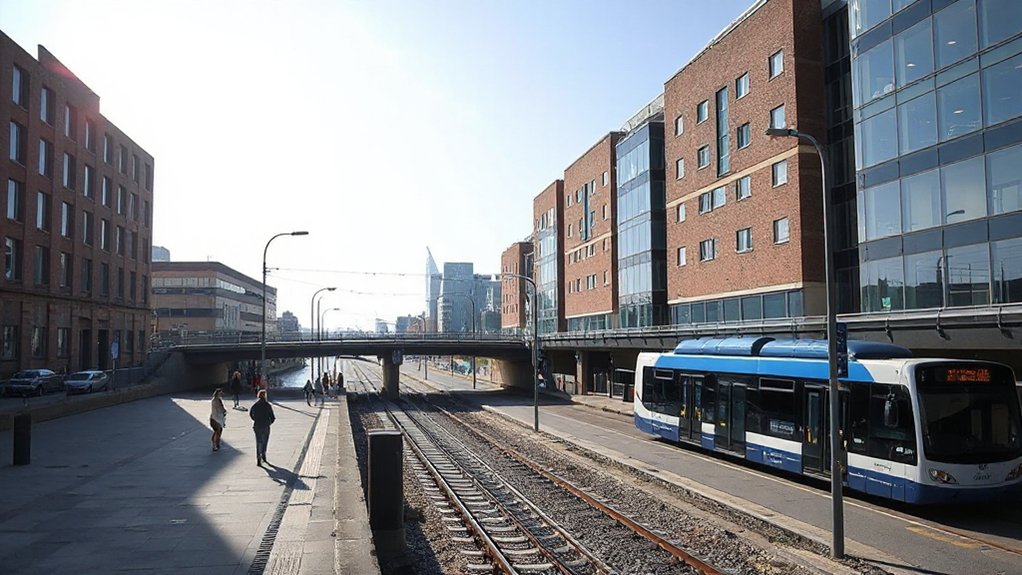
Hull’s growth story hinges on smarter, more accessible transport networks that keep costs predictable for firms of all sizes. You’ll see how ongoing urban renewal and targeted upgrades to public transport reduce travel times, improve reliability, and attract talent.
Data shows upgraded links between Hull’s city center, suburbs, and port cut congestion and support just‑in‑time logistics, boosting capacity without price spikes. You benefit from clearer routes, better cycle and pedestrian access, and smoother multimodal options that lower overhead for operations and employees alike.
Market signals point to durable demand for affordable commutes, fostering retention and local hiring. With predictable transit costs, investment decisions align with growth, resilience, and a sense of belonging in Hull’s connected, forward‑looking economy.
Cost of Ownership in Hull: Operating Costs, Taxes, and Incentives
Cost of ownership in Hull hinges on predictable operating costs, favorable tax regimes, and targeted incentives that together shape long‑term profitability.
You’ll find costs are transparent, with stable utility rates and competitive business taxes that support steady cash flow. Market volatility and Regulatory changes are factored into planning, so you can forecast scenarios with confidence and adjust quickly.
Incentives targeted to growth sectors reduce initial outlays and accelerate ROI, helping you feel a genuine sense of belonging in a supportive ecosystem.
- Predictable operating costs aligned with inflation
- Competitive taxes and timely exemptions
- Sector-specific incentives that accelerate payback
- Contingency buffers for market volatility
- Proactive compliance guidance amid Regulatory changes
Risk and Mitigation for Budget Investors in Hull
Even with Hull’s budget-friendly profile, prudent investors should anticipate regime shifts and market swings, then pair them with concrete mitigations. You’ll track market volatility indicators—rents, occupancy, and yield dispersion—to align exposure with your risk tolerance.
Diversify across property types and neighborhoods to dampen single-asset shocks, while maintaining a cash buffer for downturns. Leverage long-term leases and quality covenants to secure stable income during volatile spells.
Stay attuned to Political stability signals, including local policy changes, zoning previews, and council budgets, adjusting leverage and timelines accordingly. Use conservative capex planning to preserve value during uncertain cycles, and collaborate with local advisors to stress-test scenarios.
These practices foster confidence, belonging, and resilient budgeting in Hull’s evolving market.
Practical Steps to Start or Expand an Investment in Hull

To start or expand an investment in Hull, begin with a clear map of target outcomes and a disciplined, data-driven plan. You’ll align capital with measurable benchmarks, market timing, and risk controls, then track performance against transparent metrics.
Focus on signals around demand, yield, and liquidity, while prioritizing assets with enduring value. Embrace a portfolio mix that includes Luxury developments and high end amenities to attract quality tenants and long-term appreciation.
Your approach should be iterative, peer-informed, and outcome-driven, not reactive.
- Define target neighborhoods and exit horizons based on data streams.
- Map cash flow scenarios under different rental and occupancy conditions.
- Vet developers and operators with track records in Hull.
- Secure debt terms that preserve flexibility during cycles.
- Build a branding narrative around luxury, lifestyle, and belonging.
Frequently Asked Questions
How Does Hull Compare With Other UK Cities for Entry Costs?
Hull offers particularly lower entry costs than many UK cities, with affordable neighborhoods and favorable capitalization. You’ll see solid local market trends, steady demand, and a sense of belonging, making it a prudent, data-driven choice for investors.
What Hidden Risks Affect Budget-Focused Investors in Hull?
Like a tightrope under wind, you face hidden risks. You must perform risk assessment amid market volatility, because Hull’s budget appeal can hide tenant turnover, regulatory shifts, and funding gaps, affecting cash flow and long-term returns.
Which Grants or Subsidies Specifically Support Hull Property Investors?
Government incentives and local grants support Hull property investors. You’ll access targeted schemes, regional funding, and refurbishment subsidies, boosting viability. You’ll compare offers, monitor eligibility, and align investments with data-driven insights and a sense of community belonging.
How Stable Is Hull’s Rental Demand Across Economic Cycles?
Stability endures: rental demand shows steady cycles, linking to economic resilience. You’ll notice demand doesn’t collapse in downturns, and rebounds quickly, confirming Hull’s market remains resilient, with rental stability supporting your portfolio through varied economic climates.
What Exit Strategies Work Best for Budget Hull Investments?
You should prioritize exit strategies that maintain Rental yield while you watch Market stability tighten or expand. Go with phased sales, secondary rentals, or fixed-term holds to maximize exits during favorable demand shifts and resilient cash flow.
Conclusion
Hull remains a budget-friendly investment city because affordability meets steady demand, supported by regeneration, resilient rental markets, and solid economic pillars. One striking stat: city centre yields often sit in the 6–7% range, with weekly occupancy trends outperforming national averages. You’ll find lower entry costs, accessible incentives, and improving transport links driving value without excessive risk. Start small, stack data, and scale as regeneration momentum locks in stable, growth-oriented returns.