
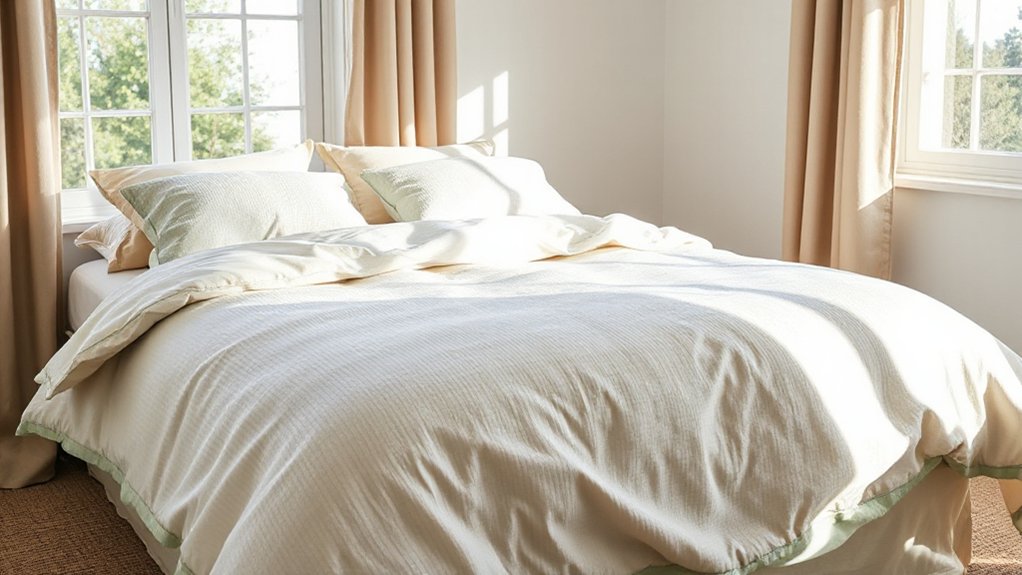
To refresh a bedroom with textiles, define the mood you want—calm, cozy, or luxurious—and translate that into fabric weight, texture, and patterns. Build a cohesive color story using 2–3 core hues, then repeat key patterns and vary scale for harmony. Choose durable, easy-care fabrics and layer light to heavy textures for depth. Refresh on a budget with targeted swaps and seasonal updates, and maintain freshness with quick routines—stay tuned for more practical tips you can apply now.
Define the Mood You Want Textiles to Create in Your Bedroom
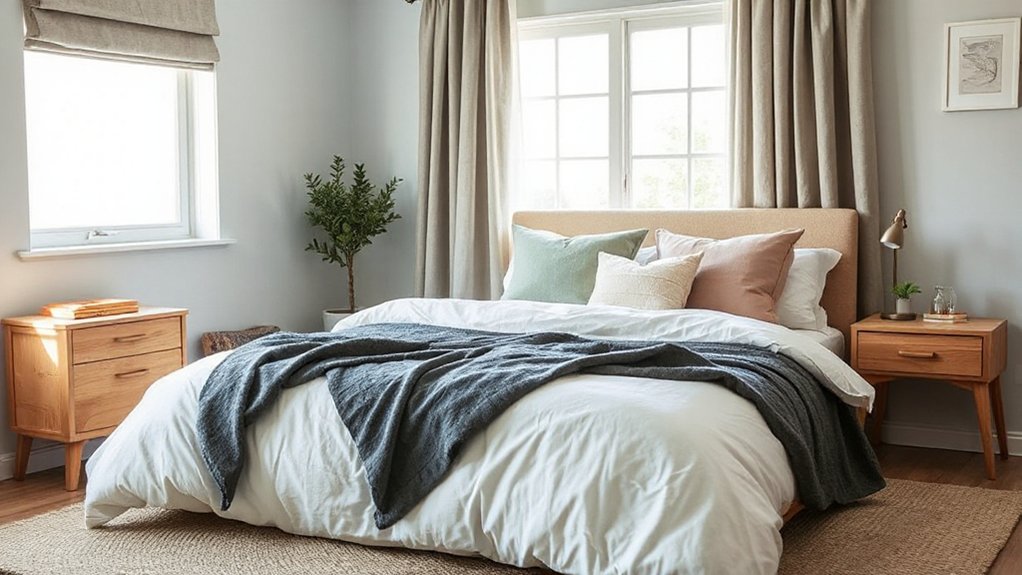
To set the mood with textiles, start by identifying the feeling you want to evoke in your bedroom—calm, cozy, energizing, or luxurious. You’ll translate that feeling into concrete choices: fabric weight, textures, and patterns that align with mood setting and textile symbolism.
Begin with a core element, such as a comforter or throw, and pair it with sheets in a complementary hue to reinforce the desired atmosphere. Consider the tactile experience you want every night—soft and breathable for calm, plush and warm for cozy, smooth and bright for energizing, or rich and velvety for luxurious.
Document your mood goals so selections stay cohesive. This clarity keeps your space belonging-centric, practical, and anchored in intentional textile symbolism.
Build a Cohesive Color Story That Supports That Mood
A cohesive color story starts with a limited palette that reinforces your chosen mood; pick two to three core colors and use them consistently across textiles.
- Establish color harmony by repeating the same hues in bedding, curtains, and throws, ensuring contrast is intentional and calm.
- Apply textile hierarchy: primary textiles wear the dominant color, secondary accents support with a quieter shade, and accents pop with a small dose of contrast.
- Test lighting at dusk to confirm the story holds under real conditions, adjusting shades as needed for balance and cohesion.
This approach gives you a confident, belonging-filled space where every textile reinforces mood, avoids chaos, and feels deliberate.
Mix Patterns With Textiles Without Clashing
After establishing a cohesive color story, the next step is to mix patterns with textiles without clashing. You achieve harmony by choosing one dominant motif and supporting it with two secondary patterns that share a shared color or undertone.
Prioritize pattern coordination: repeat a key element—a stripe with a dot, or a geometric with a subtle floral—to create visual continuity.
Mix scale deliberately: large prints anchor the bed, medium prints cushion the seating, small prints appear in blankets or lampshades to tie the room together.
Consider texture and weight to avoid visual noise; heavier textiles ground the space while lighter ones add air.
Always assess textile durability in context—visible wear on frequently touched items matters for long-term cohesion.
Pick Fabrics by Wear, Care, and Durability
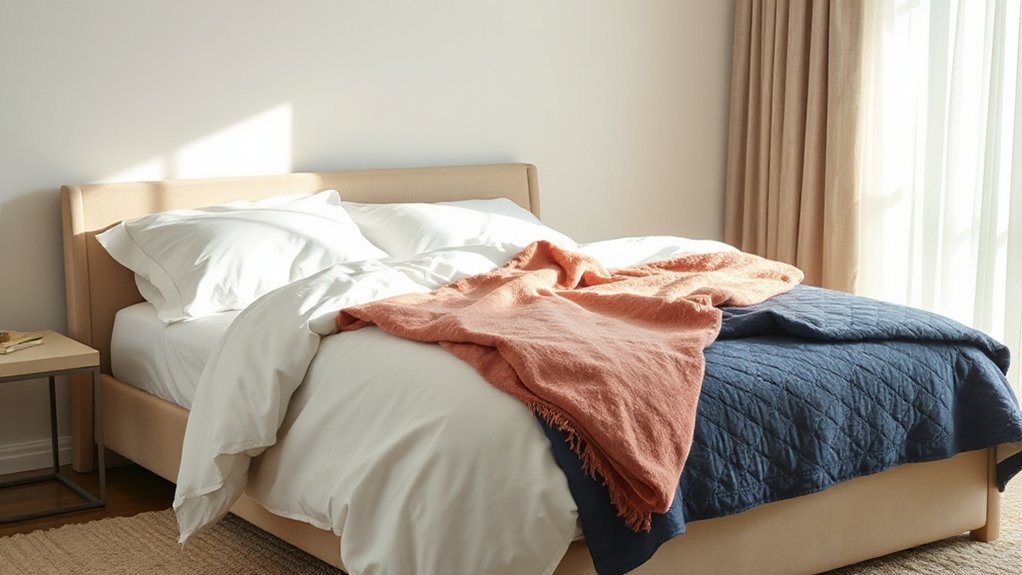
Choose fabrics by wear, care, and durability to guarantee long-lasting comfort and a clean look. You want textiles that resist daily use without losing color or shape, preserving textile longevity and your room’s calm feel. Focus on fabric durability ratings, fiber blends, and care requirements to minimize upkeep while maximizing comfort. Consider how each option handles sunlight, friction, and stains, so you don’t chase endless replacements.
Prioritize breathable textures that still endure frequent use, and align choices with your routine to foster a sense of belonging in your space.
- Assess wear patterns and care needs before buying
- Favor blends known for durability and easy maintenance
- Match fabric weight and breathability to your climate and habits
Fabrics durability, textile longevity.
Layer Textiles for Depth: Texture, Weight, and Opacity
Texture adds visual interest without bulk, while weight governs how fabric drapes and fills space. Consider how opacity layers reveal or mute underlying color.
Then, mix light, medium, and heavy textiles to create depth. Start with a base, then add tactile pairings to balance texture, weight, and translucence.
Texture Versus Weight
Texture and weight determine how a layered textile setup reads in a room. You balance textures to create depth without heaviness, letting fiber composition affect hand and drape while weight grounds the space.
You’ll notice seasonal variations shift how a pattern reads with lighting and temperature, so choose versatile pieces you can mix and match.
- Consider fiber composition to predict tactile contrast and drape
- Align weight with room scale and seasonal variations for comfort
- Build a cohesive palette by pairing textures you already own with a few new pieces
This approach keeps the room feeling belonging, practical, and refined. You’ll feel confident layering textiles, knowing each choice supports comfort, cohesion, and a durable, welcoming atmosphere.
Opacity And Layering
Opacity is the key to layering that adds depth without crowding the space. You’ll balance textiles by pairing sheer or light-weight fabrics with solid, denser pieces, letting each layer contribute texture without overwhelming the room.
Start with a foundational curtain or bedcover in a medium weight, then introduce lighter linens for contrast. Opacity effects vary with weave and color; choose breathable blends for daily use and reserve heavier textures for accent regions.
Layering techniques hinge on intentional scale: mix large panels with smaller textiles, offset tones, and repeat subtle hues to create cohesion. Keep trims simple and edges clean to avoid visual clutter.
Use texture and opacity to guide the eye, not dominate it, cultivating a calm, welcoming atmosphere you can inhabit daily.
Refresh on a Budget: Targeted Swaps by Price Tier
Considering a budget? You can refresh without overspending by targeting swaps by price tier plus practical touches. Start with mid-range updates first, then fill gaps with small, high-impact items. Seasonal swaps keep rooms feeling current without a full overhaul, while scent enhancements give an immediate sense of renewal.
- Seasonal swaps align textiles to the calendar, changing color and texture without major expense
- Layer up with affordable inserts and trims to shift mood and warmth
- Scent enhancements via simple, targeted additions create a refreshed feel instantly
Choose items that maximize impact per dollar, and keep a short list of core pieces you’ll rotate. This approach reinforces belonging through thoughtful, purposeful choices rather than constant turnover.
Keep Textiles Looking Fresh: Quick Maintenance Tips
To keep textiles looking fresh, establish a simple maintenance routine and stick to it. You’ll extend life and comfort by quick, decisive checks: rotate sets seasonally, inspect seams, and spot-clean spills immediately.
Develop a practical cadence—weekly quick dust, monthly vacuum with a brush attachment, and quarterly laundering where possible. Use the right settings to protect fibers and color, avoiding over-washing.
Implement Cleaning routine tips that minimize wear: air fabrics after use, treat sun exposure, and store out-of-season textiles in breathable bags.
Consider Seasonal fabric swaps to refresh textures without full replacements, keeping a sense of belonging in your space.
Track labels and care instructions, and honor them consistently.
Consistency builds trust in your design, delivering lasting freshness with minimal effort.
Frequently Asked Questions
How Do Textiles Affect Sleep Quality in a Refreshed Bedroom?
Textiles considerably impact sleep, you’ll notice when you choose breathable fabrics and clean, well-maintained pieces. They modulate temperature and noise, boosting comfort. Textile maintenance and consistent care preserve softness, while guiding Bedroom ambiance toward restful, belonging-focused environments.
Which Fabrics Are Best for Allergy Sufferers in Bedrooms?
Most fabrics suitable for allergy sufferers are tightly woven and breathable, reducing dust retention. About 60% prefer washable options. You choose cotton or linen blends, use fabric cleaning regularly, and apply allergy proofing techniques to minimize irritants.
Can Sustainable Textiles Influence Mood as Effectively as Synthetic Ones?
Yes, sustainable textiles can influence mood as effectively as synthetic ones. You’ll notice it when you choose Eco friendly fibers and mood enhancing textures, creating a calm, cohesive space that clearly signals belonging and comfort in your bedroom.
How Often Should Pillows, Blankets, and Drapes Be Replaced?
Replace pillows every 1–2 years, blankets every 3–5, and drapes every 5–7, depending on wear. Decorating tips emphasize longevity and color coordination, so rotate seasonal hues to maintain cohesion and a sense of belonging in your space.
What Signs Indicate a Textile Needs Replacement Beyond Wear?
You’ll know a textile needs replacement when you notice thinning fibers, persistent pilling, persistent odors, and faded colors despite cleaning. Prioritize fabric maintenance, and assess Textile durability regularly to guarantee comfort, safety, and a confident, belonging-oriented space.
Conclusion
Refresh your bedroom with textiles by starting small—swap pillow shams, add a throw, or switch curtains to shift the mood without a full overhaul. Build a cohesive color story, mix patterns carefully, and choose fabrics by wear and care to keep things practical. Layer for depth, and budget with targeted swaps. Quick maintenance keeps it fresh: tumble dry low, spot-clean, and rotate use. Think of textiles as the seasoning that elevates your space’s flavor. Your sanctuary, refreshed.