
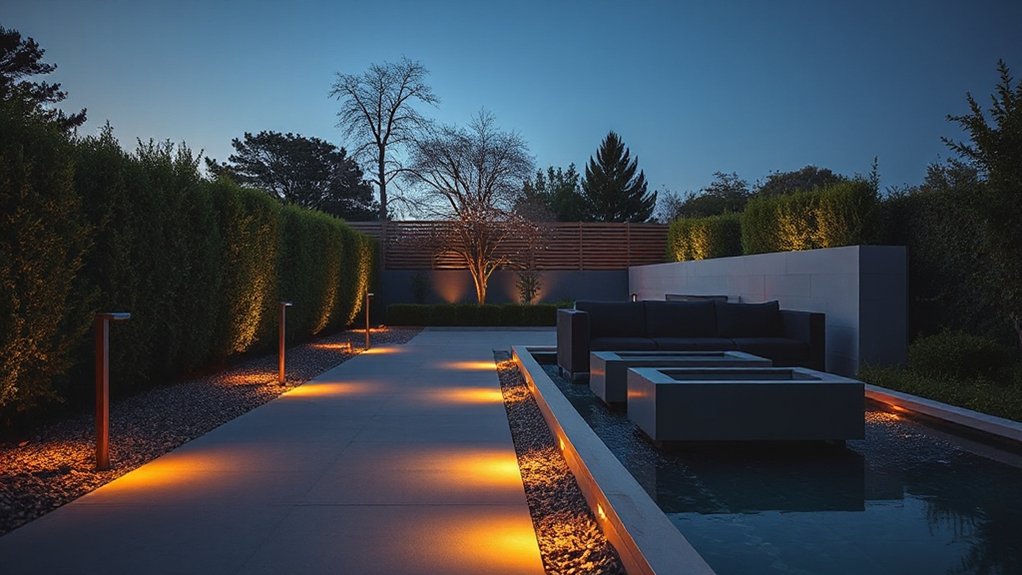
For modern gardens, layer warm, low-glare lighting to shape paths, focal points, and outdoor rooms. Use minimalist fixtures with slim profiles, dimmable LEDs, and smart controls for mood, safety, and energy savings. Combine ground-level lighting with taller accents to add depth, and keep color temperature around 2700–3000K for inviting warmth. Shield lenses to minimize glare, and stagger light levels along borders. Regular maintenance preserves performance. Keep exploring to uncover more practical, site-ready ideas.
Foundations of Outdoor Lighting: What Makes It Work
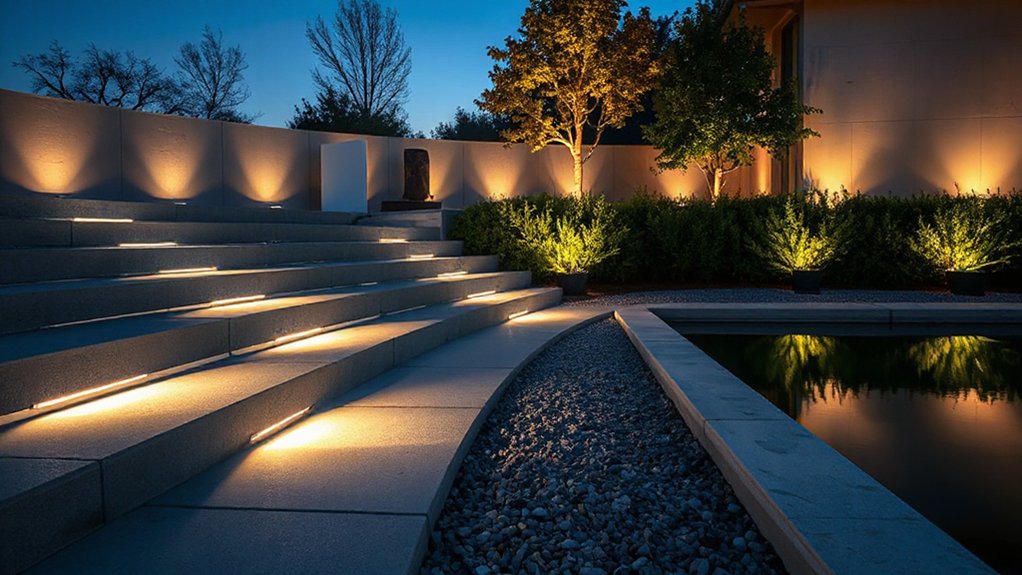
Foundations are the backbone of effective outdoor lighting. You shape a cohesive system by selecting reliable fixtures, proper mounting, and balanced illumination goals.
Start with core principles: brightness enough for safety, color accuracy that flatters plants and surfaces, and uniform spacing to avoid hotspots.
Consider solar efficiency where you rely on natural energy, but don’t sacrifice placement or durability for savings.
Choose components rated for outdoor use, weather-resistant housings, and corrosion-proof fasteners.
Plan a simple circuit or zone layout that’s easy to adjust as gardens evolve, so you feel connected to the space and its changes.
Prioritize color rendering to reveal true hues after dusk, helping you partner with friends and family in comfortably lit gatherings.
With these foundations, your garden becomes inviting and cohesive.
Layered Path Lighting for Safe, Stylish Navigation
Layered path lighting creates distinct glow layers that guide you along walkways without glare. You’ll combine low-contrast ground level lighting with higher, accent fixtures to guarantee Safe Navigation Lighting, even in mixed terrain.
This approach blends Pathway Glow Layers with deliberate placement, giving Style With Illumination while keeping safety at the forefront.
Pathway Glow Layers
Layering creates depth, helping you see where to step while highlighting your garden sculpture as a focal point. Use a consistent lighting color to avoid confusion and oversaturation; a warm white often feels inviting and cohesive with natural tones.
Balance brightness so paths read clearly without glare, and guarantee fixtures are glare-controlled toward the ground. This approach reinforces belonging by inviting guests to stroll, pause, and connect with landscape details.
Avoid clutter; let color temperature and form guide attention.
Safe Navigation Lighting
Place warm-toned LEDs at ground level for depth, adding taller bollards at critical turns to warn of obstacles. Aim for even spacing and a light level that reads as invitation, not drama.
Integrate solar or low-voltage options for ease of maintenance, and assure cords are concealed—safety is priority. Use contrast: bright foreground lighting with softer background washes to prevent tripping while sustaining intimacy.
Your garden gains outdoor ambiance and a welcoming, inclusive vibe through thoughtful, practical garden lighting choices.
Style With Illumination
Illumination can transform a garden path from utilitarian to inviting, guiding every step with confidence and style. You’ll layer light to define edges, highlight texture, and create a natural rhythm that feels cohesive.
Start with low-profile path lights at a consistent height, spacing them to illuminate toe-safe ground without glare. Add wall-mounted fixtures for tactile depth along fences or borders, then accent a focal point with a subtle garden art sculpture or plant grouping to anchor the scene.
Use warm color temperatures to foster outdoor ambiance, and dimmers to shift mood from practical to leisure-ready. With this layered approach, you invite lingering and conversation, turning a simple walk into an experience that reinforces belonging and everyday discovery.
Achieving Soft Warmth: Color Temperature and Fixture Techniques
To create soft warmth in a modern garden, start with a warm color temperature—typically 2700K to 3000K—and pair it with well-placed fixtures that direct light where you need it without glare.
You’ll focus on fixture placement to sculpt pathways, seating nooks, and focal trees, avoiding hot spots and excessive brightness. Choose luminaires with full cutoff or shielded optics to maintain a gentle wash rather than harsh beams.
Layer light at different heights—ground-level uplights, step lights, and low-profile wall washers—to build depth and a welcoming mood. Use dimmable LEDs so you can adjust intensity as evenings unfold.
Prioritize consistency in color temperature across fixtures for a cohesive, inviting atmosphere that makes your garden feel thoughtfully illuminated and part of your home.
Minimalist Fixtures That Blend With Architecture
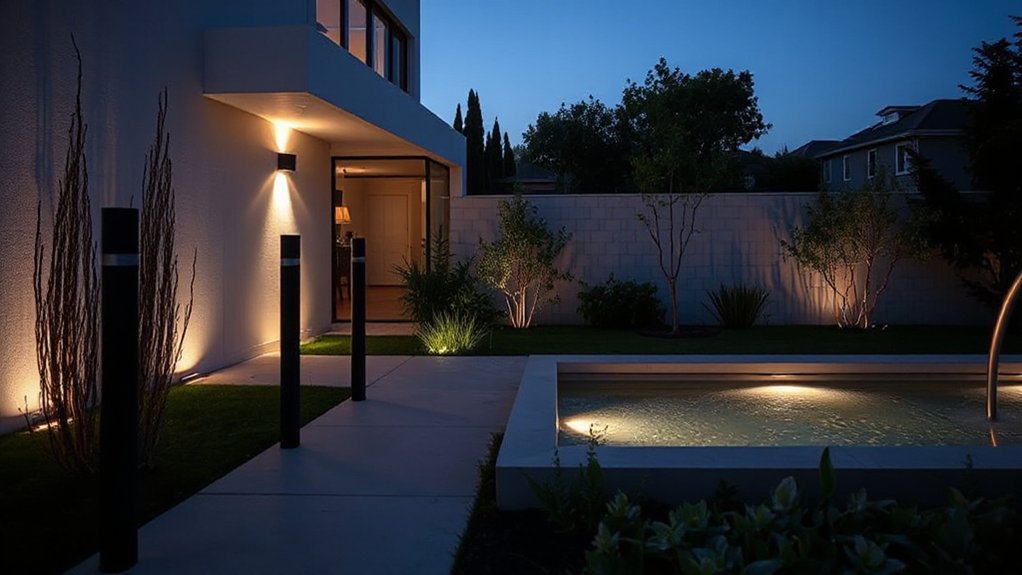
Fixtures that blend with architecture maintain the minimalist aesthetic you’ve chosen, letting the built form stay the visual focus while lighting remains practical and discreet. You prioritize clean lines, so select fixtures with slim profiles, recessed mounts, or surface-mounted units that mirror materials—stone, concrete, metal, or wood.
Aim for fixture consistency across zones to reinforce a cohesive look, avoiding competing styles. Choose warm, even illumination that highlights architectural features without creating glare. Use dimmable LEDs to adapt mood and function, ensuring light levels support safety while preserving ambience.
Plan placement to emphasize edges, steps, and recesses rather than decorative accents. In modern aesthetics, restraint communicates confidence; in your garden, restraint and precision make lighting feel organic and earned.
Smart Controls for Dimmers, Schedules, and Remote Access
Smart controls elevate any modern garden by making dimming, scheduling, and remote access straightforward. You’ll set scenes that fit routines, from warm evenings to late-night safety, without stepping outside.
Voice control lets you adjust lighting hands-free, so you feel in command without clutter.
Dimmers protect plant health and extend fixture life by moderating brightness, while schedules align illumination with sunset and your activities, reducing waste.
Remote access means you can tweak setup from anywhere, ensuring outdoor spaces feel welcoming when guests arrive or you return home.
All together, these features heighten energy savings by preventing overuse and optimizing run times.
You belong to a thoughtfully managed garden where technology serves you, not the other way around. Energy savings and control become second nature.
Sculptural Lights: When Light Becomes Art
Sculptural lights transform outdoor spaces into visual statements, where form and function fuse to create striking focal points. You’re not just lighting a path—you’re curating a mood, telling a story through shadow, texture, and glow.
Choose Sculptural forms that echo your garden’s lines, from sweeping arcs to angular silhouettes, so the fixture feels like part of the landscape rather than an add-on.
Opt for Artistic fixtures with thoughtful scale, ensuring they don’t overpower or underplay your elements.
Place key pieces where they’ll be most noticed: entrances, seating vignettes, and architectural accents.
Use warm, consistent color temperatures to foster belonging and comfort, while dimming options let you shift atmospheres effortlessly.
Maintenance is simple: wipe down, check seals, and replace bulbs proactively.
Your outdoor space becomes a living sculpture.
Illuminating Landscape Features: Foliage, Water, and Stone
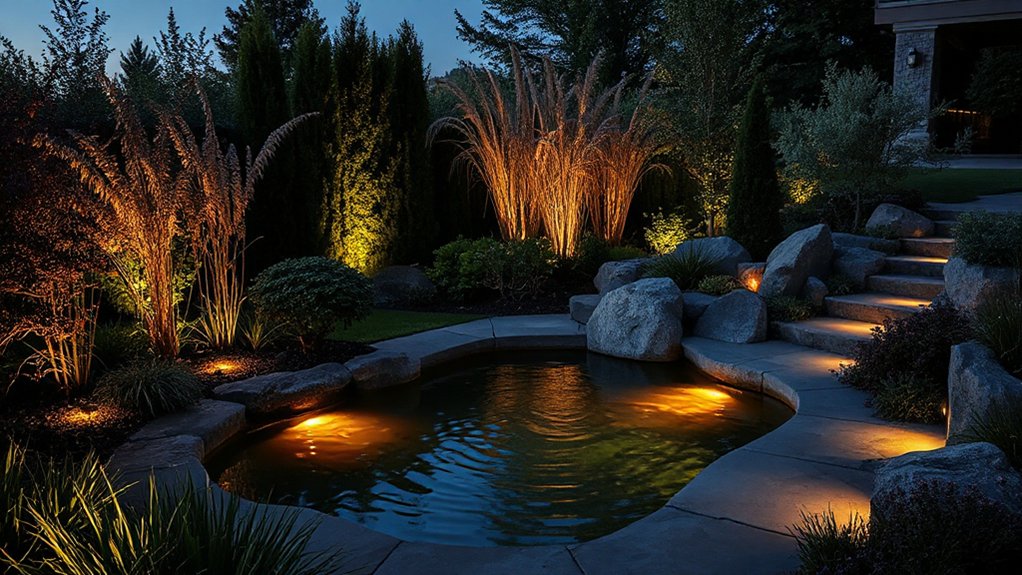
Now that you’ve explored sculptural lighting as a design statement, you can shift the spotlight to how lighting plays with the garden’s natural features. Illuminating foliage, water, and stone is about highlighting texture, color, and movement without overpowering them.
Use low-angle, directional LEDs to create sculpted shadows on leaves and stems, emphasizing botanical accents. Accent water features with soft, rippling reflections that feel calm and intimate, avoiding glare on the surface.
For stone, opt for warm, even washes that reveal grain and form, pairing shadows with highlights for depth. Keep the ambiance cohesive by timing lights to the landscape’s rhythm, so the garden feels welcoming and inclusive.
This approach builds an ambient mood that invites you to linger and belong.
Safety and Maintenance: Glare Reduction and Longevity
To minimize glare, position fixtures so the beam stays below eye level and shield lenses with louvers or diffusers.
Regularly clean and inspect housings, seals, and connections to preserve efficiency and prevent color shifts that shorten lamp life.
Track performance over time and replace aging components promptly to sustain safe, long-lasting illumination.
Glare Reduction Techniques
Are glare issues undermining your garden lighting? You’ll curb them with simple, practical tweaks that respect lighting ergonomics and daily use. Choose luminaires with full cutoff designs to limit upward and sideways escape, then position fixtures to illuminate targets without glaring into eyes or windows.
Opt for warmer color temperatures around 2700–3000K to reduce harsh contrasts and fatigue. Dim-to-warm options let you ease brightness as evenings unfold, preserving comfort.
Shielded eyework, glare-reducing housings, and shielded lenses minimize high-intensity hotspots. Use diffusers or louvers on pathway lights to soften edges, and stagger light levels along borders for depth without overpowering the scene.
Finally, test and re-balance after installations; refined glare control grows with real-world use, reinforcing belonging and confidence in your garden’s glow. Glare reduction supports lasting, ergonomic lighting.
Longevity Through Maintenance
Regular maintenance keeps garden lighting safe, reliable, and long-lasting, so build a simple routine into your weekly and seasonal checks. You maintain safety and curb glare while preserving garden aesthetics and the integrity of lighting fixtures, ensuring lasting enjoyment of outdoors.
- Inspect fixtures for corrosion, moisture, and loose fittings to prevent failures and maintain clean lines in your landscape.
- Clean lenses and diffusers to preserve true color and reduce glare without dulling ambience.
- Replace aging bulbs or LEDs before output drops, preserving consistency across your garden aesthetics.
- Schedule seasonal tests of wiring and connections to prevent outages and extend the life of lighting fixtures and wiring.
Frequently Asked Questions
How Can I Balance Energy Efficiency With Bright Outdoor Lighting?
You balance energy efficiency with bright lighting by choosing solar-integrated fixtures and smart controls, adjusting intensity with occupancy and time schedules, and prioritizing warm, well-distributed light so you feel safe, connected, and included in your outdoor space.
What Impact Does Lighting Have on Wildlife in Gardens?
What happens to wildlife? Lighting can disturb nocturnal behavior and cause wildlife disturbance, guiding you to design with dimmed, shielded lights and motion sensors so you still enjoy your space while respecting neighbors and ecosystems.
Which Mounting Heights Maximize Safety Without Glare?
You should mount lights at a height that minimizes glare while staying out of direct sightlines, balancing safety and comfort. Use mounting height considerations with glare control in mind, ensuring you’re visible without dazzling neighbors or guests.
How Do I Design a Cohesive Lighting Plan for Small Spaces?
Guiding light, you map a cohesive plan by outlining garden pathways and placing decorative fixtures at varying heights for depth. You unify textures, balance brightness, and group zones, so every corner feels welcome, practical, and belonging to your intimate outdoor space.
What Maintenance Routines Extend Fixture Longevity Outdoors?
Tackle maintenance by cleaning fixtures monthly, sealing connections, and checking seals for wear; replace bulbs promptly. This sustains fixture durability and weather resistance, ensuring you stay confident outdoors, supported, and connected to your lighting system’s lasting performance.
Conclusion
You’ve planted the seed for a luminous garden that guides, delights, and protects. Think of lighting as choreography for your outdoor space—pathways glow softly, trees cast theater-like shadows, and water becomes a living mirror. Keep it simple, layered, and controllable: dimmers, schedules, and smart tweaks keep glare down and mood up. Maintain fixtures, test yearly, and let harmony grow with safety. In short, light that plans with you becomes timeless.