
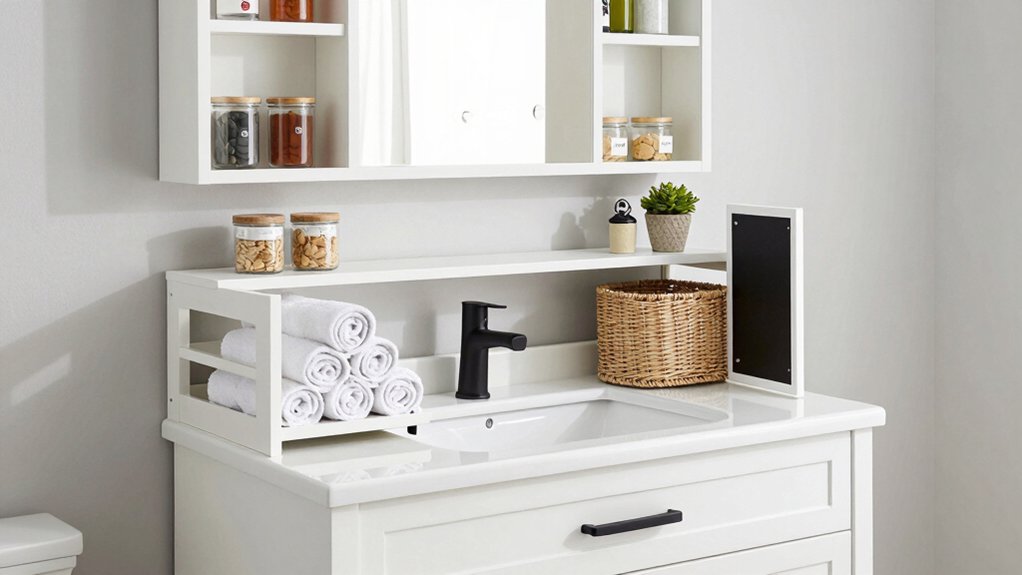
You probably don’t realize how much vertical space you’re wasting in a small bath until you map every wall, nook, and door for storage opportunities. You’ll want moisture-resistant options, smart placements, and a clear plan that hides clutter while keeping essentials within arm’s reach. From niches and recessed shelves to under-sink bins and over-the-door organizers, a precise setup can transform usability—but the best approach hinges on your layout, and there’s more to contemplate beyond basics.
Clever Corner Shelving for Small Bathrooms

Corner shelving is a smart way to maximize bathroom storage without crowding floor space. You’ll install compact units that fit into elbow room between walls, corners, and plumbing. This approach leverages vertical height, giving you multiple tiers for essentials—soap, toothbrushes, towels—without crowding the sink area.
Choose sturdy materials and corrosion-resistant finishes to handle humidity. Measure precisely: wall depth, ceiling clearance, and door swing if applicable. Install brackets or a retrofit rail system securely; uneven walls require spacers or shims for plumb alignment.
Opt for modular or adjustable shelves to tailor spacing as needs shift. For small bathroom storage, prioritize shallow depths and glass or light-toned finishes to maintain visual openness. Integrate discreet hardware to preserve clean lines and minimize visual clutter.
Over-the-Door Organizers That Free Counter Space
Over-the-door organizers are a practical, space-saving solution that frees counter space by using existing door surfaces. You’ll gain vertical storage without remodeling, keeping frequently used items reachable.
Select heavy-duty models with corrosion-resistant hardware and adjustable shelves to tailor to your routine. For towels, choose towel racks integrated into the unit so damp textiles dry promptly and don’t drip on counters.
Position soap dispensers at eye level for easy access, reducing bottle clutter on sinks. Ensure door clearance remains intact; opt for slim profiles if you have limited doorway width.
Install with a level, using mounting screws appropriate to your door material. Regularly rotate contents to prevent overloading, maintaining smooth operation and maximizing the organizer’s lifespan.
Under-Sink Storage Hacks That Maximize Depth
Under-sink storage hacks maximize depth by exploiting vertical space and pipe clearance to keep essentials accessible without clutter. You optimize every inch with stackable bins, narrow trolleys, and slim pull-out organizers that fit around traps and valves.
Prioritize cabinet organization by grouping items by use and frequency, then store cleaners away from food-contact surfaces.
Use deep storage solutions like extending drawer slides, tiered shelves, and bottle racks to create multiple levels within the cabinet cavity. Measure clearance precisely to avoid rubbing pipes or the drain hose.
Consider a modular system that allows reconfiguration for seasonal items. Label transparently, so you can locate items fast.
Choose corrosion-resistant materials, and design for airflow to minimize moisture buildup behind stored goods.
Wall-Mounted Cabinets for Moisture-Friendly Rooms
Wall-mounted cabinets in moisture-friendly rooms require materials and mounting methods that resist humidity and fasten securely to wall substrates. Choose cabinets with enamel, acrylic, or powder-coated finishes that resist corrosion and peel. Opt for solid-core doors or moisture-sealed panels to minimize swelling and warping.
Use stainless-steel or corrosion-resistant fasteners, plus wall anchors suited to your substrate, and apply a continuous seam sealant around mounting gaps. Guarantee adequate clearance from fixtures and maintain ventilation paths remain open; bathroom ventilation should complement cabinet placement, not hinder access.
For lighting, integrate vanity lighting above or beside doors to reduce fogging on fronts. Avoid overt shelving near direct water spray; position shelves away from shower zones.
Prioritize secure mounting, moisture-aware hardware, and accessible door operation for long-term reliability.
Tiered Shower C Shelves for Easy Access
Tiered Shower C shelves optimize Easy Access by placing frequently used items at hip to eye level, reducing reach and strain.
They support Space-Saving Design with staggered tiers that maximize vertical space without crowding the shower stall.
Use a shallow, water-resistant finish and clear labeling to reinforce quick, reliable access for daily routines.
Easy Access Tips
To maximize accessibility in the shower, tiered C shelves place frequently used items within easy reach without bending or twisting. You’ll optimize placement by assigning top tiers to daily essentials and lower levels to backups, reducing reach fatigue and streamlining routine tasks.
Align bottles vertically to minimize water spotting and maintain quick visibility; label or color-code items for fast identification. Secure shelves with corrosion-resistant hardware, ensuring consistent load tolerance during movement.
Use rounded edges to prevent snagging and enable smooth access while standing. Choose luxury fixtures for durable aesthetics, and prefer eco-friendly materials that resist humidity without off-gassing.
Regularly inspect seals, and rotate products to avoid clutter buildup. Maintain a minimal, orderly surface to preserve efficient access between uses.
Space-Saving Design
Space-saving design for tiered C shelves focuses on maximizing storage density without compromising access or safety. You optimize spacing by aligning shelves to the shower wall, placing frequently used items at arm height, and leaving clear zones for soap, shampoo, and towels.
Use rounded edges and slip-resistant mounting to minimize injury risk while maintaining easy reach. Materials should be corrosion-resistant and easy to clean, favoring eco-friendly materials for long-term durability.
Prioritize ventilation to reduce moisture buildup and prevent mold. Label sections for quick retrieval and avoid overcrowding to sustain sightlines.
Integrate vanity lighting near the mirror to illuminate products without glare. Keep aesthetics simple and modular so you can reconfigure as needs evolve.
This approach balances density, safety, and accessibility.
Magnetic and Slim-Line Storage for Metal Surfaces
Magnetic and slim‑line storage options optimize metal surface organization by using strong neodymium magnets or low-profile rails that cling to steel backsplashes, cabinet doors, or utility panels.
You deploy magnetic storage to hold small tools, clipped cords, or metal containers with predictable retention strength, so items stay in sight and within reach.
Slim line organizers install flush, reducing profile while increasing surface usability on metal doors or panels.
Measurement accuracy matters: choose rails and magnets rated for anticipated load, with corrosion-resistant finishes for bathroom humidity.
Install with provided templates to ensure alignment and even weight distribution.
Routine checks prevent loosening, and you label zones for quick retrieval.
This approach delivers reliable, modular organization without bulky hardware or clutter.
Floating Vanities With Built-In Still-Available Nooks
Floating vanities with built-in, still-available nooks streamline your workflow by pairing visible storage with discreet access. You’ll appreciate the Built-In Nook Access for quick, organized reach while Floating Vanity Efficiency keeps floor space open and airflow unblocked.
This Hidden Storage Synergy guarantees valuables stay out of sight yet within arm’s reach, optimizing both utility and aesthetics.
Built-In Nook Access
Built-in nook access in floating vanities keeps essential storage within arm’s reach while maintaining a clean, streamlined look. You’ll appreciate how the built-in nooks align with typical drawer heights, allowing you to segregate daily essentials without external organizers.
This design minimizes countertop clutter and enhances wipe-down efficiency, since clutter-free surfaces reduce dust and moisture buildup near sinks. Consider placement relative to plumbing fixtures to avoid interference with pipes or valves; the nooks should sit slightly above the cabinet base to prevent water ingress.
When selecting materials, prioritize moisture resistance and easy-to-clean finishes. Integrate subtle lighting to illuminate items without creating glare.
Balance storage depth with door or panel access for smooth operation, ensuring the system supports routine maintenance and bathroom lighting tasks.
Floating Vanity Efficiency
Open space under the sink and countertop access in floating vanities maximize efficiency by keeping essential items within arm’s reach while reducing visible clutter. You’ll appreciate built-in still-available nooks that stay organized without sacrificing counter space.
Efficiency hinges on deliberate layout: align vanity lighting to illuminate work zones without creating glare on mirrors, and position faucet placement to minimize splash while maximizing under-sink clearance.
Choose adjustable organizers and spill trays that slot into side cubbies, ensuring quick access to daily-use items. Integrate shallow drawers for cords and grooming tools to maintain clean lines.
Material selection matters: durable finishes resist moisture and wipe clean easily. Prioritize wall anchors and secure mounting hardware to preserve stability during routine use and cleaning.
Hidden Storage Synergy
Hidden storage synergy hinges on seamless integration of built-in still-available nooks with floating vanities, delivering quick-access compartments without encroaching on workspace. You design around efficiency, pairing slim profiles with recessed drawers and open-front shelves that remain out of sight when unused.
Concealed compartments blend with cabinetry, preserving clean lines while hosting daily essentials. You’ll allocate vertical gaps for tall bottles and compact units for grooming tools, ensuring every inch serves a purpose.
Hidden compartments emerge behind panels that swing or slide, enabling secure storage without countertop intrusion. Precision hinges and soft-close mechanisms prevent noise, preserving a calm bathroom rhythm.
Material choices emphasize moisture resistance, easy cleanup, and compatibility with existing finishes.
Result: a streamlined, functional system that visually expands space while respecting workflow and accessibility.
Mirror Cabinets That Hide Imperfections and Clutter
Mirror cabinets offer a practical blend of reflective surface and storage, letting you hide imperfections and clutter behind a clean front. You gain discreet access to essentials without sacrificing aesthetics, because the mirrored front doubles as a diagnostic tool for daily routines.
Choose units with integrated lighting and anti-fog features to maintain visibility and reduce residue that invites grime. Prioritize adjustable shelves and deep compartments to maximize hidden storage without overcrowding the cabinet’s interior.
Look for soft-close hinges to prevent slams that can jar delicate items. Consider perimeter seals to minimize moisture infiltration and improve longevity.
This setup supports clutter concealment by isolating everyday items from view while preserving a streamlined bathroom silhouette. Ensure installation preserves level alignment for ideal function and mirror integrity.
Baskets and Bins That Tailor to Your Routine
You tailor your storage by choosing everyday baskets that align with your routine, ensuring each item has a specific home. Consider a spa-day bin setup to streamline wash-day and self-care tasks, keeping towels, products, and tools within arm’s reach.
For tiny spaces, use compact, clearly labeled bins and a predictable layout to minimize search time and maximize surface area.
Everyday Baskets Layout
Organize daily routines with a purpose-built basket layout that keeps bathroom essentials within reach and clearly categorized. You’ll group items by function (daily rituals, grooming, backups) and place them in a tiered or labeled system to minimize search time.
Use a core set of high-contrast containers to maintain visual order, and reserve a shallow bin for frequently used items. Implement consistent placement: near sink for daily items, away from moisture-prone zones for backups.
Keep a small, visible inventory to avoid repeats and overstock. Integrate decorative accents to signal zones without clutter, and employ lighting enhancements to improve visibility in low-light conditions.
Prioritize easy access, wipe-clean surfaces, and modular components that adapt as routines evolve. This layout delivers repeatable efficiency with minimal friction.
Spa-day Bin Organization
Spa-day bin organization starts with tailoring baskets and bins to your routine, so items you use most appear at a glance and everything else stays out of the way. You map daily tasks to storage zones: facial implements near the sink, towels within arm’s reach, and backups in a labeled bin.
Choose clear or labeled containers to reveal contents at a glance, reducing search time during a routine. Use size matching: small compartments for razors and cotton, larger bins for lotions and cleansers.
Implement a rotation system that refreshes monthly, discarding empty or expired products. Maintain hygiene by separating damp items from dry ones and cleaning bins weekly.
This structure minimizes clutter, enhances accessibility, and supports a consistent spa day routine through precise bin organization.
Tiny-Space Storage Tricks
When space is tight, choose baskets and bins that align with your routine to maximize every inch of your bathroom. You’ll segment tasks into quick-swap zones: daily essentials in shallow caddies, OTC items in uniform bins, and towels in stackable stacks.
Select sizes that fit your vanity footprint and keep lids closed to reduce visual clutter. Use clear or labeled containers so you can verify contents at a glance, avoiding overreach searches.
Mount a slim shelf for mirror lighting cords and faucet accessories, maintaining a tidy surface area. Pair bins with hooks or a magnetic strip to free drawer space and minimize clutter.
Prioritize uniform materials for a cohesive look, and prefer stackable options to adapt as routines evolve.
Pegboard and Grid Systems for Flexible Layouts
Pegboard and grid systems offer flexible storage layouts that adapt to changing needs. You’ll implement modular pegboard designs to place hooks, bins, and accessories precisely where you use them most. Choose a base panel size and add perforations that align with common product spacings, minimizing wasted space.
Grid system customization lets you rotate between vertical and horizontal arrangements, maintaining clean sightlines while maximizing accessibility. Use labeled zones for frequently used items, and reserve peripheral areas for seasonal or infrequently accessed gear.
Install with level accuracy and consider moisture-resistant finishes for bathrooms. Cable management and ventilation considerations prevent obstruction and mildew.
Regularly reassess placement as routines evolve, ensuring the system remains intuitive, scalable, and durable over time.
Stackable Bins for Linen and Towels
Stackable bins streamline linen and towel storage by enabling you to adjust capacity without renouncing organization.
Use stacking style essentials to keep daily sets separated and reduce cross-contamination, while preserving quick access to clean items.
This approach supports practical linen and towel organization with clear visibility and scalable capacity.
Stacking Style Essentials
Stacking bins are a practical, space-saving solution for linen and towel storage in bathrooms. You’ll maximize foregrounded space with uniform dimensions that fit standard shelves and cabinets, while maintaining clear access to contents.
Choose bins with gridded walls or open fronts to optimize airflow and visibility, reducing moisture buildup. For customizable storage, select modular units that interlock or stack adjustably, allowing you to tailor capacity to your needs without reconfiguring the entire system.
Emphasize vertical stacking to exploit unused wall height, freeing countertop real estate and preventing overhangs. Use labeling zones on the front or lid for quick retrieval, and pair bins with moisture-resistant materials to extend longevity.
Ensure compatibility with existing hardware, minimizing installation steps and preserving clean, professional aesthetics.
Linen & Towel Organization
Linen and towel storage benefits directly from the bin strategy discussed earlier: stackable bins maximize vertical space, keep contents visible, and provide durable, moisture-resistant housing.
In Linen & Towel Organization, you apply the same logic to classify by use and material. Place items by function: Linen folding routines near access points for quick redraws, and reserve stowage for lighter, breathable packages to reduce moisture buildup.
Choose bins with clear fronts and labeled tiers to minimize search time and errors. Separate towels by size or material, and allocate one bin for everyday Towel material versus specialty textiles.
Maintain consistent folding standards, rotate stock seasonally, and inspect seals regularly to preserve integrity and distribution.
This approach delivers predictable retrieval, tidy aisles, and reliable content protection.
Shower Nooks and Recessed Shelves for Wet Zones
Shower nooks and recessed shelves optimize wet-zone storage by keeping toiletries and cleaning products within arm’s reach without crowding the shower floor. You gain organized access to bottles, soaps, and razors while maintaining a clear drainage path. Install at appropriate heights to minimize bending or overreaching, and align compartments with your typical routines.
Choose materials with proven water resistance and mold resistance, such as solid stone or waterproofed composites, and seal edges to prevent seepage. Consider bathtub niches for transitional spaces where tub and shower areas meet, ensuring consistent waterproofing details across joints.
For longevity, select waterproof recessed shelves with chamfered edges and non-slip interiors. Plan drainage, ventilation, and easy-clean surfaces to sustain maintenance-free operation.
Floating Shelves for Decor and Essentials
Floating shelves add upward storage and display without crowding surfaces, blending decor with essentials in a clean, accessible system. You install wall-mounted units at eye level for easy access and minimal reach. Choose sturdy supports rated for your load, and secure studs to prevent sag over time.
Position shelves to separate wet zones from dry zones, and stagger heights to create visual rhythm. Plant decor integrates naturally on open shelves, while compact baskets corral toiletries without clutter.
Use lighting fixtures strategically—under-shelf LEDs highlight objects and cast soft shadows, improving task visibility without glare. Finish options range from matte white to natural wood, matching fixtures and hardware.
Clean regularly; avoid overloading to preserve balance, accessibility, and long-term stability.
Customizable Laundry Zones Within the Bath Space
Customizable laundry zones in the bath space optimize workflow and conserve moisture control. You design dedicated lanes for sorting, washing, and folding, reducing cross-contamination and time waste.
Start with a compact cabinet set that houses your washer and dryer, and integrate open shelving for detergents, liners, and lint traps. Use adjustable shelves to accommodate varying loads, and install labeled bins to streamline laundry organization.
Choose customizable cabinetry with moisture-resistant finishes and magnetic closures to minimize slippage and maintain a clean surface footprint. Implement a vented utility drawer for odor suppression and a tilt-out hamper for sorting before entry.
Place a small dual-access countertop for folding near the dryer, and ensure electrical outlets meet code. This modular approach enhances accessibility, reliability, and upkeep.
Frequently Asked Questions
How Do I Prevent Moisture Damage on Wood Shelving?
You should seal wood shelving with waterproof coatings and apply moisture resistant finishes, then maintain ventilation. Regularly wipe damp surfaces, inspect joints for wear, recoat as needed, and choose fasteners rated for humid environments to prevent warping and decay.
What Is the Ideal Lighting for Bathroom Storage Areas?
The ideal lighting for bathroom storage areas is bright, shadow-free LEDs around 4,000–5,000K, mounted overhead and under cabinets. This enhances visibility for bathroom decor and cleaning tips, while remaining energy-efficient and easy to maintain.
Can Storage Affect Bathroom Ventilation and Humidity Levels?
Storage can influence ventilation impact and humidity control; it won’t fix airborne moisture alone, but improper layouts trap warm air like a closed oven. You’ll optimize airflow and moisture balance by strategic placement, spacing, and vent-aware design.
Are There Budget-Friendly, Durable Materials for Shelving?
Yes—opt for affordable materials like resin, PVC, or powder-coated steel, and choose solid wood with waterproof sealant. These long lasting options resist humidity, photon exposure, and daily use while keeping costs low and installation straightforward.
How Do I Measure for Corner or Odd-Shaped Spaces?
You’ll need precise measurements: average homes waste 15% space without proper corner-fit. Use a measuring tape to capture wall lengths and corner angles; record three points per corner for odd-shaped spaces, then calculate shelves accordingly.
Conclusion
You’ll finish with a bathroom that behaves like a well‑drilled storage system. Each feature—niches, over‑the‑door organizers, and under‑sink hacks—acts as a precise cog, maximizing space without clutter. Moisture‑resistant choices keep everything reliable, while wall‑mounted and recessed elements preserve flow. Layered shelving, laundry zones, and tiered C shelves translate function into finesse. In the end, you’ve built a sanctuary where every item has a home, and every routine runs with surgical, silent efficiency.