

In the UK, flats and private apartments differ mainly in tenure, governance, and costs. You’ll typically face leasehold with service charges and ground rent, plus shared spaces managed by a building or residents’ association. Freehold or share of freehold options offer greater control but higher responsibility. Layouts, ceilings, and acoustics matter for comfort and value, while planning constraints and maintenance rules shape interior design. If you want precision on costs, structures, and protections, you’ll find more details ahead.
Flat vs. Apartment: the Quick Decision Framework

When deciding between a flat and an apartment, start with the practical distinctions that matter in the UK market: ownership type, leasehold versus freehold, and service charges. You’ll assess ownership structure, noting that most flats sit in leasehold blocks with ground rents and service charges, while some freehold houses or maisonettes avoid ongoing fees.
Lease length, ground rent terms, and future reversion influence value and budgeting. Service charges cover maintenance, utilities, and building insurance, affecting monthly outgoings and long-term costs.
From a design perspective, consider interior design potential within the communal rules and external historical architecture constraints. You’ll also weigh personal belonging: how the layout supports daily routines, storage, and social spaces without sacrificing authenticity and connection to the surrounding fabric.
How UK Flats and Private Apartments Differ at the Core
In the UK, flats and private apartments differ at the core in ownership structure, rights, and ongoing costs. You assess how historical development shaped legal norms, ownership models, and resident expectations, then align these with your needs.
Flats often reflect collective governance, shared spaces, and community rules rooted in past urban planning, whereas private apartments emphasize individual control, market-driven pricing, and clearer personal responsibility.
Cultural differences influence perceptions of space, privacy, and tenure, affecting your sense of belonging and daily routines.
You’ll notice variance in maintenance funding, service charges, and decision processes, which influence long-term affordability and predictability.
Understanding these core distinctions helps you choose environments that match your values, supports your lifestyle, and sustains your integration within a given neighbourhood.
Ownership Options: Freehold, Leasehold, and Share of Freehold
You’ll scope how ownership structures shape control, costs, and risk across properties.
We’ll compare Freehold, Leasehold, and Share of Freehold to show where each option fits in long-term planning and maintenance responsibilities.
This discussion sets the framework for understanding how legal rights translate into practical ownership outcomes.
Freehold Ownership Nuances
Freehold ownership confers complete title to a property and its land, unlike leasehold arrangements where you hold a lease for a set term. You gain enduring control, enabling you to modify, extend, or sell without landlord consent, subject to regulations.
This nuance affects long‑term planning, investment value, and succession. Historical ownership patterns influence expectations around title integrity, covenants, and community standards.
You’ll also navigate local zoning regulations that shape permitted alterations, density, and uses, ensuring conformity with planning authorities.
Freehold offers stronger stewardship duties, including maintenance responsibilities and insurance, yet it reinforces belonging through direct accountability and tenure security.
Understanding these dynamics helps you assess risk, optimize capital, and align property choices with your goals for stability, autonomy, and long‑term residency.
Leasehold vs ShareofFreehold Dynamics
When weighing ownership options, leasehold, freehold, and share of freehold each offer distinct control, responsibilities, and risk profiles.
Leasehold confines you to a term-bound relationship with a landlord, shaping long-term costs, maintenance obligations, and management influence.
Freehold grants enduring autonomy, but you shoulder full upkeep, taxes, and decisions.
Share of freehold blends control with shared duties, often requiring cooperative governance yet preserving more flexibility than pure leasehold.
You’ll evaluate service charges, ground rents, and potential enfranchisement opportunities against your budget and future plans.
Interior design choices align with permitted alterations and collective taste, while property taxes reflect tenure structure and property value.
Building Types Explained: Conversion Flats, Purpose-Built, and Mixed-Use
Conversion flats, purpose-built flats, and mixed-use buildings represent the three main pathways for housing that blur the line between residential and other uses. You’ll understand how each type shapes living experience, safety standards, and design choices. This overview stays technical, concise, and oriented toward belonging and practicality, emphasizing how Building insulation and Interior design interact with each format.
- Conversion flats maximize existing layouts, requiring adaptive insulation strategies and cohesive interior design to guarantee contemporary comfort.
- Purpose-built flats offer standardized infrastructure, predictable maintenance, and optimized common-area planning.
- Mixed-use schemes integrate retail, workspaces, or services, affecting acoustics, access control, and environmental performance.
- Regulatory adherence and energy efficiency metrics guide decisions across all types.
Note: focus remains on structure, not costs.
Costs That Matter: Purchase, Service Charges, and Ground Rent
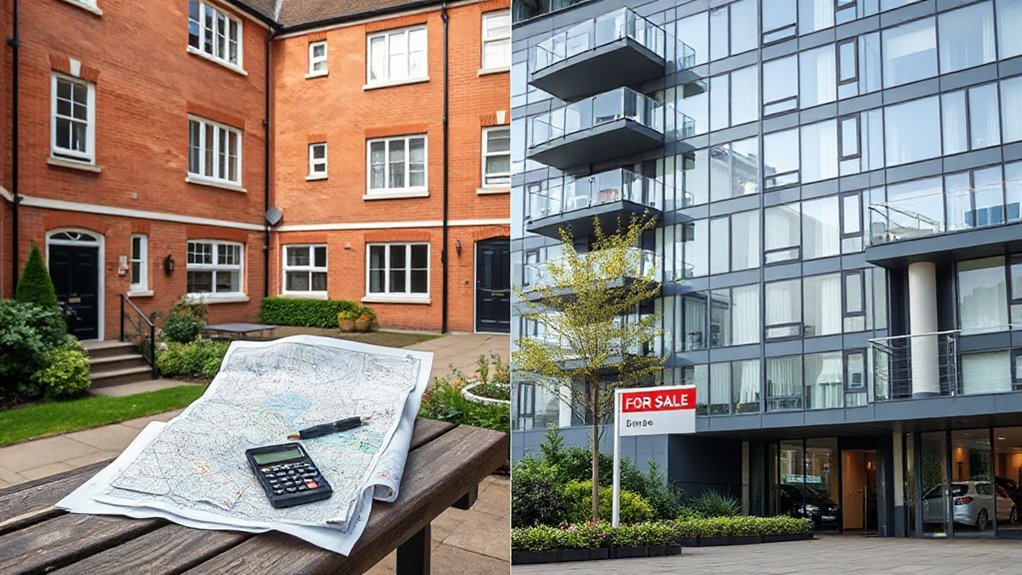
Purchase costs set the upfront baseline, including stamp duty and legal fees, so you can model total expenditure from day one.
Service charges vary by building and lease, affecting ongoing affordability and upkeep, making clarity on what’s included essential.
Ground rent varies by regime and lease length, so compare amounts, frequency, and escalation to avoid surprise costs over time.
Purchase Costs Overview
In the UK, buying a flat or leasehold apartment involves three core cost areas to watch: the purchase price, ongoing service charges, and ground rent. You’ll evaluate upfront outlay, anticipated increases, and long-term value, while aligning with interior design goals and market trends. This framing helps you compare flats and apartments with confidence, avoiding hidden surprises.
- Purchase price components: base price, conveyancing, stamp duty, and potential lender fees.
- Service charges: maintenance, insurances, reserve funds, and management fees.
- Ground rent: amount, review cadence, and any doubling clauses.
- Total cost trajectory: projected annual increases, sensitivity to market shifts, and resale impact.
Service Charge Dynamics
Service charges are the ongoing costs you’ll pay to maintain and operate the building, so understand what’s included, how charges are calculated, and how reserves and management fees affect year-to-year bills.
In practice, you’ll see a breakdown into service charges and maintenance fees, with service charges covering common area upkeep, staff, insurance, and utilities, while maintenance fees fund ongoing repairs and compliance.
Transparent budgets should reveal per-unit allocations, caps, and surcharge rules. Look for reserve funds and a long-term plan; healthy reserves reduce surprise spikes.
Ask about governance, frequency of invoicing, and how you’re informed of variances. A predictable regime supports belonging, ensuring predictable costs while maintaining standards, quality, and safety across the building you share.
Ground Rent Variations
- Escalation triggers and timing
- Calculation bases and indexes
- Caps, limits, and review intervals
- Protections against onerous increases
Space and Layout: What You Actually Get for Your Money
Space and layout determine daily living quality and long-term value, so it’s essential to compare floor plans, room dimensions, and configuration head-on rather than rely on superficial square footage alone. You’ll judge spaces by usable area, circulation, and potential for flexible use, not just total meters.
In both flats and apartments, interior design choices shape how you feel in the home, from ceiling height to storage placement, ensuring you belong in the space you’re investing in. Look for logical room adjacencies, natural light, and how future changes might fit your lifestyle.
Historical architecture can offer character, while modern layouts maximize efficiency. Prioritize clear, scalable layouts that support comfort, acoustics, and durability, keeping design intent aligned with your long-term needs.
Maintenance and Management: Who Does What and When
Maintenance and management responsibilities differ between flats and apartments, and clarity upfront prevents disputes later. You’ll see the distinction in what the building owner, management company, and you handle day to day.
In flats, expect a clearer split: exterior maintenance, common areas, and building systems managed centrally, with your responsibilities focused inside your unit.
In larger apartment complexes, a management team often coordinates security features, facilities, and service contracts, with residents contributing via fees or by reporting issues promptly.
Interior design choices may influence maintenance tasks and access during updates. Security features should be specified in your lease or management agreement to avoid gaps.
- Define who handles common-area upkeep and who approves exterior changes.
- Confirm response times for repairs and access for contractors.
- Clarify responsibilities for interior design alterations.
- Establish procedures for reporting issues and safety concerns.
Sound, Privacy, and Shared Amenities in Practice

Sound and privacy are essential in multi-unit living, and shared amenities must operate with clear boundaries. You evaluate sound insulation quality by reference to tested ratings, noting ceilings, floors, and wall assemblies that reduce impact and airborne noise.
In practice, you’ll encounter privacy concerns tied to sightlines, corridor acoustics, and communal spaces; you should assess layout choices that minimize line-of-sight into bedrooms and living areas.
Shared amenities demand predictable access rules, maintenance responsiveness, and independent utility controls to prevent cross-use disruptions. Clear signage, consent processes, and schedule frameworks help tenants feel grounded.
For belonging, demand transparent incident reporting and proactive vibration management, ensuring that ownership of noise, privacy, and common areas aligns with resident expectations and regulatory requirements.
Location and Transport: How It Affects Value and Lifestyle
Location and transport options are primary value drivers for flats in the UK, shaping purchase decisions and daily routines. You assess access, commute time, and nearby amenities to gauge overall lifestyle fit, while recognizing how these factors influence resale value.
Architectural styles and building materials interact with transport proximity, signaling durability and design coherence that buyers value. You’ll notice that well-connected flats with distinctive façades tend to command premium in evolving markets, yet practical materials assure long-term maintenance efficiency.
- Proximity to transit hubs reinforces value and predictable routines.
- Urban connectivity aligns with belonging, enabling frequent social and cultural participation.
- Architectural styles signal identity, influencing buyer perception and marketability.
- Building materials affect energy performance, upkeep costs, and longevity.
Legal Protections and Conveyancing Pitfalls to Watch
When buying a flat or apartment, legal protections and conveyancing pitfalls can determine whether a purchase closes smoothly or stalls. You must verify title sufficiency, search results, and restrictive covenants, since omissions expose you to later disputes.
Rely on a qualified conveyancer to confirm chain integrity, SDLT implications, and mortgage conditions, while documenting every instruction and waiver.
Be mindful of historical ownership records, ensuring prior transfers align with current registrations to avoid enfranchisement or conflicting claims.
Review building insurance, service charges, and sinking funds for long-term viability.
Renovation regulations matter for compliance, especially if permissions or party-wall agreements are involved, because unapproved changes can derail settlement.
Clear communication with sellers, lenders, and your solicitor protects you from hidden liabilities and promotes timely, secure completion.
Lease Length, Renewal, and Forfeiture Risk Explained
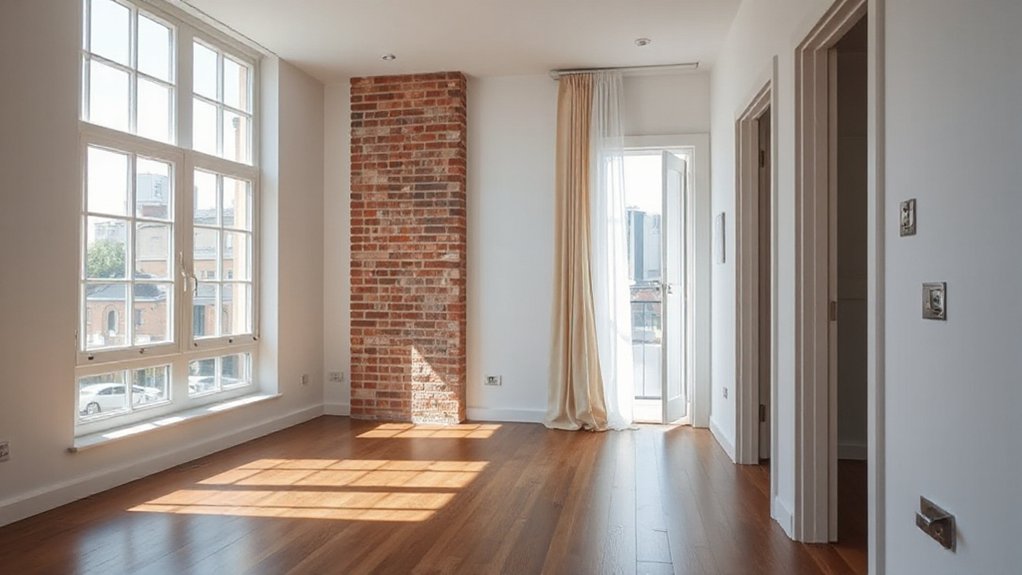
Lease length directly affects value and risk: a short lease can hinder mortgage approval, reduce marketability, and inflate service charges.
While extending a lease or exercising renewal rights may involve complex negotiations, ground rents, and onerous conditions.
You’ll encounter Leasehold complexities and forfeiture policies that shape your bargaining power and exposure to enforcement.
Understanding renewal timing, ground rent reviews, and service charge caps helps you assess true cost and risk.
- Lease extension negotiation leverage and potential price impact
- Renewal option mechanics and notice requirements
- Forfeiture risk indicators and lender caution
- Long-term cost implications of escalating charges and fees
What to Inspect at a Viewing and the Right Questions to Ask
When you view a flat or apartment, you should systematically verify structural integrity, service arrangements, and ongoing costs, so you can gauge overall investment risk and future expense.
During the viewing, inspect damp signs, leaks, electrical safety, heating reliability, and water pressure, noting any required immediate maintenance.
Confirm service charges, ground rent, and energy efficiency ratings, and compare with comparable units to assess value.
Ask about recent redecoration restrictions, tenancy concerns, and upcoming major works or insurance.
Evaluate interior design and layout for practical living flow, storage adequacy, and lighting quality, considering potential renovation opportunities without breaching building rules.
Inquire about partition flexibility, potential for kitchen or bathroom upgrades, and any renovation approvals needed.
Gather measurements, obtain written estimates, and request contact details for property managers or freeholders.
Making the Decision: A Practical 6-Step Checklist
You’ll apply a Practical 6-Step Framework to compare flats and apartments against clear criteria, ensuring choices align with your priorities.
Use the Decision-Making Criteria Overview to quantify trade-offs and risk, then map each option to real-world implications.
Finally, follow Real-World Application Steps to implement a disciplined, reproducible evaluation and reach a well-supported decision.
Practical 6-Step Framework
To decide between flats and apartments efficiently, follow this practical 6-step checklist: define your priorities, assess location and access, compare costs and long-term value, evaluate building management and amenities, scrutinize lease terms and flexibility, and test your daily living fit with a site visit and future plans.
This framework pairs historical architecture appreciation with pragmatic Urban zoning awareness, ensuring you measure style against regulatory reality. You apply rigorous criteria while preserving belonging within your community.
- Priorities alignment
- Location and access rigor
- Cost, value, and financing
- Management, amenities, and compliance
Decision-Making Criteria Overview
Decision-making criteria for choosing between flats and apartments in the UK require a clear, structured approach that builds on practical steps. You’ll evaluate intrinsic factors first: location, price, and tenure. Then, weigh architectural styles and historical significance alongside modernization needs.
Prioritize access to amenities, transport links, and building management quality, because community fit matters for belonging. Next, assess regulatory specifics, lease terms, service charges, and potential resale value to guarantee financial alignment.
Risk tolerance guides assumptions about maintenance, renovation permissions, and future market shifts. Documentation readiness—proof of income, references, and surveys—reduces decision friction.
Finally, synthesize findings into a short set of non-negotiables, enabling you to compare options rapidly. This disciplined approach yields confident choices that preserve identity while meeting practical constraints.
Real-World Application Steps
Gather essential data on location, price, tenure, and lease terms. You’ll follow a practical 6-step checklist that translates research into action, aligning with Historical architecture and Market trends as benchmarks for value and vibe. This Real-World application guides you through disciplined decision-making, ensuring you feel confident and connected to your choice.
- Compare properties by long-term cost and potential appreciation.
- Align tenure type with your lifestyle and mobility needs.
- Validate lease terms against future plans and renewal options.
- Assess neighborhood signals, including amenities and future development.
Frequently Asked Questions
How Does Leasehold Affect Long-Term Costs and Ownership?
Lease duration affects long-term costs by eroding ownership rights over time; you’ll face escalating ground rent, maintenance, and renewal fees. You maintain limited Ownership rights, so plan exits and protections, ensuring clear lease terms, extensions, and cost predictability.
Can Conversion Flats Legally Convert to Freehold Ownership?
Yes, conversion flats can become freehold in certain circumstances; about 15% pursue lease extension and ownership rights through enfranchisement, though conditions vary by building and legal structure. You’ll prioritize lease extension and ownership rights in negotiations.
What Are Typical Service Charge Structures Across UK Flats?
You’ll typically pay maintenance fees on a quarterly or annual basis, with structures including service charges, reserved funds, and contingency buffers, managed by management companies. This provides predictable costs and professional upkeep for your building and community.
How Do Ground Rents Vary by Property Type and Location?
Ground rent variations depend on property type and location, with higher fees in urban cores and newer builds. Location based fees apply to central zones, while suburban areas trend lower. You’ll see predictable banding across developer contracts and leases.
What Should I Prioritise in a Viewing Beyond Interior Space?
80% of buyers say safety matters most after space. Prioritize building amenities and neighborhood safety during a viewing; you’ll gauge long-term value, energy efficiency, and community fit, ensuring you feel you belong in a well-supported, well-maintained environment.
Conclusion
You’ve weighed the basics, costs, and protections; now choose with clarity. Remember: the property’s legal structure drives ongoing obligations, not just purchase price. If you want certainty, demand lease terms, service charges, and ground rent in writing, and verify ownership type before signing. Treat the decision like a compass—aligning lifestyle, finance, and risk. In short, pick the option that minimizes unexpected costs and maximizes long‑term control. Your best path reveals itself when you pin down the fine print.