
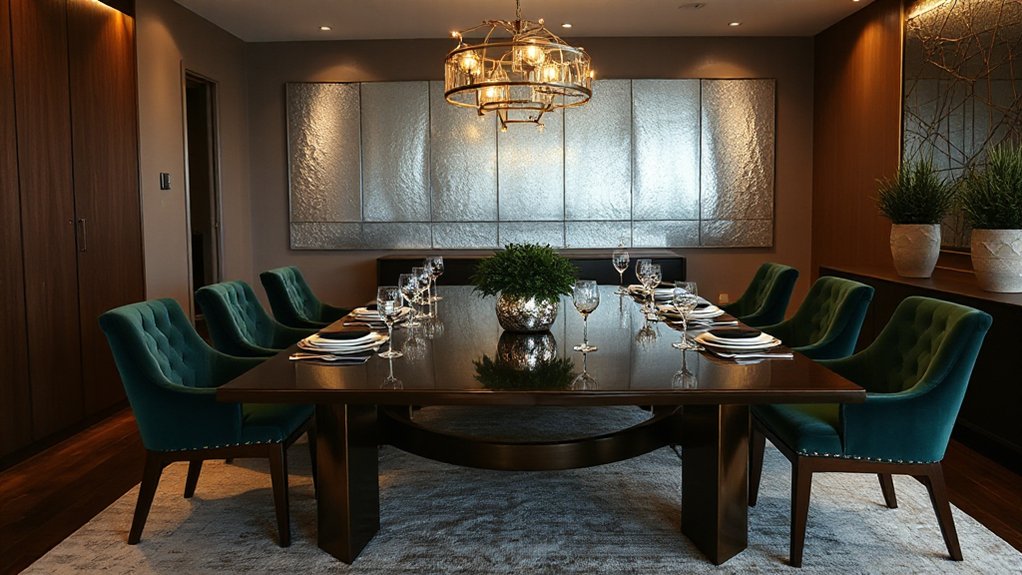
To create a stylish dining room for entertaining, define your vibe first—intimate, festive, or minimalist—and tailor lighting, textures, and color to that mood. Plan a flow-friendly layout with clear paths, anchoring the space with a timeless dining table and versatile seating. Layer lighting for ambiance and function, balance scale with a cohesive mix of chairs, sideboards, and storage, and add wall art or architectural details for depth. Want more tips to elevate every gathering? Keep going.
Define Your Entertaining Vibe for the Dining Room
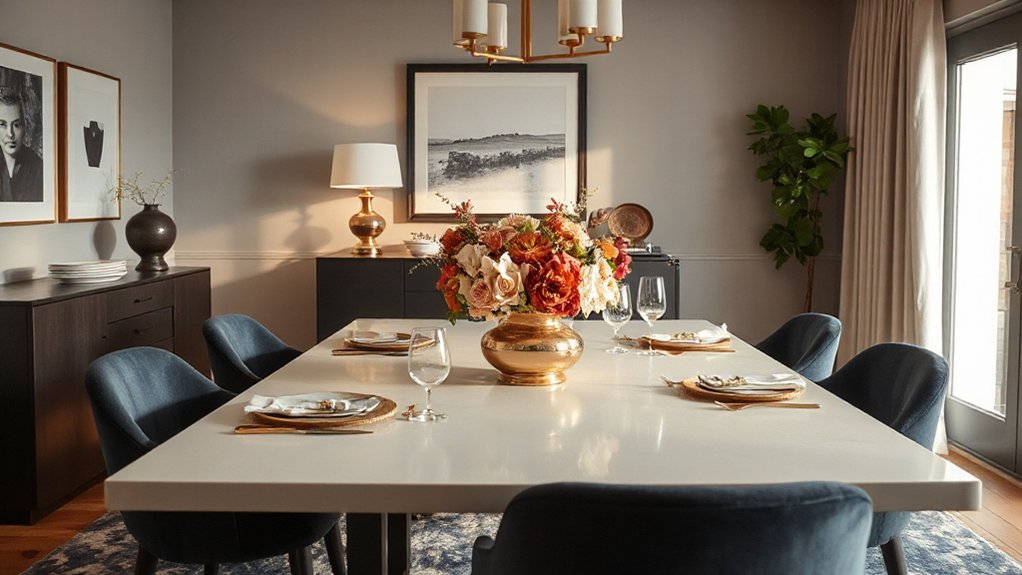
Begin by clarifying the mood you want to set—whether intimate, festive, or minimalist—and let that guide every choice, from color and lighting to tableware and seating. You define the vibe, then translate it into a cohesive dining room story.
For intimate evenings, lean on warm textures, soft light, and vintage accents that feel personal yet refined.
For festive gatherings, introduce bolder contrasts and layered centerpiece drama to spark energy.
For minimalist moments, emphasize clean lines, restrained palette, and purposeful negative space.
Consider outdoor integration if weather allows, merging indoors with the exterior for seamless entertaining.
Your vibe should inform furniture scale, accessory choices, and seating comfort, ensuring guests feel invited, seen, and at home.
Plan a Flow-Friendly Layout With Clear Paths
Prioritize clear traffic paths so guests can move easily from room to room. Arrange furniture to create natural zones with unobstructed circulation, and keep at least a 36-inch walkway between pieces.
Start with a focal point and test flow by walking the space as a guest would.
Clear Traffic Paths
Think in zones: dining, service, and conversation, each with distinct thresholds that don’t collide. This approach supports traffic management without sacrificing style. Choose a layout that prevents crowding at the table and avoids tunneling through the room.
Keep pathways at least 36 inches wide where possible, and widen main routes for smoother flow. Emphasize space optimization by tucking sideboards and appliances along walls, not in paths. The result is communal ease, confident hosting, and a room that genuinely feels welcoming.
Furniture Flow Tips
To create a flow-friendly dining room, map out the furniture so paths stay unobstructed and visually calm. You’ll want clear sightlines from entry to seating, ensuring chairs glide in and out without snagging.
Start with a central anchor—often a generous rug placement under the table—to define the zone while preserving open circulation.
Position the dining set to allow at least 36 inches of clearance on all sides for comfortable motion.
Integrate accent lighting that highlights movement and emphasis without glare, such as a dimmable pendant above the table and soft wall washes nearby.
Keep furniture scale proportional to the room and avoid crowding corners.
Choose a Timeless Dining Table Style
A timeless dining table balances core styles with your room’s scale, so you can pick a silhouette that stays relevant.
Consider seating proportions first, ensuring you have comfortable space around the table for movement.
Then weigh material and finish options to harmonize with existing décor while preserving flexibility for years to come.
Timeless Table Core Styles
When selecting a timeless dining table, prioritize enduring materials, clean lines, and proportions that suit your room and everyday life. You’ll choose a core style that anchors versatility, balancing function with feel.
Solid wood offers warmth and longevity, while glass or metal accents introduce light and modern ease. Consider a rectangular shape for flexibility or an oval for softer traffic flow. The table’s silhouette should look like it’s grown from your space, not imposed on it.
Vintage accents can live within a streamlined frame, adding character without clutter. For broad appeal, align with modern aesthetics through refined finishes, muted tones, and thoughtful detailing.
This approach invites belonging, ensuring your table remains welcoming, durable, and consistently relevant.
Proportions For Seating
Selecting seating proportions that align with a timeless table starts with clear rhythm: guarantee the table comfortably accommodates the intended number of guests while leaving at least 12–15 inches of elbow room per person.
You’ll choose a style that pairs seamlessly with your room’s proportions and seating needs, avoiding crowding or sparse placement. Aim for a balance between chair width, legroom, and aisle access, so guests move with ease and conversation flows naturally.
Color contrast between chairs and tabletop enhances readability and visual anchor without competing with artwork or textiles. Consider window treatments that frame sightlines and soften lighting, ensuring guests feel invited rather than boxed in.
This thoughtful alignment reinforces belonging, making every seating moment feel intentional and cohesive.
Material And Finish Balance
Pair a timeless dining table with finishes that harmonize the room’s proportions and seating rhythm you’ve established. You’ll balance material selection and finish coordination to create a cohesive, welcoming focal point.
Choose a table with clean lines and durable surfaces, then align its tone with nearby cabinetry, textiles, and lighting. Favor finishes that read as paired, not matched, to enhance depth and longevity. Subtle contrast can emphasize texture without disrupting flow.
Consider the room’s scale: larger boards or veneers for expansive spaces; smaller grain for intimate settings. Prioritize durability for entertaining and ease of care.
Material and finish balance should feel deliberate, not decorative, so guests sense belonging through thoughtful, timeless choices.
- Material selection that supports durability and ease of use
- Finish coordination to unify tones and textures
- Timeless details that invite lingering conversations
Select Seating That Fits Your Space and Guests
Choosing seating that fits your space and your guests begins with a clear sense of flow and scale: measure the room, note doorways, and map traffic patterns to guarantee every seat is comfortable and accessible.
Start with a versatile table size and a mix of seating heights to invite conversation without crowding. Opt chairs that combine cushion comfort with clean lines, and add a bench for flexibility during larger gatherings.
Consider a few intimate nooks: true-to-scale side chairs around the ends and a secure, stable bench for seasonal decor accents.
Prioritize legroom and easy access to the table, storage, and paths. This approach delivers casual elegance and invites belonging, with seating that adapts to your guests and occasions.
Balance Scale With Chairs, Sideboards, and Lighting
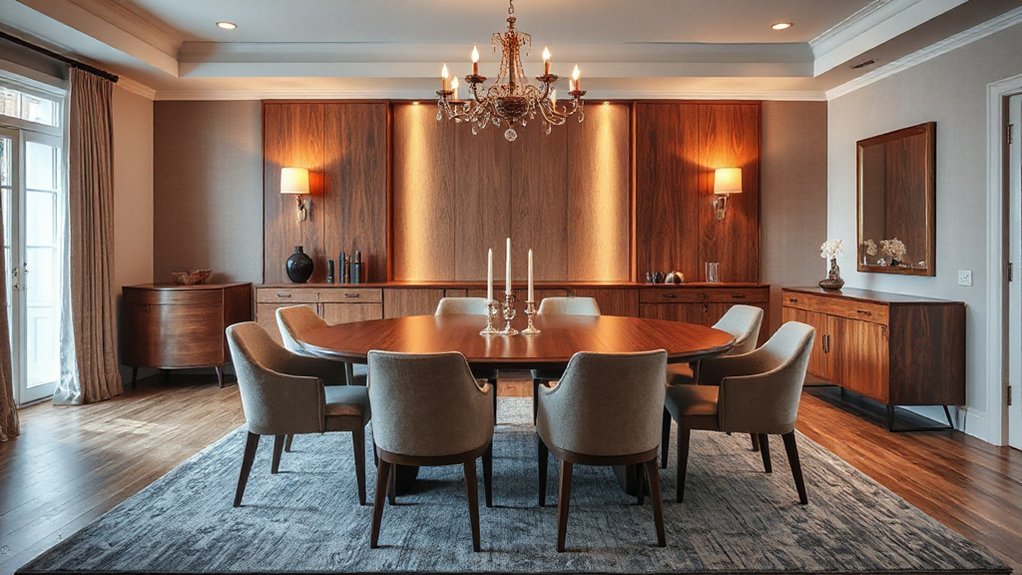
You’ll balance the room by aligning seating with the sideboard and ensuring the lighting complements the overall proportion. Consider how chairs and the sideboard relate in scale to each other, so no one element dominates.
Let lighting harmonize, guiding the eye across the space without overpowering the furnishings.
Balance With Seating
When balancing a dining room, coordinate seating with the room’s scale by pairing chairs and a sideboard that share a unified silhouette and proportion. Ensuring lighting complements rather than competes with the furniture is also key.
You’ll create cohesion by matching leg lines, back profiles, and materials, letting each piece reinforce the room’s rhythm. Choose seating that mirrors the sideboard’s footprint to avoid visual heaviness and to invite easy conversation.
Incorporate Vintage accents and Eco friendly materials to cultivate warmth without sacrificing sleek polish.
- Unified silhouettes across chairs and sideboard
- Consistent scale for comfortable gathering
- Lighting that enhances, not competes with, furniture
This approach fosters belonging, clarity, and a thoughtfully curated mood for entertaining.
Proportions of Sideboards
How do you guarantee the sideboard scales correctly with chairs and lighting to keep a dining room feeling balanced? You tune sideboard proportions to the room’s footprint, keeping the piece visually lighter than a massive cabinet.
Aim for a width about two-thirds the dining table and a height that aligns with chair backs when pushed in. This creates furniture balance without crowding, inviting conversation rather than competition.
Choose a finish and hardware that echo dining chairs, reinforcing cohesion, not matchy-matchy sameness. If you pair glass doors or open shelving with warm wood, you’ll achieve subtle rhythm that reads as intentional design.
Lighting Harmony Tips
Lighting should balance the scale of chairs and the sideboard to keep the dining room cohesive. You’ll use lighting to reinforce proportions while creating warmth and welcome. Aim for ambient lighting that fills the room without glare, then add targeted cues to highlight textures and art.
This approach quietly elevates mood enhancement, making guests feel at ease and included. Choose fixtures that echo the room’s shapes and materials, aligning with furniture scale so everything reads as a confident, cohesive whole.
- Layer ambient, task, and accent lighting for depth
- Position fixtures to cast flattering, even light across the table
- Select warm, inviting hues that enhance color and texture
Pick a Cohesive Color Palette That Sparks Conversation
A cohesive color palette unites the dining room and sparks conversation by balancing dominance and accents. You aim for intentional harmony that feels effortless, not forced, so your space reads polished and welcoming.
Begin with a neutral foundation, then layer subtle hues that echo your lighting and furniture. Color coordination means selecting two to four core tones and using them consistently across walls, textiles, and artifacts.
Palette pairing happens when you connect accents—like napkins, ceramics, and a centerpiece—with your larger scheme, creating a story rather than a catalog of items. Avoid competing shades in the same area; instead, let contrasts refine focus.
Your guests notice cohesion, comfort, and intention, inviting conversation and belonging from the moment they enter.
Layer Textures for Warmth and Depth
Textures are what give your dining room warmth and depth beyond color. Layering diverse textures creates inviting, tactile interest that people notice and feel connected to. You’ll balance smooth surfaces with tactile fibers, minerals, and metals to avoid flatness while preserving cohesion.
Focus on textural contrast—pair a matte tabletop with glossy chairs, or a woven rug under a sleek table—to keep the room dynamic yet harmonious. Cozy layering comes from combining fabrics, woods, and ceramics in complementary tones, so the space invites lingering conversations.
Ground the look with a simple linen table runner, a tactile centerpiece, and soft drapery that whispers regardless of the season.
- Embrace textural contrast with matte, gloss, and weave varieties
- Add cozy layering through fabrics, woods, and ceramics
- Anchor with a tactile centerpiece and soft drapery
Integrate Statement Lighting With Ambient Glow
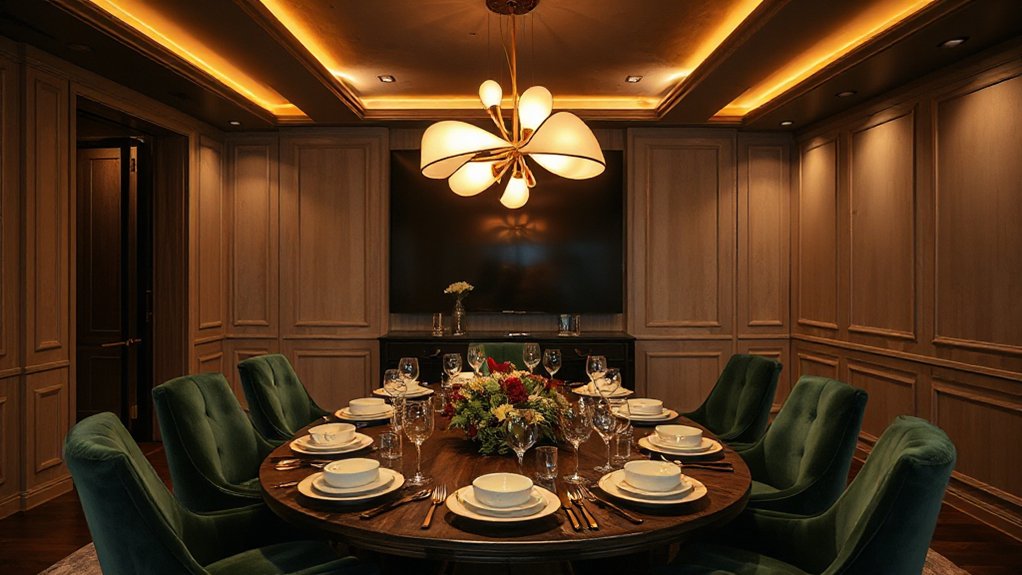
To elevate your dining room, blend layered ambient illumination with a striking statement light that anchors the mood. You’ll balance soft fills and focused glow so the room feels cohesive, not cluttered.
Let the statement piece set the tone while practical ambient light keeps every moment clear and inviting.
Layered Ambient Illumination
- Dimmable fixtures for flexible ambiance
- Warm-toned accents to soften edges
- Soft uplight and recessed sources for depth
Statement Lighting Anchors Mood
Statement lighting sets the mood by acting as the room’s focal point while your ambient glow softens the scene. You choose a standout fixture or a pair of sculptural sconces to command attention without overpowering the table.
The key is balance: the chandelier or statement lamps create visual interest, while your ambient glow rounds edges, invites conversation, and makes textures feel intimate. Coordinate finishes, scale, and color temperature so the centerpiece complements rather than competes with the room’s other details.
Dimmer controls give you versatility, letting you shift from bright, engaging meals to cozy, lingering evenings. When lighting feels intentional and cohesive, you’ll sense belonging—guests relax, stay longer, and your dining space becomes a confident expression of refined hospitality. ambient glow, focal point.
Add Task Lighting for Dining and Prep Areas
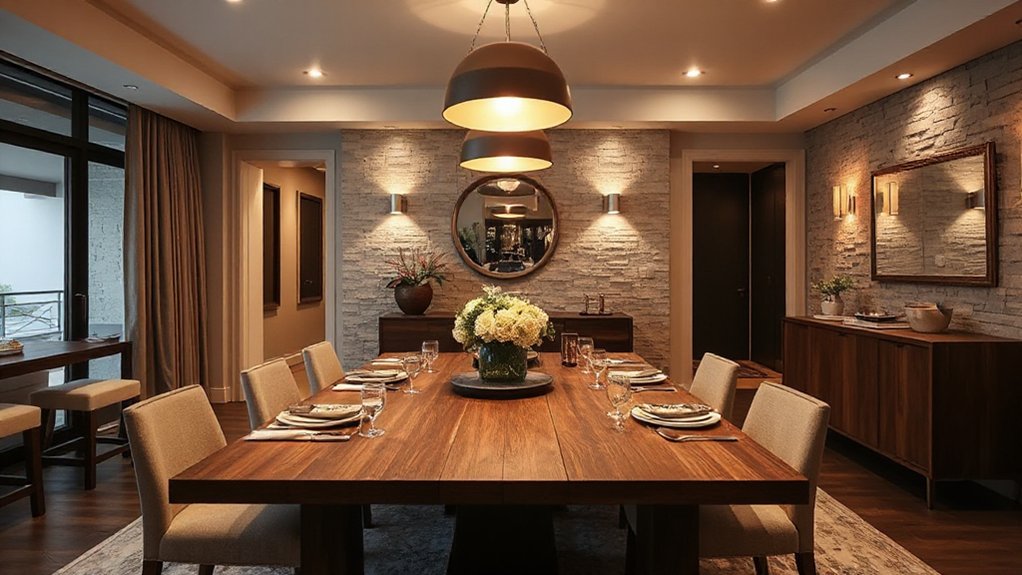
Careful task lighting is essential for dining and prep areas, where focused illumination boosts accuracy and mood alike. You’ll balance ambience with utility by layering light sources that target work zones without glare. Prioritize under-cabinet and pendant accents to deliver crisp task illumination, while recessed or track lights offer broad coverage for prep surfaces.
Choose dimmable options to shift from daytime efficiency to evening charm, and pair warm color temperatures with neutral surroundings for cohesion. Keep controls near the areas you use most to strengthen a sense of belonging and ease.
Accent lighting complements function, creating depth and interest without overpowering conversation.
- Under-cabinet streams for precise chopping and plating
- Pendant clusters over the table for atmosphere and clarity
- Recessed rails or track lights guiding prep zones and seating
Introduce Color-Affirming Textiles and Accessories
To introduce color-affirming textiles and accessories, choose pieces that reflect your room’s palette and elevate mood with intentional contrast. You’ll balance color coordination with subtle shifts in tone, creating depth without shouting.
Pick fabric textures that complement your chairs, drapes, and table linens, then layer them to add tactile richness. For a cohesive look, repeat a primary hue in varying textures, and anchor brighter accents with a neutral ground.
Consider textiles in matte and sheen finishes to keep the eye moving gracefully. Accessories—pillows, table runners, and wall hangings—should echo the dominant colors while introducing a complementary secondary shade.
Aim for harmony over clutter; selective repetition yields clarity. Your dining space feels confident, welcoming, and distinctly you.
Create Zones Within an Open-Plan Dining Room
Define functional zones to clearly separate dining, lounging, and circulation areas.
Use visual cues like rugs, lighting, and furniture scales to delineate each zone without walls.
Start with a cohesive color and materials plan to unify the open space while guiding flow.
Define Functional Zones
In an open-plan dining room, define functional zones by clearly separating dining, lounging, and circulation areas with intentional furniture placement, rugs, and lighting. You’ll create a cohesive flow that invites conversation while guiding movement, rooted in timeless design values and your unique story through historical references and cultural influences.
Use variations in scale, texture, and color to cue each zone without walls, ensuring comfort and inclusion for all guests.
- Define dining aloud with a dedicated rug, table, and lighting trio.
- Create lounging as a low-profile, inviting anchor near the dining edge.
- Plan clear circulation paths using furniture silhouettes and subtle contrasts.
This approach signals belonging, fosters ease, and honors the room’s evolving use.
Use Visual Cencing Ideas
Use visual cues to carve zones within an open-plan dining room by layering texture, color, and furniture silhouettes. You’ll guide the eye with Lighting accents that define dining, conversation, and display areas without walls.
Choose a cohesive color accents palette that ties zones together while letting each space breathe. Start with a dining silhouette—a tailored table and chairs—that anchors the room; flank it with a lounge vignette in a contrasting, yet complementary, texture.
Introduce area rugs to ground each zone and create soft boundaries. Vary lighting tones: brighter over the table, warmer around seating nooks.
Use shelving or a console to carve vertical interest and reflect your gathering intentions. The result feels intentional, intimate, and effortlessly welcoming to guests.
Incorporate Storage That Doubles as Style
Stowaway clutter without sacrificing style by choosing storage that doubles as decor. You’ll blend function and flair with pieces that pull as hard as they store, keeping your dining room inviting and calm.
Opt for display cabinets, woven baskets, and slim consoles that feature clean lines, soft lighting, and subtle metallic accents. Prioritize longevity with eco friendly materials and vintage accents that feel collected, not staged.
Your space becomes cohesive, with storage that invites hands-on use while maintaining an elevated mood.
- Vintage accents in storage: sideboards, china cabinets, and open shelving
- Eco friendly materials: bamboo, reclaimed woods, low-VOC finishes
- Dual-purpose designs: lift-top consoles, hidden compartments, modular units
Design for Easy Entertaining: Flow and Access
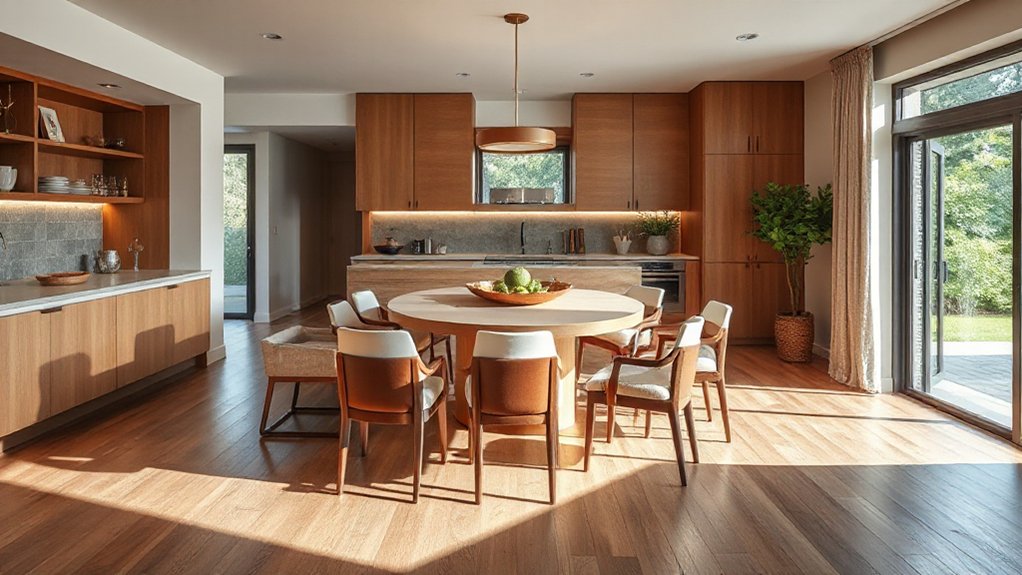
Opt for a layout that encourages effortless movement from room to room and around the table. You design for flow by prioritizing clear sightlines and accessible paths, so guests mingle without crowding.
Consider a neutral base and a deliberate color palette that guides circulation, not distracts from conversation. Place the dining table where it anchors the space yet allows easy progression to seating clusters and service zones.
Keep furniture arrangement permissive: avoid rigid lines, allow staggered seating, and leave at least 36 inches of clearance around furniture for comfortable navigation.
Integrate serving surfaces, bar-height stations, or a sideboard to streamline movement during courses. With intentional spacing and balanced proportions, your dining room feels open, welcoming, and perfectly prepared for effortless entertaining.
Set the Mood With Music, Scent, and Seasonality
Music, scent, and seasonality set the dining mood in seconds. You’ll curate ambience by pairing subtle ambient sound with gentle scent layering, complementing seasonal textures without overwhelming conversation.
Choose a low-volume playlist that supports discussion, not dominates it, and switch scents with the seasons so guests feel grounded, not overwhelmed.
Allow natural light and a warm palette to reinforce the mood, aligning music tempo with the pace of the evening.
- ambient sound: choose understated playlists that match the room’s acoustics
- scent layering: light, evolving fragrances that don’t mask voices
- seasonality: textures and colors that reflect the current season without shouting
This approach invites belonging, enabling guests to linger and connect comfortably.
Elevate the Tabletop With Thoughtful Place Settings
Thoughtful place settings set the tone before anyone sits down, guiding conversation and ease from the first glance. You craft a cohesive table by aligning tableware arrangements with your room’s mood and guests’ expectations.
Begin with a clean base: charger or plate, then napkin placement that echoes the centerpiece decor without overpowering it. Keep utensils in logical order, and choose glassware that complements your menu as well as your color story.
Integrate subtle height with a low centerpiece that invites conversation, avoiding crowding on busy nights. Use a cohesive palette, repeat textures, and tuck a personal detail for belonging.
In practice, less is more, so let each element breathe while maintaining a polished, purposeful rhythm across the tabletop.
Don’t Overlook Wall Art and Architectural Details
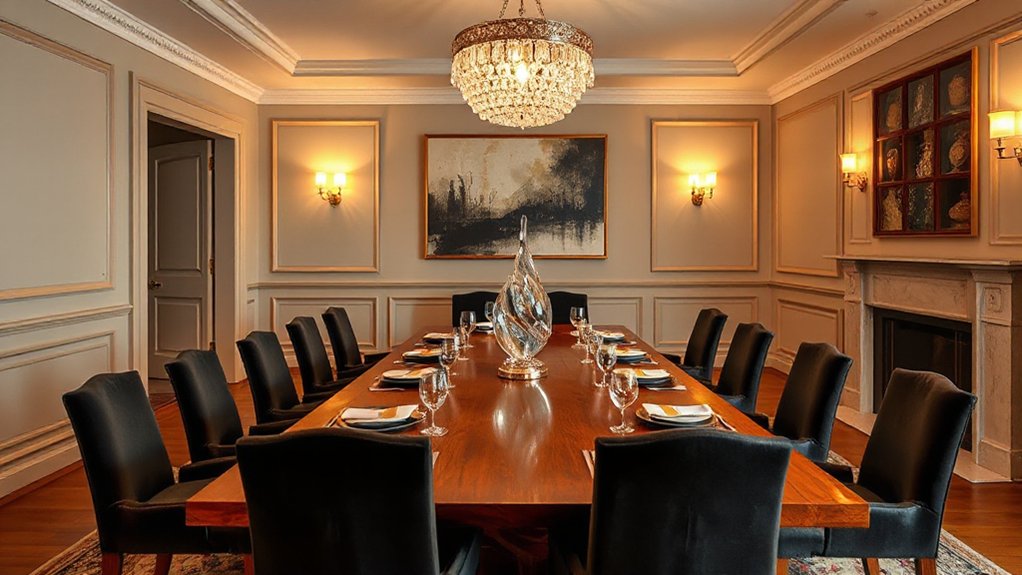
Wall art and architectural details shape the room’s character, so don’t overlook their impact on dining mood. You elevate spaces by choosing wall decor that echoes your table setting, while architectural accents frame conversation and flow. Start with a cohesive theme—art prints, textiles, and sconces should feel intentional, not random.
Balance scale with neighbors, and let lighting highlight textures. Avoid overcrowding; negative space invites comfort and belonging. Consider a curated trio: a bold statement piece, complementary smaller works, and a sculptural element that echoes the room’s lines.
- wall decor that ties color and mood to your dining scene
- architectural accents that add depth without clutter
- lighting and texture choices that unify the look
Budget-Smart Upgrades That Wow Guests
Budget-smart upgrades open major impact without major cost. You can elevate your dining room with a few thoughtful swaps that feel intentional, not indulgent. Begin with decorative touches that echo your personality: vintage accents like a mid-century sideboard, a crystal decanter, or a brass centerpiece elevate without overspending.
Swap in lighting that glows, not gawks—an affordable pendant or sconces with warm bulbs transforms mood instantly. Choose textiles in rich textures and subdued patterns to add depth without clutter.
Opt for eco-friendly materials where possible—reclaimed wood témper, cork-backed placemats, or natural fiber textiles—without compromising style. Keep the layout open, ensuring flow and sightlines, so guests feel welcomed and at ease from entry to farewell.
Maintain Flexibility for Different Gatherings
Flexibility is the backbone of a dining room that works for any gathering. You design for flow and ease, not rigidity, so guests feel welcome whether you host a quick brunch or a formal dinner.
Choose Flexible furniture that can reconfigure without fuss, and adaptable decor that blends across moods. Prioritize clear sightlines, ample seating, and storage that vanishes when not in use.
- Flexible furniture arrangements that transform from intimate to expansive
- Adaptable decor elements that shift with color, texture, or lighting
- Purposeful storage solutions that keep essentials at hand yet hidden
You’ll create a room that respects change, invites conversation, and grows with your social calendar, reinforcing a sense of belonging every time you gather.
Practical Tips for Maintaining Style Over Time
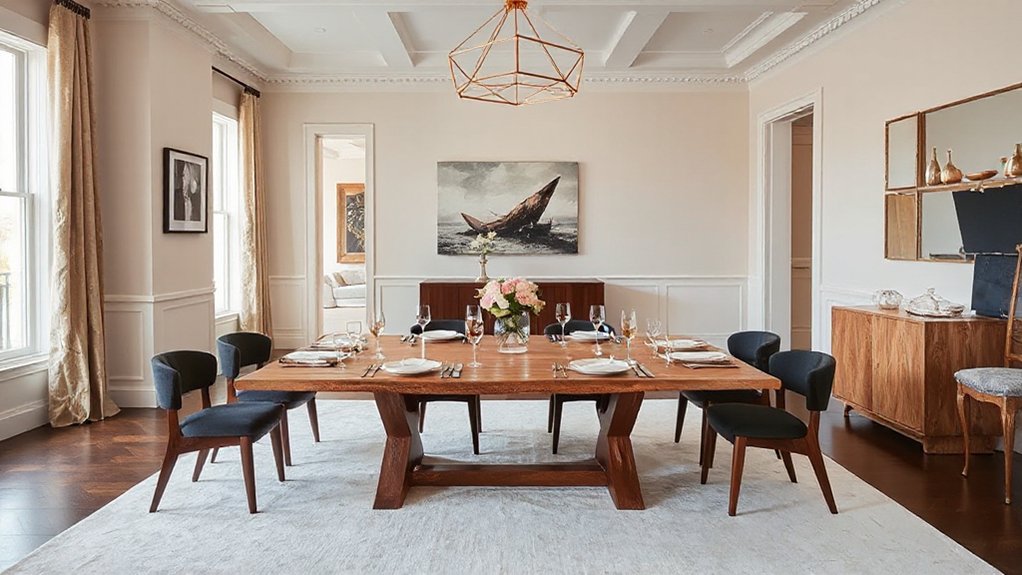
To keep your dining room’s style from aging poorly, focus on timeless foundation pieces, quality finishes, and smart maintenance routines. Your goal is steady elegance, not trendy chaos.
Schedule quarterly checks: tighten hardware, polish metals, and reseal wood where needed. Embrace durable textiles and easy-clean surfaces to handle spills without drama.
When updating, choose seasonal decor thoughtfully rather than piling on novelty items; let each piece earn its place. Maintain balance by rotating accents rather than constant swaps, preserving cohesion and value.
For gatherings, practice confident hosting etiquette: greet warmly, seat thoughtfully, and transition conversations smoothly.
Keep lighting layered and adaptable, so mood shifts align with occasions.
Document care steps and inventory, reinforcing belonging through consistent, intentional choices that withstand time.
Frequently Asked Questions
How Can I Measure Space for Dining Furniture Layout?
Measure your space carefully, then map Wall spacing and Floor planning. You’ll place furniture with at least 36 inches of clearance around pieces, toying with scale until the room feels inviting and you clearly belong in the design.
What Seating Arrangement Encourages Conversations?
Casual seating encourages conversation best when you cluster chairs around a focal point, while formal arrangements use a centered table with varied seating. You’ll feel belonging as guests swap stories, moving between casual and formal setups to suit moments.
Which Lighting Layers Best Suit Entertaining Spaces?
You’ll layer ambient lighting with warm dimmers and add accent lighting to highlight art or architecture, creating depth and intimacy. You feel welcomed, connected, and effortless; this setup elevates conversations while you curate a polished, inviting entertaining space.
How to Mix Textures Without Clutter?
Mix textures by balancing Textural contrast and Pattern mixing, so you avoid clutter while adding depth. You’ll layer tactile fabrics, glossy surfaces, and natural materials, keeping lines clean and spaces cohesive, inviting guests to feel at home and inspired.
What Is a Simple Approach to Color Balance?
Color theory guides you to balance hues with complementary palettes; start with a dominant color, then add accents in opposite wheel positions, keeping you aligned, cohesive, and feeling connected to the space.
Conclusion
You’ve got this: turn every dining moment into an effortlessly chic experience. Keep your vibe clear, plan a flow that guides guests, and choose timeless pieces that scale with your gatherings. Mix seating, lighting, and subtle art to balance warmth and polish. With smart budgeting and flexible layouts, you’ll host with confidence and style for years. This isn’t just decorating—it’s a lifestyle upgrade that makes every dinner feel like a five-star event, instantly transforming your space into a showstopper. Hyperbole? it’s legendary.