
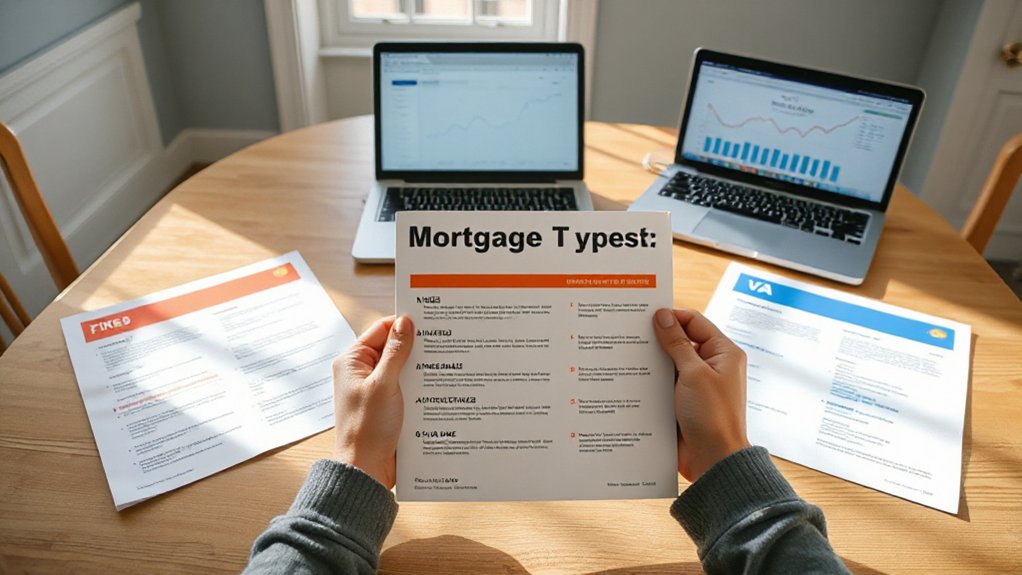
When you’re comparing mortgage types as a first-time buyer, start by matching your budget, timeline, and risk tolerance to the loan features. Fixed-rate loans offer predictable payments and long-term stability; ARMs can save you upfront but bring rate adjustments later. Consider FHA or Conventional options based on down payment and credit. VA loans can eliminate PMI with eligibility. Weigh total costs, including fees and amortization, and think about refinancing or term lengths to fit future goals—there’s more to uncover below.
How to Choose the Right Mortgage for You

Choosing the right mortgage starts with your goals and finances. You’ll assess how long you plan to stay, your monthly comfort zone, and any upcoming life changes.
Start by checking your Credit scores, because they influence rate options and required down payments.
Next, seek Loan preapproval so you see real offers and gain confidence in bargaining power.
Compare fixed and adjustable plans, but focus on predictable costs and total interest over time.
Consider down payment flexibility, private mortgage insurance, and closing costs as part of the picture.
Prioritize lenders who explain terms clearly and respect your pace.
Your belonging comes from clarity you can defend: you know your budget, your risk tolerance, and the mortgage path that fits your future.
Fixed-Rate Mortgages: What They Mean for Your Budget
Fixed-rate mortgages lock your payments for the life of the loan, giving you budget predictability you can trust. You gain stability when market ups and downs tempt you to panic, because your principal and interest stay constant. That certainty helps you plan milestones—rent, kids, renovations—without surprise spikes.
You’ll still need to monitor costs like taxes and insurance, but the core payment remains steady enough to anchor your monthly budget. When you compare lenders, focus on total cost, not just the rate. Look for favorable points, closing costs, and customer service.
Consider how interest rate trends may influence prepayment options and refinancing options down the line. A thoughtful lender comparison helps you choose confidently, reinforcing a sense of belonging in your first-home journey.
Adjustable-Rate Mortgages: Pros, Cons, and When They Fit
ARMs adjust your payment when rate triggers occur, so you’ll want to understand how index movements and caps set the ceiling on changes.
This can affect your budget month to month, even as initial payments may look lower than fixed-rate options.
ARMs fit best when you expect rate trends to stay favorable or when you plan to move or refinance before adjustments kick in.
Rate Adjustment Triggers
Rate adjustments on adjustable-rate mortgages hinge on specific triggers that determine when your rate and payment can move. These triggers typically relate to index movements, margin, caps, and timing.
An index tracks market rates, and your note adjusts with its fluctuations, while the margin stays fixed.
Caps limit how much you can rise or fall at each adjustment and over the life of the loan, preserving some payment predictability.
When a reset happens, your new payment reflects the current rate plus any applicable costs, influencing overall interest paid.
You gain interest rate awareness and, with careful timing, some payment flexibility. But you should be mindful of potentially higher payments if rates climb.
Weigh stability versus opportunity as you compare fixed and adjustable options.
Payment Budget Impact
Armed with an understanding of rate adjustment triggers, you’ll see how an adjustable-rate mortgage can shape your monthly budget. With ARM timing, you gain payment flexibility during lowers, but you also shoulder shifts when rates rise. That means your short-term savings can turn into long-term planning, so budgeting strategies matter more than ever.
You’ll want to map out scenarios for rate floors and caps, and build a realistic cushion for volatility. Consider how payment changes interact with other costs—taxes, insurance, and home maintenance—to keep your overall housing cost stable.
If you value predictability, weigh how long you expect to stay in the home and whether the perceived savings justify potential adjustments. Belonging comes from informed, deliberate choices that support your financial confidence.
When ARMs Fit Best
There are times when an adjustable-rate mortgage makes the most sense: you expect to move or refinance before rates reset, you’re confident you’ll benefit from initial lower payments, or you’re prioritizing rate relief in a short-term ownership window.
An ARM can offer interest rate stability in the early years, giving you predictable budgeting if you plan a quick exit. You also gain payment flexibility as your rate adjusts with market conditions, potentially lowering costs if rates stay flat or decline.
Use an ARM when you anticipate a move, a sale, or refinancing within 5–7 years. Weigh the risk of future rate bumps against your timeline, and consider a cap structure and built-in safeguards to protect your affordability.
Belonging means choosing certainty aligned with your plans.
FHA vs Conventional Loans: Which Is Best for Your Situation?

When deciding between FHA and conventional loans, you’ll want to compare FHA’s looser qualification rules with conventional loan costs and down payment requirements.
You’ll find that FHA can be more accessible if you have a smaller down payment or imperfect credit, but it often comes with mortgage insurance and higher long-term costs.
Understanding how FHA qualifications differ from conventional loan costs helps you choose the option that fits your financial picture and homeownership timeline.
FHA Qualifications Differences
So, what’re the key differences in FHA qualifications versus conventional loans, and which option best fits your situation?
You’ll find FHA is often more forgiving on credit and debt ratios, easing entry for first-time buyers who are building a credit history. You’ll also notice more flexible down payment options, with as little as 3.5% down in many cases.
However, you’ll pay mortgage insurance longer with FHA, which can affect monthly costs.
Compare FHA credit requirements to conventional standards: score thresholds vary by lender, but FHA generally accepts lower scores.
You’ll want to verify FHA income limits and how they apply in your area, as they influence loan size and eligibility.
In short, assess stability, savings, and long-term plans to choose confidently.
Conventional Loan Costs
Yet you’ll still face ongoing costs like mortgage insurance if your down payment is smaller. Compare these alongside your total interest over the life of the loan to avoid surprises.
Loan origination fees, points, and appraisal costs can differ by lender, so shop with precision and ask for itemized estimates.
If your credit improves, your rate can drop, reducing overall costs even after closing.
Remember to weigh mortgage insurance options and how long you plan to stay in the home to determine the true value of choosing conventional.
VA Loans: Eligibility, Benefits, and Limits

VA loans offer a powerful path to homeownership by letting eligible veterans, service members, and certain spouses buy with little to no down payment and without private mortgage insurance. You’ll gain access to competitive rates, predictable monthly payments, and streamlined appraisal processes that keep your focus on lasting belonging rather than fear of costs.
Understanding VA loan eligibility helps you chart a confident course, while recognizing VA loan benefits reinforces your sense of security and purpose in ownership.
- You gain leverage for financial peace of mind with no private mortgage insurance.
- You access lower upfront costs and flexible credit standards that honor service.
- You enjoy streamlined processing that keeps your homebuying journey clear and inclusive.
Down Payments Demystified: How Much to Put Down
Choosing how much to put down is a practical step you can tailor to your finances and goals, especially after exploring VA loan benefits.
You’ll find that you don’t must hit a, or even near, 20% to secure a solid loan; many buyers start with smaller, doable down payments and scale up as savings grow.
Down payment strategies include leveraging gifts from family, using first-time buyer programs, and earmarking windfalls for principal reduction.
Remember, the size of your down payment shapes monthly payments, interest costs, and private mortgage insurance considerations.
Set clear savings goals, map a timeline, and adjust as your financial picture changes.
Belonging comes from steady progress and informed choices that align with your long‑term homeownership vision.
Total Cost Calculator: Interest, Fees, and Monthly Payments
A Total Cost Calculator helps you see the full financial picture by estimating interest, fees, and monthly payments in one place, so you can compare loan options confidently. You’ll grasp how interest rates shape total costs, how loan origination fees alter upfront outlays, and how monthly payments fit your budget.
This tool clarifies trade-offs, helping you choose with certainty rather than guesswork.
- You feel empowered when you see a single total that reflects both upfront costs and ongoing payments.
- You gain confidence knowing how slight rate shifts impact long-term ownership.
- You’ll trust the numbers, not wishful thinking, to guide your loan origination decisions and future budgeting.
Timeline Fit: Refinancing and Term Lengths Explained

When you’ve modeled total costs, you’re ready to assess how your loan’s timeline fits your goals. Refinancing timing matters: shifting when you lock in a rate can save thousands or tighten monthly obligations. You’ll want to balance short-term relief with long-term costs, especially if your plans include career changes, growing family, or retirement.
Mortgage term flexibility lets you tailor duration to your life, not just today’s rates. Shorter terms often bring higher monthly payments but lower overall interest; longer terms ease cash flow yet raise total costs. Consider your break-even point, potential future earnings, and how long you expect to stay in the home.
Align your choice with stability, predictability, and a shared sense of progress.
Quick Comparison Framework: Pick the Best Mortgage Type for Your Situation
To pick the right mortgage type for your situation, start with a simple framework: match your cash flow, risk tolerance, and plans for homeownership to the loan features that matter most—rate type, payment stability, and total cost over time.
You’ll quickly see which elements drive confidence as you compare loan types and forecast future housing costs. Use this framework to align with your sense of belonging and long-term security.
1) Rate type clarity: fixed, adjustable, or hybrid, so you know how predictability shapes your budget.
2) Payment stability: how often payments change and how that feels in real life, especially during income shifts.
3) Total cost over time: fees, amortization, and potential savings that influence your sense of belonging in your financial story.
Frequently Asked Questions
How Do I Estimate My Total Closing Costs Accurately?
You can estimate closing costs by budgeting for loan origination, title, and appraisal fees, plus taxes and reserves, then add a 10–15% cushion. Include loan amortization and a recent property appraisal to refine your total.
What Hidden Fees Should I Watch for in Mortgages?
Hidden fees lurk, yet transparency protects you; watch for prepayment penalties and loan origination charges, which can sneak up. You’ll balance curiosity with prudence, demanding clear disclosures, fair terms, and lenders who value your belonging and trust.
How Does My Credit Score Affect Approval Speed?
Your credit score speeds up the approval timeline; higher scores typically trigger faster decisions, while lower scores may prompt slower reviews. Credit impact matters—maintain good history, document steady income, and monitor reports to keep the process smooth.
Can I Switch Mortgage Types After I Buy?
Switching mortgage types after you buy isn’t ideal, but it’s possible. You can explore Mortgage flexibility and Loan conversion options, though limits and costs apply; consult your lender for timing, rates, and eligibility—feel confident guiding your own financial journey.
What Happens if Interest Rates Rise After Locking a Rate?
If rates rise after you lock, you’re protected only by the terms of your lock. Monitor interest rate trends and consider lock-in strategies early; otherwise you could miss favorable moves and feel left behind by the market.
Conclusion
You want stability, yet you crave flexibility; each mortgage type offers a different balance. Fixed-rate coats your budget in certainty, while ARMs tempt with lower initial costs before future shifts. FHA and Va loans open doors you might not qualify for otherwise, while conventional loans reward strong finances with fewer constraints. Down payments influence your leverage, not just your price. In the end, choose what protects your future and adapts to life’s changes—safety with room to grow.