
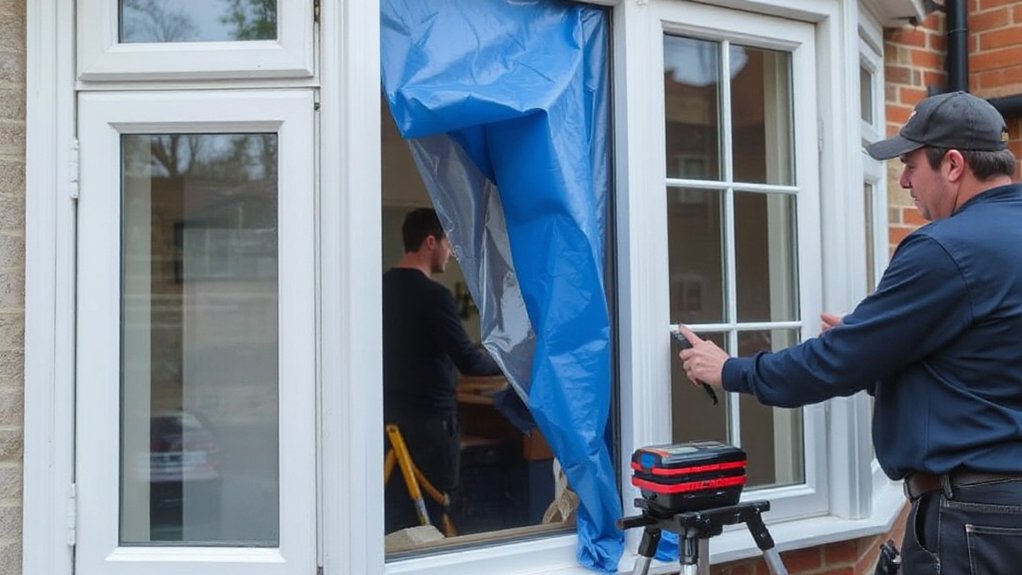
When you replace windows in a UK home, you’ll weigh frame material, glazing type, and any decorative features against cost and installation effort. Prices vary by material and unit, while labor depends on region and site access. Consider potential savings from energy efficiency and available grants, but also hidden costs like disposal or specialty properties. Start with a clear scope and budget framework, then anticipate lead times and contractor credentials before you commit to a plan.
What UK Window Replacement Costs Include
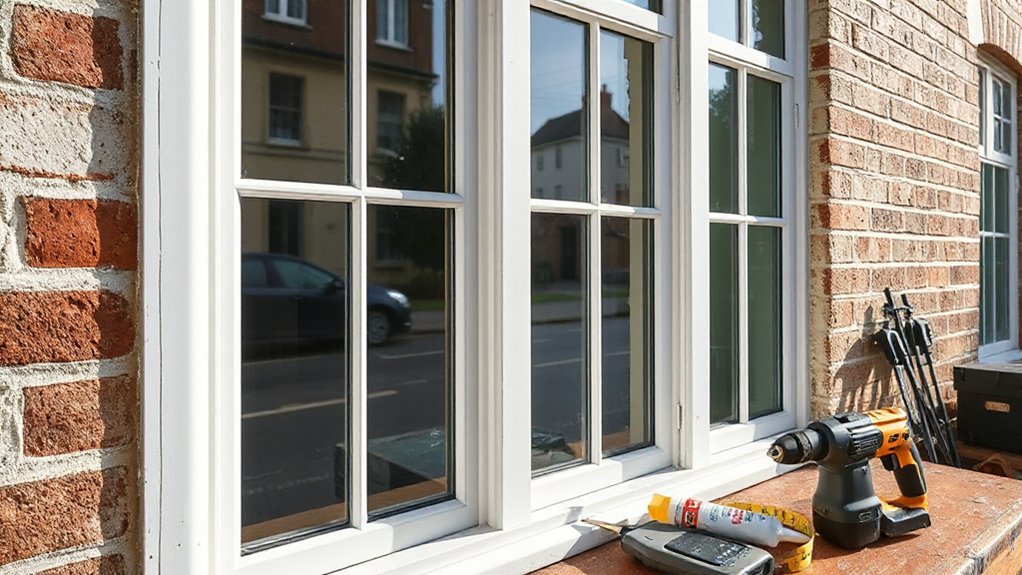
When estimating UK window replacement costs, you must account for the components the price covers and what may incur additional charges. You’ll assess the base unit price, installation labor, and any required scaffolding or access equipment.
The quote should itemize frame material, glazing type, and hardware, clarifying whether security features or seals are included. Decorative features may add cost if you request ornate sash work or mullion detailing, and you should verify whether these elements affect lead times.
Historical accuracy matters for listed buildings or conservation areas, where you may face compliance checks, specialist profiles, or weatherproofing adaptations.
Consider disposal of old windows and waste handling as separate line items.
Finally, confirm warranty terms, aftercare, and potential calibration or insulation tests post-install.
Materials and Prices by Window Type
You’ll see how window type choices drive material costs and set baselines for variation.
We’ll quantify Material Price Variations by frame material, glazing, and design, then map how each option interacts with installation Labor Rates.
This starting discussion establishes a method to compare overall costs across common UK window configurations.
Window Type Costs
What’re the typical material and price ranges for different window types? You assess common options by material, construction, and performance.
UPVC single- and double-glazed units offer low cost, moderate thermal efficiency, and quick fit, generally £250–£550 per window, excluding installation.
Alloy and timber frames raise upfront costs but improve durability, rigidity, and aesthetics. Timber may reach £X00–£X00, with decorative finishes adding premium.
Aluminum frames provide slim sightlines but mid-range insulation, around £350–£700.
Composite options blend materials for balance, often £450–£900.
For large or custom sizes, anticipate higher labour and glazing costs.
You’ll also consider hardware quality, weather seals, and glazing options.
Historical styles and decorative finishes influence final price and perceived value, guiding budget alignment with performance targets.
Material Price Variations
Material price variations across window types stem from differences in frame material, glazing configuration, and fabrication complexity. You assess costs by isolating three factors: material quality, production methods, and energy performance.
Frame materials—vinyl, wood, aluminium, or composite—present distinct price bands, influenced by durability expectations and dimensional stability.
Glazing configurations, including single, double, or triple glazing, alter unit cost through glass area, coatings, and spacing.
Fabrication complexity, such as custom shapes or mitred joints, adds labour and tooling expenses.
You should weight durability prospects and aesthetic appeal against upfront price, since these influence long-term value and maintenance.
Installation Labor Rates
Installation labor rates vary by window type and complexity, reflecting crew skill, working time, and on-site logistics. Labor costs depend on unit tasks such as removing existing frames, preparing openings, and fitting new units.
For casement windows, expect longer wrap-up times due to hinge checks and sealant applications. For sash replacements, count extra labor for track realignment and hardware adjustments.
Budget allowances differ with window frame styles and depth of installation modifications. Glass design options influence handling precision, glazing, and finishing steps, subtly shifting crew duration.
Internal plaster removal or masonry rebates add to labor demand. Site access, weather protection, and debris management further affect rates.
You should document measured hours, productivity, and any contingency for glazing and sealant curing when planning replacement projects.
Installation Fees by Home and Region
When budgeting window replacement, installation fees vary by home type and region due to differing labor rates, material handling, and installation complexity. In this subtopic, you’ll encounter typical regional modifiers that adjust base labor time and travel costs.
Single-family homes generally incur lower per-site travel charges than multi-unit buildings, while listed or heritage properties may require specialist personnel and additional compliance work. Sheet materials, frame compatibility, and retrofit versus full-frame installs influence overall fees.
Local permitting or disposal fees can add a modest surcharge, often itemized separately. You should anticipate a breakdown: labor, materials handling, equipment, and site protection.
For ongoing upkeep, consider associated costs like window maintenance and glass cleaning as part of post-installation service; these don’t alter core installation pricing.
Energy Savings and Available Grants
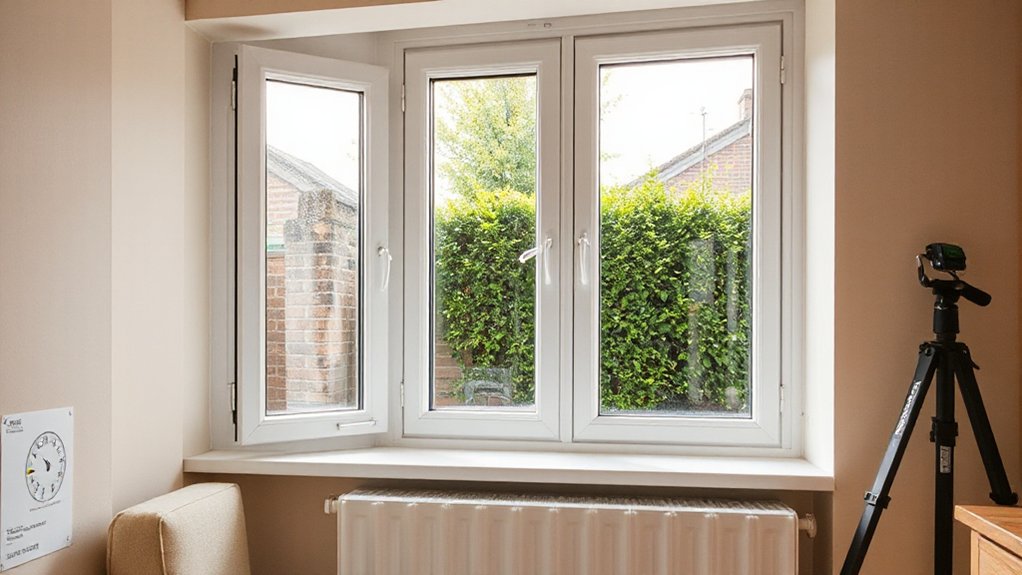
Energy savings from window upgrades depend on selecting high-performance glazing, proper installation practices, and correct sizing. You’ll reduce heat loss by choosing U-values and solar gain figures suitable for UK climates, with triple or double glazing as appropriate.
In addition, guarantee airtight seals, compliant weatherproofing, and correct frame-to-opening compatibility to maximise performance.
Grants and incentives vary by location and project scope, so you should verify eligibility for programs such as energy efficiency schemes and local subsidies before purchasing.
Historic preservation concerns can influence eligible measures and documentation required for funding.
Architectural compatibility matters for grant approval, so you’ll align glazing aesthetics, frame materials, and glazing traditions with existing façades.
Thorough performance verification after installation can confirm realized savings and grant compliance.
Choosing the Right Window Style for a UK Home
Choosing the right window style for a UK home requires balancing performance, aesthetics, and practical constraints. You evaluate frame materials, sash configuration, and glazing options by performance metrics such as u-value, thermal breaks, solar gain, and noise reduction.
Consider the proportion of light transmission, security ratings, and maintenance burden to determine lifecycle cost. Style choices should align with architectural context, room purpose, and potential for future upgrades.
Decorative features influence perceived value and interior ambiance but mustn’t compromise energy efficiency or weather tightness. Window accessories, including hardware finishes, decorative grilles, and window vents, can enhance usability and ventilation control without increasing heat loss.
Document compatibility with existing openings and consider ease of operation when selecting hinges, seals, and hardware, ensuring durable performance.
Location, Contractors, and Warranties: What Affects the Bill
Location drives cost differences, from regional labour rates to travel time for specialists.
Contractor credentials matter for quality and warranty eligibility, so verify licenses, references, and installation trays before committing.
Warranty coverage varies by region and provider, so map what’s included, what’s excluded, and any maintenance requirements up front.
Location Impact Costs
Location, contractor selection, and warranty terms directly influence total project cost. You’ll see variation driven by site access, travel time, and local permit processes, which affect labour rates and scheduling.
In historic or constrained locations, access may require small-scale handling or scaffolding, elevating equipment charges and safety measures. When you choose a contractor, confirm proximity to the property to minimize travel time and out-of-hours surcharge risks.
Warranties vary in coverage duration and response policies, influencing upfront price and long-term reliability. Consider whether the replacement aligns with historical architecture or window ornamentation constraints, as preserving façade integrity can require specialised profiles or finishes.
In turn, these factors shape ordering lead times, material compatibility, and total cost, ensuring you plan for site-specific complexities.
Contractor Credentials Matters
Your choice of contractor credentials directly drives cost certainty and long-term performance. In this phase, you assess contractor credentials and alignment with installation requirements, local regulations, and material compatibility.
Verify that personnel hold current certification standards appropriate to window systems, glazing, and weatherproofing, and that firms maintain recognized quality programs. Credentials influence risk exposure, material warranty validity, and defect resolution timelines, so you should map credential status to project milestones and post-installation support.
Expect documented proof of training, licensing where required, and adherence to industry bylaws. Distinguish between third-party certifications and employer-based programs, and confirm ongoing recertification plans.
Clarify credential-related responsibilities in the contract, including those affecting schedule, inspections, and claim procedures. This focus reduces rework and protects your fiscal and performance outcomes.
Warranty Coverage Variations
Warranty coverage isn’t one-size-fits-all; several factors shape what you get and what you pay. In practice, coverage varies by location and installer, affecting both your decision and the bill. Begin with the property address and local building codes, which influence eligible components and duration.
Next, confirm who provides coverage—manufacturer warranties, contractor guarantees, or third-party service agreements—and note the exact terms, exclusions, and claim procedures. Warranties can differ in scope: window frame, seal, glazing performance, and hardware may be separately covered or bundled.
Verify service intervals, response times, and whether workmanship is included, since some quotes only cover parts. Finally, align warranty terms with expected service frequency; longer service agreements often add premium cost but reduce out-of-pocket repairs over time.
Hidden Costs to Watch Out For
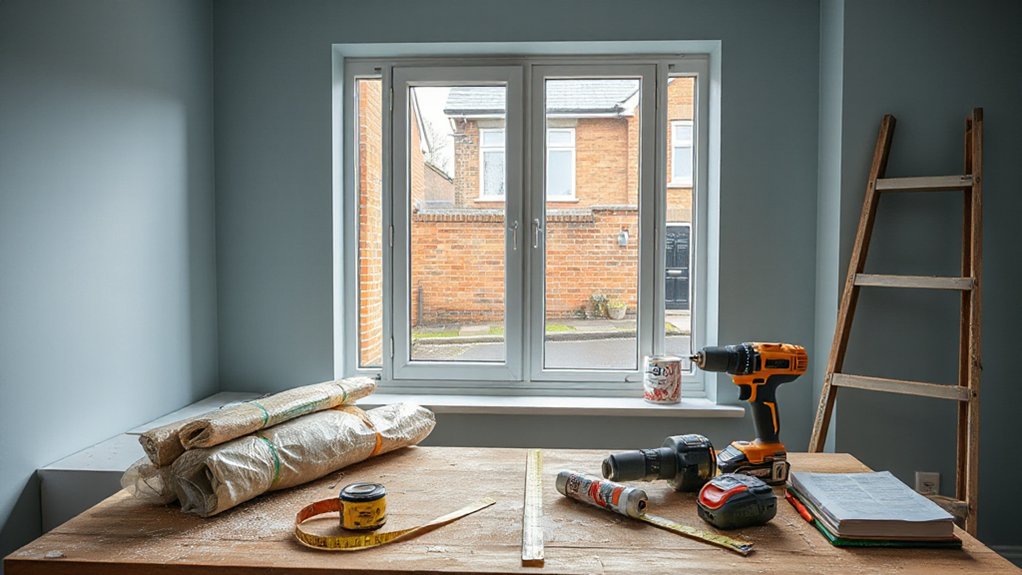
Hidden costs can surprise when replacing windows, so it’s essential to plan for more than the sticker price. You’ll encounter Hidden fees that arise after measurement, permitting, and subcontracting decisions.
Unforeseen work, such as sills, rebates, or secondary glazing integration, adds measurable expense even when the primary installation proceeds smoothly.
Field access, scaffold safety, and waste disposal are non-trivial costs you must quantify, document, and compare across suppliers.
Expect charges for specialist sealants, frame adjustments, and moisture testing that improve long‑term performance but aren’t included in basic quotes.
Delays due to permitting, weather, or council inspections can inflate labor time, driving incremental costs.
Clarify inclusions, exclusions, and contingencies in writing to mitigate unexpected charges and maintain budget accuracy throughout the project.
A Practical Budgeting Framework for Your Replacement Project
A practical budgeting framework starts with a clear, itemized baseline of costs and contingencies, then builds a phased plan that aligns with your project timeline. You identify fixed expenditures (windows, installation, scaffolding) and variable costs (decor, trim, seals), assigning confidence levels to each estimate.
Use a bottom-up approach: quote-based line items rolled into a total, then apply 5–15% contingency for unknowns. Structure phases by procurement, removal, installation, and finishing, with entry/exit criteria to prevent scope creep.
Track cash flow monthly, updating the forecast as vendor prices shift. Consider design intent: Vintage charm guides material decisions, while Modern upgrades inform performance targets.
Maintain a change-control log and audit trail to preserve cost integrity across your replacement project. Regular reviews ensure the budget remains aligned with evolving priorities and timelines.
Frequently Asked Questions
How Long Does a Full Window Replacement Typically Take?
Typically, a full window replacement takes 1–2 days, depending on size and kit. You’ll compare window material options and follow installation process steps, ensuring precise sealing, frame rebedding, and final adjustments for ideal performance.
What Impact Does Bay or Bow Layout Have on Costs?
Bay or bow layouts raise costs due to more units and precision; you’ll face higher window frame materials and installation labor, yet improved energy efficiency ratings can offset long-term savings through better insulation and reduced heating bills.
Are There Regional Delays Affecting Installation Timelines?
Regional delays can occur as manufacturing delays and supply chain disruptions ripple through installers, causing variable timelines. You should anticipate slower procurement, plan contingencies, and verify updated ETA communications to mitigate scheduling impacts on your window project.
Can Replacements Affect Home Insurance Premiums?
Replacing windows can affect your insurance premiums, especially if you upgrade to higher security or energy-efficient standards; insurers may adjust coverage. If you upgrade, discuss policy implications and potential coverage adjustments to avoid gaps. Verify impact with your provider.
Do Replacement Windows Need Planning Permission in All Cases?
Replacement windows don’t always need planning permission; it depends on size, material, and location. You assess window styles and energy efficiency, ensuring alterations stay within permitted development, or apply for consent if requirements aren’t met.
Conclusion
To wrap things up, you’ll typically budget £250–£900 per unit, plus installation, with regional labor skews. Tally materials, glazing, and frame type first, then add site access and potential disposal or heritage constraints. Check warranties, credentials, and any grants or energy savings. Build a practical budget by itemizing each window, factoring delivery, and allowances for hidden costs. In short, map costs methodically, like a chassis diagram, so your project stays on track and on budget.