
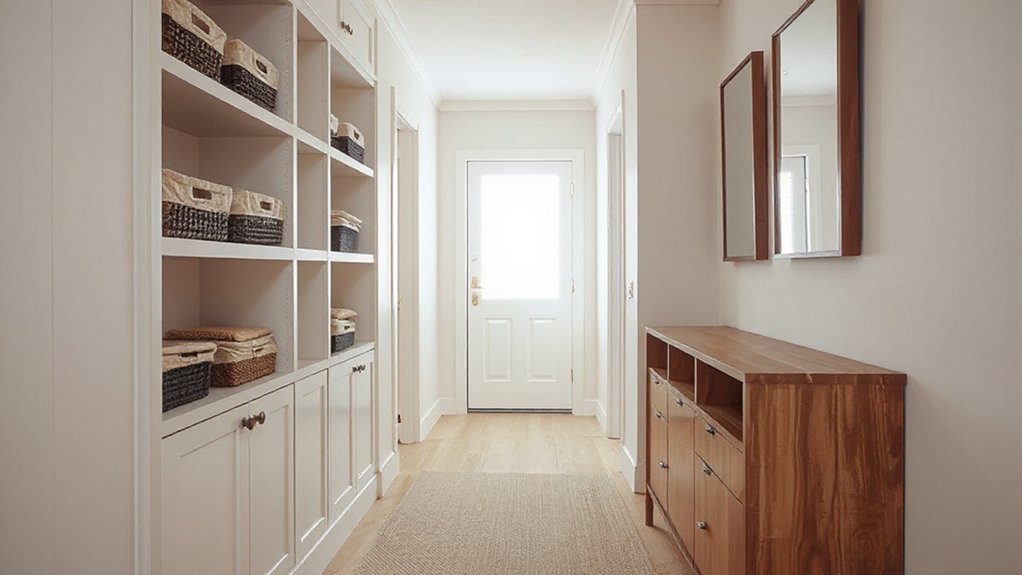
To add storage in a narrow hallway, start by diagnosing space and traffic: measure width, door swing, outlets, and baseboards, then map obstacles. Use slim, wall-mounted storage that nearly disappears, like shallow cabinets or push-to-open niches, and add decorative shelves for display. Favor built-in and movable pieces to balance stability with flexibility, and tuck storage along edges to preserve flow. Use safety lighting and color cues to expand the space, and you’ll reveal hidden efficiency as you explore further.
Diagnose the Cramped Hallway and Set Storage Goals
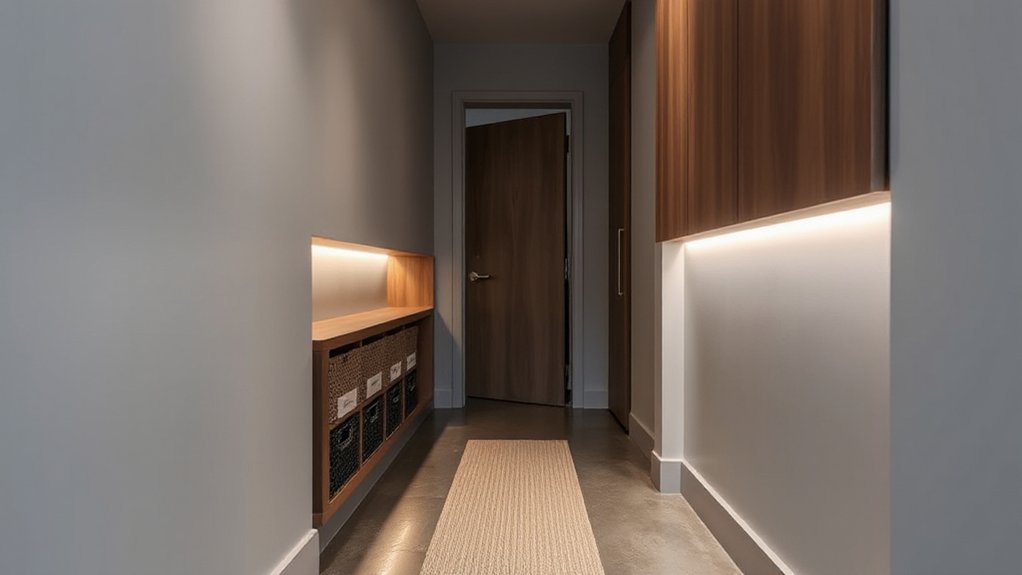
Start by evaluating the hallway’s current constraints: measure width, door swing clearance, and the location of light switches, outlets, and baseboards. You’ll map every obstacle and opportunity, because precision informs smart placement.
Next, define storage goals that fit your rhythm and routines: what you grab first in the hallway, what you want out of sight, and what earns you breathing space at the door. Prioritize high-traffic needs, then consider vertical solutions that don’t crowd floor space.
Plan for entryway lighting to keep everything visible and welcoming, pairing it with decorative accents that signal belonging and warmth.
Choose methods that are flexible, reversible, and durable, so you can refine as life changes. Your hallway becomes a functional, inviting passageway, not a compromise.
Slim Wall Storage That Nearly Disappears
Slim wall storage options sit flush against the wall and vanish into the hallway’s profile, so they free floor space without sacrificing reach. You’ll install slim modules that tuck into corners or run along unobtrusive seams, preserving flow while adding practical capacity.
Choose decorative wall shelves that double as display and storage, keeping essentials within arm’s reach without crowding the path.
For hidden storage compartments, opt for shallow, high- or low-mounted units with magnetic or push-to-open lids to maintain a clean line. Install brackets or French cleats behind trim to keep everything secure and accessible.
This approach respects style and function, making you feel grounded in the space. You deserve organized simplicity that invites you to breathe and move confidently.
Traffic-Friendly Organizing Systems for Hallways
Efficient hallway storage starts with a clear plan that prioritizes unobtrusive access and smooth traffic. You’ll apply traffic-friendly organizing systems that keep daily routes easy and welcoming, not cluttered.
- Choose color schemes that visually expand the space and cue zones for quick access.
- Implement lighting options that brighten but don’t glare; consider wall sconces and under-slab LEDs for safety.
- Use slim, synchronized storage that tucks along edges without blocking footpaths.
- Establish a simple rotation routine so items stay near the door and away from the center.
Keep lines clean, avoid heavy textures, and align hardware with your palette for cohesion. A calm, orderly hall invites belonging and reduces everyday friction.
Built-In vs Movable Solutions for Flexible Flow
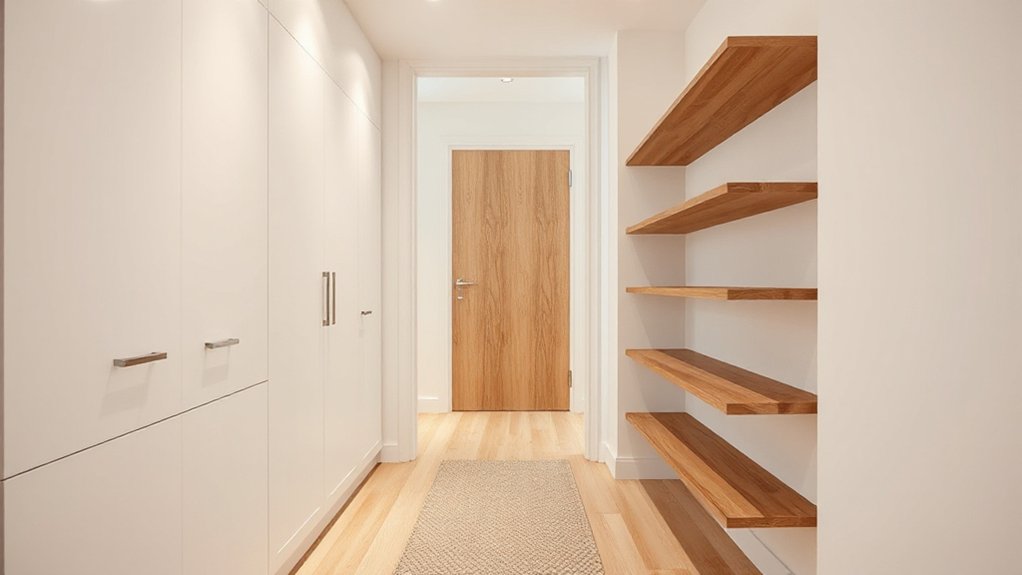
Built-in units offer seamless, space-saving storage that stays out of the way, while movable options give you flexible flow as needs change.
In a narrow hallway, built-ins maximize footprint without crowding the path, using custom cabinetry to tailor depth, height, and compartments. They feel permanent, cohesive, and resilient, reinforcing a sense of home.
Movable solutions, like decorative shelving on dimmable brackets or slim carts, let you reconfigure quickly for guests, seasonal items, or arrival zones.
Pairing both approaches gives you stability with adaptability: fixed cabinetry for daily essentials and portable pieces for occasional display or extra function.
The result is a hallway that reads intentionally designed, inviting you to belong while staying organized and efficient.
Safe, Budget-Friendly Hallway Storage Installs
Ever thought you could add practical storage to a narrow hallway without breaking the bank? You can, with safe, budget-friendly installs that feel intentional, not cluttered. Focus on compact options that don’t crowd traffic and add decorative accents to elevate the space. Pair storage with lighting enhancements to boost visibility and curb appeal.
Here are solid choices:
- Slim wall-mounted shelves for essentials
- Over-the-door organizers to maximize vertical space
- Low-profile benches with hidden cubbies
- Magnetic or peg rail strips for quick-access items
Choose durable materials, secure mounting, and soft finishes to reduce noise. Integrate decorative accents and coordinated lighting to make these saves feel deliberate and cohesive, so the hallway stays practical, welcoming, and stylish.
Frequently Asked Questions
How Do I Measure Clearance for Doors and Furniture?
To measure clearance for doors and furniture, you first determine the door swing path and mark its full arc.
Then measure the width of the doorway and the depth you’ll need for open doors, noting any obstructions.
Record clearance measurement at chair, table, or cabinet positions, ensuring at least 36 inches of passing space.
Recheck with doors fully open, and adjust as needed to maintain smooth door swing and safe movement.
You belong in a well-planned space.
Can Storage Options Affect Hallway Lighting Quality?
Yes, storage options can affect hallway lighting quality. Lighting enhancement comes from thoughtful placement of storage, which prevents shadowed corners and keeps sightlines clear.
Choose low-profile pieces and install them along one wall to maximize ambient light from fixtures or natural sources. Keep storage placement away from direct light paths.
Use reflective surfaces or under-cabinet lighting to boost brightness. This approach feels practical, inclusive, and helps you belong in a well-lit, organized space.
Which Materials Resist Scuffing and Fingerprints Best?
You’ll want materials that resist scuffs and fingerprints, and you’ll choose wisely. Opt for decorative wall panels with matte or satin finishes.
And select non slip storage bins with textured, easy-clean surfaces. You’ll get durability, easier maintenance, and a cohesive look.
You’ll feel confident and connected as you design, balancing style and practicality. You’ll keep spaces welcoming, organized, and resistant to daily wear, reinforcing belonging while you simplify and protect high-traffic areas.
Are Pet-Friendly Storage Solutions Safer for Hallways?
Yes, pet-friendly storage can be safer for hallways, provided you choose rounded edges, chew-resistant surfaces, and secure, tip-resistant units.
Prioritize materials with high storage durability and non-slip bases, and use wall-mounted options to reduce clutter.
Keep cords tucked away and designate a pet-accessible, but separate, zone for bowls or toys.
Regularly inspect for wear, clean spills promptly, and choose finishes that resist paw oils.
Your space stays functional, stylish, and welcoming for everyone.
How Can I Access Stored Items Without Blocking Traffic?
To access stored items without blocking traffic, use Hidden compartments and Vertical shelving that glide or swing open in tight spaces.
Install a slim, recessed bench with pull-out drawers beside the doorway, so you can grab what you need without stepping into the hall.
Keep pathways clear by labeling bins and aligning shelves to wall studs.
This approach feels practical, belongs in your home, and lets you move confidently through shared spaces.
Conclusion
You’ve diagnosed the space, defined clear storage goals, and chosen slim, nearly invisible options that respect traffic flow. Install wall shelves, tall slim cabinets, or a bench with hidden storage to keep the hallway open. Opt for movable units to preserve flexibility when layouts shift. Prioritize safety with sturdy anchors and cable management. In short, smart, compact storage and thoughtful placement turn a cramped hallway into an organized, usable passage—no bulky clutter, just efficient, dependable flow. Remember: restraint is stealthy power.