
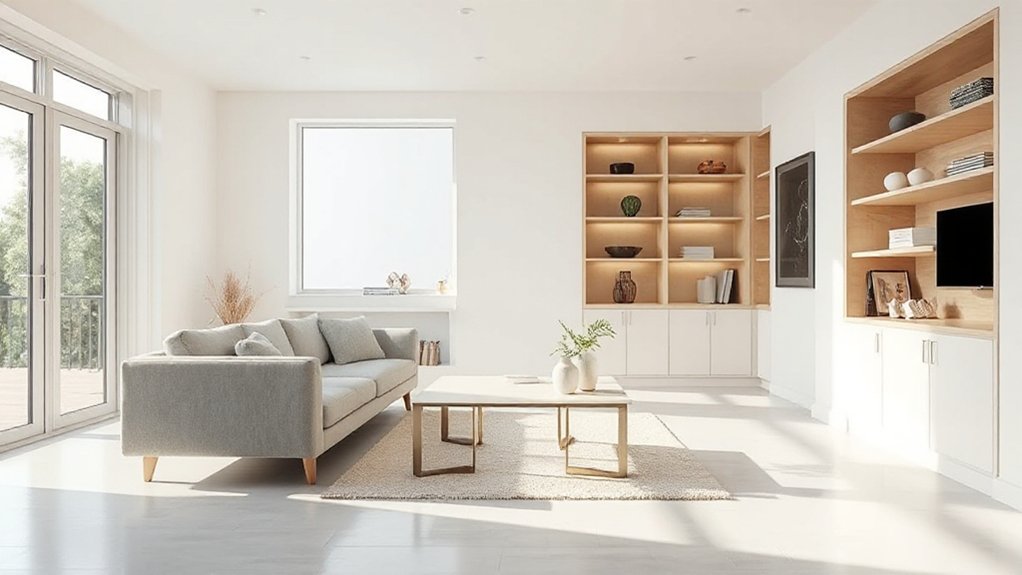
You can create a calm, clutter-free home by starting with a clear vision of your ideal space and defining practical zones for living, retreat, work, and display. Apply the One-Surface Rule in every room, group like items into cohesive baskets, and keep only what serves a current need. Do five-minute daily resets, plus quick declutter sweeps, to maintain order. Choose soothing finishes and colors, guarantee good light and fresh air, and you’ll master lasting calm—more steps await.
Define Your Calm: Create a Personal Clutter-Free Vision
Creating a calm, clutter-free home starts with a clear vision of what that calm looks like for you. You’ll define your personal space by identifying what belongs there, what supports your focus, and what drains your energy.
Start with a practical description: where do you feel most at ease, how you move through it, and which objects earn their place daily. This vision sharpens mental clarity, because you’re anchoring decisions to a consistent standard.
Keep the goal attainable and specific—color palette, lighting, textures, and essential items only. When you design around belonging, you honor shared routines and individual needs.
Revisit your vision weekly, adjusting as life shifts. With intention, you’ll create a space that reflects you and sustains calm, every day.
One-Surface Rule for Each Room
To keep every room calm and uncluttered, establish a one-surface rule: designate a single, primary surface per space for the items that truly belong there, and keep all other items off that surface. This simple boundary creates immediate order and sets expectations for daily use.
Choose surfaces that feel natural to the room’s purpose—living areas, desks, entryways. Limit decorative accents to a small, intentional group on each surface; rotate them as seasons or moods shift.
Your personal routines should dictate what stays out—keys, mail, a lamp, or a single tray—so you move with ease and calm.
Consistency matters: ease of maintenance and visual clarity reinforce belonging, rather than fretting over what to place, or where.
Group Like Items to Reduce Visual Noise
Group like items together to cut visual noise and make spaces feel calmer. Create visual zones by grouping similar pieces and separating them with clear boundaries, so your eyes know where to land.
Keep on-surface clutter to a minimum by corraling items in baskets or trays that match your style.
Group Similar Items
Grouping like items reduces visual noise and makes finding what you need quicker. When you group similar items, you create a calmer surface and quicker access to what you actually use. You’ll sense belonging as you organize around common purposes, not random placements.
Keep decorative accents and seasonal decor together in labeled bins or a dedicated shelf—this streamlines rotation and reduces clutter. This habit reinforces mindful choices and supports a welcoming space for guests.
- Group by function: daily tools, entertaining supplies, and seasonal decor
- Use uniform containers for visual cohesion
- Label shelves or bins for quick retrieval and future maintenance
Create Visual Zones
Varied items don’t just sit there—they create visual noise. You’ll create calm by defining zones: group like items, then assign each zone a clear purpose. Start with a core living area, then designate a quiet retreat, a work corner, and a display shelf.
Within each zone, limit decorative accents to a cohesive palette and a fixed number of pieces. Use storage to keep extras out of sight, so only the intended items remain visible.
Personal mementos deserve thoughtful placement; display a few meaningful pieces together, don’t scatter them. This approach reduces distraction, guides movement, and reinforces belonging.
Minimize On-Surface Clutter
To minimize on-surface clutter, start by grouping like items and keeping only what serves a clear purpose in sight. When you simplify surfaces, you create visual calm and a sense of belonging for the whole home. Focus on intentional displays that feel cohesive rather than crowded.
Use a single tray or tray-and-miller to corral essentials, and swap stray items for functional alternatives. Variety stays, but order remains.
- Decorative accents grouped by color or texture
- Seasonal decor rotated seasonally or stored neatly when not in use
- Essential items kept visible in use zones, with others tucked away
This approach keeps you grounded, makes rooms feel welcoming, and supports a calm, purposeful living space.
Decide What to Keep: Simple Keep/Donate Criteria
Decide what to keep with simple criteria: if an item doesn’t serve a current need, adds value, or will be used soon, set it aside for donation or discard. You’ll develop a practical framework, not a guilt trip, so you feel a sense of belonging in a calmer space.
Separate objects by function: everyday essentials, meaningful keeps, and potential candidates for removal.
Apply the Minimalist mindset: resist impulse holds, honor deliberate choices, and limit duplicates that don’t add utility.
For sentimental sorting, ask if an item sparks joy or memory without anchoring clutter. If the answer isn’t a confident yes, relocate it to donation or storage for review later.
Your home becomes intentional, cohesive, and welcoming to those who share it.
Create Simple Daily Decluttering Habits That Stick
Creating simple daily decluttering habits that stick starts with tiny, repeatable actions you can do in minutes and without drama. You’ll gain momentum by choosing small, meaningful tasks that reduce emotional clutter and reinforce a sense of belonging.
The rhythm matters: daily, consistent steps beat big, sporadic efforts.
- Quickly scan a surface and put items away, honoring where they belong
- Tidy your inbox or notifications for 5 minutes to improve digital organization
- End the day by reflecting on one item you freed or reset
Design Real-Life-Friendly Storage Solutions
Consider hidden storage hacks and everyday access systems to keep essentials within arm’s reach without clutter. You’ll design spaces that hide items you use often yet let you grab them quickly when needed.
Use simple, real-life setups that blend with your flow and keep daily routines efficient.
Hidden Storage Hacks
Hidden storage isn’t just about adding drawers; it’s about making every inch count with purpose. You’ll gain access to clever options that blend function with calm, without shouting for attention. Hidden compartments and concealed storage let you tuck everyday items where they’re needed most, yet out of sight. Use under-bed drawers, recessed shelves, and ottomans with flip tops to maximize vertical and hidden space.
- Create a gallery of usefulness with furniture that hides essentials inside.
- Preplan nooks for seasonal gear and rarely used appliances.
- Label discreet pockets so you remember what’s hidden where.
These strategies keep surfaces clear, reduce visual noise, and invite you to feel at home. Practical, durable, and considerate, they support belonging and everyday ease.
Everyday Access Systems
When designing everyday access systems, prioritize solutions that you can reach and use without thinking about them, every day. You’ll create a calm flow by grouping frequently used items near your routines and labeling clearly so you don’t waste mental energy.
Choose simple, tactile cues—hooks at shoulder height, drawers that glide, bins that invite touch. Design with personal organization in mind: designate zones for keys, mail, bags, and electronics, and keep a consistent drop zone for each.
Address clutter psychology by removing duplicate tools and keeping only what you genuinely use. Build in visual calm: uniform containers, muted colors, and open sightlines.
This approach fosters belonging, reduces decision fatigue, and makes everyday tasks feel seamless, intentional, and supportive of your home’s peaceful rhythm.
Use Zone-Based Organization for Quick Access
Zone-based organization groups items by where you use them, so you can grab what you need without extra searching. When you set zones, keep essentials within arm’s reach and store rarely used items out of sight. This structure supports steady clutter reduction and makes your routine smoother.
Use labeled bins and consistent placements so every family member can contribute to a calm home. Focus on practical zones like near the entry, by the workspace, and in the kitchen, tailoring each to daily flow.
- Easy-access storage solutions for keys, wallets, and mail
- Work-in-progress areas to prevent piles
- Quick-grab zones for snacks, chargers, and cleaning supplies
Adopt this approach for reliable storage solutions and reduced clutter, reinforcing a belonging-first environment.
Choose Soothing Finishes and Colors for a Calmer Home
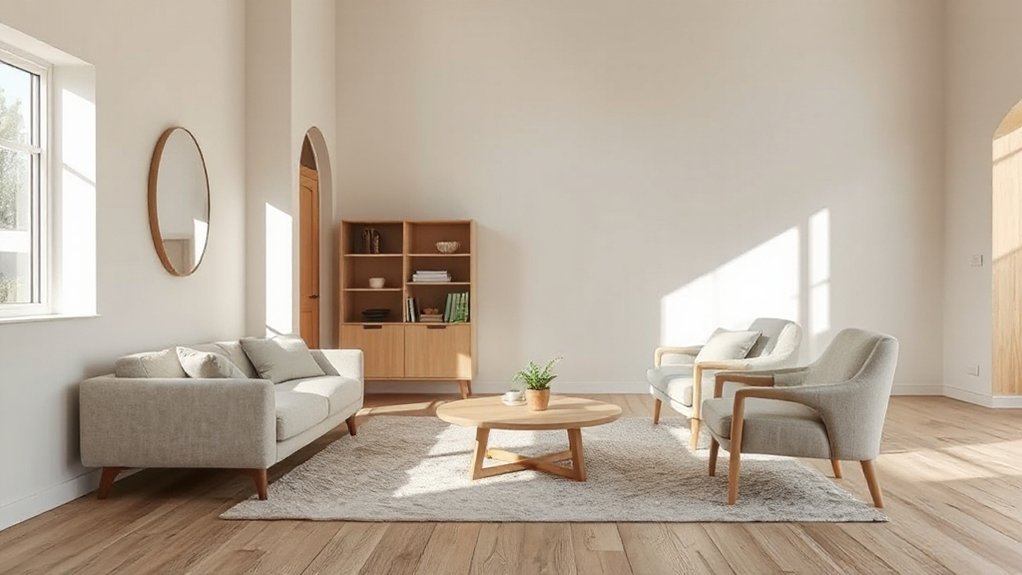
Choose soothing color palettes and calm finishes to set a serene baseline for every room. Start with soft neutrals or muted pastels and pair them with matte or satin textures that feel quiet underfoot and on surfaces.
This practical foundation helps you build a calmer, clutter-free home that endures beyond trends.
Soothing Color Palettes
A soothing color palette starts with calm, easy-to-live-with hues that don’t fight your eyes. You’ll choose tones that flow, support, and ground rooms, then layer in color psychology to cue comfort and focus. Aim for aesthetic harmony by balancing cool and warm neutrals with quiet accents, avoiding high-contrast jolts. Keep saturation low to mid, and test light in different rooms and times of day.
- Use soft neutrals as anchors, then add restrained accent colors for personality.
- Pair cool and warm tones to preserve balance and depth.
- Introduce texture through fabrics and art instead of loud color blocks.
This approach helps you feel rooted and included, turning spaces into calm, cohesive environments.
Calm Finishes Guide
Calm finishes start with materials that feel soft to the touch and easy to maintain, so you can live with them daily without constant upkeep. You choose paints, wallpapers, and flooring that blur edges and reduce visual noise, prioritizing low-lustre sheens and breathable surfaces.
Opt for warm neutrals and cool blues in restrained amounts to create cohesion without dullness. When selecting decorative accents, favor natural fibers, wood tones, and matte metals that echo restfulness rather than flash.
Material textures matter: brushed textures, linen-like fabrics, and wooly weaves add depth without glare. Use these finishes to anchor rooms, then layer with simple decor.
The result is a calm, welcoming environment where belonging comes from consistency, comfort, and thoughtfully chosen details.
Tame Surfaces With a 5-Minute Daily Reset
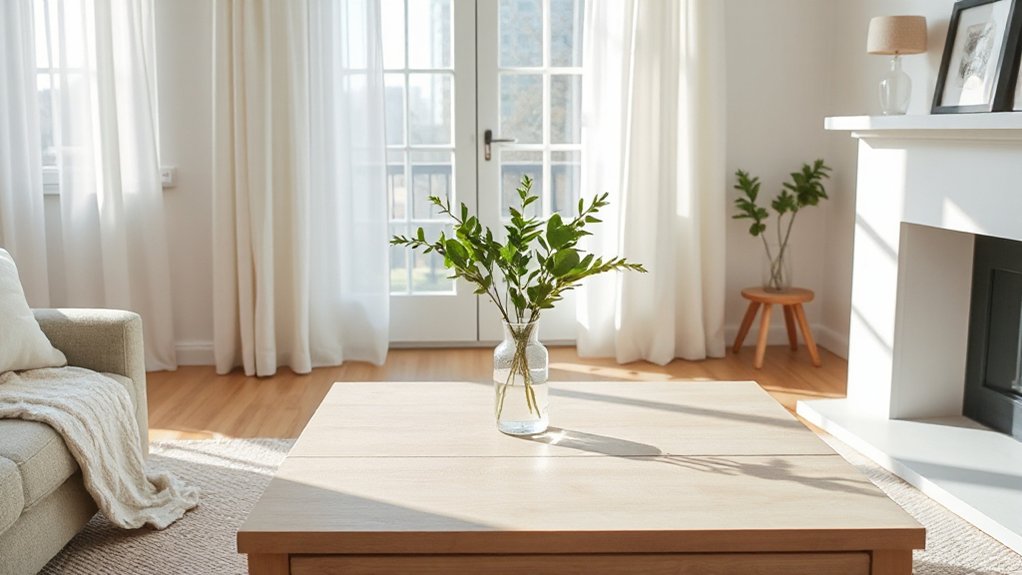
If you start each day with a quick, five-minute reset, surfaces stay clear and your mind stays calm. A daily sweep keeps remote work tools in their place and prevents clutter from stealing focus. You’ll feel more in control, and stress reduction follows naturally.
- Set a small zone: clear the desk, wipe down, and return items to labeled spots
- Sort as you go: group papers, cables, and gadgets, then store or recycle
- Establish a routine: five minutes at the same time every day reinforces calm
Consistency creates belonging—you’re not tidying alone, you’re shaping a shared, serene space. This simple ritual supports clarity, efficiency, and a calmer mood throughout your day.
Light It Right: Simple Lighting and Fresh Air for Calm Energy
Light and air play a quiet but powerful role in steadying energy. You’ll create a calm rhythm by choosing lighting that supports focus and relaxation, not glare.
Opt for layered lighting to sculpt a soft lighting ambiance: dimmable lamps, warm bulbs, and task lighting where you work or read. Let daylight flow in during the day, and use curtains to soften brightness when needed.
Fresh air matters just as much as light; open windows daily or run a small purifier if outdoor air isn’t ideal. Keep vents clear and fans on low to circulate, not blast.
This simple balance reduces noise in your mind, making spaces feel welcoming, easier to inhabit, and ready for intentional, calm energy.
Build Quick-Reset Routines to Maintain Calm
To keep a calm home-time rhythm, build quick-reset routines you can run in under five minutes. You’ll regain balance with simple, repeatable actions that reinforce belonging and control. Each reset centers you, so you stay aligned with your space and your intentions.
Use mindful meditation to settle your breathing, a quick sweep to clear visible clutter, and scented relaxation to signal a fresh start. These routines become second nature, letting you finish daily tasks with calm momentum and not a trace of chaos.
- Mindful meditation for 60 seconds, focusing on breath and surroundings
- Quick declutter sweep: return items to their homes and wipe surfaces
- Scented relaxation: diffuse or dab a comforting fragrance
Frequently Asked Questions
How Long Does a Full Room Declutter Take?
A full room declutter can take 2–6 hours, depending on size, current chaos, and your pace. Start with a quick plan, then sort into keep, donate, and trash.
As you work, your decluttering mindset grows sharper, helping you decide faster. Use storage optimization ideas to consolidate items and create clear zones.
Stay present, take short breaks, and celebrate progress. You’ll feel belonging as order returns, and you’ll know exactly where things belong.
Can I Start With One Shelf Only?
Yes, you can start with one shelf. Begin small, then build momentum with a minimalist approach, layering in items you truly use.
Tidy as you go, and label or group by category for sustainable storage. You’ll gain confidence quickly, feel more in control, and invite others to join your space.
Embrace purpose over perfection, and treat your shelf as a welcoming anchor—a shared, lived-in place that still signals belonging.
What if I Share Spaces With Others?
Yes, you can, even when you share spaces with others. Start by negotiating clear routines and shared responsibilities for tidying, and set boundary setting rules that respect everyone’s needs.
Draft simple agreements, assign tasks, and rotate duties so no one bears the full burden. Communicate openly, stay consistent, and celebrate progress together.
Do I Need to Buy New Storage Solutions?
Yes, you don’t need to buy new storage solutions right away. You can start with what you have and explore clever Storage alternatives like under-bed bins or vertical organizers.
The trick is to declutter first with practical decluttering tools, then choose only pieces that fit your space and routines. You’ll feel more belonging as you reclaim real estate.
Stay purposeful, test options, and keep what truly works, rejecting clutter that drains you.
How Often Should I Reassess My Clutter?
You should reassess your clutter every month to stay proactive. You’ll spot habitual accumulations and adjust quickly. Rely on clear organizational habits, not impulse, to prevent backlog.
When you notice items you rarely use or emotional attachment lingering, reevaluate their place. This keeps spaces welcoming and inclusive, so you feel you belong in a calm home.
Keep a simple checklist, carve out a few minutes, and honor boundaries you set for yourself and others.
Conclusion
So you’ve chased calm to a room near you, huh? You’ll love the clutter-free glow, the “one surface” miracle, and that fancy 5-minute reset you actually stick to. Irony here: all this order makes the chaos of life look heroic by contrast. You’ll find serenity in simpler choices, and still somehow manage to misplace the serenity you just found—behind a cushion, under a toe-kick—until you tidy again. Practical, doable calm, delivered with a wink.