
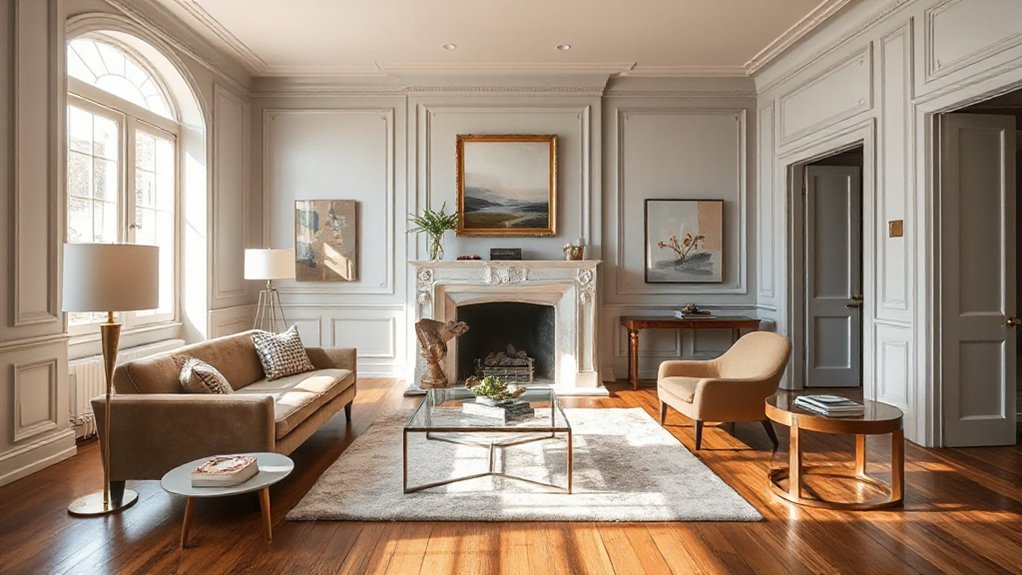
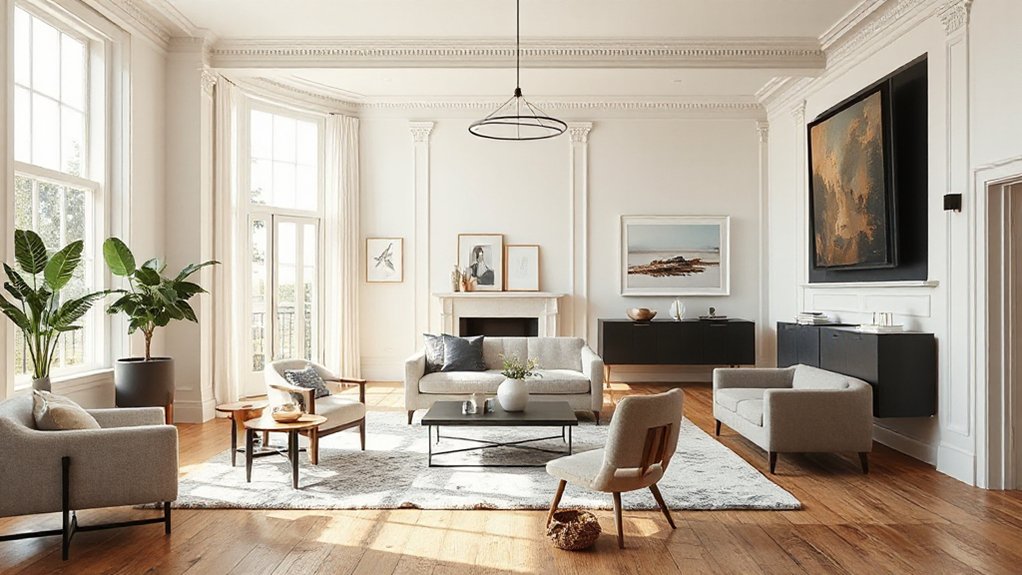
To create a modern interior in a period home, first decide which period details to preserve as core features and which living details can evolve. Establish a heritage-driven, modern color palette with muted neutrals and a restrained accent trio. Choose furniture that merges vintage structure with clean lines, and plan lighting to spotlight period elements. Design storage that frees space without erasing character, map daily circulation, and integrate discreet smart tech. Layer accessories to unite past and present; a cohesive plan awaits.
Identify Which Period Details to Preserve (Core Features vs. Living Details)
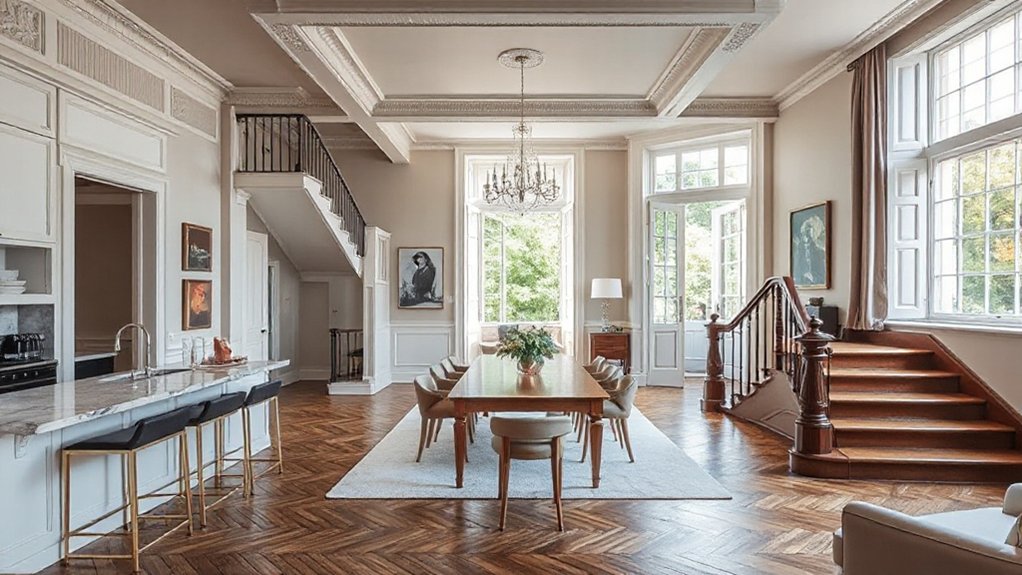
When deciding which period details to preserve, distinguish core features from living details. You assess walls, floors, molding, and fixtures for historical accuracy, then separate those that convey era essence from those that can adapt with modern use.
Core features anchor the house’s character: structure, rhythm, and notable ornament that resist superficial change. Living details—surface textures, colors, or decorative motifs—offer flexibility, guiding where modern updates can occur without erasing lineage.
This split clarifies your restoration challenges and informs practical decisions, from budget to care requirements. You’ll prioritize elements that define identity, while planning reversible updates for practicality.
The aim isn’t nostalgia alone, but a coherent fusion that respects origin and serves contemporary living needs. You create a confident, inclusive space that honors history without sacrificing daily comfort.
Establish a Heritage-Driven, Modern Color Palette
A heritage-driven, modern color palette should balance respect for period character with practical daily use. You build cohesion by anchoring rooms to a few core hues and letting accents emerge through texture, light, and material. This approach supports heritage preservation while carving a contemporary feel through thoughtful color coordination.
1) Establish a restrained base: muted neutrals with warm undertones that echo historic spaces.
2) Introduce a secondary accent trio: one deep, one mid, one soft highlight to unify zones.
3) Apply color strategically: reserve bolder choices for focal walls, built-ins, and artwork, not every surface.
Choose Furniture That Melds Vintage Structure With Clean Lines
Choosing furniture that melds vintage structure with clean lines starts with identifying pieces that honor the past while offering modern clarity. You seek forms that preserve proportion and silhouette, then simplify surfaces for the present.
Favor solid woods or restrained metal frames, letting architectural details—arched legs, cornice edges—read as period truth without ornament overreach. Pair antique artwork or heirloom textures with plain upholstery in neutral tones to avoid visual clutter.
Vintage lighting can illuminate contrast, casting warm, consistent light that ties rooms together without competing with new lines. Prioritize balance: a robust, historically informed sofa paired with streamlined coffee tables, and a credenza that anchors the room while echoing architectural rhythm.
This disciplined pairing communicates belonging: respectful yet distinctly contemporary.
Plan Lighting to Highlight Period Features
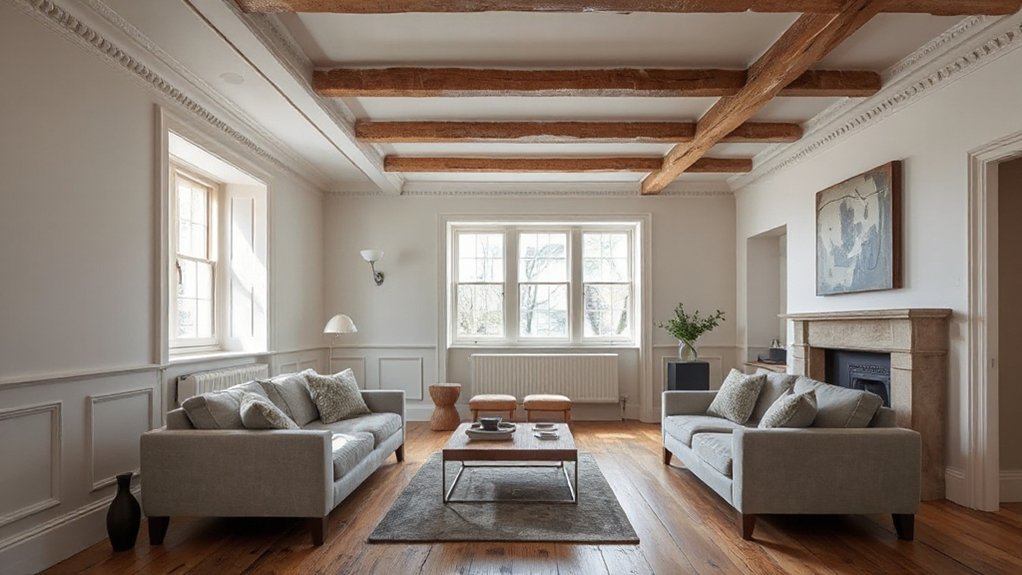
Lighting should emphasize the room’s period character while supporting modern lines you’ve already established. Plan lighting to sculpt form, enhance texture, and create depth without overpowering features. Use strategic layering to balance vintage ambiance with contemporary clarity.
Focus on three core moves:
- Targeted fixtures: place vintage lighting at focal points—mantels, alcoves, and stair landings—to draw attention to period details.
- Light quality: mix warm, soft glows with crisp, functional task light to preserve character while improving usability.
- Accent integration: pair period rugs with subtle uplighting or rail-light angles that highlight weaving and grain.
This approach respects tradition, fosters belonging, and guarantees spaces feel cohesive, not cluttered.
Design Storage That Frees Space Without Hiding Character
Storage should free space without compromising character by integrating built-in benches, alcove nooks, and cabinet fronts that echo period detailing. You design storage as a sculpted extension of the room, not an afterthought.
Favor recessed or concealed solutions that maintain proportions and sightlines, so surfaces read clean rather than crowded. Hidden storage should be deliberate, aligning with architectural moldings, paneling, or cornices to avoid visual clutter.
Choose cabinetry with vintage lighting accents—soft, warm glow behind glass or beneath shelves—to reveal organization without drawing attention.
Prioritize multi-function pieces: a bench with lift-top storage, a console with integrated drawers, or a wardrobe that doubles as a display. This approach preserves character while delivering practical, serene spaces you’ll feel you belong to.
Refresh Textiles With Period-Informed yet Modern Textures
Texture meets tradition by pairing period-inspired fabrics with clean, modern textures that quiet ornament while preserving character. You’ll balance subtle historical references with contemporary materials, creating a tactile dialogue between old and new.
This approach sets the stage for a period-informed palette that feels deliberate, cohesive, and ready for everyday use.
Texture Meets Tradition
You’ll fuse Historical preservation with Material authenticity, ensuring fabric choices honor eras without surrendering comfort. Balance exposed weave textures, damask relief, and modern bouclé to create tactile contrast that reads as intentional rather than nostalgic.
- Choose fabrics that reveal construction techniques true to the period, but weave them into contemporary silhouettes.
- Layer textures—velvet, linen, wool—to build depth while keeping color restrained and cohesive.
- Pair antique patterns with solid modern grounds to maintain legibility and comfort.
This approach signals belonging: respectful reverence paired with practical, everyday luxury, so spaces feel steadied by history and energized for now.
Modern Fabrics Pairing
As you move from texture-focused detail to fabric strategy, pairing modern textiles with period-informed textures sharpens both authenticity and comfort. You’ll balance weight, opacity, and tactile contrast, ensuring textiles feel cohesive rather than costume.
Favor contemporary weaves that read clean and resilient, then layer in vintage patterns as accents rather than anchors. This keeps rooms feeling current while respectful of history.
Use a restrained palette to prevent clashes; allow texture to carry personality, not loud color. Consider scale: large motifs modernize, while smaller, vintage-inspired patterns add heritage.
Pay attention to lighting and placement, so fabrics glow rather than overwhelm. The goal is belonging through restraint—modern fabrics that respect era-informed texture, delivering durable comfort and a quiet, confident elegance.
Period-Informed Palette
To refresh textiles with a period-informed yet modern texture, start with a palette that nods to era cues without shouting them. You’ll balance historical accuracy with contemporary tact, selecting hues that echo plaster, timber, and soft masonry—muted greens, warm neutrals, and slate accents. Structure and texture carry the story, not loud prints.
1) Choose fabrics in refined weaves and matte finishes, ensuring tonal harmony across cushions, curtains, and throws.
2) Layer colors and textures using controlled contrast, so modern pieces read as respectful additions rather than impositions.
3) Apply preservation techniques to maintain antique textiles, then integrate new fibers that respect age and scale.
This approach fosters belonging through thoughtful restraint and purposeful material choices.
Map Daily Circulation and Living: A Practical Layout Plan
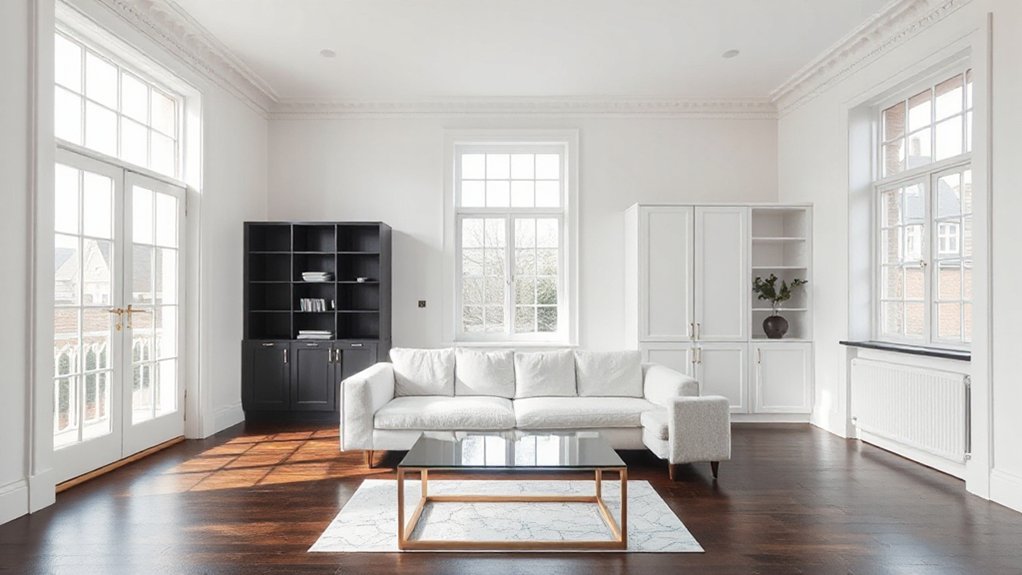
Start by mapping your daily circulation to guarantee smooth, intuitive movement between zones. Analyze practical layout flow to minimize wasted steps and keep traffic clear of work and living areas.
Then define the living zone zoning to balance openness with private corners, guiding furniture and storage decisions for everyday practicality.
Map Daily Circulation
A daily circulation map should reveal how people move through the home, highlighting the most efficient routes between frequently used zones. You’ll locate primary corridors that minimize backtracking while supporting historic preservation and architectural authenticity, ensuring modern use respects the original fabric.
Analyze sightlines, door widths, and threshold heights to support fluid movement without visual disruption. Focus on zones that host daily routines, creating intuitive passages between living, dining, and work areas.
Use a practical layout plan to reduce congestion during peak hours and preserve spatial rhythm.
- Identify core paths that connect entry, kitchen, and living spaces.
- Mark bottlenecks and re-route to preserve original architectural cues.
- Test with daily activities to confirm seamless circulation without compromising authenticity.
Practical Layout Flow
You’ve mapped daily circulation to reveal efficient routes between entry, kitchen, and living spaces; now translate that into a practical layout flow that supports both movement and authenticity.
You create a coherent sequence: entry to public zones, with the kitchen connected to living spaces without self-conscious separations. Prioritize sightlines, so circulation feels natural rather than forceful, and verify doorways align with furniture to avoid clutter.
Use vintage contrasts in finishes to emphasize transitions between old and new while preserving historical integrity. Plan for flexible zones that adapt to daily rituals—work, dining, relaxation—without sacrificing cohesion.
Ground the layout in historical preservation principles, then layer contemporary ergonomics, so every step reinforces belonging and purposeful living. This approach yields legible, enduring flow that respects heritage.
Living Zone Zoning
How should daily movement define the living zone? You map circulation first, then carve zones for gathering, dining, and relaxation. An open floor plan guides sightlines, but clear delineation keeps intimacy and flow intact. Balance aligns with your period home’s character, using ceiling beams and furniture placement to cue zones without enclosing the space.
You’ll design around daily rituals, not just rooms, ensuring ease of access from kitchen to living and outdoors.
- Establish focal points that anchor each zone, using furniture as soft dividers.
- Align traffic paths with doorways and windows to minimize disruption.
- Layer materials and textures to reinforce function while honoring heritage.
This approach creates belonging, clarity, and a modern rhythm within an open floor context, where ceiling beams ground the ensemble.
Integrate Smart Home Tech Without Compromising Character
Integrating smart home tech in a period home doesn’t require sacrificing character; with thoughtful placement and discreet hardware, modern controls vanish into the design. You stage tech where it serves routines rather than focal points, masking devices behind cabinetry, crown mouldings, and wall panels.
Prioritize robust, wireless, or retrofit solutions that minimize visible hardware, ensuring cables stay hidden and outlets align with traditional spacing. Thoughtful zoning preserves the tactile rhythm of rooms while supporting seamless automation, so occupants feel connected without distraction.
When you choose Smart integration strategies, document a clear plan for maintenance access and future updates. Emphasize tech concealment in the overall finish, not as an afterthought.
The result: reliable performance, timeless character, and belonging through calm, unobtrusive convenience.
Layer Accessories to Unite Past and Present
Layering accessories is the design move that bridges eras without shouting the change. You create cohesion by selecting items that echo both periods and personalities, not by competing with them. Use curated pieces that feel intentional, not random clutter.
Focus on texture, scale, and placement to knit past and present into a single story. Gallery displays and architectural salvage offer authentic textures that read as deliberate supports, not gimmicks. They anchor modern elements with context and warmth.
- Curate a small gallery display that pairs a vintage frame with a contemporary print.
- Mix architectural salvage shelving with sleek, modern vessels to balance lines.
- Place heirloom textiles alongside contemporary upholstery to unify color and mood.
Create a Master Plan and Realistic Implementation Timeline
To turn the insights from layering into action, map out a practical master plan with a realistic timeline. You’ll detail scope, priorities, and milestones, tying each decision to historic preservation and architectural authenticity.
Begin with a phased approach: assess, plan, execute, and review, allocating time buffers for approvals and adjustments.
Define measurable goals—light, texture, material quality, and period-accurate finishes—so every choice reinforces the home’s character while supporting contemporary function.
Establish a budget framework, then map costs to stages, ensuring contingency funds.
Create decision logs to maintain continuity across trades and designers.
Build in tenanting of space use, accessibility, and maintenance cycles to sustain believability.
Regular reviews keep momentum, prevent scope creep, and preserve belonging through deliberate, accountable progress.
Frequently Asked Questions
How to Balance Authenticity With Personal Taste in Period Homes?
You balance authenticity with personal taste by prioritizing architectural authenticity while expressing your sensibility through deliberate, reversible updates. Listen to the home’s cues, test details, and textures, then layer personal expression without erasing the building’s spirit.
What Budget Ranges Suit Modern Updates in Period Interiors?
Budget-friendly rounds: you can start around $5–15k for basics, mid-range $15–40k, and premium $40k+. Furnishing essentials and a cohesive color palette guide every decision, ensuring belonging through deliberate, parallel choices and confident, analytical updates.
How to Source Period-Accurate but Affordable Materials?
You source period-accurate but affordable materials by prioritizing architectural detailing restorations, reclaimed items, and budget-friendly reproductions, ensuring historical accuracy while negotiating with suppliers. You compare options, test finishes, and couple authenticity with contemporary functionality for belonging.
How to Preserve Structure While Avoiding Outdated Quirks?
Preserve structure by prioritizing load-bearing integrity and discreet reinforcements, then balance with modern updates. Avoid medieval relics as focal points, integrate Victorian accents thoughtfully, and create cohesive spaces where you belong without clashing styles.
When to Hire Specialists Versus DIY for Restoration?
You should hire specialists for high-risk or intricate work, but handle simple tasks yourself if you’re confident. Prioritize DIY safety, seek Expert consultations when uncertain, and balance cost with precision to feel confident and belong in the process.
Conclusion
You’ve mapped a clear path: preserve core period features, layer modern color and lighting, choose furniture that blends vintage form with clean lines, and store smartly to keep character visible. Plan circulation with intent, add discreet tech, and finish with layered accessories that unite past and present. Execute the master plan on a realistic timetable, adapting as you go. Think of your home as a dialogue between eras—each detail listens, each choice speaks, until harmony becomes your daily backdrop.