
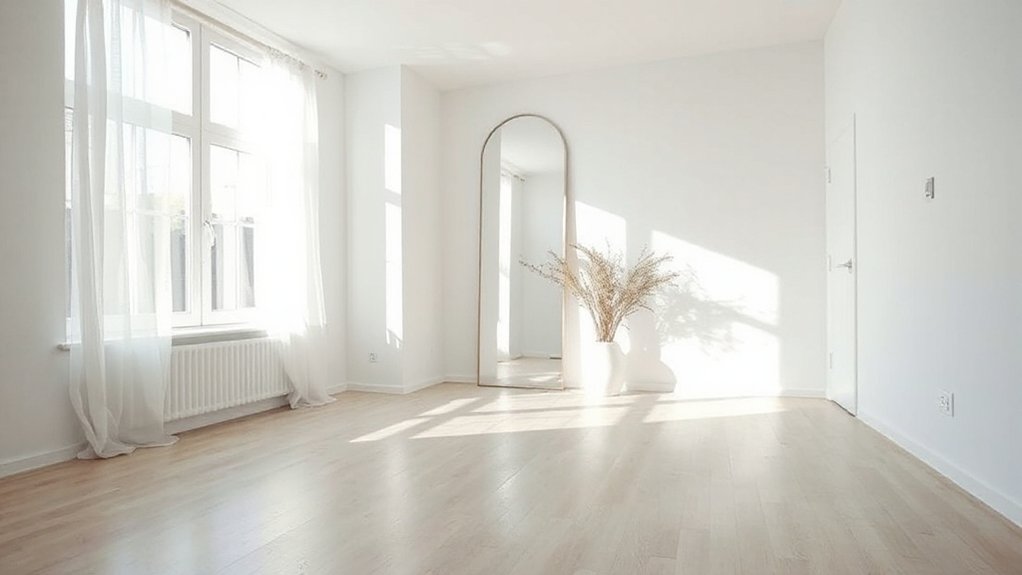
To boost natural light in a north-facing room, start by evaluating current levels at different times of day and note any obstructions. Maximize diffusion with pale paints, reflective surfaces, and strategically placed mirrors to bounce light deeper. Use larger window panes, low-profile frames, and energy-efficient glazing to reduce glare while inviting daylight. Layer ambient, task, and accent lighting to complement soft daylight. Aim for furniture that nudges seating toward windows and stay mindful of seasonal shifts—more tips await.
How North-Facing Rooms Differ From Other Orientations
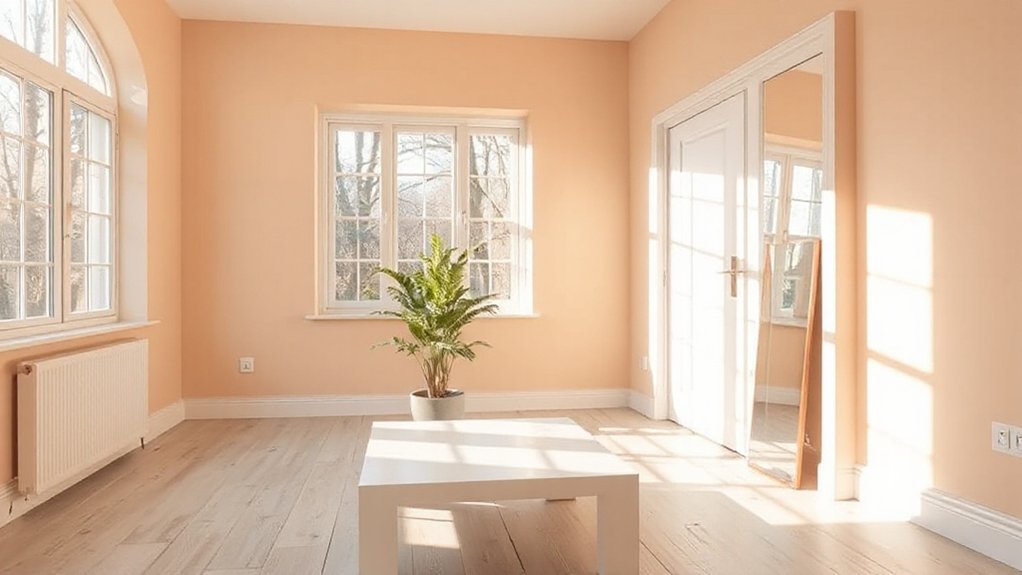
North-facing rooms receive consistent, softer daylight without strong afternoon sun, so they feel cooler and more even than rooms that face south or west. You’ll notice orientation differences in how light enters: fewer harsh highlights, steadier illumination, and less glare on screens or artwork.
Light penetration is gentler, spreading evenly across walls rather than batching into a single radiant zone. Because you’re dealing with lower sun angles, you’ll often have more usable daylight hours without abrupt shifts as the day changes.
This means your space can feel calm, cohesive, and welcoming, reinforcing a sense of belonging. With awareness of these differences, you can plan furniture placement and tasks to align with the room’s natural rhythm and comfort.
A Practical Plan to Boost Daylight Diffusion in North-Facing Spaces
To boost daylight diffusion in north-facing spaces, start with a simple, strategic plan: maximize reflective surfaces, minimize obstructions, and choose lighting that complements soft, consistent light. You’ll align layout with the room’s natural rhythm, selecting pale paints and mirrors to bounce daylight deeper.
Prioritize uncluttered sightlines and angled furnishings that catch and diffuse glow without glare. Integrate natural ventilation strategies that move fresh air through without sacrificing diffusion, like operable vents paired with breathable textiles.
Use acoustic treatments that absorb reflections at key frequencies, preventing echoey, loud spots while preserving airiness. Consistently test scale, proportion, and placement, adjusting as daylight shifts with seasons.
This practical approach builds belonging through brighter, calmer spaces you feel encouraged to use daily.
How to Assess Your Light Levels Before Making Changes
Start by measuring current light levels in the main living areas to establish a baseline you can improve from.
Note how much daylight you actually get at different times of day and in key spots where you spend time.
Then identify any obstructions—furniture, blinds, or exterior shading—that block or reduce light before you plan changes.
Measure Current Light Levels
To assess how much natural light your north-facing room actually gets, start by measuring key light levels at different times of day and across multiple spots. Use Lighting sensors or a reliable light meter to capture readings at morning, noon, and late afternoon, noting variations between corners and near windows.
Record both illuminance (lux) and color temperature to gauge quality as well as quantity. Compare readings against practical targets for living spaces, like 300–500 lux for tasks and brighter daylight cues for ambiance.
Keep a simple log, labeling spots and times, so you can spot patterns quickly. If you notice low, uneven light, consider temporary improvements such as solar shades to refine daylight without permanent changes.
Identify Light Obstructions
Before you can improve natural light, identify what’s blocking it. You’ll assess both indoor and outdoor factors that dim daylight entering your space. Look for heavy furniture placements, dark window treatments, and clutter that absorbs or diffuses light.
Check exterior elements that create shade or glare, such as trees, fences, or neighboring structures. Don’t overlook sun shading strategies and outdoor obstructions that redirect or block rays at different times of day.
Document sources of obstruction to plan targeted changes rather than broad, costly fixes. Then, compare current light levels to your goals to decide where to focus.
- Note sun shading that limits morning and afternoon light
- Identify outdoor obstructions like trees and walls
- Evaluate window coverings and furniture blocking glare
- Record seasonal changes to anticipate shifts in brightness
Choose a Paint Color That Makes Walls Read Brighter
Choosing a paint color with brighter walls starts with smart tint choices and a balance of reflective white or soft pastels.
Opt for shades that bounce light without washing out your space, and consider finishes that enhance reflectivity.
Use this foundation to guide your wall color decisions and test samples in north-facing rooms.
Brighten With Tint Choices
Brighten your north-facing walls by selecting tint and paint colors with high light reflectance. Your goal is brightness without glare, so opt for light-toned bases and subtle tints that bounce daylight deeper into rooms. Consider tint choices that lean toward warm or cool undertones to suit your space and mood, while keeping them within the high-reflectance family.
Pair with practical finishes that stay clean and vibrant, and don’t underestimate the power of window films to reduce glare while preserving color accuracy.
- Choose tint choices that maximize reflectance without washing out detail
- Test swatches on walls and beneath windows at different times of day
- Pair with coatings that resist fading and maintain hue stability
- Consider window films to manage glare and enhance perceived brightness
Reflective White Or Pastels
A reflective white or pale pastels can instantly boost wall brightness in north-facing rooms by bouncing more daylight across the space. Choose colors with high reflectance to maximize light distribution without washing out details. Opt for true whites or soft neutrals rather than stark options, and test chips in your room’s lighting at different times of day.
Consider color psychology: lighter hues can feel more open and welcoming, supporting a sense of belonging and calm.
Balance brightness with durability—select paints described as durable for busy walls, easy to scrub, and resistant to fading in indirect sun. For best results, pick a finish in the eggshell to semigloss range, ensuring subtle sheen without glare while sustaining longevity.
Select Reflective Surfaces and Finishes to Multiply Daylight
To multiply daylight in a north-facing room, pick reflective surfaces and finishes that bounce light rather than absorb it. You’ll gain brightness without adding clutter, so stay purposeful with how you reflect every faculty of daylight.
Choose materials and colors that mirror rather than soak: high-gloss or satin finishes, and glazed or lacquered panes that amplify the glow. Maintain consistency in reflective choices so the room feels cohesive and welcoming.
You’ll notice a calmer, more expansive feel when surfaces work together to multiply daylight instead of competing with it.
- Use reflective surfaces like glossy tiles, glass, and polished metal accents
- Favor light, cool-toned finishes that diffuse harsh shadows
- Pair mirrored surfaces with open shelving to extend brightness
- Balance shine with matte neutrals to prevent glare
Light-Weight Window Treatments That Maximize Brightness
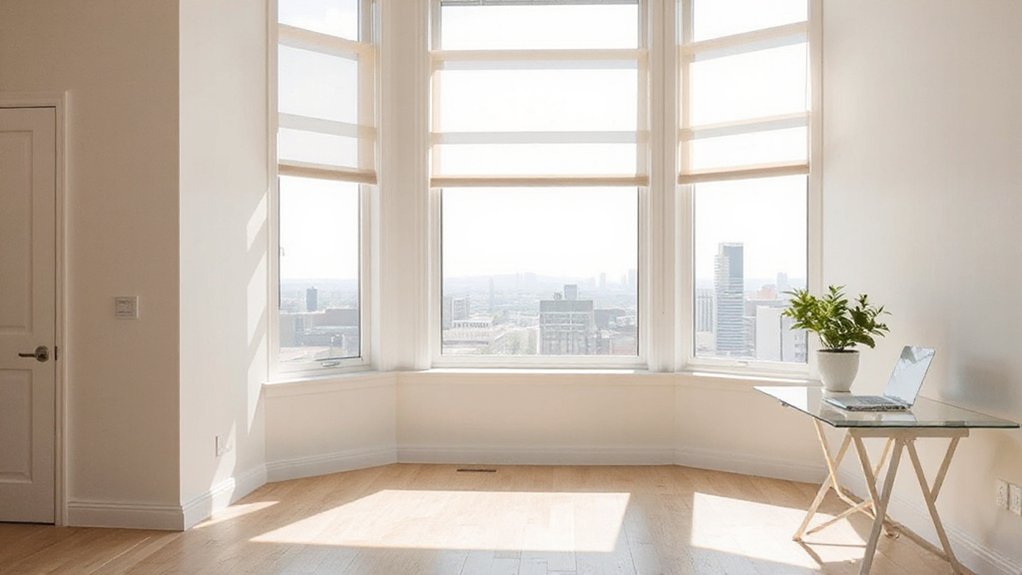
Ever wondered how to keep daylight blazing in a north-facing room without weighing it down? You can, with light-weight window treatments that maximize brightness.
Choose sheer or voile fabrics that diffuse rather than block light, preserving luminance while softening glare. Opt for minimalistic roller or Roman shades in pale hues or translucent materials to reflect more daylight deeper into the space.
Consider color and texture: airy whites, cool neutrals, and subtle sheens amplify brightness without heaviness. Go cordless and clean-lined for a crisp, uncluttered look that feels welcoming.
Mount treatments close to the ceiling to create the illusion of higher windows and more glass. Use lightweight linings or none at all when privacy isn’t a concern.
Light weight window treatments truly support maximizing brightness.
Strategic Furniture Layouts for Daylight Distribution
Strategic furniture layouts can maximize daylight by guiding light deeper into the room and reducing glare. You’ll create ideas that feel intentional and welcoming, not cluttered. Shape traffic flow with clear sightlines to the primary light source, and position seating to catch daylight without facing harsh reflections.
Use furniture placement to direct soft northern light toward walls that brighten the space, while keeping pathways unobstructed. Integrate lighting fixtures as layered accents—table lamps, wall sconces, and floor lamps—to extend daylight after sundown. This approach builds a sense of belonging, making the room feel designed for you and your guests.
- Align seating to reflect and distribute daylight across focal walls
- Place compact consoles or shelves to bounce light without crowding
- Layer lighting fixtures for depth and flexibility
- Choose furniture with light, neutral tones to maximize perceived brightness
Mirror Placement to Bounce Daylight Deeper Into the Room
Mirrors placed opposite a primary light source can bounce daylight deeper into the room, brightening dull corners without adding fixtures. You should position a medium-height mirror across from a window or soft light to maximize spread.
Avoid placing mirrors where they reflect glare or heat. Tilt mirrors slightly to catch daylight at different angles as the sun moves.
Pair mirrors with decorative wall art near reflective surfaces to create a cohesive, welcoming vibe. Thin frames and unobtrusive spacing prevent the space from feeling cluttered while amplifying brightness.
Consider using a wall-mounted mirror near a ceiling light fixture to distribute artificial and natural light evenly. This approach supports a balanced, comfortable environment you’ll want to share with others.
Floor Materials and Rugs That Reflect Rather Than Absorb Light
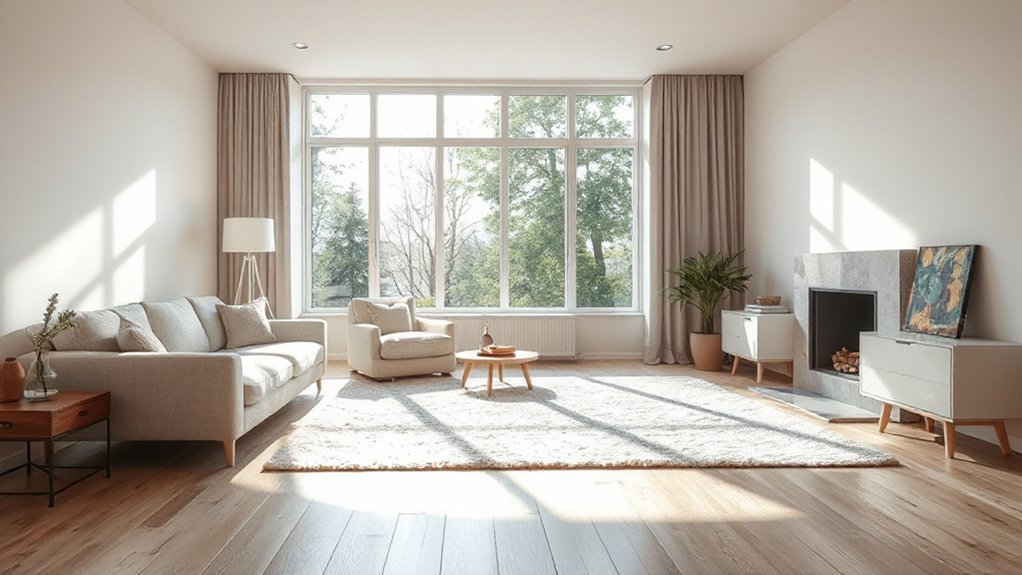
Floor materials and rugs can make a notable difference in how bright a north-facing room feels. You can choose surfaces and textiles that reflect light instead of soaking it up, enhancing daylight without adding fixtures.
Reflective flooring options, like high-gloss or light-toned finishes, bounce more daylight across the space. Pair with deliberately placed rugs to guide reflections toward darker corners, and avoid dark tonality that absorbs glow.
Rug placement matters: position larger, light-colored rugs near darker patches to create luminous flow, and rotate seasonally to balance ambience.
Prioritize low-pile textures that reflect rather than trap light, and keep finishes clean for maximum gleam. Your goal is cohesive brightness that reinforces a welcoming, belonging-focused atmosphere.
- Reflective flooring options and their impact on daylight
- Rug placement to maximize light distribution
- Color and texture choices that reflect rather than absorb
- Maintenance tips to sustain brightness over time
Use Glass and Translucent Elements for Airy Vibes
Glass and translucent elements illuminate north-facing spaces by allowing light to pass through rather than absorb it. You’ll reinforce this effect with glass accents that reflect daylight deeper into rooms and create a sense of openness.
Choose translucent panels for cabinet doors, room dividers, and skylight enclosures to diffuse harsh glare and maintain a calm, cohesive feel. Keep frames slim and in light metals or pale woods to avoid visual heaviness.
For walls, select frosted or softly tinted panels in strategic locations to guide light flow without sacrificing privacy. Pair with furniture and textiles in cool neutrals to amplify airy vibes while preserving a grounded, welcoming atmosphere.
This approach delivers brightness, tactility, and a bedroom- or living-room-friendly sense of belonging.
Layered Lighting: Ambient, Task, and Accent for Natural Daylight
Layered lighting makes the most of natural daylight by combining ambient, task, and accent layers so daylight flows evenly through the space. You’ll create a flexible, welcoming environment by coordinating light temperatures and brightness with your north-facing window’s softness, not harsh glare.
Use layered illumination to support daily activities while preserving the room’s calm atmosphere. Align fixtures to daylight layering, so ambient fills the room, task targets work zones, and accents highlight architecture and art without overpowering the view.
This approach reinforces a sense of belonging, making you feel grounded and supported.
- Layered illumination guides your eye and mood throughout the day
- Ambient light sets the baseline without overpowering daylight
- Task lighting concentrates function where you need it
- Accent lighting adds depth and personality without clutter
Skylights and Light Tubes in North-Facing Rooms: Are They Worth It?
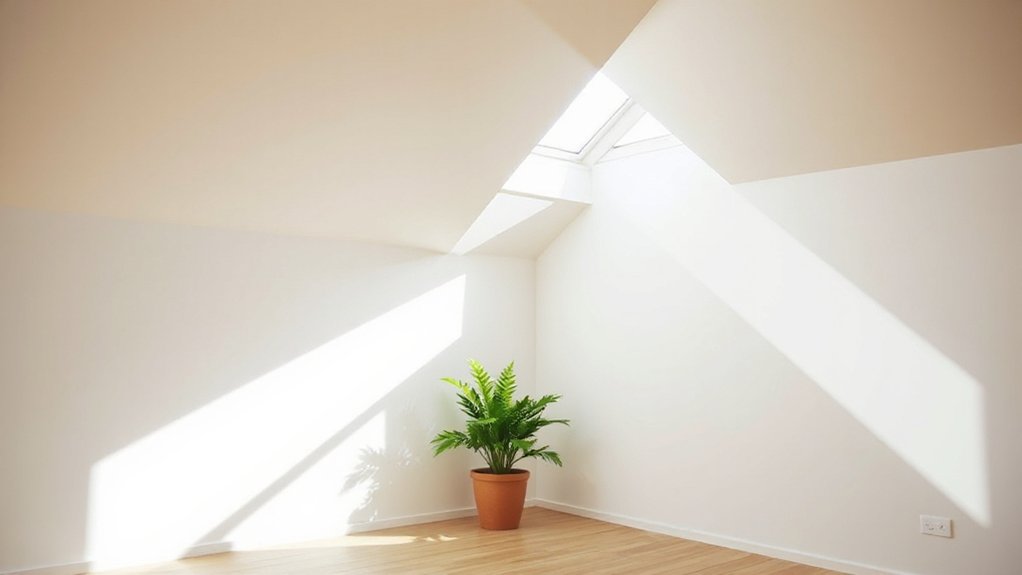
Skylights and light tubes can boost daylight in north-facing rooms, but they’re not a universal fix. You should weigh practicality over novelty: will the improvement justify cost and potential heat loss or glare?
Skylight installation can flood a space with natural light, yet aesthetic integration matters—clean lines, glare control, and exterior shading all influence results.
Light tubes channel daylight from roof to interior, often delivering bright, even illumination in hallways or small rooms without heavy remodeling.
Assess how much daylight you truly need and where it’s most lacking. In many cases, combined with strategic blinds and reflective finishes, these options improve perception of brightness without overhauling your decor.
Consider skylight installation or light tube effectiveness only after measuring current daylight gaps and budget.
Plant and Greenery Choices to Enhance Perceived Brightness
Choose brightness-boosting foliage and light-reflecting plant choices to make a north-facing room feel brighter. Opt for leaves with glossy or variegated surfaces and arrange plants to bounce light toward darker corners.
Start with a few strategically placed, low-maintenance varieties to test how greenery impacts perceived glow.
Brightness-Boosting Foliage
To brighten a north-facing room, choose foliage that reflects light and creates a sense of space: go for plants with light leaves, compact growth, and upright form that won’t crowd windows. Brightness-boosting greenery helps you feel connected to outdoors, even on dim days.
Select varieties that bounce light with pale variegation and glossy surfaces, and group plants to double the visual impact. Combine foliage with a few low-maintenance accents to reinforce a brighter mood.
Use scale thoughtfully so plants don’t block sightlines or natural air flow; keep a tidy, cohesive display that still feels welcoming.
- Shade trees for exterior framing and foliage contrast that mimics outdoor brightness
- Indoor fountains to introduce ambient reflections and soft movement
- Pale, reflective leaf patterns that brighten shadows
- Upright, compact pieces that maximize floor space without crowding windows
Light-Reflecting Plant Choices
Brighten north-facing rooms with plant varieties that reflect light and amplify brightness without cluttering windows. You’ll want reflective foliage textures and bright, variegated leaves to bounce limited daylight around a space.
Choose compact, upright plants that stack visual impact rather than spread; think pothos with pale margins, snake plants with light edges, and aluminum plant varieties that shimmer. Place these near the light source to maximize reflectivity without crowding.
Maintain indoor humidity to keep leaves shiny and healthy, and mist occasionally to prevent browning tips.
Pair light-reflecting choices with simple contrasts—glossy pots, light shelves, and clean lines.
Implement a straightforward pest-control routine and inspect regularly, so your brightening strategy stays effective and feels like part of your home’s everyday belonging.
Windows and Glazing Upgrades That Improve Light Entry
If you want more natural light in a north-facing room, upgrading windows and glazing is one of the most effective steps. You’ll improve daylight entry, reduce glare, and create a brighter, more inviting space.
Focus on glazing with larger, strategically placed panes and minimal framing to maximize visible light. Incorporate practical upgrades like energy-efficient units and compatible window coatings or glass tinting to control heat and brightness without sacrificing clarity.
Consider practical installation options that preserve style and budget, and choose finishes that feel like part of your home.
- Window coatings
- Glass tinting
- Double or triple glazing
- Low-profile frames
How to Optimize Room Layout Across Different Daylight Hours
As daylight shifts through the day, position and size your furniture, specced lighting, and focal points to align with the sun’s path in a north-facing room. You’ll optimize brightness by grouping seating near windows at peak light times and shifting bulky pieces away from direct rays to reduce glare.
Use focal points—art, plants, or a rug—to capture soft reflections during low sun angles, keeping the room feeling intentional and cohesive. Plan zones that support different activities as daylight changes, so you aren’t scrambling for light or privacy.
This approach boosts indoor privacy and energy efficiency by reducing the need for artificial lighting and minimizing heat loss. With deliberate layout, you create a welcoming, belonging-filled space that thrives across the day.
Window Mullions and Frame Choices to Minimize Shadowing
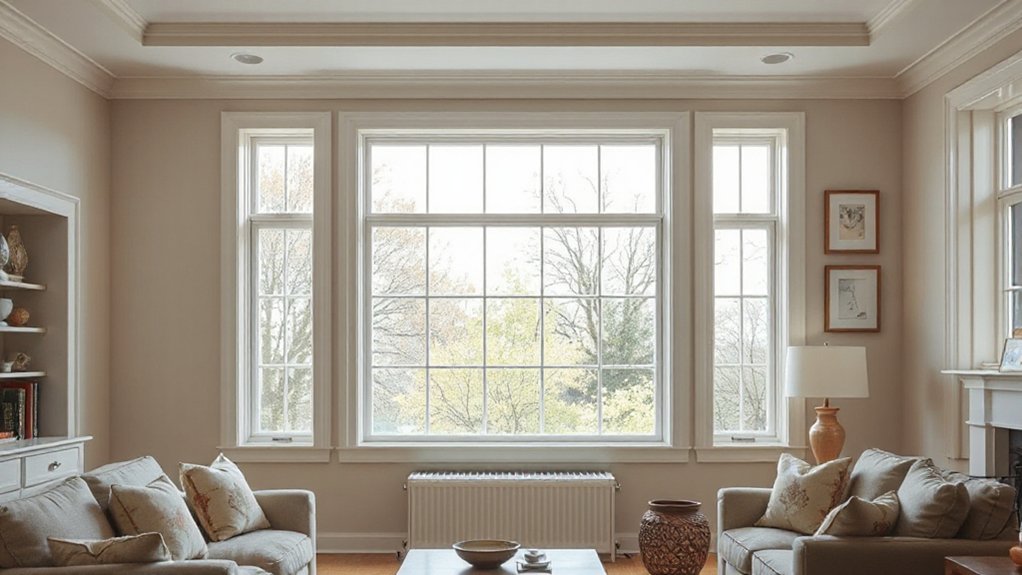
To minimize shadowing in a north-facing room, choose window mullions and frames that maximize light transmission and reduce obstructions. Your goal is clean sightlines and subtle geometry that won’t interrupt daylight.
Focus on mullion designs that break up the grid without creating dense shadows, and favor frameless or thin-profile options where possible.
Frame finishes should reflect light rather than absorb it, so choose light or neutral tones with smooth, non-textured surfaces.
As you select, prioritize consistency with existing interiors to foster belonging and cohesion.
- mullion designs that minimize visual clutter while preserving structural integrity
- narrow frames that maximize glass area and light capture
- frame finishes in light hues or reflective coatings to boost brightness
- clean, simple profiles that align with architectural rhythm
Texture and Pattern Ideas to Keep Spaces Luminous
Texture and pattern choices can keep north-facing rooms feeling bright and airy by guiding light across surfaces without creating visual heaviness. You’ll want texture that reads light rather than weight, so opt for fine pile, linen, or smooth plaster finishes that bounce rather than absorb.
Introduce textural contrast: pair matte walls with a subtle sheen on textiles, or mix sleek ceramics with soft weaves to catch highlights. Pattern layering matters too—keep scales varied: a large, airy motif on a rug, smaller repeats in cushions, and a faint undertone on drapery.
This approach sustains cohesion while preventing visual flatness. Together, textural contrast and pattern layering create depth, guiding daylight to travel, enhancing brightness, and fostering a welcoming, belonging-filled space.
Seasonal Color Strategies to Maintain Brightness Year-Round
Seasonal color shifts can keep north-facing rooms feeling bright by selecting palettes that reflect and amplify available light. You’ll harness color to support brightness maintenance across seasons, choosing hues that bounce light while still feeling cohesive with your space.
Move between cool neutrals in winter to warm, sunlit tones as days lengthen, always prioritizing contrast that preserves depth. Test samples on walls at different times of day and under artificial light to confirm how a palette behaves.
Use finishes that reflect rather than absorb, and limit heavy darkness in corners. Consistency in color family creates a sense of belonging and calm, helping you feel connected year-round.
- Seasonal color choices guide brightness maintenance with intention
- Reflective neutrals and bright accents maximize light
- Seasonal shifts synchronize mood and room depth
- Paper-thin layering adds warmth without crowding light
Quick Fixes and Budget Hacks to Lift Ambience
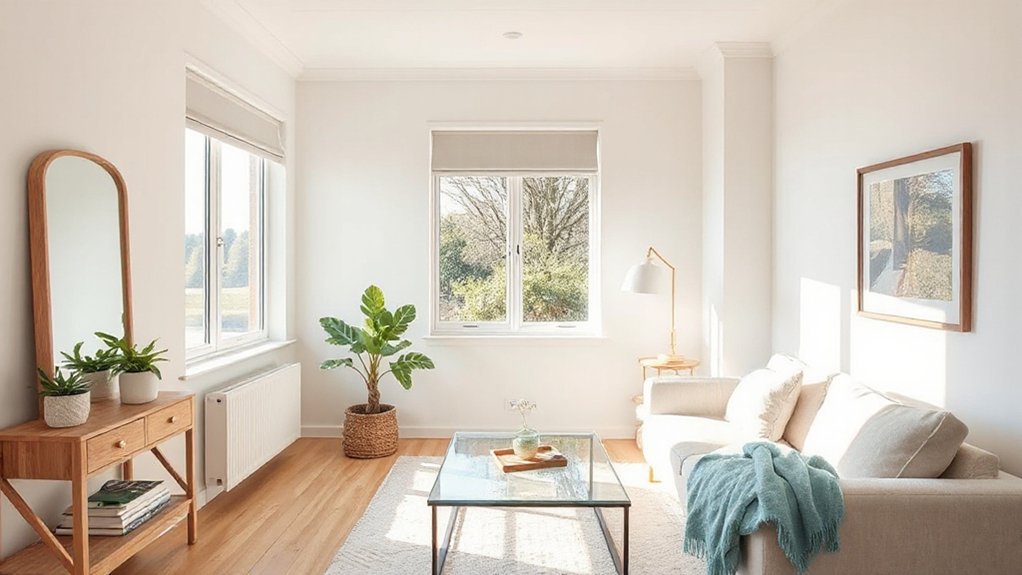
If you’re aiming to lift ambience quickly without breaking the bank, start with simple, high-impact fixes. Begin by maximizing existing light: trim obstructive plants, declutter surfaces, and place mirrors opposite windows to bounce daylight deeper into the room.
Choose white or light-reflective paints and light textiles to amplify brightness without costly renovations. For immediate mood, layer warm LEDs with daylight bulbs, avoiding harsh contrasts.
Practical upgrades include outdoor shading to control glare while preserving daylight quality, and window tinting to soften harsh sun and enhance perceived space. These tweaks create a cohesive, inviting feel, helping you feel connected to the home and to others who share it.
Minimal effort, tangible lift, lasting sense of belonging.
Frequently Asked Questions
Can Furniture Placement Really Boost North-Facing Daylight Significantly?
Yes, it can greatly boost daylight. By smart furniture arrangement, you reflect and trap more light across the room, widening perceived brightness.
Place mirrors opposite windows, keep paths clear, and lift bulky pieces away from central sightlines.
Use light colors and low-profile furnishings to maximize transit of sunlight.
This sunlight optimization helps you feel more connected, energized, and grounded, making your space welcoming and inclusive for everyone who shares it.
Do Wall Colors Affect Daylight More Than Window Size?
Wall color impact matters more than you might think, but window size still influences daylight.
You notice how a light, cool wall palette brightens corners, while larger windows boost overall brightness and reduce contrast.
The coincidence is practical: put brighter walls near windows to reflect more light, and choose window sizes that balance structure with daylight needs.
In short, both matter, but wall color often shapes perceived daylight more than you expect; plan accordingly.
Are Reflective Surfaces Harmful to Glare in North-Facing Rooms?
Yes—reflective surfaces can worsen glare in north-facing rooms if overused. You’ll want strategic window treatments to control midday glare, paired with ambient layers of Artificial lighting.
Place matte, low-reflectance finishes on walls and furniture, and offset bright surfaces with softer textures.
Avoid mirrors opposite windows; instead, position them at angles to diffuse light.
Choose dimmable LEDs and task lighting to balance brightness, creating a comfortable, inclusive space you’ll feel you belong in.
Is Installing Skylights Worth the Cost in North-Facing Spaces?
Skylight installation can be worth it in north-facing spaces, especially if you prioritize natural brightness and energy savings. You’ll gain daylight without sacrificing privacy, and modern skylights minimize heat loss with efficient glazing.
Consider the orientation and shading, and factor in costs, installation challenges, and maintenance.
If you want brighter, more welcoming rooms, skylights paired with north facing windows offer a practical boost you’ll feel every day.
Which Light Bulbs Best Mimic Natural Daylight Year-Round?
You should choose bulbs that mimic natural daylight year‑round, aiming for 5000–6500K.
Use high-quality LEDs labeled “full spectrum” or “color temperature daylight” to balance brightness and color accuracy.
Prefer CRI 90+ for true colors, and match artificial lighting to seasonal shifts with layered lighting: task, ambient, and accent.
This creates a welcoming, cohesive space where you feel you belong.
Keep dimmable options for versatility and adjust to activities and moods.
Conclusion
You can’t ignore the gloom, but you can outsmart it. With brighter paint, reflective surfaces, and smarter window choices, your north-facing room will feel open and airy. If you worry it won’t ever satisfy daylight needs, remember: small changes multiply—clean blinds, light furniture, and strategic mirrors push diffuse light across walls. You’ll see it in the glow on your walls and in your mood, even on overcast days, as you reclaim a brighter, more inviting space.